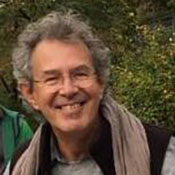
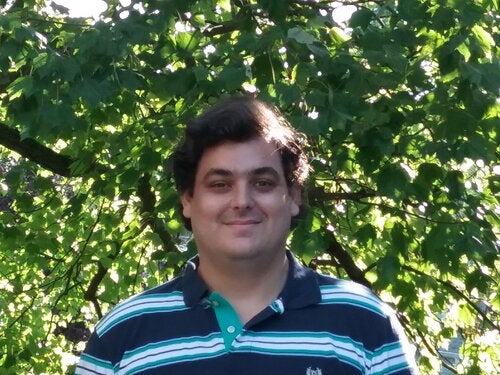
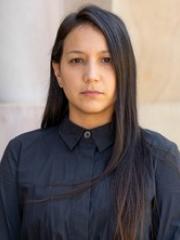
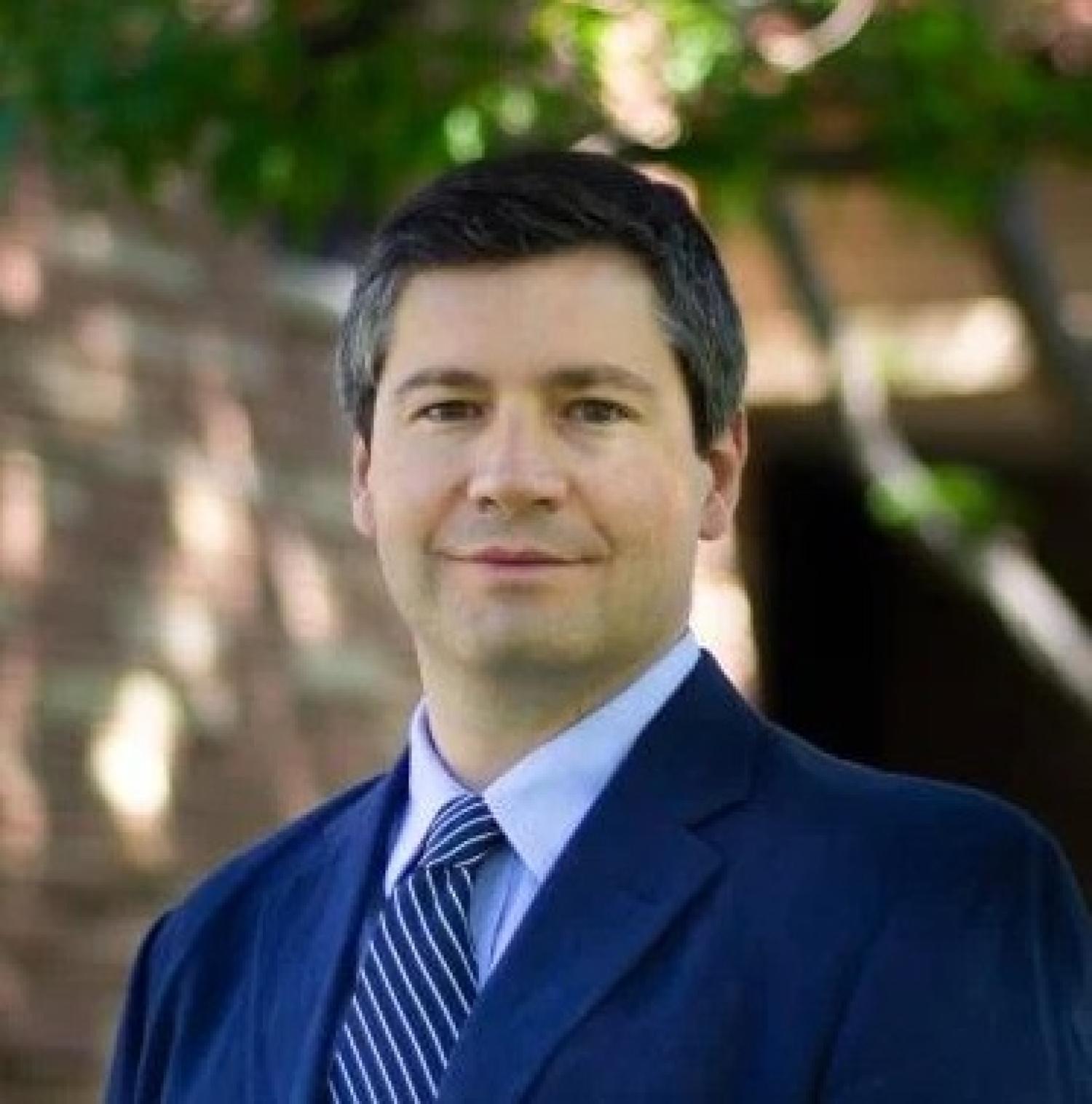
Nicholas Evans is Distinguished Professor of Linguistics and Director of the ARC Centre of Excellence for the Dynamics of Language (CoEDL) at the Australian National University’s School of Culture, History & Language. His work bridges fieldwork-based language documentation with theoretical questions in typology, cultural evolution, and social cognition. Focus on endangered Australian and Papuan languages Director of ARC Laureate Project on 'The Wellsprings of Linguistic Diversity' Co-leader of SCOPIC (Social Cognition Parallax Corpus) study Collaborator in global linguistic diversity initiatives His research explores how micro-level community multilingualism shapes macro-level linguistic diversity, with fieldwork spanning seven years in remote Indigenous communities. Recent projects include PARABANK (paradigm syncretism analysis) and Southern New Guinea language studies, particularly Nen and Yam family languages. Scientific recognition includes the Ken Hale Award (Linguistic Society of America), Anneliese Maier Forschungspreis, and fellowships in the Australian Academy of Humanities, Australian Social Sciences Academy, and the British Academy.
Dr. Guillermo Amador is an Assistant Professor in the Experimental Zoology department at Wageningen University & Research. His research focuses on understanding how animals interact with complex environments through locomotion, adhesion, and fluid dynamics. He investigates biological systems like insects, plants, and marine organisms to inspire bio-engineered solutions for robotics, microfluidics, and material science. Amador received his PhD in Mechanical Engineering from Georgia Institute of Technology (USA), followed by postdoctoral research at the Max Planck Institute for Intelligent Systems (Germany) and a Marie Sklodowska-Curie fellowship at TU Delft (Netherlands). His expertise spans biophysics, biomaterials, and biomechanics, with a focus on self-cleaning mechanisms and bioadhesion. He collaborates with the 4TU consortium on Dutch Soft Robotics to develop bio-inspired designs. His work bridges fundamental biology with engineering applications, emphasizing interdisciplinary approaches to solve challenges in robotics and environmental science. Amador teaches courses including Biomimetics and Functional Zoology , integrating his research into education. His research highlights include studies on cuttlefish suction cups, stick insect adhesion, and pollen transport mechanisms in pollinators.
Arti Singh is an Assistant Professor in the Department of Agronomy at Iowa State University. Her research focuses on plant breeding, soybean diseases, genomics, and phenomics, with a strong emphasis on integrating artificial intelligence and high-throughput technologies into agricultural systems. She leads projects involving AI-driven disease identification, precision agriculture, and crop improvement strategies. Her expertise includes developing machine learning models for real-time weed and insect classification (e.g., WeedNet and InsectNet), deploying drones and ground robots for crop phenotyping, and leveraging genomic data to map traits like flowering time and disease resistance in legumes. Singh collaborates on initiatives like the AIIRA Institute for Resilient Agriculture and the BioTrove biodiversity dataset. Singh’s work spans plant stress phenotyping, digital twin technologies for plant sciences, and multi-sensor phenotyping for early disease detection. Her research bridges computational methods with traditional agronomy, aiming to enhance crop resilience and sustainability in the face of environmental challenges. Her recent projects include optimizing robotic navigation for precision agriculture, improving soybean yield estimation via video analysis, and dissecting genetic architectures of traits in mungbean and soybean using GWAS and genomic tools. She actively contributes to conferences and publishes in high-impact journals, advancing both foundational and applied aspects of agricultural science.
Dr. Kaya de Barbaro is an Associate Professor in the Department of Psychology at the University of Texas at Austin (College of Liberal Arts). She holds a Ph.D. from the University of California San Diego. Her research focuses on bridging computer science and developmental/clinical psychology, particularly maternal mental health and infant social-emotional development. She directs the Daily Activity Lab, which uses mobile/wearable sensors and machine learning to analyze real-world interactions, aiming to develop just-in-time interventions for new mothers. Key research areas include maternal-infant dynamics, physiological synchronization, and the impact of environmental chaos on development. She has pioneered methods for analyzing high-density data, such as Granger causality and machine learning algorithms to detect behaviors like crying and holding. Recent work emphasizes leveraging ecological momentary assessment surveys and 24-hour LENA audio recordings to understand proximal mechanisms of development. Dr. de Barbaro teaches Psychology 333D (Introduction to Developmental Psychology) and has developed curricula for both in-person and online formats. She is actively involved in training students through the Eureka program at UT Austin. Her lab collaborates on tools like chatbots for postpartum mental health and has published extensively on sensor-based methodologies in developmental science.
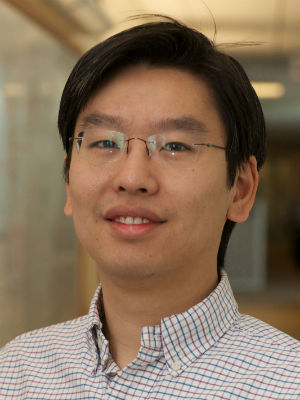
Harris H. Wang is an Associate Professor in the Department of Systems Biology and Department of Pathology and Cell Biology at Columbia University's Vagelos College of Physicians and Surgeons, where he also serves as Interim Chair of Systems Biology. He is affiliated with the Center for Computational Biology and Bioinformatics (C2B2) and the Integrated Program in Cellular, Molecular and Biomedical Studies (CMBS). B.S., Physics and Mathematics, MIT Ph.D., Biophysics, Harvard University Dr. Wang's research lies at the intersection of systems and synthetic biology, focusing on developing foundational technologies for genome engineering, microbiome manipulation, and synthetic genomics. His lab pioneers methods such as MAGE, MAGIC, CAST, and CAMII to enable high-throughput genetic manipulation, in situ microbiome engineering, and AI-driven microbial culturomics. Key research themes include understanding microbial community dynamics, engineering cellular memory systems, designing biocontained genetic circuits, and applying synthetic biology to human health challenges in personalized medicine and infectious disease. His recent publications reveal a strong trend in spatial and functional metagenomics, CRISPR-based microbiome editing, and synthetic biology tools for data storage and genetic stability. The articles span high-impact journals like Nature , Science , and Nature Biotechnology , reflecting his leadership in developing scalable, programmable biological systems. Scientific Awards: NIH Director’s Early Independence Award Forbes 30 Under 30 in Science Sloan Research Fellowship NSF CAREER Award ONR Young Investigator Award Burroughs Wellcome Fund PATH Award Schaefer Scholar Blavatnik National Award Vilcek Prize PECASE Dr. Wang has advised numerous PhD and postdoctoral researchers, many of whom have gone on to independent scientific careers. His lab is supported by major grants from NIH, NSF, DARPA, DOE, and foundations including the Bill & Melinda Gates Foundation and CZ Biohub NY. He is actively involved in educational initiatives, including organizing Columbia’s iGEM team and the Cold Spring Harbor Laboratory Synthetic Biology course. The Wang Lab is based at the Columbia University Irving Medical Center and is part of national consortia such as the Engineering Biology Research Consortium (EBRC) and the Genome Project-Write (GP-Write) initiative. The lab develops and applies cutting-edge technologies in automation, machine learning, and synthetic biology to engineer microbiomes for applications in medicine, global health, and climate change.
Steven Jackson is a Professor of Information Science and Science and Technology Studies at Cornell University's Bowers College of Computing and Information Science, with additional graduate field appointments in Communication and Public Affairs. Since July 2023, he has served as Vice-Provost for Academic Innovation at Cornell, and previously held leadership positions as Chair of Information Science and Dean of William Keeton House. His work bridges academic research with significant institutional leadership in higher education innovation. Dr. Jackson's research focuses on critical intersections of technology, society, and the environment, with three primary strands: technology ethics, law and policy; maintenance, repair and sustainability; and technology, inequality and global development. His work draws from American pragmatism, political economy, and science and technology studies, integrating methods from sociology, anthropology, philosophy, and media studies. He is particularly interested in how computing practices meet social and material worlds, with implications for infrastructure, collaboration, sustainability, and cultural practice. His recent publications reveal a strong emphasis on repair as both theoretical concept and practical methodology, exploring 'ordinary hope' as a framework for technological engagement and examining unmaking as a necessary counterpart to design. The research spans diverse geographical contexts from the global North to South, addressing caste dynamics in computing, digital authoritarianism, and infrastructure challenges in developing contexts. Dr. Jackson has received significant recognition including an NSF CAREER award and more than twenty paper awards at leading computing and information science venues. His research has been supported by major organizations including the U.S. National Science Foundation, Social Science Research Council, Ford Foundation, Sloan Foundation, World Bank, Intel Research, Atkinson Center for Sustainability, and the Canadian Social Science and Humanities Research Council. As an advisor, Dr. Jackson has mentored numerous graduate students who have gone on to prominent positions at institutions worldwide. He currently advises Jen Liu, Amy Cheatle, Daniel Mwesigwa, Johan Michalove, and Ritik Batra, while his former students include Palashi Vaghela (Assistant Professor at Simon Fraser University), Samir Passi (Responsible AI Researcher at Microsoft), Maggie Jack (Assistant Professor at NYU), and Ranjit Singh (Senior Researcher at Data and Society). Dr. Jackson convenes the Computing On Earth Lab, an experimental collaboration bringing together social scientists, humanists, artists, and engineers to rethink the material and planetary foundations of computing. The lab reflects his commitment to interdisciplinary approaches that address computing's environmental impacts and sustainability challenges.
Sarah Billington is the UPS Foundation Professor of Civil and Environmental Engineering at Stanford University and a Senior Fellow at the Woods Institute for the Environment. Her research program focuses on sustainable building design, human wellbeing, and ethical supply chain practices. Education: PhD, University of Texas at Austin, Structural Engineering (1997) MSE, University of Texas at Austin, Structural Engineering (1994) BSE, Princeton University, Civil Engineering & Operations Research (1990) Her lab employs interdisciplinary methods to study how built environments impact human physical, psychological, and social wellbeing. Current projects include developing tools to quantify nature exposure in buildings, exploring affordable housing's role in wellbeing, and using AI to assess forced labor risks in material supply chains. While no longer active in this area, her group previously pioneered research on sustainable construction materials like bio-based composites and ductile cement-based composites. Her recent publications address topics such as nature integration in architecture, workplace design optimization, and health impacts of building materials. The Billington Lab at Stanford fosters collaborative team science, welcoming partnerships to advance occupant-centric engineering solutions.
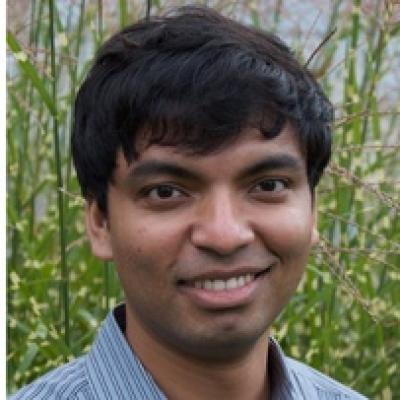
Subhransu Maji is an Associate Professor in the Manning College of Information and Computer Sciences at the University of Massachusetts Amherst, and the co-director of the Computer Vision Lab. He is also affiliated with the Center for Data Science and holds a part-time role as an Amazon Scholar. His research focuses on high-level visual recognition algorithms and interdisciplinary applications in ecology and astronomy. He has received prestigious awards including the NSF CAREER Award (2018), Best Paper at WACV 2015, and the Google Graduate Fellowship (2008). Education: PhD in Computer Science from UC Berkeley (2011), BTech from IIT Kanpur (2006). Prior roles include Research Assistant Professor at Toyota Technological Institute at Chicago (2012-2014). Research Interests: Computer Vision Machine Learning AI Applications in Ecology and Astronomy 3D Shape Understanding Climate Science Grants and Funding: Supported by NSF, NASA, Climate Change AI, and industry grants from Facebook, NVIDIA, Adobe, and Dolby. Current projects include satellite imagery analysis for ecology and material science applications using deep learning. Labs and Teams: Leads the Computer Vision Lab, collaborates with interdisciplinary teams on ecological monitoring (e.g., bird migration tracking via radar data) and material property prediction (e.g., zeolite adsorption modeling).
Zaid Harchaoui is an Adjunct Professor in the Department of Statistics at the University of Washington. His research focuses on machine learning, generative AI, and algorithmic optimization, with applications spanning ecology, neuroscience, and artificial intelligence. He explores learning under distributional shifts and develops tools for scalable generative models in language and vision domains. University: University of Washington Department: Statistics Research Focus: Learning from data with computational, inferential, and mathematical rigor; distributional shift adaptation; generative model scaling Email: zaid@uw.edu His recent work emphasizes generative AI applications in ecology and neuroscience, stochastic optimization for robustness, and algorithmic efficiency in large-scale learning. Key contributions include techniques for distributionally robust optimization, interpretable authorship obfuscation, and uncertainty quantification in behavior classification. Scientific awards and honors are not explicitly mentioned in the provided text. Collaborative efforts often intersect with nonlinear control algorithms, spectral analysis, and privacy-preserving machine learning frameworks.
University of Illinois Urbana-ChampaignUnited States
Daniel Cooney is an Assistant Professor in the Department of Mathematics at the University of Illinois Urbana-Champaign. He holds additional affiliations as an Affiliate at the Carl R. Woese Institute for Genomic Biology. His research focuses on applying partial differential equations (PDEs), dynamical systems, and stochastic processes to study evolutionary dynamics, particularly in biological and social systems. Key themes include multilevel selection, evolutionary game theory, and the emergence of cooperative behavior. Cooney earned his PhD in Applied and Computational Mathematics from Princeton University, advised by Simon Levin, and completed a postdoc as a Simons Fellow in Mathematical Biology at the University of Pennsylvania. His work bridges theoretical mathematics with applications in ecology, epidemiology, and social sciences. Recent publications explore topics like altruistic punishment in cultural systems, classroom-turnover dynamics, and protocell evolution. He actively participates in academic outreach, co-organizing conferences such as the AMS Special Session on Mathematics of Infectious Disease and the SIAM Minisymposium on Social-Ecological Systems. His research has been published in high-impact journals including *Proceedings of the National Academy of Sciences* and *Bulletin of Mathematical Biology*.
Dr. Gloria Milena Monsalve Bravo is an Advanced Queensland Industry Research Fellow and lecturer at The University of Queensland's School of Chemical Engineering, where she develops novel multiscale simulation techniques combining molecular simulations with macroscopic physics-based modeling to solve complex energy and environmental problems. Her interdisciplinary work bridges applied mathematics and engineering to improve understanding of phenomena in complex systems across chemical, biomedical, and ecological applications. Her research focuses on: Multiscale simulation techniques for complex systems Molecular simulations coupled with macroscopic modeling Gas permeation and separation in mixed-matrix membranes Uncertainty and sensitivity analysis in mathematical models Applied mathematics for engineering problems Dr. Monsalve Bravo's publication record demonstrates a strong trajectory in membrane technology and computational modeling. Her recent work has advanced understanding of gas transport in novel membrane materials, particularly mixed-matrix membranes, with applications in carbon capture and hydrogen storage. She has made significant contributions to theoretical frameworks for modeling permeation in finite-sized composite systems and developed Bayesian approaches for analyzing parameter uncertainty in sorption predictions. Her research bridges fundamental science with practical applications in energy and environmental engineering. Her scientific contributions have been recognized through research funding including: ARC Research Hub for Value-Added Processing of Underutilised Carbon Wastes (2024-2029) Tailor-made composite membranes for greenhouse gas capture (2023-2026) through Advance Queensland Industry Research Fellowships Dr. Monsalve Bravo actively mentors PhD students on cutting-edge projects related to membrane technology, catalyst development, and waste conversion. She collaborates extensively across disciplines, as evidenced by her diverse publication record spanning chemical engineering, materials science, and environmental applications.
Martin T. Wells is the Charles A. Alexander Professor of Statistical Sciences at Cornell University, with joint appointments in the Department of Statistical Science, Department of Biological Statistics and Computational Biology, Department of Social Statistics, and as Professor of Clinical Epidemiology and Health Services Research at Weill Medical School. He serves as Editor-in-Chief of the ASA-SIAM Book Series and Co-Editor of the Journal of Empirical Legal Studies. Cornell University, Ithaca, NY Weill Cornell Medical College Research Interests span applied and theoretical statistics, Bayesian methods, biostatistics, clinical epidemiology, and computational biology. His work bridges disciplines like finance, legal studies, and health services research. Article Trends highlight advancements in Bayesian modeling, quantum cognition machine learning, tensor analysis, and misclassification correction, with applications in genomics, finance, and public health. Fellow of the American Statistical Association Fellow of the Royal Statistical Society Contributions include developing statistical software (e.g., rTensor), methodological innovations in clinical trials, and empirical legal studies on civil rights and the death penalty.
Robert MacCurdy is an Assistant Professor at the Department of Mechanical Engineering, University of Colorado Boulder . He leads the Matter Assembly Computation Lab (MACLab) focused on automating robot design and fabrication. His research bridges computational design and advanced manufacturing to create "robots that walk out of the printer." The lab develops tools like OpenVCAD , an open-source volumetric multi-material geometry compiler.
Yannis Paschalidis is a Distinguished Professor at Boston University with appointments in Electrical and Computer Engineering, Systems Engineering, Biomedical Engineering, and Computing & Data Sciences. He serves as Director of the Rafik B. Hariri Institute for Computing and Computational Science & Engineering. He holds a PhD (1996) and MS (1993) in Electrical Engineering and Computer Science from MIT, and a Diploma (1991) from the National Technical University of Athens. His interdisciplinary research spans optimization, control systems, machine learning, and data science with applications in healthcare, autonomous systems, and networks. Key focus areas include developing algorithms for autonomous navigation, healthcare analytics for clinical decision support, energy demand optimization, and computational biology for protein interaction modeling. Recent publications demonstrate strong focus on AI robustness (adversarial defenses, distributional robustness), healthcare applications (cognitive impairment detection, epidemic control), and sustainable systems (power networks, ecological forecasting). Methodological innovations center on reinforcement learning, distributionally robust optimization, and geometric analysis of classical algorithms. CAREER Award (NSF) IEEE Fellow (2014) IFAC Fellow (2022) IBM/IEEE Smarter Planet Award IEEE Computer Society Crowd Sourcing Prize IMIA Best Paper Award Charles DeLisi Award (2020) Distinguished Professor of Engineering As primary advisor to 35 PhD graduates, he leads the Network Optimization & Control (NOC) Lab. His research is funded by NSF, NIH, DoD, ARPA-E, and industry partners, including major grants on Neuro-Autonomy (ONR MURI), pandemic preparedness (ARPA-E NewRAMP), and healthcare AI (NIH QuBBD). He directs the Network Optimization & Control Lab focusing on optimization, learning, and control for autonomous systems, healthcare, and networks. The lab develops fundamental methodologies with applications in robotics, computational medicine, and infrastructure systems.
Roles & Affiliations: Ikhlas Khan serves as Director of the National Center for Natural Products Research (NCNPR), Distinguished Professor, and Research Professor of Pharmacognosy at the University of Mississippi's School of Pharmacy. He also leads the FDA Program and coordinates natural products research across multiple initiatives, including the Sino-US TCM Research Center and the Center for Research of Indian Systems of Medicine (CRISM). Education: B.Sc. Chemistry (1980) - Aligarh Muslim University, India M.Sc. Organic Chemistry (1982) - Aligarh Muslim University, India Ph.D. Pharmacy (1987) - Ludwig-Maximilians-Universität, Munich Postdoctoral Studies - Swiss Federal Institute of Technology (ETH), Zurich Research Focus: Dr. Khan specializes in natural products research with emphasis on: Phytomedicine: Standardization of herbal products via analytical fingerprinting, pesticide/herbicide residue analysis, and bioanalytical quality control. Drug Discovery: Isolation of bioactive natural products, development of analytical methods for phytochemical characterization, and chiral separation techniques. Metabolism Studies: Role of metabolism in drug/natural product activity, particularly in aminoquinoline antimalarials. His work bridges academia, industry, and regulatory bodies, shaping policies for botanical supplements. Key Contributions: Over 850 peer-reviewed publications and leadership in high-impact projects like the FDA Center of Excellence. His lab pioneered methods to combat herbal product adulteration and safety issues. Awards & Recognition: UM Distinguished Professor Award (2018) Wiley Award (AOAC International, 2018) Qihuang International Prize (2017) Honoris Causa Doctorate (University of Hamdard, 2012) Labs & Collaborations: Directs the NCNPR, a global leader in natural products research, and collaborates with institutions worldwide. His team develops technologies for herbal product authentication and drug metabolism studies.