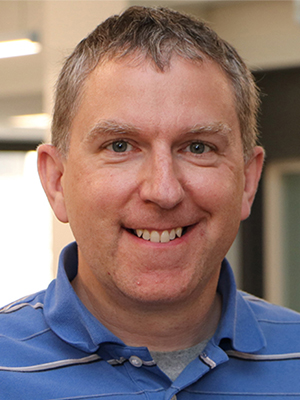
Charles Perin is an Assistant Professor of Computer Science at the University of Victoria, leading the UViz research group. He holds a PhD from Université Paris-Sud (2014) and has held roles including Post-doc at the University of Calgary and Lecturer at City, University of London. His research focuses on information visualization, personal visualization, human-computer interaction, and sports visualization. Education: PhD in Computer Science (2014), Université Paris-Sud; Post-doc at University of Calgary (InnoVis lab); MS and earlier studies in Computer Science and HCI in France. Research interests include designing interactive visualization tools for personal data reflection, health data communication, and sports analytics. He emphasizes authoring tools for non-experts and physical/tangible visualization systems. Recent work explores embedded data physicalizations and mobile visualization design. His articles span topics like data storytelling, patient-generated health visualizations, and soccer data analysis, often appearing in top venues like IEEE VIS, CHI, and Eurovis. He has advised over 20 students across PhD, MSc, and undergraduate levels. Teaching includes courses on Information Visualization and HCI at UVic, City, and other institutions. He co-organized workshops on topics like Personal Visualization and Sports Data at IEEE VIS. His UViz lab collaborates internationally with institutions like Monash University and the National Archives (UK).
Essa Yacoub is a Professor in the Department of Radiology at the University of Minnesota, affiliated with the PhD Program in Medical Physics and the Center for Magnetic Resonance Research. His work focuses on advancing MRI and fMRI technologies, particularly at ultrahigh magnetic fields (e.g., 10.5 T), to achieve unprecedented spatial and temporal resolution in brain imaging. He leads projects in RF coil design, noise reduction algorithms, and developmental neuroimaging. Roles: Professor, Medical Physics Program Faculty Affiliations: Center for Magnetic Resonance Research, Department of Radiology Research emphasizes high-resolution fMRI applications, including layer-specific brain mapping, pediatric neurodevelopment studies (e.g., Baby Connectome Project), and translational tools like BIBSNet for infant brain segmentation. His innovations bridge hardware engineering (RF coils) and software (denoising pipelines) to tackle challenges in mesoscopic-scale imaging. Key contributions include optimizing imaging protocols at 7T/10.5T, developing NORDIC denoising for submillimeter data, and advancing understanding of brain networks in aging and neurological disorders. His work is foundational for large-scale initiatives like the Human Connectome Project and non-human primate neuroimaging collaborations. Grants and collaborations focus on translational imaging technologies, while educational contributions include training through the Medical Physics PhD Program. Ongoing efforts aim to refine ultra-high field MRI applications for clinical and basic neuroscience research.
Lena Simine is an Associate Professor in the Department of Chemistry at McGill University, affiliated with the Faculty of Science. She holds a B.Sc. (2009) and Ph.D. (2015) from the University of Toronto, followed by a postdoctoral fellowship at Rice University (2015–2019). Her laboratory is located in P&P 118A, focusing on developing computational approaches for modeling molecular phenomena in theoretical chemistry and chemical physics. Her research interests center on computational materials design, quantum dynamics, and the application of machine learning to chemistry. Specific areas include simulating amorphous materials, aptamer design, and quantum systems modeling. She teaches CHEM 365 (Statistical Thermodynamics) and CHEM 593 (Statistical Mechanics and Machine Learning for Chemistry). Her work explores interdisciplinary frontiers, such as path-integral simulations, GFlowNets for molecular design, and the physical principles underlying deep learning in materials science. Recent studies highlight innovations like DeltaGzip for binding affinity prediction and the MAP protocol for 3D disordered matter simulations. Her lab’s contributions span computational methods, material innovation, and quantum phenomena, with a focus on advancing both theoretical frameworks and practical applications in chemistry and materials science.
Iris D. Tommelein serves as the Roy W. Carlson Distinguished Professor in the Civil and Environmental Engineering Department at the University of California, Berkeley's College of Engineering, where she directs the Project Production Systems Laboratory (P2SL). A globally recognized pioneer in Lean Construction, she has revolutionized architecture-engineering-construction (AEC) practices through research, industry workshops, and leadership since co-founding the Lean Construction Institute in 1997. Her educational foundation spans multiple disciplines: Ph.D. in Civil Engineering (Construction Engineering and Management), Stanford University, 1989 M.S. in Computer Science (Artificial Intelligence), Stanford University, 1989 M.S. in Civil Engineering (Construction Engineering and Management), Stanford University, 1985 B.S. (5-year degree) in Civil Engineer-Architect, Vrije Universiteit Brussel, Belgium, 1984 Professor Tommelein's research centers on transforming construction processes through Lean principles and digital innovation . Her work pioneers takt planning for workflow reliability, industrialized construction for labor and sustainability challenges, and mistakeproofing to eliminate errors. She integrates digital twins , AI , and optimization to develop practical decision-support systems for supply chains, logistics, and production management. Recent focus includes modular offsite construction and Industry 4.0 applications. Analysis of her 2023-2025 publications reveals intensifying research on takt planning maturity models and industrialized construction feasibility , with growing emphasis on mass timber automation and visual management systems. Her work consistently bridges lean theory with practical implementation across megaprojects, subcontracting networks, and heavy civil engineering. Her exceptional contributions have earned: Lean Pioneer Award (Lean Construction Institute, 2015) National Academy of Construction induction (2019) PPI Technical Achievement Award (2022) Robert B. Harris Award (University of Michigan, 2024) ASCE Construction Management Award (2024) - first woman recipient in 51 years Through the P2SL, she leads industry-collaborative research on production system design, mistakeproofing frameworks, and digital transformation. Her grant-funded projects develop assessment tools for industrialized construction adoption and takt planning methods adaptable to diverse project types. She actively mentors graduate students and drives knowledge transfer via workshops and the annual Construction Innovation Day. The Project Production Systems Laboratory (P2SL) operates as a global hub for construction innovation, partnering with owners, contractors, and suppliers to implement lean production systems. Current initiatives include developing serious games for mistakeproofing training, optimizing work density methods for heavy civil projects, and creating digital twins for real-time construction management.
Joseph P. Romano is a distinguished Professor of Statistics and Economics at Stanford University, where he has been on the faculty since 1986. He holds joint appointments in both the Department of Statistics and the Department of Economics, reflecting his interdisciplinary research that bridges statistical theory with economic applications. Romano has established himself as a leading scholar in mathematical statistics with significant contributions to econometrics, climate science, and multiple testing methodologies. Ph.D. in Statistics, University of California, Berkeley (1986) M.S. in Statistics, University of California, Berkeley (1983) A.B. in Statistics, Princeton University (1982), Summa Cum Laude Romano's research focuses on the theoretical foundations and practical applications of statistical methods, particularly in nonparametric statistics, bootstrap and resampling techniques, and multiple testing procedures. His work addresses the challenges of analyzing massive datasets with complex structures, such as those found in biotechnology, clinical trials, and econometrics. He has developed universal statistical tools applicable across diverse fields including climate science, genetics, finance, and education. His recent work emphasizes methods for multiple testing and multivariate inference driven by the availability of massive datasets, where he tackles issues like unknown dependence structures, heterogeneity, and high dimensionality. Analysis of Romano's recent publications reveals a consistent focus on developing robust statistical methodologies for complex data structures. His work spans theoretical advances in U-statistics with growing dimensions, practical applications in seroprevalence studies, and innovative approaches to ranking inference across various domains. The interdisciplinary nature of his research is evident in publications spanning economics journals, statistics journals, and even behavioral science preprints, demonstrating the broad applicability of his methodological contributions. 2021 LGBTQ+ Scientist of the Year, Out to Innovate Fellow, International Association of Applied Econometrics (2020) Fellow, Institute of Mathematical Statistics Presidential Young Investigator Award, National Science Foundation The Canadian Journal of Statistics Award Romano has mentored dozens of doctoral students throughout his career at Stanford, serving as dissertation advisor, co-advisor, and committee member for numerous PhD candidates in Statistics. His research has been consistently supported by National Science Foundation grants, including recent funding for computer-intensive inference with applications to social sciences (2020-2023) and randomization inference for contemporary statistical problems (2013-2016). He has served in various administrative roles at Stanford including Associate Chairman and Chair of Committee on Faculty Affairs. Beyond his academic pursuits, Romano is actively involved in the 500 Queer Scientists visibility campaign and maintains a balanced life with passions in music (having performed at Carnegie Hall), competitive tennis (ranked nationally in his age group), cooking, and architecture.
Dr. Thilina Halloluwa is a Teaching Focused Lecturer in the Department of Human-Centred Computing at The University of Queensland (UQ). He holds a PhD in Human-Computer Interaction from Queensland University of Technology (2019) and a Computer Science undergraduate degree from the Sri Lanka Institute of Information Technology. With over 15 years of academic and industry experience, his research emphasizes real-world impact in education technology, financial inclusion, smart agriculture, and HCI. Educational Background: PhD in Human-Computer Interaction, Queensland University of Technology (2019) Bachelor of Computer Science, Sri Lanka Institute of Information Technology Research Interests: Education for All: Leveraging technology to enhance collaborative learning and social experiences in education. Human Money Interaction: Designing ethical AI solutions for financial services, particularly for underserved communities. Smart Agro: Developing AI-driven tools for crop disease detection, yield optimization, and precision agriculture. Software Project Estimation: Improving effort estimation accuracy through explainable AI (Metrix project). Key Contributions: Developed UrbanAgro (tomato disease detection) and BellCrop (bell pepper disease datasets). Pioneered Dhana Labha , a financial management tool for rural Sri Lankan communities. Advanced online exam proctoring systems for low-resource settings. Previous Roles: Lecturer at University of Sydney (2023) Senior Lecturer at University of Colombo (2013–2023) Lab/Team Affiliations: Smart Agro Project: AI-driven agricultural solutions Metrix Initiative: Software project estimation frameworks
Pingfu Fu, PhD, is a Professor in the Department of Population and Quantitative Health Sciences at Case Western Reserve University's School of Medicine. He is also a member of the Developmental Therapeutics Program at the Case Comprehensive Cancer Center. His expertise spans biostatistics, mathematics, and computer science, with a focus on cancer research and HIV/AIDS. Dr. Fu advises researchers on study design and statistical methodology for clinical and pre-clinical studies. He teaches courses in survival data analysis and clinical trials, and was recognized as 'Professor of the Year' in 2010 by the Department of Epidemiology and Biostatistics. Education: PhD in Biostatistics (Case Western Reserve University, 2001), MS in Statistics (Case Western Reserve University, 1996), MS in Mathematics (Xiangtan University, 1988), and BS in Mathematics (Jiangxi Normal University, 1984). His research interests include survival analysis, tree-based methods, clinical trials, and statistical applications in medical research. He has co-authored numerous peer-reviewed articles, focusing on cancer disparities, radiomics, and computational pathology. Professional memberships include the American Statistical Association, American Mathematical Society, and American Cancer Society. Dr. Fu holds editorial roles at Reviews on Recent Clinical Trials , Journal of Clinical Oncology , and Journal of the National Cancer Center . His work has addressed mathematical challenges in stochastic processes and resolved statistical issues in study design and tree-based models. Notable contributions include developing risk prediction models for cancer outcomes and advancing interdisciplinary collaborations across oncology, biostatistics, and computer science. His lab focuses on integrating computational methods with clinical data to improve patient outcomes.
Jonathan Hauenstein is the Robert and Sara Lumpkins Collegiate Professor in the Department of Applied and Computational Mathematics and Statistics at the University of Notre Dame, serving as Department Chair. He holds a Ph.D. from Notre Dame (2009) and M.S. from Miami University (2005). His research focuses on numerical algebraic geometry and computational methods for solving nonlinear equations, implemented in the Bertini software package. Applications span engineering, ecology, sports science, and machine learning. Education: Ph.D., Applied and Computational Mathematics, University of Notre Dame (2009) M.S., Mathematics, Miami University (2005) Research Interests: Development of numerical algorithms for polynomial systems, real algebraic geometry, and scientific computing. Key areas include homotopy continuation methods, parameter space decomposition, and applications in mechanism design, ecological modeling, and sports biomechanics. His work bridges theoretical mathematics with practical computational tools. Awards: Sloan Research Fellowship DARPA Young Faculty Award Army Research Office Young Investigator Award Office of Naval Research Young Investigator Award College of Science Research Award Advising & Grants: Advised numerous undergraduates, graduate students, and postdoctoral researchers. Active in securing grants for computational mathematics projects, including NSF-funded initiatives. His work emphasizes interdisciplinary collaboration between mathematics and engineering. Labs/Teams: Leads computational algebraic geometry research groups at Notre Dame, focusing on software development (e.g., Bertini) and numerical methods innovation.
Stephen L. Bearne is a Professor in the Departments of Biochemistry and Molecular Biology and Chemistry at Dalhousie University, affiliated with the Faculty of Medicine. He has been a department member since 1996 and served as Department Head from 2012 to 2022. His research focuses on enzymology, enzyme catalysis, and protein engineering, with a particular emphasis on transition state analogues, enzyme inhibition mechanisms, and the chemical basis of disease-associated enzymes. His work integrates organic synthesis, biophysical techniques, and computational modeling to explore enzyme function and design inhibitors for therapeutic applications. Dr. Bearne holds a PhD from the University of Toronto and an MDCM from McGill University. His lab is part of the Protein Assembly Research Team and the BioActives CREATE Training Program. Current research themes include understanding carbon acid substrate catalysis in mandelate racemase, developing inhibitors for CTP synthase and racemases involved in diseases like cancer and neglected tropical infections, and proteomic tools for enzymatic activity profiling. His research leverages advanced techniques such as site-directed mutagenesis, isothermal titration calorimetry, NMR spectroscopy, and macroion mobility spectrometry. His lab supports equity, diversity, and inclusivity and has been funded by NSERC, CIHR, and other agencies. Recent publications highlight advancements in enzyme inhibition strategies, allosteric regulation mechanisms, and enzyme filamentation roles in metabolic pathways.
Jiri Srba is a Professor at Aalborg University's Department of Computer Science, part of the Technical Faculty of IT and Design. He leads research in the Distributed, Embedded and Intelligent Systems group and contributes to projects like "ControLing wAter In an uRban Environment" and "Collective Adaptive System SynThesIs using Non-zero-sum Games". His office is located at Selma Lagerløfs Vej 300, 9220 Aalborg Øst, Denmark. Contact him at +4599409851 or srba@cs.aau.dk. His core research focuses on formal methods and applied computer science: Model checking and verification of concurrent systems Petri nets and their applications Network protocol verification and synthesis Distributed system correctness Automated reasoning for industrial systems His publication record shows strong emphasis on network verification, model checking optimization, and applying formal methods to environmental systems. Recent work integrates computer science with sustainable engineering, particularly in water management systems and energy control.
Tamon Stephen is a Professor in the Department of Mathematics at Simon Fraser University (SFU), part of the Faculty of Science. His research focuses on operations research, with an emphasis on combinatorial optimization, algorithms, discrete geometry, and computational biology. He holds a Ph.D. in Mathematics from the University of Michigan (2002). His work often bridges theoretical and computational aspects, addressing interdisciplinary applications. Stephen is affiliated with the Centre for Operations Research and Decision Sciences (CORDS) and has contributed to software tools for hypergraph transversals and colorful linear programming. He has taught courses such as Math 208W (Introduction to Operations Research) and has advised projects in metabolic network analysis and scheduling optimization. His office is located at the Surrey campus (SRYC 2886). Key research collaborations include studies on firefighter scheduling, nurse rostering, and metabolic pathway analysis. His methodologies often leverage algorithm design, polytope theory, and discrete mathematics. Stephen actively participates in academic service, organizing seminars and contributing to conferences such as the West Coast Optimization Meeting. His work emphasizes practical applications of theoretical results, with a focus on solving real-world optimization challenges.
Carlisle-Martin is an Associate Department Head and Professor of Practice in the Department of Computer Science & Engineering at Texas A&M University. They also serve as Director of the United States Air Force Academy Center for Cyberspace Research. Their research focuses on computer security, programming languages, and innovative computer science education techniques. Education: Ph.D., Computer Science, Princeton University (1996) B.S., Mathematics and Computer Science, University of Delaware (1991) Research Interests: Malware analysis and detection Cybersecurity frameworks for DNS and network protocols Visual programming tools like RAPTOR for education Ada language modernization and integration Cybersecurity education through CTF competitions Awards: 2016: Meritorious Civilian Service Award (USAF) 2014: SANS Institute Security Award 2009: ACM Distinguished Educator 2008: Colorado Professor of the Year 2007: Arthur S. Flemming Award Advising & Grants: Known for mentoring through cybersecurity initiatives and leading the USAF Academy's cyberspace research programs. No specific grant details listed, but their work aligns with defense and education funding priorities. Labs/Teams: Directs the USAF Academy's Center for Cyberspace Research, focusing on applied cybersecurity solutions and educational outreach.
Alastair F. Donaldson is a Professor and Director of Research in the Department of Computing at Imperial College London, where he leads the FastPL research group. His work bridges formal methods, software testing, and programming languages, with a focus on enhancing the reliability of high-performance and parallel software systems. He has held key roles including Director of Research (since 2023) and previously served as Lecturer (2011–2014), Senior Lecturer (2014–2017), and Reader (2017–2020) before being promoted to Professor in 2020. His research interests include formal verification, compiler testing, GPU programming, concurrency, and fuzzing. He has made significant contributions to the verification of GPU kernels, metamorphic testing of graphics drivers, and the development of tools like GPUVerify and GraphicsFuzz. His work combines theoretical rigor with practical impact, demonstrated by the acquisition of his startup GraphicsFuzz by Google in 2018 and his subsequent roles as Senior Software Engineer and Visiting Researcher at Google. His recent publications reflect a sustained focus on compiler and system reliability, with trends in fuzzing, formal specification, and automated testing of complex systems such as WebGPU, CXL cache coherence, and large language models for code generation. His work increasingly integrates empirical validation with formal techniques to uncover subtle bugs in real-world systems. Scientific awards and recognitions include: 2017 BCS Roger Needham Award EPSRC Early Career Fellowship Fellow of the British Computer Society Best Paper awards at EuroSys 2024, MET 2021, IISWC 2019, IWOCL 2019, and ICST 2016 Best Industry Paper at ICST 2024 ACM SIGSOFT Distinguished Paper at ISSTA 2023 ACM SIGPLAN Most Influential OOPSLA Paper Award (2012 paper), awarded in 2022 Best Student Paper at PPoPP 2014 He has advised numerous PhD students and leads a vibrant research group. He has secured significant research funding and collaborates extensively with industry and academia. His service includes leadership roles such as General Chair of PLDI 2020, PC Chair of ECOOP 2019, and Steering Committee Chair of PLDI (2022–2025). He also serves on the advisory board of PACM-PL and on program committees for top venues including POPL, OOPSLA, PLDI, ICSE, and ISSTA. He leads the FastPL research group, which focuses on the design and implementation of programming tools and techniques for reliable software. The group conducts cutting-edge research in compiler testing, formal methods, and high-performance systems, fostering collaboration across academia and industry.
Katrine Eldegard is a Professor at the Norwegian University of Life Sciences (NMBU), Faculty of Environmental Sciences and Natural Resource Management (MINA), Department of Ecology and Natural Resource Management (INA). She leads BatLab Norway and contributes extensively to national and international conservation science policy. Institution: Norwegian University of Life Sciences School: Faculty of Environmental Sciences and Natural Resource Management Department: Department of Ecology and Natural Resource Management Position: Professor Her research centers on understanding how human activities and land use affect natural ecosystems and species across taxa and spatial scales. She specializes in the behavioral, population, and community-level responses of mammals, birds, and insects to anthropogenic pressures such as energy infrastructure, transport networks, and forestry. A major focus is on bat ecology and conservation, pollination dynamics, and biodiversity monitoring in boreal and agricultural landscapes. Her recent publications reveal strong trends in climate change impacts on bat morphology and distribution, pollinator-plant interactions under environmental change, and the ecological consequences of infrastructure development. These works integrate field ecology with advanced modeling and policy-relevant assessments. She has played leading roles in key scientific committees: Chair, Mammal Committee, Norwegian Red List for Species (2021) Chair, Mammal Committee, Norwegian Alien Species List (2023) Member, Norwegian Scientific Committee for Food and Environment (VKM), CITES Expert Panel Norway’s representative, UNEP/Eurobats Advisory Committee Eldegard has supervised numerous research projects and collaborated with government agencies and private partners on applied ecology. She teaches courses including NATF200 Vern og forvaltning av norsk natur and the upcoming NATF300 Conservation Science. Her work is supported by extensive fieldwork, interdisciplinary collaboration, and integration of ecological theory with practical conservation. She leads BatLab Norway, a research group dedicated to advancing knowledge on bat ecology, behavior, and conservation through innovative methods including telemetry, acoustic monitoring, and landscape analysis.
Immanuel Trummer is a Professor of Computer Science at Cornell University, specializing in database systems, query optimization, and applications of large language models (LLMs) and quantum computing. He leads research projects such as DB-BERT, UDO, and SkinnerDB, focusing on automated database tuning, adaptive query processing, and leveraging LLMs for code synthesis and system optimization. His research interests span quantum computing for database optimization, cost-efficient LLM utilization, and voice-based data exploration. Key contributions include developing systems like CEDAR for claim verification, CodexDB for LLM-driven code generation, and ThalamusDB for multimodal data querying. Trummer has received prestigious awards, including the NSF CAREER Award (2023-2028) and the Best Demonstration Award at BDA 2020. His work has been funded by NSF, Google, Huawei, and others, supporting projects like quantum-index selection and misinformation detection. He advises graduate students in database systems and teaches advanced courses such as CS 6320 (Advanced Database Systems) and CS 7390 (Seminar in Database Systems). His research lab hosts open-source tools like JoinGym and maintains extensive collaborations in industry and academia.