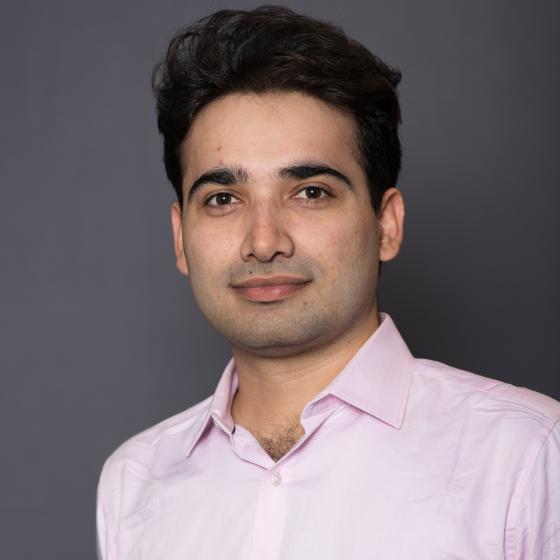
Raaz Dwivedi is Assistant Professor in Operations Research and Information Engineering at Cornell University and Cornell Tech. His research develops statistical and computational methods for personalized decision-making, focusing on causal inference, reinforcement learning, and distribution compression. Recent publications advance kernel thinning techniques, counterfactual inference methods, and adaptive nearest-neighbor algorithms with applications in healthcare and recommendation systems. Research appears in top venues with 15+ publications since 2022. Awards and honors: Blackwell-Rosenbluth Award (2024) ASA Best Student Paper Award (2022) MIT LIDS Best Presentation Award Harvard Teaching Excellence Award FODSI Postdoctoral Fellowship Holds PhD in EECS from UC Berkeley and BTech from IIT Bombay.
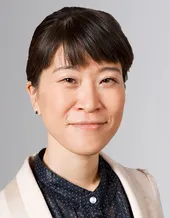
Dongheui Lee is an Assistant Professor at the Institute of Automatic Control Engineering (LSR) within the Faculty of Electrical Engineering and Information Technology at Technische Universität München (TUM). She leads the Dynamic Human Robot Interaction for Automation System Lab. Her research focuses on human motion understanding, physical human-robot interaction, and machine learning in robotics. Education: B.S. and M.S. in Mechanical Engineering from Kyunghee University (2001-2003), PhD in Mechano-Informatics from the University of Tokyo (2007). Prior roles include research scientist at KIST Korea (2001-2004) and project assistant professor at the University of Tokyo (2007-2009). Research Interests: Human-robot collaboration, probabilistic robotics, motion recognition, and incremental lifelong learning mechanisms. She has contributed to advancements in motion primitives, compliant physical interaction, and real-time object tracking. Selected Awards: Finalist for KUKA Service Robotics Best Paper Award (2009), Hirose Scholarship (2006-2007), and multiple grants from KRF, KOSEF, and international robotics competitions. Key Publications: Focus on prioritized inverse kinematics, motion imitation, and adaptive control systems. Her work bridges robotics theory and practical applications in humanoid robots and human-robot interaction.
Professor Theodore Papamarkou is a leading researcher in Bayesian and topological approaches to deep learning, with a focus on healthcare applications. His work addresses scalability challenges in machine learning by integrating Bayesian inference and topological data analysis into deep learning frameworks. He contributes to the UN Sustainable Development Goals through his research in Digital Futures and the Centre for Digital Trust and Society. Key projects include collaborations on financial crime prevention and digital trust. He received the 2023 ECML PKDD best paper award and serves as Editor-in-Chief of ACM Transactions on Probabilistic Machine Learning. His research spans topics like uncertainty quantification, material microstructure analysis, and predictive model interpretability. Professor Papamarkou has contributed to 19 peer-reviewed publications and actively participates in academic activities such as editorial work and conference organization. His interdisciplinary approach bridges computer science, statistics, and healthcare, emphasizing ethical and practical AI applications.
Fabio Nobile is a Full Professor at the École Polytechnique Fédérale de Lausanne (EPFL) in the School of Basic Sciences (SB), Department of Mathematics (MATH), holding the CADMOS Chair in Scientific Computing and Uncertainty Quantification. He leads the CSQI (Chair of Scientific Computing and Uncertainty Quantification) group. His work focuses on numerical methods for partial differential equations (PDEs), uncertainty quantification, stochastic modeling, and computational fluid dynamics. He is involved in collaborative projects involving fluid-structure interaction, cardiac electro-mechanics, and energy systems. Professor Nobile has extensive teaching experience, including courses on advanced analysis, stochastic simulation, and numerical integration of stochastic differential equations. He supervises numerous PhD students and has contributed to over 200 peer-reviewed publications, covering topics such as low-rank approximation methods, multilevel Monte Carlo techniques, and optimal control under uncertainty. His research emphasizes interdisciplinary applications, including biomedical engineering (e.g., personalized cardiac simulations) and renewable energy (e.g., probabilistic load forecasting). He collaborates with industries and academic institutions globally, advancing computational methodologies for engineering and scientific challenges.
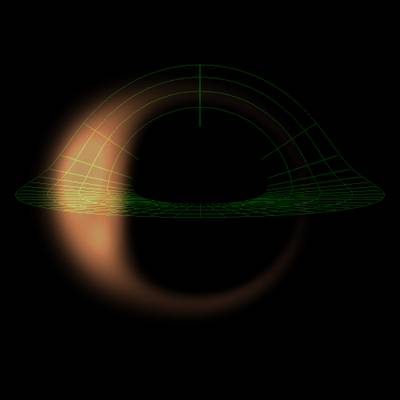
Avery E. Broderick is an Associate Professor in the Department of Physics & Astronomy at the University of Waterloo and an Associate Faculty Member at the Perimeter Institute for Theoretical Physics. His research focuses on theoretical astrophysics, particularly studying compact objects like black holes and testing general relativity through astronomical observations. He is a key member of the Event Horizon Telescope (EHT) collaboration, which produced the first direct images of black hole horizons in M87* and Sagittarius A*. Broderick’s work emphasizes relativistic astrophysical phenomena such as accretion flows, jet formation, and polarization signatures. He collaborates extensively with observational astronomers and computational physicists to model black hole environments using general relativistic magnetohydrodynamic simulations. His recent research includes analyzing EHT data to constrain black hole spin, test spacetime metrics, and study photon ring dynamics. He also explores next-generation EHT (ngEHT) capabilities for higher-resolution imaging and multi-wavelength studies. Broderick has delivered invited lectures globally, including at Harvard-Smithsonian CfA, MIT, and the Aspen Center for Physics, reflecting his leadership in the field. Broderick’s contributions span over 135 refereed publications and conference proceedings, with a focus on black hole astrophysics, VLBI techniques, and relativistic plasma physics. His work bridges theoretical predictions with observational data, advancing our understanding of extreme gravitational regimes in the universe.
James V. Burke is a Professor of Mathematics at the University of Washington with extensive contributions to optimization theory and its applications. His academic career spans several decades, during which he has developed fundamental theories in nonsmooth and convex optimization, variational analysis, and computational methods for complex optimization problems. Research Focus Burke's primary research centers on convex-composite optimization , where he has established critical theoretical foundations and practical algorithms. His work on weak sharp minima has become foundational in optimization theory, providing essential insights into solution stability and error bounds. He has made significant advances in gradient sampling algorithms for nonsmooth, nonconvex optimization problems, which have broad applications in engineering and data science. More recently, Burke has applied optimization techniques to state estimation problems , particularly developing robust Kalman smoothing methods using Student's t-distributions and other non-Gaussian models. His research bridges pure mathematical theory with practical computational methods, demonstrating consistent innovation across multiple subfields of optimization. Academic Contributions Burke has taught numerous graduate-level courses including Math 509 (Optimal Control), Math 554 (Linear Analysis), and specialized courses on convex analysis and optimization. His research collaborations span multiple institutions, with frequent co-authorship with leading optimization researchers such as Tim Hoheisel, Adrian Lewis, and Michael Overton. He regularly presents his work at major conferences including SIAM Optimization and ICCOPT, with his most recent presentation at the SIAM Conference on Optimization in Seattle (June 2023).
Marc Toussaint is Full Professor leading the Learning & Intelligent Systems Lab at TU Berlin's EECS Faculty. His research integrates machine learning, optimization, and AI reasoning to solve fundamental robotics problems like physical reasoning and human-robot interaction. He holds a physics diploma from University of Cologne and PhD from Ruhr-Universität Bochum. Key research themes include: Task-motion planning integration Reinforcement learning for robotics Physical simulation and control Probabilistic inference methods Recent publications focus on efficient kinodynamic planning, belief space planning under uncertainty, and neural policy learning. He develops open-source robotic tools like the 'robotic python package' used in academic courses worldwide. Toussaint collaborates with Amazon Robotics and MIT CSAIL, and has held positions at Max Planck Institute and University of Stuttgart.
Laurence Perreault-Levasseur is an Associate Professor at Université de Montréal and an Associate Member of Mila. She specializes in applying machine learning methods to cosmology, with affiliations at the Flatiron Institute and Perimeter Institute. Her research focuses on gravitational lensing, dark matter, and precision cosmology. She holds a Canada Research Chair in Computational Cosmology and Artificial Intelligence. Education: PhD (University of Cambridge, 2015), M.Sc. and B.Sc. (McGill University). Research Interests: Machine learning for cosmological inference, strong gravitational lensing, galaxy cluster characterization, and dark matter studies. Affiliations: CRAQ (Québec Astrophysics Research Centre), Mila (Quebec AI Institute). Her work includes developing Bayesian methods for inverse problems and neural networks for astrophysical data analysis. Key projects involve precision cosmology via machine learning and reconstructing early-universe conditions using generative models.
Sachin Shanbhag is an Associate Professor in the Department of Scientific Computing and Department of Chemical & Biomedical Engineering at Florida State University (FSU), affiliated with the FAMU-FSU College of Engineering. His research focuses on polymer rheology, complex fluids, and multiscale modeling with applications in biomedical materials and nanotechnology. He holds a PhD in Chemical Engineering from the University of Michigan and a B.Tech from IIT Bombay. Research interests include polymer dynamics, constitutive modeling, and inverse problems. Notable awards include the NSF Early Career Award (2010) and the Petroleum Research Fund New Faculty Award (2006–2008). His work bridges computational methods with experimental data, advancing understanding of polymer networks and viscoelastic behavior. Education: B.Tech, IIT Bombay (1999); PhD, University of Michigan (2004) Affiliations: FSU-FAMU College of Engineering, Department of Scientific Computing Key Projects: Multiscale modeling for tissue engineering, nanotechnology applications, and polymer dynamics His publications emphasize analytical and numerical approaches to rheological challenges, with contributions to software tools like pyReSpect for relaxation spectrum analysis. Current research trends include nonlinear rheology, surrogate modeling, and data assimilation in polymer systems.
Bettina Grün is an Associate Professor and Deputy Head of the Institute for Statistics and Mathematics at Vienna University of Economics and Business (WU). Her research focuses on Bayesian mixture models, cluster analysis, and applying statistical methods to sustainability, tourism, and environmental studies. She has led multiple research projects, including studies on environmental behavior in tourism and advanced text modeling in economics. Grün holds a PhD in Technical Mathematics from TU Wien (2006) and a Habilitation in Statistics from Johannes Kepler University Linz (2012). She has authored over 150 publications in top journals like Journal of Environmental Management and Expert Systems with Applications . Her work emphasizes practical applications, such as reducing hotel waste through behavioral interventions and developing R packages like movMF and circlus for statistical clustering. Grün has received awards including the AIEST Best Contribution Award (2019) and the MRS Silver Medal (2016). Grün teaches courses on statistical modeling and leads projects like Analysis of Central Bank Communication (2022–2026) and Environmentally Friendly Behavior in Tourism (2019–2024).
Julia A. Palacios is an Associate Professor of Statistics and Biomedical Data Science at Stanford University, with a courtesy appointment in Biology. She leads the Palacios Lab, focusing on developing statistical methods for evolutionary genomics, infectious diseases, and stochastic processes impacting public health. Her work integrates Bayesian nonparametric techniques, probabilistic AI, and computational statistics to address challenges in genetics, health, and cancer research. Her educational background includes a PhD in Statistics and postdoctoral research in computational biology. Current lab members include postdocs Bingjing Tang and Isaac Goldstein, PhD students Yi-Ting Tsai, Ivan Specht, Julie Zhang, and Leda Liang, and undergraduate researcher Shinnosuke Yagi. Former postdocs like Airam Blancas and Jaehee Kim have moved to faculty positions at ITAM and Cornell, respectively. Research funding includes NIH, NSF, Sloan Foundation grants, and the Terman Fellowship. Key contributions span phylodynamic modeling, coalescent theory, and real-time pathogen surveillance. Her lab's software tools include phylodyn (R package for phylodynamic inference) and adaPop (Bayesian population dynamics inference). Awards include the Sloan Research Fellowship and Gabilan Fellowship. Teaching roles include courses like Stats 376 and Stats 305A . Her lab actively recruits students and postdocs for research in evolutionary stochastic processes and biomedical data science. Labs/Teams: Palacios Lab at Stanford's Department of Statistics, collaborating with institutions globally on pandemic tracking and genomic studies. Current projects focus on multifurcating trees in infectious diseases, Bayesian nonparametric coalescent models, and computational tools for public health.
Bruno Olshausen is a Professor at the University of California, Berkeley, holding appointments in the Helen Wills Neuroscience Institute and the School of Optometry. He also directs the Redwood Center for Theoretical Neuroscience, focusing on mathematical and computational models of brain function. His research explores visual system processing, sparse coding, and neural mechanisms underlying perception. Olshausen earned his B.S. and M.S. in Electrical Engineering from Stanford University and a Ph.D. in Computation and Neural Systems from Caltech. Previously, he was on the faculty at UC Davis (1996–2005) before joining UC Berkeley. Education : Ph.D. in Computation and Neural Systems, California Institute of Technology, 1994 M.S. in Electrical Engineering, Stanford University, 1987 B.S. in Electrical Engineering, Stanford University, 1986 Research Interests : Olshausen's work bridges neuroscience and computer science, emphasizing the development of computational models for understanding visual processing, sparse coding, and neural representation. His lab explores topics such as optic flow analysis, hierarchical scene representation, and neuromorphic systems. Key themes include the study of neural circuits, probabilistic models of perception, and the application of these insights to AI and data compression. Grants & Labs : Director of the Redwood Center for Theoretical Neuroscience Recipient of grants in computational neuroscience and neuromorphic engineering Labs/Teams : His research group collaborates on projects involving neural network models, analog computing with emerging memory systems, and hyperdimensional computing architectures.
Sivan Sabato is an Associate Professor at McMaster University's Department of Computing and Software , a Canada CIFAR AI Chair, and faculty member at the Vector Institute of Artificial Intelligence . She holds a joint appointment at Ben-Gurion University's Department of Computer Science while on leave. Her research focuses on machine learning theory, active learning algorithms , and fairness in machine learning . Education: PhD in Computer Science, Hebrew University of Jerusalem Postdoctoral Fellowship, Microsoft Research New England Her theoretical work develops interactive learning frameworks that optimize information costs through algorithmic interaction patterns. Recent publications emphasize differential privacy and discriminative feature analysis with applications to healthcare and social data. She serves as Action Editor for Journal of Machine Learning Research and organizes conference tracks including ICML 2022-2023 and ALT 2021 . Awards include the Alon Scholarship and Google Anita Borg Memorial Scholarship . Advising: Actively supervises Computer Science PhD and MSc students through McMaster's Faculty of Engineering. Research interns can apply via the Vector Institute program with Summer 2026 opportunities.
Rong Chen is a Distinguished Professor and Chair of the Department of Statistics at Rutgers University, within the School of Arts and Sciences. With a Ph.D. from Carnegie Mellon University, Professor Chen has established himself as a leading researcher in statistical time series analysis, Monte Carlo methods, and their applications across various fields. Professor Chen's research focuses on: Nonlinear and Multivariate Time Series Analysis Monte Carlo Methods, Statistical Computing and Bayesian Analysis Statistical Applications in Science, Engineering and Business His research trajectory has evolved significantly over the years, beginning with foundational work on nonlinear time series and moving toward more complex high-dimensional tensor time series analysis. Recent publications show a strong emphasis on matrix and tensor factor models for high-dimensional time series, reflecting the growing importance of analyzing complex structured data in modern applications. His work bridges theoretical statistical innovation with practical problem-solving across finance, engineering, and computational biology. Professor Chen has been recognized for his contributions to the field with prestigious fellowships: ASA Fellow (American Statistical Association) IMS Fellow (Institute of Mathematical Statistics) As Chair of the Department of Statistics, Professor Chen oversees academic programs including the Master in Financial Statistics and Risk Management (FSRM) and the Master in Data Science (Statistics Track) programs. His leadership extends to guiding research directions in the department and fostering collaborations across disciplines. Professor Chen has secured numerous research grants supporting work in time series analysis, statistical computing, and applications in finance, engineering, and bioinformatics. Professor Chen's research group maintains active collaborations with researchers in finance, engineering, and computational biology, applying statistical innovations to real-world problems including financial time series analysis, protein folding studies, HIV infection dynamics modeling, wind power forecasting, and nuclear material detection systems.
Associate Professor Christopher Wensrich is a faculty member in the School of Engineering at the University of Newcastle, Australia, specializing in Mechanical Engineering. He has a strong background in applied mechanics from both computational and experimental perspectives, with significant expertise in granular mechanics, neutron diffraction strain measurement, and Bragg-edge transmission strain tomography. Education: PhD, University of Newcastle Bachelor of Mathematics, University of Newcastle Bachelor of Engineering, University of Newcastle Professor Wensrich's research focuses on several interconnected areas within mechanical engineering and materials science. His primary expertise lies in granular mechanics, spanning from micromechanics and homogenization of granular systems to analytical modeling of granular dynamics (particularly the silo quaking problem) and computational modeling using the Discrete Element Method (DEM). He is also a pioneer in applying neutron diffraction strain scanning techniques to granular systems. In the broader field of applied mechanics, he has made significant contributions to neutron diffraction-based strain measurement, including breakthroughs in Bragg-edge Transmission Strain Tomography, where he demonstrated the world's first practical application outside of simple axisymmetric systems. His publication record demonstrates a consistent focus on developing and applying advanced techniques for strain measurement and reconstruction in granular and composite materials. His recent work has centered on tomographic reconstruction methods using neutron diffraction, with particular emphasis on Bragg-edge techniques for 2D and 3D strain field reconstruction. His research bridges theoretical mathematics, computational methods, and experimental validation, creating a robust framework for non-destructive stress measurement in complex materials. Professional Recognition: President of the Australian Neutron Beam User Group (ANBUG) since December 2022 Member of the ACNS Program Advisory Team at ANSTO (Australian Nuclear Science and Technology Organisation) since March 2019 Visiting Fellow at Clare Hall College, Cambridge University (January-June 2023) Visiting Researcher at Isaac Newton Institute for Mathematical Sciences (January-June 2023) Professor Wensrich has secured substantial research funding, with a total of $5,478,793 across 42 grants. His funding portfolio includes projects from the Australian Research Council (ARC), ANSTO, and international partners like Oakridge National Laboratory and Japan Proton Accelerator Research Complex. He has successfully supervised 11 PhD and Masters students to completion, with research topics spanning granular mechanics, conveyor systems, and neutron strain tomography. His current research involves collaborations with institutions worldwide, focusing on advanced strain measurement techniques and their application to complex material systems.