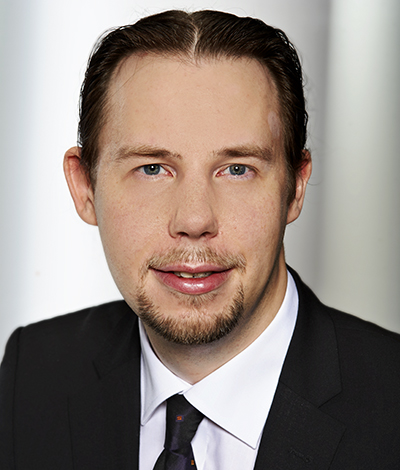
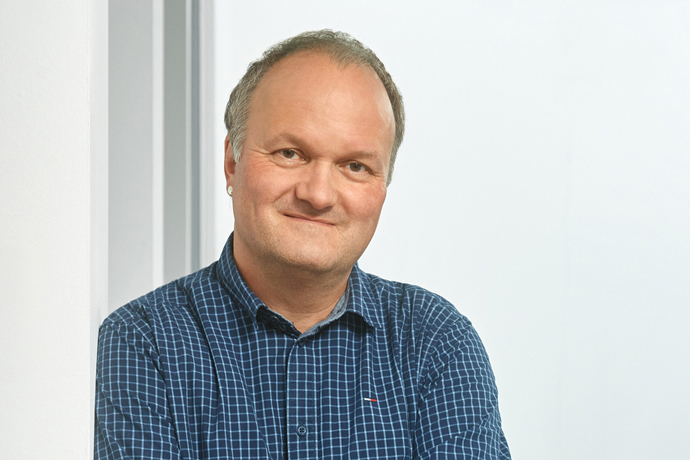
Professor Bernd Möbius is a leading academic in Phonetics and Phonology at the Department of Language Science and Technology, Saarland University. His research bridges phonetic theory with speech technology applications, focusing on text-to-speech systems, prosody modeling, and computational simulations of speech processes. Current research projects: DFG SFB 1102, C1: Information density and phonetic structure predictability DFG SFB 1102, C4: Slavic intercomprehension and surprisal theory (INCOMSLAV) Research Themes: Key areas include text-to-speech synthesis, speech prosody analysis, experimental methods in speech production/perception, information density in phonetics, and cross-linguistic studies of Slavic-Germanic languages. Scientific Contributions: Recent work explores Parkinson-induced dysarthria detection, breath noise acoustics, surprisal-driven speech behaviors, multilingual BERT models for idiomaticity, and perceptual consequences of acoustic adjustments.
Andreas Rietbrock is Professor and Director of the Geophysical Institute (GPI) at the Karlsruhe Institute of Technology (KIT) , Germany, where he also serves as Dean of Studies for Geophysics . He is a leading expert in earthquake seismology, seismic tomography, and subduction zone dynamics, with a strong focus on integrating advanced observational techniques and computational methods. Education: While specific degrees are not listed in the provided text, his extensive publication record and leadership roles indicate advanced academic training in geophysics and seismology. Research Interests: His work spans a wide range of topics including: Seismic imaging of subduction zones (e.g., Nazca, Lesser Antilles) Earthquake rupture dynamics and fault mechanics Volcanic seismology and magma transport Full waveform inversion and AI-enhanced seismic analysis Distributed Acoustic Sensing (DAS) applications Induced seismicity and reservoir monitoring Research Trends: His recent publications (2022–2025) emphasize the use of dense seismic arrays, AI-based data processing, and multi-method tomography to study complex tectonic environments. Key themes include high-resolution imaging of slab structures, fluid migration in subduction zones, and the integration of DAS and machine learning for seismic monitoring. Scientific Contributions: Andreas has led major international projects such as the ANTICS Large-N deployment in Albania and the VoiLA project in the Lesser Antilles. He has published extensively in top-tier journals like Nature , Geophysical Research Letters , and Journal of Geophysical Research , with over 200 peer-reviewed articles. Teaching and Supervision: He teaches courses such as "Introduction to Geophysics II", "Seismology", and "Current Topics in Seismology and Risk". While specific student names are not listed, his role as Dean and principal investigator on numerous projects indicates active supervision of graduate students and postdocs. Labs and Teams: He leads the seismology group at GPI, coordinating large-scale deployments of seismic instruments, including ocean-bottom seismometers and fiber-optic DAS systems. His team collaborates globally with institutions in Europe, South America, and Asia.
Prof. Dr. Steffen Marburg is a Full Professor at the Chair of Acoustics of Mobile Systems within the TUM School of Engineering and Design at the Technical University of Munich. His research focuses on numerical methods in vibroacoustics, structural optimization, and acoustic modeling for applications in automotive, maritime, and musical instrument domains. Education: PhD from Technical University of Dresden (1998). Academic Career: Junior Professor at TU Dresden (2004), Chair of Technical Dynamics at University of the Federal Armed Forces Munich (2010), Full Professor at TUM (2015–present). Editorial Roles: Co-Editor-in-Chief of Journal of Theoretical and Computational Acoustics, Associate Editor of Journal of the Acoustical Society of America, Editor of Acoustics Australia and Mechanical Systems and Signal Processing. His research integrates computational acoustics, boundary element methods, and machine learning to address noise control and structural optimization challenges. Recent work explores acoustic metamaterials, viscothermal losses, and data-driven modeling. He has co-authored over 150 publications and led advancements in multifrequency solution methods and noise-insulating structures. Scientific awards include the Innovation Award of the Industrieclub Sachsen e.V. (1999). His editorial contributions and leadership in journals highlight his influence in computational acoustics and structural dynamics.
Prof. Dr. Mirko Hornung is a Professor of Aircraft Design at the TUM School of Engineering and Design, Technische Universität München. His research focuses on conceptual aircraft design, integration of propulsion systems, and evaluation of aviation technologies in operational contexts. Education and Career: PhD in Aeronautical Engineering from the University of the Bundeswehr (2003), awarded a research prize for work on reusable space transport systems. 2003–2009: Worked at Airbus Group (EADS) on military air systems, propulsion integration, and program management. Executive Director of Research & Technology at Bauhaus Luftfahrt, a think tank for long-term aviation developments. Research Interests: Aircraft design optimization, including hybrid energy systems, electric propulsion, and UAV technologies. Environmental sustainability in aviation, such as hydrogen-powered aircraft and lifecycle assessment. Aerodynamic and structural analysis, including flutter suppression and composite materials. Key Publications Highlight Trends: Focus on hybrid-electric and hydrogen propulsion for reducing environmental impact. Advancements in UAV design, including morphing wings and autonomous systems. Integration of AI-driven tools for propulsion optimization and lifecycle analysis. Scientific Awards: EADS Promotion Award (1995) Research Prize for Thesis on Reusable Space Transport Systems (2003) Advising & Grants: Directs research at Bauhaus Luftfahrt, collaborating on future aviation concepts. Engaged in interdisciplinary projects like FLEXOP UAV demonstrator and Ce-Liner eMobility studies. Labs/Teams: Active in the Aircraft Design Professorship at TUM and leadership roles at Bauhaus Luftfahrt, focusing on next-generation aviation technologies.
Bistra Andreeva is a full Professor of Phonetics and Phonology at Saarland University, Department of Language Science and Technology. She is also a principal investigator of the DFG-funded project “Judeo-Spanish in Bulgaria: a contact language between archaism and innovation” (2022-2025) and leads or co-leads several other externally funded projects on prosody, information structure, and language contact. She teaches and has taught at Saarland University, Sofia University “St. Kliment Ohridski”, and other European universities. Education & Academic Background Habilitation (kumulative Habilitationsschrift): “Contrastive Prosody: Bulgarian vs. German”, Saarland University, 2016. PhD (Dr. phil.): “Zur Phonetik und Phonologie der Intonation der Sofioter-Varietät des Bulgarischen”, Saarland University, 2007. Research Interests Andreeva’s research focuses on the phonetics and phonology of intonation and rhythm, cross-language and individual differences in the production and perception of syllabic prominence, the relation between intonation and information structure, minority languages (especially Judeo-Spanish in Bulgaria), and the interaction between information density and prosodic structure. Her methodological expertise includes experimental phonetics, corpus-based studies, and acoustic analysis. Major Projects SFB 1102 C1: “Information Density and the Predictability of Phonetic Structure” (DFG, 2014-2026) JuSpa: “Judeo-Spanish in Bulgaria: a contact language between archaism and innovation” (DFG, 2022-2025) Prosodic aspects of Bulgarian compared to other languages with lexical stress (Bulgarian National Science Fund, 2019-2024) Prosodic manifestations of focus in French and English from a Bulgarian point of view (DAAD & Sofia University, 2021-2023) Scientific Awards & Recognition While no major named prizes are listed, Andreeva’s work has been continuously supported by competitive grants from the German Research Foundation (DFG), DAAD, and Bulgarian National Science Fund. Her publications appear in top-tier journals and conference proceedings (Journal of the Acoustical Society of America, Interspeech, Speech Prosody, International Congress of Phonetic Sciences). Teaching & Supervision She offers a broad spectrum of courses including Experimental Phonetics, Prosody, Phonetics & Phonology of Slavic Languages, Introduction to Instrumental Phonetics, and seminars on language contact. She has supervised numerous BA, MA, and PhD theses and regularly teaches at the PhD School of Sofia University. Labs & Teams She is affiliated with the Phonetics Laboratory at Saarland University and collaborates closely with the Institute for Bulgarian Language (Bulgarian Academy of Sciences), working in interdisciplinary teams involving phoneticians, computational linguists, and field linguists.
Prof. Dr.-Ing. Erwin Biebl is a Professor in the Chair of High Frequency Engineering at the Technical University of Munich (TUM). His research focuses on high-frequency technology, automotive radar systems, and microwave communication. He has held academic positions since 1999 and has extensive industry experience at Rohde & Schwarz. His work includes developing sensors and communication systems for automotive safety and environment detection. Education: Studied electrical engineering at TUM, earned his doctorate (1991) and habilitation (1994) in high-frequency engineering. Professional Memberships: Senior Member of IEEE, Member of URSI Commission B, and liaison officer for the Hanns Seidel Foundation. Research Interests: Automotive radar systems, antenna design, millimeter-wave measurements, and sensor technology. His contributions include advancements in synthetic aperture radar and inductive compensation techniques for automotive radomes. Awards: Recognized for his teaching (2002 Lecturer Award) and research, including the Dr. Georg Spinner High Frequency Prize (1992). Supervised teams in competitions such as the 2009 International Collegiate Student Safety Technology Design Competition. Labs/Teams: Leads the Chair of High Frequency Engineering at TUM, focusing on interdisciplinary research in high-frequency systems and automotive applications.
Max Planck Institute of Colloids and InterfacesGermany
Shrikanth (Shri) Narayanan is University Professor and Niki & C. L. Max Nikias Chair in Engineering at the University of Southern California (USC), with appointments spanning Electrical & Computer Engineering, Computer Science, Linguistics, Psychology, Neuroscience, Pediatrics, and Otolaryngology-Head & Neck Surgery. He serves as Research Director of the Information Sciences Institute and Director of the Ming Hsieh Institute. PhD in Electrical Engineering (UCLA, 1995) Engineer and MS in Electrical Engineering (UCLA, 1992 and 1990) BE in Electrical Engineering (Anna University, India, 1988) His interdisciplinary research focuses on human-centered signal processing and machine intelligence , addressing societal challenges in health, education, defense, and media arts. Key areas include: Behavioral signal processing Affective computing Multimodal signal processing Computational speech science Biomedical applications Scientific Awards : IEEE James L. Flanagan Speech and Audio Processing Award (2025) Edward J. McCluskey Technical Achievement Award (2024) ISCA Medal for Scientific Achievement (2023) Claude Shannon-Harry Nyquist Technical Achievement Award (2023) ACM ICMI Sustained Accomplishment Award (2020) USC Distinguished Faculty Service Award With over 1,000 publications and 19 patents , his work has been commercialized through startups like Behavioral Signals Technologies and Lyssn . He leads transformative university initiatives and has served in editorial roles for top journals including Computer Speech and Language and IEEE Transactions on Affective Computing .
Gerd Bruder is an Associate Professor at the University of Central Florida , affiliated with the Department of Computer Science . He previously held positions as a Research Associate Professor at UCF's Institute for Simulation and Training (2016-2022), Post-Doc at University of Hamburg (2014-2016), and Post-Doc at University of Würzburg (2011-2014). Habilitation : Computer Science, University of Hamburg (2017) Ph.D. : Computer Science, University of Münster (2011) M.Sc. : Computer Science (minor in Mathematics), University of Münster (2009) Research Interests : Gerd Bruder's work focuses on Extended Reality (XR) systems, spanning Virtual Reality (VR) , Augmented Reality (AR) , and Mixed Reality (MR) . Key areas include human factors , digital twins , 3D user interfaces , and perceptual modeling , with applications in healthcare, military operations, architecture, and smart environments. Recent Publications highlight innovations in XR locomotion , trust calibration with autonomous agents, spatial cognition , and haptic-visual integration . His 2025 articles address task-switching efficiency in XR and collaborative mixed reality design. Scientific Awards : Best Paper at ACM VRST 2023 2021 TechConnect Innovation Award Best Demo at ACM SUI 2021 Multiple Best Paper Awards (2016-2023) Best Poster & Demo Awards (2015-2020) Patents include systems for medical simulation , smart environment interruption management , and adaptive AR interfaces . His work bridges academic research and practical applications across VR, AR, and MR domains.
Prof. Dr. Patrick Huber is a leading physicist and Institute Director at the Hamburg University of Technology (TUHH) , heading the Institute for Materials and X-Ray Physics (M-2) . He also leads the High-Resolution X-Ray Analytics of Materials group at DESY through a cooperative professorship. His research spans condensed matter physics , nanoporous materials , and X-ray analytics , with significant contributions to molecular water science and soft matter in confinement . Education: PhD in Physics (1999, Saarland University), Diploma in Physics (1995, Saarland University) Professional Career: Full Professor at TUHH (2020-present), Member of CRC 1615 (2023-present), Spokesperson for CMWS (2024-present), Cluster of Excellence BlueMat (2025) Research Interests focus on multi-scale material behavior under extreme confinement, particularly hierarchical porous silicon and silica systems . His work examines adsorption-induced deformation , elastocapillarity , fluid transport in nanopores, and metamaterial design principles using electrolytes , polymers , and liquid crystals . Fundamental studies include fluid interface thermodynamics and microscopic hydrodynamics . Scientific Awards include the Top Reviewer Award (2018) from Applied Physics Letters and the Dr.-Eduard-Martin Award (2000) for his dissertation. He contributes to 130+ publications with an h-index of 36 (2021). Advising and Grants involve supervising 18 doctoral and master's students , including Manuel Brinker , Marc Thelen , and Stella Gries . He participates in Collaborative Research Centre CRC 1615 , Cluster of Excellence EXC 3120 BlueMat , and the United Nations University Hub on Climate Engineering . Laboratory and Teams include the Institute for Materials and X-Ray Physics (M-2) at TUHH, the High-Resolution X-Ray Analytics group at DESY, and contributions to the Centre for Hybrid Nanostructures (CHyN) .
Prof. Dr. Martin Kronbichler is a faculty member at the Faculty of Mathematics , Ruhr University Bochum , leading the Numerics group. His research focuses on higher-order finite element methods, multigrid techniques, and high-performance computing for complex fluid and solid mechanics problems. Key Research Areas: Higher-order finite element methods, iterative solvers, multigrid algorithms, exascale mathematical software, and computational fluid dynamics. Notable Projects: EU-funded dealii-X (exascale digital twins), BMBF PDExa (optimized PDE solvers for exascale), and DFG grants for cut-discontinuous Galerkin methods and geometric multigrid. Publications Trends: Recent works emphasize matrix-free operators for hyperelasticity, diffuse-interface models for additive manufacturing, and multigrid smoothers for higher-order elements. Scientific Awards: Recipient of the Humboldt Research Award for his contributions to numerical methods and HPC. Team: Collaborates with researchers like Dr. Shubham Kumar Goswami, Dr. Richard Schussnig, and Natalia Nebulishvili.
Fabian Fritz holds an M.Sc. degree and works at the Technical University of Munich (TUM) within the Chair of Aerodynamics and Fluid Mechanics . His research focuses on computational fluid dynamics (CFD) and numerical simulation of multiphase flows, particularly using Smoothed Particle Hydrodynamics (SPH) . He collaborates on projects like PBF-LB/M (additive manufacturing) and contributes to Lagrangian fluid mechanics benchmarking frameworks. Research Trends: His publications emphasize numerical methods (SPH, level-set, finite-volume), multiphase flow modeling , heat transfer , and thermoacoustic stability . Recent work includes hardware-agnostic code optimization and adaptive mesh refinement techniques. Education: Completed a master’s thesis on Diffusive-Interface Modeling of Multiphase Flows with Surface-Tension Effects , supervised by P.D. Dr.-Ing. habil. Stefan Adami.
Prof. Dr.-Ing. Ahmad Osman is a Professor at the Saarland University of Applied Sciences (htw saar), specializing in Test Technologies and Test Methods within the Faculty of Engineering. He also holds an Adjunct Professor position at Laval University in Quebec, Canada, in the Department of Electrical Engineering and Computer Science. His research focuses on Artificial Intelligence applications in Signal and Image Processing for Non-destructive Testing (NDT) , with extensive work on Deep Learning , 3D Ultrasound Tomography , and Sensor Data Fusion in industrial contexts. Engineering Artificial Intelligence Signal Processing Image Processing Non-destructive Testing Quality Control Augmented Reality Osman leads the AutomaTiQ research group and serves as Head of the Algorithms/Signal and Data Processing Department at Fraunhofer IZFP . His recent publications (2017–2022) emphasize Deep Learning for defect detection in CFRP , Terahertz Imaging for artwork diagnostics, and Acoustic Sensors for agricultural quality control. He has organized international conferences on Structural Health Monitoring and contributed to Springer books on NDT technologies. His projects include ComforTex-AI (2024) and development of 3D positioners for ultrasound measurements. Collaborations span institutions in Germany, Canada, Italy, and Brazil, with advisory roles in the German Society for NDT and technical committees for conferences in Montreal and Egypt.
Sebastian Möller is a Professor at the Faculty for Electrical Engineering and Computer Science at Technical University of Berlin and leads the Speech and Language Technology research department at the German Research Center for Artificial Intelligence (DFKI) since 2017. His work bridges speech technology, natural language processing, and quality engineering, with a focus on usable security, virtual reality applications, and ethical AI. Born in 1968, studied electrical engineering at Ruhr University Bochum, Université d'Orléans, and University of Bologna Doctorate in 1999 from Ruhr University Bochum on speech quality prediction Adjunct Professor at University of Technology Sydney since 2018 His research spans speech signal processing, quality assessment of AI systems, and ethical challenges in medical AI applications. Recent work includes fairness in clinical AI decision-making, audio deepfake detection using self-supervised learning, and collaborative approaches to natural language explanation generation. All three 2025 publications reflect his focus on AI quality assessment and ethical implementation across domains: medical AI fairness, audio deepfake detection, and collaborative explanation frameworks. These works demonstrate expertise in natural language processing, speech technology, and model interpretability. Johann-Philipp-Reis-Prize (2009) Heisenberg Scholarship (2005) Lothar Cremer Prize (2003) VDE ITG Prize (2001) Geers Foundation award (1998) Möller has held leadership roles at TU Berlin including Vice Dean for Research (2015-2017) and Dean (2017-2019). He contributes to international standardization through ITU-T (since 1997) and has served in key positions at DEGA, VDE, and ISCA, including ISCA presidency (2021-2023).
Prof. Torsten Wolfgang Kuhlen serves as a Universitätsprofessor at RWTH Aachen University, leading the Teaching and Research Area for Virtual Reality and Immersive Visualization within the Department of Computer Science. He is affiliated with Chair of Computer Science 12 (High Performance Computing), the Visual Computing Institute, and remains an integral part of the RWTH IT Center where his research group operates one of the world's largest Virtual Reality laboratories including the 30 sqm aixCAVE visualization chamber. The group maintains strong connections with Computational Science & Engineering Division, National High Performance Computing Center for Computational Engineering Science (NHR4CES), and VR in Science and Industry Network NRW e.V. Prof. Kuhlen's research spans virtual reality, immersive visualization, and multimodal 3D user interfaces with applications across simulation science, production technology, neuroscience, and medicine. His work combines basic research on advanced methods and algorithms with interdisciplinary collaborations involving RWTH Aachen institutes, Forschungszentrum Jülich, and industry partners. Recent publications demonstrate strong focus on audiovisual perception, immersive analytics, collaborative virtual environments, and practical VR applications in education and manufacturing. His research group has produced significant work on listening effort in virtual environments, immersive authoring techniques, and VR applications for scientific visualization. Notable projects include VRScenarioBuilder for automated vehicle testing and applications in monitoring additive manufacturing processes. The group actively participates in major conferences including IEEE VIS and EuroVis, with several award-winning contributions. Prof. Kuhlen has advised PhD students including Martin Bellgardt who recently completed his doctoral degree on "Increasing Immersion in Machine Learning Pipelines for Mechanical Engineering". The research group maintains state-of-the-art VR infrastructure including the aixCAVE facility which is open to all RWTH research groups.
Prof. Dr.-Ing. Elisabeth Clausen is a Professor and Director of the Chair and Institute for Advanced Mining Technologies at RWTH Aachen University. She holds key roles in the Specialist Group for Raw Materials and Disposal Technology, serves as a rectorate representative, and leads the Commission for EU Research Funding. Her research spans Underground mining automation Acoustic emission diagnostics Sustainable mining systems Space resource extraction Advanced sensor technologies Her recent publications focus on autonomous mining machinery, underground communication systems, and acoustic emission analysis across 15+ studies from 2013–2025, with particular emphasis on Ultra-wideband positioning Thermographic detection Crack monitoring in planetary gearboxes Explosive atmosphere safety Mineral processing diagnostics Digitalization trends Prof. Clausen contributes to mining education reform through initiatives like CDIO™ and has developed innovative learning spaces in underground mines. She coordinates international educational labs and integrates sustainability into mining engineering curricula, with publications on Adaptive ventilation systems Mining education frameworks Future-proof mineral extraction Entrepreneurial mindset in engineering