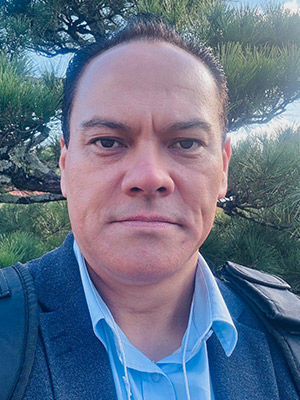
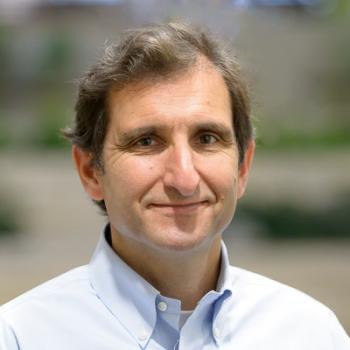
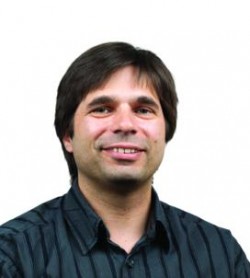
Professor Takachi Tomita is a Professor of Practice in Aerospace Engineering at Texas A&M University, located in HRBB 604. His research focuses on compressible flows, gas turbines, aerospace propulsion systems, computational fluid dynamics (CFD), numerical methods, and turbomachinery design. He holds a Ph.D. in Mechanical-Aeronautical Engineering from the Aeronautics Institute of Technology (2009), an M.S. from the same institution (2003), and a B.S. in Mechanical Engineering from the Industrial Engineering College (2000). Education: Ph.D., Mechanical-Aeronautical Engineering, Aeronautics Institute of Technology (2009) M.S., Mechanical-Aeronautical Engineering, Aeronautics Institute of Technology (2003) B.S., Mechanical Engineering, Industrial Engineering College (2000) His research emphasizes advanced CFD techniques, turbulence modeling, and optimization of gas turbine and rocket engine components. Recent work explores evaporative cooling systems, offshore gas turbine control, and high-performance axial compressor designs. He has contributed to parametric studies of turbine tip geometries in rocket engine systems and developed novel computational tools for thermal power plant analysis. No scientific awards or grants are explicitly listed in the provided text. No advisees/students are mentioned in this profile. His work is primarily centered on experimental and computational studies in aerospace propulsion and turbomachinery.
Dr. Ahmad Mojiri is a Senior Research Fellow in Sustainability at RMIT University's Research & Innovation Capability department. His research focuses on thermal energy storage systems, renewable energy integration, and sustainable cooling technologies. He specializes in optimizing thermal storage materials and systems for applications like data centers, residential energy systems, and industrial processes. Mojiri has supervised multiple projects addressing thermal management challenges, including improving phase change material performance and developing hybrid solar-thermal systems. His work spans experimental investigations into high-temperature storage using recycled materials and theoretical modeling of heat transfer dynamics in scroll compressors. Key research interests include solar energy conversion, optical physics, and interdisciplinary engineering solutions for energy efficiency. Mojiri has contributed to over 20 peer-reviewed articles since 2014, focusing on thermal storage innovation and sustainable energy systems design. Current supervision topics include thermal conductivity enhancement of PCMs, spray-cooled data center cooling, and green hydrogen generation thermal management. He collaborates extensively on projects aiming to decarbonize energy systems through advanced thermal storage and renewable integration strategies.
Professor Ahmed Kovacevic is a leading academic at City, University of London, where he holds the Howden / Royal Academy of Engineering Research Chair in Compressor Technology. He is based in the Department of Mechanical Engineering within the School of Science and Technology, and serves as Director of the Centre for Compressor Technology, a key component of the Thermo-Fluids Research Centre. He has been affiliated with City University since 1998, progressing from Research Fellow to Professor and Chair, and maintains strong industrial partnerships with Howden Compressors Ltd and the Royal Academy of Engineering. Education: PhD in Mechanical Engineering, City University London (1998–2002) MSc in Mechanical Engineering, University of Tuzla, Bosnia and Herzegovina (1995–1997) Dipl Ing in Mechanical Engineering, University of Sarajevo, Bosnia and Herzegovina (1981–1986) Professor Kovacevic’s research centers on compressor and screw machine technology, with a focus on high-fidelity computational modeling, design optimization, and performance analysis of positive displacement machines. His work integrates advanced CFD simulations, thermodynamic modeling, and experimental validation to improve the efficiency, reliability, and environmental impact of screw compressors and expanders. He is particularly known for his contributions to oil-free compression, multiphase flow modeling, and rotor profile optimization. His research often bridges academic theory with industrial applications, especially in energy recovery systems such as Organic Rankine Cycles. The recent trend in his publications shows a strong emphasis on numerical modeling, experimental validation, and optimization of rotary machines, particularly using CFD and machine learning techniques. His work spans leakage flow analysis, conjugate heat transfer, real gas effects, and oil injection dynamics in screw machines. He frequently collaborates with industry and co-authors with researchers from institutions worldwide, maintaining a high impact in mechanical and thermo-fluids engineering. Scientific Awards and Honors: James Clayton Prize (IMechE, 2020) Howden / Royal Academy of Engineering Research Chair (2020) Donald Julius Groen Prize (2016) IMechE Ludwig Mond Prize (2012) IMechE Moss Prize (2011) Geothermal Resources Council Best Paper (2007, 2004) City University President’s Award for Teaching (2017) Professor Kovacevic has supervised numerous PhD students, including Brijeshkumar Patel, Yang Lu, and Nausheen Basha, on topics ranging from leakage flows to rotor design. He has led significant research grants such as the EPSRC-funded NextORC project on ORC expanders. He is actively involved in professional service, including as Co-Editor of the Journal of Process Mechanical Engineering, Chair of the Design Education Special Interest Group, and board member of the IMechE Fluid Machinery Group. He is the initial author of the SCORG software, widely used in the compressor industry, and serves as Director of PDM Analysis Ltd, a spin-out company from City, University of London. His work in engineering design education and international collaboration further demonstrates his leadership in both research and academic development.
Dr. Tala El Samad MBE is a Lecturer in Thermo-Fluids for Energy Systems at City St George's, University of London, and Programme Director for the Energy and Environmental Technology and Economics (EETE) MSc. She is affiliated with the Turbomachinery and Energy Systems Research Group, focusing on energy efficiency, turbomachinery design for non-ideal fluids, and waste heat recovery systems. Her work spans supercritical CO₂ power cycles, organic Rankine systems, and heat pumps. Dr. El Samad holds a PhD in Energy from Cranfield University (2020), an MSc in Mechanical Engineering from Khalifa University (2016), and a BSc in Mechanical Engineering from the University of Balamand (2014). She has held academic and research roles at City, University of London since 2020, including post-doctoral and lecturing positions. Her research integrates experimental studies, numerical simulations, and social-impact projects, particularly in bioenergy and waste valorization. She leads EU-funded and UKRI projects on energy systems, with a focus on sustainable technologies. Teaching modules include Renewable Energy and Sustainability, and Thermodynamics. Awards include the MBE for services to education and energy innovation. Dr. El Samad’s expertise spans turbomachinery design, thermal systems optimization, and energy policy. She collaborates on projects such as the NextORC facility and investigates multifuel applications in turboshaft engines. Her work on glycerol gasification and biodiesel production emphasizes circular economy principles. She is fluent in Arabic, English, and Spanish (Latin American).
Franck Cappello is a distinguished computer scientist currently serving as a Project Manager and Senior Computer Scientist at Argonne National Laboratory and as an Adjunct Research Professor at the University of Illinois at Urbana-Champaign. With over 30 years of research experience, he has made significant contributions to high-performance computing, particularly in the areas of resilience and fault tolerance at extreme scale, lossy compression of scientific data, and AI for science. Dr. Cappello received his Ph.D. from the University of Paris XI in 1994 with highest honors ("très honorable avec les félicitations du jury"). His academic journey includes positions as a Junior Researcher at CNRS (1994-2003), Senior Researcher at INRIA (2003-2013), and Visiting Research Professor at the University of Illinois (2009-2013). His research interests focus on high-performance parallel and distributed computing, resilience and fault tolerance at extreme scale, lossy compression of scientific data, and AI for science. Cappello has pioneered several high-impact software tools including XtremWeb (one of the first Desktop Grid software systems), MPICH-V fault tolerance MPI library, VeloC multilevel checkpointing environment, and SZ lossy compressor for scientific data. His work on the Grid'5000 project has enabled hundreds of researchers to conduct experiments in parallel and distributed computing, resulting in over 2000 research publications and supporting 300+ Ph.D. theses. Dr. Cappello's recent publication record shows a strong integration of AI techniques with traditional HPC approaches, particularly in lossy compression, workflow management, and energy efficiency. His research demonstrates a consistent focus on practical solutions for real-world scientific computing challenges with emphasis on maintaining data fidelity while achieving significant data reduction. The publications reveal growing interest in GPU acceleration, wafer-scale engines, federated learning, and energy trade-offs in compressed I/O systems. IEEE Fellow (2017) 2024 IEEE CS Charles Babbage Award 2024 Europar Achievement Award 2022 ACM HPDC Achievement Award 2021 IEEE Transactions of Computer Award for Editorial Service and Excellence 2018 IEEE TCPP Outstanding Service Award Two R&D 100 awards (2019 and 2021) for innovative software 12 Best papers Finalists/Awards Dr. Cappello has advised 22 Ph.D. students and served on 58 Ph.D. defense juries. He has secured over 60 research grants as main PI or Co-PI, including numerous DOE ECP projects, NSF grants, and European projects. His leadership extends to directing the Joint Laboratory on Extreme-Scale Computing (JLESC), which brings together seven prominent research centers in supercomputing. Currently, he leads the AuroraGPT Evaluation Group, focusing on evaluation methods for Large Language Models as research assistants, and continues to lead resilience and compression research at Argonne's Mathematics and Computer Science Division. Dr. Cappello directs several significant research initiatives including the Joint Laboratory on Extreme-Scale Computing and leads resilience and compression research at Argonne's Mathematics and Computer Science Division. His teams have developed groundbreaking software frameworks like SZ and VeloC that are deployed on exascale systems. Through his leadership of the Grid'5000 project and JLESC, he has fostered international collaboration among researchers working on the frontiers of supercomputing. His current work on error-bounded lossy compression, resilient workflow management, and energy-efficient computing represents the cutting edge of scientific computing research with practical applications across numerous scientific domains.
Prof. Volker Gümmer is a Professor at the Technical University of Munich (TUM) holding the Chair of Turbomachinery and Flight Propulsion. He specializes in aerodynamic optimization of compressors/turbines, future propulsion systems, and gas turbine component design. His academic career includes roles at Rolls-Royce Group as Chief of CFD Methods and Associate Fellow for Compression Systems. Education: Studied mechanical engineering at TU Braunschweig (until 1991), earned his PhD from TU Munich (1999) on compressor blade design. His research focuses on advancing gas turbine efficiency and aerothermal technology. Research Highlights: Develops innovative heat exchanger concepts, applies CFD methods to turbomachinery, and optimizes fan systems for aviation. Key projects include the V2500 Select and BR725 engine developments. Awards: Sir Henry Royce Innovations Award (2014) Trusted to Deliver Excellence Award (2014) His work bridges academia and industry, with contributions to Rolls-Royce's technical leadership and TUM's engineering education. No specific lab affiliations mentioned, but collaborates extensively with aerospace R&D networks.
Francesco Contino is a Professor at the Department of Applied Mechanics, Vrije Universiteit Brussel (VUB). His research focuses on combustion systems, internal combustion engines, computational fluid dynamics (CFD), and energy systems. He has led over 25 projects since 2012, including collaborations with institutions like ULB and UMons. Notable achievements include the 2012 Adolphe Van Tiggelen Award for his contributions to combustion science. His work spans ammonia synthesis, gas turbine optimization, and renewable energy integration. Contino has supervised 16 research projects and authored 146 publications, with a research output growing steadily since 2009. Key projects include the Belgian Energy System (BEST) initiative exploring electrofuels and carbon capture, as well as modular linear actuation systems for reciprocating compressors. His research emphasizes practical applications, such as resilient ammonia production processes and dynamic engine control strategies. Contino frequently presents at international conferences, including discussions on ammonia-fueled SI engines and laminar flame behavior. Research Highlights: Combustion dynamics and emissions reduction in SI engines Numerical modeling of high-pressure laminar flames Optimization of gas turbine operational flexibility His work bridges fundamental combustion science with industrial applications, addressing challenges in sustainable energy and propulsion systems.
Dr Nigel Garland is a Senior Lecturer and Principal Academic in Sustainable Technology at Bournemouth University, Faculty of Science and Technology, Department of Design & Engineering. He serves as Programme Leader for BSc (Hons) Design Engineering and Lead for Innovation & Professional Accreditation, ensuring alignment with Engineering Council AHEP4 standards and UN Sustainable Development Goals. His research focuses on tribology , sustainable design , and the integration of sustainability into engineering education . He has led EPSRC-funded research on hydrocarbon refrigerants in hermetic compressors, examining tribological and environmental impacts. More recently, his work explores the integration of AI vision systems and edge computing into student design projects, fostering innovation and industry readiness. Dr Garland's publications span tribology, sustainable materials, engineering education, and technical standards. His recent work emphasizes practical AI applications, model-based definition (BS8888), and problem-based learning. He actively contributes to pedagogical innovation and student confidence in emerging technologies. Chartered Engineer, Engineering Council UK (2015) Fellow, Higher Education Academy (2018) He supervises curriculum development and unit leadership across all undergraduate levels in design engineering. As an external examiner at the University of Plymouth, Greenwich University, and formerly Coventry University, he contributes to national academic quality. He is also deeply involved in professional standards through the BSI (TPR/1 committees) and the Institute of Engineering Designers, where he chairs accreditation panels and contributes to programme validation. Dr Garland leads initiatives in engineering drawing practice, technical product realization, and curriculum sustainability, bridging academic and industrial perspectives to advance engineering education.
Saleh Meibodi is a Lecturer in Sustainable Engineering at Teesside University’s Department of Computing, Engineering & Digital Technologies. He previously held postdoctoral and research fellow positions at Durham University and the University of Leeds, focusing on hybrid energy storage, geothermal systems, and district heating networks. Education: PhD in Civil Engineering, University of Leeds (2021) MSc in Mechanical Engineering (Energy Conversion), Ferdowsi University of Mashhad (2015) BSc in Mechanical Engineering, Yazd University (2011) Research Areas: Solar Energy Systems Chemisorption Technologies Geothermal Heating/Cooling District Heating/Cooling Building Performance Simulation His recent work explores advanced thermal energy storage, solar-heat pump integration, and district heating optimization, with publications in Energy , Renewable Energy , and International Journal of Heat and Mass Transfer . Collaborations include Durham Energy Institute and Xi’an Jiaotong University on renewable energy projects.
Cengiz Camci is a Professor in the Department of Aerospace Engineering at Pennsylvania State University, with a focus on heat transfer and fluid dynamics in air-breathing propulsion systems. His research spans turbine aerodynamics, cooling schemes for gas turbines, and finite element methods for viscous flow analysis. Research Keywords: Turbines, Heat Transfer, Aerodynamics, Turbomachine Blades, Axial Flow Rotors, Cooling, Coolants, Liquid Crystals, Fans, Gas Turbines, Takeoff, Viscous Flow, Ducts, Landing, Vortex Flow, Secondary Flow, Flow Structure, Nozzles, Reynolds Number. Recent publications highlight his work on optimizing turbine blade geometries, unsteady flow structures in rim seal cavities, and supersonic compressor designs. Collaborators include researchers from multiple institutions on topics like UAV propulsion and aerothermal efficiency. Contact: Email: cxc11@psu.edu Phone: (814) 865-9871 Office: 223 Hammond Bldg, College Avenue, University Park, PA 16802
Dr. Michael Evans is a Program Director at UniSA STEM , University of South Australia, with a focus on combustion science, thermal energy storage, and machine learning applications. He actively supervises research degrees and contributes to media commentary on clean energy systems. University: University of South Australia Academic Unit: UniSA STEM / Future Industries Institute Email: Michael.Evans@unisa.edu.au His research spans combustion dynamics in low-oxygen environments, hydrogen jet autoignition, and thermal energy storage systems for solar power and refrigeration. Key interests include flame acceleration , phase change materials , and structural integrity under vibration . Recent publications highlight his work on bluff-body obstructions in hydrogen combustion (2024), machine learning for flame diagnostics (2024), and fatigue life analysis of latent heat storage tubes (2025). He collaborates with institutions like Stanford University, University of Adelaide, and CRC Press. Grants from the Australian Research Council (ARC), AOARD, and National Computational Infrastructure (NCI) support his projects. Notable affiliations include the Future Industries Institute and the UniSA STEM college.
Luigi Lentini serves as an Associate Professor in the Department of Mechanical and Aerospace Engineering (DIMEAS) at the Polytechnic University of Turin. His academic career spans multiple teaching levels including PhD, Master's, and Bachelor's programs where he teaches specialized courses in bearing technology, rotordynamics, and numerical modeling of lubricated systems. Dr. Lentini's research focuses on advanced tribological systems with particular emphasis on gas bearings, thrust bearings, and fluid film lubrication. His expertise spans both theoretical modeling and experimental validation of bearing systems, with applications ranging from high-speed rotating machinery to biomedical engineering. His work bridges mechanical engineering fundamentals with practical industrial applications, addressing challenges in precision machinery and clean energy systems. The publication record demonstrates consistent focus on gas bearing technology, with recent work examining spiral groove geometries, active compensation methods, and numerical modeling techniques. His research shows strong alignment with sustainable development goals related to clean energy (Goal 7), industry innovation (Goal 9), and health applications (Goal 3), particularly through the application of bearing technologies in medical devices and clean energy systems. As a member of the Automation and robotics research group within DIMEAS, Dr. Lentini contributes to interdisciplinary projects that integrate mechanical design with control systems. His teaching portfolio includes specialized courses on thin film lubrication, high-speed bearing applications, and rotordynamics, reflecting his deep expertise in these areas. He serves on PhD committees for Mechanical Engineering and participates in multiple degree program colleges including Biomedical Engineering and Mechanical, Aerospace, and Automotive Engineering.
Norbert Szmolke serves as a Professor in the Department of Process and Environmental Engineering within the Faculty of Mechanical Engineering at Opole University of Technology. His academic position is housed in room E-220, with contact available via phone (77 449 8391) and email (n.szmolke@po.edu.pl). His research focuses on renewable energy integration in building systems, with particular emphasis on heat pump technology, photovoltaic systems, and energy auditing methodologies. Key areas include thermal modernization of residential structures, ventilation efficiency optimization, and energy performance assessment in public buildings. His work bridges theoretical thermodynamics with practical industrial applications. Analysis of his 15 most recent publications reveals consistent focus on building energy systems, with dominant themes in heat pump efficiency (40% of works), photovoltaic integration (25%), and industrial ventilation (20%). His research demonstrates strong practical orientation with direct applications in energy consulting and building certification processes. Professor Szmolke's scientific contributions include methodological developments in energy auditing procedures and performance assessment of renewable energy systems. His work provides critical technical foundations for implementing energy efficiency standards in Polish construction practices. His teaching activities focus on energy systems engineering within mechanical engineering programs, with particular emphasis on practical energy auditing techniques and renewable integration strategies. His departmental affiliation places him at the intersection of mechanical engineering principles and environmental sustainability applications.
Jarl Beckers serves as an Unpaid employee and Applied Mechanics postdoctoral researcher at the Department of Applied Mechanics, Faculty of Engineering, Vrije Universiteit Brussel. His research focuses on advanced compressor technologies and mechanical system dynamics. His primary research interests include: Compressor mechanics and optimization Piston-crank mechanism dynamics Linear electromagnetic actuation systems Active vibration and ripple control Reciprocating machinery innovation Robotic assembly planning Analysis of Beckers' 13 research outputs (2020-2024) reveals strong concentration in mechanical engineering with emphasis on compressor technology evolution. His work bridges theoretical dynamics with practical implementation, particularly in distributed linear actuation systems for reciprocating compressors. Key themes include energy efficiency improvements, vibration suppression, and modular system design. Beckers participated in the Baekeland mandate project (2018-2022) focused on Modular Distributed Linear Electromagnetic Actuation for Reciprocating Compressors, collaborating with F. Contino and J. Van Mierlo. His research demonstrates consistent publication output with significant practical applications in industrial machinery.
Gilles Courret is an Associate Professor at the School of Engineering and Management of the Canton of Vaud (HEIG-VD) in Yverdon-les-Bains, Switzerland. His primary areas of expertise include Applied Physics, Thermodynamics, Energy Efficiency, Plasma Technologies, Plasma Chemistry, and Lighting Design. With a career spanning over two decades, Professor Courret has made significant contributions to the fields of plasma physics, energy storage, and sustainable building technologies, particularly focusing on environmentally friendly solutions. Professor Courret's research interests cover several critical areas: Plasma physics and applications, especially atmospheric plasma for disinfection and lighting technologies Energy efficiency and storage solutions, including innovative approaches to storing renewable energy Thermodynamic systems and magnetocaloric refrigeration Daylighting systems and sustainable building technologies Data compression algorithms for efficient information storage His recent work has increasingly focused on practical applications of plasma technology for public health, particularly in response to the COVID-19 pandemic. Courret has developed atmospheric plasma sources as alternatives to traditional hand disinfection methods, investigating both radio frequency and direct current plasma approaches. His research demonstrates that cold atmospheric plasma can achieve significant disinfection on various surfaces while being safe for skin application when properly controlled. The technology uses only electricity and air, potentially replacing or complementing current hand disinfection methods and mitigating economic burdens during public health crises. Throughout his career, Courret has maintained a strong focus on environmentally friendly technologies. Early in his career, he worked on innovative daylighting systems based on non-imaging optics (anidolic systems) to improve natural lighting in buildings. More recently, he has explored energy storage solutions that avoid the environmental impacts of traditional batteries, developing pneumatic storage systems with 60-70% efficiency. His work on translucent honeycomb solar collectors demonstrates his commitment to integrating renewable energy solutions into building design.