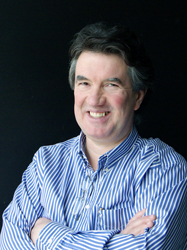
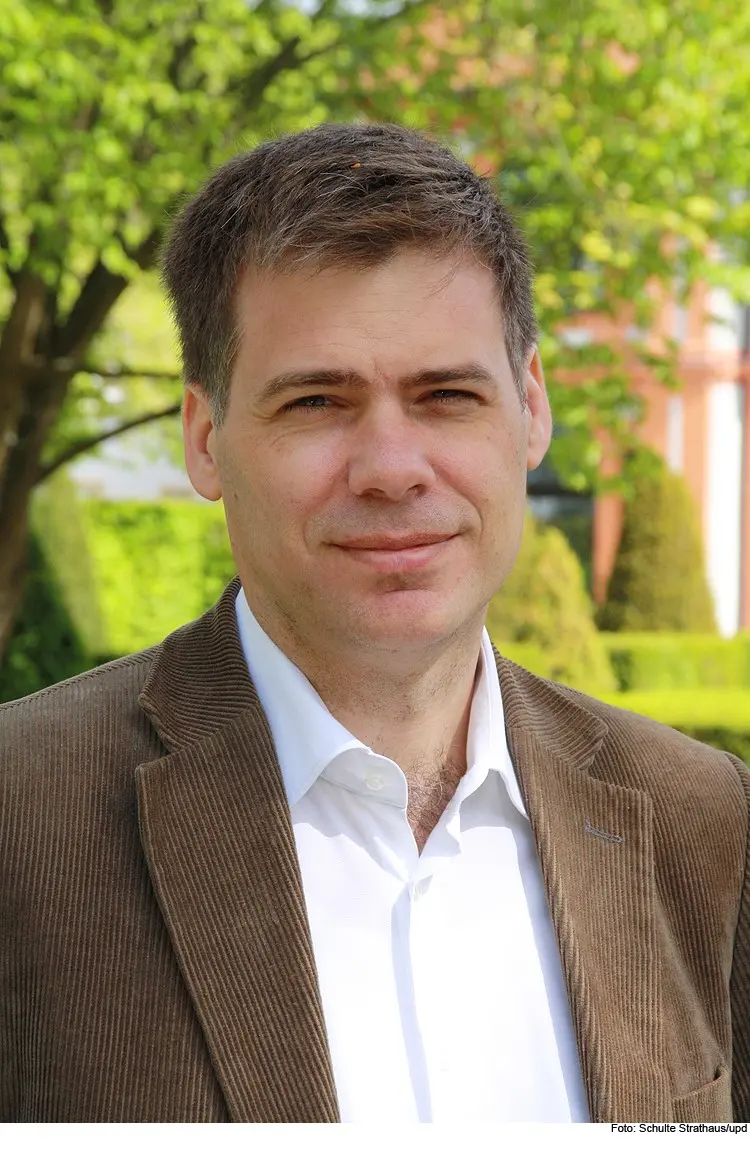
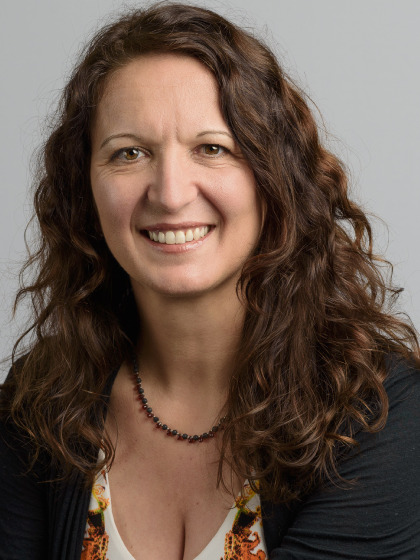
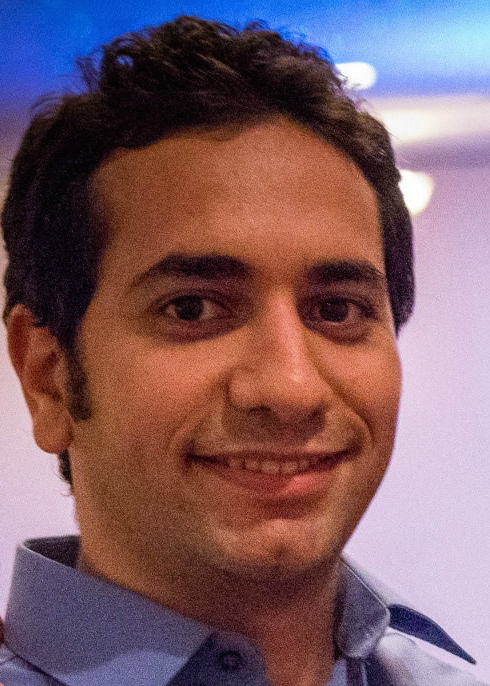
Dirk Slock is a Professor at EURECOM's Communication Systems department. His research focuses on advanced signal processing for wireless communications, including transmitter/receiver design for 4G/5G systems, Massive MIMO, stochastic geometry, and audio signal processing. He has contributed to areas like interference management, compressive sensing, and Bayesian methods. Slock teaches courses on statistical signal processing and wireless communication techniques. His notable awards include IEEE Fellow (2006) and EURASIP Fellow (2015). Collaborations with students like Christo Kurisummoottil Thomas have yielded Best Student Paper Awards at SPAWC 2018. His work addresses challenges in cell-free MIMO, semi-blind channel estimation, and secure communication systems. Recent research trends explore ultra-massive MIMO signal detection, dynamic channel prediction with tensor methods, and cell-free network optimization. His publications span 639 entries, emphasizing practical implementations of theoretical signal processing advancements.
Cong Shen is an Associate Professor in the Department of Electrical and Computer Engineering at the University of Virginia, where he leads a research group focused on machine learning, wireless communications, and networking. He is affiliated with the UVA Link Lab and serves as Deputy Director of Collaboration at SpectrumX, an NSF Spectrum Innovation Center. He has previously held faculty positions at the University of Science and Technology of China (USTC) and maintains strong industry ties with companies such as Qualcomm, SpiderCloud Wireless, Silvus Technologies, and Xsense.ai. Education: B.E. and M.E., Electronic Engineering, Tsinghua University, China Ph.D., Electrical Engineering, University of California, Los Angeles (UCLA), USA His research lies at the intersection of machine learning and communication systems, with a focus on in-context learning, transformers, federated learning, reinforcement learning, distributed optimization, multi-armed bandits, and AI for wireless . His work aims to bridge theoretical foundations with engineering applications in next-generation wireless networks and intelligent systems. His recent publications (2023–2025) reveal a strong trend toward integrating foundational models with communication constraints, particularly in federated and decentralized settings. Key themes include in-context learning with provable guarantees, efficient prompt optimization using bandit methods, privacy-preserving federated learning, and reinforcement learning for wireless resource management. His work frequently appears in top-tier venues such as NeurIPS, ICML, ICLR, AISTATS, and IEEE ICC. Scientific Awards: NSF CAREER Award (2022) Best Paper Award, IEEE ICC (2021) Excellent Paper Award, ICUFN (2017) Best Paper of 2024, Science Robotics Finalist for Best Student Paper Award, Asilomar (2024) Dr. Shen advises a dynamic group of graduate and undergraduate students, including PhD candidates Chengshuai Shi, Zhoubin Kou, Di Wu, and others. He leads multiple NSF-funded projects, including initiatives under the SWIFT, ECCS Core, MLWiNS, and CAREER programs, focusing on spectrum access, resource rationing in wireless FL, and domain-knowledge-enriched RL for network optimization. His lab actively contributes to open science through GitHub repositories and code releases. He also serves as an associate or editor for several IEEE Transactions journals and participates in program committees of major AI and communications conferences.
Pia Addabbo is a Lecturer at the Department of Engineering , University of Sannio , with expertise in remote sensing and satellite data analysis. Her work focuses on GNSS reflectometry, wind speed estimation, and hyperspectral imaging applications. Department: Engineering Academic Rank: Lecturer Research Interests: Addabbo's research spans Remote Sensing , Geophysics , Environmental Monitoring , and Signal Processing . She has contributed to: GNSS reflectometry for ocean wind speed retrieval UAV systems in photovoltaic plant maintenance Phase altimetry techniques for surface height measurement Sparse learning algorithms in radar profiling Publication Trends (2015–2024): 15 articles highlight her focus on satellite-based environmental monitoring (CYGNSS, Sentinel-1), microwave reflectometry , and machine learning applications in remote sensing. Key collaborations include Silvia Ullo, Maurizio Di Bisceglie, and Carmela Galdi.
Dipl.-Ing. Dr. Bernhard Ungerer is a researcher at the Institute of Wood Technology and Renewable Resources , part of the Department of Biotechnology and Food Science at the University of Natural Resources and Life Sciences, Vienna (BOKU). His work focuses on advanced wood-based composites and sustainable material systems.
Saikat Chatterjee is a Professor in the Department of Information Science and Engineering at the School of Electrical Engineering and Computer Science, Royal Institute of Technology (KTH). He is also a Fellow of Digital Futures and maintains visiting researcher positions at Karolinska Institute, Karolinska Hospital (specializing in 'AI for Health Care'), and Oslo University Hospital in Norway. His primary research interests span Signal Processing and Machine Learning, with specific focus on signal modeling (sparsity, compressive sensing, dynamical systems), statistical signal processing, statistical machine learning, deep learning, speech/audio/image processing, medical data analytics, life science data analysis, perception for autonomous systems, distributed machine learning, and explainable AI (XAI). He particularly emphasizes explainable machine learning, having a strong background in signal processing and statistical machine learning, with growing passion for medical data analysis due to its societal importance. SSF - Swedish Foundation for Strategic Research Region Stockholm European Union Digital Futures Vinnova WASP Companies: Ericsson, Scania, Saab Professor Chatterjee is actively involved in teaching, serving as examiner and course responsible for various degree projects and courses including Machine Learning and Data Science, Pattern Recognition and Machine Learning, and Speech and Audio Processing. His research group has produced significant work across multiple domains, with notable publications in Bioinformatics and smart city applications, demonstrating the breadth of his research impact from healthcare to urban systems.
Thomas Rylander is an Assistant Professor in the Signal Processing research group at Chalmers University of Technology. His research focuses on electromagnetics, computational methods, and microwave engineering, with applications in antenna modeling, wireless power transfer, and electromagnetic compatibility. He has led projects such as Modeling of RF emissions from e-axis (MORFex) (2024–2028) and Säker induktiv energiöverföring för elfordon (2014–2017). His work integrates advanced numerical techniques like the Method of Moments (MoM) and Finite Element Method (FEM) to solve complex electromagnetic problems. Education: PhD in Electromagnetics (2001, Chalmers University) Research Keywords: Electromagnetics, Computational Electromagnetics, Microwave Engineering, Signal Processing, Wireless Power Transfer, Finite Element Method, Method of Moments Projects: MORFex (2024–2028, funded by Energimyndigheten), Virtual Electric Driveline (2018–2022, Vinnova), FFI SAWE (2014–2017, Energimyndigheten), Model-Based Reconstruction (2011–2014, VR) His recent publications emphasize efficient electromagnetic modeling techniques, including macro basis functions for wire antennas and compressed sensing for microwave imaging. Despite extensive collaboration with researchers like Matthys M. Botha and Johan Winges, no specific scientific awards or advisees are mentioned in the provided data.
Götz Pfander is a Professor of Mathematics at the Catholic University of Eichstätt-Ingolstadt , holding the Chair of Mathematics - Scientific Computing . He has held previous academic roles at Philipps-Universität Marburg (W2 Numerical Analysis), Jacobs University Bremen (Associate/Assistant Professor), and visiting positions at institutions including MIT, NYU Courant, and TU München. His leadership roles include Dean and Vice Dean of the Faculty of Mathematics and Geography (2019-2023) and Speaker of the Mathematical Institute of Machine Learning and Data Science (MIDS) since 2022. PhD in Mathematics (University of Maryland, 1999), advised by John J. Benedetto Master of Arts in Mathematics (University of Maryland, 1998) Studies in Mathematics and Psychology (Johannes Gutenberg University Mainz, Freie Universität Berlin) Pfander's research focuses on numerical harmonic analysis, operator sampling theory, and time-frequency analysis, with applications in digital communications and signal processing. His work bridges Gabor frames, wavelet transforms, and uncertainty principles to solve problems in OFDM channel modeling, sparse signal recovery, and quantum information theory. Notable contributions include: Sampling theory for pseudodifferential operators with bandlimited Kohn-Nirenberg symbols Uncertainty principles for joint time-frequency representations on finite Abelian groups Design of robust Gabor systems for wireless communication channels Wavelet-based periodicity detection for biomedical signals His recent publications (2022-2024) emphasize exponential bases for interval partitions, cube tiling constraints, and complex-valued neural network approximation. Scientific awards include the Max Kade Fellowship and John von Neumann Visiting Professor title. He serves as Editor in Chief of Sampling Theory, Signal Processing, and Data Analysis and chairs the International Conference on Sampling Theory and Applications .
Elisabetta Chicca is a Professor of Bio-Inspired Circuits and Systems at the University of Groningen's Faculty of Science and Engineering. Her work bridges neuromorphic engineering, spiking neural networks, and bio-inspired sensing. University: University of Groningen Department: Bio-Inspired Circuits and Systems Email: e.chicca@rug.nl Research Interests: Focus on developing CMOS models of cortical circuits for brain-inspired computation, combining spiking neural networks with memristive systems. Key areas include bio-inspired vision, olfaction, touch, and motor control to create agents that operate in real-world environments. Recent Article Trends: Explore neuromorphic processors with hybrid CMOS-memristor architectures, event-based vision for motion detection, tactile sensing in robotics, and benchmarking frameworks for neuromorphic algorithms. Scientific Contributions: She co-founded the Neuromorphic Computing and Engineering journal and serves on its Executive Editorial Board. Her team has received EU Horizon 2020, NWO, and DFG grants.
Jake Nease is an Associate Professor in the Department of Chemical Engineering at McMaster University's Faculty of Engineering. A McMaster graduate himself, he has built his academic career at this institution with a strong focus on teaching excellence and innovative pedagogy in chemical engineering education. Dr. Nease's research interests span energy systems, sustainable design, and environmental engineering, with particular expertise in process control and optimization. His work demonstrates a strong commitment to addressing climate change challenges through sustainable energy solutions, focusing on the efficient use of fossil fuels en route to carbonless power generation. His research portfolio reveals a consistent theme of integrating advanced optimization techniques with sustainable energy systems, particularly in the areas of solid oxide fuel cells, CO2 capture technologies, and zero-emissions power generation. His scholarly output shows a clear evolution from fundamental process control and optimization research toward increasingly applied sustainable energy systems. The most recent publications demonstrate his expanding interests into biomedical applications and educational research, while maintaining his core focus on energy systems optimization. His work bridges theoretical process systems engineering with practical environmental applications, particularly in carbon management technologies. Dr. Nease has taught a wide range of courses including Process Control/Optimization, Numerical Methods, Big Data Methods, Chemical Process Design, Engineering Economics, and Biomedical Control Systems. His teaching portfolio reflects both his technical expertise in process systems engineering and his commitment to preparing students for emerging challenges in sustainable engineering. His research collaborations span multiple disciplines, with significant work alongside colleagues in chemical engineering, environmental science, and biomedical engineering. While specific grant information isn't detailed in the available materials, his publication record suggests active research funding supporting his work in sustainable energy systems and process optimization.
Pasquale Corsonello is a Professor of Electronics at the Department of Informatics, Modeling, Electronics and System Engineering (DIMES) , University of Calabria. He has held academic positions at the University of Reggio Calabria and the University of Rochester (Adjunct Associate Professor). His career spans over three decades in digital electronics, VLSI design, and low-power systems. Education: Master's in Electronic Engineering, University of Naples “Federico II” (1988) Key Roles: Editor-in-Chief (Journal of Low Power Electronics), Senior Area Editor (IEEE Transactions on Circuits and Systems II), Steering Committee Member (IEEE Transactions on VLSI Systems) Research interests include: Embedded systems and low-power design for IoT VLSI architectures for image processing and neural networks FPGA-based accelerators for real-time applications Quantum-dot cellular automata (QCA) circuits His recent publications focus on energy-efficient FPGA implementations, approximate computing for imaging, and QCA-based arithmetic circuits. He has co-authored over 180 technical articles and holds three patents. Awards : BEST ASSOCIATE EDITOR IEEE CASS AWARD (2016) GOLDEN LEAF Certificate (PRIME 2019) Multiple BEST PAPER AWARDS at ICECS, CENICS, and PRIME Top 25 Downloaded Articles (IEEE Transactions on VLSI Systems) Leadership : Coordinated PhD programs in Information and Communication Technologies Directed research units in projects exceeding €8M in funding Member of editorial boards for IEEE Transactions and Electronics journal He leads the Nanoelectronics and Microsystems research group , which integrates material characterization, IC design, and system-level electronics for applications in power systems and photovoltaics.
Mark Rodwell is a Professor in the Electrical and Computer Engineering Department at the University of California, Santa Barbara (UCSB). He holds the Doluca Family Endowed Chair and has directed major research centers, including the SRC/DARPA Center for Converged Terahertz Communications and Sensing (2018-2023) and the UCSB Nanofabrication Lab (1996-2018). His work focuses on extending electronics to ultrahigh frequencies (60-600 GHz), involving semiconductor devices, IC design, and terahertz systems. Dr. Rodwell earned a B.S.E.E. in IC design (1980, University of Tennessee), an M.S.E.E. in signal processing (1982, Stanford University), and a Ph.D.E.E. in semiconductor devices (1988, Stanford University). He worked at AT&T Bell Labs (1981-1984) before joining UCSB. His research interests include High-frequency IC design in Silicon and III-V technologies THz InP bipolar transistors and MOSFETs Mm-wave wireless communication systems Nonlinear transmission lines for picosecond instrumentation Optoelectronic integration for THz applications His publications emphasize advancements in Transferred-substrate HBTs for >400 GHz operation Mm-wave network analyzers and amplifiers Resonant tunnel diode oscillators Electro-optic sampling techniques Scientific accolades include IEEE Fellow (2003) SIA/SRC University Research Award (2022) IEEE Sarnoff Award (2010) IEEE Microwave Prize (1997, 1998 European Microwave Conference) IEEE Marconi Prize Paper Award (2012) NSF Presidential Young Investigator (1989) and eight UCSB Teaching Awards (1994, 1997, 1998, 2014, 2019-2023). He contributes to IEEE Microwave Theory and Technology Society Nanofabrication facility management Short courses on THz wireless systems Collaborative projects with Prof. Umran Inan and others
Hande Alemdar is an Assistant Professor at the Department of Computer Engineering, Middle East Technical University, specializing in machine learning, data science, and big data analytics. She earned her BSc, MSc, and PhD in Computer Engineering from Boğaziçi University in 2004, 2009, and 2015, respectively, with her PhD thesis awarded the Bogazici University Research Fund (BAP) Best Thesis Award. PhD in Computer Engineering (2015), Boğaziçi University MSc in Computer Engineering (2009), Boğaziçi University BSc in Computer Engineering (2004), Boğaziçi University Her research focuses on applying machine learning to resource-efficient hardware, wireless sensor networks, and smart environments. She has pioneered work on ternary neural networks for FPGA-based AI, which reduce computational costs while maintaining accuracy. Her work spans diverse applications like activity recognition, fall detection, and sports analytics. Her recent publications reflect trends in deep learning for hardware efficiency, smart healthcare via ambient sensors, and network security with machine learning. These studies often integrate multi-modal sensor fusion and real-time data analysis , emphasizing deployability in resource-constrained scenarios. Scientific Awards Bogazici University BAP Best Thesis Award Hande has collaborated with Grenoble Informatics Institute and industry leaders like ST Microelectronics on energy-efficient AI. Her work has been published in journals and conferences such as Sensors, Computers & Graphics, and FPL, addressing topics from elite football performance analysis to covert channel detection in SDN. She leads research in scalable architectures for smart environments and is involved in the H2020 FET Project 'ROBOtic Replicants for Optimizing the Yield by Augmenting Living Ecosystems', demonstrating her commitment to interdisciplinary AI applications.
Dong Yang is a Researcher and PhD candidate at the Chair of Media Technology, Technical University of Munich (TUM) , since October 2021. His work bridges Computer Vision, Machine Learning, and Robotics to advance haptic teleoperation systems. B.Eng in Electrical Engineering and Automation (Fuzhou University, China) B.Sc in Electrical Engineering and Information (Technical University of Kaiserslautern, Germany) M.Sc in Electrical Engineering and Information (TUM, Germany) Research focuses on haptic communication , teleoperation , and scene understanding for robots. Key contributions include: Developing SRI-Graph for scene-robot interaction Creating ISSC for semantic shared control Advancing depth estimation in adverse weather Designing HPF-SLAM for visual navigation His publications span top conferences like ICRA , IROS , and RO-MAN , addressing topics in haptic teleoperation , sensor fusion , and collaborative robotics . Supervises thesis projects including Diffusion Model-based Imitation Learning and Scene Graph-based Real-time Scene Understanding Collaborates on projects like Centre for Tactile Internet with Human-in-the-Loop (CeTI) and Teleoperation over 5G
Associate Professor Craig Engstrom is an accomplished academic at The University of Queensland's School of Human Movement and Nutrition Sciences within the Faculty of Health, Medicine and Behavioural Sciences. He serves as Program Coordinator for the Postgraduate Masters of Sports Medicine and is an Affiliate of the Centre for Innovation in Pain and Health Research (CIPHeR). With over 100 publications including 47 journal articles, 52 conference papers, and a book chapter, his research spans sports medicine, musculoskeletal imaging, and innovative educational approaches. Bachelor of Human Movement Studies (Education) (Honours), University of Queensland MSc, Queen's University, Canada PhD, University of Queensland Professor Engstrom's research focuses on three primary areas: Sports Medicine with particular emphasis on injury mechanisms in athletes (especially cricket fast bowlers and water polo players), cutting-edge Magnetic Resonance Imaging of the Musculoskeletal System for assessing joint morphology and pathology, and development of innovative web-based approaches for learning and assessment in health professional education. His work on the eCAPS (e-Clinical Assessment of Practical Skills) system demonstrates his commitment to educational innovation. His current research leverages advanced computational methods including deep learning, statistical shape modeling, and 3D segmentation techniques applied to musculoskeletal MRI data. Analysis of his recent publications reveals a strong trend toward applying artificial intelligence and machine learning techniques to medical imaging, particularly in knee and hip joint analysis. His work increasingly focuses on automated segmentation, anomaly detection, and quantitative assessment of joint morphology using 3D MRI. The Osteoarthritis Initiative dataset features prominently in his recent work, indicating a growing focus on osteoarthritis research alongside his longstanding interest in sports injuries. Award for Teaching Excellence (ATE) - Australian Award for University Teaching (AAUT) 2015-2018 Professor Engstrom actively supervises numerous PhD candidates working on projects related to medical image analysis, ACL registry development, and deep learning applications in healthcare. His current research is supported by significant funding including 'Cost effective and portable low-field musculoskeletal MRI for high performance sport' (2025-2027) and 'Quantum-Enabled Low-Field Magnetic Resonance Imaging for High-Performance Sport' (2024-2027). His past funding includes NHMRC Development Grants, ARC Linkage Projects, and industry partnerships with Siemens Healthcare. His work bridges clinical practice, research, and education, with strong collaborations across The University of Queensland, particularly with researchers like Stuart Crozier and Shakes Chandra. His research group appears to focus on developing computational tools for quantitative analysis of musculoskeletal MRI, with applications in sports medicine, orthopedics, and rehabilitation.
Ahmed Alkhateeb is an Associate Professor at Arizona State University's School of Electrical, Computer and Energy Engineering. His work bridges wireless communications, machine learning, and sensing technologies, with a focus on 6G networks and beyond. He leads the Wireless Intelligence Lab and has contributed to datasets like DeepSense 6G and DeepMIMO. Ph.D., Electrical Engineering, University of Texas-Austin (2016) M.S., Electrical Engineering, Cairo University (2012) B.S., Electrical Engineering (with distinction), Cairo University (2008) Research Interests: Machine learning for wireless communication Integration of sensing and communication for 6G Multi-modal sensing (LiDAR, radar, cameras) for channel optimization AI-based wireless sensing and perception Recent publications emphasize digital twin applications, robust beamforming, and real-world testing of reconfigurable intelligent surfaces (RIS), with a focus on sim-to-real transfer and hardware constraints. His work spans vehicular/drone networks, OTFS modulation, and terahertz communication. Scientific Awards: 2012 MCD Fellowship (University of Texas-Austin) 2016 IEEE Signal Processing Society Young Author Best Paper Award NSF CAREER Award (2021) His lab develops tools like DeepSense 6G and ViWi datasets, advancing AI-driven wireless system design. He explores decentralized interference management and cell-free MIMO architectures for next-gen networks.