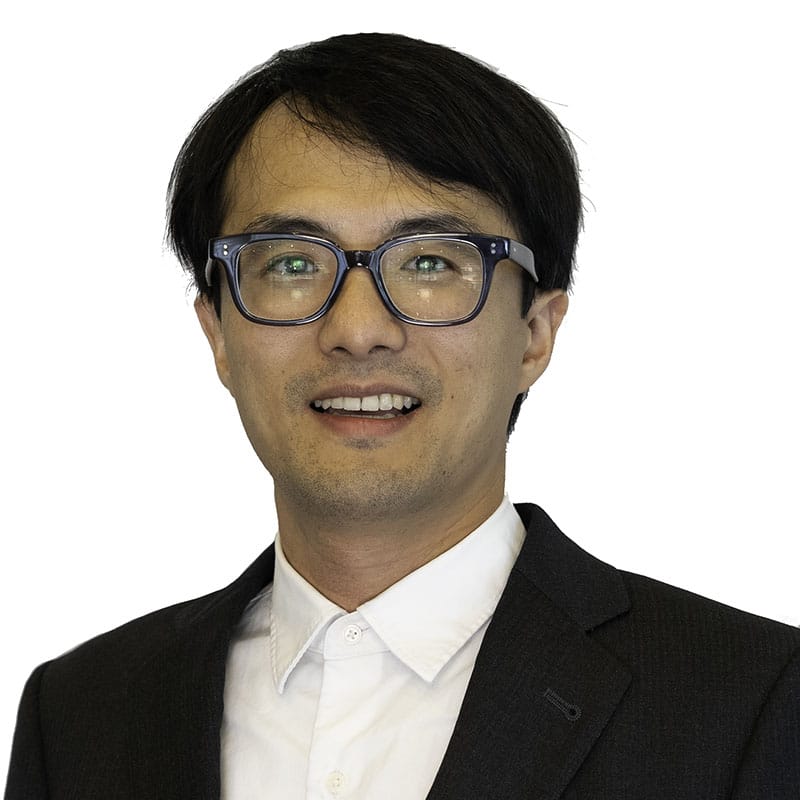
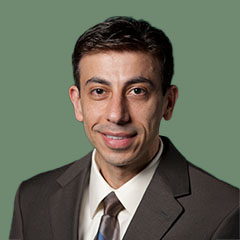
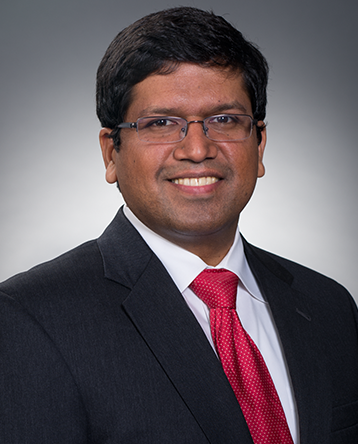
Stefano Fortunati is an Assistant Professor at Telecom SudParis within the ISTeC research centre. His work focuses on advanced signal processing, radar systems, and machine learning applications in communication and sensing. He has contributed to robust statistical methods, MIMO radar technologies, and environmental monitoring using underwater gliders. His research interests include semiparametric estimation, reinforcement learning for cognitive systems, and performance bounds in parametric models. Notable contributions address elliptical distributions, target detection in dynamic environments, and distributed sensor networks. Recent work explores integrated sensing and communication (ISAC) systems, massive MIMO radar architectures, and anomaly detection algorithms. He has published extensively on topics such as compressed sensing applications and sensor calibration in airborne systems.
Prof. Marc CASTELLA is a Lecturer at Telecom SudParis, part of the SOP (Signal and Optimization Processing) unit. His research focuses on signal processing, particularly in blind source separation, nonlinear reconstruction, and optimization techniques. He has extensively contributed to areas such as sparse signal recovery, neural networks, and tensor decomposition. His work often addresses challenges in noisy environments and nonlinear systems. Recent publications include advancements in clipped signal recovery, motor torque estimation, and global optimization methods. Though no specific awards are listed, his prolific publication record reflects his impactful contributions to signal processing and applied mathematics. He collaborates with researchers like Jean-Christophe Pesquet and Arthur Marmin on projects involving polynomial systems and neural network models. His work is applied in diverse fields from industrial electronics to data analysis.
Chau-Wai Wong is an Associate Professor in the Department of Electrical and Computer Engineering at North Carolina State University, with affiliations to the Forensic Sciences Cluster and Secure Computing Institute. He previously served as a Data Scientist at Origin Wireless, Research Assistant at University of Maryland, and Research Associate at Hong Kong Polytechnic University. His work bridges machine learning with applications in multimedia forensics, signal processing, and computational social science. Ph.D. , Electrical Engineering, University of Maryland (2017) M.Phil. , Electronic and Information Engineering, Hong Kong Polytechnic University (2010) B.Eng. , Electronic and Information Engineering, Hong Kong Polytechnic University (2008) Research spans federated learning (security vulnerabilities, communication efficiency), physically unclonable features (PUF-based authentication), generative models (GANs for hardware modeling), and computational social science (AI chatbots for disaster communication, TikTok behavioral analysis). Recent work explores neural tangent kernels and multi-LLM agent collaboration . Key publications focus on decentralized AI systems (ICML'25), deepfake detection (under review), and social media health analytics (Telematics and Informatics'25). His federated learning research has appeared at ICLR, IEEE T-NNLS, and USENIX Security. NSF CAREER Award IEEE Signal Processing Cup Organizer (2016) Technical Program Committee Chair (IH&MMSec'25) Area Chair (ICME'21–'24) Senior Member, IEEE Advises students in AI security , physiological sensing , and social science automation . Collaborates with teams at University of Maryland, Hong Kong Polytechnic University, and industry partners. Current projects include identity-privacy protection for smart health and UAV-assisted network optimization (IEEE DySPAN'25).
Steven Beyea is a Professor at Dalhousie University, holding joint appointments in the Department of Physics and Atmospheric Science, Department of Diagnostic Radiology, and School of Biomedical Engineering. He leads the Biomedical Translational Imaging Centre (BIOTIC) , focusing on developing and clinically translating novel diagnostic imaging technologies. His work integrates MRI, MEG, and multimodal imaging to advance pre-surgical functional neuroimaging, abdominal/pelvic cancer diagnostics, and biomarker-driven patient stratification. Research Interests : His interdisciplinary research spans compressed sensing algorithms for parametric mapping, automated analysis of functional neuroimaging data, and machine learning applications in healthcare. Projects include high-resolution liver iron/fat quantification without a priori assumptions and enhancing reliability in pre-surgical brain mapping. Infrastructure includes clinical 3T MRI/MEG and preclinical PET/SPECT/CT systems strategically located in Halifax’s major hospitals. Key Projects : Compressed Sensing for High-Temporal-Resolution Parametric Mapping Algorithms for Functional Neuroimaging Reliability in Pre-Surgical Mapping Novel MRI Pulse Sequences for Iron/Fat Quantification Machine Learning for Patient Stratification using MRI/MEG Grants & Labs : As head of BIOTIC, he oversees translational research infrastructure. Ongoing work explores imaging biomarkers for neurological diseases and cognitive impairment in systemic lupus erythematosus.
Tajana Rosing is a Professor at the University of California, San Diego, specializing in hyperdimensional computing, neural network acceleration, and edge AI systems. Her work bridges hardware-software co-design for IoT, biomedical applications, and security-enhanced computing. University: University of California, San Diego Research Focus: Hyperdimensional Computing, Edge AI, IoT Systems, Neural Acceleration, Secure Machine Learning Her recent publications focus on energy-efficient neural network acceleration (e.g., Processing-in-Memory architectures), few-shot learning for edge devices, and hyperdimensional methods for sensor data and biomedical applications. She explores robustness against adversarial attacks and federated learning frameworks. Key trends include hyperdimensional computing for multimodal sensor fusion, transformer optimization via hardware-software co-design, and privacy-preserving edge AI. Collaborations often involve co-authors like Xiaofan Yu, Minxuan Zhou, and Onat Güngör. Her work impacts domains such as healthcare (glucose prediction, ECG analysis), cybersecurity (intrusion detection), and bioinformatics (mass spectrometry, viral sequence analysis).
Robert Akl is a Professor of Computer Science and Engineering at the University of North Texas. His research focuses on next-generation wireless communication systems, including 6G networks, IoT applications, and AI-driven cybersecurity. He specializes in Massive MIMO systems, vehicular communication (V2X), channel estimation for millimeter-wave technologies, and signal processing algorithms. His work spans theoretical frameworks (e.g., compressed sensing, topological vector spaces) and practical implementations like LDPC coding, Jacobi detectors, and beamforming optimization. Publications emphasize emerging technologies' challenges and opportunities in healthcare IoT, smart cities, and industrial automation. Key contributions include adaptive user scheduling algorithms for 6G, machine learning defense strategies for industrial control systems, and throughput improvement methods in vehicular networks. His research bridges mathematical rigor with real-world network design, addressing capacity, latency, and security in modern telecommunications.
Jason Quinlan is a Lecturer in the Department of Computer Science at University College Cork (UCC), Ireland. He holds a PhD in Computer Science and has extensive experience in teaching undergraduate modules such as Introduction to Programming (CS1117), Problem-Solving (CS1022), and Team Software Project (CS3305). His current role includes coordinating the CSIT SOLAS support hub for first-year students. Previously, he served as a Senior Post-Doc Researcher focusing on Intelligent Video Delivery at the Edge for 5G networks with the SFI iVID Project and CONNECT institute. Research interests span Natural Language Processing , Video Streaming Optimization , Software Defined Networking , and 5G Infrastructure . He led the development of frameworks like D-LiTE (DASH performance evaluation) and GoDASH (Go-based HAS framework). His work emphasizes QoE/QoS metrics, adaptive streaming algorithms, and network simulation tools. Key achievements include publishing over 30 peer-reviewed articles (e.g., on DASH streaming, 5G dataset analysis), securing €21,744 in research grants, and supervising 2 PhD, 15 Master’s, and numerous undergraduate students. Collaborations span institutions like UC Riverside (USA) and Université Clermont Auvergne (France). He actively contributes to conferences like ACM Multimedia Systems and IEEE LANMAN. Teaching and outreach activities include the MISL Summer of Code initiative mentoring over 60 students since 2018, and completing certifications in Project Management (PRINCE2, Scrum) and Higher Education Teaching. He has reviewed for top journals including Multimedia Systems Journal and IEEE Transactions on Multimedia, and serves on program committees for ACM MM and NetSoft conferences.
Laura Waller is a Professor in the Department of Electrical Engineering and Computer Science at the University of California, Berkeley, where she leads the Computational Imaging Lab. Her research focuses on integrating hardware and software for optical imaging systems, with applications in microscopy, biomedical imaging, and industrial inspection. She is affiliated with the Berkeley Artificial Intelligence Research Laboratory (BAIR) and the Berkeley Institute of Data Science (BIDS). 2010 Ph.D. in Electrical Engineering and Computer Science from MIT 2005 M.Eng. in Electrical Engineering and Computer Science from MIT 2004 B.S. in Electrical Engineering and Computer Science from MIT Her research spans computational imaging , optics , and machine learning , particularly physics-based approaches for designing imaging systems. Key areas include phase imaging , light-field microscopy , and imaging through scattering . She has pioneered DiffuserCam , a lensless imaging system, and developed space-time reconstruction algorithms for dynamic samples. Her work intersects signal processing , biomedical imaging , and inverse problems . Her recent publications emphasize single-shot 3D imaging , hyperspectral capture , and machine learning-optimized optical design . Notable collaborations include projects with the Lawrence Berkeley National Lab on X-ray and EUV imaging . 2024 : Max Planck-Humboldt Medals 2021 : AIMBE Fellow, OSA Adolf Lomb Medal 2018 : SPIE Early Career Achievement Award 2016 : Carol D. Soc Mentoring Award 2014 : NSF CAREER Award, Moore Investigator in Data Driven Discovery, Packard Fellow, Bakar Fellows Spark Award She mentors graduate students across EECS , Bioengineering , and the Applied Sciences & Technology (AS&T) programs. Her lab has produced alumni who now hold faculty positions at institutions like UT Austin and UCSD.
Rahul Panat is a Professor in the Department of Mechanical Engineering at Carnegie Mellon University’s College of Engineering. He is affiliated with the Manufacturing Futures Institute, NextManufacturing Center, and the Wilton E. Scott Institute for Energy Innovation, where his research bridges advanced manufacturing, materials science, and biomedical engineering. Ph.D., Theoretical and Applied Mechanics, University of Illinois at Urbana-Champaign (2004) M.S., Mechanical Engineering, University of Massachusetts Amherst (1999) B.S., Mechanical Engineering, Pune University (1997) His research focuses on micro-scale additive manufacturing, particularly aerosol jet 3D nanoprinting, to develop high-performance biosensors, brain-computer interfaces, and energy storage systems. His lab pioneers techniques for 3D-printed ceramics, stretchable electronics, and ultra-sensitive pathogen detection platforms, including a rapid 3D-printed COVID-19 antibody test. The recent articles highlight a strong trend in additive manufacturing of functional microarchitectures , with applications in biomedical sensing , energy storage (3D batteries) , and ceramic nanostructures . Keywords span materials science, nanotechnology, and mechanical reliability, emphasizing scalable, high-precision fabrication methods. His scientific recognition includes an award for developing the world’s first fully green IC chip at Intel. Additional honors stem from groundbreaking work in sustainable electronics and high-performance sensors. Panat mentors students in the Panat Laboratory, where they work on printed electronics, flexible sensors, and battery architectures. He has secured grants from ARPA-H and the Scott Institute for Energy Innovation to advance implantable cancer detection and energy research. His work often involves interdisciplinary collaborations across engineering and healthcare. The Panat Laboratory focuses on solving fundamental challenges in printed microelectronics, flexible sensors, and Li-ion batteries, aiming to enable next-generation wearable devices, IoT systems, robotic skins, and bio-patches.
Reinhard Heckel is a Professor of Machine Learning at the Department of Computer Engineering, Technical University of Munich (TUM). His career includes positions as a Tenure-Track Assistant Professor at Rice University (2017–2019) and postdoctoral fellow at UC Berkeley's Berkeley Artificial Intelligence Research Lab. He holds a PhD from ETH Zurich (2014) and conducted doctoral research at Stanford University’s Statistics Department. Recognitions include being named one of Germany's 'Top 40 under 40' (2022) and the Werner von Siemens Ring Foundation Award (2022). Education & Professional Background: PhD in Computer Science, ETH Zurich (2014) Visiting Doctoral Fellow, Stanford University (Statistics Department) Postdoctoral Fellowship, UC Berkeley (EECS Department) Research Focus: His work bridges theoretical foundations and practical applications in machine learning, including: Algorithm development for deep learning and medical image processing Mathematical foundations of machine learning DNA data storage technology (error correction, synthesis methods) Computational imaging and inverse problem solutions Awards & Highlights: 2022: Capital 40 under 40, Werner von Siemens Ring Foundation Award 2015: ETH Zurich Medal for Doctoral Thesis, IBM Invention Achievement Award Grants & Collaboration: His research has been supported by grants focusing on DNA storage scalability and MRI reconstruction. He collaborates with institutions like IBM Research and the Berkeley AI Lab. Key projects include developing DNA synthesis methods and AI-driven medical imaging tools. Labs & Teams: Leads TUM's machine learning initiatives in computational imaging and biological data storage systems. Active in interdisciplinary teams bridging computer science, bioengineering, and statistics.
Dirk Slock is a Professor at EURECOM's Communication Systems department. His research focuses on advanced signal processing for wireless communications, including transmitter/receiver design for 4G/5G systems, Massive MIMO, stochastic geometry, and audio signal processing. He has contributed to areas like interference management, compressive sensing, and Bayesian methods. Slock teaches courses on statistical signal processing and wireless communication techniques. His notable awards include IEEE Fellow (2006) and EURASIP Fellow (2015). Collaborations with students like Christo Kurisummoottil Thomas have yielded Best Student Paper Awards at SPAWC 2018. His work addresses challenges in cell-free MIMO, semi-blind channel estimation, and secure communication systems. Recent research trends explore ultra-massive MIMO signal detection, dynamic channel prediction with tensor methods, and cell-free network optimization. His publications span 639 entries, emphasizing practical implementations of theoretical signal processing advancements.
Cong Shen is an Associate Professor in the Department of Electrical and Computer Engineering at the University of Virginia, where he leads a research group focused on machine learning, wireless communications, and networking. He is affiliated with the UVA Link Lab and serves as Deputy Director of Collaboration at SpectrumX, an NSF Spectrum Innovation Center. He has previously held faculty positions at the University of Science and Technology of China (USTC) and maintains strong industry ties with companies such as Qualcomm, SpiderCloud Wireless, Silvus Technologies, and Xsense.ai. Education: B.E. and M.E., Electronic Engineering, Tsinghua University, China Ph.D., Electrical Engineering, University of California, Los Angeles (UCLA), USA His research lies at the intersection of machine learning and communication systems, with a focus on in-context learning, transformers, federated learning, reinforcement learning, distributed optimization, multi-armed bandits, and AI for wireless . His work aims to bridge theoretical foundations with engineering applications in next-generation wireless networks and intelligent systems. His recent publications (2023–2025) reveal a strong trend toward integrating foundational models with communication constraints, particularly in federated and decentralized settings. Key themes include in-context learning with provable guarantees, efficient prompt optimization using bandit methods, privacy-preserving federated learning, and reinforcement learning for wireless resource management. His work frequently appears in top-tier venues such as NeurIPS, ICML, ICLR, AISTATS, and IEEE ICC. Scientific Awards: NSF CAREER Award (2022) Best Paper Award, IEEE ICC (2021) Excellent Paper Award, ICUFN (2017) Best Paper of 2024, Science Robotics Finalist for Best Student Paper Award, Asilomar (2024) Dr. Shen advises a dynamic group of graduate and undergraduate students, including PhD candidates Chengshuai Shi, Zhoubin Kou, Di Wu, and others. He leads multiple NSF-funded projects, including initiatives under the SWIFT, ECCS Core, MLWiNS, and CAREER programs, focusing on spectrum access, resource rationing in wireless FL, and domain-knowledge-enriched RL for network optimization. His lab actively contributes to open science through GitHub repositories and code releases. He also serves as an associate or editor for several IEEE Transactions journals and participates in program committees of major AI and communications conferences.
Jake Nease is an Associate Professor in the Department of Chemical Engineering at McMaster University's Faculty of Engineering. A McMaster graduate himself, he has built his academic career at this institution with a strong focus on teaching excellence and innovative pedagogy in chemical engineering education. Dr. Nease's research interests span energy systems, sustainable design, and environmental engineering, with particular expertise in process control and optimization. His work demonstrates a strong commitment to addressing climate change challenges through sustainable energy solutions, focusing on the efficient use of fossil fuels en route to carbonless power generation. His research portfolio reveals a consistent theme of integrating advanced optimization techniques with sustainable energy systems, particularly in the areas of solid oxide fuel cells, CO2 capture technologies, and zero-emissions power generation. His scholarly output shows a clear evolution from fundamental process control and optimization research toward increasingly applied sustainable energy systems. The most recent publications demonstrate his expanding interests into biomedical applications and educational research, while maintaining his core focus on energy systems optimization. His work bridges theoretical process systems engineering with practical environmental applications, particularly in carbon management technologies. Dr. Nease has taught a wide range of courses including Process Control/Optimization, Numerical Methods, Big Data Methods, Chemical Process Design, Engineering Economics, and Biomedical Control Systems. His teaching portfolio reflects both his technical expertise in process systems engineering and his commitment to preparing students for emerging challenges in sustainable engineering. His research collaborations span multiple disciplines, with significant work alongside colleagues in chemical engineering, environmental science, and biomedical engineering. While specific grant information isn't detailed in the available materials, his publication record suggests active research funding supporting his work in sustainable energy systems and process optimization.
Pasquale Corsonello is a Professor of Electronics at the Department of Informatics, Modeling, Electronics and System Engineering (DIMES) , University of Calabria. He has held academic positions at the University of Reggio Calabria and the University of Rochester (Adjunct Associate Professor). His career spans over three decades in digital electronics, VLSI design, and low-power systems. Education: Master's in Electronic Engineering, University of Naples “Federico II” (1988) Key Roles: Editor-in-Chief (Journal of Low Power Electronics), Senior Area Editor (IEEE Transactions on Circuits and Systems II), Steering Committee Member (IEEE Transactions on VLSI Systems) Research interests include: Embedded systems and low-power design for IoT VLSI architectures for image processing and neural networks FPGA-based accelerators for real-time applications Quantum-dot cellular automata (QCA) circuits His recent publications focus on energy-efficient FPGA implementations, approximate computing for imaging, and QCA-based arithmetic circuits. He has co-authored over 180 technical articles and holds three patents. Awards : BEST ASSOCIATE EDITOR IEEE CASS AWARD (2016) GOLDEN LEAF Certificate (PRIME 2019) Multiple BEST PAPER AWARDS at ICECS, CENICS, and PRIME Top 25 Downloaded Articles (IEEE Transactions on VLSI Systems) Leadership : Coordinated PhD programs in Information and Communication Technologies Directed research units in projects exceeding €8M in funding Member of editorial boards for IEEE Transactions and Electronics journal He leads the Nanoelectronics and Microsystems research group , which integrates material characterization, IC design, and system-level electronics for applications in power systems and photovoltaics.
Mark Rodwell is a Professor in the Electrical and Computer Engineering Department at the University of California, Santa Barbara (UCSB). He holds the Doluca Family Endowed Chair and has directed major research centers, including the SRC/DARPA Center for Converged Terahertz Communications and Sensing (2018-2023) and the UCSB Nanofabrication Lab (1996-2018). His work focuses on extending electronics to ultrahigh frequencies (60-600 GHz), involving semiconductor devices, IC design, and terahertz systems. Dr. Rodwell earned a B.S.E.E. in IC design (1980, University of Tennessee), an M.S.E.E. in signal processing (1982, Stanford University), and a Ph.D.E.E. in semiconductor devices (1988, Stanford University). He worked at AT&T Bell Labs (1981-1984) before joining UCSB. His research interests include High-frequency IC design in Silicon and III-V technologies THz InP bipolar transistors and MOSFETs Mm-wave wireless communication systems Nonlinear transmission lines for picosecond instrumentation Optoelectronic integration for THz applications His publications emphasize advancements in Transferred-substrate HBTs for >400 GHz operation Mm-wave network analyzers and amplifiers Resonant tunnel diode oscillators Electro-optic sampling techniques Scientific accolades include IEEE Fellow (2003) SIA/SRC University Research Award (2022) IEEE Sarnoff Award (2010) IEEE Microwave Prize (1997, 1998 European Microwave Conference) IEEE Marconi Prize Paper Award (2012) NSF Presidential Young Investigator (1989) and eight UCSB Teaching Awards (1994, 1997, 1998, 2014, 2019-2023). He contributes to IEEE Microwave Theory and Technology Society Nanofabrication facility management Short courses on THz wireless systems Collaborative projects with Prof. Umran Inan and others