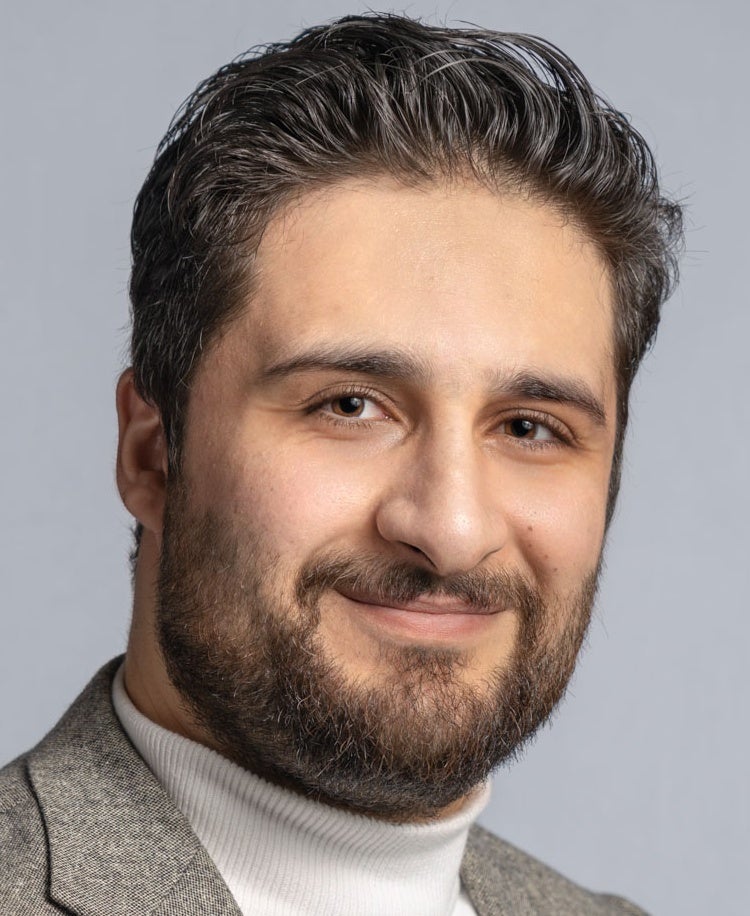
Sanad Aburass serves as Assistant Professor of Computer Science at Luther College, Decorah, Iowa, with office located in Olin 322. Contactable via phone at 563-387-1717 or email saburass@luther.edu, he maintains active academic engagement through cutting-edge research and institutional contributions. His research spans artificial intelligence, machine learning, and computer vision with significant applications in medical imaging, military technology, and ethical frameworks. Key innovations include Cubixel for three-dimensional pixel representation and volumetric feature extraction from 2D images. His work bridges technical advancement with societal implications, particularly in AI governance and digital rights. Recent publications (2023-2025) demonstrate consistent output across healthcare (skin cancer classification, gene mutation analysis), agricultural technology (barley leaf disease detection), and security systems (digital image transmission). The research portfolio reveals strong emphasis on transformer architectures, optimization algorithms, and ethical considerations in AI deployment across military and civilian contexts.
Dr. Marc Botha serves as Associate Professor in the Department of English Studies at Durham University with dual affiliation at the Institute of Hazard, Risk and Resilience. His interdisciplinary scholarship bridges literary theory, aesthetics, and cultural studies with a focus on contemporary crises of fragility, risk, and prediction. Appointed in 2016 after prior teaching at the University of Pretoria, he maintains active research collaborations across international networks including the Matiri University Consortium and University of Witwatersrand. His educational trajectory includes an MA from the University of Pretoria followed by doctoral research at Durham University (2006-2011), where he completed his dissertation on Modernism and Literary Theory. This foundation supports his current investigations into conceptual intersections across media and temporalities. Botha's research centers on three interwoven domains: fragility/vulnerability studies examining cultural artifacts from Scottish poetry gardens to Georgian icons; divination/futurity research analyzing prediction politics through Rob Halpern's poetry; and queer poetics exploring desire within necropolitical frameworks. His methodological toolkit combines deconstruction, object-oriented ontology, Badiou's event theory, and queer criticism applied primarily to American literature with global resonance. His publication trajectory reveals consistent thematic evolution from minimalism studies (2017 monograph) toward risk/hazard scholarship, culminating in the 2021 'Future Theory' handbook co-edited with Patricia Waugh. Recent works demonstrate increasing interdisciplinary convergence between literary analysis and environmental/social dynamics, particularly through Leverhulme Trust-funded projects. No scientific awards are documented in current institutional profiles. His supervisory activities include mentoring Paul Cockburn as Research Postgraduate while securing project funding through initiatives like the Leverhulme Trust Tipping Points collaboration. Administrative leadership encompassed co-directing Durham's Institute of Hazard, Risk and Resilience (2017-2020) and coordinating international risk/humanities workshops through the Matiri Network. Current research collectives feature the Institute of Hazard, Risk and Resilience where he maintains affiliate status, and ongoing South African collaborations through his University of Witwatersrand Research Associate position established in 2016. These frameworks facilitate his cross-continental investigations into aesthetic responses to systemic fragility.
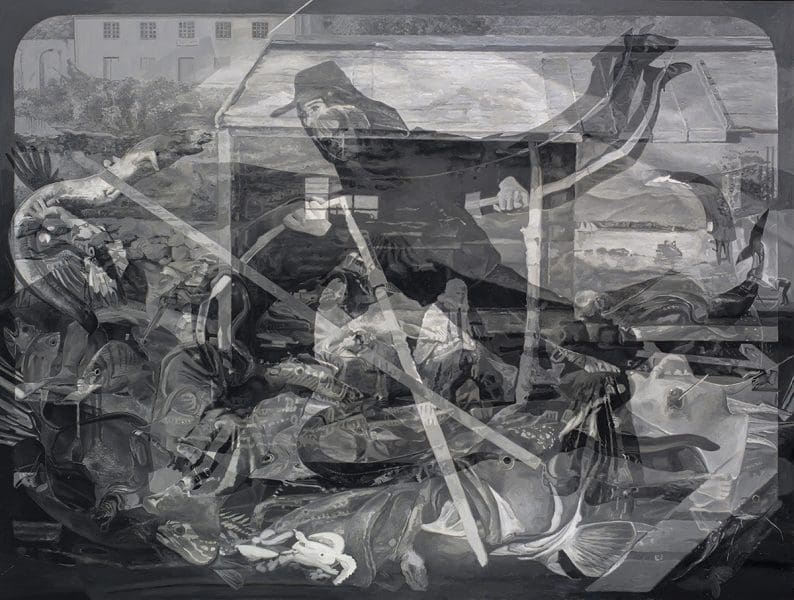
Associate Professor Julie Fragar serves as Deputy Director (Research) at Queensland College of Art and Design, Griffith University, where she also holds the position of Program Director of Visual Arts. With a career spanning over two decades, Fragar has established herself as one of Australia's most acclaimed contemporary painters, winning the prestigious 2025 Archibald Prize and receiving numerous other significant awards including the Sylvia Jones Award and Ramsay Art Prize. Her educational background includes a PhD in Fine Art from Griffith University, a Master of Visual Arts, and a Bachelor of Visual Arts (Hons Class 1), all from Sydney College of the Arts. Fragar's academic career at Griffith University progressed from Lecturer (2015) to Senior Lecturer (2018) to her current leadership roles. Fragar's artistic practice centers on painting and autobiography, exploring the complex relationship between reality and fiction through carefully constructed visual narratives. Her work often incorporates personal and family history, as well as observations from real-world settings like courtrooms. The 2023/24 'Biograph' exhibition represented the first comprehensive survey of her career, mapping over twenty years of practice from 1998 to 2021. Her exhibitions demonstrate consistent thematic development, with works like 'Next Witness' examining the intersection of art and justice through courtroom observations, and 'Goose Chase' exploring family migration history. Fragar's paintings are characterized by layered compositions that collapse time and space to create psychologically rich explorations of identity and memory. Award Highlights: 2025 Archibald Prize Winner 2020 Sylvia Jones Award for Women Artists 2017 Ramsay Art Prize (Lipman Karas Award) 2016 Tidal: City of Devonport National Art Award 2013 Pine Rivers Art Prize Fragar maintains an active professional profile beyond her university roles, serving on the Board of Directors for Art Monthly Australasia and regularly judging major art prizes including the Ramsay Art Prize. Her work is held in major public collections including the Art Gallery of NSW, Art Gallery of South Australia, and Queensland Art Gallery/Gallery of Modern Art, with her paintings resonating with audiences through their profound exploration of personal and collective consciousness. As Program Director of Visual Arts, Fragar oversees a comprehensive program that emphasizes both technical excellence and conceptual depth in contemporary art practice, providing students with opportunities to develop their artistic voices within a research-informed environment.