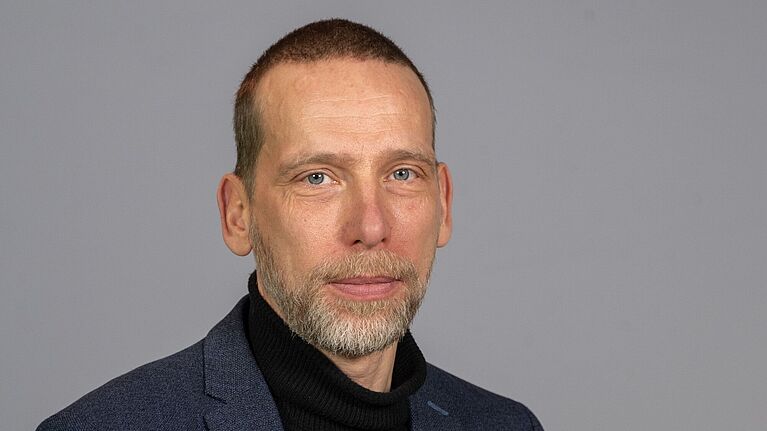
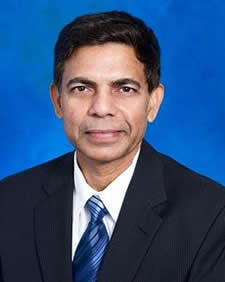
Zygmunt Mariusz Gusiatin is a Professor at the University of Warmia and Mazury in Olsztyn (UWM), specializing in environmental engineering within the realm of technical sciences. His research centers on innovative approaches to soil remediation and contaminant management, including: Bioremediation of trace element-contaminated soils Sorption techniques for environmental contaminant removal Utilization of bioproducts from (bio)waste Metal fractionation and immobilization Application of composts, biochars, and ash as soil amendments Enhanced phytostabilization via additives Ex-situ and in-situ soil washing using biosurfactants Development of "green" remediation strategies Post-remediation soil valorization His work emphasizes sustainable environmental solutions through waste-derived materials and eco-friendly remediation technologies.
Dr. Majeed Safa is a Senior Lecturer in the Department of Land Management and Systems at Lincoln University, New Zealand, where he also serves as Program Director for the Master of Precision Agriculture. He holds a PhD from Lincoln University, MAgEng from Azad University (Tehran), and BAgrEng from University of Tehran. His research focuses on sustainable agricultural engineering with expertise in energy management, environmental sustainability, and precision farming technologies. Research interests center on developing engineering solutions for sustainable agriculture, including: Energy consumption modeling and carbon footprint analysis in agricultural systems Precision agriculture technologies using ANN and MLR modeling Environmental impact assessment of farming and construction practices Sustainable waste management and composting technologies Development of digital tools for farm management decisions His publications demonstrate strong focus on sustainability metrics, with recurring themes in carbon footprint analysis (dairy systems, construction), precision agriculture applications (image analysis, sensor technology), and waste management solutions. Recent work shows increasing emphasis on digital transformation in agriculture and sustainable materials. Awards & Recognition: Early Career Research Award, Modelling and Simulation Society of Australia and New Zealand (2015) Academic Leadership: Serves as Assistant Editor for the IV-Energy sector of the CIGR journal. Supervises postgraduate research projects on topics including precision livestock management, dairy technology adoption, greenhouse gas quantification, and energy-efficient farming systems. Developed educational app for optimal fertilizer application using satellite imagery. Professional Engagement: Member of Asian Association of Agricultural Engineering (AAAE). Leading development of digital tools for sustainable farming practices, including an app for precision fertilizer application using thermal imaging.
Fabio Tatano is an Associate Professor in Sanitary-Environmental Engineering at the University of Urbino Carlo Bo, where he conducts research on waste management, bioenergy production, and contaminated site remediation. His work focuses on sustainable approaches to environmental challenges, with particular emphasis on waste-to-resource conversion and risk assessment methodologies. Dr. Tatano earned his engineering degree with maximum honors (110/110) from the University of Palermo and completed his PhD in Sanitary-Environmental Engineering at the Technical University of Milan. During his doctoral studies, he conducted research on wastewater treatment and sludge management at Ruhrverband in Essen, Germany, a prestigious organization responsible for integrated water management in the Ruhr river basin since 1913. His research interests span landfill gas emission monitoring, integrated municipal and industrial waste management systems, bioenergy production through anaerobic digestion of organic waste, and advanced risk analysis for contaminated sites. Since May 2012, he has served as chairman of the European Technical & Scientific Committee at the European Water Association, demonstrating his leadership in the field. Analysis of his publication record reveals a consistent focus on practical waste management solutions with strong emphasis on characterization methodologies, resource recovery, and sustainability assessment. His work spans industrial, municipal, and agricultural waste streams, with increasing attention to circular economy principles and regional implementation strategies over time. Dr. Tatano teaches courses on Characterization and Recovery of Contaminated Sites and Resource Recovery from Waste for the Environmental Geology and Land Management degree program. His ongoing involvement in both teaching and research demonstrates his commitment to advancing sustainable environmental engineering practices through education and innovation.
Christian Andreasen is an Associate Professor at the University of Copenhagen's Department of Plant and Environmental Sciences, where he leads the Plant Protection research group in the Section for Crop Sciences. He earned his MSc in Agronomy (1986) and PhD in Weed Science (1990) from the Royal Veterinary and Agricultural University (now University of Copenhagen). His academic career includes roles as Assistant Professor (1991-1995), Associate Professor (1995-present), and Head of Crop Sciences (2004-2015). His research spans weed biology, sustainable crop protection, and seed technology, with emphasis on: Non-chemical weed control (laser weeding, thermal methods) Crop-weed interactions in changing climates Seed science and quinoa cultivation in tropical zones Biodiversity conservation in agricultural systems Publications (2019-2025) demonstrate strong focus on sustainable agriculture technologies, particularly laser-based weed control, climate adaptation of crops, and biochar soil applications. Research consistently addresses herbicide alternatives, precision agriculture, and resilience of crops like quinoa under abiotic stresses. He actively advises PhD candidates and has supervised 10+ doctoral projects. Major grants include Horizon 2020's WeLASER project (2021-2024) on autonomous laser weeding, AC/DC Weeds (2021-2022) for perennial weed management, and Sweedhart (2016-2019) on harvest weed seed control. Leads field and laboratory facilities at Taastrup Campus, collaborating internationally through NIBIO (Norway) and DanSeed consortium.
Fevzi Sevik is a Lecturer in the Department of Environmental Health at Bingöl University's Vocational School of Health Services, a position he has held since 2023. Previously, he served at the university's Project Coordination Implementation and Research Center from 2019 to 2023. A Süleyman Demirel University PhD graduate in Environmental Engineering, he contributes to the institution's mission of regional development through applied waste management research. His academic credentials include: Bachelor of Science in Environmental Engineering, Süleyman Demirel University (2008-2012) Master of Science in Environmental Engineering, Süleyman Demirel University (2012-2014) Doctor of Philosophy in Environmental Engineering, Süleyman Demirel University (2014-2022) Dr. Sevik's research centers on optimizing composting processes for challenging organic wastes. He investigates how carbon-to-nitrogen ratios and aeration methods affect decomposition of olive mill residues, rose oil byproducts, sewage sludge, and animal manures. His work bridges environmental engineering and agricultural science, developing practical protocols for converting waste streams into valuable soil amendments while addressing regional waste management challenges in Eastern Anatolia. Analysis of his 2020-2025 publications reveals deepening specialization in process parameter optimization, particularly for rose oil and olive processing wastes. Recent studies increasingly focus on energy efficiency, compost maturity metrics, and agricultural applicability - reflecting a trajectory toward practical implementation of circular economy principles in regional farming systems. His scholarly recognition includes: Ege University Ebiltem Best Idea Project Award (2009) SDÜ Student Project Competition 3rd Place in Agriculture (2012) TÜBİTAK 2238 Entrepreneurship Competition 1st Stage Award (2013) Ministry of Science Teknogirişim Capital Support (2014) TÜÇEV Doctoral Scholarship for animal waste research (2016-2018) Dr. Sevik actively mentors students through TÜBİTAK 2209-A research projects on composting and biogas production, requiring email appointments for advising. His current grants include Fırat Development Agency feasibility studies and TÜBİTAK science-society workshops promoting waste conversion techniques. He emphasizes hands-on research with tangible applications for local agricultural communities. While no dedicated laboratory is specified, his work utilizes Bingöl University's research infrastructure through the Vocational School of Health Services. He collaborates with regional stakeholders on practical waste management solutions, particularly for agricultural byproducts common in Eastern Anatolia's farming economy.
Louise Sennett serves as a Postdoctoral Researcher within the Microbial Ecology and Physiology (MEP) group at the Department of Chemistry, Biotechnology and Food Science, Norwegian University of Life Sciences (NMBU). Her work integrates advanced molecular techniques with biogeochemical process measurements to investigate soil microbial community responses to environmental stressors and agricultural management practices. Her research interests span multiple critical domains in environmental microbiology: Microbial community dynamics under oxygen/carbon starvation Nitrogen cycling processes and denitrifier functionality Impacts of agricultural interventions (fumigation, compost) on soil biodiversity Multi-omics integration for microbial ecosystem analysis Soil health indicators in agricultural systems Dr. Sennett's publication record demonstrates consistent output in high-impact soil science journals, with four publications from 2021-2022 addressing chemical/biofumigation effects and compost applications. Her work reveals how management practices alter microbial community composition while influencing critical nutrient cycling processes. As part of the STARVOX project, she contributes to NMBU's research mission in sustainable agricultural systems. She actively collaborates with researchers including C. Goyer, D.B. Burton, and B.J. Zebarth across multiple institutions. While not currently supervising independent students as a postdoctoral researcher, she contributes to the research environment within the MEP group. Her work provides foundational insights for developing environmentally sustainable soil management practices in agriculture. The MEP research group maintains specialized capabilities in multi-omics analysis and high-sensitivity gas kinetics measurements, creating a robust platform for investigating soil microbial physiology under controlled experimental conditions. This infrastructure supports research into microbial responses to agricultural stressors and management interventions.
Andrea Corti serves as Associate Professor in the Department of Information Engineering and Mathematical Sciences at the University of Siena, teaching core courses including Physics I for Management Engineering undergraduates and advanced subjects like Energy Conversion Systems and Environmental Impact Containment, alongside Technologies for Environmental Resource Management for Engineering Management graduate students. Research Focus: His work centers on Environmental Engineering with specialized expertise in Waste Management and Circular Economy systems. He investigates hazardous waste treatment processes, biochemical methane potential in organic waste streams, and solid recovered fuel applications, increasingly integrating robotics and machine learning for sustainable resource management solutions as evidenced by his 2024 IEEE Access publication. Publication Evolution: Analyzing his 2015-2024 output reveals a clear trajectory from foundational waste characterization studies toward interdisciplinary approaches. The 2024 paper demonstrates his current emphasis on unifying deep-learning vision with thermodynamic modeling and robotic manipulation to advance circular economy frameworks, signaling a strategic pivot toward AI-driven environmental engineering solutions.
Trevor Browning serves as Assistant Professor of Environmental Science within the Division of Mathematics & Natural Sciences at Elmira College, where he has held a full-time faculty position since July 2021. His academic work centers on interdisciplinary environmental education and field-based research across diverse global ecosystems. Dr. Browning's research integrates environmental, earth, and marine science disciplines with specific focus on quantifying land use change impacts on tropical systems from watershed to coastal zones. His methodology emphasizes holistic system analysis through the convergence of terrestrial, atmospheric, and oceanic processes. Current projects examine anthropogenic effects on vulnerable island ecosystems demonstrated through fieldwork in locations including St. John (US Virgin Islands), the Bahamas, Hawaii, and Alaska. His teaching portfolio features hands-on coursework including: Introduction to Environmental Science Earth's Climate Geographic Information Systems Environmental Geology Oceanography Environmental Hydrology New York Environmental Field Methods Tropical Environmental Field Methods Instruction prioritizes practical skill application through regular field excursions to local Chemung River watersheds and international tropical environments. Dr. Browning actively contributes to campus sustainability initiatives as faculty advisor for the EC Environmental Club, which implements recycling/composting programs and developed an Augmented Reality Sandbox for K-12 STEM education. He participates in college-wide efforts including the Sustainability Scholarship program and Elmira College's 2022 Worldwide Climate Justice Teach-In event engaging over 400 students. His department recently secured a $$25,000$$ grant from the Corning Incorporated Foundation to enhance environmental science curriculum development.
Dr. Thiago Assis Rodrigues Nogueira is an Assistant Professor in the Department of Soil Science at São Paulo State University (UNESP), where he has been employed since December 2016. His research focuses on soil fertility, plant nutrition, and sustainable agricultural practices, particularly in Brazilian tropical environments. His educational background includes: Bachelor's degree from Federal University of Minas Gerais (2006) Master's degree from São Paulo State University (2008) Doctoral degree from University of Sao Paulo (2012) Dr. Nogueira's research interests center on soil fertility management, plant nutrition, and the use of alternative fertilizers in tropical agriculture. His work particularly emphasizes sustainable approaches to soil management in Brazilian Savannah (Cerrado) ecosystems. He investigates the effects of various soil amendments including sewage sludge, silicate minerals, and plant-growth-promoting bacteria on crop productivity and soil health. His research has significant implications for improving agricultural sustainability in tropical regions while addressing soil fertility constraints. His publication record shows a strong focus on soil-plant interactions, with particular emphasis on nutrient cycling, soil amendment effects, and sustainable fertilization practices. Recent work has explored the use of composted sewage sludge as an organic fertilizer alternative, the application of silicate rock powders as soil remineralizers, and the integration of beneficial microorganisms in cropping systems. His research spans multiple crops including soybeans, maize, sugarcane, and common beans, all critical agricultural commodities in Brazil. Dr. Nogueira has received recognition through multiple peer-reviewed publications in high-impact journals across soil science, agriculture, and environmental science disciplines. His work demonstrates a consistent contribution to understanding soil fertility management in tropical agricultural systems. His research collaborations extend internationally, with co-authors from institutions in Brazil, Europe, and Asia, reflecting the global relevance of his work on sustainable soil management practices. He serves as a reviewer for several prominent journals in the fields of soil science and agriculture.
Prof. Dr.-Ing. Christian Springer is a Professor at Fachhochschule Erfurt (University of Applied Sciences Erfurt) in the Department of Civil Engineering and Conservation/Restoration. His office is located at Altonaer Straße 25, 99085 Erfurt, room 5.2.33. He specializes in urban water management and environmental technology, with extensive experience in both academic and practical applications of waste and water management systems. His educational background includes a Dipl.-Ing. Degree in Civil Engineering and a Dr.-Ing. in Energy Efficiency of Biological Waste Treatment, both from Bauhaus University Weimar. He has taught at multiple institutions including Bauhaus University Weimar, Università degli Studi di Padova in Italy, and the Indian Institute of Technology Madras in India. Prof. Springer's research focuses on sustainable waste and water management systems with particular emphasis on developing countries. His work spans urban water management, environmental technology, waste treatment processes, energy efficiency in biological waste treatment, and advanced wastewater treatment technologies. He has made significant contributions to understanding the energy and carbon footprint of waste management systems, particularly composting and biological treatment processes. His research demonstrates a strong trend toward developing practical, sustainable solutions for water and waste management challenges, with increasing focus on advanced treatment technologies like photocatalysis for removing trace contaminants from water. His international perspective is evident through numerous collaborations with institutions in developing countries. 2012 Award of the Quality Association Compost Berlin – Brandenburg – Saxony-Anhalt eV for the doctoral thesis Prof. Springer has supervised numerous students and has been instrumental in developing the continuing education Master's programme "Water and Environment." He has coordinated research at MFPA Weimar and at the Bauhaus University Weimar, Chair of Urban Water Management. His work often involves international research cooperation, particularly in developing countries. He is actively involved with several professional organizations including serving as Editor of the OrbitScience platform for international publications on waste management, and membership in DWA (German Association for Water, Wastewater and Waste), BWK (The Environmental Engineers), and DVGW (German Association of the Gas and Water Industry).
Dr. Wenbin Zhou is a Lecturer (Assistant Professor) in Mechanical and Industrial Engineering at the University of Dundee's School of Science and Engineering, where he joined in January 2023. He holds a PhD from Imperial College London's Department of Mechanical Engineering (2015-2019), where his thesis received the Unwin Postgraduate Prize as the best thesis of 2019. Previously, he earned an MSc in Solid Mechanics from Peking University and a BEng in Engineering Mechanics from Huazhong University of Science and Technology. Dr. Zhou's research spans mechanics of materials, sustainable manufacturing, and lightweight structures with applications in aerospace and automotive industries. His work focuses on three main areas: developing novel flexible metal forming techniques (notably the patented Flextrude® technology), designing porous functionally graded materials for aerospace thermal protection systems, and studying diffusion-induced stress in Li-ion battery electrodes for electric vehicles. His research contributes significantly to UN Sustainable Development Goals related to sustainable manufacturing and clean energy. With an h-index of 23 and 1358 citations, Dr. Zhou has published 58 research outputs, showing increasing productivity with 13 publications in 2024 and several more in 2025. His recent work spans sustainable manufacturing, advanced composites, battery technology, and electric vehicles, demonstrating both theoretical depth and practical applications. His publications appear in high-impact journals across materials science and mechanical engineering. Unwin Postgraduate Prize (best thesis, Imperial College London, 2019) The Institute of Physics (IOP) Outstanding Reviewer Awards 2023 & 2024 Materials 2022 Outstanding Reviewer Award The Institute of Physics (IOP) Trusted Reviewer designation Dr. Zhou actively supervises PhD students and has secured research funding including a current project with Shenyang University of Technology on Characterisation Of Anisotropic Behaviour In Aluminium Alloys (2024-2026). He serves on editorial boards for multiple journals including Scientific Reports and Heliyon. His teaching includes Mechanical Engineering Project II (3D Printing) and Thermodynamics I, connecting his research expertise with undergraduate education. He is also involved in innovative sustainability projects, including research on turning whisky waste into compostable packaging.
Dr. Dieter Lohr is a Scientific Assistant at the Institute for Horticulture, Weihenstephan-Triesdorf University of Applied Sciences. His research bridges sustainable horticulture and urban climate resilience, with core expertise in: Plant nutrition optimization and recycled phosphorus utilization Green roof systems for stormwater management and urban heat mitigation Nitrogen dynamics in container nurseries and soilless media IoT-based irrigation technologies using non-potable water sources He leads transformative projects including the development of adaptive irrigation systems for green roofs that balance evapotranspiration cooling with flood prevention, and initiatives to replace peat in growing substrates. His work employs rigorous methodologies like pot trials, sensor calibration studies, and field validations across multiple growing seasons. Collaborations include industry partnerships for sensor deployment and interdisciplinary teams studying substrate physics, plant physiology, and urban hydrology. Current innovations focus on real-time retention control using radar precipitation data and optimizing nitrogen conservation through zeolite amendments.
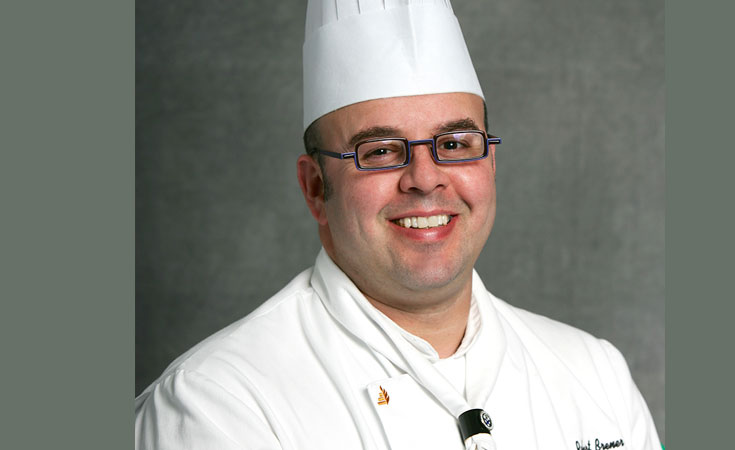
Robert Brener is an Associate Professor at Johnson & Wales University (JWU) in the College of Food Innovation and Technology, Charlotte campus, since 2004. A classically trained chef with global experience in Germany and Ireland, he bridges culinary expertise with HACCP system solutions and campus sustainability leadership. His academic credentials include: M.A.F. in Foodstyling from University of Central Lancashire B.S. in Food Service Management from Johnson & Wales University A.A.S. in Culinary Arts from Johnson & Wales University Brener's research integrates food science with environmental stewardship, emphasizing organic/local foods education and waste-reduction systems. His campus-wide composting program diverts thousands of pounds of food waste annually into usable compost for gardens, reflecting his commitment to practical sustainability solutions in culinary operations. His professional recognition includes: Keep NC Beautiful Award (Nonprofit category) As a Certified Campus Sustainability Leader (University of Vermont) and holder of multiple food safety certifications (NRFSP, American Hotel & Lodging Association), Brener drives institutional change through applied projects rather than theoretical research. His work with campus gardens and composting systems demonstrates hands-on environmental leadership across all JWU campuses.
Dr. Gary Clark is a Lecturer in Teaching & Research at La Trobe University's Department of Ecological Plant and Animal Sciences. His work focuses on sustainable soil management for agricultural resilience, particularly addressing constraints in Australian soils through biological methods like multi-species pastures, cover crops, and organic amendments. Education BSc(Hons) from La Trobe University M Agriculture from the University of Melbourne PhD from La Trobe University Graduate Diploma in Higher Education from La Trobe University Research Focus Clark's research explores soil health improvement via biological interventions, including: Sustainable agricultural practices for climate resilience Soil structure enhancement through plant-based solutions Organic amendment efficacy in constrained soils Ecosystem responses to fire and land management His publications demonstrate consistent focus on soil-plant-microbe interactions across diverse ecosystems. Professional Activities President of Soil Science Australia - Victorian Branch (since 2022) Teaching & Supervision He coordinates courses including AGR2ILS (Introduction to Land and Soil), AGR3LS (Land and Soil Management), and AGR2WIL (Work Integrated Learning). Available for Masters/PhD supervision and industry collaborations. Funded Research Next-generation weed management (2025-2030) Maize Field Trial with AgBioEn Pty Ltd (2020-2023)
Chandra Reddy serves as Professor and Dean and Director of Research/Administrator of Extension at Tennessee State University's College of Agriculture since joining the staff in 2008. His educational background includes a B.Sc (Ag) and M.Sc (Ag) from Andhra Pradesh Agricultural University and a Ph.D. from the University of Florida. Dr. Reddy's research focuses on sustainable agricultural systems with expertise in environmental agronomy, soil nutrient dynamics, and tropical crop production. His work emphasizes practical solutions for soil health management through poultry litter application, no-till farming, and dryland cropping systems in both temperate and tropical regions. His publication portfolio demonstrates consistent contributions to agronomic science, with significant emphasis on sustainable soil management practices for cotton production and nutrient cycling in agricultural ecosystems. Scientific recognition includes: Soil Science Society of America Fellowship (2010) Food Systems Leadership Institute Fellowship (2010-2012) AASIO Outstanding Scientist Award (2010) NAREEEAB Board Membership (2010-2013) George Washington Carver Agricultural Excellence Award (2008) American Society of Agronomy Fellowship (2006) Dr. Reddy has significantly impacted agricultural extension through no-till farming adoption in Alabama and dryland cropping system development in West Africa, while teaching advanced courses in sustainable agriculture, tropical soils, and natural resource modeling.