Zachary Aman is a Professor in the School of Engineering , Chemical Engineering department at the University of Western Australia . His research focuses on gas hydrates , flow assurance , and subsea pipeline management , with applications in petroleum engineering and hydrocarbon processing . Research Output: 127 publications Grants: 53 funded projects H-index: 39 Research interests include: Hydrate formation kinetics and rheology Subsea flowline stability and inhibition Hydrocarbon separation under high-pressure Novel composite materials and ionic liquids for hydrate management Article Trends highlight his work on hydrate probability models , flowloop experiments , and environmental applications like oil spill modeling and CO 2 capture. His recent work explores nanostructured additives and transient simulation tools for energy and environmental systems. Grants and Supervision reflect 53 funded projects and 19 supervised works, indicating active mentorship and industry collaboration.
Dr. David Evans is a Royal Society University Research Fellow at the University of Southampton with expertise in paleoclimate reconstruction and marine geochemistry. His research focuses on understanding climate-Earth surface interactions through geochemical proxies, experimental culturing of marine organisms, and numerical modeling. He leads several major projects funded by the Royal Society and UKRI aimed at refining paleoclimate reconstructions. Dr. Evans investigates Cenozoic warm periods (particularly the early Eocene) to evaluate climate model performance and understand climate-biosphere interactions. His work centers on: 1) Reconstructing boundary conditions affecting geochemical proxies, especially seawater composition; and 2) Understanding biomineralization processes in key archives like foraminifera to ensure accurate proxy applications through geologic time. His publications (2024-2025) predominantly focus on marine biomineralization, paleoclimate proxies, and carbonate geochemistry, with frequent applications of isotope techniques and experimental approaches. Research consistently emphasizes methodological improvements in geochemical analyses and proxy validation. He currently supervises four PhD students across biological sciences and oceanography. His research group is part of the Geochemistry unit and Southampton Marine and Maritime Institute. Major active projects include Horizon Europe's AMOEBA initiative and a correlative cryo-analytical center development.
Professor Christopher Baddeley is a faculty member in the School of Chemistry at the University of St Andrews, where he leads research in Surface Chemistry and heterogeneous catalysis. His work focuses on understanding surface reaction mechanisms underlying enantioselective catalytic processes and developing novel surface architectures for catalytic applications. His research expertise includes: Surface reaction mechanisms in enantioselective heterogeneous catalysis Construction of porous 2-D surface architectures using intermolecular H-bonding and metal-organic coordination Development of in situ probes for liquid-solid interface studies Corrosion inhibition mechanisms on metal surfaces Characterization of bimetallic surface composition using Medium Energy Ion Scattering Professor Baddeley employs advanced surface characterization techniques including Scanning Tunnelling Microscopy (STM), Reflection Absorption Infrared Spectroscopy (RAIRS), and High Resolution Electron Energy Loss Spectroscopy (HREELS) in ultrahigh vacuum environments. His laboratory also features specialized equipment for studying processes at the liquid-solid interface, bridging the gap between idealized UHV studies and real-world catalytic systems. Analysis of his recent publications reveals strong trends in surface science with particular emphasis on: Molecular adsorption and monolayer formation on metal surfaces N-heterocyclic carbene chemistry for surface modification Corrosion inhibition mechanisms of organic molecules on copper alloys Thermal behavior of bimetallic nanoparticles on oxide supports Surface-confined hydrogenation reactions Professor Baddeley has received significant recognition for his contributions to surface science: CR Burch Prize from the British Vacuum Council (1999) His academic leadership extends to supervising doctoral students and serving as an external examiner for PhD theses at other institutions. Professor Baddeley has secured substantial research funding through multiple EPSRC grants: N-heterocyclic Carbenes on Metal Surfaces project (2019-2022) Investigating corrosion at the interface project (2019) Hydrogen Free Selective Hydrogenation project (2015-2018) MEIS investigations of adsorbate induced segregation (2007-2010) He is actively involved in the EaSTCHEM research school, a joint initiative between the University of Edinburgh and the University of St Andrews that provides a collaborative environment for chemical research and training, with significant contributions to UN Sustainable Development Goals related to clean energy and responsible consumption.
Dr Christopher Grey serves as a Pearl Jubilee Research Fellow and Lecturer in Theological Aesthetics at the London School of Theology, with additional affiliations to the American Maritain Association and the Personal Ordinariate of Our Lady of Walsingham. His career bridges practical music education and advanced philosophical-theological scholarship. His academic credentials include: PhD in Philosophy and Music (2017-2021) from The Open University UK as an AHRC Scholar MA in Music Education (2004-2006) from University College London BMus, LRAM (1987-1990) from the Royal Academy of Music Grey's research centers on Aesthetics and Philosophy of Music through a Thomistic lens, exploring how musical beauty intersects with theological concepts. His work develops Jacques Maritain's aesthetic theory to construct a tradition-constituted framework that addresses modern challenges while overcoming Enlightenment limitations. Key themes include virtuous aesthetic experience, the ineffable in music, and historical contexts of musical beauty in ecclesial settings. His publication trajectory (2010-2023) reveals evolving focus from congregational singing dynamics to Maritain's creative intuition, culminating in current work commemorating the 50th anniversary of Maritain's death. Articles consistently bridge Thomistic philosophy, Catholic theology, and musical practice, with increasing emphasis on Maritain's unfinished musical theory. No scientific awards beyond his AHRC doctoral scholarship were documented. Grey supervises postgraduate research at the London School of Theology in theological aesthetics. Current Pearl Jubilee Research Fellowship supports his monograph on Thomist musical aesthetics and a Maritain-focused conference. Past funding includes AHRC doctoral support. He contributes to the Margaret Beaufort Institute of Theology's research ecosystem and collaborates with the American Maritain Association, aligning with the Institute's Centre for Ecclesial Ethics initiatives.
Thomas Riise Johansen is a Professor in the Department of Accounting at Copenhagen Business School (CBS), where he has been affiliated since completing his PhD in Accounting from CBS in 2005. Prior to joining CBS, he worked at Ernst & Young (1996-2005), bringing practical industry experience to his academic role. His primary academic home is within the Department of Accounting, focusing on critical intersections between auditing practices and corporate governance structures. His research centers on auditing, sustainability accounting, corporate governance, and annual report disclosure. Key investigations include: The relationship between board networks and auditor selection Value and barriers in annual report innovation Performance evaluation systems within audit firms Public oversight mechanisms in auditing Information systems for sustainability reporting Accountability dynamics between employees and organizations His work bridges academic rigor and practitioner relevance, addressing evolving regulatory landscapes and market demands. Analysis of his 15 most recent publications reveals consistent focus on audit quality determinants, sustainability reporting evolution, and governance-audit interdependencies. Recent work increasingly examines EU regulatory frameworks (Taxonomy Regulation, climate risk disclosure) and Big 4 governance structures, reflecting growing emphasis on public interest accountability in auditing. He actively supervises master's theses in accounting, auditing, and corporate governance. His current research portfolio includes projects on: Revisors' declaration (FSR) Enforcement impact on financial reporting Annual report disclosure value enhancement TIME MIRROR: Accounting for Green Transition Diversity in accounting careers Behavioral aspects of auditor professionalism
Jia-Bin Huang is an Associate Professor in the Department of Computer Science at University of Maryland, College Park , with a secondary appointment at the University of Maryland Institute for Advanced Computer Studies . His work bridges computer vision , computer graphics , and machine learning . His research focuses on 3D scene reconstruction , neural radiance fields , generative models , and multimodal foundation models . He has made significant contributions to video super-resolution , text-driven 3D modeling , and inverse rendering techniques. 15 recent publications (2024-2025) at top venues: CVPR , NeurIPS , SIGGRAPH Asia , 3DV , and ECCV Pioneering work in Urban Scene Inverse Rendering , Generative Video Editing , and 3D Human Digitization He has received multiple awards including the 3M Non-Tenured Faculty Award , ETRA Best Paper , and NSF Grants . His lab trains 12 PhD students and has graduated 18 Masters/PhD students now at institutions like Stanford , Meta , and Google .
Sachiko Amari serves as a Research Professor of Physics in the Department of Physics at Washington University in St. Louis, where she conducts pioneering research in cosmochemistry through the McDonnell Center for the Space Sciences. Her work bridges laboratory astrophysics and planetary science, focusing on extraterrestrial materials to unravel solar system formation and stellar processes. Amari's educational foundation includes a PhD from Kobe University and both Master of Engineering and Bachelor of Engineering degrees from Waseda University in Japan. This engineering background informs her precise analytical approach to meteoritic materials. Her research centers on presolar grains—stardust formed in stellar outflows that were incorporated into primitive meteorites. Using secondary ion mass spectrometry, she analyzes isotopic ratios to investigate nucleosynthesis in stars, mixing processes in stellar ejecta, and Galactic chemical evolution. A secondary focus examines noble gas trapping mechanisms in meteorites to understand volatile origins and early solar system processes. Her work reveals how microscopic grains preserve macroscopic cosmic histories. Analysis of her recent publications shows consistent emphasis on silicon carbide and graphite presolar grains, with increasing technical sophistication in NanoSIMS analysis. Research trends include correlating multi-element isotopic systems, identifying rare stellar sources like novae, and resolving phase Q—the elusive noble gas carrier in meteorites. Her work demonstrates how laboratory studies of individual grains constrain astrophysical models. Amari leads an active research group within the McDonnell Center for the Space Sciences and collaborates on major initiatives including the Mars Sample Return Science Definition Team. She mentors graduate students in meteoritics research while developing analytical protocols for extraterrestrial material characterization. Her laboratory serves as a hub for stardust analysis, utilizing advanced mass spectrometry techniques to decode isotopic fingerprints of stellar processes.
Elizabeth A. Edwards is a University Professor at the University of Toronto in the Department of Chemical Engineering and Applied Chemistry , with cross-appointments to the Department of Cell & Systems Biology . As Director of BioZone and Canada Research Chair in Anaerobic Biotechnology, she leads groundbreaking research in microbial bioremediation of groundwater pollutants and industrial wastewater treatment through anaerobic digestion. Ph.D. in Environmental Engineering (Stanford, 1993) M.Eng. and B.Eng. in Chemical Engineering (McGill, 1985/1983) Licensed Professional Engineer (P.Eng.) Her research focuses on anaerobic microbial communities that degrade pollutants like chlorinated solvents and aromatic hydrocarbons. Using advanced molecular biology, genomics, proteomics , and biochemical pathway analysis , her lab investigates functional interactions in microbial consortia and translates discoveries to commercial applications such as the KB-1® bioproduct . Recent studies examine enzyme activity, lignocellulose degradation, and granulation dynamics in anaerobic reactors. Scientific Recognition: 2020 Killam Prize in Engineering 2016 Canada Research Chair (Tier 1) 2014 Royal Society of Canada Fellow 2011 Canadian Academy of Engineering Fellow 2011 AAAS Fellow 2008-2010 Killam Research Fellowship She supervises extensive graduate student projects spanning enzyme discovery, bioremediation optimization, and microbial consortium analysis. Her lab collaborates with GeoSyntec Consultants and SiREM Labs for field implementation of bioremediation strategies.
Yang Fan is an Associate Professor at the Shenzhen University of Technology, currently serving as Deputy Director of the Shenzhen Key Laboratory of Marine Energy and Environmental Safety and Deputy Director of the Center for Frontier Science and Engineering Applications of Surfaces and Interfaces. He is a recipient of the Shenzhen 'Peacock Plan' Overseas High-Level Talent Program and Pingshan District Second Prize in the 2020 Shenzhen Innovation and Entrepreneurship Competition. Educational Background: Bachelor in Materials Science (2006), Huazhong University of Science and Technology Master in Materials Science (2009), University of Alberta PhD in Chemical Engineering (2015), University of Alberta Research Interests: Focuses on magnetic functional materials, silicon-carbon anode materials for lithium-ion batteries, and superhydrophobic coatings. His work on oil-water emulsion stability mechanisms and nanosilver composite applications has been recognized by major energy companies. Prominent Research Trends: Publications highlight advancements in energy storage materials (e.g., potassium-ion battery anodes), functional coatings for water treatment, and innovative carbon encapsulation strategies for silicon nanoparticles in batteries. Scientific Awards: Shenzhen 'Peacock Plan' Overseas High-Level Talent Program Nanshan District Pilot Talent Guangdong Province Yuyue Card 2019 Guangdong Provincial University Achievement Transformation Competition - First Place in Environmental Protection and New Materials 2020 Shenzhen Innovation and Entrepreneurship Competition - Third Place in Finals Grants & Projects: Currently leads the Shenzhen Key Laboratory of Marine Energy and Environmental Safety (5000k RMB, 2021-2023) and co-leads the Shenzhen University of Technology's Center for Surface and Interface Science (10,000k RMB, 2021-2023). Previously contributed to NSERC-funded projects in Canada and Guangdong's leading talent program. Labs & Teams: Associated with the Shenzhen Key Laboratory of Marine Energy and Environmental Safety and the Center for Surface and Interface Science and Applied Engineering at Shenzhen University of Technology.
Om P. Damani is a Professor in the Department of Computer Science and Engineering at Indian Institute of Technology Bombay. He serves as Faculty In-Charge of the Sustainable Development unit of the Center for Policy Studies and is also associated with the Centre for Technology Alternatives for Rural Areas (CTARA). His work bridges computer science with social development challenges, focusing on practical applications for rural communities. Dr. Damani's research interests span Technology for Development of the bottom 80%, System Dynamics: Modeling and Simulation for Social Development, System Architecture, and Data Science. His work demonstrates how computational approaches can address complex development challenges through projects like GramDrishti (for detecting rural infrastructure in satellite images), JalTantra (for optimizing water distribution networks), and FAI (Farm Assessment Index for holistic farming practice evaluation). His publications reveal a consistent focus on applying computer science to solve real-world problems in water management, agricultural systems, and rural infrastructure. His research has been recognized with significant awards including the IIT Bombay Industrial Impact Award 2010, IIT Bombay Impactful Research Award 2019, and Best Poster Award at Agriculture Science Congress 2017. Dr. Damani has successfully translated theoretical research into practical tools that address development challenges, particularly in water resource management and agricultural systems. As an educator, he has mentored numerous PhD students including Chintan Tundia, Shreenivas Kunte, Nikhil Hooda, Sivamuthu Prakash Murugan, Dipak L. Chaudhari, Prateek Kapadia, and Manoj K. Chinnakotla. His teaching portfolio includes courses on System Dynamics: Modeling and Simulation for Development (CS 752), Program Derivation (CS 420), and ICT for Development. Dr. Damani's educational background includes a Ph.D. in Computer Sciences from the University of Texas at Austin (1994-1999), B.Tech. in Computer Science and Engineering from IIT Kanpur (1990-1994), and prior professional experience at IBM T J Watson Research Lab and Akamai Technologies.
Jianqi Xi is an Assistant Professor in the Department of Nuclear, Plasma & Radiological Engineering at the University of Illinois Urbana-Champaign, affiliated with The Grainger College of Engineering. His research focuses on nuclear materials, combining multiscale modeling with experimental techniques to understand material degradation under radiation and corrosive environments. He holds a Ph.D. in Materials Science and Engineering from the University of Tennessee-Knoxville (2017). Before joining UIUC, he held postdoctoral and industry positions at the University of Wisconsin-Madison and ThermoFisher Scientific. Research Interests: Fusion Materials Design Radiation-Corrosion Synergy Multiscale Modeling of Microstructure Evolution Data-Driven Materials Innovation Molten Salt Corrosion Recent publications emphasize atomic-scale mechanisms in silicon carbide (SiC) corrosion, radiation damage mitigation, and advanced ceramics design. His work bridges computational simulations with experimental validation to address challenges in nuclear energy systems. Awards include the Joseph E. Spruiell Award (2017) and recognition as an Outstanding Reviewer (2018). He leads the Modeling of Nuclear Materials (MNM) Group , focusing on interdisciplinary approaches to accelerate material discovery for next-generation nuclear reactors. Current openings exist for researchers interested in computational materials science and experimental collaborations.
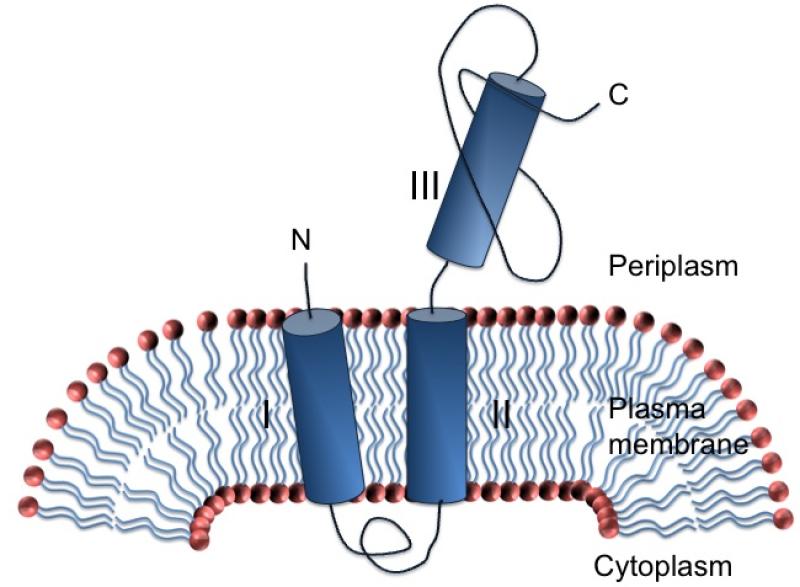
Dr. Ross Dalbey is a Full Professor in the Department of Chemistry and Biochemistry at The Ohio State University, affiliated with the College of Arts and Sciences. He holds a B.S. in Chemistry from the University of Washington (1978) and a Ph.D. in Biochemistry from Washington State University (1983). Postdoctoral training included work with Prof. William Wickner at UCLA. His research focuses on membrane protein assembly and proteases, particularly the YidC protein's role in membrane insertion and folding. Key areas include biophysical mechanisms of protein insertion, signal peptidase function, and mitochondrial membrane systems. He has held NIH and AAAS fellowships, and his lab has been funded by NIH and NSF for over three decades. His students hold academic and industry positions at institutions like NIH, MIT, and pharmaceutical companies such as Eli Lilly. Education: B.S., Chemistry, University of Washington, 1978 Ph.D., Biochemistry, Washington State University, 1983 Awards: American Cancer Society Junior Faculty Award (1989–1992) Elected Fellow of the American Association for the Advancement of Science (AAAS) Professional Memberships: American Chemical Society Federation of American Societies for Experimental Biology American Society of Microbiology Sigma Xi Phi Kappa Phi His lab investigates how proteins are inserted into membranes and folded, with emphasis on the YidC/Oxa1 family of insertases. Recent work explores YidC's substrate specificity, dimeric structure, and interactions with the Sec translocon. Studies on proteases like signal peptidase reveal their roles in membrane-associated peptide cleavage. Collaborations include structural biology with Prof. Horst Vogel in Switzerland and functional analyses with Prof. White at Ohio State. Research highlights include defining YidC's role in multispan membrane protein integration and uncovering evolutionary conservation across bacterial, archaeal, and eukaryotic systems. The lab's findings contribute to understanding mitochondrial protein insertion pathways and drug design targeting membrane-associated enzymes.
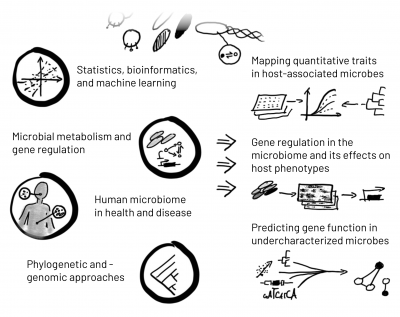
Patrick Bradley is an Assistant Professor of Microbiology at The Ohio State University, affiliated with the College of Arts and Sciences. He is also part of the Infectious Diseases Institute and the Center of Microbiome Science. His research focuses on understanding human microbiota (particularly the gut and oral microbiomes) using computational and experimental approaches. Bradley earned his A.B. from Harvard University (2005), Ph.D. from Princeton University (2012), and completed a postdoctoral fellowship at the University of California, San Francisco (2013–2020). Education: A.B., Harvard University, 2005 Ph.D., Princeton University, 2012 Postdoc, University of California, San Francisco, 2013–2020 His research interests include microbial gene function prediction, gene regulation in adaptive environments, and the role of microbiomes in drug metabolism and disease. Current lab projects involve leveraging natural genetic variation to identify genes influencing microbial colonization, understanding regulatory mechanisms in microbial adaptation, and developing machine learning tools for functional annotation. Recent work highlights the disproportionate impact of genomic misassembly in metagenomic studies and the shared metabolic pathways between hosts and microbes in cancer drug processing. Bradley’s lab actively collaborates on projects such as PanSweep (a tool to detect pangenome contamination) and Phylogenize2 (for phylogeny-corrected gene association analysis). Advising and grants: Bradley mentors PhD students (Christian J. Quiles Pérez, Stephanie Majernik, Nghi Tran, Alexis Young) and has contributed to studies exploring microbiome-modulating therapies. The Bradley Lab is part of interdisciplinary initiatives at Ohio State, emphasizing translational research in microbiome science. Lab activities include developing computational tools for microbiome analysis and maintaining collaborations with institutions like the Center for Microbiome Science. The lab’s work has implications for precision medicine and understanding microbial contributions to human health.
Cormac Fay is a Research Fellow in Artificial Intelligence for Smart Cities at the School of Computing and Information Technology (SCIT), University of Wollongong, within the Faculty of Engineering and Information Sciences. His roles include affiliations with the SMART Infrastructure Facility and the ARC Centre of Excellence for Electromaterials Science. Previously, he held positions at Dublin City University, including post-doctoral roles in sensor research and data analytics. He holds a PhD in Engineering from Dublin City University (2013), an M.Eng. in Telecommunications Engineering (2007), and a B.Eng. in Mechatronic Engineering (2005). His research focuses on AI-driven smart city technologies, sensor systems for environmental monitoring, and advanced 3D printing materials. Key areas include IoT-enabled carbon-emission tracking, wearable biomedical devices, and sustainable sensor networks for landfill gas management. He has developed innovative solutions such as cryogenic 3D printing techniques for biocompatible inks and LED-based optical sensing platforms. Dr. Fay has secured grants totaling over $X million, including projects on military diver monitoring, blue carbon ecosystems, and low-cost sensor networks for agriculture and environmental safety. His work integrates interdisciplinary approaches, bridging materials science, biomedical engineering, and environmental engineering. Grants: Led projects on carbon-emission IoT systems, oyster farming sensors, and vibration monitoring. Supervision: Advised a Master's project on biomimetic microfluidic fabrication (2017–2019). Labs/Teams: Collaborates with the SCIT, SMART Infrastructure Facility, and global institutions like École Polytechnique Fédérale de Lausanne.
Kaliramesh (Kali) Siliveru is an Associate Professor and University Outstanding Scholar in the Department of Grain Science and Industry at Kansas State University. His work focuses on grain processing, food safety, and process modeling , with expertise in milling technologies, particle mechanics, and material handling. He holds a B.S. in Food Science from Acharya N.G Ranga Agricultural University, India, and a Ph.D. in Grain Science from Kansas State University. Dr. Siliveru’s research has produced 75+ peer-reviewed articles, 13 book chapters , and impactful studies on reducing microbial contamination in wheat-based products, optimizing pulse processing, and advancing nonthermal technologies like cold plasma. He has received prestigious awards including the ASABE Early Career Engineer of the Year and the University Distinguished Faculty Award for undergraduate mentoring. He teaches GRSC 310 (Materials Handling) , GRSC 810 (Particle Technology) , and GRSC 840 (Advanced Grain Processing) . His lab affiliations include the BIVAP Feed Quality Assurance Lab and Hal Ross Flour Mill, where he explores milling efficiency, microbial control, and sustainable food processing . Current projects address novel applications for minor millets and engineering solutions for safe, nutritious food production.