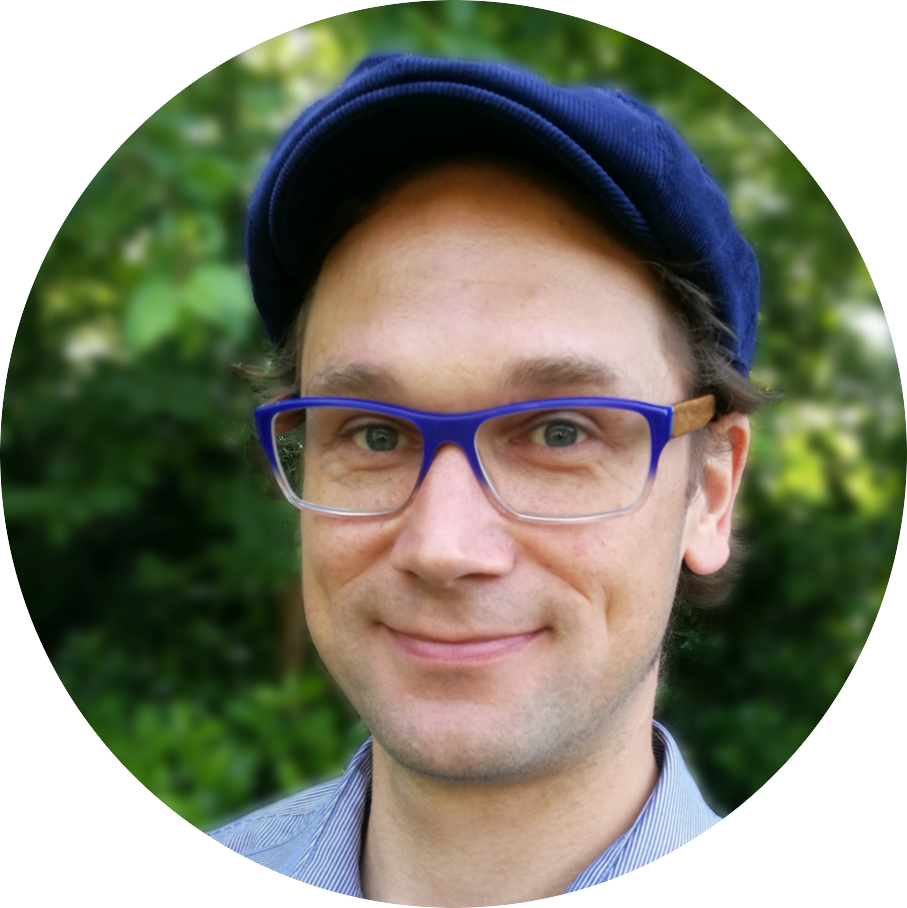
Hans Tompits is an Associate Professor in the Department of Knowledge-Based Systems at Technische Universität Wien (Vienna University of Technology). His research focuses on computational logic, declarative logic programming, and formal methods, with a particular emphasis on Answer-Set Programming (ASP). He coordinates the Master's program in Logic and Computation and leads projects in areas such as formal methods for optimization, fault-tolerant autonomous systems, and algorithmic composition. His work bridges theoretical advancements with practical applications, including tools like SeaLion (an ASP IDE with debugging support) and dlvhex (an ASP-based semantic web reasoner). He has contributed to foundational topics like program equivalence, debugging techniques, and integration of ASP with external systems. His recent projects address challenges in autonomous vehicle architectures, music composition algorithms, and safety-critical system design. Tompits has published extensively on topics ranging from nonmonotonic reasoning and modal logics to the development of declarative programming tools. His interdisciplinary approach spans computer science, mathematics, and AI, with applications in both academic and industrial contexts.
Matthias Sutter serves as Director at the Max Planck Institute for Research on Collective Goods in Bonn while holding part-time professorships at the University of Cologne (10%) and University of Innsbruck (5%). His academic career spans multiple prestigious institutions including the European University Institute in Florence (2013-2014), University of Gothenburg (2007-2013, part-time), University of Cologne (2015-2017, Excellence Chair), and University of Innsbruck (2006-2017). His educational background includes a PhD in economics (1999) and habilitation (2002), both from the University of Innsbruck. Additional academic recognition includes membership in the German National Science Association (Leopoldina) and Academia Europaea. Sutter's research program centers on experimental economics, with particular focus on team decision making processes and the development of economic decision capabilities across different age groups. His work investigates how patience, risk preferences, and social behaviors evolve throughout life, and how these economic preferences impact health and economic success. He has made significant contributions to understanding credence goods markets, where information asymmetry between providers and consumers creates unique market challenges. His experimental approaches combine laboratory studies with field experiments to generate robust insights applicable to real-world economic situations. His publication record demonstrates consistent output in top-tier journals, with recent work spanning diverse topics including energy consumption during crises, workplace climate interventions, vaccination attitudes in polarized environments, and the formation of economic preferences in childhood. The interdisciplinary nature of his research connects economics with psychology, public policy, and organizational behavior, reflecting his broad scholarly impact. Major Awards and Honors: 2017 Hans Kelsen Preis of the Universität zu Köln 2016 Pater Johannes Schasching SJ Preis for dialogue between economy, ethics and religion 2015 Exeter Prize for Research in Experimental Economics 2009 Science Prize of the State of Tyrol 2008 Honorary Prizes from Stiftung Südtiroler Sparkasse and State of Vorarlberg 2004 Oberbank-Science-Prize Linz Sutter serves as Principal Investigator in the Excellence Cluster 'ECONtribute: Markets & Public Policy,' funded by the German Science Foundation (DFG). He holds editorial positions as Associate Editor of 'Management Science,' 'European Economic Review,' and 'Economics Letters,' and serves on the Editorial Boards of 'Experimental Economics' and 'Journal of the Economic Science Association.' His work extends beyond academia through popular science communication, including the best-selling book 'Die Entdeckung der Geduld' (The Discovery of Patience) exploring the importance of patience for health and economic success.
Gunnar von Heijne serves as Professor of Theoretical Chemistry at Stockholm University, a position he has held since 1994, and as Director of the Center for Biomembrane Research since 2006. Previously, he directed the Stockholm Bioinformatics Center from 2000-2006. His academic career includes appointments at Karolinska Institute as Associate Professor (1989-1994), University of Munich as Full Professor of Computer Science (1999-2002), and ETH Zurich as Professor of Computer Science (2003). Dr. von Heijne earned his Ph.D. in Theoretical Physics from the Royal Institute of Technology, Stockholm in 1980. His research focuses on protein sorting and membrane protein biogenesis, with groundbreaking contributions including the discovery of the "(-1,-3)-rule" for signal peptide cleavage sites and the "positive inside" rule for membrane protein topology. He has developed essential bioinformatics tools such as SignalP, TargetP, and TMHMM that are widely used in the field. His work spans both computational methods development and experimental validation across E. coli and eukaryotic systems, with recent emphasis on dual-topology membrane proteins and their evolutionary significance. His research has established fundamental principles in membrane protein biology and provided essential tools for the global research community. Dr. von Heijne's publications have received approximately 75,000 citations with an h-index of 102, reflecting his significant impact on molecular biology, bioinformatics, and membrane protein research. The T. Svedberg Award, The Swedish Biochemical Society (1990) The Göran Gustafsson Prize, The Swedish Academy of Sciences (1995) The Arrhenius Medal, The Swedish Chemical Society (1997) Elected member of the Royal Swedish Academy of Sciences (1997) Elected member of the Academia Europaea (1998) "Excellence" Award, the Swedish Research Council (2002) Honorary Doctorate, Åbo Akademi (2008) The van Deenen Medal, Utrecht University (2009) The Accomplishment by a Senior Scientist Award of the International Society for Computational Biology (2012) Dr. von Heijne has supervised 16 Ph.D. students since 1991 and has served extensively on academic committees, including as faculty examiner for doctoral defenses at multiple international institutions. He has chaired the Nobel Committee for Chemistry since 2007 and has participated on editorial boards of leading journals including Journal of Molecular Biology and EMBO Journal. As Director of the Center for Biomembrane Research, he leads an interdisciplinary team investigating membrane protein structure, function, and biogenesis through integrated experimental and computational approaches, advancing our understanding of fundamental cellular processes.
Joanna Jurewicz serves as Professor at the University of Warsaw's Faculty of Oriental Studies within the Department of South Asian Studies. Elected to Academia Europaea in 2002 following her habilitation, she maintains active scholarly engagement in Vedic studies and cognitive linguistics. Her institutional affiliation spans decades, rooted in Warsaw's Indological tradition since her 1990 doctorate. Her research centers on cognitive-linguistic analysis of the Ṛgveda, examining metaphorical structures, conceptual formation in archaic thought, and philosophical continuities into Upaniṣadic literature. Key contributions include deconstructing Vedic concepts of self (ātmán), desire (kāma), and cosmic order through frameworks like "fire cognition" and spatial metaphors. This interdisciplinary approach bridges linguistics, philosophy, and religious studies to reveal systematic cognitive patterns in ancient Indian thought. Jurewicz's publication trajectory shows consistent focus on Ṛgvedic semantics since the 1990s, evolving toward comprehensive analyses of Indian philosophical development. Her work demonstrates methodological innovation through cognitive linguistics applied to classical texts, influencing contemporary Indological scholarship across Central and Eastern Europe. Prime Minister Award for outstanding academic achievements (2010) for 'Fire and Cognition in the Ṛgveda' Member of Academia Europaea (2002) Her editorial leadership includes co-editing significant volumes like 'Symbolism of Meadows and Pastures in Ancient Beliefs' and 'Cultural Conditions of Development in Asia and Africa.' Jurewicz actively participates in commemorative academic projects, such as the 50th Anniversary of Indological Studies at Warsaw University (2003/2004), where she contributed analyses of ritual language and hydraulic metaphors. Her scholarly network extends across European Indological conferences, evidenced by collaborations with institutions like the Polish Semiotic Society and University of Warsaw Press.
Karl-Heinz Wagner is Full Professor of Nutrition and Food Quality at the University of Vienna, Faculty of Life Sciences, Department of Nutritional Sciences. He directs an experimental research group investigating how lifestyle factors—diet, specific food components, phytochemicals, physical activity and bioactive non-food compounds—modulate oxidative stress and DNA stability in humans, with emphasis on aging and sarcopenia. He initiated the university-wide “Active Ageing” research platform and coordinates EU projects such as SHIFT2HEALTH. Education & Affiliations: University of Vienna, Faculty of Life Sciences, Department of Nutritional Sciences – Professor and Chair of Nutrition and Food Quality Principal investigator of the Emerging Field “Oxidative Stress and DNA Stability” Head of the “Active Ageing” research platform activeageing.univie.ac.at Research Focus: Prof. Wagner’s group applies state-of-the-art biochemical and molecular techniques to quantify antioxidant compounds, ROS-induced DNA and chromosomal damage, DNA repair capacity and transcriptional regulation of antioxidant defenses. Human intervention trials, cross-sectional cohorts and in-vitro models are used to examine: Impact of plant-based vs. animal-based diets on multimorbidity risk Nitrate-rich beetroot juice effects on microbiome, vascular function and oxidative stress Bilirubin biology and metabolic health in Gilbert’s syndrome High-protein nutrition and resistance training on DNA damage and muscle quality in older adults Microbiota-derived metabolites that enhance CD8 T-cell antitumor immunity after exercise Publication Trends 2023-2025: Recent output demonstrates a strategic shift toward multi-omics integration (metabolomics, lipidomics, proteomics) to dissect diet–microbiome–immune crosstalk and to identify predictive biomarkers of healthy ageing. Papers consistently appear in top-tier journals (Cell, Lancet Healthy Longev, Redox Biol, Mol Nutr Food Res) and embrace large multinational cohorts, randomized controlled trials and mechanistic animal/cellular work. Funding & Networks: Research is mainly funded by the Austrian Science Fund (FWF), National Bank, European Commission (Horizon 2020, Horizon Europe), EU Cross-Border Co-operation and the University of Vienna. A dense national and international partner network ensures continuous biomarker development and knowledge transfer. Student Training & Citizen Science: Prof. Wagner actively involves MSc/PhD students and post-docs in externally funded projects and advertises internships via ERASMUS+. Study participant recruitment portals for projects like SHIFT2HEALTH, NUTRIAGING and bilirubin clinical studies are maintained to engage the public and foster translational impact.
Prof. Konstantin Hadjiivanov (b. 1958) is a Full Professor and Director of the Institute of General and Inorganic Chemistry at the Bulgarian Academy of Sciences. He holds a PhD (1991) and Doctor of Sciences (2000) from the same institution, where he advanced to Associate Professor (1996) and Full Professor (2002). PhD in Chemistry, 1991, Bulgarian Academy of Sciences Doctor of Sciences (Doctor Habil), 2000, Bulgarian Academy of Sciences His research focuses on surface chemistry, particularly the characterization of surface species via vibrational spectroscopy. He is a global authority in identifying nitrogen-oxo species in environmental catalysis, developing theoretical models for geminal adspecies formation, and pioneering methodologies for IR probe molecule analysis (e.g., CO/NO dual probing, isotope labeling). Hadjiivanov's work has been cited over 3900 times (H-index 31), making him the most cited scientist in the Bulgarian Academy of Sciences. He has collaborated extensively with leading groups in Germany, France, Spain, Italy, and the USA, resulting in 146 publications including 5 reviews. Scientific Awards & Recognition: Alexander von Humboldt fellowship (1998-1999) Doctor Honoris Causa, University of Caen (2007) Pythagoras award for top Bulgarian scientist in Natural Science (2008) As a research leader, he supervised 8 PhD students and coordinated EU-funded projects like the Centre of Competence (INCO 016414) and the National Centre of Excellence for New Materials (grants DO-02-82 and CVP 02/2009). He also organized international events including Symposia on Advanced Micro- and Mesoporous Materials and MetEcoMat workshops.
Luca Zoppelli is a Professor of Musicology at the University of Fribourg, Switzerland, since 2000. Previously, he held academic positions at the University of Salento (1993–1998 as Lecturer, then Associate Professor) and taught at several Italian conservatories including Padua, Vicenza, and Lecce. His research focuses on 19th-century opera, Venetian music history, musical dramaturgy, and the aesthetics of Baroque music. He co-directs the critical edition of Vincenzo Bellini's works and served as editor of the Schweizer Jahrbuch für Musikwissenschaft / Annales Suisses de Musicologie (2008–2019). Education: Studied Musicology and Literature at Ca' Foscari University in Venice (B.A., 1984 under Giovanni Morelli). Specialized in Baroque music aesthetics, operatic narrative structures, and the interplay between music and drama. His work bridges historical analysis with contemporary musicological methodologies. Research interests prominently feature operatic composition processes, the role of narrative in music, and the socio-political dimensions of 19th-century Italian opera. His publications critically analyze composers like Rossini, Verdi, Wagner, and Bellini, with notable contributions to understanding musical dramaturgy and the evolution of operatic forms.
Nicolas Donin is a Professor and Chair of Musicology at the University of Geneva and a Senior Researcher at IRCAM (Paris), leading the 'Analysis of Musical Practices' team within STMS Labs. He specializes in interdisciplinary musicology, focusing on 20th- and 21st-century musics, compositional processes, and the intersection of music history with social sciences. Elected to the Academy of Europe in 2020, he has held key roles such as Head of IRCAM’s Research Group and Pedagogical Board Member at the Ecole des Hautes Etudes en Sciences Sociales. His research explores post-Wagnerian listening practices, post-spectral aesthetics, and ethnography of creative processes. He led major French research programs (MuTeC, GEMME) and founded the Tracking Creative Process in Music conference series. Over 100 publications span music analysis, composition theory, and interdisciplinarity, with edited volumes like *L’Analyse musicale, une pratique et son histoire* (2009) and *Théories de la composition musicale au XXe siècle* (2013). As an associate member of Oxford University’s Faculty of Music and the Centre de Recherche sur les Arts et le Langage, he contributes to musicological discourse and institutional leadership. His work bridges empirical research, historical analysis, and social science methodologies.
Joost-Pieter Katoen is a full Professor at RWTH Aachen University and Head of its Computer Science Department since 2012. He also holds a part-time (20%) Professorship at the University of Twente . His research focuses on model checking , probabilistic verification , formal semantics , and software verification , with applications in aerospace systems. His work has led to significant tools like MRMC (probabilistic model checker), COMPASS (AADL analysis tool-set), and libalf (learning automata library). He has authored over 18 international projects (total €5.2 million) and graduated 12 PhD students. Scientific Awards : Member, German National Academy of Sciences (Leopoldina), 2024 ACM Fellow, 2020 ERC Advanced Grant, 2018 Honorary doctorate, Aalborg University, 2017 Teaching Award, RWTH Aachen, 2010 Philips Early Career Development Award, 1988 Research Trends (from articles): His recent work spans probabilistic program verification , quantitative game theory , Markov chain analysis , and parameter synthesis for stochastic systems, with applications in AI, quantum computing, and fault tree analysis. Leadership & Service : Katoen co-founded the QEST conference , chairs ETAPS steering committee, and has led numerous program committees (CONCUR, TACAS, QEST). He has served on editorial boards and organized conferences/seminars globally.
Martin Ostoja-Starzewski , Ph.D. (McGill), is a Professor of Mechanical Science & Engineering at the University of Illinois at Urbana-Champaign , with affiliate appointments at the Beckman Institute and National Center for Supercomputing Applications . His research spans continuum mechanics , stochastic wave propagation , and fractal media , focusing on scaling laws and the statistical-to-representative volume element transition. 2006–Present: Professor, UIUC 2001–2005: Canada Research Chair, McGill University 2023: Rothschild Distinguished Visiting Fellow, University of Cambridge 2022: Member, European Academy of Sciences and Arts 2024: Academia Europaea Foreign Member His work pioneered continuum mechanics with spontaneous second law violations and tensor random fields for stochastic PDEs. He authored four foundational books, including Tensor-Valued Random Fields for Continuum Physics (2019), and edited 16 special issues. Recent 2025–2023 articles explore odd elasticity , fractal thermodynamics , and stochastic wavefronts , bridging non-equilibrium thermodynamics to granular Couette systems . Scientific accolades include the Worcester Reed Warner Medal (2018) and ASME , AAM , SES fellowships. As part-time faculty at Beckman Institute (2008–Present), he integrates bioimaging with mechanics across electrosurgery and traumatic brain injury modeling.
Heitor Alvelos is a Full Professor of Design at the University of Porto's School of Fine Arts, where he has held academic positions since 2003. He serves as Course Director for the PhD in Design program (since 2011), Director of ID+ Institute for Research in Design, Media and Culture (since 2007), and Curator of FuturePlaces Medialab for Citizenship (since 2008). His institutional roles extend to the Foundation for Science and Technology (Portugal), where he chairs the Scientific Board for Humanities and Social Sciences. His academic journey includes a PhD in Design/Media Studies from the Royal College of Art (2003), an MA in Visual Communication from the School of the Art Institute of Chicago (1992), and a BA in Communication Design from the University of Porto (1989). His educational path was supported by prestigious awards including a Fulbright scholarship and FCT grant. Alvelos' research spans sound design, new media, cultural criminology, and citizen engagement through media. He explores the intersection of perception, technology, and cultural practices, with particular focus on lexical implications of digital media and ecological approaches to perception. His work often bridges artistic practice with academic research, creating innovative frameworks for understanding contemporary media culture. His recent publications reveal a trajectory from theoretical explorations of graffiti and street art toward more complex investigations of algorithmic identity, digital citizenship, and the materiality of sound in digital contexts. The publications show strong interdisciplinary connections between design, media studies, cultural theory, and sound art, reflecting his dual identity as both academic researcher and creative practitioner. Elected Vice-President, Scientific Board (HSS), Foundation for Science and Technology, Lisbon, Portugal (2010-present) Elected Board Member, Fundação Gomes Teixeira, Portugal (2007-2013) FCT Scholarship, London, UK (1997-1999) Fulbright scholarship, trustee scholarship (SAIC), JNICT grant (1992) As an academic advisor, Alvelos has supervised over 20 PhD students across diverse topics in design, media, and cultural studies. His research is supported through institutional roles including Director of ID+ Institute, which facilitates collaborative research between the University of Porto and University of Aveiro. His work with FuturePlaces Medialab has created unique opportunities for community engagement and citizen science initiatives. Alvelos directs ID+ Institute for Research in Design, Media and Culture, a collaborative research entity between the University of Porto and University of Aveiro. He also curates FuturePlaces Medialab for Citizenship, which has evolved into a significant platform for exploring digital citizenship and community engagement through media arts. His leadership in these organizations demonstrates a commitment to bridging academic research with practical applications in community contexts.
Alex X. Liu is a Professor in the Department of Computer Science & Engineering at Michigan State University (2016-2022), currently serving as Chief Information Security Officer and President of Midea Software Engineering Institute. His academic career includes roles as Associate Professor (2012-2016) and Assistant Professor (2006-2012) at the same institution. He holds a Ph.D. and M.S. in Computer Science from The University of Texas at Austin, and a B.S. in Computer Science from Jilin University, China. Education Ph.D. in Computer Science (UT Austin, 2006) M.S. in Computer Science (UT Austin, 2002) B.S. in Computer Science (Jilin University, 1996) Liu's research focuses on Dependable computing , Networking algorithms , Cloud computing , Mobile computing , Privacy computing , and Computer/network security . His work spans secure systems, network protocols, and resource optimization in distributed environments. Recent publications address quantum neural networks , microservices autoscaling , RFID tag recognition , network traffic classification , and hybrid physical-layer authentication , demonstrating expertise at the intersection of AI and network security. Key trends include deep learning applications for cloud systems and robust security protocols. Scientific Awards IET Fellow (2021) IEEE Fellow (2019) ACM Distinguished Scientist (2019) Withrow Distinguished Scholar Awards (Senior 2019, Junior 2011) NSF CAREER Award (2009) IEEE & IFIP William C. Carter Award (2004)
Assoc. Prof. MMag. Dr. Alexandra Rausch is an Associate Professor at the Department of Controlling and Strategic Management , Institute of Management at Alpen-Adria-Universität Klagenfurt . Her research focuses on corporate decision-making, budgeting, controlling, and economics, with particular emphasis on agent-based modeling of organizational dynamics and team coordination. University: Alpen-Adria-Universität Klagenfurt Affiliation: Institute of Management Department: Department of Controlling and Strategic Management Rausch's research explores: Organizational behavior and individual-group interactions Coordination mechanisms in dynamic teams Strategic management and adaptive systems Controlling frameworks for corporate sustainability Agent-based modeling of distributed decision-making Recent publications demonstrate interdisciplinary work spanning both management science (team coordination, strategy-making) and pharmacological chemistry (indazole derivatives for autoimmune therapies). 2022-2025 work highlights coordination benefits in virtual teams, dynamic group adaptation, and pharmaceutical compound development. She teaches courses in controlling and strategic management, with consultation hours available by appointment via email at Alexandra.Rausch@aau.at . Contact details: Phone +43 463 2700 4032 | Office S.0.10 Main Building, South Wing West, Level 0.
Thomas Schnabel is a Research Group Leader and Senior Researcher in Design and Green Engineering at Salzburg University of Applied Sciences, where he heads the Green Materials and Processing research group and leads the Salzburg Center for Smart Materials 2.0 initiative. His work bridges academic research with practical industrial applications in sustainable materials science. His research focuses on: Valorization of wood byproducts, particularly tree bark extracts for multiple applications Development of natural fiber insulation materials from recycled wood residues Life cycle assessment of sustainable material production processes Application of bioactive compounds from bark for biomedical uses Green chemistry approaches to material processing and purification Dr. Schnabel's publication record shows a cohesive research trajectory focused on extracting maximum value from wood processing byproducts. His recent articles demonstrate increasing sophistication in characterizing bark extracts and developing practical applications across construction, biomedical fields, and sustainable manufacturing. The research directly contributes to UN Sustainable Development Goals related to responsible consumption, climate action, and industry innovation. He leads multiple significant research initiatives including: NETTLE: Cross-border cooperation for alpine plant bioactive compounds (2024-2026) DRWO4.0: Danube Region Wood Industry Transformation toward Industry 4.0 (2024-2025) SCSM 2.0: Salzburg Center for Smart Materials 2.0 (2023-2026) User-centered teaching materials development in forestry and bioeconomy (2023-2026) His collaborative network spans the Danube region and beyond, reflecting the international significance of his work in advancing sustainable materials science and engineering practices.
Robert Peharz is an Assistant Professor at Graz University of Technology, where he leads research at the Institute of Machine Learning and Neural Computation. His work focuses on probabilistic machine learning, with particular emphasis on tractable probabilistic models, causality, and neurosymbolic AI. Education and Career PhD from TU Graz (Austria) in 2015 Postdoc at Medical University of Graz Postdoc and Marie-Curie Individual Fellow at University of Cambridge (2017-2019) Assistant Professor at Eindhoven University of Technology (2019-2021) Current: Assistant Professor at Graz University of Technology Research Interests Peharz's research spans multiple areas of artificial intelligence with a focus on making probabilistic reasoning both theoretically sound and practically efficient. His work addresses fundamental challenges in tractable probabilistic inference and learning, probabilistic circuits as a unified framework for deep generative models, Bayesian causal inference, and neurosymbolic AI combining sub-symbolic and symbolic approaches. His research has applications in cybersecurity, healthcare, and energy systems. Research Projects VENTUS (2024-present): Physics-informed, probabilistic and causal machine learning for wind energy systems NEO DNA (2023-present): DNA-based data storage systems using computer vision and probabilistic ML VanillaFlow (2023-present): AI-guided development of novel vanillin-based molecules for redox flow batteries Bilateral AI : Cluster of Excellence focused on Broad AI combining sub-symbolic and symbolic AI approaches Awards and Recognition Finalist for TUG's Excellent Teaching Award (2023) for all 3 of his courses Marie-Curie Individual Fellow at University of Cambridge Academic Service Peharz is actively involved in the academic community through conference organization and reviewing: Area Chair: UAI (2022), ECML/PKDD (2022) Senior Committee Member: UAI (2021), IJCAI (2019, 2020) Reviewer for major conferences including ICML, NeurIPS, AAAI, IJCAI-ECAI Teaching and Mentorship Peharz supervises multiple PhD students working on diverse projects at the intersection of machine learning, causality, and neurosymbolic AI. His current advisees include Sepideh Adamiat, Irina Dobrianski, Johannes Exenberger, Giacomo Di Gobbi, Tim d'Hondt, Christian Toth, and Thomas Wedenig. Previous students include Alvaro Correia, Martin Trapp, and David Montalvan.