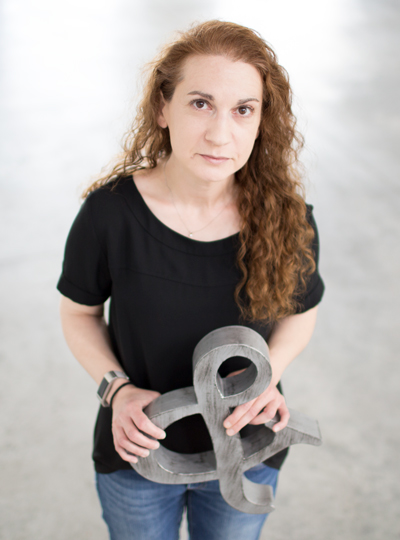
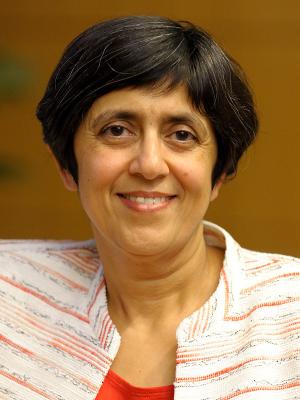
Monica Berlin was the Richard & Sophie D. Henke Distinguished Professor of English at Knox College, serving from 1998 until her passing in 2022. She held leadership roles as Chair of the Department of English and Associate Director of the Program in Creative Writing. Her academic background includes a B.A. in English Writing (1995, Knox College), M.A. in Literature and Composition (1998, Western Illinois University), and M.F.A. in Poetry (2002, Vermont College). Her research focuses on creative writing (poetry, nonfiction, fiction) and modern/contemporary American literature. She has published extensively in literary journals and anthologies, earning major awards like the Crab Orchard Poetry Series Open (2018) and New Measure Poetry Prize (2013). Her collaborative work with Beth Marzoni has been widely recognized in literary circles. Beyond academia, Berlin directed The Space (a literary center) and spearheaded digital archives like A Map of Voices: The Knox Writers' House . She contributed to campus governance as a member of the Faculty Personnel Committee and engaged with the community through roles at the Galesburg Public Library and literary festivals. Students praise her ability to guide them in refining their craft, emphasizing the 'elusive mechanics of writing.' Her legacy includes fostering literary innovation and accessibility in education and public spaces.
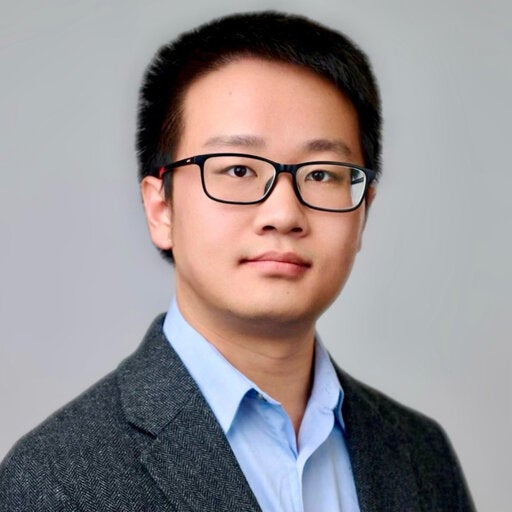
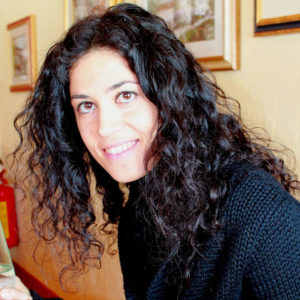
Dr. Peichen Zhong is an Assistant Professor in the Department of Materials Science and Engineering at the National University of Singapore (NUS). He leads the Applied Machine Learning and Materials Modeling (AM³) Group, focused on advancing computational methods for clean energy technologies. His research integrates machine learning with atomistic simulations to tackle challenges in battery materials, disordered materials, and sustainable energy systems. Education: B.S. in Physics from University of Science and Technology of China (2018); Ph.D. in Materials Science from UC Berkeley (2023, advised by Prof. Gerbrand Ceder); Postdoctoral training at Lawrence Berkeley National Lab and BIDMaP, co-advised by Persson, Cheng, and Krishnapriyan. Research Interests: Computational modeling of battery cathodes/electrolytes, AI-driven interatomic potentials, statistical mechanics in disordered materials, and generative models for scientific discovery. Key areas include Li/Na-ion batteries, solid-state reactions, and sustainable energy materials. Awards: BIDMaP Emerging Scholar Fellowship (UC Berkeley CDSS, 202?), 2023 Rising Stars in Materials Science (CMU/MIT/Stanford). Labs/Teams: The AM³ Group at NUS MSE focuses on interdisciplinary research combining theory, computation, and AI4Science. Current openings include PhD students and postdoctoral researchers.
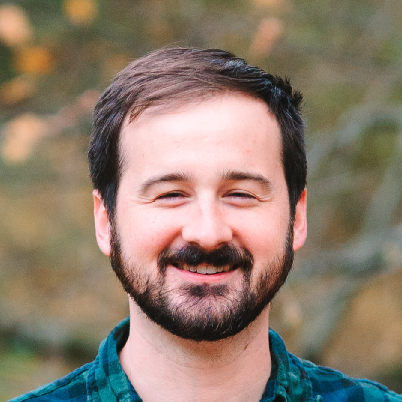
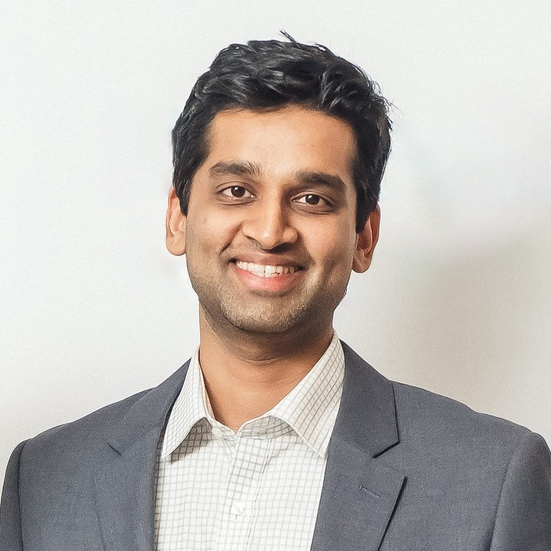
Colin Raffel , currently an Associate Professor at the University of Toronto and Associate Research Director at the Vector Institute , is a leading researcher in machine learning and natural language processing . His career spans roles at Hugging Face (Faculty Researcher), Google Brain (Senior Research Scientist), and UNC Chapel Hill (Assistant Professor). Education: PhD in Electrical Engineering (Columbia), MA in Music/Science (Stanford), BA in Mathematics (Oberlin) Key affiliations: Google Brain (2016-2020), Hugging Face (2021-present), Vector Institute (2023-present) His research focuses on language model development , attention mechanisms , efficient machine learning , and music information retrieval . Recent work explores model merging , parameter-efficient fine-tuning , and data-constrained language models . Teaching : Has instructed courses at University of Toronto and UNC Chapel Hill on Neural Networks , Deep Learning , and Information Theory . Academic service includes organizing ICLR workshops and serving as Senior Area Chair for NeurIPS and EMNLP . Notable awards : NSF CAREER (2022), Caspar Bowden Award (2023), NeurIPS Outstanding Paper (2023) Key contributions : Core developer of WT5 , Git-Theta , and mir_eval software
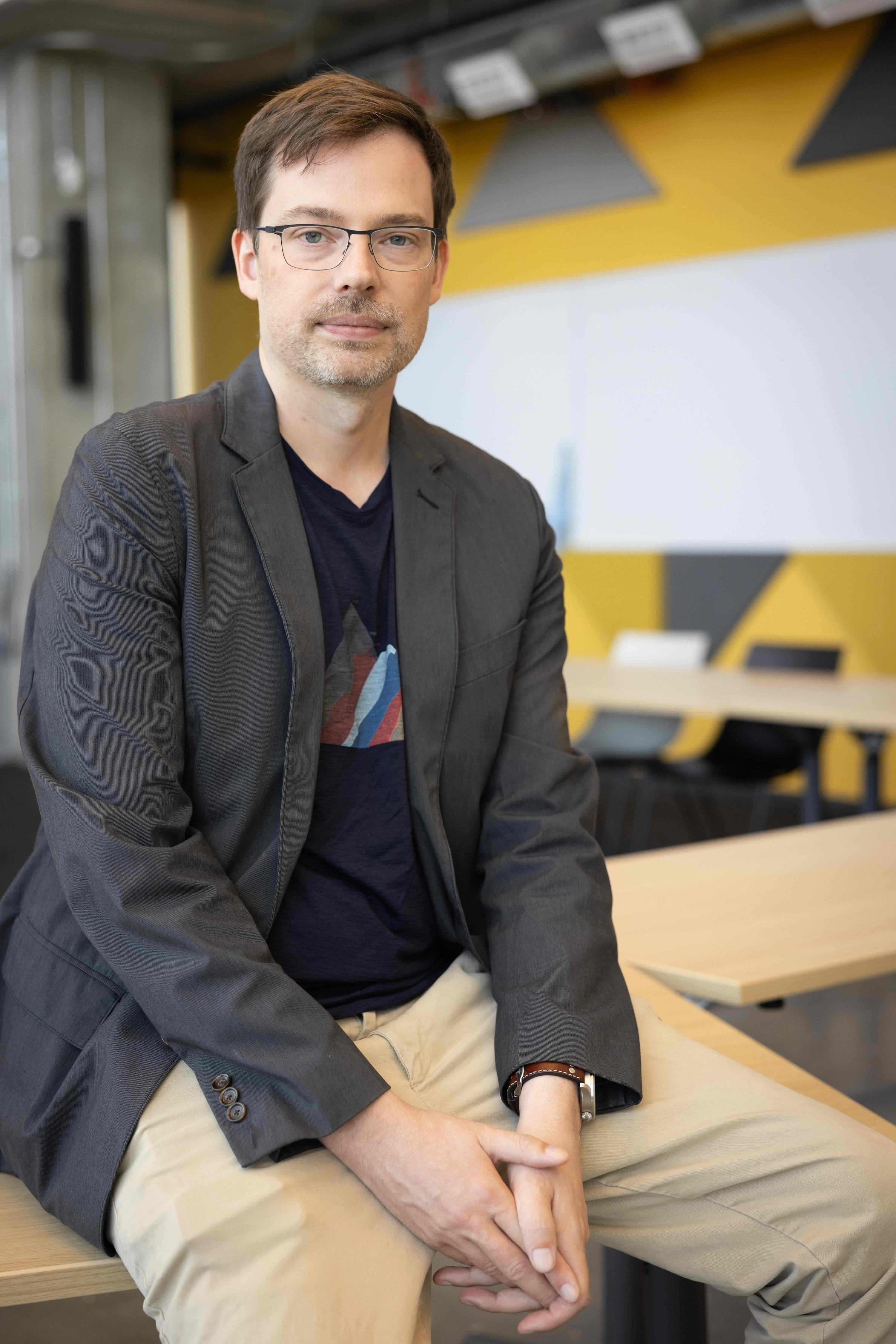
Chris Donahue is an Assistant Professor in the Computer Science Department at Carnegie Mellon University . He also serves as a part-time Research Scientist at Google DeepMind on the Magenta team. His work focuses on leveraging generative AI to enhance human creativity, particularly in music. Education: PhD in Computer Science (UC San Diego), Postdoctoral Scholar (Stanford University) His research spans controllable generative modeling of music and audio , with a focus on real-time interactive systems. Projects like Piano Genie , Beat Sage , and Copilot Arena demonstrate his commitment to real-world deployment. His Generative Creativity Lab (G-CLef) explores AI applications beyond music, including programming and natural language. Recent publications highlight advancements in multimodal music evaluation , real-time adaptation , and AI-driven sound morphing . He co-developed Magenta RealTime , an open-weight real-time music generation model, and MusicFX DJ Mode . Scientific Awards: Best Paper Award (top 1) at NAACL Student Research Workshop 2025 Best Paper Award (top 1% of submissions) at CHI 2025 Best Paper Runner-up at ISMIR 2021 He co-advises PhD students like Wayne Chi (NDSEG Fellow) and mentors Irmak Bukey . His lab receives support from the AIxArts incubator fund at CMU .
Lerrel Pinto is an Assistant Professor of Computer Science at the Courant Institute of Mathematical Sciences at New York University (NYU), where he leads the General-purpose Robotics and AI Lab (GRAIL) as part of the CILVR research group. His work bridges the gap between theoretical machine learning and practical robotics applications, with a focus on enabling robots to generalize and adapt in real-world environments. Dr. Pinto received his undergraduate degree from IIT Guwahati, followed by a PhD from the Robotics Institute at Carnegie Mellon University (CMU). He then completed a postdoctoral fellowship at the University of California, Berkeley before joining NYU as faculty. His research program centers on robot learning and decision making, with several key thrusts that demonstrate his innovative approach to robotics. Pinto's work emphasizes large-scale learning techniques that leverage both extensive data and sophisticated model architectures. A significant portion of his research focuses on representation learning for sensory data, particularly developing methods that enable robots to make sense of visual, tactile, and auditory inputs. His lab has made notable contributions to reinforcement learning algorithms that allow robots to adapt to new scenarios with minimal retraining. Pinto also champions open-source robotics , developing affordable robot platforms that democratize access to robotics research. Analysis of Pinto's recent publications reveals a strong trend toward multimodal perception in robotics, integrating visual, tactile, and auditory information to create more robust robot systems. His work increasingly focuses on zero-shot and few-shot learning capabilities, enabling robots to handle novel situations without extensive retraining. There's also a clear progression toward general-purpose robotics , moving away from task-specific solutions toward more flexible systems that can handle diverse real-world challenges. Dr. Pinto's scientific contributions have been recognized with several prestigious awards: Sloan Research Fellowship (2025) NSF CAREER Award (2024) RAL Early Career Award (2024) Best Student Paper Award at ICRA (2016) Outstanding Paper Award at MFM-EAI workshop at ICML (2024) Best Paper Award at NGSM workshop at ICML (2024) Best Student Paper Award at RSS (2023) As an advisor, Pinto has mentored numerous students who have gone on to impactful careers in both academia and industry. His former PhD student Denis Yarats co-founded Perplexity.AI, while Mahi Shafiullah became a postdoc at UC Berkeley and Meta AI. Many of his Masters students have pursued PhDs at top institutions like CMU, MIT, and Stanford, or joined leading robotics companies including 1X, Fauna Robotics, and NVIDIA. Pinto's lab has secured significant research funding, including the NSF CAREER award and likely other grants supporting his robotics research program. The General-purpose Robotics and AI Lab (GRAIL) that Pinto leads brings together a diverse team of researchers working on cutting-edge robotics challenges. The lab maintains strong collaborations with industry partners and other academic institutions, facilitating technology transfer and real-world impact. GRAIL's research spans multiple robotics platforms and focuses on developing algorithms that enable robots to learn from diverse experiences and generalize across environments.
Alan Ritter is an Associate Professor at the School of Interactive Computing , Georgia Institute of Technology, with additional affiliation to the Machine Learning Center . His research focuses on Natural Language Processing , particularly robust models across domains/languages with fewer labels and efficient resource use, plus data-driven dialogue agents for open-topic conversations. Research Interests : Robust NLP models, cross-lingual transfer, resource-efficient learning, dialogue systems, cultural bias measurement, and privacy-aware language models Students : Mentors Ph.D. students in Georgia Tech's ML and CS programs, including Junmo Kang, Yang Chen, and Duong Minh Le. Alumni include Fan Bai (Ph.D. 2023), Yang Chen (Ph.D. 2024), and Andrew Li (M.S. 2024). Awards : NSF CAREER Award, Amazon Research Award, ACL 2024 Best Social Impact Paper, IUI 2009 Best Student Paper. Recent Work : Studies training budget allocation between supervised and preference-based finetuning, cross-lingual information extraction, cultural bias in LLMs, and privacy risk mitigation in social media disclosures. Service : Served as Program Chair for NAACL 2025, Area Chair for multiple top-tier conferences (COLM, EMNLP, ACL, EACL, AAAI). Email : alan.ritter@cc.gatech.edu
Maja J Matarić is the Chan Soon-Shiong Chaired and Distinguished Professor of Computer Science at the University of Southern California's Viterbi School of Engineering, with courtesy appointments in Neuroscience and Pediatrics. She serves as founding director of the USC Robotics and Autonomous Systems Center, co-director of the USC Robotics Research Lab, and Principal Scientist at Google DeepMind. Previously, she held leadership roles as USC's interim Vice President of Research (2020-2021) and Vice Dean for Research (2006-2019). Her educational background includes: PhD in Computer Science and Artificial Intelligence from MIT (1994) MS in Computer Science from MIT (1990) BS in Computer Science from University of Kansas (1987) Matarić pioneers Socially Assistive Robotics (SAR) , a field her lab named, focusing on human-robot interaction that provides assistance through social rather than physical support. Her research targets critical health and wellness challenges including post-stroke rehabilitation, autism spectrum disorder therapy, cognitive exercises for Alzheimer's patients, ADHD academic support, and mental health interventions. She develops systems modeling user engagement, personality, and motivation, with extensive real-world deployments in schools, rehabilitation centers, and homes. Analysis of her recent publications reveals dominant themes in cognitive health robotics (2025 CHI paper on LLM-powered elder care), pediatric assistive technology (2025 IDC speech therapy review), and adaptive preference modeling (2025 HRI contrastive learning work). Her research consistently bridges machine learning with human-centered design for vulnerable populations. Major scientific recognition includes: ACM Athena Lecturer Award (2024) ACM Eugene L. Lawler Humanitarian Award (2024) ACM Fellow (2020) Presidential Mentoring Award (2011) Multiple society fellowships (AAAS, IEEE, AAAI) As a dedicated mentor, Matarić has championed underrepresented groups through CRA-W, placing numerous women in faculty positions. She leads USC Viterbi's K-12 STEM Outreach Program serving low-income Los Angeles schools and authored The Robotics Prime for student education. Her research has secured significant funding enabling real-world technology transfer, with documented impact in rehabilitation centers and homes through deployable SAR systems. Her Robotics Research Lab at USC drives innovation in embodied AI, with current projects spanning LLM-integrated elder care robots, ADHD academic companions, and autism therapy systems. The lab emphasizes co-design with end-users and rigorous real-world validation across diverse populations.
Richard M. Murray is the Thomas E. and Doris Everhart Professor of Control and Dynamical Systems and Bioengineering at the California Institute of Technology (Caltech). He holds a B.S. from Caltech (1985), M.S. from UC Berkeley (1988), and Ph.D. from UC Berkeley (1990). He has served in academic roles from Assistant Professor (1991–1997) to his current endowed professorship. He chaired the Engineering and Applied Science division (2000–2005) and Biology and Biological Engineering (2020–2024). His research focuses on feedback control in biological and autonomous systems, synthetic cells, and networked control systems. Collaborators include experts in robotics, synthetic biology, and systems biology. Key awards include the IEEE Control Systems Award and election to the National Academy of Engineering. His educational contributions span courses on control systems, robotics, and bioengineering. Current research projects include the Developer Cell initiative (Sloan Foundation), layered testing for autonomous systems (AFOSR), and microbiome-based environmental solutions (CHARMME, ARO). He advises numerous graduate students and postdocs, with notable alumni in academia and industry. Labs include facilities in Keck and Steele laboratories at Caltech. His work bridges control theory, synthetic biology, and autonomous systems to address societal challenges like environmental monitoring and safe autonomy.
Shanique Brown serves as Assistant Professor of Management at the Zicklin School of Business, City University of New York (CUNY), where she investigates cognitive processes impacting organizational team dynamics and decision-making. Her research bridges industrial-organizational psychology with practical applications in extreme environments. Her academic foundation includes: Ph.D. in Industrial-Organizational Psychology from DePaul University M.A. in Industrial-Organizational Psychology from Southern Illinois University, Edwardsville B.Sc. in Psychology from the University of the West Indies Dr. Brown's research centers on decision-making mechanisms and team cognition within organizational contexts, with specialized focus on extreme environments like space missions. She examines how cognitive styles, working memory, and team composition influence performance in isolated, confined, and high-stakes settings. Her work integrates psychological theory with actionable frameworks for optimizing team effectiveness across virtual and physical workspaces. Analysis of her publication history reveals evolving expertise in team science, particularly regarding virtual team leadership, polycultural organizations, and NASA-relevant analog research. Recent work emphasizes selection-optimization-compensation models for team performance and psychosocial factors in extreme environments, demonstrating consistent contribution to organizational psychology literature. Her scientific recognition includes: Editorial Fellowship from Group Dynamics (2022) Wayne State University Faculty Accessibility Fellowship (2022) Teaching Innovation Development Excellence Award (2020) Faculty Teaching Award (2020) University Research Grant (2019) Robert A. Daugherty Memorial Award (2011) Dr. Brown actively collaborates on NASA-funded research through the Human Research Program, developing crew composition models for long-duration space missions. She serves on Baruch College's PhD Admissions and Interdisciplinary Business Major committees while maintaining leadership roles in the Society of Industrial-Organizational Psychology, including Task Force Chair and Conference Committee positions. Her grant work focuses on translating team dynamics research into operational frameworks for extreme environments. She leads interdisciplinary collaborations with NASA researchers and international scholars on projects including virtual escape room studies for team performance assessment and CREWS (Crew Recommender for Effective Work in Space) development, demonstrating commitment to solving real-world team challenges in high-consequence settings.
Wojciech Matusik is a Professor of Electrical Engineering and Computer Science at MIT's Computer Science and Artificial Intelligence Laboratory (CSAIL). He leads the Computational Design and Fabrication Group and is a member of the Computer Graphics Group. His research spans computer graphics, robotics, and AI-driven manufacturing, with a focus on computational design, tactile sensing, and material science. Matusik holds a PhD in Computer Science from MIT (2003), an MS from MIT (2001), and a BS from UC Berkeley (1997). His work includes groundbreaking projects like differentiable cloth simulation (DiffCloth), AI-enhanced molecular design, and tactile sensing gloves. He has received prestigious awards such as the MIT TR35 (2004), DARPA Young Faculty Award (2012), and Ruth and Joel Spira Teaching Award (2014). Matusik teaches courses on computer graphics, machine learning, and computational fabrication at MIT. Key research themes include: Robotics: Robotic assembly, tactile interaction, and soft robotics Graphics: 3D holography, procedural material generation Manufacturing: Additive fabrication, topology optimization His recent articles explore AI-driven molecular synthesis, holographic displays, and tactile-enabled VR systems. Matusik collaborates on open-source tools like the WiReSens tactile platform and Simit language for sparse systems.
Sarita V Adve is the Richard T. Cheng Professor of Computer Science at the University of Illinois at Urbana-Champaign, where she conducts research spanning hardware, programming languages, operating systems, and applications with a focus on domain-specific systems. Her work bridges theoretical foundations and practical implementations, particularly in extended reality and heterogeneous computing. Her educational background includes a Ph.D. and M.S. in Computer Science from the University of Wisconsin-Madison (1993, 1989) and a B.Tech in Electrical Engineering from the Indian Institute of Technology Bombay (1987). Prior to joining Illinois, she served on the faculty at Rice University from 1993 to 1999. Adve's research centers on generalizable and scalable specialization for domain-specific systems, with current emphasis on extended reality (XR) systems including virtual, augmented, and mixed reality. She chairs the ILLIXR consortium to democratize XR research and developed the first fully open-source XR system (ILLIXR). Her foundational contributions include memory consistency models for C++ and Java programming languages, the Spandex coherence framework for heterogeneous systems, and software-driven approaches for hardware reliability. Her work spans hardware reliability (SWAT and RAMP projects), power management (GRACE system), and instruction-level parallelism. Recent publications reveal a strong focus on energy-efficient XR systems, hardware-software co-design for AI workloads, and resilience analysis. Her team explores rendering offload, visual-inertial odometry optimization, and compositional error injection frameworks, often targeting tradeoffs between energy, latency, and accuracy in mobile and edge environments. Fellow of the American Academy of Arts and Sciences Fellow of the ACM and IEEE ACM/IEEE-CS Ken Kennedy Award Anita Borg Institute Woman of Vision in Innovation Award ACM SIGARCH Maurice Wilkes Award Alfred P. Sloan Research Fellowship UIUC University Scholar University of Illinois Campus Award for Excellence in Graduate Student Mentoring Adve actively mentors students and has received multiple teaching awards. She co-founded the CARES movement to address discrimination in CS research events and chairs CS@Illinois CARES. Her service includes leadership roles in ACM SIGARCH (2015-2019), DARPA/ISAT study group, ACM Council, and Computing Research Association. She has secured significant funding including DARPA initiatives and Google Faculty Research Awards. She leads the ILLIXR consortium and has established collaborative research programs such as the $8.3M DARPA Joint University Microelectronics Program. Her lab focuses on open-source XR development, heterogeneous system architectures, and reliability-aware designs, with strong industry and government partnerships.
Robert MacCurdy is an Assistant Professor at the Department of Mechanical Engineering, University of Colorado Boulder . He leads the Matter Assembly Computation Lab (MACLab) focused on automating robot design and fabrication. His research bridges computational design and advanced manufacturing to create "robots that walk out of the printer." The lab develops tools like OpenVCAD , an open-source volumetric multi-material geometry compiler.
Prof. Roger Wattenhofer is a Full Professor at the Department of Information Technology and Electrical Engineering, ETH Zurich, Switzerland, and Deputy head of the Computer Engineering and Networks Lab. He holds a doctorate in Computer Science from ETH Zurich (1998) and has held positions at Brown University and Microsoft Research before returning to ETH. His research focuses on distributed computing, wireless networks, and algorithmic systems design, with contributions to Byzantine agreement protocols, blockchain technologies, and neural network architectures. He teaches courses such as Distributed Systems and Computational Thinking. Education: Ph.D. in Computer Science (ETH Zurich, 1998). Research interests include distributed systems, network algorithms, and the intersection of machine learning with distributed computing. His work spans both theoretical foundations and practical implementations, addressing challenges in fault tolerance, consensus mechanisms, and algorithmic efficiency. Recent publications explore topics like adversarial robustness in voting systems, privacy in reinforcement learning, and generative music models. He actively contributes to open-source frameworks and benchmarks for neural algorithmic reasoning.
Elisa Ricci is a Full Professor at the Department of Information Engineering and Computer Science (DISI) at the University of Trento and serves as Head of the Research Unit Deep Visual Learning at Fondazione Bruno Kessler. She coordinates the Doctoral Program in Information Engineering and Computer Science at the University of Trento and holds prestigious fellowships from ELLIS and IAPR. Her research focuses on advancing computer vision and deep learning systems capable of operating in open-world environments. Key interests include domain adaptation, continual learning, and self-supervised learning for visual and multi-modal data processing. Her work addresses critical challenges in enabling machines to adapt to new domains without forgetting prior knowledge, with applications spanning robotics perception, medical imaging, and privacy-preserving AI systems. Recent publications reveal a dominant trend toward leveraging vision-language models for open-vocabulary tasks, training-free adaptation methods, and federated learning architectures. Significant research thrusts include machine unlearning for privacy, robustness against bias in visual classifiers, and novel class discovery using foundation models—particularly evident in 2025 publications addressing medical imaging, 3D segmentation, and collaborative generative systems. Her major recognitions include: ELLIS Fellow IAPR Fellow As Doctoral Program Coordinator at the University of Trento, she oversees PhD training while leading the Deep Visual Learning unit at Fondazione Bruno Kessler. Her research group secures competitive grants in AI-driven perception systems, though specific funding sources aren't detailed in the source material. The Deep Visual Learning Research Unit specializes in open-world computer vision challenges, developing frameworks for domain adaptation, continual learning, and multi-modal perception. Current projects integrate generative models with robotics applications while addressing privacy concerns in vision-language systems through unlearning techniques.
Karthik R. Narasimhan is a Professor at Princeton University's School of Engineering and Applied Science in the Department of Computer Science. Previously, he earned his PhD from MIT under Regina Barzilay and served as a visiting research scientist at OpenAI during 2017-18. His research focuses on the intersection of language and decision-making, building autonomous agents that learn from both experience and human knowledge. His research spans multiple high-impact areas including language agents (Text-DQN, CALM, ReAct, Tree of Thoughts), reinforcement learning (h-DQN, Multi-Objective RL), and AI safety (Toxicity in ChatGPT, DataMUX). He has developed critical datasets and benchmarks such as WebShop, InterCode, SWE-bench, and SILG that have become standard evaluation tools in the field. Current work emphasizes agent capabilities, software engineering automation, and multimodal interaction. His publication trends show strong focus on practical agent deployment (SWE-agent, Tree of Thoughts), safety evaluation (Probing AI Safety), and efficiency improvements (DataMUX). Recent work increasingly addresses real-world challenges in software engineering, security, and human-AI collaboration through rigorous benchmarking. Co-author of foundational GPT (2018) paper Key developer of Text-DQN (2015), CALM (2020), ReAct (2022), Tree of Thoughts (2023) Creator of influential benchmarks: WebShop (2022), SWE-bench (2023), InterCode (2023) He actively advises students through Princeton's computer science program, with research supported by multiple grants focused on autonomous agent development and language-based decision systems. His GitHub repositories (nlp-datasets, text-world-player) demonstrate strong community engagement in open-source research tools. Current projects include advancing language agent capabilities through Reflexion (2023) and Tree of Thoughts (2023) frameworks while addressing critical safety and efficiency challenges.