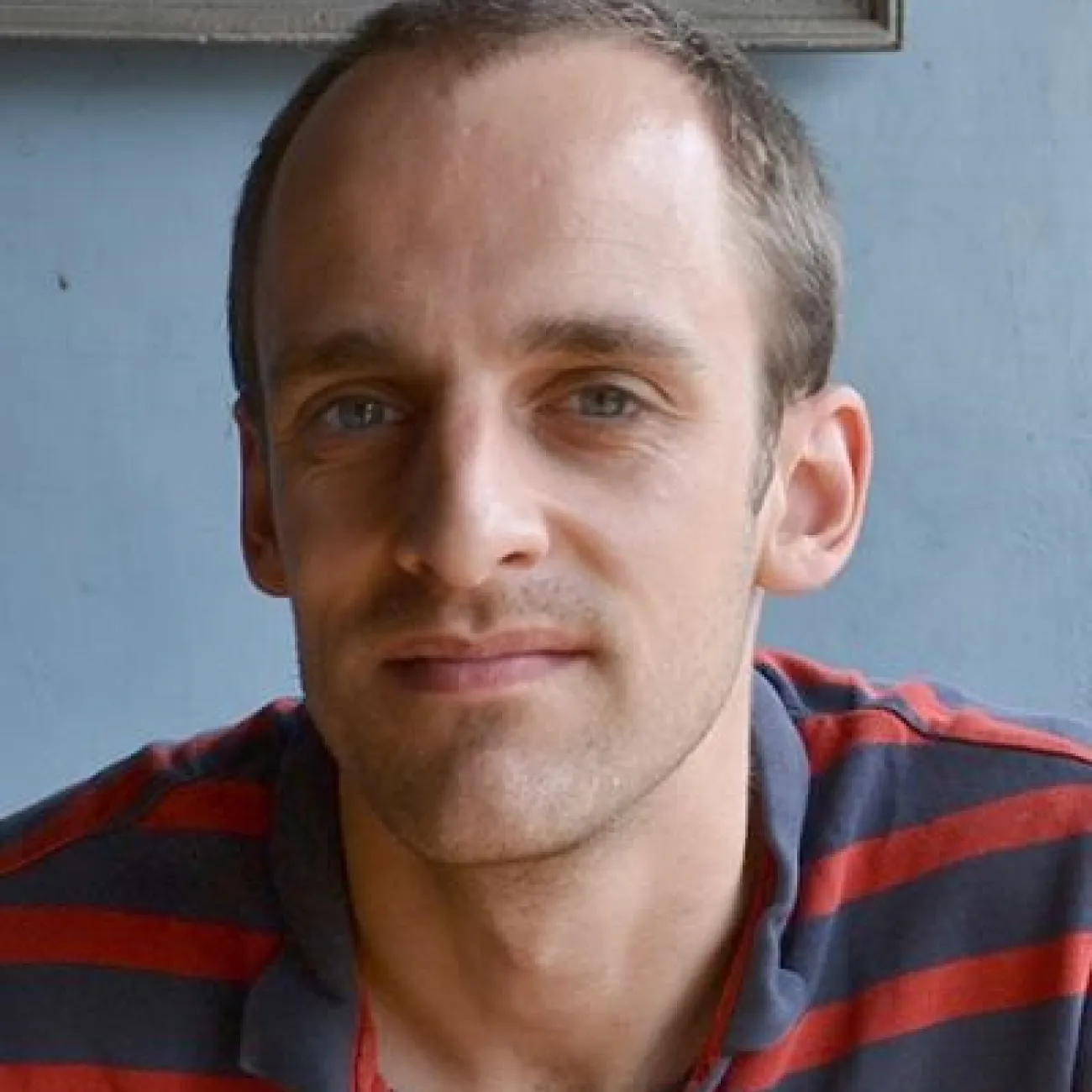
Dr. Ben Ward is a Principal Research Fellow at the University of Southampton's Ocean & Earth Science department. His research focuses on marine biogeochemistry, plankton ecology, and computational modeling of ocean systems. He leads several high-profile projects funded by the Royal Society and UKRI, including studies on mixotrophy impacts, trophic diversity, and Arctic ecosystem changes. Dr. Ward supervises four PhD students and collaborates internationally on projects like the BIOcean5D initiative. Key affiliations: Marine Biogeochemistry Research Group Active projects: 7 ongoing research initiatives His work bridges empirical field studies with advanced numerical modeling, emphasizing sediment archives and evolutionary mechanisms to improve climate projections. Recent publications address nutrient competition, diatom modeling, and microbial plasticity in response to environmental stressors.
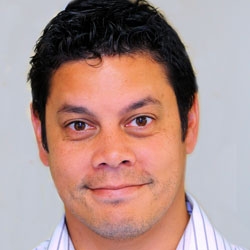
Dr. Mahyar Khorasani is a Senior Lecturer at the School of Engineering, RMIT University, Australia. His research focuses on additive manufacturing (AM), laser-based processes, materials engineering, and Industry 4.0 integration. He has a strong publication record in journals like International Journal of Advanced Manufacturing Technology and Rapid Prototyping Journal . Key research interests include: Process optimization in laser powder bed fusion (LPBF) and directed energy deposition (DED) Material characterization of AM alloys (e.g., Inconel 718, Ti-6Al-4V) Thermal modeling of meltpool dynamics Post-processing techniques for surface enhancement AM applications in aerospace and automotive industries His work emphasizes bridging AM with Industry 4.0 tools, including digital twin integration and process monitoring systems. He has supervised one PhD project on Multi Jet Fusion quality mapping (2025). No awards are explicitly mentioned in the provided texts. Dr. Khorasani collaborates internationally and contributes to open-access research platforms. His publications span over 24 peer-reviewed articles, books, and book chapters since 2019, with notable impact in AM process modeling and material behavior analysis.
Dr. Ngoc San Ha is a Lecturer in the School of Engineering at RMIT University, specializing in Civil and Infrastructure Engineering. He holds a PhD in Structural Mechanics from Konkuk University (South Korea, 2014). Previously, he served as a Sessional Lecturer at La Trobe University and a Research Fellow at Swinburne and Curtin Universities. He is a member of RMIT's Centre for Innovative Structures and Materials (CISM), led by ARC Laureate Fellow Mike Xie. Dr. Ha's research focuses on bio-inspired structures, construction materials, and energy absorption mechanisms. He has published over 40 peer-reviewed articles, including highly cited works in Composite Part B and Journal of Bionic Engineering , and has received two best-paper awards for biomimetic research. His work spans metamaterials, advanced composites, and structural analysis under extreme conditions. Education: PhD in Structural Mechanics (Konkuk University, 2014). Grants: Involved in ARC Linkage Projects and NSF China initiatives. Editorial Roles: Guest editor of International Journal of Protective Structures and topic editor at Materials . He supervises Masters and PhD students and contributes to cutting-edge research in structural innovation through CISM.
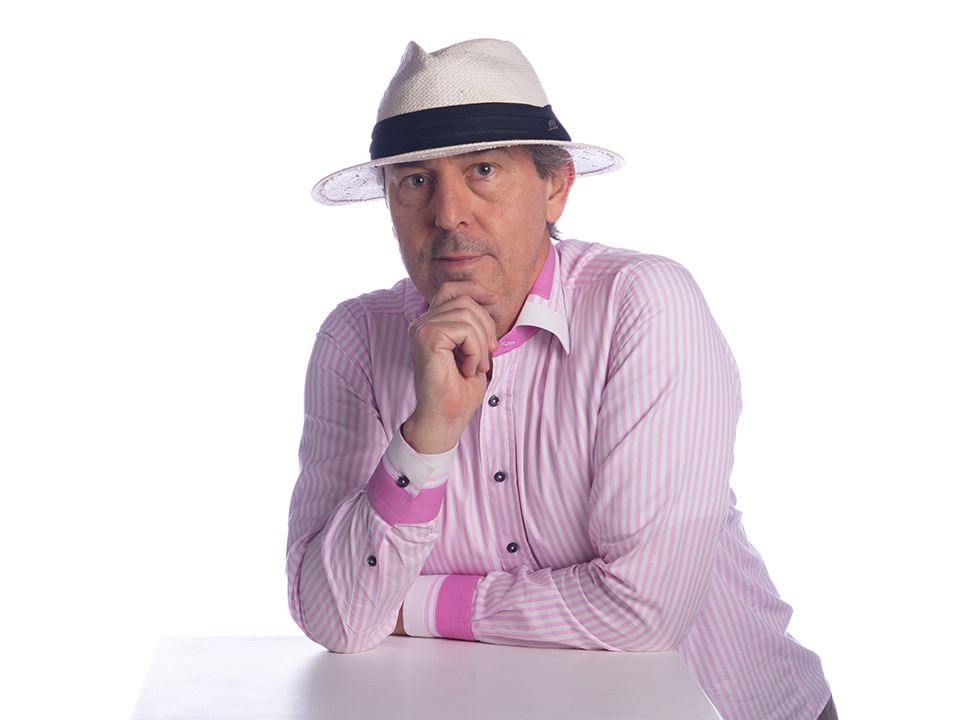
Paula Antoshechkin is a Senior Research Scientist at the California Institute of Technology, specializing in igneous petrology and geochemistry. Her work focuses on thermodynamic modeling of magmatic processes, particularly through the development and maintenance of the alphaMELTS software suite, which provides advanced computational tools for simulating mantle melting and magma chamber dynamics. Her research integrates phase equilibrium modeling with geodynamic frameworks to study mantle melting, subduction zone processes, and the evolution of volcanic systems. She contributes to the MAGMA website and serves as an administrator for the MELTS Facebook page, maintaining key community resources for computational geoscience. B.A., University of Cambridge, 1996 Ph.D., University of Cambridge, 2001 Research Assistant, University of Cambridge, 2001–2002 Postdoctoral Scholar, Caltech, 2003–2006 Research Scientist, Caltech, ongoing Recent publications emphasize thermodynamic modeling of complex oxide systems (2013), subduction zone melt dynamics (2009), and computational tools for phase equilibrium analysis (2005). The work demonstrates a consistent focus on quantitative integration of geophysical and geochemical processes.
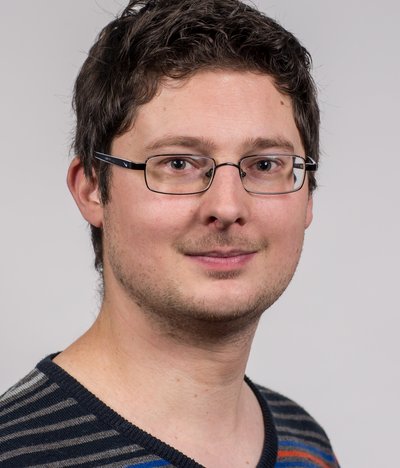
Diego Ulisse Pizzagalli is an independent researcher in Computational Medicine affiliated with the Faculty of Biomedical Sciences at the Università della Svizzera italiana (USI), the Euler Institute, and the Institute for Research in Biomedicine (IRB). He holds roles as a lecturer at USI and teaching assistant, focusing on machine learning in medicine and signal processing. His work bridges immunology and AI, with projects involving wearable device monitoring in chronic diseases and the development of digital biomarkers. His research focuses on applying artificial intelligence to understand immune responses, tissue remodelling, and chronic diseases. Key areas include trajectory analysis of immune cells using intravital microscopy, predictive models for disease complications, and bioimage analysis. He leads the IMMUNEMAP initiative, an open immunology data platform, and collaborates on hardware prototyping for medical applications. Pizzagalli’s recent work emphasizes AI-driven medical imaging tools (e.g., CompositIA for CT scans, deep learning in forefoot morphology analysis) and trajectory-based studies of immune cell behavior. His projects integrate clinical data with computational models, such as predicting hospital admissions in chronic liver disease patients using wearable sensors. He co-leads projects funded by systemsx.ch, Apple Inc., and others. Supervises BSc/MSc students. The Digital Pathophysiology Lab at Euler Institute serves as his primary research base, promoting interdisciplinary collaboration in biomedical imaging, trajectory mining, and wearable sensor development.
Dr Andy Gibson is an Associate Professor and Associate Head (Global Engagement and Education Partnerships) at the University of Portsmouth's Faculty of Science and Health, School of the Environment and Life Sciences. His research focuses on reducing the socio-economic impacts of natural hazards, landslide dynamics, and remote sensing applications in geotechnical engineering. He previously led the British Geological Survey's Science team for Land Use and Development, overseeing projects on geohazards and urban geoscience. Research Interests : Natural hazards management, landscape evolution's role in disasters, geotechnical properties modeling, and remote sensing for soil behavior analysis. His work integrates field techniques with advanced technologies like UV/NIR spectroscopy to improve disaster preparedness. Recent Work : Recent studies include spectral analysis of soil-oil interactions, landslide susceptibility modeling in China, and climate change impacts on UK geohazards. He has contributed to over 30 peer-reviewed publications and serves as a PhD supervisor. Grants & Teams : Collaborates with the Centre of Excellence in Defence, Risk & Resilience and leads projects on hyperspectral analyses for geotechnical characterization. His work spans international partnerships, including research in Maltese coastal landscapes and Chinese disaster zones.
Dr. Ashley Evanoski Cole is a Professor in the Department of Chemical and Physical Sciences at Westfield State University, where she has been since Fall 2020. Her expertise spans analytical and atmospheric chemistry, with a focus on air quality, chromatography, and environmental chemistry. She teaches courses such as CHEM 109/111 (General Chemistry), CHEM 311 (Instrumental Analysis), and GPS 230 (Meteorology). Her research emphasizes undergraduate research mentorship, having guided numerous student projects on topics like water quality, soil chemistry, food product analysis, and air sampling. Education: B.S. Chemistry, Susquehanna University M.S. & Ph.D. Atmospheric Science, Colorado State University Her research interests include atmospheric aerosol characterization, oil and gas development impacts on air quality, and innovative chemical education practices. She has published extensively in atmospheric chemistry and chemical education journals, with a focus on Bakken oil field pollution, Rocky Mountain National Park air quality, and undergraduate STEM retention strategies. Her work combines field measurements (e.g., Sequential Spot Sampler evaluations) with computational modeling to address real-world environmental challenges. No scientific awards are explicitly listed, but her publications indicate sustained research excellence. She advises student-led research projects and emphasizes inclusive, high-impact teaching practices using open-source materials. Her contributions to environmental science and education are further exemplified through collaborations on the Bakken Air Quality Study and FRAPPÉ campaign.
Lukas Sablica, Ph.D., is a researcher affiliated with the Department of Statistics and Mathematics at WU Vienna University of Economics and Business. His work focuses on statistical methodology, computational statistics, and software development for statistical analysis. He is particularly known for contributions to probabilistic modeling, distribution sampling techniques, and the development of R packages such as circlus , mistr , and watson , which support advanced statistical analyses including circular/spherical clustering, mixture distributions, and Watson distribution modeling. Research interests include mathematical analysis of special functions, algorithmic approaches to distribution sampling, and applications of machine learning in environmental sensor data analysis. His interdisciplinary work bridges theoretical statistics with practical software solutions. Key contributions include methods for efficient sampling from complex distributions (e.g., PKBD, Watson), bounds analysis for Kummer’s functions, and machine learning models for estimating resource usage (e.g., EcoShower project). Collaborations involve experts in environmental science, computer science, and applied mathematics.
Dr. Xiangyang Dong is an Associate Professor at Arizona State University's School of Manufacturing Systems and Networks. He serves as a member of the graduate faculty in Manufacturing Engineering, Materials Science and Engineering, Mechanical and Aerospace Engineering, and Systems Engineering. His research focuses on multifunctional composites and ceramics, particularly structural power composites that combine mechanical load-bearing and energy storage capabilities. His work is supported by NSF, AFOSR, DOE, and industry partners. He holds prestigious awards including the NSF CAREER Award and the Ralph E. Powe Junior Faculty Enhancement Award. Education: PhD in Mechanical Engineering from Purdue University. Research Interests: Multifunctional composites, additive manufacturing, structural batteries, ceramics, and machine learning modeling. His group develops advanced materials and processes for applications in robotics, energy storage, and aerospace. Recent innovations include UV-assisted coextrusion deposition for structural batteries and laser-based additive manufacturing of transparent ceramics. Scientific Awards: NSF CAREER Award (202?), Ralph E. Powe Award (202?). Advising & Grants: Active Ph.D. and PostDoc openings in materials science, mechanics, and manufacturing. His projects address energy-efficient manufacturing and multifunctional material design. Courses taught include Materials and Manufacturing Processes and graduate research supervision. Labs/Teams: Directs the Dong Research Group, advancing additive manufacturing and materials modeling through interdisciplinary approaches.
Distinguished Professor Dietmar W Hutmacher is a leading academic at Queensland University of Technology, specializing in regenerative medicine, tissue engineering, and advanced additive biomanufacturing. His research integrates soft robotics principles with biomedical applications, focusing on patient-specific 3D-printed scaffolds for bone and soft tissue repair. As director of the Australian Research Council Industrial Transformation Training Centre in Additive Biomanufacturing, he bridges academia and industry to accelerate clinical translation. His research interests emphasize biomimetic strategies, bioinspired design, and the convergence of engineering with biological systems. Notable contributions include pioneering scaffold-guided bone regeneration techniques and developing biodegradable materials for medical applications. He has been recognized with prestigious awards such as the Ramaciotti Medal and Alexander von Humboldt Award. Professor Hutmacher prioritizes diversity in his labs, maintaining gender parity and cultural representation among his team members. His work addresses critical challenges in manufacturing, healthcare, and robotics, with applications spanning surgery, drug delivery, and sustainable industry creation. Key collaborations include Osteopore, University of Texas MD Anderson Cancer Centre, and BellaSeno GmbH. Awards: Ramaciotti Medal (2019), Alexander von Humboldt Award (2019), Top Biofabrication Pioneer (2019) Labs/Teams: Additive Biomanufacturing Research Group, Scaffold-Guided Regeneration Lab Grants: ARC Training Centre in Additive Biomanufacturing, Industry-funded translational projects
Anna Nazzari is a Lecturer at Curtin University's School of Media, Creative Arts and Social Inquiry, located at Curtin Perth. Her portfolio includes roles in the Office of the Provost, reflecting her institutional engagement. Her creative practice spans visual arts, exhibition curation, and cross-disciplinary collaborations, with a focus on themes of cultural memory, environmental narratives, and hybrid materiality. Nazzari’s work often integrates installations, sculptures, and mixed-media projects that interrogate human-environment interactions, migration, and symbolic representation. Notable exhibitions include Ghosti (2023), Transmigrations (2021), and Monster Theatre (2020). She has curated projects such as Open Water: The Offering (2017) and contributed to academic discourse through publications like Residency: An Account of Otherworldly Dwelling (2016). Her creative works frequently explore material transformation, spatial dynamics, and the intersection of cultural and ecological themes. Nazzari maintains an active exhibition record, with installations in venues like Holmes à Court Gallery and Turner Galleries. Her research interests span contemporary art practices, curatorial methodologies, and the role of materiality in conveying complex narratives. While no specific awards are listed, her consistent output across creative and academic platforms underscores her contributions to the field.
Clemens Verhoosel is an Associate Professor in Computational Methods for Model- and Data-Driven Engineering at Eindhoven University of Technology (TU/e), specializing in the Department of Mechanical Engineering. His research focuses on numerical methods for engineering applications, including isogeometric analysis, immersed methods for complex geometries, and uncertainty quantification. He holds a prestigious NWO Veni Grant (2011) and has contributed to open-source tools like the Nutils toolkit. Education: MSc (with honors) in Aerospace Engineering from TU Delft (2005) PhD in Computational Mechanics from TU Delft (2009, cum laude) Postdoctoral research at the University of Texas at Austin (2009-2010) Research Interests: Scan-based immersed isogeometric analysis Uncertainty quantification and Bayesian inference Fluid-structure interaction Multiphase flow and fracture mechanics Teaching: Courses include Advanced Discretization Techniques (Isogeometric Analysis) and Scientific Computing for Mechanical Engineering. Awards: NWO Veni Award (2011): "Efficient modelling of bone fractures" Labs/Teams: Leads the Group Verhoosel and contributes to EAISI Foundational and Energy Technology research groups.
Agnieszka Cydzik-Kwiatkowska is a Professor at the University of Warmia and Mazury in Olsztyn, where she is affiliated with the Department of Environmental Biotechnology within the Faculty of Geoengineering. She is an active researcher and PhD supervisor, contributing significantly to the fields of wastewater treatment, microbial ecology, and environmental biotechnology. Research Interests: Advanced wastewater treatment using aerobic granular sludge Microplastics removal and impact on biological systems Biopolymer and bioenergy recovery from sludge Molecular methods in microbial community analysis Microbial fuel cells and bioelectrochemical systems Circular economy applications in waste management The recent publications reflect a strong trend toward understanding the impact of microplastics on wastewater treatment efficiency, optimizing biogas and bioproduct recovery, and enhancing nitrogen removal through innovative bioreactor designs. Her work integrates molecular microbiology with process engineering to improve sustainability and resilience of treatment systems. Scientific Supervision and Grants: Supervised 2 doctoral students 1 PhD graduate promoted Open to supervising both Polish and international PhD candidates Research projects are supported by available funding and adequate laboratory infrastructure Laboratory and Research Team: She leads her own research lab and collaborates extensively with colleagues on interdisciplinary environmental projects, particularly in soil phytostabilization, anaerobic digestion, and membrane technologies. Her team includes researchers focusing on microbial fuel cells, bioplastics biodegradation, and microplastic fate in sludge systems.
Dr. Laszlo Konozsy is a Reader (Associate Professor) in Fluid Mechanics and Computational Engineering at the Centre for Computational Engineering Sciences, Cranfield University. He serves as Course Director for the MSc in Aerospace Computational Engineering, a top 5 UK program. His expertise spans computational fluid dynamics (CFD), turbulence modelling, and multiphysics simulations with industrial applications in aerospace, automotive, and energy systems. PhD in Engineering Sciences, University of Miskolc (2004) PhD in Computational Fluid Dynamics, Cranfield University (2006) His research focuses on anisotropic turbulence modelling , hybrid LES/RANS methods , micro/nanofluidics , and multiphysics simulations for aerospace and industrial processes. He pioneered acoustic streaming models for space applications and developed high-order numerical methods for incompressible flows. Dr. Konozsy has authored two Springer books on turbulence modelling, which received 72,000+ views on LinkedIn. He has over 100 publications, including 40+ peer-reviewed journals, and supervised 10+ PhD students. His work involves collaborations with the European Space Agency , Reaction Engines Ltd. , and Pangea Aerospace . Best Lecturer (Student Led Teaching Award) 2014/2015 Best Research Supervisor (Student Led Teaching Award) 2015/2016 9 awards for supervisory excellence Dr. Konozsy teaches 2500+ academic hours across institutions, emphasizing computational engineering and turbulence theory. He has established new educational frameworks and mentored award-winning students, including recipients of the Lord Kings Norton Medal and Vice-Chancellor's Prize .
Mariana Hill Cruz is a Researcher at the GEOMAR Helmholtz Centre for Ocean Research Kiel , within the FB2: Marine Biogeochemistry division and the FE Biogeochemical Modelling department. She has been actively contributing to marine ecosystem research since 2022, focusing on modeling higher trophic levels and their interactions with environmental dynamics in key upwelling systems such as the Humboldt Current and the Western Baltic Sea. She holds a PhD in Biological Oceanography from Christian-Albrechts-Universität zu Kiel (2022), an MSc in Biological Oceanography (2018), and a BSc in Marine Science from The University of Western Australia (2015). Her research interests center on ecosystem modelling , particularly using the OSMOSE model coupled with biogeochemical frameworks. She investigates fish population dynamics, mesopelagic biomass, habitat suitability, and the impacts of climate and fishing pressures. Her work integrates ecological, biogeochemical, and machine learning approaches to understand complex marine systems. The recent publications highlight a strong trend in end-to-end ecosystem modelling , with emphasis on the Northern Humboldt Current System. Her work spans sensitivity analyses of biogeochemical models, comparisons of fish biomass estimation techniques, and the application of machine learning to forecast species habitats under climate change. These studies reflect interdisciplinary efforts combining oceanography, fisheries science, and computational modelling. BMT Oceanica Consulting Marine Science Prize She has served as Principal Investigator for the BMBF-funded Humboldt Tipping (Phase 2) project and was a doctoral researcher in both Humboldt Tipping and CUSCO projects. She has supervised multiple bachelor's and master's interns and is open to advising students in ecosystem modelling. She is an active member of the ICES Working Group on Integrative, Physical-biological and Ecosystem Modelling . Her work is disseminated through peer-reviewed journals, conference presentations, workshops, and preprints. She has contributed to scientific capacity building by teaching courses on ocean upwelling systems, ecosystem modelling with OSMOSE, and scientific communication. Her research is conducted within collaborative international teams, as evidenced by her co-authorship in multi-institutional studies.