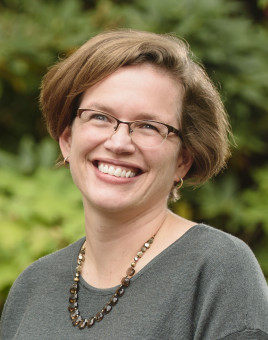
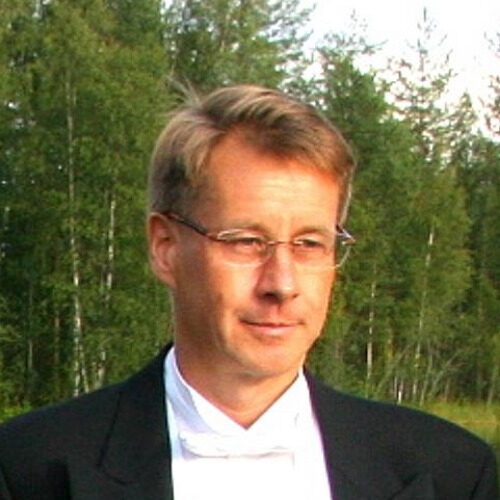
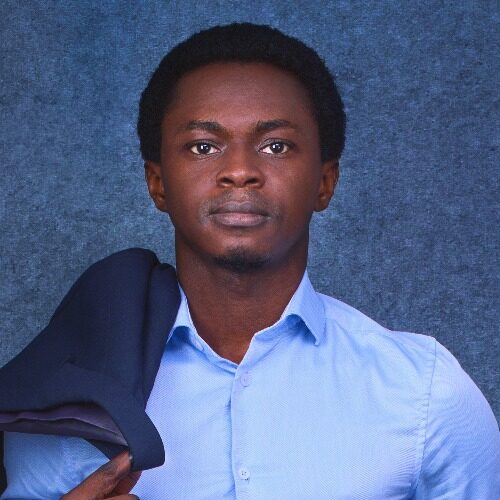
Kelly Riley is a Songwriting faculty member at Berklee College of Music, holding a Bachelor of Music in Professional Music from the institution. She specializes in voice, guitar, piano instruction, and music theory while maintaining active roles as an award-winning songwriter, vocalist, touring performer, and recording artist. Her work has been featured in prominent TV shows (Mission Impossible, General Hospital) and commercials. As an instructor, she contributes to online coursework including lyric writing modules. Notable career highlights include opening for Willie Nelson and Lyle Lovett, demonstrating her industry prominence. Her multidisciplinary approach integrates performance, composition, and media-driven music creation.
Anne Bentley is an Associate Professor of Inorganic Chemistry at Lewis & Clark College. She holds the Dr. Robert B. Pamplin Jr. Associate Professorship in Science. Her research focuses on nanoparticle surface chemistry, electrodepositing composite materials for energy applications, and advancing inorganic chemistry education. She teaches courses in general chemistry, inorganic chemistry, environmental chemistry, and nanomaterials. Bentley leads the Bentley Lab and actively contributes to initiatives like IONiC and VIPEr to enhance teaching practices and collaborative research in chemistry. Education: PhD in Inorganic Chemistry, University of Wisconsin at Madison (2005) BA in Chemistry, Oberlin College (1997) Her research interests blend materials science and education innovation. Recent work emphasizes nanoparticle synthesis for energy storage and pedagogical strategies for foundational inorganic chemistry courses. She has co-authored studies on student motivation in STEM and curriculum development for nanomaterials. Her articles highlight interdisciplinary approaches, merging nanotechnology with environmental applications and societal engagement. Notably absent from her profile are formal awards, though her contributions to educational platforms like VIPEr reflect her commitment to community-driven scholarship. She collaborates on national initiatives such as the Primarily Undergraduate Nanomaterials Cooperative, fostering research opportunities at small institutions. Labs & Teams: Bentley Lab (specializing in nanoparticle synthesis and energy applications). Active in CASPiE (Center for Authentic Science Practice in Education) to integrate research into undergraduate curricula.
Pierpaolo Loreti is an Adjunct Professor at the Department of Electronic Engineering and a Researcher at the University of Rome Tor Vergata. He holds a Ph.D. in Telecommunications and Microelectronics (2002) and a Degree in Electronic Engineering (1998), both from University of Rome Tor Vergata. His research focuses on wireless/mobile networks, framework design, analytic modeling, and performance evaluation through simulation and test-bedding. He has led projects on IoT, cybersecurity (e.g., medical device security, satellite networks), blockchain in healthcare, and wildlife tracking systems for endangered species like the Galápagos pink iguana. He collaborates with CNIT and coordinates initiatives in distributed computing, edge AI, and federated testbeds. Education: Ph.D. in Telecommunications and Microelectronics, University of Rome Tor Vergata, 2002 Electronic Engineering Degree (cum laude), University of Rome Tor Vergata, 1998 Research Interests: Wireless networks, IoT sensor systems, cybersecurity for healthcare and satellite infrastructure, blockchain applications in energy grids, and in-network machine learning. His work addresses challenges in privacy preservation, resource-sharing protocols, and energy-efficient designs for critical environments like wildlife monitoring and smart grids. Notable Projects: Developed miniaturized tracking systems for Galápagos pink iguanas Designed cybersecurity frameworks for medical devices and satellite networks Advanced eBPF program composition tools (HIKe/eCLAT) Co-led OpenSatRange and Cyber Range initiatives for space system training Awards: None explicitly mentioned in texts. Advising/Grants: Coordinated European/national projects since 1998 Supervised multiple research initiatives in IoT, blockchain, and network security Labs/Teams: Active member of Netgroup and collaborates with CNIT on interdisciplinary projects.
Hilary Barnes, PhD, NP-C, FAANP, is an Associate Professor and Director of the Nursing DNP Program at Widener University's School of Nursing. She holds academic affiliations with the Nursing Science (PhD) and Nursing Practice (DNP) programs, specializing in preparing advanced practice nurses. Her academic career includes teaching in DNP and PhD programs, mentoring students in clinical and research scholarship, and directing graduate nursing programs. PhD in Nursing Science (Widener University, 2013) MSN in Family Nurse Practitioner (Widener University, 2008) BSN in Nursing (University of Pennsylvania, 2005) BA in German-Economics (Skidmore College, NY, 1997) Dr. Barnes' research focuses on the nurse practitioner workforce, role transition challenges, and health policy impacts on care delivery. She employs advanced statistical methods, secondary data analysis, and primary data collection to address workforce sustainability and clinical practice integration. Notable areas include nurse practitioner turnover analysis, scope of practice policy effects, and interprofessional collaboration dynamics. Her publications span journals like Health Affairs Scholar and Journal of the American Association of Nurse Practitioners, emphasizing workforce policy, role transition frameworks, and healthcare labor economics. Recent work examines how public insurance expansions influence provider labor demand and the disruptive potential of retail health clinics. Excellence in Research Award (Sigma Theta Tau, 2023) AANP Open Access Award (2021) Fellow of the American Association of Nurse Practitioners (2020) Barnes has led grant-funded projects on NP workforce dynamics and participated in the NINR T32 postdoctoral fellowship at the University of Pennsylvania. She advises on transition-to-practice programs and collaborates with interdisciplinary teams to optimize advanced practice provider roles in evolving healthcare systems. Her research lab focuses on workforce analytics and policy solutions, supported by affiliations with Widener's School of Nursing and national organizations like the National Organization of Nurse Practitioner Faculties.
Alaukik Saxena is a Researcher at the Department of Computational Materials Design, Max Planck Institute for Sustainable Materials. Their work focuses on applying machine learning techniques to analyze atom probe tomography (APT) datasets for advanced material design. Saxena holds a B.Eng. in Mechanical Engineering from Panjab University (2016), an M.Sc. in Material Science and Simulation from Ruhr University Bochum (2020), and is a PhD candidate at the Max-Planck Institut für Eisenforschung GmbH (2020–2023). Research interests include defect chemistry, microstructure analysis, and data-driven materials science. Saxena’s work bridges experimental techniques like APT and scanning transmission electron tomography (STEM) with machine learning to quantify chemical segregation, grain boundary roles in corrosion, and optimize permanent magnet performance. They also develop open-source tools for high-throughput material data analysis. Publications emphasize APT data workflows, microstructural feature quantification, and roadmap strategies for data-centric materials science. Their contributions highlight theoretical advancements in nanoporous materials and θ′ precipitation in Al-Cu alloys. Saxena collaborates within the Defect Chemistry and Spectroscopy group, advancing computational phase studies and material defect engineering. Awards and grants are not explicitly listed, but their research aligns with sustainable materials innovation. Advising and team leadership are inferred through collaborative projects in computational materials design and defect chemistry.
Kirsi Yliniemi is a Senior University Lecturer in the Department of Chemistry and Materials Science at Aalto University, Finland. Her research focuses on electrochemical recovery of critical raw materials, functional nanomaterials synthesis, and sustainable resource utilization from waste streams. She actively contributes to UN Sustainable Development Goals related to responsible consumption and production (SDG 12) and climate action (SDG 13). Education: D.Sc. (Engineering and Technology) from Helsinki University of Technology (2008), M.Sc. (Engineering and Technology) from Helsinki University of Technology (2001). Research interests include hydrometallurgical processes, electrochemical deposition, functional surface engineering, and nanomaterial applications in environmental technologies. She has pioneered non-toxic methods for precious metal recovery, notably replacing cyanide-based leaching with chloride solutions in gold extraction. Recent work emphasizes circular economy solutions for metals, with publications on electrodeposition-redox replacement (EDRR) methods and lignin-based nanomaterial functionalization. She has been awarded for educational innovation, including virtual laboratory development and open science practices. Awards: Aalto CHEM Teaching Act of the Year (2021), Open Science Award (2024), and recognition for educational initiatives in virtual learning environments.
Antti Rousi is a Researcher specializing in Research Services at Aalto University. He holds a Doctoral degree in Other disciplines from the University of Tampere (2021) and a Master's degree in Arts and Design (2010). His work focuses on Research Data Management (RDM), Open Science practices, and institutional policies supporting open scholarship. He actively contributes to Aalto's Data Agents initiative and has published extensively on topics including open access strategies, data sharing policies, and music information studies. Rousi serves as a peer reviewer for journals like Journal of Documentation and participates in grant evaluations for institutions like the Poland National Science Center. His research bridges theoretical frameworks with practical implementation in academic settings, emphasizing interdisciplinary approaches to scholarly communication challenges.
Professor Dennis Taaffe is a leading academic in Exercise Gerontology and Exercise Oncology at Edith Cowan University (ECU), affiliated with the School of Medical and Health Sciences and the Exercise Medicine Research Institute. He holds a prestigious Vice-Chancellor’s Professorial Research Fellowship. His academic journey includes a PhD from the University of Oregon, postdoctoral training at Stanford University, and additional qualifications such as a DSc from Charles Sturt University and an MPH in epidemiology from the University of Hawai'i. Professor Taaffe’s research focuses on the intersection of exercise, aging, and cancer, with a particular emphasis on improving treatment outcomes through exercise interventions. His work spans clinical trials, systematic reviews, and meta-analyses examining the effects of exercise on muscle function, inflammation, and cancer progression. Notable contributions include studies on exercise’s role in mitigating side effects of androgen deprivation therapy for prostate cancer and its impact on tumor biology. Key achievements include awards for clinical research excellence and teaching, along with recognition from the American College of Sports Medicine and Exercise and Sports Science Australia. His research has been published in high-impact journals such as JAMA Network Open , Journal of the National Cancer Institute , and British Journal of Sports Medicine . Professor Taaffe leads the Exercise and Gastrointestinal Cancers Research Group and collaborates on national and international projects, including clinical trials like the ERADICATE study (examining exercise and radiation therapy efficacy) and the EXPAN trial (focusing on pancreatic cancer prehabilitation). His work bridges clinical practice and research, aiming to integrate exercise as a cornerstone of cancer care.
Pasi Fränti is a Professor of Computer Science at the University of Eastern Finland (UEF) since 2000, affiliated with the School of Computing within the Faculty of Science, Forestry and Technology. He holds MSc and PhD degrees from the University of Turku (1991 and 1994). His research focuses on machine learning, data mining, pattern recognition, and location-based systems, with notable contributions to clustering algorithms, image compression, and speech technology. Fränti leads the Machine Learning research group at UEF and has supervised 25 PhD students, covering topics like clustering, image/audio compression, and location-aware systems. His work bridges theoretical advances with practical applications in healthcare optimization, mobile services, and intelligent systems. He has published extensively, with over 79 journal articles and 167 conference papers, including 14 IEEE Transactions papers. Recent research highlights include optimizing health station locations via clustering algorithms, outlier detection improvements, and gamified location-based services (e.g., Mopsi). His interdisciplinary projects address challenges in urban planning, energy systems, and biomedical signal processing. Fränti actively critiques academic publishing practices, advocating for open science and peer review reforms. Key projects include the IMPRO initiative (2018–2023) supporting health/social services reform, and contributions to journals like Applied Computing and Intelligence . His lab develops tools for real-time data clustering and spatial analysis, with applications in mobile user behavior prediction and smart city infrastructure planning.
Isaac O. Afara is an Associate Professor at the Department of Technical Physics , Faculty of Science, Forestry and Technology , University of Eastern Finland . He leads the Biomedical Spectroscopy Lab (BSL) and the Biophysics of Bone and Cartilage (BBC) research group, focusing on translational spectroscopy and computational biophotonics for tissue diagnostics. Multi-disciplinary team of physicists and engineers Established 2018 (BSL), 1998 (BBC) His research bridges applied spectroscopy , machine learning , and biomechanics to develop optical methods for non-destructive assessment of biological tissues. Key areas include: Visible/NIR/Raman spectroscopy for cartilage/meniscus diagnostics Computational modeling of tissue optical properties Development of AI-driven preprocessing algorithms Characterization of viscoelastic properties in connective tissues Recent work demonstrates machine learning-enhanced spectroscopy for real-time cartilage assessment during arthroscopy, with applications in osteoarthritis detection, tissue engineering, and joint biomechanics. His 15 most recent articles (2025-2017) focus on: Cartilage/meniscus biomechanical properties Spectral differentiation of tissue pathologies Photon path length modeling Multi-sensor data fusion techniques Optical diagnostics for fibrosis and osteoarthritis Development of open-source preprocessing tools He collaborates with international institutions on computational biophotonics and has contributed to open-source Python modules for spectroscopic data analysis.
Adolfo R. Escobedo is an Associate Professor in the Edward P. Fitts Department of Industrial and Systems Engineering at North Carolina State University. His research focuses on mathematical programming, power systems operations, circular economy, computational social choice, and computational linear algebra. He has received prestigious awards including the NSF CAREER Award (2024) and the INFORMS MIF Early Career Award (2023). His work bridges theoretical advancements in optimization algorithms with practical applications in energy systems, crowd intelligence, and STEM education equity. Education: PhD in Industrial Engineering from Texas A&M University (2016), BA in Mathematics from California State University-Los Angeles (2009). Affiliations: Member of the College of Engineering, actively contributing to interdisciplinary research and education initiatives. His research emphasizes robust numerical guarantees in optimization solvers, with a focus on overcoming computational bottlenecks in linear and mixed-integer programming. Recent projects include developing open-source tools for reliable optimization software and launching inclusive STEM education programs targeting underrepresented minorities. Escobedo’s work also addresses societal challenges such as sustainable power systems and waste management through data-driven models. His publications highlight contributions to rank aggregation, crowd wisdom enhancement, and exact matrix factorization techniques. Beyond academia, he advocates for diversity in STEM through recruitment programs and research internships. Key Grants: NSF CAREER Award (2024), CRII: III Grant (2019). Labs/Teams: Leads research groups focused on optimization algorithms and computational social choice, collaborating with interdisciplinary teams in energy and environmental systems.
Associate Professor Helen Kang holds a dual role as Associate Professor and Associate Dean (Higher Degree Research) at the School of Accounting, Auditing and Taxation within the UNSW Business School. She completed her academic journey at UNSW with a BCom (Hons), MCom (Hons), and PhD, and is a CPA. Her research focuses on voluntary disclosures, intangible assets, and international accounting practices. She contributes to leading journals such as European Accounting Review and has explored topics ranging from fair value measurement during financial crises to cross-border market integration mechanisms. Her work often bridges theoretical frameworks with empirical analyses of corporate governance and regulatory compliance. Professional service includes editorial roles and academic leadership in higher degree research supervision. Education: BCom (Hons), MCom (Hons), PhD from UNSW Affiliations: CPA Australia, UNSW Business School Research interests emphasize transparency in financial reporting, with studies on non-IFRS disclosures and the impact of legal systems on valuation hierarchies. Her recent work examines market integration effects of programs like the Shanghai-Hong Kong Connect and the evolving landscape of intangible asset accounting in global contexts.
Zengxu GUO is a researcher affiliated with Université de Technologie de Troyes (UTT), holding a Doctorate. His research focuses on thermal energy storage systems, phase change materials (PCMs), and operations research with particular emphasis on inventory optimization. Key areas of expertise include enhancing thermal performance through metal foam integration, analyzing inclination effects on heat transfer, and modeling inventory systems for omnichannel environments. His work bridges experimental and computational methods, with notable contributions to understanding PCM behavior in porous media and optimizing inventory policies under dual demand classes. Recent studies (2021-2024) explore thermal tank design, aspect ratio impacts, and cost evaluation frameworks for inventory models. Publications highlight interdisciplinary approaches combining materials science with thermal engineering and supply chain optimization, demonstrating strong methodological rigor through experimental validation and numerical simulations.
Prof. Marian Oslislo is a Professor of Fine Arts at the Academy of Fine Arts in Katowice , teaching in the Multimedia Studio within the Faculty of Design. He holds dual roles as an educator and artist, focusing on new media, kinetic typography, and interdisciplinary multimedia projects. Born in 1955, he graduated from the Faculty of Graphic Art at his current institution and has been affiliated with the academy since 1983. Education: Graduate - Faculty of Graphic Art, Academy of Fine Arts in Kraków (Katowice branch) Research Interests: Dynamic visual systems integrating music and multimedia Ergonomics of medical equipment in ambulances Wayfinding systems in complex architectural spaces Preservation of regional visual culture (Upper Silesia) Typography for Central European languages His creative practice spans experimental film, digital publishing standards, and cultural heritage documentation. Awards Highlights: Bronze Medal at ED-Awards 2014 for Symphony Orchestra signage system Special Award at Festival Animator 2018 for NEBULA National recognition for The Insects Project typography study Advancing Design Education: Developed curricula blending traditional and digital design methods Pioneered student collaborations with Bogucice Porcelain and Beijing University of Technology Directed studio projects showcased internationally (Mainz, Beijing, Genoa) Labs & Teams: M-Studio graphic design collective since 1991 Multimedia Activities Studio - UNESCO City of Music initiatives Visual Research & Interaction Department collaborations
Jérôme Charmet is an Associate Professor at the University of Applied Sciences Arc (HES-SO) and holds adjunct positions at the University of Bern (School of Biomedical and Precision Engineering) and the University of Warwick (Warwick Medical School). His research focuses on biomedical engineering , microfluidics , and advanced manufacturing for medical devices. BSc in Microtechniques, Haute Ecole Arc MSc in Biomedical Engineering, University of Bern Current research projects include: Bacterial Suicide (HES-SO funded): Treating biomaterial-associated infections on 3D-printed implants HYPERCELL (SNSF funded): Developing single-cell T cell therapy efficacy assays ELUSIVE (HES-SO funded): Creating mechanically enhanced biodegradable PCBs Public Mask (HES-SO funded): Biodegradable electrospun mask filters His >50 publications and >1200 citations reflect expertise in biodegradable polymers , organic bioelectronics , and point-of-care diagnostics . Key technologies include microheater fabrication , immunoaffinity liquid biopsies , and contamination-free OFET manufacturing .