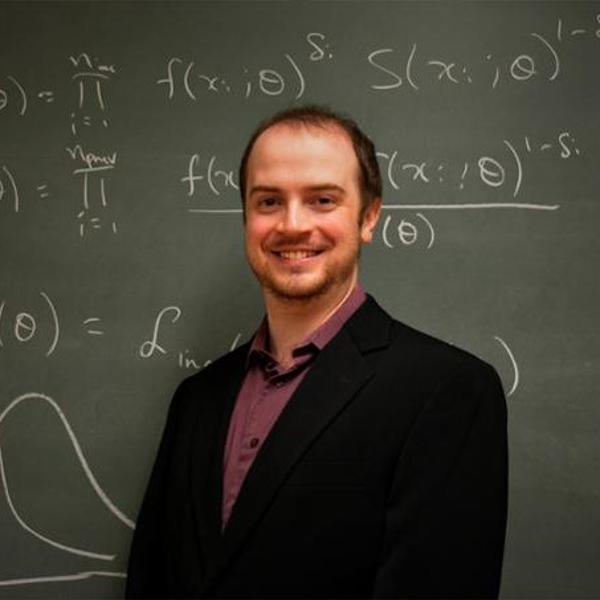
Dr. Jan Hamann is a Senior Lecturer at the School of Physics , University of New South Wales, specializing in theoretical cosmology. His research focuses on analyzing high-precision astrophysical observations to study the universe's history, composition, and inflationary models. Education: PhD in Cosmology from Hamburg University (2007) Research Interests: Cosmic Microwave Background (CMB) analysis, inflationary features, dark matter (sterile neutrinos), cosmological parameter estimation, and machine learning applications to astrophysical data. Supervision: Primary supervisor for PhD students Yuqi Kang, Julius Wons, and Nathan Cohen; secondary supervisor for Kai Yi; and Honours supervisor for Jahanvi Maheshwari. Teaching: Courses include PHYS1241 Higher Physics 1B (Special) , PHYS4143 General Relativity , and PHYS3115 Particle Physics and the Early Universe . Recent publications (2024–2017) address CMB lensing, inflationary model optimization, sterile neutrino constraints, and machine learning techniques for cosmological data. He has contributed extensively to Planck mission analyses, particularly in CMB power spectra, isotropy tests, and inflationary parameter constraints.
Dr. Andreas Haahr Larsen is an Assistant Professor at the Niels Bohr Institute within the University of Copenhagen , specializing in Solid State Physics with a focus on membrane protein-lipid interactions . His research integrates molecular dynamics simulations with X-ray and neutron scattering techniques to study structural and dynamic aspects of GPCRs , AMPA receptors , and nanodisc systems . His work emphasizes computational-experimental synergy , including SAStutorials.org for scattering data education and Shape2SAS software development. Recent projects explore protein desensitization mechanisms , amphipathic helix functionality , and lipid particle engineering for membrane protein solubilization. Key trends show interdisciplinary applications of structural biology to neuroscience and bioengineering , particularly in GPCR trafficking and AMPA receptor mutations . He leads in data simulation and multi-modal structural analysis , contributing to drug development and biophysics methodologies . Andreas is based at Madsen Lab , located at Universitetsparken 5, building D, Copenhagen Ø. His collaborations span international institutions in X-ray crystallography , neutron scattering , and computational biophysics domains.
Mijke Rhemtulla is an Associate Professor in the Department of Psychology at the University of California, Davis, where she directs the Psychological Models and Measurement Lab. She serves as Associate Editor of Advances in Methods and Practices in Psychological Science , Guest Editor for a Psychometrika Special Issue on Network Psychometrics, Consulting Editor for Psychological Methods , and Statistical Advisor for Psychological Science . She is an active member of the Society for Multivariate Behavioral Methods (SMEP) and Society for the Improvement of Psychological Science (SIPS). Education: Ph.D. in Developmental Psychology, University of British Columbia, 2010 M.A. in Developmental Psychology, University of British Columbia, 2005 B.A. in Psychology, University of Alberta, 2002 Research Focus: Dr. Rhemtulla specializes in structural equation modeling (SEM) , developing methodologies for ordinal and incomplete data analysis , planned missing data designs , and item parceling to minimize bias. Her theoretical work critically examines latent variable interpretation and the implications of network models for psychological constructs, bridging methodological rigor with substantive theory testing. Publication Trends: Her research (2012-2025) demonstrates sustained innovation in psychometric methodology, with recurring themes in missing data solutions, network modeling, and genomic applications of SEM. Recent work emphasizes statistical power, research transparency, and efficiency—particularly in infant studies and complex trait genetics—showcasing interdisciplinary impact across developmental psychology, genomics, and educational research. Scientific Awards: European Research Council Fellowship SSHRC Fellowship (Social Sciences and Humanities Research Council of Canada) NSERC Fellowship (Natural Sciences and Engineering Research Council of Canada) Advising and Grants: Supported by major international and national grants (ERC, SSHRC, NSERC), Dr. Rhemtulla mentors graduate students through advanced coursework in SEM and measurement theory. Her grant portfolio enables methodological development while promoting open science practices through editorial leadership and society involvement. Labs and Teams: She leads the Psychological Models and Measurement Lab at UC Davis, which develops SEM-based tools for psychological research. The lab fosters cross-disciplinary collaboration with geneticists, developmental researchers, and educational psychologists while advocating for transparent, reproducible methods.
Irini Moustaki is a full-time Professor in Social Statistics at the Department of Statistics , London School of Economics and Political Science . Her work focuses on latent variable models, structural equation models, and categorical data analysis with applications in education, psychology, and social sciences. She has co-authored influential books such as Latent Variable Models and Factor Analysis: A Unified Approach (2011) and Analysis of Multivariate Social Science Data (2008). Research Interests : Latent variable models, structural equation modeling, categorical data analysis, missing values, outliers, longitudinal data, composite likelihood estimation, and applications in social sciences. Recent research trends include: Composite likelihood and stochastic approximation methods Bayesian structural equation modeling Outlier detection in latent variable frameworks Network meta-analysis for intervention hierarchies Advances in DIF analysis and sparse factor modeling Scientific Awards : Honorary Doctorate, University of Uppsala Honorary Professor, The Education University of Hong Kong LSE Excellence in Education Award Advising & Grants : Supervised 8 PhD students and contributed to major grants from ESRC, MRC, and British Academy. Key roles in editorial boards of Psychometrika , Computational Statistics and Data Analysis , and Structural Equation Modeling .
Professor Andrew Wood is a faculty member at the Research School of Finance, Actuarial Studies and Statistics, Australian National University. His research spans non-Euclidean statistics, theoretical statistics, computational methods, and applied statistics in sciences and medicine. Research Interests : Non-Euclidean statistics, directional statistics, statistical shape analysis, asymptotic theory, computational statistics, stochastic differential equations, and applications in science/medicine. Grants : Funded by Engineering and Physical Sciences Research Council (UK), Biotechnology and Biological Sciences Research Council (UK), and Australian Research Council Discovery Projects. Editorial Roles : Former Joint Editor of Journal of the Royal Statistical Society, Series B and current Associate Editor of Biometrika . Research Trends : Recent publications focus on robust statistical methods for non-Euclidean data, computational approaches for complex distributions, principal component analysis for high-dimensional datasets, and geometric inference on manifolds. Applications include microbiome analysis, surface fractal dimension estimation, and spherical regression models. Supervision & Collaboration : Registered as a supervisor at ANU, with collaborations across disciplines including molecular biology, environmental science, and computational mathematics.
Prof. Wouter M. Koolen serves as Professor of Mathematical Machine Learning in the Statistics group at the University of Twente and as Senior Researcher in the Machine Learning group at Centrum Wiskunde & Informatica (CWI). He maintains active research affiliations with INRIA-CWI associate teams 6PAC (with Inria Lille) and 4TUNE (with Inria Paris and Grenoble), and holds the distinction of ELLIS Scholar. Dr. Koolen earned both his MSc and PhD cum laude from the Institute of Logic, Language and Computation at the University of Amsterdam, completing his doctoral work titled 'Combining Strategies Efficiently: High-quality Decisions from Conflicting Advice' in January 2011. His academic journey includes being designated a Master of Logic. Prof. Koolen's research spans theoretical machine learning with deep connections to game theory, information theory, statistics, and optimization. His current work focuses on pure exploration in multi-armed bandit models, game tree search algorithms, and provably accelerated learning methods in statistical and individual-sequence settings, which he characterizes as 'learning faster from easy data.' His theoretical contributions consistently demonstrate practical relevance in sequential decision making and statistical inference. Analysis of his recent publications reveals three dominant research threads: martingale-based methods for anytime-valid statistical inference using e-values, adaptive optimization algorithms with provable guarantees, and theoretical foundations of multi-armed bandit problems. His work increasingly bridges theoretical computer science with modern statistical methodology, particularly in sequential analysis and adaptive experimentation. His notable achievements include: NWO VENI grant for innovative research QUT Vice-Chancellor's postdoctoral research fellowship Designation as ELLIS Scholar recognizing European research excellence cum laude distinctions for both master's and doctoral degrees Prof. Koolen actively mentors the next generation of researchers, having supervised multiple PhD students to completion including Hongwei Wen, Clément Lezane, and Tyron Lardy with defenses scheduled for 2025. His research program is supported by competitive grants focusing on theoretical machine learning and statistical methodology. He maintains an active presence in the international research community through conference presentations, workshop organization, and collaborations across European institutions. Within the Machine Learning group at CWI and Statistics group at the University of Twente, Prof. Koolen contributes to a dynamic research environment focused on theoretical foundations with practical applications. His work often intersects with colleagues investigating sequential decision processes, game-theoretic approaches to learning, and robust statistical inference methods.
Stefano Cabras is a Full Professor in the Department of Statistics at University Carlos III de Madrid (UC3M), where he serves as Director of the Flores de Lemus Institute and Deputy Director of the Master's Degree in Statistics for Data Science. His office is located at 10.1.10 - Campomanes (Getafe). Professor Cabras maintains broad interdisciplinary research interests spanning: Bayesian statistics and computational methods Biostatistical applications in nutrition, epidemiology, and medicine Causal inference and policy impact evaluation Machine learning applications in transportation and sports science Statistical modeling of complex biological systems His publication trends show strong emphasis on Bayesian methodologies applied to healthcare, public policy, and urban systems. Recent work demonstrates increasing integration of deep learning with traditional statistical approaches for problems in causal inference, pandemic forecasting, and transportation optimization. Professor Cabras leads several major research initiatives: Principal researcher for 'Statistical modelling for smart cities' (Beijing Metro Group, 2020-2023) Director of 'Contrato marco para servicios de consultoría estadística' (KROLL Advisory, 2022-2024) Co-researcher for 'Predicción de edad biológica mediante IA' (Fundación Mutualidad Abogacía, 2020-2021) He has supervised graduate research including theses on Bayesian metro occupancy modeling and maintains active collaborations through the Flores de Lemus Institute. His research has been applied in policy analysis, healthcare diagnostics, and urban planning internationally.
Prof. Dr. Ahmet Sermet is a faculty member at Izmir University of Economics, affiliated with the Faculty of Engineering and Architecture in the Department of Industrial Engineering . He previously served as Head of the Industrial Engineering Department at Eskişehir Osmangazi University (2015-2017) and has held various administrative roles, including Vice Dean, Erasmus Coordinator, and KOSGEB representative. PhD in Industrial Engineering (Cleveland State University, 1994) Master’s and Bachelor’s degrees from Anadolu University His research focuses on Statistical Analysis , Quality Control , and Forecasting , with a strong emphasis on applying fuzzy logic , neural networks , and design of experiments to industrial and environmental challenges. Recent publications highlight innovations in fuzzy control charts , nanofluid viscosity modeling , and sustainable biosorbent development . He utilizes the GMDH Shell software in his teaching for predictive modeling applications. Collaborative work includes biosurfactant production optimization (2022) and environmental remediation technologies (2021). Notable Contributions : Development of Interval Type-2 Fuzzy C-Control Charts for manufacturing quality control Advancements in biosorption techniques using novel biological materials Integration of CHAID analysis for predicting educational technology adoption (2025)
Qi Feng is an Assistant Professor at the Department of Physics and Astronomy, University of Utah since January 2024. Previously held academic positions include Astrophysicist at Harvard-Smithsonian Center for Astrophysics (2022-2023), Postdoctoral Research Scientist at Barnard College and Columbia University (2017-2022), and Postdoctoral Research Fellow at McGill University (2015-2017). Education: PhD in Physics from Purdue University (2015), BS in Physics from University of Science and Technology of China (2009) Research Focus: High-energy and multi-messenger astrophysics through gamma-ray observations, dark matter searches, cosmic ray acceleration studies, and advanced instrumentation development Collaborations: Active in VERITAS Collaboration, CTAO Consortium, and IceCube neutrino follow-up campaigns Teaching: Instructs Observational Astronomy and supervises graduate research projects at University of Utah Current research group includes postdoc Ashwani Pandey, graduate students Simon Filbert and Michael Martin, and undergraduate researcher Rachel Freeman. Previous students include Sneha Singh, Rumman Neshat, and several REU/SURF program participants.
Prof. John Jelonnek is a Professor at the Institute of High-Power Pulse and Microwave Technology (IHM) within the Department of Electrical Engineering and Information Technology at the Karlsruhe Institute of Technology (KIT). His research focuses on gyrotron technology, high-power microwave systems, and their applications in nuclear fusion energy, particularly for plasma heating in devices like the Wendelstein 7-X stellarator and ITER. He leads projects involving advanced gyrotron design, including multi-megawatt-class systems operating at the second cyclotron harmonic, diamond window development, and quasi-optical mode generators. His work also extends to microwave plasma applications, additive manufacturing, and radar systems. Key collaborations include the ITER-Fusionsenergie-Kooperation and contributions to EU-DEMO fusion projects. His experimental facilities include the FULGOR test stand for gyrotron testing and the W7-X stellarator for plasma physics research. Research highlights include the 1.5-MW-class 140-GHz gyrotron, high-azimuthal mode selectivity cavities, and diamond output window performance analysis. Ongoing projects address challenges in achieving stable, efficient plasma heating and advanced cooling solutions for fusion reactor components. Recent trends in his publications emphasize second-harmonic gyrotron development, tolerance investigations in waveguide designs, and fusion energy system integration. His work bridges fundamental microwave engineering with applied fusion technology, aiming to advance next-generation energy systems.
James Hugh McVittie serves as an Assistant Professor in the Department of Mathematics and Statistics within the Faculty of Science at the University of Regina. His academic profile features active research engagement with contact details including email (james.mcvittie@uregina.ca) and office phone (306-585-5080), though no courses are scheduled for Spring/Summer 2025. McVittie's research program centers on Survival Analysis and Biostatistics, with specialized expertise in Statistical Inference for Combined Cohort Methodologies and Measurement Error. His methodological work addresses partially observed data structures, particularly focusing on right-censored and length-biased failure time data. Applications span health studies (including Parkinson's disease research using the Canadian Longitudinal Study on Aging) and modeling sports career durations, demonstrating translational impact across medical and social domains. Analysis of his 2022-2025 publications reveals three dominant research thrusts: (1) Advanced survival modeling for combined cohort data (incident/prevalent cohorts), (2) Bayesian nonparametric estimation techniques for censored data, and (3) Extreme value theory applications in environmental statistics with missing observations. His work consistently addresses methodological gaps in sample size determination, hazard modeling, and survival function estimation under complex data constraints. Scientific Awards No scientific awards were documented in the provided sources Advising and grant activities remain unreported in the available materials, with no mention of student supervision or funded research projects. Laboratory infrastructure and research team compositions were not specified in the institutional profiles or publication records.
Bahaedin Khaledi is an Assistant Professor in the Department of Applied Statistics and Research Methods at the University of Northern Colorado (UNC), part of the College of Education and Behavioral Sciences. He holds a PhD in Statistics from the Indian Statistical Institute (2000), an M.Sc. from Shahid Beheshti University (1991), and a B.Sc. from Shahid Chamran University (1988, ranked 1st). His career includes visiting roles at institutions like Florida International University and Portland State University, alongside his primary faculty position at UNC since 2016. Dr. Khaledi's research focuses on stochastic comparisons, actuarial science, Bayesian analysis, and risk modeling. His work addresses challenges in insurance claims reserving, mortality forecasting, and reliability theory. Notable contributions include studies on policy limit allocations, stochastic orderings of systems, and machine learning applications in demographic projections. His publications span over 50 peer-reviewed articles in journals like Statistics and Probability Letters and Communications in Statistics . While no awards are explicitly listed, his extensive academic collaborations and global research engagements highlight his disciplinary impact. His teaching and advising roles at UNC further underscore his commitment to graduate education in applied statistics.
Dr. Glen Satten is a Professor in the Department of Biostatistics and Bioinformatics at Emory University, with secondary appointments in the Departments of Human Genetics and Biostatistics and Bioinformatics. He is affiliated with the Division of Research in the Department of Gynecology and Obstetrics within the Emory University School of Medicine. His work focuses on developing statistical methods for analyzing microbiome, genetic, and epidemiologic data. Education: Ph.D. in Biostatistics from Harvard University (1985), M.A. in Biostatistics from Harvard (1981), and B.A. from Oberlin College (1979). Research interests include Genetic Epidemiology, Microbiome Research, Genomics, and the development of novel statistical methodologies for high-dimensional biological data. His contributions span computational tools for microbiome analysis (e.g., LDM and MIDASim), bias correction in compositional data, and improving statistical efficiency in genetic association studies. He has also contributed to studies on maternal health outcomes and HIV in pregnancy. His recent publications highlight advancements in microbiome data analysis, including bias detection in mock communities and integrating multiple sequencing modalities. Collaborative work extends to public health surveillance and methodological improvements for case-control studies. No scientific awards are explicitly listed in the provided materials. His research has been applied to clinical settings, such as optimizing embryo transfer protocols using national surveillance data. He advises on statistical methodologies but no student names are provided in the text. Labs/Teams: While not explicitly named, his work suggests involvement in interdisciplinary teams focused on bioinformatics, genetic epidemiology, and clinical data analysis.
Yuqiong Wang is a Byrne Research Assistant Professor in Mathematics at the University of Michigan, mentored by Erhan Bayraktar. Her research focuses on stochastic control systems, optimal stopping problems, and stochastic game theory with applications in mathematical finance. She earned her Ph.D. from Uppsala University in 2023, where she developed Bayesian frameworks for sequential decision-making under uncertainty. Her publication record demonstrates consistent focus on refining stochastic modeling techniques, particularly through Bayesian approaches to sequential analysis. Recent theoretical advances include novel formulations of asymmetric Dynkin games and nonlocal parabolic operators derived from game-theoretic principles.
Jun Shao is a Professor of Statistics at the University of Wisconsin-Madison, affiliated with the School of Computer, Data & Information Sciences. His research focuses on statistical theory and methodology, including resampling methods, high-dimensional data analysis, and medical statistics. He holds prestigious fellowships from the Institute of Mathematical Statistics and the American Statistical Association. Education: B.S., Mathematics, East China Normal University (1982) Ph.D., Statistics, University of Wisconsin-Madison (1987) Research Interests: Shao's work addresses challenges in statistical inference, such as handling missing data, longitudinal studies, and covariate-adaptive designs in clinical trials. He develops methodologies for resampling techniques, variable selection, and nonignorable nonresponse scenarios. His contributions include influential papers on log-rank tests, robust treatment effect estimation, and integration of external data sources. Professional Activities: Editor of Statistical Theory and Related Fields (2017–present) Co-Editor of Journal of Systems Science and Complexity (2014–2019) Fellow of the Institute of Mathematical Statistics and American Statistical Association Awards: Fellow, Institute of Mathematical Statistics (Year not specified) Fellow, American Statistical Association (Year not specified) Teaching & Mentorship: Shao teaches advanced courses like Mathematical Statistics and Variable Selection , emphasizing rigorous theoretical foundations and practical applications. His courses cover topics such as asymptotic theory, likelihood-based methods, and modern variable selection techniques.