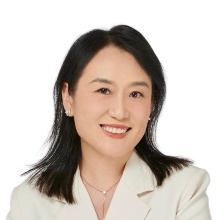
Alessandro Aliakbargolkar is a Professor at the Department of Space Systems Design under the School of Aerospace Engineering at Skolkovo Institute of Science and Technology (Skoltech). His research focuses on Federated Satellite Systems, CubeSat constellations, and Spacecraft Systems Architecture, with applications in Earth observation, messaging services, and networked satellite systems. He has an extensive publication record in these areas, including work on technology roadmapping and digital twin implementation. Key Research Areas: Satellite federation and resource sharing CubeSat constellation design Network performance optimization Integration of systems engineering models with AI Selected Trends: Recent work explores digital twin technologies for CubeSats, federated satellite network analysis, and large language model applications in spacecraft design. Publications often combine theoretical frameworks (e.g., network theory) with practical implementations (e.g., LoRa-based messaging services). ORCID Profile: 0000-0001-5993-2994
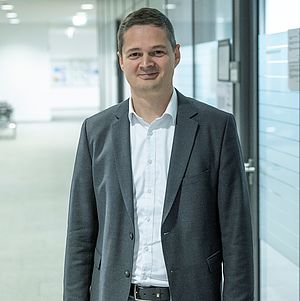
Prof. Dr. Roland Zengerle serves as Full Professor for Application Development at the Institute of Microsystems Technology within the Faculty of Engineering at Albert Ludwigs University of Freiburg, concurrently holding the position of Director at Hahn-Schickard Institute for Microanalysis Systems in Freiburg. His academic leadership spans microsystems engineering with a focus on translational research bridging fundamental science and clinical applications. Zengerle's research expertise centers on Microfluidics, Lab-on-a-Chip systems, Bio-MEMS, Electrochemical Energy Systems, and Tomographic Reconstruction of Mesoporous Materials. He pioneers hybrid manufacturing techniques integrating molten metal printing with polymer processing to develop point-of-care diagnostic platforms and advanced energy systems. Current projects include UTI-Diag for urinary tract infection diagnosis and PhotonMed, a 32-million-euro medical technology initiative where his MEMS Applications Laboratory develops centrifugal microfluidic solutions. Analysis of his recent publications reveals a dominant trend toward multi-technology integration: centrifugal microfluidics combined with 3D bioprinting for organoid-based drug testing, molten metal printing for flexible electronics, and bead-based immunoassays for infectious disease detection. The work demonstrates strong clinical translation focus, particularly in cancer diagnostics (circulating tumor cell isolation), infectious disease testing (TB diagnostics), and regenerative medicine (spheroid/organoid handling). His laboratory has secured significant funding for high-impact projects including: UTI-Diag: Molecular diagnostics for urinary tract infections PhotonMed: Medical technology innovation consortium livMatS: Living, Adaptive and Energy-autonomous Materials Systems Zengerle actively mentors researchers through Freiburg's Master Lab program and Writer's Studio initiative while promoting young talent via Bootcamp training. His group maintains strategic alliances with Hahn-Schickard spin-offs and industry partners, leveraging university cleanroom facilities and specialized service centers for microfabrication. The MEMS Applications Laboratory operates as a hub for interdisciplinary innovation, combining microfabrication expertise with clinical insights to develop commercializable diagnostic solutions. Current infrastructure supports centrifugal microfluidic cartridge development, 3D-bioprinting of tissue models, and electrochemical sensor integration, with ongoing work focused on automating complex biological workflows for point-of-care applications.
Markus König is a Professor of Informatics in Civil Engineering at Ruhr University Bochum, where he has been researching and teaching since October 2009. His work focuses on Building Information Modeling (BIM), digital construction technologies, and civil engineering informatics, with significant contributions to the development and implementation of digital methods in German construction industry. Dr. König earned his degree in civil engineering with a focus on applied computer science at Leibniz University Hannover, where he also completed his doctorate on cooperative building planning at the Institute for Building Informatics. He subsequently held a junior professorship for Theoretical Methods of Project Management at Bauhaus University Weimar before joining Ruhr University Bochum. His research spans multiple cutting-edge areas including Building Information Modeling (BIM), construction process simulation, tunneling informatics, infrastructure asset management, and the application of artificial intelligence and computer vision in civil engineering. As chair of the Building Informatics Working Group from 2012-2016, he played a key role in developing the first national BIM curriculum for German universities and serves as editor of the book 'Building Information Modeling: Technological Foundations and Industrial Practice.' Analysis of his recent publications reveals a strong trend toward semantic technologies, digital twins, automated compliance checking, and the integration of AI in construction processes. His work increasingly focuses on information containers, ontology development, and the application of large language models to infrastructure data, reflecting the evolving landscape of digital construction. Dr. König's significant contributions to digital construction have been recognized with prestigious awards: Lower Saxony-Bremen Construction Industry Award (2017) for 'services in the development and introduction of digital construction in Germany' Konrad Zuse Medal (2020) While specific details about his advising and grant activities aren't explicitly mentioned in the provided text, his extensive publication record with numerous co-authors suggests active supervision of doctoral students and research staff. His involvement in multiple collaborative research projects is evident from his publication history. At Ruhr University Bochum, Professor König leads a research group focused on civil engineering informatics, with particular emphasis on BIM, digital construction technologies, and their application across the building lifecycle. His team appears to work at the intersection of computer science and civil engineering, developing innovative solutions for construction process optimization, infrastructure management, and digital transformation of the AEC industry.
Prof. Dr. Gudrun P. Kiesmüller is a full professor of Operations Management at TUM Campus Heilbronn since 2019. Previously, she held full professorships at Kiel University (Supply Chain Management) and Otto von Guericke University Magdeburg (Operations Management). She studied mathematics at Julius-Maximilians-University of Würzburg and later worked as a postdoc and assistant professor at Eindhoven University of Technology. Her research focuses on supply chain management, inventory management (particularly spare parts), maintenance process planning, and manufacturing system design. She develops optimization approaches for decision support, with publications in journals like IISE Transactions and Production and Operations Management . Key awards include an Honorary Doctorate (2023), ISIR Service Award (2022), and multiple teaching and reviewer awards. She has contributed to advancing stochastic inventory models and operational efficiency in complex systems. Her work integrates theoretical rigor with practical applications, addressing challenges in inventory routing, buffer allocation, and component reliability optimization. Current research emphasizes dynamic maintenance planning and capital goods design.
Prof. Dr. Axel Mecklinger is a leading cognitive neuroscientist at Saarland University , specializing in the neurocognition of memory and language through spatiotemporal brain imaging (EEG/MEG/fMRI). His career spans over three decades, with significant contributions to understanding visual working memory , associative recognition , and memory development . Key research areas: Memory binding, ERP subsequent memory effects, novelty detection, and cognitive aging Major grants: DFG Research Groups, Collaborative Research Centers, and international collaborations with the Chinese Academy of Sciences Scientific leadership: Organized conferences, edited journals, and served as speaker for research training groups His recent work explores unitization in memory formation , cross-cultural differences in memory processing , and theta neurofeedback interventions . Awards include the Early Career Award of the German Psychophysiology Society (1992) and the European Federation of Psychophysiology Societies' Federation Prize (1994). Current projects investigate the neural mechanisms of semantic surprisal and memory plasticity in aging populations.
Prof. Dr. Uli Lemmer is a Professor at the Department of Electrical Engineering and Information Technology (ETIT) at the Karlsruhe Institute of Technology (KIT). His research focuses on optoelectronics, thermoelectric materials, and printed electronics, with a strong emphasis on energy harvesting, nanotechnology, and photonics. He leads the Lichttechnisches Institut (LTI) and is affiliated with the Institute of Applied Physics. His work spans innovations in laser systems, flexible electronics, and bio-inspired materials. Office: Building 30.34, Room 223; Phone: +49 721 608-42530; Email: uli.lemmer@kit.edu. Research interests include the development of advanced materials for solar cells, thermoelectric generators, and sensor technologies. He pioneers methods like aerosol-jet printing and inkjet printing for scalable production of electronic devices. His group explores biomimetic structures (e.g., snake scale nanopores) and terahertz systems, pushing boundaries in both fundamental science and applied engineering. Recent publications highlight breakthroughs in printed thermoelectric modules, perovskite-based photovoltaics, and high-frequency antennas. His work integrates cutting-edge fabrication techniques with material science to address challenges in renewable energy, sensor networks, and flexible electronics. Prof. Lemmer collaborates internationally on projects like EU-funded energy initiatives and partners with industry for technology transfer. His lab specializes in additive manufacturing, optical systems, and nanoscale device engineering, aiming to bridge the gap between academic research and industrial applications.
Samuel Leder is a doctoral researcher at the Institute of Computational Design and Construction (ICD) under the Cluster of Excellence IntCDC at the University of Stuttgart. His work focuses on the integration of robotics and architectural design, particularly in developing distributed robotic systems for timber construction. He has been actively involved in research projects such as RP 19-1 – Robotic Kinematic System for Parallel Construction and RP 19-2 – Co-Design for Distributed Cooperative Multi-Robot Systems . Additionally, he serves on the Equal Opportunity Commission at ICD. Bachelor of Design in Architecture (summa cum laude), Washington University in St. Louis Bachelor of Applied Science in Systems Science and Engineering (magna cum laude), Washington University in St. Louis MSc in Architecture via the Integrative Technologies and Architectural Design Research (ITECH) program, University of Stuttgart Samuel’s research explores the synergies between agent-based modeling , robotic systems , and architectural design . His work aims to create minimal robotic machines capable of constructing complex spatial assemblies, particularly with timber structures . He investigates the co-design of robots and the structures they build, emphasizing modular systems and kinematic behaviors . Recent publications highlight advancements in digital twins , adaptive assembly , and human-robot collaboration for timber construction. The 15 most recent articles reveal trends in collective robotic construction , agent-based modeling , and material-robot interaction . These works emphasize timber fabrication , modular systems , and interactive simulation for large-scale construction tasks. Key sub-fields include adaptive assembly , cyber-physical systems , kinematic control , and human-guided robotics . Scientific Awards: German Academic Exchange Service (DAAD) Award for Outstanding Achievement Deutschlandstipendium Samuel’s research is conducted within the ICD at University of Stuttgart , where he collaborates on the Wood Building Systems for Distributed Robotics associated project. His work bridges architecture , robotics , and computational design , aiming to redefine on-site construction methodologies through innovative robotic systems.
Prof. Dr. Katja Rösler is a Professor of Automotive Engineering at the Institute of Mechanical Engineering, Ruhr West University of Applied Sciences since March 2012. Her career spans academic research and industrial development with key positions at TU Braunschweig, Volkswagen AG, and Fraunhofer Institute. Education: Industrial Mathematics degree completed under standard period Doctorate: Engineering (Driver Modeling) from TU Braunschweig, 2008 Her research focuses on automotive engineering with special emphasis on modeling/simulation, vehicle dynamics, driver assistance systems, accident research, alternative drives, and mobility concepts. She actively combines simulation with experimental verification and has significant involvement in Formula Student projects. Recent publications highlight her work in intelligent mobility systems (2018-2020), with particular attention to electromobility, accessibility solutions for elderly/disabled populations, and micromobility analysis. Earlier works established her expertise in driver modeling, vehicle measurement technology, and simulation-experiment correlation. Labs: Automotive Engineering Lab Teaching: Mechanics (Statics, Strength of Materials, Dynamics), Vehicle Dynamics, Driver Assistance Systems
Prof. Dr. Felix Warmer is an Assistant Professor at Eindhoven University of Technology (TU Eindhoven) and leads the Stellarator Reactor Studies (SRS) research group at the Max Planck Institute for Plasma Physics (IPP) in Greifswald. He holds a dual role, teaching at TU Eindhoven while conducting advanced fusion energy research at IPP. Current Affiliation: Max Planck Institute for Plasma Physics, Greifswald (Head of SRS Group) Academic Position: Assistant Professor, Eindhoven University of Technology Teaching: Courses include 'Fusion on the Back of an Envelope' and 'Design of a Fusion Power Plant' His educational journey began with a master's thesis at IPP Greifswald, followed by doctoral research culminating in a PhD from the Technical University of Berlin in 2016. He was awarded a prestigious Feodor Lynen Research Fellowship, enabling research at Japan's National Institute for Fusion Science. Felix Warmer's research is centered on the scientific and engineering design of stellarator-based fusion power plants. He develops innovative physical and engineering models to simulate fusion reactor components and validates these using experimental data from the Wendelstein 7-X stellarator. His work bridges theoretical modeling with real-world experimental verification, contributing to the advancement of magnetic confinement fusion technology. Although no specific recent publications are listed in the provided text, his leadership of a dedicated research group and active teaching role indicate a strong and ongoing research trajectory in fusion energy systems. Scientific Awards and Honors: Feodor Lynen Research Fellowship, Alexander von Humboldt Foundation Advising and Grants: Felix Warmer heads the SRS research group, indicating active supervision of researchers and students. While specific grant details are not mentioned, leadership of a research group at the Max Planck Institute implies involvement in major national and international funding initiatives in fusion energy. His past fellowship also reflects competitive grant support. Labs and Research Teams: He leads the Stellarator Reactor Studies (SRS) research group at the Max Planck Institute for Plasma Physics in Greifswald. This team focuses on reactor design and modeling, closely tied to the Wendelstein 7-X experiment, one of the world's most advanced stellarator devices.
Professor Dr. Martin Grepl is a faculty member at RWTH Aachen University, where he holds the Lehr- und Forschungsgebiet Optimierung mit partiellen Differentialgleichungen (Teaching and Research Area in Optimization with Partial Differential Equations). He has been affiliated with RWTH Aachen since 2009, first as a Professor (W1) and since 2014 as a Professor (W2). Education: Diplom-Ingenieur (Aerospace Engineering), University of Stuttgart (2000) Master of Science (Mechanical Engineering), MIT (2001) Doctor of Philosophy (Mechanical Engineering), MIT (2005) His research focuses on numerical methods for partial differential equations (PDEs) , particularly model order reduction , reduced basis methods , finite element methods , and optimal control for parametrized PDEs. He also investigates parameter estimation , inverse problems , and control constraints in elliptic and parabolic PDE systems. The scientific awards he has received include the Studienstiftung des deutschen Volkes (1997-2000), a Fellowship from the Dr. Jürgen Ulderup-Stiftung (1998-1999), and the Lehrpreis der Fachschaft Mathematik/Physik/Informatik (2011). His work spans applications in manufacturing , medical physics , and fluid dynamics , as evidenced by his patents and collaborative research. His publications demonstrate expertise in reduced basis methods for nonaffine/nonlinear PDEs , trust region optimization , and error bounds for real-time and many-query scenarios. His collaborations often involve interdisciplinary applications, including thermal conduction , welding processes , and glomerular filtration modeling .
Christoph Gehlen is Professor and Chair of Materials and Materials Testing in Civil Engineering at the Technical University of Munich (TUM), based at Franz-Langinger-Str. 10 in Munich. His research group focuses on advanced concrete technologies, materials science, and digital construction methods, with significant contributions to additive manufacturing in civil engineering through the Collaborative Research Center TRR 277. His research spans concrete technology, durability assessment, and sustainable construction practices. Key interests include corrosion mechanisms in reinforced concrete, non-destructive testing methodologies, and additive manufacturing techniques like Selective Paste Intrusion (SPI). Recent work emphasizes 3D concrete printing for structural applications, life cycle assessment of printed elements, and fundamental studies on material behavior under environmental stressors including carbonation, chloride exposure, and freeze-thaw cycles. Analysis of his 15 most recent publications (2024-2025) reveals dominant research trajectories in digital fabrication of concrete structures, particularly SPI-based additive manufacturing. His work integrates materials science with structural engineering to develop functionally graded components, assess sustainability metrics, and solve reinforcement integration challenges. Significant interdisciplinary efforts address durability issues through electrochemical monitoring, coda wave interferometry, and advanced imaging techniques for concrete microstructure characterization. Gehlen leads the Chair of Materials and Materials Testing in Civil Engineering at TUM, which operates advanced laboratories for concrete characterization including confocal laser scanning microscopy and virtual testing environments. His team actively participates in TRR 277 (Additive Manufacturing in Construction), developing fabrication-aware design methods and experimental validation protocols for novel construction technologies.
Prof. Florian Zaussinger is a faculty member at the Faculty of Applied Computer and Life Sciences at Mittweida University of Applied Sciences. His research focuses on thermal convection, fluid dynamics, and numerical simulations in both geophysical and astrophysical contexts. He has contributed extensively to studies on microgravity experiments, including the GeoFlow and AtmoFlow projects conducted on the International Space Station (ISS). University: Mittweida University of Applied Sciences Faculty: Applied Computer and Life Sciences Department: Mathematics Contact: +49 3727 58-1381 | florian.zaussinger@hs-mittweida.de | Building 6, Room 6-131 His research involves advanced numerical modeling of complex fluid systems, including spherical convection, dielectric heating, and double-diffusive processes. He has developed and applied computational tools like the ANTARES code to simulate convection in DA white dwarfs, planetary atmospheres, and Earth's mantle. His work bridges theoretical fluid mechanics with experimental validation in space-based microgravity environments. Recent publications highlight his expertise in thermo-electrohydrodynamic convection, planetary fluid flow analysis, and microgravity-induced instabilities. While the scraped data does not list scientific awards or students directly, his academic profile emphasizes interdisciplinary collaboration with engineering and life sciences, particularly in applied mathematics for fluid dynamics and experimental data processing.
Lionel C. Briand is a Professor of Software Engineering with shared appointments at the University of Luxembourg's SnT Centre for Security, Reliability, and Trust and the School of Electrical Engineering and Computer Science at the University of Ottawa. He holds a Canada Research Chair (Tier 1) in Intelligent Software Dependability and Compliance and serves as Director of Lero, Ireland's national software research center. His academic leadership spans over 25 years of collaborative research with industry partners across automotive, aerospace, energy, financial, and legal domains. Professor Briand's research focuses on software verification and validation, trustworthy AI systems, model-driven engineering, and empirical software engineering methodologies. His work bridges theoretical foundations with industrial applications, particularly in cyber-physical systems where machine learning components interact with safety-critical control systems. He has pioneered techniques for testing AI-enabled systems, GDPR compliance automation, and mutation analysis for space systems. His publication portfolio demonstrates consistent innovation in software testing, with recent emphasis on large language models for test generation, automated compliance checking, and safety analysis of deep neural networks. Key trends include black-box testing methodologies, metamorphic testing for security, and search-based approaches for DNN validation. IEEE Fellow and ACM Fellow IEEE Computer Society Harlan Mills Award (2012) ACM SIGSOFT Outstanding Research Award (2022) IEEE Reliability Society Engineer-of-the-Year Award (2013) ERC Advanced Grant recipient (2016) Fellow of the Academy of Science, Royal Society of Canada (2023) ICSE 2011 Most Influential Paper Award As Director of Lero and holder of a Canada Research Chair, Professor Briand leads major research initiatives including an ERC Advanced Grant on cyber-physical system modeling and testing. His industrial collaborations generate substantial grant funding, particularly in automotive safety validation and regulatory compliance automation. He mentors numerous researchers through his dual appointments and serves on program committees for top software engineering conferences. Professor Briand directs research activities at the SnT Centre's SVV department, focusing on software verification and validation. His team develops practical tools like MASS for space system mutation analysis and COREQQA for compliance requirements understanding, with strong industry adoption in automotive and aerospace sectors.
Prof. Laura Na Liu is a Professor and Director at the 2nd Physics Institute, University of Stuttgart, with a dual affiliation at the Max Planck Institute for Solid State Research. Her research bridges nanophotonics, DNA nanotechnology, and plasmonics, focusing on dynamic systems for biomedical applications, optical metamaterials, and synthetic biology. Key contributions include DNA-templated plasmonic architectures, reconfigurable metasurfaces, and synthetic cell components using DNA nanotechnology. Academic training includes advanced work in physics and materials science, with a career spanning leading institutions. Research interests emphasize the interplay between nanoscale structures and optical/chemical functionalities. Recent publications highlight innovations in programmable nanomaterials, real-time molecular tracking, and high-performance holography systems. Her work integrates experimental and theoretical approaches, addressing challenges in biophotonics, nanoelectronics, and smart materials. Awards and recognitions are listed in institutional records, while her lab actively collaborates with industry on applied photonics solutions.
Christoph Heinzl is a Professor of Cognitive Sensor Systems at the University of Passau since September 2022. He leads the Knowledge-based Image Processing research group at the Fraunhofer Development Center X-ray Technology (EZRT) . His academic background includes a PhD in Informatics and a Habilitation in 2022 , both from TU Wien . Research Focus: Scientific visualization, visual analytics, immersive analytics, virtual/augmented reality, machine learning, and X-ray computed tomography (XCT). Key Trends: Development of novel visualization techniques for complex volumetric data (e.g., dynamic volume lines, visual coherence frameworks), parameter space analysis, and cross-virtuality collaboration tools. Applications: Aerospace component inspection, defect analysis in composites (CFRP, GFRP), porosity quantification, and 4DCT time-series exploration.