Dr. Gernot Liebchen is a Lecturer in Computing at Bournemouth University since March 2015, with expertise in Empirical Software Engineering . He holds a PhD in Software Engineering from Brunel University (2010) and a PGCE from the University of Southampton (2013). His work bridges software engineering practices with real-world applications. Education : PhD (Brunel University), PGCE (University of Southampton) His research focuses on data quality , program slicing , and usability in software development. Recent work examines user experience in smart community portals and digital addiction mitigation through mobile applications. Key trends in his publications span: 2020-2022 : Usability in smart systems and model-driven software development 2016-2008 : Evolution of data quality frameworks in software engineering 2005-2006 : Foundational studies on code complexity and empirical validation Advising & Grants : Supervises PhD students and has contributed to grants including FoodSMART (HEIF 5+1) and FoodSmart (Horizon 2020 RISE). Previously worked on an EPSRC-funded project on program slicing.
Chris Loftus is a Lecturer in the Department of Computer Science at Aberystwyth University, with over two decades of academic experience. He teaches and coordinates second and third year modules including Software Engineering, Mobile Development with Android, and E-Commerce Implementation. His responsibilities include moderating modules and contributing to Open Days. Research interests focus on software engineering education methodologies, agile development practices, and system dynamics. He has published extensively on topics like extreme programming in education, distributed service design, and tool integration in software environments. His work bridges pedagogical innovation and practical software engineering challenges. Loftus has supervised multiple student projects including major/minor projects in software engineering and web development. His research outputs span from 1993 to 2017, reflecting sustained contributions to both educational and technical aspects of computing. Notable collaborations include work on CORBA-based systems and tool integration frameworks.
Rajeshkumar Madarkar is a Lecturer at Buckinghamshire New University, where he serves as Course Leader for BEng (Hons) Engineering Design and BEng (Hons) Mechanical Engineering. Prior to joining in 2024, he was a Research Associate at the Centre for Precision Manufacturing (CPM), University of Strathclyde, Glasgow, and held academic and industry roles in India, including Assistant Professor and Associate Software Engineer at IBM. Education: Ph.D. in Mechanical Engineering, Indian Institute of Technology Delhi, 2020 M.Tech in Manufacturing Science, Indian Institute of Technology Kanpur, 2007 Rajeshkumar's research focuses on advancing precision and smart manufacturing technologies. His work spans hybrid machining , ultrasonic vibration-assisted grinding , minimum quantity lubrication , digital twin-driven systems , and micromachining of superalloys . He aims to improve manufacturability, sustainability, and efficiency in industrial applications through innovative process development. His recent publications reflect a strong trend in intelligent, data-driven, and environmentally conscious manufacturing. Themes include digital twin integration for predictive maintenance, smart sensor-based grinding systems , and sustainable machining through MQL and life cycle analysis. His work bridges academic research with industrial applications, particularly in aerospace and high-value component manufacturing. Scientific Awards and Recognitions: All India Rank 22 in GATE MHRD Scholarship for M.Tech and Ph.D. Session Chair at an international conference Rajeshkumar has secured research funding through participation in EPSRC projects, notably as a Work Package Leader on the 'Multiscale Digital Twin-Driven Smart Manufacturing System' project. He has advised students and mentored early-career researchers, though specific names are not listed. His industry collaborations include IBM and Swift Infotech, demonstrating strong academia-industry linkages. He has contributed to professional development by delivering invited talks at workshops and conferences and served as a National Council Member of the Indian Institution of Industrial Engineering (IIIE) from 2012 to 2020, highlighting leadership in the engineering community.
Dr Stuart Norcross is a Scientific Officer and Researcher at the School of Computer Science, University of St Andrews. His work focuses on distributed systems, fault tolerance, peer-to-peer networks, and resilient middleware frameworks. He has contributed to projects funded by the Nuffield Foundation, including research on adaptable middleware for distributed applications and resilient web services infrastructure. His research emphasizes generative approaches to state machine design, Byzantine fault tolerance in distributed protocols, and innovative P2P architectures. Key areas of expertise include distributed algorithms, middleware design, and resilient service deployment. Recent work explores policy-aware frameworks separating application logic from distribution mechanisms, as well as adaptive garbage collection strategies for distributed systems. Norcross has authored/co-authored 16 research outputs including peer-reviewed conference papers and technical reports, with notable contributions to dependable systems architecture (e.g., Architecting Dependable Systems V ) and distributed application methodologies. His grants include the 2009 Nuffield Undergraduate Research Bursary and a 2007 project on policy-free middleware. Norcross collaborates extensively with colleagues like Prof. Alan Dearle and Dr. Geoffrey Kirby on foundational distributed systems research. He is based in the Jack Cole Building, contributing to both theoretical advancements and practical implementations in distributed computing.
Dr Alan Cannon is a Research Fellow at Edinburgh Napier University's School of Computing , affiliated with the Centre for Algorithms, Visualisation and Evolving Systems . His work spans data-driven web technologies, information visualization, interaction design, and software evaluation. Education: PhD: Interactive Visualisation Tools for Supporting Taxonomists Working Practice (2006) Alan specializes in creating visualization systems for biological and taxonomic data through projects like MaTSE and TaxVis . His recent work focuses on mobile platforms for safety engineering inspections and data-driven web services for academic and commercial applications. His publications demonstrate expertise in bioinformatics visualization, ontology-driven systems, and mobile application development across multiple domains including taxonomy, property management, and safety engineering. Research Grants: Data Driven Analysis of PEMFT Benefits (2022, £5,000) Solicitor Data Management for TC Young (2018, £5,000) Managing Archaeological Projects (2017, £5,000) Follow-on development for Plansafe Ltd. (2015-2016, £35,837) TrueBuild App Development (2014-2015, £5,000) Scottish Forestry Project (2016-2017, £28,492) Alan has extensive experience in academic-industry collaboration, commercialization activities, and developing visualization tools for complex data sets across biological sciences, engineering, and database systems.
Dr Carmine D'Agostino is a Senior Lecturer in Chemical Engineering at the University of Manchester, specializing in analytical methods like NMR spectroscopy to study catalytic systems and porous materials. His research focuses on improving industrial processes through advanced characterization techniques, with applications in sustainable chemistry and renewable energy. Education: BEng (2004) and MEng (2006) from Università di Napoli Federico II, Italy; PhD (2012) in Chemical Engineering from the University of Cambridge under Prof. Lynn Gladden. Previously a research scientist at the University of Cambridge's Department of Chemical Engineering and Biotechnology. Research interests include catalysis, porous materials, ionic liquids, and multi-component diffusion. He has received awards such as the Young Scientist Award at the International Congress on Catalysis and a Wolfson College Junior Research Fellowship. His work contributes to UN Sustainable Development Goals related to clean energy and sustainable production. Active in projects like SPACING (sustainable acrylic acid production) and low-field NMR studies in rock pore structures. Supervises PhD students and collaborates internationally, contributing to journals like Advanced Materials and Physical Chemistry Chemical Physics .
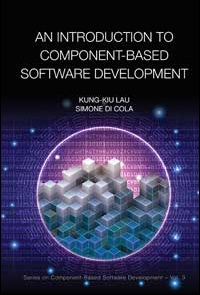
Kung-Kiu Lau is a Senior Lecturer at the School of Computer Science, University of Manchester , specializing in Component-based Software Development and Computational Logic . He leads the Component-based Software Development research group and has supervised 11 PhD students. Research Focus: Component models, algebraic service composition, logic program synthesis, and IoT systems scalability. Key Contributions: Development of tools like X-MAN and D-XMAN for compositional software design, exploration of formal methods in software engineering, and foundational work on steadfast programs. Publications span IoT service composition, component certification, reverse engineering, and formal verification. His work addresses challenges in scalability, reusability, and automated synthesis of software components. Awards: ICIOT 2018 Best Paper Award
Aman Dhir is a Senior Lecturer in Chemical Engineering at the University of Wolverhampton , Faculty of Science and Engineering. He holds a 1st class MEng (2004) and PhD (2008) in Chemical Engineering from the University of Birmingham, and a PGCert in Higher Education (2014). As Head of the Department of Engineering since 2022, he has transformed Wolverhampton's Chemical Engineering program into a top-tier student-centered course with 95%+ National Student Survey satisfaction. MEng, Chemical Engineering (1st class), University of Birmingham PhD, Chemical Engineering, University of Birmingham PGCert, Higher Education, University of Birmingham Research Interests focus on Solid Oxide Fuel Cells (SOFC) with specializations in Portable SOFC , Hydrocarbon Reforming , Anode Material Development , and Hydrogen Production . His work spans SOFC Stack and System Modelling for unmanned aerial vehicles and Hydrogen Vehicles integration. Key sub-fields include: Fuel Cell Design , Electrochemical Performance , Material Optimization , Thermal Management , Energy Conversion , and Multiphysics Modeling . Grants include Innovate UK - KTP (2021-2023). He has supervised 6+ research-based degrees including topics like Microtubular SOFC thermofluidics and Biogas fuel cell performance . Professional Activities encompass journal editorships (Processes, Applied Sciences) and editorial/peer review work for 5+ journals. As a Fellow of the Higher Education Academy , he has contributed to Computational Fluid Dynamics software education.
Ahmed Tawfik is a Senior Research Fellow at the University of Huddersfield , affiliated with the School of Computing and Engineering and the Department of Engineering . His research focuses on additive manufacturing (3D printing) , materials science , and X-ray computed tomography (CT) applications in dentistry , surface metrology , and porosity analysis . He is actively involved in supervising PhD students and has an h-index of 50 based on Scopus citations. Key Research Areas : Powders and Additive Manufacturing Defects and Porosity Analysis Tomography and X-ray Applications Surface Finish Optimization Electron Beam Melting (EBM) Dimensional Metrology Recent publications highlight his work in additive manufacturing for dental prosthetics (e.g., PEEK and zirconia inlays, endocrown restorations) and industrial CT applications for quality assurance in manufacturing. His studies often involve collaborations with researchers like Liam Blunt , Paul Bills , and Younes Chahid , with outputs published in journals such as BMC Oral Health , Measurement Science and Technology , and Journal of Prosthetic Dentistry . Key Activities : Oral presentations on surface finish optimization for AM tungsten and novel ECP processes for titanium EBM components. Collaborative work on CT resolution standards for ballistic forensic evidence and data processing in dimensional metrology .
Dawit Tibebu Tiruneh is a Senior Research Associate at the REAL Centre within the University of Cambridge's Faculty of Education, and a Bye-Fellow and Undergraduate Tutor at Homerton College. His work focuses on large-scale education reforms, particularly their impact on foundational learning among disadvantaged students in low-income countries. He holds a PhD from the University of Leuven and has held academic roles at institutions including East China Normal University and Bahir Dar University. His research emphasizes equitable access to quality education, teacher professional development, and systemic reforms. Recent projects include the RISE Ethiopia study examining educational inequities and pandemic impacts. Dawit has authored over 30 publications, with key contributions on critical thinking pedagogy, GEQIP reforms, and post-COVID learning disparities. His current research explores how education systems can better support marginalized learners through evidence-based policies and teacher training initiatives. He collaborates with global institutions to advance educational equity in low-resource settings.
Dr. Markus Wolf is a Principal Lecturer at the University of Greenwich's School of Computing and Mathematical Sciences, with expertise in artificial intelligence and software engineering. His research applies Case-Based Reasoning to software design knowledge retrieval, combining object-oriented methodologies with AI techniques. Professional experience includes Knowledge Transfer Partnerships and commercial projects utilizing Java and Microsoft development stacks. Teaching responsibilities span object-oriented programming, web development, and component-based systems. Administrative roles have included Year Tutor and Faculty Timetable Coordinator.
Xu Chen is a Lecturer in Data Science at the School of Mathematics, Statistics and Actuarial Science (SMSAS), University of Essex since 2023. She holds a PhD in Statistics from the University of Warwick (2014) and a BSc in Information and Computational Science from Shanghai University of Finance and Economics (2009). Her research focuses on developing statistical and computational methods for analyzing large-scale neuroimaging data, particularly in quantifying brain activity, heritability analysis, and functional connectivity studies. Prior to Essex, she conducted postdoctoral research at Leiden University Medical Center (2019–present) and Maastricht University (2015–2018) in biomedical data science and cognitive neuroscience. Her work emphasizes statistical methodologies for neuroimaging, including permutation-based inference, cluster thresholding, and accelerated estimation techniques for ACE models. She has contributed to studies on genetic influences on nervous system activity during fear conditioning and pain processing, leveraging twin studies and functional MRI datasets. Dr. Chen’s expertise spans computational neuroscience, biostatistics, and interdisciplinary applications of statistical methods in biomedical research. Key research outputs include advancements in neuroimaging data analysis frameworks, such as NetTDP for differential co-expression networks and adaptive cluster thresholding methods. Her contributions are reflected in peer-reviewed publications and collaborative projects involving the Human Connectome Project (HCP) datasets.
Wilhelm Hasselbring is a Professor of Software Engineering at the School of Electronics and Computer Science, University of Southampton. His research focuses on software system quality, architecture design, software visualization, component-based development, and cloud/grid middleware. He leads projects in digital twin prototypes, microservices, and DevOps for continuous software engineering. His work addresses challenges in embedded systems, smart farming automation, and scalable cloud-native applications. He collaborates on tools for collaborative code visualization and low-overhead monitoring. Research Interests: Software reliability, distributed systems, enterprise integration, and software engineering methodologies. Publications emphasize innovations in digital twin applications, performance benchmarking, and cloud architecture optimization. He actively contributes to open science initiatives and software management practices. No current PhD supervision is listed, but he welcomes prospective students through Pure.
Professor Yang Hao is a distinguished academic at Queen Mary University of London, where he holds the position of Professor of Antennas and Electromagnetics. He serves as Deputy VP for Strategic Research and Deputy Head and Research Lead of The Centre for Electronics within the School of Electronic Engineering and Computer Science. His research group spans multiple centers including the Centre for Electronics, Centre for Multimodal AI, and Centre for Networks, Communications and Systems. Professor Hao earned his Ph.D. from the Centre for Communications Research at the University of Bristol in 1998, followed by postdoctoral research at the University of Birmingham (1998-2000). He joined Queen Mary University of London in 2000 as a lecturer, was promoted to Reader in 2005, and to Professor in 2007. He currently holds the QinetiQ/Royal Academy of Engineering Research Chair and has completed executive leadership training at Oxford's Saïd Business School. His research spans antenna engineering, transformation optics, material discovery, bioengineering, metamaterials, and communication engineering. Professor Hao's pioneering work in metamaterials and transformation optics has reshaped electromagnetic device possibilities. His research laid the foundation for discovering unconventional material properties through AI/ML and robotic-controlled lab automation, enabling precise wave control. Beyond theoretical advancements, he has made significant contributions to wireless communication, wearable electronics, and in-body radio channels for medical applications, demonstrating the societal impact of his work. His recent publications reveal a strong focus on metamaterials, AI-driven material discovery, and practical applications in satellite communications and medical devices. There's a clear evolution from fundamental electromagnetic theory toward integrated systems with machine learning components, particularly in antenna design, material characterization, and wireless communication for next-generation (6G) systems. Fellow of the Royal Academy of Engineering (2020) Fellow of the IEEE (2013) Fellow of the IET (2010) Fellow of the ERA Foundation (2007) Royal Society Wolfson Research Merit Award (2013-2018) IET AF Harvey Research Prize BAE Chairman's Silver Award Professor Hao has supervised over 70 PhD students and postdocs since 2000, with many now working at leading global institutions and companies including Samsung, Airbus, and Isotropic Systems. He has secured approximately £60M in research funding from UKRI, Royal Society, Royal Academy of Engineering, ERC, and EU. Current projects include an EPSRC prosperity partnership project of £2.6M. His leadership extends to editorial roles including Editor-in-Chief for EPJ Applied Metamaterials and past Editor-in-Chief for IEEE Antennas and Wireless Propagation Letters (2014-2017). His research group operates across multiple domains including the Centre for Electronics, where they develop advanced antenna systems and metamaterials; the Centre for Multimodal AI, focusing on AI-driven material discovery; and the Centre for Networks, Communications and Systems, working on next-generation wireless communication architectures. The team has successfully translated research into practical applications, including co-founding Isotropic Systems (All.Space), which has created over 100 engineering jobs in Reading.
Gordon Blair is a Professor of Distributed Systems at the Lancaster University School of Computing and Communications , with an Adjunct Professor role at the University of Tromsø, Norway. He co-founded the ACM/IFIP/USENIX Middleware Conference and serves on its steering committee, alongside roles as Co-Editor-in-Chief of Springer's Journal of Internet Services and Applications. Ph.D. in Computer Science (Strathclyde, 1983) B.Sc. in Computer Science (Strathclyde, 1980, 1st Class Hons) His research spans distributed systems architecture , middleware , and model-driven engineering , with applications to environmental science through cloud computing and Internet of Things technologies. Recent work integrates environmental impact analysis with digital innovation, as highlighted in his EPSRC Senior Fellowship . Publications include foundational work on middleware interoperability and adaptive systems , alongside applied studies on digital sustainability and ecological data science . Awards include the EPSRC Senior Fellowship , and he mentors PhD students in areas like environmental informatics and runtime models . Labs & Groups Co-director, Centre of Excellence in Environmental Data Science (CEEDS) (Lancaster University + CEH) Theme Lead, Lancaster Data Science Institute (DSI) - Environment Theme Co-founder, HighWire CDT (Digital Economy Centre)