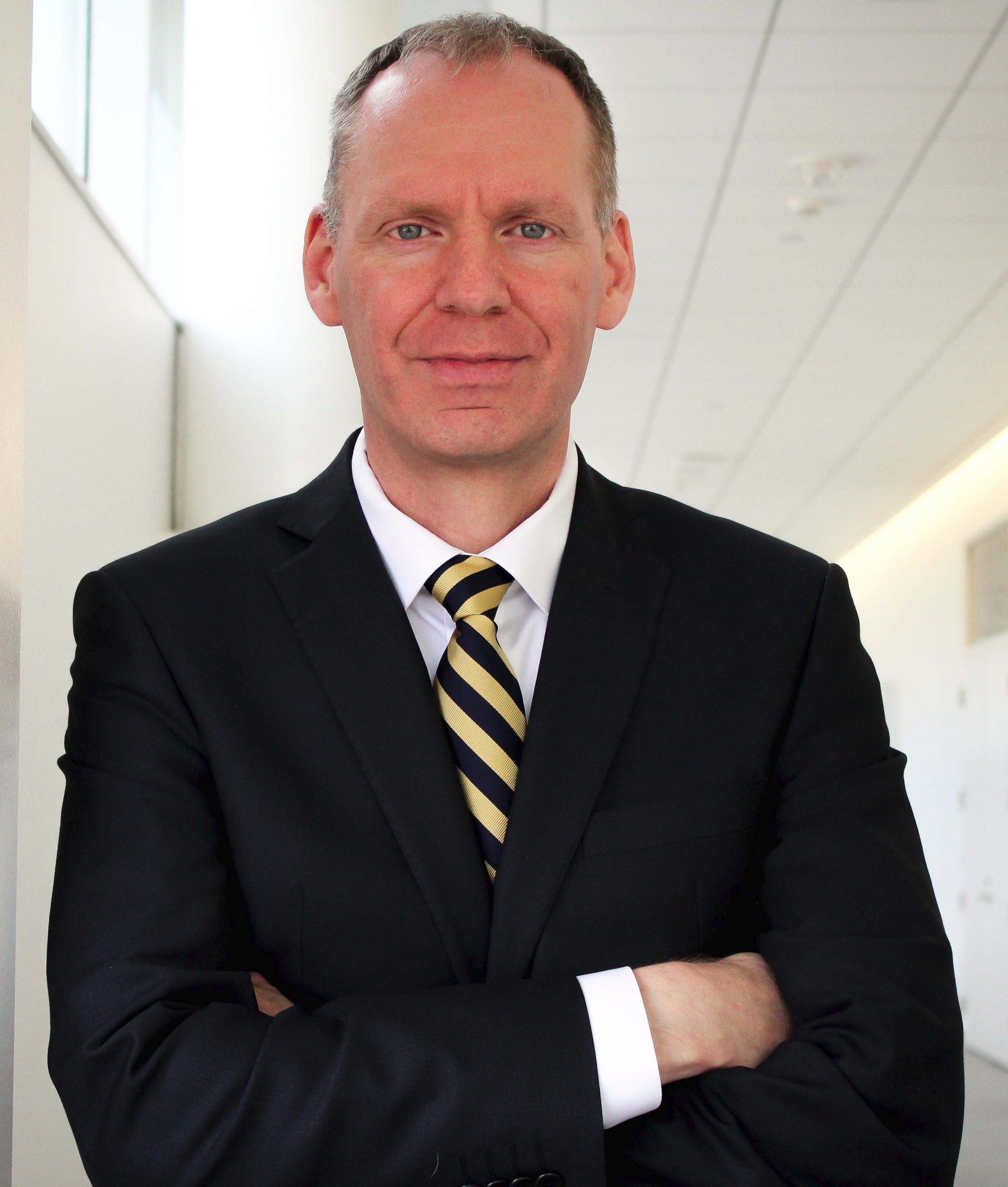
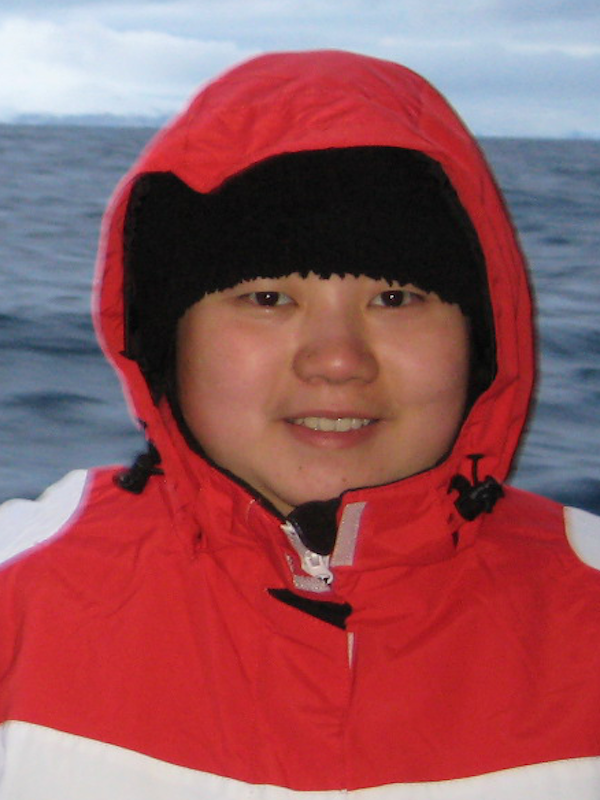
Shui Feng is a Professor in the Department of Mathematics and Statistics at McMaster University. His research focuses on stochastic processes and their applications in ecology, finance, population genetics, and statistical physics, with current work emphasizing Bayesian non-parametrics and measure-valued processes. He holds a PhD in Math and Stats from Carleton University (1993), an MSc in Mathematics from Beijing Normal University (1987), and a BSc in Mathematics from Beijing Normal University (1984). Research interests include stochastic processes, probability theory, and stochastic models (queueing, simulation). He has published extensively on topics such as Poisson-Dirichlet distributions, large deviation principles, and applications in population genetics and finance. Teaching responsibilities include advanced courses like Stochastic Processes (STATS 3U03), Intermediate Probability Theory (STATS 4D03/6D03), and Graduate Level Topics in Statistics (STATS 5GT3). Recent publications (2015–2025) explore theoretical advancements in stochastic models and their real-world applications.
Tassilo Pellegrini is a Professor at the Department of Digital Business and Innovation and Co-Director of the Institute for Innovation Systems at St. Pölten University of Applied Sciences. With a background in commerce, communication science, and political science, he has led R&D at The Semantic Web Company (2004–2012) and served as a lecturer since 2007. His research focuses on Digital Business , Innovation Systems , Semantic Web , Open Data Governance , and Media Economics , with recent works addressing the Digital Product Passport for circular economy. Education: Commerce, Communication Science, Political Science Key Projects: DPP4Plastics, ECO-TCO, DALICC Framework Collaborations: Springer Handbooks, BMK symposia, EU conferences His publications bridge Open Data , Digital Licensing , and Eco-Design , emphasizing regulatory compliance and technical frameworks. He actively contributes to policy discussions on EU-level technologies and sustainable innovation.
Professor Sami Pajunen is affiliated with the Department of Civil Engineering at Tampere University, within the Faculty of Built Environment. His research focuses on structural engineering, timber and steel composites, fire safety, computational modeling, and sustainable construction practices. He has contributed significantly to the analysis of timber structures, impact sound insulation, and fire resistance of materials like cross-laminated timber (CLT). His work bridges experimental methods with advanced numerical simulations, addressing challenges in structural acoustics, nonlinear behavior, and eco-friendly construction systems. Key research interests include: structural integrity of glued laminated timber (glulam), optimization of steel-timber composite systems, fire performance of CLT panels, and vibration analysis of timber floors. He has explored innovative solutions such as the HB structural timber system and design-for-disassembly principles. His studies often involve collaboration with Finnish industry on case studies related to industrial wood construction productivity and bridge engineering practices. Publications emphasize parametric studies on structural components under fire conditions, mechanical testing of composite beams, and the application of finite element methods (FEM) for acoustic and thermal modeling. His work highlights the integration of computational tools with experimental validation to advance sustainable construction technologies.
Professor Patrick Rinke leads the Chair of AI-based Materials Science at the Technical University of Munich (TUM), within the TUM School of Natural Sciences and Department of Physics. His research group develops advanced electronic structure and machine learning methods to address critical challenges in materials science, surface science, physics, chemistry, and nanoscience. Professor Rinke's research spans multiple cutting-edge domains including electronic structure theory development, machine learning applications for materials science, data-driven materials discovery, biomaterials engineering, atmospheric science applications, clean energy materials, and hybrid materials systems. His work integrates advanced computational methods with practical applications across diverse scientific fields, particularly focusing on how artificial intelligence can transform traditional materials research. Analyzing his recent publications reveals strong trends in applying machine learning techniques to materials discovery, with particular emphasis on Bayesian optimization methods, active learning approaches for molecular data, and efficient dataset generation strategies. His research spans from fundamental electronic structure theory to practical applications in biomaterials, atmospheric science, and renewable energy technologies. Professor Rinke has received several prestigious awards including the August-Wilhelm Scheer visiting professorship (2017), a German Science Foundation research scholarship (2007), the Outstanding Postdoctoral Research Achievement Award from UC Santa Barbara (2009), recognition as an Outstanding Referee for Physical Review journals (2014), and the Institute of Physics Computational Physics Group Thesis Prize (2003). Professor Rinke actively contributes to the academic community through teaching and supervision. For the Winter term 2025/26, he is teaching courses including Academic Writing Skills, Introduction to Machine Learning for Materials Science, Current Topics in AI-Based Materials Science, and Machine Learning for Natural Sciences. His research group includes several team members working on diverse projects spanning the intersection of AI and materials science.
Lars Pforte is a Lecturer in the Faculty of Science & Engineering at Maynooth University, affiliated with the Mathematics and Statistics department. He holds a PhD in Mathematics and a Masters Degree in Geocomputation. PhD in Mathematics Masters in Geocomputation His research spans both pure mathematics and applied geospatial analysis. Key areas include: Representation theory of finite groups Urban airspace traffic management (UTM) Road safety analysis Data imputation in space-time series While his recent publications focus on algebraic structures like symplectic modules for the Klein-four group and permutation module vertices, he also applies Bayesian statistical methods to urban analytics and transportation safety. No scientific awards are explicitly mentioned in the available information.
Massimo Zucchetti is a Full Professor at Politecnico di Torino, Department of Energy (DENERG), where he has been teaching Radiation Protection and Nuclear Power Plants. He maintains a significant international presence as a Research Affiliate at the Plasma Science and Fusion Center at MIT, a position he has held since 2005. His academic journey began at Politecnico di Torino, where he graduated in Nuclear Engineering in 1986 and completed his PhD in Energetica between 1986-1990. He progressed through the academic ranks at Politecnico di Torino from Associate Professor (1998-2002) to Full Professor (2002-present), with prior research experience at the European Commission Joint Research Centre. Zucchetti's research spans nuclear fusion engineering, radioactive waste management, and energy policy. His work focuses particularly on controlled thermonuclear fusion, nuclear safety, and radioactive waste management, with emphasis on tritium transport in fusion reactors, safety analysis of fusion power plants, and environmental impact assessment. He has led multiple significant research projects including TITANS (Tritium Impact and Transfer in Advanced Nuclear reactorS, 2022-2025), components for ITER (2008-2010), and innovative materials for fusion reactors (2004-2006). As coordinator of the IEA Program on Environmental, Safety and Economic Aspects of Fusion Power, he plays a key role in international fusion research collaboration. His recent publications show a clear trend toward practical applications of fusion technology, particularly in the ARC (Affordable Robust Compact) reactor design. These works emphasize neutronics, thermal-hydraulics, tritium management, and safety analysis for compact fusion systems. His research demonstrates increasing focus on making fusion energy more commercially viable through innovative engineering solutions while maintaining rigorous safety standards. The interdisciplinary nature of his work connects nuclear engineering with environmental science and energy policy. Fellow of Plasma Science and Fusion Center, MIT (2015-present) Research Affiliate Fellow at Laboratory for Nuclear Science, MIT (2005-2015) Nomination for 2015 Nobel Prize in Physics for research on advanced fuel nuclear fusion Editor-in-Chief of multiple journals including International Journal of Ecosystems and Ecology Science and Journal of International Environmental Application & Science Zucchetti actively mentors PhD students in the Energetica program at Politecnico di Torino, with current advisees working on topics ranging from multiphysics modeling in ARC-class reactors to innovative materials for next-generation nuclear reactors. He coordinates significant research grants from competitive funding programs including EURATOM and PRIN. His laboratory work focuses on fusion reactor components, particularly breeding blankets and tritium management systems. The TESIN research group within DENERG serves as his primary research team, working on thermal-hydraulic analysis, neutronics, and safety assessments for advanced nuclear systems.
Joe Alexandersen is an Associate Professor in the Department of Mechanical Engineering at the University of Southern Denmark (SDU), affiliated with the Institute of Mechanical and Electrical Engineering. His research spans structural optimization, heat transfer, fluid dynamics, and high-performance computing, with applications in heat sink design, microfluidic devices, and additive manufacturing. Research Interests Topology and shape optimization Conjugate heat transfer Navier-Stokes flow modeling Finite element methods High-performance computing Scientific Awards 2022 Fluids 2020 Best Paper Award 2017 DTU Young Researcher Award 2015 ISSMO/Springer Prize for Young Scientist Key Projects HiHeaT: Topology optimization for high heat flux components (2024–2027) Structural Analysis of Large Modular Vessels (2025–2027)
Prof. Dr.-Ing. Katharina Schmitz serves as Institute Director and Vice Dean at the Institute for Fluid Power Drives and Systems, RWTH Aachen University. Her leadership within the Production Technology Cluster and extensive contributions to fluid power engineering establish her as a leading authority in mechanical engineering research and education. Her research spans fluid power systems, hydraulic component design, tribology, and physics-informed machine learning applications. She pioneers sustainable propulsion solutions through bio-hybrid fuels research while addressing fundamental challenges in polymer material behavior under hydraulic stresses. Current work focuses on carbon-neutral heavy-duty transportation, physics-based neural networks for lubrication modeling, and advanced control systems for electro-hydraulic actuators. Analysis of her 15 most recent publications reveals a dominant trend toward integrating physics-based modeling with deep learning to solve complex engineering problems. Her team consistently develops novel frameworks for cavitation prediction, flow rate determination, and material compatibility assessment - significantly advancing fluid power system reliability, efficiency, and digitalization. Scientific recognition includes: GfT Förderpreis 2023 for experimental and simulative investigation of partially hydrostatic relieved contacts in variable speed axial piston machines As head of the Institute for Fluid Power Drives and Systems, she leads cutting-edge research in sustainable fluid power technologies. The institute maintains strong industry partnerships while driving innovation in hydraulic component design, digital twins for condition monitoring, and next-generation propulsion systems through its position within RWTH Aachen's Production Technology Cluster.
Aida Akbarzadeh is a Senior Researcher at the Norwegian University of Science and Technology (NTNU) , specifically within the Department of Information Security and Communication Technology under the Faculty of Information Technology and Electrical Engineering . Her work focuses on cybersecurity, critical infrastructure protection, and cyber-physical systems (CPS). Research Areas: Threat modeling, digital twins for security, dependency-based risk analysis, advanced persistent threats (APT), IT/OT integration, and industrial control system vulnerabilities. Publications: Recent work includes studies on automating threat modeling, digital twin applications, APT attacks on power grids, and protocol-specific vulnerabilities (PTP, IEC 61850, IEC 60870-5-104). Collaborations: Active in interdisciplinary research with colleagues like Laszlo Erdodi, Siv Houmb, Sokratis Katsikas, and Tore Soltvedt. Labs & Groups: Member of the Critical Infrastructure Security and Resilience Group (CISaR) . Contact: aida.akbarzadeh@ntnu.no
Rainer J. Hebert is a Professor in the Department of Materials Science and Engineering at the University of Connecticut, serving as Director of the Pratt and Whitney Additive Manufacturing Center and Associate Director of the Institute of Materials Science. His research focuses on advancing additive manufacturing technologies with particular emphasis on materials development and process optimization for industrial applications. Education Ph.D., University of Wisconsin-Madison, 2003 Postdoctoral Fellow, University of Wisconsin-Madison, 2003-2005 Post Doctoral Fellow, Research Center Karlsruhe, Germany (now Karlsruhe Institute of Technology), 2003-2005 Research Interests Professor Hebert's research spans multiple areas within materials science and additive manufacturing. His primary focus is on developing new alloys specifically designed for additive manufacturing processes, with particular attention to how microstructures form during rapid solidification and laser processing. He investigates powder characteristics and their effects on the final manufactured products, aiming to improve quality and performance. His work on quasicrystal-reinforced aluminum alloys has shown promising results for high-performance applications, and he has made significant contributions to understanding the fundamental mechanisms of laser powder bed fusion. Hebert's research bridges fundamental materials science with practical industrial applications, particularly in aerospace and high-temperature environments. Publication Trends Analysis of Professor Hebert's recent publications reveals a strong focus on advancing additive manufacturing technologies, particularly laser powder bed fusion. His work spans from fundamental materials science (microstructure formation, phase transformations) to practical applications (alloy design, process optimization). A notable trend is the increasing integration of computational methods with experimental work to predict and optimize material behavior. His research shows a progression from basic microstructure characterization to more complex systems involving multi-material interactions, intelligent manufacturing systems, and the development of specialized alloys resistant to cracking and other defects. The consistent theme across his publications is improving the reliability and performance of additively manufactured components for demanding applications. Awards Materials Science and Engineering Program Teaching Award, 2010-2011 Advising and Grants As Director of the Pratt and Whitney Additive Manufacturing Center, Professor Hebert oversees significant research initiatives funded by both government agencies and industry partners, particularly in aerospace applications. His leadership in the Institute of Materials Science provides opportunities for student research and collaboration across multiple disciplines. His extensive publication record suggests active mentorship of graduate students in materials science and engineering. His research program likely involves multiple PhD and Master's students working on various aspects of additive manufacturing, from fundamental materials science to process development. Laboratories and Teams Professor Hebert directs the Pratt and Whitney Additive Manufacturing Center at UConn, which serves as a hub for collaborative research between academia and industry. The center focuses on advancing metal additive manufacturing technologies, particularly for aerospace applications. He also plays a key leadership role in the Institute of Materials Science, one of UConn's premier research centers. His research teams likely include graduate students, postdoctoral researchers, and industry collaborators working on projects related to powder characterization, laser processing, microstructure analysis, and alloy development. The collaborative nature of his work is evident from the multi-institutional authorship on many of his publications.
Professor David Armstrong serves as Professor of Materials Science and Engineering at the University of Oxford and Fellow and Tutor at St Edmund Hall. His work focuses on developing materials for extreme environments including nuclear fusion reactors, aerospace systems, and energy storage applications through microstructural control and advanced mechanical characterization. His educational background includes a first degree in Materials Science from St Anne’s College, Oxford and a DPhil from Corpus Christi, Oxford investigating micromechanical properties in copper and nickel alloys. This foundational work evolved into radiation damage studies during his Culham Centre for Fusion Energy Junior Research Fellowship. Armstrong's research centers on mechanical behavior of materials under extreme conditions—high temperatures (jet engines, reactors), radiation exposure (nuclear facilities, space), and high stresses (batteries, geological systems). He develops novel testing methodologies for nanoscale mechanical properties up to 1300 K, collaborating with Rolls Royce, UKAEA, ESA, and Berkeley on fusion materials, aerospace components, and battery technologies. His work bridges fundamental micromechanics with industrial applications in energy systems. Analysis of his 2023-2025 publications reveals dominant themes in nuclear fusion materials (tungsten, ODS steels), lithium battery interfaces, and ceramic composites for extreme environments. Methodologically, his group pioneers correlative microscopy combining nanoindentation, TEM, and atom probe tomography to study irradiation effects, high-temperature deformation, and interfacial degradation across length scales. His scientific recognition includes: Culham Centre for Fusion Energy Junior Research fellowship (2009) Royal Academy of Engineering Research Fellowship (2013) Institute of Materials Minerals and Mining Grunfeld Memorial Award & Medal (2015) As an educator, Armstrong teaches core mechanical properties courses across undergraduate years and leads Fusion CDT modules on nuclear materials. He supervises numerous doctoral students while serving on the EPSRC Fusion Advisory Board and CDT management board. Current grants support micro-engineering of alloys for nuclear environments and lithium-metal battery development through industry partnerships with Rolls Royce and MicroMaterials. His research group operates advanced micromechanical testing facilities for high-temperature and irradiated materials, collaborating with UKAEA’s Culham Centre and European fusion laboratories on plasma-facing component development. Future work targets solid-state battery interfaces and radiation-resistant high-entropy alloys for next-generation fusion reactors.
Tim Kraska is an Associate Professor in the Department of Electrical Engineering and Computer Science at the Massachusetts Institute of Technology (MIT), affiliated with the Computer Science and Artificial Intelligence Laboratory (CSAIL) within the School of Engineering. His research spans foundational areas in modern data systems: Database Systems Distributed Systems Machine Learning Systems Learned Indexes Cloud Databases Dr. Kraska pioneers the integration of machine learning into core database components, developing "learned systems" that replace traditional algorithms with ML models for significant performance gains. His work on learned indexes redefined indexing paradigms, while recent research extends this approach to garbage collection, query optimization, and concurrency control. His publication trends reveal a strategic shift toward applying ML to low-level systems problems, particularly in memory management and runtime optimization as demonstrated by his PLDI 2020 paper on Learned Garbage Collection. Award highlights include: ACM SIGMOD Jim Gray Doctoral Dissertation Award VLDB Early Career Research Contribution Award Marie Curie Fellowship At MIT, he leads a research group focused on next-generation data systems, securing grants from NSF and industry partners to explore the theoretical and practical boundaries of learned components in database engines. His team collaborates extensively with industry research labs on real-world deployment challenges. As a core member of CSAIL's distributed systems group, he contributes to MIT's leadership in reimagining data infrastructure for the AI era through cross-lab initiatives on scalable machine learning systems.
Dr. Silvia Gratz serves as a Senior Research Fellow and Principal Investigator at the University of Aberdeen's School of Medicine, Medical Sciences and Nutrition, where she leads the Gut Health research group at the Rowett Institute. Her work bridges nutritional science and toxicology with significant implications for public health and food safety. Her academic foundation includes: MSc in Human Nutrition from the University of Vienna, Austria (2002) PhD in Food Toxicology from the University of Kuopio, Finland (2007) Dr. Gratz's research program investigates how gut microbiota processes dietary components and toxins, with particular expertise in mycotoxins (foodborne toxins from molds) and their impact on human health. She examines how microbial metabolism of these compounds affects intestinal toxicity and how dietary interventions like fiber supplementation can mitigate harmful effects. Her work on masked mycotoxins—bound forms that become active through gut bacterial action—has significantly advanced understanding of food contaminant risks. Analysis of her recent publications reveals a strong focus on gut microbiome interactions with dietary components, mycotoxin metabolism across different food matrices, and development of biomarkers for human exposure assessment. Her work consistently bridges basic microbiological mechanisms with practical applications for food safety and nutritional recommendations. Dr. Gratz actively contributes to scientific governance as a member of the FSA Committee on Toxicity of Chemicals in Food, Consumer Products and the Environment (since 2022) and serves on the editorial board of Frontiers in Predictive Toxicology. She demonstrates strong commitment to academic service through leadership roles including Co-lead of the Equality, Diversity and Inclusivity Team at the Rowett Institute and membership on the Athena Swan Self-Assessment Team. As an educator, she coordinates the MSc Clinical Nutrition course and lectures across multiple nutrition programs, while supervising PhD students in Nutrition and Health and Biomedical Sciences. Her substantial grant portfolio demonstrates research leadership across multiple funding sources including Scottish Government programs, research councils, and industry partnerships.
Zhishu Qu is a Visiting Professor at Queen Mary University of London's School of Electronic Engineering and Computer Science. Her research focuses on reconfigurable antenna systems, particularly leveraging gallium-based liquid metals to enable dynamic beam steering, frequency agility, and phase control. She explores applications in millimeter-wave communications, LEO satellite systems, and phased array configurations. Key contributions include innovations in transmitarray unit cells, substrate integrated waveguide (SIW) phase shifters, and adaptive antenna designs. Her work spans theoretical analysis of antenna performance limits and practical implementations of liquid metal actuation in RF components. Research interests also encompass microwave engineering, electromagnetic compatibility, and next-generation wireless infrastructure. Current trends in her publications emphasize miniaturization, low-loss solutions, and reconfigurability for 5G and beyond. Notable research areas include: Beamforming algorithms for satellite communications Liquid metal integration in RF systems Millimeter-wave phased array optimization Adaptive antenna pattern reconfiguration Publications since 2020 demonstrate sustained contributions to reconfigurable antenna architectures, with recent work (2024-2025) focusing on beam switchable antennas and distributed beamforming schemes.
Dr. Yina Liu is an Assistant Professor in the Department of Oceanography at Texas A&M University, leading the Halo-Carbon Biogeochemistry Lab and serving as R&D Team Lead in the Geochemical and Environmental Research Group (GERG). Her research focuses on organic biogeochemistry, particularly halogenated compounds' roles in environmental processes. She employs advanced mass spectrometry and data science to study contaminant cycling, microbial transformations of oil components, and PFAS distributions. Education includes a Ph.D. in Chemical Oceanography (Texas A&M, 2013), B.S. in Environmental Sciences (UC Irvine, 2006), and postdoctoral work at Woods Hole Oceanographic Institution (2013-2015) and Pacific Northwest National Lab (2015-2017). Research interests span untargeted environmental analysis, halocarbon biogeochemistry, and eco-metabolomics, with emphasis on linking organic matter dynamics to ecological processes. Her lab investigates topics such as microbial degradation of crude oil components, PFAS environmental fate, and halogenated compound identification using novel computational algorithms. Current projects include developing cheminformatics pipelines for tarball fingerprinting and atmospheric particle characterization. She actively mentors students across undergraduate, graduate, and postdoctoral levels through Texas A&M's Oceanography program. Research highlights include groundbreaking work on oil spill bioremediation mechanisms and PFAS contamination in urban watersheds. Her methodologies combine field studies, laboratory experiments, and computational modeling to advance understanding of global carbon and contaminant cycles.