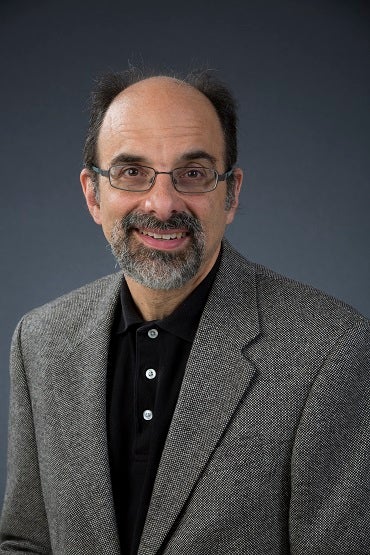
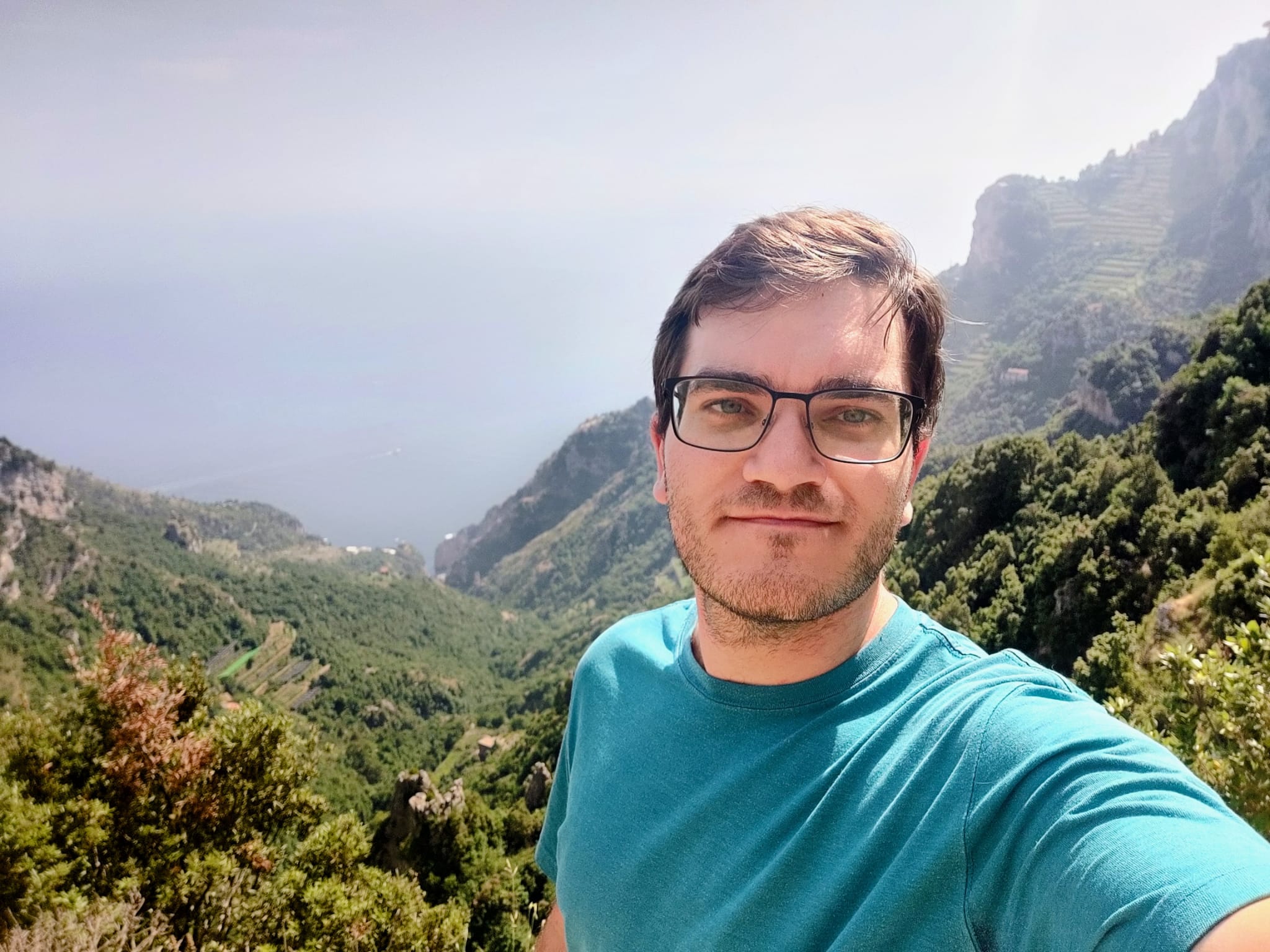
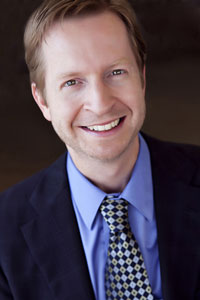
Atul N. Parikh is a Professor in the Departments of Biomedical Engineering and Materials Science and Engineering at the University of California Davis. His work bridges physical and biological sciences, focusing on understanding cellular mechanisms and designing bio-inspired synthetic materials. Key research areas include membrane dynamics, phase separation in vesicles, and the creation of synthetic protocells to explore life's fundamental processes. Education details are not explicitly provided in the text. His research emphasizes far-from-equilibrium systems and non-equilibrium self-assembly, aiming to develop materials capable of complex functions like memory and self-repair. Recent studies explore lipid phase separation, osmotic stress responses, and surfactant-mediated membrane modulations. Notable projects include the development of lipid nanoconstructs for drug delivery, osmo-regulated vesicle systems, and understanding microbial membrane interactions. His work has applications in biomedical engineering, material science, and synthetic biology. Lab activities focus on experimental approaches combining microscopy, biophysical characterization, and synthetic material fabrication. Collaborative efforts involve interdisciplinary teams addressing challenges in membrane biology and functional materials design.
Stephen A. Vavasis is a Professor in the Department of Combinatorics and Optimization at the University of Waterloo, part of the Faculty of Mathematics. He holds a PhD in Computer Science from Stanford University (1989) and has held academic positions at Cornell University (1989–2006) before joining Waterloo. His research focuses on continuous optimization, data science, first-order methods, scientific computing, and computational mechanics. Current teaching includes courses on convex optimization and portfolio optimization methods. He has served as Associate Dean of Computing (2017–2020) and Interim Director of Data Science graduate programs. His work is supported by NSERC grants. Notable awards include the Hertz Fellowship, Churchill Scholarship, and Guggenheim Fellowship. Vavasis's research emphasizes applications of optimization to clustering, machine learning, and fracture mechanics. His publications span convex optimization frameworks, algorithmic analysis of gradient methods, and numerical methods in mechanics. Recent work explores unifying analyses of first-order optimization algorithms and robust optimization techniques for high-dimensional data problems.
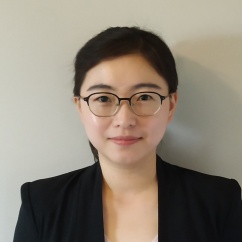
Dr. Yujie Tang is an Assistant Professor in the Faculty of Computer Science at Dalhousie University, Canada, where she has been serving since September 2022. Prior to this, she was an Assistant Professor at Algoma University (2019–2022) and a Post-Doctoral Fellow at the University of Waterloo (2017–2019). Her academic journey includes a PhD from the University of Waterloo and earlier degrees from Harbin Institute of Technology and Lanzhou Jiaotong University. PhD – University of Waterloo (2017) M.E. – Harbin Institute of Technology, Shenzhen, China B.E. – Lanzhou Jiaotong University, Lanzhou, China Her research focuses on intelligent networking and computing technologies for future IoT and 5G/6G systems. Key areas include Internet of Vehicles (IoV), AI-empowered edge computing, resource management in heterogeneous networks, software-defined networking, and UAV-assisted communications. She employs machine learning and optimization techniques to design energy-efficient and high-performance network protocols. The most recent publications reflect a strong trend in applying AI and machine learning to solve complex problems in vehicular networks, edge caching, and spectrum management. Her work spans top-tier IEEE journals such as IEEE Transactions on Vehicular Technology , IEEE Internet of Things Journal , and IEEE JSAC , with a clear emphasis on real-world deployable solutions for next-generation wireless systems. Faculty Research Startup Fund, Dalhousie University, 2022 NSERC Discovery Grant, 2021–2026 Algoma University Research Fund, 2021 Faculty Research Startup Fund, Algoma University, 2019 Best Speaker Award, University of Waterloo, 2017 Faculty of Engineering Award (4 times), University of Waterloo, 2013–2017 University of Waterloo Graduate Scholarship, 2013–2015 International Doctoral Student Award, 2012–2016 Graduate Research Studentship (twice), 2011–2012 Provost Doctoral Entrance Award for Women, 2011 Dr. Tang actively supervises graduate and undergraduate students and has secured competitive research grants, including the NSERC Discovery Grant. She serves on the technical program committees of major IEEE conferences such as INFOCOM, GLOBECOM, and ICC, and regularly reviews for top journals like IEEE JSAC , IEEE TWC , and IEEE TVT . She currently leads a research group focusing on B5G/6G networks, IoV, and edge computing, and she is actively recruiting new students and visiting scholars. Her research group operates within the Faculty of Computer Science at Dalhousie University, where she leads projects in intelligent resource management, AI-driven networking, and integration of space-air-ground networks. She is a member of IEEE, IEEE Communications Society, and IEEE Vehicular Technology Society.
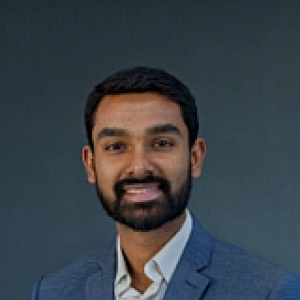
Harish Ravichandar is an Assistant Professor at the School of Interactive Computing , Georgia Institute of Technology, and a core faculty member of the Institute for Robotics and Intelligent Machines (IRIM) . He leads the Structured Techniques for Algorithmic Robotics (STAR) Lab , focusing on structured computational frameworks and learning algorithms with inductive biases to enhance robot efficiency, reliability, and self-sufficiency in human-robot collaboration and complex applications like dexterous manipulation and multi-agent coordination. His research bridges robot learning , human-robot interaction , and multi-agent systems , emphasizing stable, frugal, and safe skill acquisition from human demonstrations. Key themes include intention inference , trajectory optimization , and heterogeneous team coordination , often leveraging Koopman operators , hypernetworks , and graph-based methods . Scientific recognition includes the NSF CAREER Award , IEEE MRS Best Paper Award , and Georgia Tech’s College of Computing Outstanding Post-Doctoral Research Award . His work also received the ASME DSCC Best Student Paper Award and P&W Institute Graduate Fellowship . Harish’s educational background includes a Ph.D. in Electrical and Computer Engineering from the University of Connecticut (2018) , an M.S. from the University of Florida (2014) , and a B.E. in Instrumentation and Control Engineering from Anna University (2012) . He previously held postdoctoral and research scientist roles at Georgia Tech before his current position.
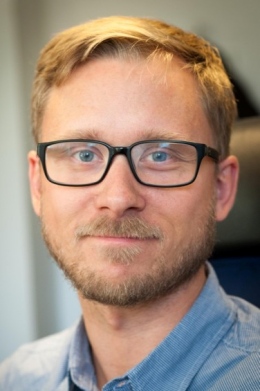
Johan Eklöf is a Professor at Stockholm University within the Department of Ecology, Environment and Plant Sciences . His research emphasizes marine ecology , focusing on interactions between marine biodiversity, environmental conditions (including climate), and societal impacts . He teaches courses such as Management of Aquatic Resources in the Tropics , Marine Ecology for the Biogeo Program , and Ecology II . Research Focus: Causal relationships between biodiversity and ecosystem resilience Foundation species as drivers of ecosystem services Optimizing resource management under climate change Projects: Principal Investigator for FORCE (2023-present), a transdisciplinary Baltic Sea recovery project Contributor to NordSalt (climate impacts on Nordic salt marshes) and PlantFish (Baltic Sea vegetation-fish interactions) Scientific Leadership : Supervises 2 current PhD students and co-supervises 6 additional PhD/postdocs Formerly mentored 4 PhD graduates and >40 MSc students Environmental Context: His work spans Baltic Sea and Western Indian Ocean ecosystems, using seagrass beds , mussel beds , and coastal benthic systems as primary models. Recent publications highlight climate change impacts on trophic cascades , habitat connectivity , and policy frameworks for marine conservation .
Westley Weimer is a Professor in the Department of Electrical Engineering and Computer Science (EECS) at the University of Michigan, College of Engineering. He teaches advanced courses such as EECS 590 (Advanced Programming Languages) and EECS 481 (Software Engineering), and has previously taught at the University of Virginia. His research integrates software engineering, programming languages, and cognitive science, focusing on automated program repair, program analysis, and the neuroscience of code comprehension. University: University of Michigan School: College of Engineering Department: Department of Electrical Engineering and Computer Science Academic Rank: Professor His research interests include automated program repair (e.g., GenProg), software quality, cognitive modeling of programming, neuroimaging studies of code review, and the application of medical imaging to software engineering. He explores deep questions at the intersection of consciousness, time, and computation, advocating for interdisciplinary approaches to understanding the mind through programming behavior. The most recent publications reflect a trend toward empirical and cognitive studies in software engineering, combining automated repair with human factors, neuroimaging (fMRI, TMS), and real-world software challenges. Themes include bias in code review, programming under cognitive influences, and the neurological basis of code comprehension. His work increasingly bridges computer science with psychology, neuroscience, and social science. Scientific awards include multiple Distinguished Paper Awards at ICSE, FSE, and ESEC/FSE, Best Paper and Runner-up awards, and several 10-Year Most Influential Paper Awards from ASE, GECCO, POPL, and ASPLOS, recognizing the lasting impact of his contributions to automated software repair and program analysis. He has advised numerous PhD and Master’s students, many of whom have gone on to faculty positions or industry research roles. He contributes to academic service through organizing diversity and inclusion initiatives, maintaining graduate career resources, and promoting ethical and inclusive practices in computing. He leads a vibrant research group focused on improving software quality through both technical and human-centered innovations, with ongoing projects in automated repair, cognitive modeling, and secure systems.
Benjamin Landon is an Assistant Professor in the Department of Mathematics at the University of Toronto, where he has been faculty since 2021. His office is located in the Bahen Centre for Information Technology, Room 6264. Prior to joining the University of Toronto, he was a CLE Moore Instructor at the Massachusetts Institute of Technology from 2018-2021. Education: PhD in Mathematics, Harvard University (2018). Advisor: Horng-Tzer Yau M.Sc. in Mathematics, McGill University (2013). Advisors: Vojkan Jaksic and Robert Seiringer B.Sc., McGill University (2012) Dr. Landon's research focuses on Probability and Mathematical Physics, with particular expertise in Random Matrix Theory. His work spans various aspects of spectral statistics, eigenvalue distributions, and universality phenomena in random matrix ensembles. He has made significant contributions to understanding the behavior of extremal eigenvalues, linear spectral statistics, and connections to other areas of mathematical physics such as spin glasses and the KPZ universality class. His research often involves developing novel analytical techniques to establish precise asymptotic behavior in complex random systems. Analysis of Dr. Landon's publication record reveals a strong focus on the intersection of probability theory and mathematical physics. His work consistently explores universality phenomena across different random matrix ensembles and related stochastic systems. A notable trend is his investigation of connections between random matrix theory and other areas of mathematical physics, particularly spin glass models and the KPZ equation. His research demonstrates both technical depth in establishing rigorous asymptotic results and breadth in connecting seemingly disparate areas of mathematical physics.
Ana Vives-Rodriguez, MD is an Assistant Professor of Neurology at Yale School of Medicine. She specializes in movement disorders and cognitive-behavioral neurology, caring for patients with Parkinson's disease, tremor, tics, dystonia, Alzheimer's disease, Dementia with Lewy bodies, and frontotemporal dementias. Based at Yale Physicians Building in New Haven, Connecticut, she provides both in-person and telehealth services to adult patients, accepting new patients without requiring referrals. Dr. Vives-Rodriguez's educational background includes: BS and MD from University of Costa Rica (2009), graduating Magna Cum Laude Residency at University Costa Rica/Calderon Guardia Hospital (2014) Clinical Fellowship in Movement Disorders at Yale New Haven Hospital (2018) Advanced Fellowship in Cognitive Behavioral Neurology at Boston University/VA Medical Center (2022) Her primary research interests focus on the behavioral and cognitive aspects of movement disorders and the early diagnosis of neurodegenerative disorders . Dr. Vives-Rodriguez examines structural and functional brain changes in conditions like Parkinson's disease, Wilson's disease, and Alzheimer's disease and their relation to clinical manifestations. Her work bridges clinical practice with translational neuroscience to improve diagnostic approaches and patient outcomes in complex neurological conditions. Analysis of her publications from 2017-2021 reveals a strong focus on movement disorders, cognitive impairment, and neuroimaging. Her research spans clinical observations of movement phenomena like index finger pointing and writing tremor, structural and functional brain changes in Wilson's disease, and innovative approaches to medical education in movement disorders. A recurring theme is the intersection between movement disorders and cognitive function, highlighting her dual expertise in both specialties. Dr. Vives-Rodriguez serves as a Sub Investigator for the Cognitive Training in Parkinson's Disease clinical trial (HIC ID 2000033352), which is recruiting participants aged 40+ through 2027. While specific grant funding isn't detailed in the available information, her active research program suggests ongoing support for her work in neurodegenerative disorders. She is affiliated with Yale's Movement Disorders and Neurodegenerative Disorders divisions, working within the Department of Neurology at Yale School of Medicine. Her clinical work at Yale Physicians Building integrates the latest research findings into patient care while contributing to the academic mission through teaching and scholarly activities.
Mohammad Modarres is the Nicole J. Kim Eminent Professor at the University of Maryland within the A.J. Clark School of Engineering. He serves as Director of the Center for Risk and Reliability (CRR) and is a Professor of Nuclear Engineering in the Department of Mechanical Engineering. Dr. Modarres co-founded the world's first degree-granting graduate curriculum in reliability engineering at the University of Maryland and has established himself as an international expert in reliability and risk analysis. Dr. Modarres received his educational credentials from prestigious institutions: B.S. in Mechanical Engineering from Tehran Polytechnic M.S. in Mechanical Engineering from MIT M.S. and Ph.D. in Nuclear Engineering from MIT Dr. Modarres' research spans multiple critical areas in engineering risk and reliability. His primary interests include probabilistic risk assessment, uncertainty analysis, probabilistic physics of failure, and probabilistic fracture mechanics. His work encompasses both experimental investigations and sophisticated probabilistic model development. He has made significant contributions to materials degradation science, prognosis and health management systems, and nuclear safety analysis. His research bridges theoretical developments with practical applications in complex engineering systems, particularly in nuclear power and aerospace sectors. Analysis of Dr. Modarres' recent publications reveals a strong trend toward integrating advanced data science techniques with traditional reliability engineering. His work increasingly incorporates machine learning, deep learning, and entropy-based approaches to solve complex problems in prognostics and health management. There's a clear focus on multi-unit systems, particularly in nuclear power applications, and a growing emphasis on data-driven methodologies for remaining useful life estimation and failure prediction. His research maintains a strong foundation in probabilistic methods while embracing cutting-edge computational approaches. Dr. Modarres has received numerous prestigious honors and awards throughout his distinguished career: Nicole Y. Kim Eminent Professorship in Engineering Minta Martin Professorship in A.J. Clark School of Engineering University of Maryland Distinguished Scholar-Teacher (2019) Tommy Thompson Award for outstanding lifetime contributions to nuclear safety (American Nuclear Society) Fellow, American Nuclear Society Fellow, Institute of Electrical and Electronics Engineers (IEEE) Life Fellow of IEEE 1996 Maryland Inventor of the Year Award (in Information Sciences) FDA Commissioner Special Citation for Contributions to Risk Assessment Methods (2004) 2008 International Research Leadership Award (Society for Reliability Engineering, Quality and Operations Management) Honorary Doctorate from Universidad Da Vinci de Guatemala As the founding director of the Center for Risk and Reliability, Dr. Modarres has built a world-renowned program that has awarded over 500 Ph.D. and master's degrees. His research has been supported by significant grants from government agencies and industry partners, particularly in nuclear safety, aerospace reliability, and critical infrastructure protection. He has mentored numerous students who have gone on to become leaders in reliability engineering across various industries. His center collaborates extensively with the International Atomic Energy Agency (IAEA) and other international organizations on risk assessment methodologies. The Center for Risk and Reliability (CRR), which Dr. Modarres directs, serves as a hub for multidisciplinary research in risk and reliability engineering. The center has recently renovated its facilities to enhance collaboration among researchers from different engineering disciplines. CRR maintains strong partnerships with industry leaders including Amazon Lab126 (as evidenced by their collaboration on device durability research) and has been instrumental in advancing probabilistic risk assessment tools used in nuclear power plant safety analysis. The center hosts regular seminars, workshops, and international conferences, positioning itself at the forefront of risk and reliability research globally.
Prof. Dr. Ingo Scholtes is Chair of Machine Learning for Complex Networks at Julius-Maximilians-Universität Würzburg's Center for Artificial Intelligence and Data Science (CAIDAS). His research spans network science, graph machine learning, and computational social science, with applications in software engineering, ecology, biology, and physics. He received a Juniorfellowship from the German Informatics Society (2014) and an SNSF Professorship (CHF 1.5Mio, 2018). Current affiliations: JMU Würzburg (since 2021), University of Zurich (2018-2024), Bergische Universität Wuppertal (2019-2021) Research focus: Higher-order network modeling, temporal graph analysis, AI for collaborative systems, causality-aware machine learning His recent publications demonstrate strong trends in temporal network analysis , graph neural networks for time-series, and higher-order models across software engineering and social science domains. He co-chairs multiple international workshops on complex networks and serves as associate editor for EPJ Data Science and Advances in Complex Systems. Key scientific contributions: Foundational work on higher-order network models published in Nature Physics Methodological innovations in temporal network visualization (HOTVis) and path-based analysis (pathpy) As both educator and organizer, he leads the Computational Social Science Section at GI e.V., mentors across disciplines, and develops tools like git2net for collaboration analysis. His work bridges theoretical foundations with practical applications in network science.
Professor Richard Powell is a Cultural, Political, and Historical Geographer with expertise in the Polar Regions. He is currently the Professor of Arctic Studies and Director of the Scott Polar Research Institute at the University of Cambridge, while also serving as a Fellow of Fitzwilliam College. His career spans roles at the University of Oxford and the University of Liverpool, with a focus on the Arctic and its geopolitical, cultural, and environmental complexities. BA Geography, St. John's College, University of Oxford (Double First Class Honours) MA Geography, University of British Columbia (Distinction) PhD Geography, Emmanuel College, University of Cambridge PG Cert. Learning and Teaching in Higher Education, University of Liverpool Richard's research explores historical and cultural geographies, the geopolitics of the Arctic, geographies of science, and the interplay between environment and politics in the Circumpolar Region. His ERC-funded project ARCTIC CULT investigates colonial representations in Arctic studies, while prior work includes ethnographic studies of Arctic scientific practices and the political implications of resource extraction. He has authored a monograph, Studying Arctic Fields , and edited volumes on polar geopolitics. His recent publications emphasize the intersection of Arctic governance, colonial histories, and environmental science. Notable awards include the ERC Consolidator Grant and the Gill Memorial Award , alongside teaching accolades like the Teaching Excellence Award at the University of Oxford. He has supervised over 30 postgraduate students and leads interdisciplinary teams in projects funded by the Leverhulme Trust, AHRC, and ESRC. ERC Consolidator Grant (2016) Gill Memorial Award (2013) Teaching Excellence Award (2012) Environment and Planning A Ashby Prize (2007) RGS-IBG Area Prize (2002) H.O. Beckit Memorial Prize (1998) Gibbs Book Prize (1998) Richard collaborates with institutions like the Royal Society, Royal Geographical Society, and National Museum of Denmark, and has hosted seminars and workshops on Arctic geopolitics. He is a member of the UK Arctic and Antarctic Partnership Steering Committee and contributes to policy discussions on polar governance.
Gabriele Farina is an Assistant Professor at MIT in the Department of Electrical Engineering and Computer Science (EECS) and the Laboratory for Information and Decision Systems (LIDS), with additional affiliations at the Operations Research Center (ORC). Holding the X-Window Consortium Career Development Chair, his research focuses on theoretical and algorithmic foundations for learning and computational decision-making under imperfect information, integrating game theory, machine learning, optimization, and statistics. He previously served as a Research Scientist at Meta's Fundamental AI Research (FAIR) group, where he contributed to Cicero, a human-level AI agent combining strategic reasoning and natural language. Ph.D. in Computer Science from Carnegie Mellon University (advisor: Tuomas Sandholm) Facebook Fellowship (2019-2020) in Economics and Computation Recipient of multiple awards including ACM SIGecom dissertation award, NSF CAREER, and AI2050 Early Career Fellow His research spans four key areas: (1) No-Regret Learning Dynamics in extensive-form games; (2) Correlation and Mediated Equilibria in sequential decision-making; (3) Team Games and Team Max-Min Equilibria; and (4) Human Modeling and Equilibrium Perfection. His work addresses challenges in scalable equilibrium computation, stability of learning algorithms, and robustness to mistakes in multi-agent systems. Recent publications highlight advancements in polynomial-time equilibrium computation, cautious optimism algorithms, and connections between regret minimization and mirror descent. These contributions appear in top venues like COLT, NeurIPS, ICML, and AAAI, with keywords spanning game theory, optimization, and machine learning. NSF CAREER award AI2050 Early Career Fellow Facebook Fellowship ACM SIGecom dissertation award GameSec 2024 best paper award ICLR 2023 outstanding paper honorable mention His research group at MIT collaborates on projects involving strategic reasoning, human-level AI agents, and equilibrium refinements, with applications to games like Diplomacy and poker. Current efforts include developing faster algorithms for correlated equilibria and exploring connections between machine learning and economic theory.
Marcella Lusardi is an Assistant Professor in the Department of Chemical and Biological Engineering and the Princeton Materials Institute at Princeton University, leading interdisciplinary research at the intersection of materials synthesis, catalysis, and sustainability. Her educational background includes: Ph.D. in Materials Science and Engineering from MIT (2018) B.S. in Chemical Engineering from Columbia University (2012) Dr. Lusardi's research focuses on designing advanced catalytic materials for environmental challenges, with core expertise in surface science, light-matter interactions, and complex materials processing. Her group develops natural and engineered materials for energy and sustainability applications, emphasizing CO 2 capture/reduction, pollution abatement, and photocatalysis through molecular-level catalyst design. The MatCat Lab integrates experimental techniques like NMR spectroscopy with computational guidance to create scalable solutions for closed carbon cycles and greener chemical processes. Analysis of her 15 most recent publications (2019-2025) reveals a dominant focus on zeolite-based catalysis for CO 2 conversion and carbonylation reactions, with growing emphasis on supramolecular assemblies and water-tolerant acid catalysts. Her work consistently bridges fundamental material properties with practical sustainability applications, showing progression toward integrated systems for direct air capture and light-mediated reactions. The MatCat Lab employs a highly interdisciplinary approach centered on defect engineering in silica matrices and molecular recognition for supramolecular networks. Current projects target tailored reaction environments for CO 2 reduction and microplastic oxidation, utilizing advanced synthesis methods and structural elucidation to develop practical catalytic technologies for a sustainable future.
Matthew Santa serves as Professor of Music Theory and Chair of the Music Theory and Composition Area at Texas Tech University School of Music, with prior teaching appointments at Queens College and Hunter College. His leadership shapes curriculum development and academic initiatives within the department. Academic credentials include advanced degrees from Louisiana State University and The City University of New York, establishing foundational expertise in theoretical frameworks and analytical methodologies. Research focuses on post-tonal analysis , diatonic set theory , and parsimonious voice leading , bridging complex theoretical concepts with practical pedagogy. His work integrates popular music analysis and metrical studies, emphasizing accessibility for diverse learners through innovative teaching resources. Publications demonstrate evolving scholarly trends from late-20th century set theory toward contemporary applications in musical form and rhythm. Recent textbooks synthesize Rothstein, Krebs, and Mirka's theories into unified analytical approaches for undergraduate and graduate education. Scientific recognition includes: MTSNYS Young Scholar Award (1998) Mentorship encompasses graduate and undergraduate students across composition and theory disciplines, though specific advisees aren't documented in source materials. No grant funding details appear in available records. Collaborative projects include the Flute/Theory Workout series with Lisa Garner Santa and Thomas Hughes, blending performance technique with theoretical concepts through MIDI accompaniment systems.
Qiang Tang is currently an Associate Professor (Level D) at the School of Computer Science of The University of Sydney. Previously, he was a Senior Lecturer (2021.1-2024.12) at USYD and an Assistant Professor at the Computer Science Department of New Jersey Institute of Technology (2016.8-2021.1), where he co-directed the JACOBI Blockchain Lab with Prof. Jian Pei and Prof. Zhenfeng Zhang. He completed his PhD at the University of Connecticut under Prof. Aggelos Kiayias and Prof. Alexander Russell, following postdoctoral research at Cornell University with Prof. Elaine Shi. His research spans applied and theoretical cryptography, blockchain technology, privacy, and computer security. His work is supported by ARC, Google, Ethereum Foundation, Stellar Foundation, Protocol Labs, Algorand Foundation, Oracle, and USYD. Previous funding includes NSF, JD.com, AFRL, DoE, and Particl Foundation. His research has led to significant contributions in consensus protocols, distributed randomness generation, secure multi-party computation, and privacy-preserving technologies. Tang's publications reveal a strong focus on practical cryptographic solutions for blockchain and distributed systems. His recent work demonstrates expertise in asynchronous consensus, optimal protocol design, and secure implementations for real-world applications. His research shows consistent innovation in improving efficiency, security, and scalability of distributed systems. Scientific Awards: 2025 DSN Best Paper Award 2024 ICDCS Distinguished Paper Award 2023 SOAR Prize, USYD 2023 Oracle for Research Award 2022 Stellar Foundation Research Awards 2022 Ethereum Academic Award 2019 MIT Technical Review, 35 Chinese Innovators Under 35 Tang actively mentors PhD and Master's students, with several alumni now holding faculty positions or research roles at institutions like City University Hong Kong, Chinese Academy of Sciences, and A*STAR Singapore. He has received significant research funding including a multi-year Google project on End-to-End Secure Cloud and an ARC DP grant on Order Fairness in Decentralized Systems. He leads the research in his lab focusing on blockchain protocols and cryptographic applications, with strong industry connections through collaborations with Google, Ethereum Foundation, Stellar Foundation, and Protocol Labs. His team regularly publishes in top security and cryptography venues including CRYPTO, CCS, USENIX Security, and S&P.