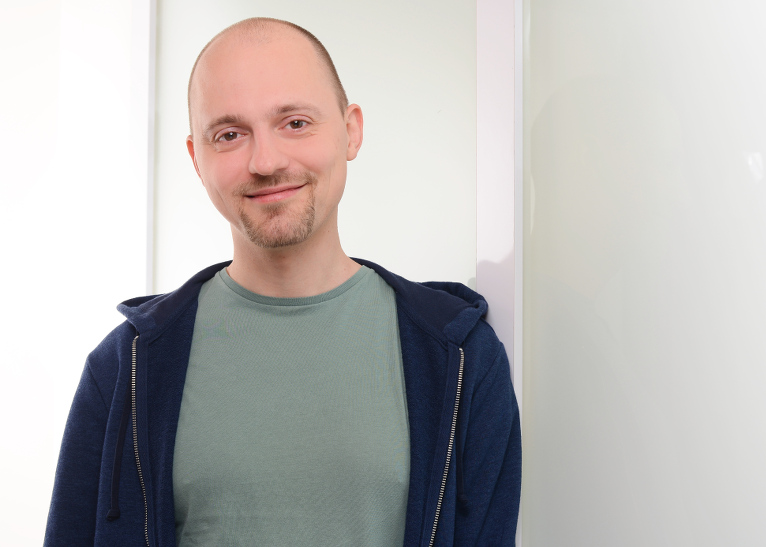
Dr. Amir Abboud is a Senior Scientist at the Weizmann Institute of Science , Department of Computer Science and Applied Mathematics. His research focuses on the Theory of Computation , particularly in Fine-Grained Complexity , aiming to determine the exact computational complexity of fundamental problems. Additional interests include Graph Theory, Dynamic Data Structures, Pattern Matching, Exact Algorithms, and Distributed Computing. Education: Ph.D. in Computer Science, Stanford University M.Sc. in Computer Science, Technion B.Sc. in Computer Science, University of Haifa (via the "Etgar" program) Research Trends: Amir's work bridges theoretical computer science with practical algorithm design, emphasizing hardness of approximation, circuit complexity, and lower bounds for dynamic problems. His recent publications highlight advancements in Gomory-Hu Tree algorithms, spanner optimality, and distributed complexity. Professional Affiliations: He has served on program committees for top conferences including FOCS, STOC, ICALP, and SODA. Previously affiliated with IBM Almaden Research Center as a Research Staff Member. Contact: Located in Room 106, Jacob Ziskind Building, Weizmann Institute. Email: amir.abboud@weizmann.ac.il , Phone: +972-8-934-3618.
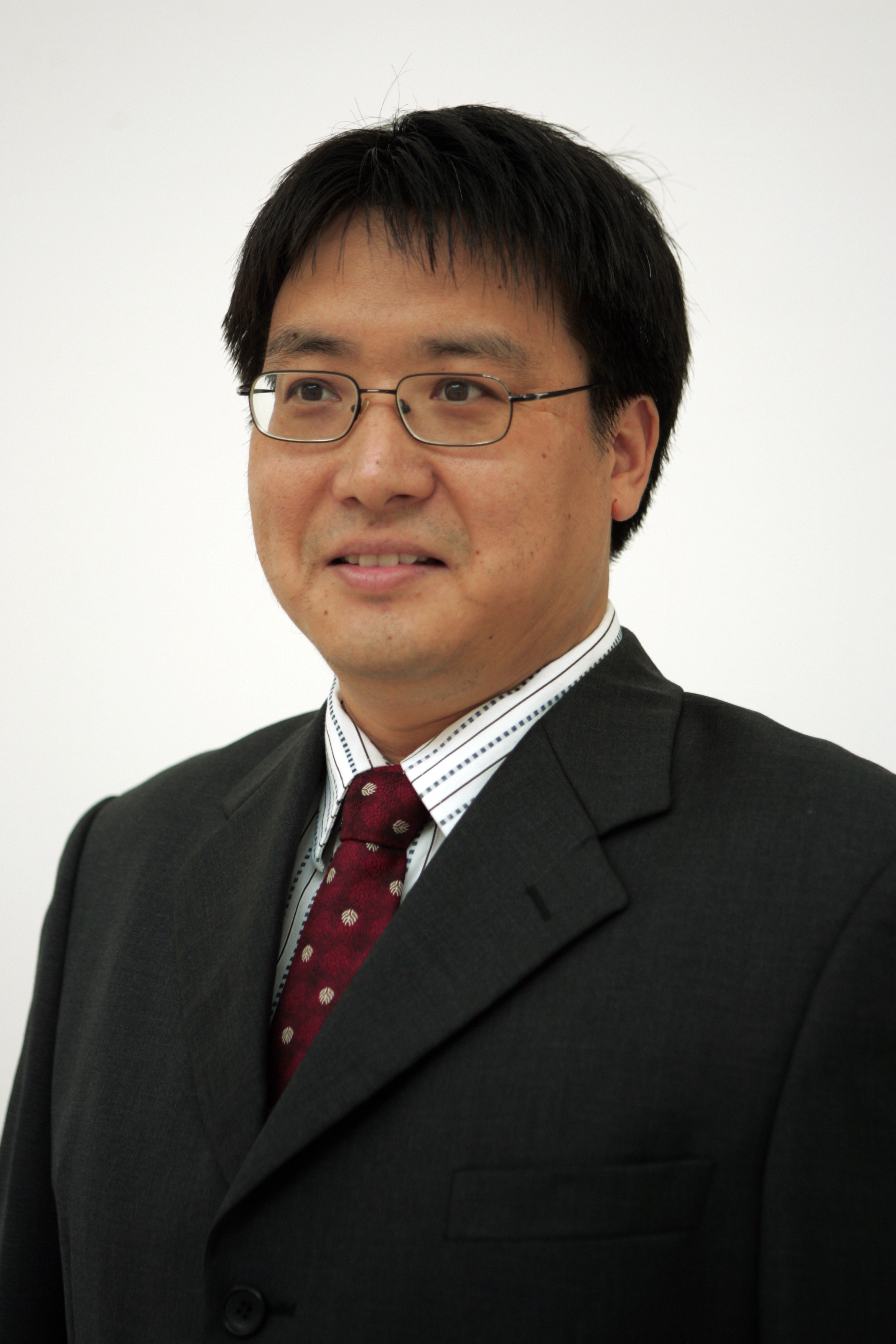
Oren Weimann is a Professor in the Department of Computer Science at the University of Haifa, Faculty of Natural Sciences. His research lies at the intersection of theoretical computer science, algorithm design, and data structures, with a strong focus on planar graphs, combinatorial pattern matching, and fine-grained complexity. He has published extensively in top-tier venues such as STOC, SODA, ICALP, PODC, and ESA. Education: Ph.D., Massachusetts Institute of Technology (MIT), 2005–2009. Advisor: Erik Demaine. Dissertation: "Accelerating Dynamic Programming" Postdoc, Weizmann Institute of Science, 2009–2011. Host: David Peleg M.Sc., University of Haifa, 2004–2005. Advisor: Gad Landau. Dissertation: "Using PQ trees for Comparative Genomics" B.A., Technion – Israel Institute of Technology, 1999–2002 Oren Weimann's research centers on the design and analysis of efficient algorithms, particularly for planar and structured graphs. His work explores fundamental problems such as shortest paths, distance oracles, fault tolerance, edit distance, and pattern matching. He investigates both upper and lower bounds, often pushing the limits of what is computationally feasible under fine-grained complexity assumptions. His contributions include optimal labeling schemes, compressed data structures, and breakthroughs in dynamic and distributed graph algorithms. His recent publications reveal a consistent trend in developing highly efficient algorithms for planar graphs, with a focus on distance computation, fault tolerance, and compression. Keywords across these works include planar graphs, dynamic programming, string matching, and conditional lower bounds, reflecting a deep integration of algorithmic techniques and complexity theory. He frequently collaborates with leading researchers such as Shay Mozes, Paweł Gawrychowski, and Philip Bille. Scientific Awards: Best Paper Award, CPM 2007 Best Paper Award, ICALP 2020 (mentioned in context of work) Oren Weimann has advised numerous PhD and Master’s students, including Yaseen Abd-Elhaleem, Nathan Wallheimer, Aviv Bar-natan, and Shon Feller, whose dissertations have led to publications in major conferences. He has also mentored several postdoctoral researchers such as Shay Golan, Itai Boneh, and Panagiotis Charalampopoulos. His work has been supported by competitive research grants, though specific grant titles are not listed in the text. He has served on the program committees of key conferences including SODA, ICALP, CPM, ESA, and SPIRE, demonstrating active leadership in the theoretical computer science community. He is associated with a vibrant research group focused on algorithms and data structures, likely involving collaboration with students and postdocs on projects related to graph algorithms, string processing, and complexity. While no formal lab name is mentioned, his collaborative output suggests a strong, productive research team at the University of Haifa.
Holly Carley is a Professor of Mathematics at the City University of New York (CUNY) within the School of Arts & Sciences Department of Mathematics. She holds a Ph.D. from the University of Virginia (2004), an M.S. (1999) and B.S. (1997) with honors from the University of Central Florida, advised by R.N. Mohapatra and X. Li. Her research spans mathematical physics, analysis, approximation theory, and copulas in probability and statistics. B.S. with honors: University of Central Florida M.S.: University of Central Florida Ph.D.: University of Virginia Carley's research interests include mathematical physics, where she explores quantum systems and nonlinear effects, and approximation theory, focusing on inequalities and polynomial properties. She also investigates copulas for modeling multivariate dependencies in probability and statistics, with applications to extremal measures and graph-based constructions. Her publications emphasize mathematical physics (e.g., Born-Infeld effects, harmonic oscillator limits), copulas (e.g., subcopula extensions, extremal measures), and pedagogical methods (e.g., matrix reduction techniques, continued fractions). Key trends involve interdisciplinary applications of analysis and geometry to physics and statistics. Grants: Senior Personnel – Minority Science and Engineering Improvement Program (MSEIP), 2015-2018 PSC-CUNY Grants (2008-2013) on polarons, extremal doubly stochastic measures Books (OER): Co-author of PreCalculus (second edition) with Thomas Tradler Co-author of Arithmetic|Algebra with Bonanome et al.
Robert T. Jantzen is a Professor in the Department of Mathematics and Statistics at Villanova University, affiliated with the College of Arts and Sciences. He holds an A.B. in Physics from Princeton University (1974) and a Ph.D. in Physics from UC Berkeley (1978), specializing in general relativity. His research focuses on mathematical general relativity, cosmology, differential geometry, and Lie groups, with collaborations at institutions like the University of Rome's ICRA. He teaches applied mathematics courses, coordinates the Differential Equations with Linear Algebra course, and advocates for active learning in STEM education. Notable awards include the 2018 Mendel Award. His work bridges mathematics and physics, exploring topics like gravitoelectromagnetism and spacetime splitting. He is an honorary member of the Italian research group G9 and contributes to interdisciplinary projects, including climate change advocacy. Education A.B. in Physics, Princeton University, 1974 Ph.D. in Physics, UC Berkeley, 1978 Research Interests Focuses on general relativity, cosmological models with symmetry, observer-based spacetime analysis, gravitoelectromagnetism, differential geometry, and applications of Lie groups. His work integrates abstract mathematics with physical interpretation, often using computational tools like Maple. Publications & Talks His articles appear in journals like Classical and Quantum Gravity and General Relativity and Gravitation . Recent talks include discussions on geodesics on pasta surfaces and relativity. He has organized international conferences, including Marcel Grossmann Meetings, and co-edited their proceedings. Teaching & Innovation Develops Maple-based educational resources for calculus and differential equations. Emphasizes active learning, problem-solving, and technical communication. Maintains extensive course materials, including quizzes, tests, and grade calculators. Collaborations & Outreach Collaborates with Italian researchers on relativistic astrophysics. Engages in public science communication and progressive activism, supporting independent media and climate change initiatives. Serves as faculty advisor for student groups like the Armenian Student Organization and Villanova Against Sweatshops. Labs & Teams Active in the International Center for Relativistic Astrophysics (ICRA) network and the Vatican Observatory collaboration. Leads interdisciplinary projects blending mathematics, physics, and technology.
Prof. Wojciech Bożejko is a Professor at the Department of Control Systems and Mechatronics within the Faculty of Information and Communication Technology at Wrocław University of Science and Technology. His research focuses on optimization algorithms, scheduling theory, and quantum computing applications in discrete optimization problems. He has contributed extensively to the development of metaheuristics for solving complex scheduling challenges, including cyclic job shop, flow shop, and single-machine scheduling under probabilistic or uncertain conditions. Notably, his recent work explores quantum annealing techniques on D-Wave systems for tackling knapsack problems and flow shop scheduling. Prof. Bożejko has also co-edited special issues on discrete systems and authored over 50 peer-reviewed articles in journals like *Computers & Industrial Engineering* and *Archives of Control Sciences*. His methodologies emphasize parallel computing approaches to enhance solution efficiency. Research Interests: - Quantum Computing Applications in Optimization - Metaheuristic Algorithms (Tabu Search, Simulated Annealing) - Cyclic and Flow Shop Scheduling - Stochastic and Robust Scheduling - Parallel Computing for Discrete Optimization Advising & Grants: While no specific grants or advisees are listed, his research outputs indicate significant contributions to collaborative projects in scheduling optimization and quantum computing applications. His work often involves interdisciplinary collaborations, such as with the Wrocław Centre for Networking and Supercomputing. Labs/Teams: Affiliated with the Department of Control Systems and Mechatronics, contributing to research groups focused on automation, discrete systems, and advanced optimization techniques.
Prof. Dr. Ahmet Sinan CEVIK is a Professor of Mathematics at the Department of Mathematics, Faculty of Science, Selcuk University, Konya, Turkey. He holds editorial roles in several journals including Guest Editor for special issues in Symmetry, Computer Modeling in Engineering & Sciences , and serves on the Advisory Board of TWMS Journal of Applied and Engineering Mathematics . His primary research interests span Combinatorial Group Theory, Graph Theory, Semigroup Theory, and Topological Indices, with a focus on algebraic structures, graph invariants, and their applications. Prof. CEVIK has authored numerous textbooks including Introduction to Algebra (multiple editions) and Lecture Notes - I: Some Topics of Combinatorial Group Theory . He has published over 100 peer-reviewed articles in high-impact journals like Proceedings of the Edinburgh Mathematical Society , Communications in Algebra , and Applied Mathematics and Computation . His research emphasizes Gröbner-Shirshov bases, group presentations, and topological indices of graphs. He has collaborated extensively with global researchers such as Prof. Kinkar Ch. Das, Ivan Gutman, and Ismail Naci Cangul. His work bridges algebraic structures with graph theory, contributing to both theoretical advancements and applied mathematical problems.
John F. Roddick is a Professor affiliated with Flinders University in South Australia. His research focuses on data mining, database systems, and temporal databases, with significant contributions to association rule mining, schema evolution, and privacy-preserving techniques. He has collaborated extensively with researchers like Shu-Chuan Chu and Jeng-Shyang Pan, producing over 138 publications across journals and conferences. Key contributions include work on schema versioning, temporal vacuuming in databases, and algorithms for wireless sensor networks. His research extends to image processing, biometrics, and swarm intelligence, with notable applications in traffic prediction and secure communication systems. He has edited conference proceedings and contributed to encyclopedic entries on database systems and data warehousing. Roddick's work often bridges theoretical foundations with practical applications, emphasizing interdisciplinary approaches to data management challenges. His publications span venues such as IEEE Transactions on Knowledge and Data Engineering, Data & Knowledge Engineering, and the Journal of Network and Intelligence.
Yunshi Lan is an Associate Professor at the School of Data Science and Engineering, East China Normal University (ECNU). He holds a Ph.D. from Singapore Management University (SMU) and a Bachelor's degree from Southwest University (SWU). His research focuses on knowledge bases, question answering systems, deep learning, and large language models. He has led multiple grants, including projects from the National Science Foundation of China and the Shanghai Pujiang Talent Program. Lan has published extensively in top venues like ACL, EMNLP, and AAAI, with notable contributions to visual question answering, grammatical error correction, and educational NLP. He serves on program committees for ACL, EMNLP, and AAAI, and has given invited talks on large language models and knowledge-based systems. His teaching includes undergraduate and graduate courses on deep learning, emphasizing practical applications and LLM integration. Lan mentors a vibrant research group, with students contributing to impactful projects like MWPToolkit and FlaCGEC datasets. Education: Ph.D., SMU (201X); B.Sc., SWU (201X). Key grants include 'Knowledge Base Question Answering System in Interactive Environments' (NSFC, 2023-2025) and 'Intelligent Low Carbon Oriented Theories for Cross-Border Electric Power Trading' (NSFC, 2024-2028). Awards include the First Prize in the Financial GraphRAG Competition (2024) and the Shanghai Pujiang Talent Program (2022). His research highlights include benchmarking Visual Chinese GEC, developing TreeEval for LLM evaluation, and creating educational NLP tools like 中介语智能批改 for CFL learning.
Karl Bringmann is a Professor at Saarland University since November 2019 and is affiliated with the Max Planck Institute for Informatics, where he works in the Department of Algorithms and Complexity. He has established himself as a leading researcher in theoretical computer science, particularly in fine-grained complexity and algorithm design. His work bridges theoretical insights with practical applications in optimization problems. Bringmann's research focuses on conditional lower bounds (often based on the Strong Exponential Time Hypothesis) and algorithm design, with particular emphasis on optimization problems, string algorithms, and computational geometry. His work has significant implications for fundamental problems like Subset Sum, Knapsack, and Integer Programming, with applications ranging from scheduling to post-quantum cryptography. He develops innovative approaches combining modern algorithmic techniques, mathematical structure theory, and fine-grained complexity to design faster algorithms and establish optimality. His publication record shows a consistent trend toward developing near-optimal algorithms for fundamental problems, with significant contributions to fine-grained complexity theory. His work often establishes tight conditional lower bounds while simultaneously providing matching upper bounds, creating a comprehensive understanding of problem complexity. He has made notable advances in string algorithms (particularly edit distance), geometric problems, and optimization. ERC Starting Grant 2019: Technology Transfer between Integer Programming and Efficient Algorithms (TIPEA) EATCS Presburger Award for Young Scientists 2019 Heinz Maier-Leibnitz-Prize 2019 EATCS Distinguished Dissertation Award 2015 Google European Doctoral Fellowship 2012-2014 Bringmann leads the ERC-funded TIPEA project (2019-2024), which investigates fundamental optimization problems with the goal of developing next-generation industrial solvers. He advises several PhD students including Nick Fischer, Alejandro Cassis, and Vasileios Nakos, and has served on numerous program committees for top theoretical computer science conferences including STOC, FOCS, SODA, and ICALP. His teaching includes advanced courses on Fine-Grained Complexity Theory and Competitive Programming.
Wu Guohua is an Associate Professor in the Division of Mathematical Sciences at the School of Physical & Mathematical Sciences, College of Science, Nanyang Technological University (NTU), Singapore. He has been serving in this position since 2011 after working as an Assistant Professor at NTU from 2005-2011 and completing a Post-Doctoral Fellowship at Victoria University of Wellington from 2002-2005. His educational background includes a B.Sc. from Yangzhou Teachers' College (1987-1991), M.Sc. from Yangzhou University (1993-1996), and Ph.D. from Victoria University of Wellington, New Zealand (1999-2002). 1987-1991: B.Sc., Yangzhou Teachers' College (now Yangzhou University), China 1993-1996: M.Sc., Yangzhou University, China 1999-2002: Ph.D., Victoria University of Wellington, New Zealand Wu Guohua's research focuses on foundational aspects of theoretical computer science and mathematical logic. His primary interests include Computability and Complexity Theory, Formal Languages, Mathematical Logic and Set Theory, Universal Algebra, and Effective Aspects of Analysis, Algebra and Combinatorics. His work bridges abstract mathematical concepts with computational applications, examining the boundaries of what can be computed and how efficiently. His publication record demonstrates consistent contributions to mathematical logic and computability theory, with recent work focusing on degree structures, randomness notions, and connections between algebraic structures and computational complexity. His articles frequently appear in top journals like the Journal of Symbolic Logic, Annals of Pure and Applied Logic, and Archive for Mathematical Logic, as well as proceedings of major conferences in theoretical computer science. His notable awards include: Young Researcher Award from School of Physical and Mathematical Sciences, NTU (2008) Hatherton Awards from Royal Society of New Zealand (2003) Post-Doctoral Fellowship from Foundation of Research, Science and Technology, New Zealand (2002-2005) Wu Guohua has been actively involved in teaching and academic service. He has taught courses including Abstract Algebra II, Probability and Statistics, Continuous Methods, and various graduate seminars. He has also co-edited proceedings of the 7th and 8th Asian Logic Conferences (2003) and the 11th Asian Logic Conference (2011), demonstrating his leadership in the logic community.
Teodora Baluta serves as an Assistant Professor and the Alan and Anne Taetle Early Career Professor at the School of Cybersecurity and Privacy, Georgia Institute of Technology, where she leads research at the critical intersection of computer security and machine learning. Her work focuses on establishing rigorous security analyses for machine learning systems through algorithmically sophisticated yet practically applicable approaches. Her academic foundation was built at the National University of Singapore (NUS) through graduate studies supervised by Professors Prateek Saxena and Kuldeep S. Meel: National University of Singapore (NUS) - Graduate Studies Dr. Baluta's research program spans computer security, machine learning, and formal methods with concentrated expertise in differential privacy, security verification for neural networks, and causal reasoning applications. She investigates membership inference attacks, model unlearning mechanisms, and security challenges in large language models while maintaining strong connections to real-world security problems through publications in premier venues like CCS, NDSS, SAT, FSE, and OOPSLA. Analysis of her publication trajectory (2017-2025) reveals an evolving research focus from foundational security work on taint analysis and insider threats toward cutting-edge investigations into AI security. Recent publications demonstrate increasing specialization in large language model security, privacy-preserving techniques for graphs, and causal approaches to security verification, establishing her as a leader in securing next-generation AI systems. Her research excellence has been recognized through: Google PhD Fellowship EECS Rising Stars 2023 Dean’s Graduate Research Excellence Award President’s Graduate Fellowship Microsoft Research PhD Fellowship Finalist, Asia-Pacific While current student mentorship details are not publicly specified, her Early Career Professorship indicates an active research group development phase. Her doctoral work at NUS was conducted within the KISP lab and MeelGroup, and she now establishes her independent research direction at Georgia Tech's School of Cybersecurity and Privacy. Current research activities center on advancing security frameworks for machine learning systems, with particular emphasis on developing formal verification methods for neural networks and privacy-preserving techniques applicable to real-world deployment scenarios.
Assoc. Prof. Petr Kolman is an academic at the Department of Applied Mathematics , Charles University , where he serves in advisory bodies of the faculty management. His research focuses on theoretical computer science , combinatorial optimization , and graph algorithms , particularly in approximation techniques and network flow problems . He has taught courses such as Linear Algebra 1/2 and Mathematical Programming and Polyhedral Combinatorics . Recent publications highlight his work on spanning tree congestion (2025), length-bounded cuts (2020), and treewidth-based extended formulations (2020). His research spans algorithms , flow theory , and graph modification problems . He maintains contact through kolman@kam.mff.cuni.cz and office hours in Prague Malostranské nám. 2/25, 2nd floor, room S225 .
Michael R. Douglas is a Professor at the Simons Center for Geometry and Physics at Stony Brook University . A renowned string theorist , he contributed to matrix models, noncommutative geometry, Dirichlet branes, and the statistical approach to string phenomenology. Previously, he was Professor of Physics and Director of the New High Energy Theory Center at Rutgers University before joining Stony Brook in 2008. Education : B.A. in Physics (Harvard, 1983), Ph.D. in Physics (Caltech, 1988) His research bridges theoretical physics and mathematics , focusing on string theory , quantum field theory , and Calabi-Yau manifolds . Recently, he has pioneered the application of machine learning and symbolic computation to solve complex mathematical and physical problems, such as computing Calabi-Yau metrics. His publications span string compactification , flux vacua , noncommutative geometry , and AI-driven scientific discovery . He explores the intersection of physics and computation , including AI models for economic simulations and mathematical data science. Scientific Awards : Sackler Prize in Physical Sciences Louis Michel Visiting Professor at IHES Clay Mathematical Institute Mathematical Emissary He is a Fellow of the American Mathematical Society and Member of the American Physical Society . Douglas has edited Journal of High Energy Physics and Communications in Mathematical Physics , and organized workshops like 'String Theory for Mathematicians' and 'Mathematical Foundations of Quantum Field Theory'.
Charles Leiserson is the Edwin Sibley Webster Professor in the Department of Electrical Engineering and Computer Science (EECS) at MIT. He is renowned for co-authoring the seminal textbook Introduction to Algorithms , now in its fourth edition, which is widely used globally. His research focuses on algorithms, parallel computing, and software performance engineering, with contributions to theoretical computer science and practical systems like the Cilk multithreaded language and the Connection Machine CM-5 architecture. Leiserson’s work spans compiler design (e.g., Pochoir for stencil computations) and high-performance computing frameworks. He explores post-Moore’s Law computational strategies, graph neural networks for financial forensics, and deterministic parallel algorithms. His educational contributions include courses like 6.172 (Performance Engineering of Software Systems) and initiatives in scalable graph learning. His research has led to innovations in parallel programming models, algorithm optimization, and hardware-software co-design. Leiserson’s interdisciplinary work bridges theory and practice, influencing both academic research and real-world applications in finance, cryptography, and supercomputing.
Yixin Cao is an Associate Professor in the Department of Computing at Hong Kong Polytechnic University, Faculty of Engineering. He conducts research in theoretical computer science with a focus on algorithmic and structural graph theory, combinatorial optimization, and their applications. He leads a research group and is actively involved in the theoretical computer science community through publications, talks, and conference organization. Research Interests: Algorithmic and structural graph theory, particularly on interval and circular-arc graphs Fine-grained complexity and parameterized algorithms Graph modification problems (editing, deletion, completion) Combinatorial optimization with applications in bioinformatics and social networks His recent publications highlight a strong trend in characterizing complex graph classes (e.g., proper Helly circular-arc graphs, chordal circular-arc graphs) and developing efficient parameterized algorithms, especially kernelization techniques for graph editing problems. He frequently publishes in top venues such as Algorithmica, Theoretical Computer Science, ICALP, ESA, and MFCS. Grants: PI, "(Parameterized) complexity of graph edge editing problems", NSFC, 01/2024–12/2027 PI, "Approximation algorithms for phylogenetic networks", RGC, 01/2021–12/2023 PI, "Algorithmic study on chordal and related graphs", NSFC, 01/2020–12/2023 PI, "Super-polynomial approximation of graph problems", RGC, 01/2018–12/2020 Multiple earlier grants from RGC, NSFC, and NLSDE on graph algorithms and complexity Research Group: Advises graduate students including Ying Xu, Haowei Chen, and Shenghua Wang Hosts visiting researchers such as Tomasz Krawczyk (Warsaw University of Technology) Collaborates extensively with researchers in China and internationally