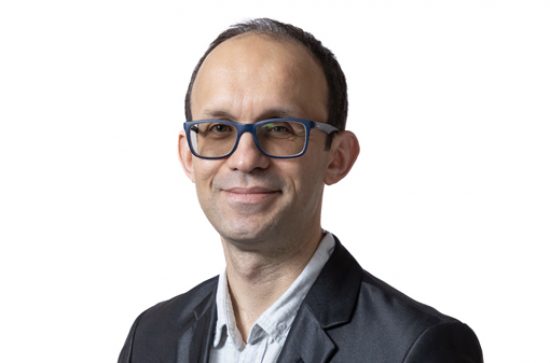
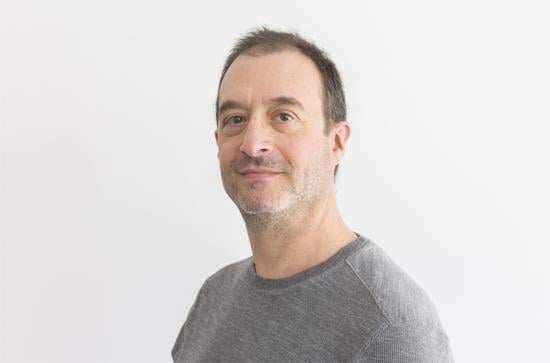
Constantine Evans is a Research Fellow at the Hamilton Institute, Maynooth University, focusing on the physics of complex self-assembly processes. His work examines how simple particles organize into intricate structures through algorithmic self-assembly, with applications in DNA nanotechnology and computational modeling. Institution: Maynooth University Research Unit: Hamilton Institute Location: Eolas Building, 3rd Floor, Office 339 Research Interests: Evans investigates non-equilibrium self-assembly systems, particularly DNA tile crystal growth and kinetic control mechanisms. His research bridges physics, computational theory, and molecular engineering to uncover unexpected behaviors in basic physical processes. Publication Trends: His recent work (2018-2024) demonstrates interdisciplinary advancements in DNA computing, focusing on proofreading systems, tile compiler optimization, and kinetic modeling. These publications span peer-reviewed journals, conference proceedings, and algorithmic frameworks that connect theoretical computer science with experimental biophysics. Labs & Teams: He is affiliated with the Hamilton Institute, a research center specializing in systems biology, computational modeling, and interdisciplinary scientific investigations.
Dr. Barry Cardiff is an Assistant Professor in the School of Electrical and Electronic Engineering at University College Dublin (UCD), where he has been a member of academic staff since September 2013. His career spans both industry and academia, with significant experience at Nokia Mobile Phone (UK) Ltd and Silicon & Software Systems (S3 group) before returning to complete his PhD at UCD. Education: B.Eng (1992), M.Eng.Sc. (1995), PhD (2011) from University College Dublin Professional Experience: Design Engineer at Nokia (1993-2001), Systems Architect at S3 group (2001-2007, 2011-2013) Current Position: Assistant Professor at UCD School of Electrical and Electronic Engineering Dr. Cardiff's research focuses on Digital Signal Processing applications in communication systems, with particular emphasis on theoretical analysis and practical implementation. His work bridges traditional communication theory with emerging biomedical applications, especially in wearable IoT sensors. He has made significant contributions to power/complexity reduction techniques in circuit design, specifically DSP algorithms for digitally assisted analog circuits. His research program addresses critical challenges in biomedical signal processing, sensor fusion, and efficient data transmission for healthcare applications. His recent publications demonstrate a strong trend toward biomedical applications of signal processing techniques, with a focus on ECG analysis, atrial fibrillation detection, and respiratory rate estimation using multimodal sensor fusion. The research shows a clear progression from traditional communication systems toward healthcare applications, with an emphasis on edge computing solutions that reduce power consumption in wearable devices. IEEE BioCas best paper award (2024) IEEE senior member since 2019 Active reviewer for multiple IEEE journals including Transactions on Biomedical Circuits and Systems, Circuits and Systems, and VLSI Systems Dr. Cardiff has supervised numerous research projects and has been instrumental in developing curriculum for digital communications, signal processing, and wireless systems. His teaching philosophy emphasizes open, friendly, and hands-on approaches that encourage independent thinking. He coordinates multiple modules including Communication Theory, Digital Electronics, DSP Technology, and Wireless Systems, demonstrating his commitment to both theoretical foundations and practical applications of electrical engineering principles. His research group works at the intersection of signal processing, machine learning, and biomedical engineering, developing innovative solutions for wearable healthcare monitoring. Current projects focus on event-driven processing architectures, decentralized classification systems, and signal quality-aware fusion techniques that enable robust performance in noisy real-world environments.
Anthony Kelly serves as a Postdoctoral Research Fellow in the Department of Electronic and Computer Engineering within the Faculty of Science and Engineering at the University of Limerick, Ireland, with his office located in E2-006. His affiliation spans both engineering and healthcare domains through interdisciplinary research initiatives. His research demonstrates dual expertise in artificial intelligence applications for healthcare and advanced power electronics. In healthcare AI, he develops interpretable mental health models, diabetes management chatbots, and comorbid condition interventions with emphasis on clinician trust and safety evaluation. In power systems, he pioneers digital control techniques for DC-DC converters, FPGA power management, and machine learning-integrated circuit designs. This bifurcated focus reveals a strategic transition from hardware-centric research (2005-2019) toward AI-health convergence (2024-2025). Analysis of his 15 most recent publications shows a pronounced shift toward healthcare AI since 2024, with 80% of current work addressing mental health modeling, diabetes chatbots, and comorbid condition management. Earlier publications (2009-2019) consistently focused on power electronics innovations including current-sharing algorithms, adaptive controllers, and FPGA-based systems, establishing foundational expertise later applied to healthcare technology development.
Erivelton Nepomuceno is an Associate Professor at Maynooth University's Faculty of Science & Engineering , affiliated with the Hamilton Institute and Centre for Ocean Energy Research . He holds a PhD in Electrical Engineering from UFMG (2005) and has held visiting positions at Imperial College London, Saint Petersburg Electrotechnical University, and City, University of London. Educational Background BEng, UFSJ (2001) PhD, UFMG (2005) Research Interests Computer Arithmetic Chaotic Cryptography Green Computing Ocean Energy Sustainable Circuits and Systems System Identification His recent publications focus on computational chaos, reinforcement learning applications, and sustainable energy systems. His work bridges chaos theory , cybersecurity , and renewables , with a strong emphasis on energy transition and finite-precision arithmetic challenges. Scientific recognitions include Senior Member of IEEE and Chair-Elect of IEEE Technical Committee on Nonlinear Circuits and Systems . He has served as Deputy Editor-in-Chief for multiple IEEE journals and currently holds associate editor roles. Erivelton supervises 5 active PhD students and has advised 7 PhD completions. His funded projects include studies on hybrid wind-wave energy control (€587,975.18), green computing (€3,700), and chaotic system simulation (€7,500). He leads the Hamilton Institute's research group on computational chaos and sustainable systems.
Professor Barak Pearlmutter is affiliated with Maynooth University in the Faculty of Science & Engineering . His research spans multiple domains including automatic differentiation , neural networks , machine learning , and neuroscience . He has contributed significantly to adaptive systems , brain imaging , and programming language design . Research Interests include: Adaptive systems, automatic differentiation, theoretical neurobiology, neural networks, machine learning, acoustic source separation/localization, neuroscience, brain imaging, programming language design, and computational neuroscience. Publications focus on applying algorithmic differentiation to machine learning, developing neural ODE models for biomedical signals, advancing sparse NMF techniques, and integrating functional programming with numerical methods. Collaborations span institutions like MIT, Oxford, and IEEE societies, with work in brain-computer interfaces , MEG source localization , and neuromodulation for tinnitus treatment. Technical Contributions include the DiffSharp AD library for .NET languages and foundational work on reverse-mode automatic differentiation in functional frameworks. His 2018 Journal of Machine Learning Research survey on AD remains a seminal reference in the field. Application Areas cover biomedical signal processing , optical brain-computer interfaces , cognitive modeling , and neural code optimization . His work intersects computer science, neuroscience, and mathematical computing through sparse decomposition and probabilistic modeling .
Dr. Paul M. Clarke is an Associate Professor and Deputy Head of the School of Computing at Dublin City University, where he also serves as Programme Board Chair. His industrial experience includes 13 years in software development firms including Logica and FINEOS Corporation, where he held roles from Senior Software Engineer to Programme Manager. Research interests focus on AI-driven software transformation, continuous engineering practices, and human factors in development processes. Significant projects include the €2.1M Future Software Systems Architectures initiative funded by the Disruptive Technologies and Innovation Fund (DTIF), which applies AI to microservices extraction from monolithic architectures. Honors and leadership roles: Irish Head of Delegation to ISO/IEC Joint Technical Committee 1 Director and Treasurer, International Systems and Software Process Association Steering Committee Chair, International Conference on Software and Systems Processes Teaching includes Software Engineering Principles, Software Testing, and Object-Oriented Programming modules.
Ian Clancy is a Lecturer at the University of Limerick , affiliated with the Faculty of Science and Engineering . He serves as the Course Director for the LM125 Physics (Common Entry) program and has previously held the same role for the BSc and MSc in Applied Physics. Education: PhD in Physics, University of Limerick (1999–2004) BSc in Applied Physics, University of Limerick (1995–1999) Dr. Clancy’s research focuses on statistical and non-linear physics , with applications in complex systems , emergent behavior , and dynamic phase transitions . His work spans modeling earthquakes, electromigration in interconnects, inkjet printing for conductive interconnects, pore growth in Indium-Phosphide, and the stability of polymers with embedded gold nanoparticles. He also collaborates on projects involving granular media and nanotechnology . His recent publications highlight expertise in electron microscopy simulation software (TEMGYM Basic and Advanced) and applications in nanomaterials and physics education . He contributed to the Professional Diploma in Teaching Physics , which received funding to train secondary school teachers in physics accreditation. Teaching includes modules like PH4005 Introduction to Computational Physics , PH4171 Mechanics , and PH4042 Thermal Physics , emphasizing programming, numerical methods, and practical lab experiments.
Patrick Healy serves as an Associate Professor in the Department of Computer Science & Information Systems within the Faculty of Science and Engineering at the University of Limerick. He is an active member of Lero – the Irish Software Research Centre , contributing to Ireland's national software research initiatives. His research spans Information Visualization, Graph Drawing, Combinatorial Optimization, and Routing/Scheduling problems. He specializes in developing algorithms for graph layout, table formatting, and upward planarity testing, with recent work expanding into machine learning robustness, medical AI diagnostics, and occlusion handling in computer vision. His fingerprint analysis reveals deep expertise in digraph theory (100%), planarity (76%), edge optimization (71%), and combinatorial optimization (51%). Current research trends show a significant shift toward applied AI since 2022, with 12 of his 15 most recent publications focusing on neural network robustness, medical diagnostics, and data augmentation techniques. Earlier work established foundations in graph theory and document engineering. He has supervised numerous research projects through Lero and maintains active collaborations across European institutions, particularly in software engineering and AI applications. His laboratory work centers on the Visualisation and Algorithm Design Group at UL, focusing on interpretable AI systems and robust visualization frameworks.
Michel Schellekens is Professor at University College Cork's School of Computer Science and Information Technology, specializing in Artificial Intelligence, Data Analytics, and Algorithmics. His research develops mathematical frameworks for complexity analysis, including quasi-metric spaces and entropy-based approaches for algorithm evaluation. Recent work focuses on low-power computing designs, reversible computing principles, and static analysis methods for energy-efficient software and hardware systems. He maintains collaborations through the Complex and Adaptive Systems Laboratory (CASL).
Dr. Thomas O’Toole is the Head of the School of Business (Dean) at South East Technological University, leading academic and strategic initiatives in marketing and strategy education. He specializes in inter-firm relationships, business networks, and collaboration, with over 90 peer-reviewed publications. His research explores network capability development, entrepreneurial dynamics, and the role of social media in B2B interactions. He co-authored the textbook Strategic Marketing Relationships and serves on editorial boards of European Journal of Marketing and Industrial Marketing Management . Dr. O’Toole holds fellowships from the Marketing Institute of Ireland (2005) and the Irish Academy of Management (2012), and was a Fulbright Scholar (2013). He actively contributes to non-profit and community organizations, emphasizing applied research and practical industry collaboration. His work bridges theoretical frameworks like Markets-as-Networks with real-world applications in innovation, sustainability, and digital engagement. Education: Ph.D. in Business (implied by title and research output). Key Research Areas: Network capability, entrepreneurial collaboration, B2B marketing, and digital resource mobilization. His recent articles (2020–2025) emphasize collaborative innovation, social media’s role in value creation, and resilience in networked systems. He advocates for strategic frameworks that integrate sustainability and digital transformation in business networks.
Graeme Watson is Professor of Theoretical Chemistry and Head of School in the School of Chemistry at Trinity College Dublin (TCD) . He leads a research group focused on computational materials science, particularly in energy-related applications such as solar cells, fuel cells, and catalysis. His research interests center on theoretical and computational chemistry , with emphasis on defect chemistry , electronic structure of materials , transparent conducting oxides , and ionic conduction in metal oxides. He employs advanced methods like density functional theory (DFT) and hybrid functionals to model complex systems. His work spans solid oxide fuel cells, photocatalysis, and novel semiconductor materials for photovoltaics. The recent publications show a strong trend in energy materials , particularly in electrochemical ammonia synthesis , solar absorbers , hydrogen production , and CO2 capture . Keywords across articles include catalysis, electronic structure, defect modeling, and computational screening, indicating a consistent focus on materials for sustainable energy . No scientific awards are mentioned in the provided text. Watson has extensive collaborative research experience, co-authoring with experimental and theoretical groups across Ireland and internationally. While specific grants are not listed, his high publication output suggests active funding. He advises researchers in computational modeling and materials discovery, though named students are not provided. His group likely contributes to major projects in computational materials design and energy conversion technologies . He is involved in method development, as evidenced by contributions to software like J2suscep for magnetic calculations, and works on both nanomaterials and bulk functional ceramics . His lab integrates simulation with experimental validation in areas like photoemission spectroscopy and catalysis.