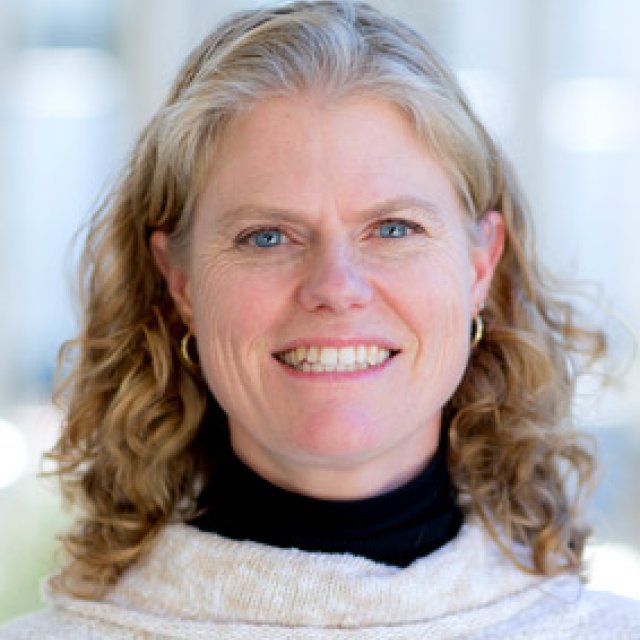
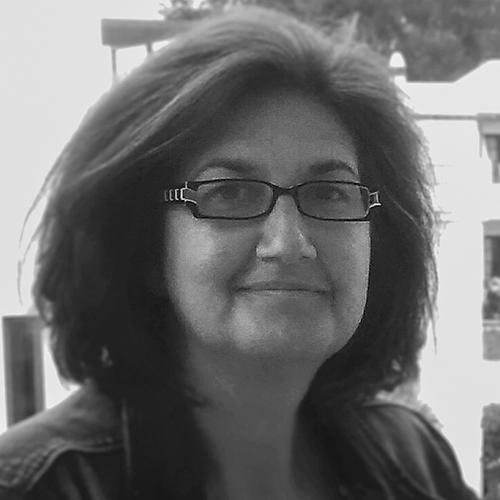
Filipe Moura is an Associate Professor at the University of Lisbon, focusing on transport systems, energy consumption, and environmental policy. His work bridges quantitative analysis with sustainable urban mobility, emphasizing cycling infrastructure, road space allocation, and socio-economic impacts of transport technologies. Research Interests include: Transport, Mobility, and Society Cycling Safety and Infrastructure Life Cycle Assessment in Transport Transport Demand Modeling Urban Mobility Planning Public Bike-Sharing Systems Filipe collaborates extensively with researchers like Gabriel Valença and Rosa Félix, contributing to studies on e-scooters, transport equity, and climate policy. His work often employs GIS, microsimulation, and multi-criteria decision-making frameworks.
Maria Bajwa is a Lecturer in the Department of Health Professions Education at the MGH Institute of Health Professions. She specializes in leveraging simulation methodology for health professions training, with expertise in adult learning theory, constructivism, and neurocognitive science applications. PhD, MBBS, MSMS, RHIT, CHSE Research Focus: Her work centers on healthcare simulation, interprofessional education, and distance learning frameworks. She develops guidelines for virtual simulation educators and investigates technological competence in remote healthcare training environments. Teaching Philosophy: Grounded in andragogy, constructivism, and neurocognitive principles, she fosters inclusive classrooms that promote self-directed learning, critical thinking, and multisensory educational experiences. Publications: Key contributions include consensus-building methodologies for equity in distance simulation, educator training frameworks, and analysis of technological competence in virtual simulation environments. Contact: bajwam@mghihp.edu
Mark P. Hemel is a University Lecturer in the Department of Built Environment at Eindhoven University of Technology (TU/e), specializing in Architecture and Transformation. He plays a central role in the Master's program in Architecture, teaching Masterproject 1 and Masterproject 2, and has supervised 40 student works, reflecting his commitment to architectural education and mentorship. His academic focus lies in architectural design, urban transformation, and sustainable development within the built environment. These interests are embedded in both his teaching and supervision, where students explore complex spatial and societal challenges through design-based research. No recent publications or research articles were listed in the source material, so no trends can be inferred from a publication record. However, his involvement in master-level project courses suggests a strong emphasis on design practice, critical thinking, and transformational urban strategies. Scientific Awards: No awards listed. Mark P. Hemel has actively contributed to academic supervision, having guided 40 student projects, though specific details about research grants or funded projects are not mentioned. His role appears centered on pedagogy and design mentorship within the architectural curriculum. He is affiliated with the Architecture and Transformation group within the Built Environment department at TU/e, a research and teaching unit focused on reimagining urban and architectural futures through innovative design methodologies and interdisciplinary collaboration.
Professor Sondoss El Sawah is a leading academic at UNSW Canberra's School of Systems & Computing, where she serves as Deputy Director of the Capability Systems Center. With over 90 publications including high-impact journal articles recognized by Web of Science, she has established herself as a prominent researcher in systems thinking and modeling. Her research focuses on advancing systems thinking methodologies to address complex socio-environmental-technical challenges. Key application areas include climate change adaptation, defense strategic decision-making, resource management, and the water-food-environment-energy nexus. She has led numerous ARC and industry-funded projects tackling high-stakes policy issues, with significant impact on defense asset management and sustainable resource planning. Professor El Sawah's recent work explores novel intersections between AI, education, and systems thinking, particularly through her ARC Discovery Project on 'Machine-education methodologies and algorithms for designing trusted multi-skilled evolutionary learners.' Her research has pioneered practical tools for promoting systems thinking in Australia's future force design and strategic asset sustainability. International Environmental Modelling and Software Society Research Award (2018) Australian Operations Research Society Rising Star Award (2016) - first female recipient Peter Cullen Trust Fellowship (Outstanding Fellow of the Year, 2014) Editor of the Journal of Environmental Modelling and Software (A*) Vice President of the Modelling and Simulation Society of Australia and New Zealand (2020-) She has significantly influenced policy through commissioned work for Queensland State Government and Department of Defence, developing good modeling practices for decision support. Her educational impact includes revitalizing systems thinking curriculum at UNSW and teaching at the European Summer School on decision making. Professor El Sawah also founded the IEEE Systems Modelling Conference and maintains strong international collaborations, including an honorary Associate Professor affiliation at Australian National University.
Brenda Senger, Ph.D., R.N., is an Associate Professor in the Department of Nursing at Gonzaga University (Spokane, WA). Her clinical expertise spans medical-surgical nursing, pathophysiology, pharmacology, and innovative educational strategies like high-fidelity simulation. She holds a Ph.D. in Nursing from Washington State University, an M.A. in Organizational Leadership and B.S.N. from Gonzaga University, and an A.D.N. from Lewis-Clark State College. Research Focus: Dr. Senger investigates evidence-based practice optimization, mitochondrial disease impacts on families, and clinical education innovations. Her work emphasizes pediatric care, pain management protocols, and healthcare quality improvement, particularly in vaccination rates and chronic disease screening. Teaching: She coordinates clinical practicums and teaches core courses including: Pathophysiology & Pharmacology Evidence-Based Practice for Quality & Safety Complex Healthcare Organizations DNP Practicum seminars Awards: Recognized with two awards for excellence in clinical teaching. Clinical Passion: Committed to social justice, she advocates for vulnerable populations, especially children with special needs and the elderly.
Vira Chankong serves as an Associate Professor in the Department of Electrical Engineering and Computer Science at the Case School of Engineering, Case Western Reserve University. His research develops rapid learning and optimization methods for intensity-modulated radiation therapy and combinatorial optimization paradigms, with office location in Olin 708 and contact via vira.chankong@case.edu. His educational background includes: PhD in Systems Engineering from Case Western Reserve University (1977) MS in Systems Engineering from Asian Institute of Technology, Thailand (1974) BS with honors in Electrical Engineering-Mathematics/Physics from University of New South Wales, Australia (1971) Dr. Chankong's research centers on large-scale optimization, multiobjective optimization, and logic-based discrete optimization, with significant applications in medical research (Gamma Knife radiosurgery and Intensity Modulated Radiation Therapy), systems biology (signaling pathways), data mining, and supply chain management. His work integrates systems methodology with decision theory to solve complex engineering design and operational problems. As a senior member of IEEE and IIE, and member of SIAM and INFORMS, he bridges theoretical optimization with practical biomedical and industrial implementations. His publication record from 1990-2017 reveals consistent interdisciplinary focus, evolving from power systems control (1990s-2014) toward medical and supply chain applications (2014-2017), demonstrating sustained expertise in optimization algorithms across diverse domains while maintaining strong ties to electrical engineering fundamentals. Scientific recognition includes: Srinivasa P. Gutti Memorial Teaching Award Nominee (2018) Tau Beta Pi Teaching Award Nominee (2016) CWRU Diekoff Award Nominee (2011, 2016) CWRU Wittke Award Nominee (2005) INFORMS Franz Edelman Award Semi-Finalist (1997) INFORMS External Appointment at Duke Medical Center (2016-present) His teaching portfolio spans optimization theory (dynamic, large-scale), computational engineering, Signals and Systems, Engineering Economics, and Systems Thinking. While specific grant details aren't documented, his Duke Medical Center appointment and publication record indicate active research collaboration. The absence of lab/team descriptions suggests primary individual research focus within the departmental structure.
Herr Henriette Hoppe ist Senior Lecturer im Fachbereich Germanistik an der Pedagogical University of Schwäbisch Gmünd. Sie ist seit 2022 in dieser Position tätig und war zuvor von 2009–2022 als abgeordnete Lehrerin an der gleichen Institution beschäftigt. Ihr akademischer Werdegang umfasst ein Germanistik- und Romanistik-Studium an der Freien Universität Berlin (1991–1997), ein Referendariat in Saarbrücken (1997–1999), sowie wissenschaftliche Tätigkeiten an der Goethe-Universität Frankfurt am Main (2000–2006) und Schuleinsätze als Gymnasiallehrerin (2004–2009). Schwerpunkte: Theorie und Praxis des Literaturunterrichts Literarisches Schreiben Einsatz digitaler Medien im Literaturunterricht Medienadaptionen in der Kinder- und Jugendliteratur Kritische Auseinandersetzung mit Identitätskonstruktionen Entwicklung multimodaler Literacy-Kompetenzen Aktuelle Projekte: Kinderkinofestival Kikife (Konzeption und Leitung der Kinderjury) Campusredaktion CrossMedia (digitale Medienpraxis) Profun.Dig (Videoproduktion im Deutschunterricht) Publikationen: Fokussieren auf narrative Strukturen in Kinder- und Jugendliteratur, medienübergreifende Lehrmaterialanalyse, digitale Diagnosemethoden und gender-spezifische Figurenkonstruktionen. Die Arbeiten decken von Schulbuchgestaltung bis audiovisuelle Lehrstrategien ein breites Spektrum der literaturdidaktischen Forschung ab.
James A. Middleton is a Professor in the School for the Engineering of Matter, Transport and Energy at Arizona State University, with an affiliate appointment in the Mary Lou Fulton College for Teaching and Learning Innovation . He previously served as director of CRESMET and associate dean for research at Fulton Teachers College. Ph.D. in Educational Psychology from University of Wisconsin-Madison (1992) His research focuses on children's mathematical thinking , teacher motivation in mathematics , and educational technology applications . Current projects explore engineering design processes to enhance STEM learning environments, particularly in urban settings. His publications since 2015 highlight collaborations across engineering education, mathematics curriculum design, and NSF-funded research initiatives. Grant activities exceed $20 million, targeting urban mathematics education reform and engineering pedagogy. Professor Middleton teaches Applied Experimental Statistics and Mechanical Engineering Design courses (MAE 301, MEE 488/489). He leads research initiatives like SMiLES (urban student engagement) and STEM RAIN (rural education networks).
Dr. Steven Mathetsa serves as a Senior Lecturer at the Graduate School of Business Administration, University of the Witwatersrand (Wits University), Johannesburg. His research bridges business administration with critical sustainability challenges in the Global South, focusing on integrated resource governance frameworks. Academic credentials include: Matric (South African National Senior Certificate) Bachelor of Science (BSc) Bachelor of Science Honors (BScHons) Master of Science (MSc) Doctor of Philosophy (PhD) from University of the Witwatersrand His research pioneers systems-based approaches to the Water-Energy-Food-Climate Nexus, emphasizing context-specific solutions for South Africa. Key contributions include developing simulation methodologies for breaking institutional silos, advancing green hydrogen policy frameworks, and designing participatory assessment tools for climate-resilient resource management. His work consistently addresses the tension between theoretical nexus models and practical implementation challenges in developing economies. Publication analysis (2019-2025) reveals three evolving research trajectories: foundational work on integrated water resource management (2019-2022), methodological innovations in systems thinking applications (2022-2024), and emerging focus on green hydrogen as a strategic energy vector (2025). All studies demonstrate rigorous context sensitivity, with 85% specifically addressing South African policy landscapes and 100% employing interdisciplinary methodologies that combine quantitative modeling with qualitative stakeholder analysis.
David Jensen is an Assistant Professor in the Department of Mechanical Engineering at the University of Arkansas, where he leads the Complex Adaptive Engineered Systems Research Laboratory (CAESR). His research focuses on modeling, simulating, and validating complex engineered systems, with applications in robotics, wind energy turbines, and additive manufacturing. Education: BS in Mechanical Engineering, Oregon State University MS in Mechanical Engineering, Oregon State University PhD in Mechanical Engineering, Oregon State University (2012) Dr. Jensen's work centers on creating robust, resilient, and adaptive systems through design theory, modeling languages, and machine learning. A secondary focus is advancing engineering education using situated cognition techniques to train systems-thinking engineers. Scientific Awards: NSF funding NASA funding Air Force Office of Scientific Research (AFOSR) grant DARPA grant He teaches undergraduate and graduate courses including Introduction to Machine Analysis and Design, Dynamics, Advanced Product Design, and Model-Based Systems Design and Analysis. Dr. Jensen is a member of the American Society of Engineering Educators, American Society of Mechanical Engineers, and the Design Society.
Dr. Thanh Mai is a Research Fellow at the Centre for Applied Climate Sciences (CACS) at the University of Southern Queensland (UniSQ), Australia. He holds a PhD in Natural Resource Management from the University of Queensland and has over 25 years of research expertise, with a focus on systems science for climate resilience and sustainable development. PhD: Natural Resource Management (University of Queensland, 2012) MSc: Regional and Rural Development Planning (Asian Institute of Technology, 2003) BSc: Forest Science (Vietnam National University of Forestry, 1997) His research spans environmental management , climate change adaptation , and system dynamics modeling , with applications in agricultural climate risk management , rangeland systems , and tourism sustainability . He has collaborated with stakeholders across Australia, Vietnam, Thailand, Laos, and India. Recent publications highlight his expertise in climate-resilient agriculture (2025), mega-delta adaptation (2024), and energy systems sustainability (2022). His work integrates system dynamics and interdisciplinary frameworks to address climate challenges in diverse contexts. Advising Roles : Associate supervisor for doctoral research on climate resilience in vulnerable communities (2022) and sustainable energy development (2020). Key Grant : Lead on the €2.14M InsuResilience-funded project for coffee climate insurance in Vietnam (2025).
Fredrik Lindstrand is Professor of Media Theory with a focus on Visual Pedagogy at Konstfack University of Arts, Crafts and Design's Department of Art and Craft Education (IBIS). His research explores multimodal communication, social semiotics, and design for learning across educational contexts. Funded by organizations including the Swedish Research Council and Knowledge Foundation, Lindstrand's work examines knowledge representation through digital and material interfaces. Research interests focus on: Multimodal meaning-making in digital and physical spaces Social semiotics in educational design Digital tools in pedagogical contexts (especially digital pencils) Museum exhibition design as learning environments Knowledge representation in academic and cultural settings Publication analysis reveals consistent focus on: Digital/material intersections in education technology Scandinavian pedagogical approaches to multimodal literacy Semiotic analysis of learning resources Design-based research methodologies Museum studies through educational lenses Lindstrand contributes to research projects including digital museum exhibitions and pedagogical innovation in Swedish compulsory schools. No awards or supervised students are documented in available sources.
Dr. Jennifer Evarts Lineback serves as Professor of Biology and Education and Chair of the Cross-Disciplinary Studies Program at Point Loma Nazarene University, where she has taught since 2012. Her dual appointment bridges the School of Education and Department of Biology, reflecting her commitment to integrating scientific expertise with pedagogical innovation across educational levels from K-12 to graduate studies. Her academic preparation includes: B.S. in Zoology from Miami University (Ohio) B.A. in Chemistry from Miami University (Ohio) M.S. in Zoology from Miami University (Ohio) Ph.D. in Math and Science Education from San Diego State University and University of California, San Diego (joint program) Dr. Lineback's research centers on teacher development in student-centered pedagogies and qualitative research methodology training for educational researchers. Her work demonstrates how science educators implement inquiry-based approaches while addressing persistent misconceptions in biology. She specializes in translating complex biological concepts like molecular genetics into accessible classroom activities through innovative methods such as shape-based coding systems for the central dogma. Her publication portfolio reveals consistent focus on science education methodology, with increasing emphasis on qualitative research techniques for novice educational researchers and molecular biology pedagogy. Recent work shows progression from classroom observation studies to developing specialized training protocols for qualitative data analysis. Her scholarly recognition includes: PLNU Center for Teaching and Learning Writing Retreat Recipient (2018) PLNU RASP Grant for AERA Conference attendance (2018) PLNU SOE Dean's Grant for AERA Conference (2017) IDEA Impact Grant with Dr. Jo Clemmons (2016) PLNU Alumni Association Faculty Grant with Dr. Rob Elson (2014) Phi Kappa Phi Honor Society (2010) Who’s Who Among American Teachers (2004-06) HHMI Teacher Fellowship at NIH (2002) As an academic advisor, she has mentored multiple School of Education master's candidates through research projects and served on numerous thesis panels since 2013. Her grant portfolio demonstrates consistent success in securing institutional funding for conference participation and collaborative research initiatives focused on science education innovation. Through her leadership of the Cross-Disciplinary Studies Program and active participation in university committees including the Children's Education Committee at University Church, Dr. Lineback cultivates institutional partnerships that connect scientific inquiry with community engagement and faith-based education initiatives.
Sílvia Tena is an accomplished Art Historian and Heritage Technician currently serving as Head of the Department of Registration and Collection Management at the National Museum of Art of Catalonia (MNAC) in Barcelona. With a PhD in Art History from the University of Valencia, she has established herself as both a museum professional and educator, having taught at the University of Valencia, Jaume I University, and the Autonomous University of Barcelona. Her academic credentials include an Extraordinary Degree Award (1996) and a postgraduate scholarship from the Generalitat Valenciana. Tena's professional journey includes significant positions at the Valencian Institute of Modern Art (IVAM), Patio Herreriano Museum of Contemporary Art, and the Museum of Contemporary Art of Barcelona (MACBA) before her current role at MNAC. Tena's research focuses on Contemporary Painting and Visual Arts from the 1930s to the present, with particular emphasis on Abstract Painting during the Franco era, Video-Art, and Design arts. Her work explores the intersection of artistic expression with historical and political contexts, examining how visual language communicates cultural identity and social commentary. She approaches art as 'a place and time where to begin defining questions,' emphasizing its communicative function while acknowledging that art doesn't need to appeal to everyone. Her extensive publication record reflects her expertise in Valencian and Catalan contemporary art, with particular attention to artists working under political constraints and those exploring new visual languages. Tena's curatorial work demonstrates her commitment to creating narrative frameworks that connect artistic works with broader cultural contexts. Extraordinary Degree Award, 1996 Type Directors Club Prize, New York (for Lavernia, Cienfuegos and Associates) Cristina Almodóvar. Set Espai d'Art. 2018 (Award-Winning Exhibition) Member of ICOM, AVCA, AECA and AICA professional associations As an educator, Tena has significantly contributed to art history and heritage management programs across multiple universities. She currently serves on the Editorial Board of Revista de Cataluña as Arts Section editor and works as an independent curator focusing on emerging and established contemporary artists. Her perspective on art education emphasizes its role in developing critical thinking and countering 'the educational positivism that emerged from the industrialization of the 19th century.' Tena's professional approach integrates theoretical knowledge with practical museum applications, particularly in collection management and exhibition design. Her recent presentation at the International Conference Museum Storage (ICOM, Sorbonne Nouvelle, 2024) demonstrates her ongoing engagement with contemporary museum challenges, particularly regarding the preservation of complex contemporary artworks.
Caglar Koylu is an Associate Professor in the Department of Geographical and Sustainability Sciences at the University of Iowa's School of Earth, Environment, and Sustainability. He directs the Geo-Social Lab where he leads research at the intersection of GIScience, network science, cartography, and visualization with applications in human mobility, migration, population geography, public health, and social vulnerability. His educational background includes a PhD from the University of South Carolina. He teaches foundational courses in GIS, geospatial programming, geographic visualization, and spatial analysis. His research program focuses on developing innovative computational and visual tools to analyze massive geospatial data and geo-social networks. Koylu's research interests span GIScience, cartography, visualization, spatiotemporal analysis, human mobility and migration, and population-scale kinship networks. His work combines network science, machine learning, and GeoAI approaches to understand complex spatial-social systems. Recent projects include analyzing historical migration patterns using population-scale family trees and developing tools for visualizing spatial flows. His publications reveal a strong focus on methodological innovation in flow mapping, spatial interaction analysis, and geovisual analytics, with applications spanning migration studies, public health, social media analysis, and disaster management. He has developed FlowMapper.org, a web-based tool for visualizing and analyzing flows across space-time. Among his notable recognitions, Koylu was elected Vice President of the Cartography and Geographic Information Society (CaGIS) in 2023. His students have received multiple awards including the CaGIS Doctoral Scholarship Award. He currently advises several graduate students including Maryam Torkashvand (PhD), Jinyi Cai (PhD), and Loretta Nwajiaku (MA). His lab has successfully graduated PhD students including Hoeyun Kwon (2023) and Geng Tian (MA, 2021). Koylu secures substantial research funding, currently serving as Principal Investigator on an NSF grant ($477,734) for population-scale kinship networks research and as Co-PI on an NIH grant ($1.18 million) for cancer risk mapping. His lab provides research experiences for undergraduate and high school students through the Secondary Student Training Program.