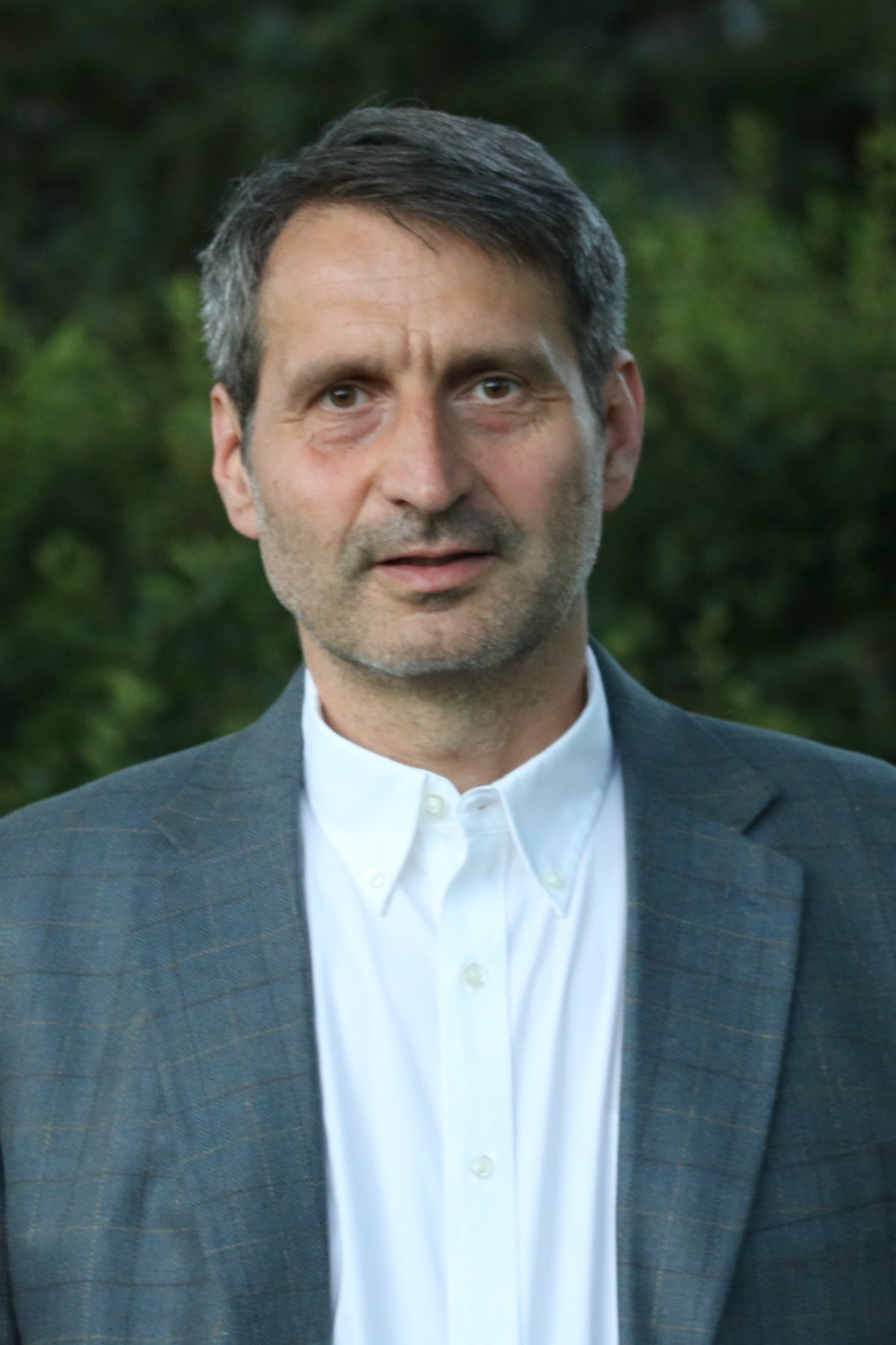
Kirill Serkh is an Assistant Professor in the Department of Mathematics at the University of Toronto, with a cross-appointment to the Department of Computer Science. His research focuses on advanced numerical methods for solving complex mathematical problems. Key Research Areas: Numerical analysis, Scientific computing, Partial differential equations, Numerical linear algebra, Quadrature and approximation theory, Special functions His recent work explores high-order numerical schemes for PDEs on non-smooth domains, adaptive methods for oscillatory integrals, and efficient evaluation of Newtonian potentials. He has contributed to the development of hybrid boundary integral methods and spectral techniques for challenging computational problems. While no specific scientific awards are mentioned in the provided text, his publications demonstrate expertise in computational mathematics and interdisciplinary applications in fluid dynamics, wave propagation, and machine learning. His methodological innovations span both theoretical and applied domains.
Matthias Aschenbrenner is a Professor at the Faculty of Mathematics, Department of Mathematics, with expertise in model theory, differential algebra, and asymptotic analysis. His research spans valued fields, transseries, and low-dimensional topology. PhD in Mathematics from the University of Illinois at Urbana-Champaign His work focuses on the intersection of mathematical logic, differential equations, and algebraic structures. Key contributions include foundational studies on transseries, Hardy fields, and applications to topology. Recent publications address analytic Nullstellensätze, distality in valued fields, and approximation theorems in o-minimal contexts. He serves as a peer reviewer and collaborates on geometric properties of transcendental functions and valued differential fields. Scientific awards include Fellow of the American Mathematical Society (2012) and the Karp Prize (2018). His research is funded by grants on model theory and geometric transcendental functions.
Dr. Alessandro Ottazzi is a Senior Lecturer in the School of Mathematics and Statistics at the University of New South Wales (UNSW). He earned his PhD from the University of Genoa (Italy) and held postdoctoral positions at the University of Bern (Switzerland), Università di Milano-Bicocca, and Università di Trento. His research spans geometric analysis, Lie groups, sub-Riemannian geometry, and CR structures, with a focus on the interplay between algebraic topology and analytic methods. Ottazzi's work consistently explores geometric rigidity, function spaces on non-Euclidean structures, and mappings in stratified groups. Recent publications emphasize Hardy spaces, Carnot group embeddings, and measure theory on metric trees. His research demonstrates deep connections between differential geometry, harmonic analysis, and operator theory.
John Mackay is an Associate Professor (Reader) in the School of Mathematics at the University of Bristol. His research focuses on geometric analysis, particularly analysis on metric spaces, geometric group theory, hyperbolic groups, and conformal dimension. He is a member of both the Probability, Analysis and Dynamics and Pure Mathematics institutes at Bristol, where he maintains an active research program and teaches undergraduate mathematics courses. His educational background includes undergraduate studies at the University of Edinburgh, PhD work at the University of Michigan under Bruce Kleiner (2003-2008), followed by a J.L. Doob research assistant professorship at the University of Illinois (2008-2010) and a postdoc at the University of Oxford (2011-2013) working with Cornelia Drutu before joining Bristol. Mackay's research explores the intersection of geometry, analysis, and group theory, with particular emphasis on conformal dimension, quasiconformal geometry, and the structure of hyperbolic and relatively hyperbolic groups. His work often involves studying metric spaces through their geometric and analytic properties, with connections to harmonic analysis and topology. His publication record shows consistent output since 2008, with recent work focusing on Poincaré profiles, asymptotic dimension, and the conformal dimension of hyperbolic groups. His most recent publications extend to 2025, indicating active ongoing research. The publications demonstrate a progression from foundational work in conformal dimension toward more complex applications involving random groups, Lie groups, and relatively hyperbolic structures. Among his significant contributions is the co-authored book "Conformal Dimension: theory and application" published by the AMS in 2010. Mackay actively contributes to the mathematical community through conference organization, including the "Interactions between Geometry, Dynamics and Group Theory" workshop at Bristol in January 2020, and upcoming events including the "Actions on graphs and metric spaces (OGG Workshop)" at the Isaac Newton Institute for September 2025 and the "Probability, Analysis and Dynamics conference" at Bristol for April 2025.
Vladimir Sverak serves as a Distinguished McKnight University Professor in the School of Mathematics at the University of Minnesota, where he maintains an active research program and teaches graduate courses in partial differential equations. His office is located in Vincent Hall 236 (206 Church Street SE, Minneapolis, MN 55455) with contact details including email sverak@umn.edu and phone (612) 625-1899. As of 2020, he continues to instruct courses such as Complex Analysis (Math 5583) and Topics in PDE (Math 8590), demonstrating ongoing academic engagement. Professor Sverak's research centers on fundamental questions in partial differential equations, particularly concerning existence, uniqueness, and singularity formation in fluid dynamics systems. His work focuses extensively on Navier-Stokes and Euler equations, examining behavior in critical function spaces where standard analytical methods often fail. He employs both rigorous mathematical techniques and numerical investigations to explore phenomena like non-uniqueness, blowup scenarios, and scale-invariant solutions, contributing significantly to the theoretical understanding of fluid mechanics. Analysis of his 15 most recent publications (2012-2017) reveals consistent thematic focus on Navier-Stokes equations, with particular attention to borderline spaces, axisymmetric flows, and singularity analysis. His collaborative approach is evident through frequent co-authorships with leading researchers including G. Seregin, H. Jia, and T. Gallay, reflecting the interdisciplinary nature of modern mathematical fluid dynamics research. His scientific recognition includes: Distinguished McKnight University Professor Research support comes from the National Science Foundation (grant DMS 1956092), while his teaching contributions span both foundational and advanced topics. Course materials for offerings like Elementary Partial Differential Equations (Math 5587/5588) and Introduction to Ordinary Differential Equations (Math 5525) remain accessible through university platforms, demonstrating commitment to pedagogical resources. Though student advising details aren't specified, his graduate-level course instruction indicates active mentorship within the mathematics community. Professor Sverak's work continues to advance mathematical fluid dynamics through rigorous analysis of nonlinear PDEs, maintaining strong connections between theoretical developments and physical fluid behavior while contributing to both research and education in mathematical sciences.
Thomas Brunold is a Professor of Chemistry at the University of Wisconsin–Madison, focusing on the geometric and electronic properties of metal centers in proteins and cofactors . His work integrates spectroscopic techniques (electronic absorption, circular dichroism, magnetic circular dichroism, resonance Raman, electron paramagnetic resonance) with density functional theory (DFT) and quantum mechanics/molecular mechanics (QM/MM) calculations to validate bonding descriptions and explore catalytic intermediates. Bio-organometallic cofactors (adenosylcobalamin, methylcobalamin, NiF430) Metal-dependent superoxide dismutases (Ni-, Fe-, Mn-SODs) Polynuclear NiFeS enzymes (ACS, CODH) His research spans vitamin B12 chemistry , metalloenzyme specificity , and redox-active clusters , with a focus on resolving substrate-bound intermediates and mechanistic debates in catalytic cycles. Recent publications emphasize ligand dynamics , second-sphere residue effects , and metal-cofactor interactions . Scientific awards include the Taylor Teaching Award (2024) , Kellett Mid-Career Award (2020) , and NSF-CAREER Award (2003) . He mentors students in the Brunold Lab, including Ryan Hall , Laura Elmendorf , and Maddy Rodemeier (co-advised with Andrew Buller), with multiple Outstanding TA Awards to lab members.
Britta Peis is a Professor of Management Science at RWTH Aachen University since September 2013. She studied Mathematics and Sports Sciences at the University of Cologne and German Sport University Cologne, respectively. Her academic journey includes positions at TU Dortmund (2006-2007), TU Berlin (2007-2010), and a visiting professorship at Otto-von-Guericke University Magdeburg (2010-2011). Her research focuses on Combinatorial Optimization , Algorithmic Discrete Mathematics , Routing and Scheduling , Robust Optimization , and Algorithmic Game Theory . Her work spans theoretical and applied domains, including network flow analysis, auction algorithms, and strategic decision-making in complex systems. Recent publications (2025-2024) highlight advancements in dynamic auction mechanisms, Stackelberg game formulations, and train routing algorithms. Earlier works (2022-2018) explore matroid theory, packet routing with priority lists, and sensitivity analysis in polymatroid optimization. Key trends include algorithmic design for competitive networks and robustness in time-dependent flows. She is affiliated with the Graduiertenkolleg UnRAVeL (Aachen Institute for Discrete Mathematics and Logic) and contributes to the Chair of Management Science's research agenda in combinatorial optimization and algorithmic game theory.
Michele Cooke is an Associate Professor at the University of Massachusetts Amherst , affiliated with the School of Earth and Sustainability. Her research focuses on mechanical modeling of fault systems, particularly in Southern California, and she leads initiatives for disability equity in geosciences. Contact: cooke@umass.edu | (413) 577-3142 | Morrill 3 230, 611 N Pleasant St, Amherst, MA Research Interests: Active faulting and work minimization in fault evolution Integration of analog experiments (sandbox/claybox) with numerical models Disability equity in geosciences (e.g., The Mind Hears mentoring forum) Subduction zone hazards and energy budgets Earthquake early warning accessibility for deaf communities Education: Ph.D., Stanford University
Dr. Pedro Mediano is a Lecturer in Computing at Imperial College London's Department of Computing (Faculty of Engineering). His research focuses on complex systems, information theory, and their applications in neuroscience, artificial intelligence, and cognitive science. He is affiliated with the Artificial Intelligence Network and leads interdisciplinary projects exploring synergistic interactions in brain dynamics, psychedelic neurodynamics, and causal emergence. Key research areas include quantifying high-order interactions in complex systems, developing information-theoretic tools for analyzing neural data, and modeling consciousness through integrated information theory. Mediano has pioneered frameworks like the Shannon invariants for scalable information decomposition and developed software tools such as THOI for analyzing higher-order interactions. Recent work examines how psychedelics alter brain entropy, the role of metastability in cognitive processes, and the computational principles underlying causal emergence in machine learning models. His studies integrate mathematical rigor with empirical neuroscience, bridging theoretical and applied domains. Mediano has collaborated on whole-brain models of psychedelic-induced neural complexity and explored the interplay between oxygen metabolism and brain evolution. He holds affiliations with Imperial's AI Network and regularly publishes in top journals across computational neuroscience and complexity science. Current projects include developing open-source tools for information decomposition and investigating the neural correlates of consciousness under altered states.
Yudong Chen is an Assistant Professor in the Department of Statistics at the University of Warwick, starting September 2024. Previously, he was an LSE Fellow (2023–2024) and a postdoctoral researcher at the London School of Economics. He holds a PhD in Statistics from the University of Cambridge (2023), with a thesis on High-dimensional Online Changepoint Detection, supervised by Richard J. Samworth and Tengyao Wang. His research focuses on changepoint detection, high-dimensional statistics, robust methods, and machine learning. Education: PhD in Statistics, University of Cambridge (2023) MA & MMath in Mathematics, University of Cambridge (2018) BA in Mathematics, University of Cambridge (2018) Teaching: University of Warwick: Module leader for ST420 Statistical Learning and Big Data (2024/25) LSE: Taught ST202/6 Probability, ST447 Data Analysis, and ST449 Artificial Intelligence His research interests span statistical methodologies including online algorithms, robust statistics, and spatial models. He has published in top journals like the Journal of the American Statistical Association and presented at venues such as the IMS Annual Meeting. Awards include the LSE Class Teacher Award (2023) and the Smith–Knight Prize (2020). Grants: Worked on EPSRC-funded research on 'Change-point analysis in high dimensions' at LSE. Labs/Teams: Engaged in collaborative projects on online changepoint detection and statistical methodologies.
David B. Massey is a Full Professor in the Department of Mathematics at Northeastern University, where he has been a faculty member since 1991 after joining as a regular faculty member following his National Science Foundation Postdoctoral Research Fellowship. Education: Bachelor's degree in Mathematics from Duke University (1977-1981), summa cum laude Ph.D. in Mathematics from Duke University (1981-1986) Professor Massey specializes in singularity theory , particularly complex analytic singularities, with research spanning algebraic geometry , topology , and complex analysis . His foundational work focuses on perverse sheaves, Milnor fibers, vanishing cycles, and stratified Morse theory, significantly advancing understanding of non-isolated singularities and Lê cycles. His methodologies integrate topological invariants with algebraic structures to solve complex problems in hypersurface singularities. Recent publications (2021-2024) reveal a concentrated exploration of numerical perverse sheaves, polar multiplicities, and real links, alongside innovative applications to hypersurface singularities. His work on Milnor fibers, Betti numbers, and monodromy demonstrates consistent advancement through stratified Morse theory, with notable contributions to Minkowski inequalities and non-isolated singularity analysis. Scientific awards: National Science Foundation Postdoctoral Research Fellowship (1991) Multiple teaching awards at Northeastern University Professor Massey has advised numerous graduate students throughout his career and founded the Worldwide Center of Mathematics, LLC in 2008, which has provided significant research support and educational resources. His work has been sustained by continuous grant funding including his early NSF fellowship and ongoing institutional support. He leads the Worldwide Center of Mathematics, LLC, an independent research organization dedicated to advancing mathematical knowledge through publications, conferences, and educational outreach since its founding in 2008.
Rasul Shafikov is a Professor in the Department of Mathematics at Western University's Faculty of Science. He has maintained an active research program in complex analysis and geometry while teaching a range of undergraduate and graduate mathematics courses including Calculus, Real Analysis, Complex Analysis, and Functional Analysis over multiple academic years. Dr. Shafikov's research focuses on several complex variables and complex geometry, with particular interest in polynomial and rational convexity of real submanifolds in complex spaces, geometric properties of holomorphic mappings and functions, and holomorphic foliations on Levi-flat hypersurfaces. His work represents significant contributions to understanding the boundary behavior of holomorphic functions, convexity properties in complex spaces, and the geometric structure of complex manifolds. An analysis of his recent publications reveals a consistent trajectory in advancing the theory of complex analysis in several variables, with increasing focus on the interplay between complex geometry, CR geometry, and convexity properties. His work often involves collaborations with researchers across international institutions, demonstrating the global relevance of his research in complex analysis. Dr. Shafikov has supervised multiple PhD students and postdoctoral researchers who have gone on to academic positions at institutions worldwide, including the University of Arkansas, Indian Institute of Science in Bangalore, Masaryk University in Czech Republic, and Central Michigan University. His mentorship has produced scholars who continue to contribute to the field of complex analysis. He has co-authored a book titled 'Geometry of Holomorphic Mappings' (Birkhäuser, 2023) with S. Pinchuk and A. Sukhov, which serves as a significant contribution to the literature in complex analysis. His teaching portfolio includes advanced graduate courses such as Complex Analysis, Functional Analysis, and Real Analysis, demonstrating his expertise across multiple mathematical disciplines.
Igor Jankovic is an Associate Professor in the Department of Civil, Structural and Environmental Engineering at the University at Buffalo's School of Engineering and Applied Sciences. His research focuses on groundwater flow and contaminant transport in heterogeneous aquifers, with particular emphasis on the impact of aquifer heterogeneity on solute movement and transport modeling. Education: PhD in Civil Engineering, University of Minnesota (1997) MS in Civil Engineering, University of Minnesota (1993) BS in Civil Engineering, University of Split, Croatia (1990) His work addresses critical issues in groundwater hydrology including: Advective transport mechanisms in heterogeneous media Breakthrough curve prediction and analysis Effective hydraulic conductivity modeling Upscaling of flow and transport parameters Application of the Analytic Element Method (AEM) for complex aquifer simulations Comparison of transport models (CTRW, MRMT) in heterogeneous environments Research trends in his publications reveal a focus on: Three-dimensional heterogeneous aquifer modeling Non-Fickian and anomalous transport behavior Impact of spatial variability on contaminant migration Development of numerical algorithms for large-scale groundwater simulations Validation of stochastic transport theories against field experiments (e.g., MADE and Borden aquifers) Interaction between physical and chemical heterogeneity in reactive transport
Gerhard Pfister is a professor of Mathematics at the University of Kaiserslautern. He holds the academic rank of Professor and specializes in Singularity Theory, Computer Algebra, Algebraic Geometry, and Complex Analysis. His career includes positions at Humboldt-Universität zu Berlin and University of Kaiserslautern, where he served as a professor from 1993 until his retirement in 2012, followed by a Senior Professorship until 2016. He has supervised numerous Ph.D. students, many of whom contributed to areas like computational algebra and singularity theory. Education: Gerhard Pfister earned his Diplom in Mathematics (1970) and Dr. rer. nat. (1971) from Humboldt-Universität zu Berlin. He habilitated in 1976 and became a professor there in 1983 before moving to Kaiserslautern in 1993. Research Interests: Pfister's work focuses on singularity theory, computational algebra, and the development of the SINGULAR computer algebra system. His research bridges theoretical and algorithmic aspects of algebraic geometry and commutative algebra, with contributions to Gröbner bases, standard bases, and modular computation techniques. He has co-authored foundational textbooks and over 140 publications. Key Contributions: Pfister is a co-developer of the SINGULAR software, a leading system for polynomial computations in algebraic geometry and singularity theory. His work includes algorithmic approaches to primary decomposition, normalization of rings, and classification of singularities. He has also contributed to the theoretical underpinnings of Neron desingularization and semicontinuity in algebraic geometry. Grants & Awards: While no specific awards are listed, his sustained contributions to computational algebra and singularity theory have had significant impact. He has supervised over 25 Ph.D. students and co-authored multiple influential books. Labs/Teams: He is a core contributor to the SINGULAR project and collaborates actively with researchers in computational commutative algebra and algebraic geometry.
Yong Zhang is affiliated with Tsinghua University's Research Institute of Information Technology in Beijing, China. His research focuses on machine learning, optimization algorithms, edge computing, and their applications in areas like time series analysis, federated learning, and sensor networks. He has collaborated on projects involving neural networks, scheduling problems, and privacy-preserving techniques. Education: Yong Zhang earned a PhD in Computer Science and Engineering from Fudan University in 2007. His academic career includes roles at institutions like the Chinese Academy of Sciences and the University of Hong Kong, reflecting a strong interdisciplinary background. Research Contributions: His work spans theoretical computer science, algorithm design, and applied machine learning. Notable areas include developing efficient scheduling algorithms for energy systems, creating robust federated learning frameworks for industrial demand forecasting, and advancing methods for sentiment analysis using multimodal data. He has also contributed to biomedical engineering through smartphone-based health monitoring systems. Collaborations: He frequently collaborates with researchers at institutions like the University of Electronic Science and Technology of China, Nanyang Technological University, and The Hong Kong Polytechnic University. Key projects involve data caching optimization in edge computing, distributed algorithms for dynamic networks, and combinatorial optimization problems. Labs & Future Work: His team explores cutting-edge topics in AI-driven systems, including trust-aware machine learning, distributed resource allocation, and real-time data processing for IoT applications. Current research emphasizes scalable solutions for complex optimization challenges in both academic and industrial settings.