Sarah F. Muldoon is an Associate Professor in the Department of Mathematics at the University at Buffalo, SUNY. Her research focuses on network neuroscience and complex systems, integrating tools from mathematics, physics, and computational biology. Education: PhD in Physics, University of Michigan (2009) Her research explores network organization in brain function, particularly in health and pathological conditions like epilepsy. Key areas include: Development of novel network statistics (e.g., small-world propensity, multilayer analysis) Computational modeling of brain dynamics and state transitions Experimental data analysis across neuronal networks, ECoG, and fMRI Software tools for seizure detection and community structure quantification She leads a multidisciplinary group affiliated with the Computational and Data-Enabled Sciences (CDES) Program and Neuroscience Program at UB. Her work bridges theoretical and applied network science, with recent publications examining brain states, pandemic modeling, and personalized network diagnostics.
Corrado Loglisci is an Assistant Professor at the Department of Computer Science, University of Bari Aldo Moro, Italy. His research focuses on Temporal Data Mining , Machine Learning , and Quantum Computing , with applications in bioinformatics, medical informatics, and cybersecurity. He earned his Ph.D. in Computer Science with a thesis on temporal projection in longitudinal data. Research Highlights : Temporal Learning, Textual Data Mining, Quantum-Classical Hybrid Systems Collaborations : IRSTEA Research Institute (France), Aristotle University of Thessaloniki (Greece) His publications address dynamic network analysis , emotion detection in social media , and quantum-enhanced classification . He contributes to program committees and journal editorial work, including a special issue on Mining Complex Patterns in the Journal of Intelligent Information Systems . Notable contributions include the jKarma framework for change detection and studies on concept drift robustness in intrusion detection systems. His work spans European/National research projects, leveraging machine learning for tasks like mobile crowd sensing trustworthiness prediction (2020) and investor behavior analysis (2023-2025).
Paul Miller is a Professor of Biology at Brandeis University and a member of the Volen National Center for Complex Systems. His research focuses on computational neuroscience, integrating dynamical systems theory with experimental data to understand neural mechanisms underlying decision-making, memory, and sensory processing. He holds a Ph.D. from the University of Bristol (UK) and a B.A. from Cambridge University. Before joining Brandeis in 2000, he was at Georgetown University and conducted postdoctoral work in theoretical physics at Oak Ridge National Laboratory. Education: B.A., Cambridge University (1991) Ph.D., University of Bristol (1994) Research Interests: Computational Neuroscience emphasizes modeling neural circuits for short-term/long-term memory, decision-making processes, and the dynamics of neural ensemble activity. His work bridges theoretical approaches (e.g., hidden Markov modeling, spiking neuron networks) with experimental data from cortical and hippocampal systems. He explores how quasistable attractor states enable robust computation and how homeostatic mechanisms stabilize neural activity. Notable Contributions: Developed models explaining how integral feedback control enables robust sequential decision-making, elucidated synaptic mechanisms for spatiotemporal discrimination, and analyzed the role of calcium/calmodulin-dependent protein kinase II (CaMKII) in long-term memory stability. His textbook An Introductory Course in Computational Neuroscience (MIT Press) is widely used in graduate programs. Labs/Teams: Leads the Computational Neuroscience Lab at Brandeis, collaborating with experimentalists to validate theoretical models. Active in interdisciplinary projects involving neurophysiology, systems biology, and mathematical neuroscience.
Andrew McKenzie is an Associate Professor in the Department of Linguistics at the University of Kansas, where he also serves as Director of Graduate Studies. He specializes in formal semantics and theory-driven language documentation with a focus on Native American languages, particularly Kiowa. His research interests include formal semantics, Native American languages (especially Kiowa), language documentation methodologies, switch-reference systems, noun incorporation phenomena, and grammatical complexity in polysynthetic languages. He maintains active research projects in Kiowa linguistics and extraterrestrial communication frameworks. Dr. McKenzie's publications demonstrate sustained focus on semantic theory, Native American language analysis, and innovative applications of linguistics. His recent work explores semantic structures across human and hypothetical alien languages, Kiowa grammatical systems, and pedagogical approaches in linguistics education. Articles frequently incorporate cross-linguistic comparison and formal theoretical frameworks. Honors include serving as invited plenary speaker at multiple international conferences (WSCLA, WECOL, WCCFL), recognition as Five-Minute Linguist runner-up, and receiving the DEL Grant from the National Science Foundation. He teaches courses including Semantics, Field Methods, Structures of Kiowa, and North American Indian Languages. Dr. McKenzie has developed educational tools like a LaTeX package for linguistics and pedagogical games including 'f(x): A Euro-style game for the λ-calculus'.
Leif Nilsson is an Associate Professor at the Department of Mathematics and Mathematical Statistics, Umeå University. His research focuses on statistical learning methods for industrial quality control and occupational health risk assessment. Statistical learning for defect detection Exposure modeling for occupational hazards Biostatistical analysis of health outcomes Recent work applies probabilistic classifiers and spline smoothers to automate surface finish inspection. He also investigates exposure variability in hand-arm vibration and its health impacts through epidemiological studies. Nilsson collaborates with clinical teams on stress recovery interventions and contributes to methodological developments in biological monitoring. His statistical expertise spans Bayesian modeling, resampling techniques, and spatio-temporal data analysis.
Per Åhag is an Associate Professor at the Department of Mathematics and Mathematical Statistics, Umeå University. His research spans several complex variables, pluripotential theory, and differential geometry, with applications in Kähler geometry, polyfold theory, and mathematical education. Current research projects include 'Mathematical Modeling for Sustainable Development and Societal Change' (2024-2029) and 'Tensors and Geometric Metrics on Manifold-like Polyfolds' (2022-2026). He explores mathematical education through studies like 'Students' Perspectives on Artificial Intelligence' (2022-2024) and 'Formative Assessment and Personalized Learning' (2022-2024). Recent publications address complex Hessian equations, geodesics in m-subharmonic functions, and educational strategies. His work intersects pure mathematics and applied educational psychology, demonstrating a commitment to both theoretical and pedagogical advancements.
Cory Hirsch is an Associate Professor & Interim Department Head in the Department of Plant Pathology at the University of Minnesota , located in the College of Food, Agriculture and Natural Resource Sciences (CFANS) . His lab focuses on Plant Stress Resistance Biology , leveraging genomic, transcriptomic, and phenomic approaches to understand plant responses to abiotic (e.g., extreme temperatures, salinity) and biotic (e.g., pathogens) stresses. Key research areas include microbiome interactions, pathogen resistance mechanisms, and precision phenotyping. He leads or collaborates on grants from USDA, Minnesota Soybean Council, and the University of Minnesota. Education: PhD and BS in Plant Breeding/Genetics and Biochemistry from the University of Wisconsin-Madison. The Hirsch Lab is based in Stakman Hall , with a focus on translational research bridging basic science and agricultural applications. Research Themes: The lab uses cutting-edge technologies to dissect genomic variation and gene expression dynamics in crops like maize, wheat, and sugar beet. Recent work includes transposable element roles in stress responses, hyperspectral imaging for disease detection, and machine learning for phenotyping. Projects emphasize understanding stress biology to enhance crop resilience. Grants & Collaborations: Notable projects include USDA-funded studies on transposable elements in maize abiotic stress, Minnesota Soybean Council support for soybean disease phenotyping, and collaboration with the Microbial and Plant Genomics Institute. These efforts aim to improve crop productivity and sustainability. Labs & Infrastructure: The lab is equipped with advanced phenotyping tools, including RGB/hyperspectral imaging systems and drone-based platforms. It collaborates with multiple departments and external institutions to advance integrative plant science.
Lucy Gao is an Assistant Professor in the Department of Statistics at the University of British Columbia (UBC). Her research focuses on statistical inference, machine learning, and bioinformatics, with particular emphasis on clustering methods, high-dimensional data analysis, and optimal design theory. She holds a faculty position within UBC’s Faculty of Science and is affiliated with the Vancouver Campus. Her work spans theoretical developments in statistical methodologies and applications to biological data, such as single-cell RNA sequencing analysis. She has contributed to areas like selective inference for hierarchical clustering and algorithmic optimization for complex systems. Her email is lucy.gao@stat.ubc.ca, and she maintains a website at https://www.lucylgao.com/ . Recent publications highlight her expertise in data thinning techniques, latent variable modeling, and multiview network analysis. She has explored topics ranging from negative binomial count splitting in genomics to bilevel optimization algorithms. Her research bridges statistical theory and practical computational challenges in modern data science. No scientific awards or advising records are explicitly listed in the provided materials. Her academic contributions are primarily through peer-reviewed articles and methodological innovations.
Paul Gustafson is a Professor and Head of the Department of Statistics at the University of British Columbia's Faculty of Science. He holds a faculty position at the Vancouver Campus and can be contacted via gustaf@stat.ubc.ca. His research focuses on advanced statistical methodologies with applications in epidemiology, public health, and clinical research. Key interests include Bayesian analysis, causal inference, measurement error correction, and meta-analysis. Dr. Gustafson's work emphasizes methodological innovations in handling complex data challenges such as exposure misclassification, missing data, and observational study biases. He collaborates on projects addressing opioid use disorder treatment efficacy, infectious disease epidemiology, and health policy. Current advisees include Nathaniel Wu Dyrkton, Daniel Daly Grafstein, Seren Lee, Yuan Xia, and Mallory J Flynn. His research outputs span statistical theory, applied public health studies, and computational methods. Recent work highlights include Bayesian approaches to sample size determination, probabilistic bias analysis in diagnostic studies, and frameworks for evaluating treatment benefit predictors using observational data. Dr. Gustafson is also involved in global initiatives such as the Zika Virus Individual Participant Data Consortium. Notable methodological contributions include developing techniques for partially identified models, correcting measurement errors in health surveys, and advancing causal inference methodologies. He has contributed to R packages like rtestim for epidemic modeling and CRTpowerdist for cluster randomized trial analysis.
Harry Joe is a Professor in the Department of Statistics at the University of British Columbia (Vancouver Campus). His primary research focuses on dependence modeling, copula theory, multivariate analysis, and applications in biostatistics, finance, and psychometrics. He has advised students including Xiaoting Li, Xinyao Fan, and Pavel Krupskiy. Research Interests: - Advanced copula constructions (e.g., vine copulas) - Extreme value theory and tail dependence - Applications in financial risk, biomedical research, and educational measurement - Multivariate time series analysis and non-Gaussian models Publications highlight contributions to copula-based classification methods (2024), factor copula models (2015), and dynamic dependence modeling (2020). His work bridges theoretical developments with practical applications across disciplines. Teaching and advising emphasize methodological innovation. Current research explores high-dimensional dependence structures and computational methods for complex data. No lab/team affiliations explicitly noted in provided materials.
Philip B. Stark is a Distinguished Professor of Statistics at the University of California, Berkeley, where he holds a faculty position in the Department of Statistics. His research focuses on uncertainty quantification, election integrity, earthquake prediction, and applications of statistics in physical and social sciences. He has developed auditing methods used in over 15 U.S. states, and his work on the U.S. Census adjustment and election security has influenced policy and legal proceedings. Stark’s research spans computational statistics, risk-limiting audits, and environmental science, with notable contributions to soil carbon sequestration and food equity. He co-created SticiGui, an online introductory statistics course that pioneered MOOCs at UC Berkeley, reaching over 50,000 students. His consulting expertise spans litigation, clinical trials, and election integrity, with roles on advisory boards like the Election Assistance Commission and OSET Institute. Key research themes include statistical methodology for complex systems, election auditing innovations, and interdisciplinary applications in law, geophysics, and nutrition. His work emphasizes rigorous statistical methods to address societal challenges, from ensuring voting integrity to advancing sustainable food systems.
Roles & Affiliations : Dr. Ariel Ramirez Torres is a Lecturer in Mathematics at the University of Glasgow's School of Mathematics & Statistics. He specializes in mathematical modeling of biological systems and material science, with a focus on biomedical applications. His research integrates continuum mechanics and asymptotic homogenization techniques to study complex biological phenomena and composite materials. Research Groups : Continuum Mechanics, Mathematical Biology Teaching : Currently instructs MATHEMATICS 2B: LINEAR ALGEBRA (MATHS2004). Research Interests : Dr. Ramirez Torres' work spans two main areas: 1. Mathematical modeling of biomechanical processes (e.g., tumor growth dynamics, vascular tissue mechanics). 2. Multiscale analysis of heterogeneous materials, including viscoelastic composites and scale-dependent material behavior. His recent studies emphasize non-local diffusion models in avascular tumors, homogenization techniques for porous media, and fractional calculus applications in fluid dynamics. Grants & Funding : EPSRC ECR International Collaboration Grant (EP/Y001583/1): £77,599 (Principal Investigator) SoftMech New Collaboration Fund: £1,500 (Principal Investigator) PhD Supervision : Mariam Al Mudarra: Non-local effects in tumor progression Alejandro Roque Piedra: Electro-diffusion in nervous tissues Zita Fulop: Fluid transport in electrophoresis-treated tumors Alenezi Abdulrahman: Myocyte-fibroblast coupling in myocardial scars Conferences Organized : ELACTAM 2024 Workshop: Brain Dynamics through Modelling, Numerics, and Experiments ELACTAM 2026 Conference: Multiscale Brain Modelling and Beyond Labs/Teams : Collaborates within interdisciplinary teams at the School of Mathematics & Statistics, focusing on multiscale modeling and computational mechanics.
Dr Daniel Abasolo is the Head of the Centre for Biomedical Engineering and a Senior Lecturer in Biomedical Engineering at the University of Surrey's School of Mechanical Engineering Sciences. His research focuses on biomedical signal processing, non-linear analysis, and deep learning applications in neurology. He specializes in analyzing EEG and MEG signals to study neurodegenerative disorders, aging processes, and cognitive decline. Education and Roles: Holds an MEng and PhD. Leads the Centre for Biomedical Engineering and supervises final-year projects for BEng/MEng Medical Engineering and MSc Biomedical Engineering students. Research Interests: Explores complexity measures in brain signals to detect Alzheimer’s disease, mild cognitive impairment, and functional seizures. Develops machine learning models for health monitoring in postmenopausal populations. Collaborates with Dr Raphaelle Winsky-Sommerer on neuroimaging and neurological biomarkers. Publications Overview: Over 50 peer-reviewed articles since 2009, emphasizing nonlinear dynamics in EEG/MEG signals, entropy-based diagnostic tools, and deep learning applications in neurology. Recent work investigates structural inequality impacts on brain aging and global dementia disparities. Teaching: Teaches Biomedical Signal Processing (ENG3186), Instrumentation (ENGM186), and Computer Methods in Biomedical Engineering Research (ENGM259) at undergraduate and postgraduate levels. Labs/Teams: Active in the Centre for Biomedical Engineering, focusing on translational research in neurotechnology and medical signal analysis.
Ivan Jeliazkov is an Associate Professor of Economics and Statistics at the Department of Economics, University of California, Irvine. His research focuses on Bayesian econometrics and simulation-based inference, emphasizing methodologies like Markov chain Monte Carlo and econometric modeling. He holds a Ph.D. in Economics from Washington University in St. Louis and a BA in Economics and Business Administration from Coe College. His key research areas include Bayesian Econometrics, advanced simulation techniques, and causal inference applications. Notable work addresses heteroskedasticity in causal studies, quantile analysis of rental markets, and simultaneous equation models for discrete data. Recent advising includes 2024 Ph.D. graduates Robert MacDonald, Parush Arora, and Jieyu Gao. His articles span topics like dynamic factor models, regression discontinuity designs, and model comparison techniques. He has contributed to interdisciplinary research in marketing, finance, and historical economic analysis. His methodological innovations emphasize practical applications of Bayesian methods to address econometric challenges such as uncertainty quantification and model specification. Current work continues advancing computational tools for complex econometric problems.
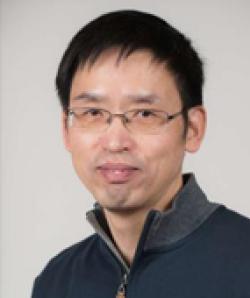
Xiaofeng Zhu, PhD is a Professor in the Department of Population and Quantitative Health Sciences at Case Western Reserve University School of Medicine. He also serves as faculty at the Cleveland Institute for Computational Biology. His research focuses on developing statistical methods and computational tools for analyzing genetic and genomic data, particularly in the context of association analysis, admixture mapping, and rare variant identification. He leads the Continental Origins and Genetic Epidemiology Network (COGENT) consortium and has identified multiple genetic loci associated with blood pressure, sleep disorders, and Alzheimer's disease. Education: Ph.D. in Biostatistics, Epidemiology and Biostatistics, Case Western Reserve University (1998) M.S. in Statistics, University of Cincinnati (1994) M.S. and B.Sc. in Mathematics, Peking University (1989, 1986) Research Interests: Dr. Zhu's work emphasizes statistical genetics, including the development of methods to control population stratification, admixture mapping in admixed populations, and cross-phenotype association analyses. His lab integrates deep learning and bioinformatics to study complex traits such as cardiovascular disease, obesity, and sleep disorders. Recent efforts include analyzing whole-genome sequencing data to uncover rare variants influencing phenotypic variation. Publications Trends: His recent work spans Mendelian randomization methods (e.g., MRBEE), gene-sleep interaction studies, and multi-ancestry genomic analyses. Key themes include causal inference, pleiotropy analysis, and leveraging diverse genetic datasets to improve polygenic risk scores. Awards & Memberships: Fellow of the Royal Statistical Society Member, American Society of Human Genetics Member, International Genetic Epidemiology Society Advising & Grants: He has mentored 3 Master’s students, 9/10 PhD graduates, and 11/12 postdoctoral researchers. Notable mentees hold positions at Harvard, Mayo Clinic, and NIH. Active grants include studies on sleep health metrics, lipid loci discovery, and cardiovascular disease genetics. Labs & Teams: Leads COGENT consortium and collaborates with the NHLBI Trans-Omics for Precision Medicine (TOPMed) program. His lab develops software tools for ancestry inference, rare variant analysis, and epigenetic association studies.