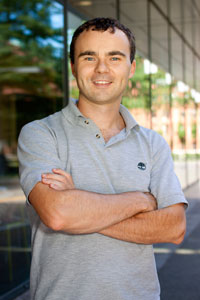
Kuan Fang is an Assistant Professor of Computer Science at Cornell University, specializing in robotics, machine learning, and computer vision. His research focuses on enabling robots to perform complex tasks in unstructured environments through deep learning-based perception and control systems. Previously, he was a postdoc at UC Berkeley under Sergey Levine and earned his Ph.D. and M.S. from Stanford University under Fei-Fei Li and Silvio Savarese, with a B.S. from Tsinghua University. He has also worked at RAI Institute, Google Brain, Google X Robotics, and Microsoft Research Asia. Education: Ph.D. & M.S., Computer Science, Stanford University Bachelor's Degree, Tsinghua University Research Interests: Robot manipulation and control Reinforcement learning and policy optimization Robot perception and vision-language integration Generalization in robotics across tasks, environments, and robots Open-world robotic systems leveraging large-scale data Teaching: CS 6758: Deep Learning for Robotics (Fall 2024) CS 4756: Robot Learning (Spring 2025) Lab & Collaborations: His lab at Cornell develops scalable algorithms and systems for robotic perception and control, emphasizing data-driven methods. Notable work includes ReLIC for interlimb coordination, GLIDE for bimanual manipulation, and TRA for compositional task execution. He collaborates with institutions like Boston Dynamics AI Institute and UC Berkeley.
Christopher Fetsch is an Assistant Professor of Neuroscience at Johns Hopkins University, affiliated with the Zanvyl Krieger Mind/Brain Institute. He leads the Fetsch Lab, which investigates the neural mechanisms underlying multisensory perception and decision-making using nonhuman primates. His research integrates quantitative behavioral modeling, neural recordings, and optogenetic manipulations to understand how the brain processes ambiguous sensory information. His research focuses on systems, cognitive, and computational neuroscience, particularly how visual and vestibular cues are combined to perceive self-motion and environmental dynamics. The lab employs advanced technologies such as flight simulators and virtual environments to deliver controlled 3D motion stimuli while recording neural population activity. A key interest is in bounded accumulation models of decision-making and the neural basis of metacognition and confidence. The recent publications reflect a strong trend in understanding neural circuit mechanisms of perception and decision-making, with emphasis on causal dissection using optogenetics, computational modeling of evidence accumulation, and multisensory integration in primates. His work bridges experimental neuroscience with theoretical frameworks in cognitive science. AAV-mediated expression of Jaws in macaque cortex Bounded accumulation model for decisions Neural basis of multisensory decisions Optogenetic circuit dissection Confidence and posterior odds modeling Dr. Fetsch is actively involved in interdisciplinary research, including membership in the Foundations of Mind group at Johns Hopkins, which fosters collaboration across philosophy, cognitive science, and neuroscience. His lab is part of the Center for Hearing and Balance, indicating institutional integration and collaborative funding. While specific grants are not listed, the lab's technological sophistication implies substantial research support. The Fetsch Lab is located in Krieger Hall and is actively engaged in training and outreach, contributing to seminars and interdisciplinary events. The lab collaborates with experts in histology and neural engineering, as seen in joint image production with researchers from Columbia University and the University of Washington.
Professor Seokhee Hong is a distinguished academic at the School of Computer Science, The University of Sydney. With prestigious appointments including an ARC Future Fellowship (2013-2016) and Humboldt Fellowship (2013-2014), she has emerged as a leading researcher in graph drawing and visual analytics. Her research focuses on developing scalable algorithms for information visualization of massive complex networks, with applications spanning security analytics, computational biology, and software engineering. Key contributions include the creation of open-source visual analytics software GEOMI and foundational work in 2.5D graph visualization. 2013-2016: ARC Future Fellowship 2008-2012: ARC Research Fellowship 2013-2014: Humboldt Fellowship Recent publications demonstrate her ongoing innovation in graph drawing algorithms, network fairness, and computational geometry. She has served on editorial boards of key journals and as program chair for major conferences in her field. 2006: CORE Chris Wallace Award 2012: Eureka Prize Finalist Multiple Graph Drawing Competition wins Her work bridges theoretical algorithm development with practical applications, addressing challenges in biological network analysis, dynamic graph visualization, and cluster-preserving layouts. With over 140 publications and significant research funding, she continues to shape network visualization research.
Malte Helmert is a Professor at the University of Basel in the Department of Mathematics and Computer Science. He previously worked at the University of Freiburg's Research Group on the Foundations of Artificial Intelligence from 2001 to 2011. His research focuses on intelligent problem-solving , particularly in automated planning , combinatorial search , constraint satisfaction , and NP-hard graph problems . Helmert has made significant contributions to classical planning, including the development of the Fast Downward planning system and its derivatives. Education : Diploma in Computer Science (M.Sc.) from the University of Freiburg (2001) Ph.D. in Computer Science from the University of Freiburg (2006) Research interests encompass the theoretical and practical aspects of automated planning, including heuristic search , optimal planning , abstraction techniques , and domain-independent planning . His work explores merge-and-shrink abstractions , landmark progression , and cost partitioning algorithms for classical planning systems. Recent publications analyze advancements in pseudo-Boolean proof logging , higher-dimensional potential heuristics , and correlation complexity in planning domains. These works often integrate mathematical modeling, algorithm design, and empirical benchmarking. Scientific awards include the AAAI Fellow (2021), EurAI Fellow (2020), multiple Best Paper Awards at ICAPS and SoCS conferences, and the Computers and Thought Award (2011). He also received the VDI-Förderpreis for his Master’s thesis. Software contributions include the Fast Downward planning system, MIPS (now maintained by Stefan Edelkamp), and COVER (a vertex cover solver). Helmert has organized tutorials at ICAPS and AAAI conferences on topics like landmark progression , abstraction heuristics , and LP-based heuristics .
Dr. MARIOROSARIO PRIST serves as a Researcher at the Department of Information Engineering within the Faculty of Engineering at Marche Polytechnic University (UNIVPM) in Ancona, Italy. His institutional affiliation is maintained through the Department of Information Engineering (quota 170) at Via Brecce Bianche, 60131 Ancona, with contact details including phone 071 220 4468 and email m.prist@staff.univpm.it. Dr. PRIST's research spans cutting-edge domains in artificial intelligence applications for industrial systems, with particular emphasis on neural network implementations, digital twin architectures, and Industry 4.0 technologies. His work demonstrates strong focus on lightweight AI frameworks for edge computing , anomaly detection in manufacturing processes , and resource optimization in production environments . The research portfolio reveals consistent innovation in adapting advanced machine learning techniques to practical industrial constraints, especially for small and medium enterprises. Analysis of his publication trends indicates a strategic shift toward implementing AI solutions on resource-constrained devices and bridging edge computing with cloud infrastructure for real-time industrial monitoring. Recent work emphasizes practical applications of Echo State Networks for process control and anomaly detection, while maintaining strong connections to additive manufacturing optimization and safety monitoring systems. His research consistently addresses the challenge of making advanced AI accessible for industrial implementation without requiring extensive computational resources. Dr. PRIST's work demonstrates significant contributions to the integration of cyber-physical systems in manufacturing environments, with particular expertise in translating theoretical AI concepts into practical industrial applications that enhance production efficiency, safety, and sustainability.
Henrik Gustafsson is a Professor of Sports Science Research at Karlstad University , affiliated with the Department of Sport and Social Sciences . His research focuses on stress, recovery, and performance development in sports contexts, with specific emphasis on mindfulness, cognitive-behavioral approaches (CBT) , and fatigue in elite athletes . Current research explores burnout trajectories in adolescent athletes and spinal cord injury rehabilitation Key collaborations include experts in sports medicine, psychology, and education Research Interests cover: Athlete burnout and mental health Mindfulness applications in sports performance Psychophysiological stress markers Coach-athlete relationship dynamics Intervention sustainability and behavioral change Neurodiversity in athletic populations Recent publications analyze: Burnout prevention strategies Perfectionism in elite sports Psychosocial dropout predictors Rehabilitation through physical activity Cognitive interference under pressure Contact: henrik.gustafsson@kau.se
Dongyi Wang is an Assistant Professor in the Department of Biological and Agricultural Engineering at the University of Arkansas, where he directs the Smart Agriculture and Food Engineering (SAFE) Lab. His work bridges advanced technologies like artificial intelligence, robotics, and machine vision with agrifood manufacturing to enhance product quality, safety, and worker welfare. Ph.D. in Bioengineering from the University of Maryland, College Park B.S. in Electrical and Computer Engineering from Fudan University Visiting experience at The Chinese University of Hong Kong Research interests span smart agrifood manufacturing , robotics , machine vision , and artificial intelligence , with applications in crop monitoring, food safety, and healthcare. His lab develops solutions like automated defect detection, pathogen sensing, and sustainable processing systems. Article analysis reveals a focus on AI-driven agricultural automation , hyperspectral imaging , robotic manipulation of bio-products , and food safety innovations . Recent works include YOLO-based tomato defect segmentation, E. coli biosensing, and UAV-based blackberry monitoring. Awards & Memberships College of Engineering Dean’s Award of Excellence Rising Star Research Award (UARK) Outstanding Mentor Award (UARK) Professional memberships in ASABE and IEEE As an educator, he teaches instrumentation and artificial intelligence in agrifood manufacturing . The SAFE Lab, funded by USDA NIFA, NSF, and federal/local agencies (> $7M), prioritizes workforce development in AI/robotics for agrifood industries.
Keivan Navaie is a Professor of Intelligent Networks at Lancaster University’s School of Computing and Communications. He serves as a member of the Independent Scientific Advisory Committee at the Alan Turing Institute, overseeing the £100 million BridgeAI programme, and previously as Principal AI Technology Advisor to the UK Information Commissioner’s Office (ICO). He is recognized with Fellowships from the Institution of Engineering and Technology (IET), Chartered Engineer status in the UK, Senior Fellowship of the Higher Education Academy (HEA), and the IEEE Young Investigator Award. Research Focus: Wireless communications, mathematics, artificial intelligence, 6G networks, blockchain technology, edge computing, cognitive radio networks, and non-orthogonal multiple access (NOMA). Supervision: Actively supervises PhD students in areas like wireless communications and mathematical modeling. Projects: Involved in distributed learning, blockchain integration, 6G research, and spectrum sharing systems. Awards: IEEE Young Investigator Award, Fellow of IET, Chartered Engineer, Senior Fellow of HEA.
Samuel Watson is Professor of Biostatistics in the Institute of Applied Health Research at the University of Birmingham. He leads methodological research in experimental design with a focus on cluster randomised trials and spatial statistics, with significant applications in global health contexts. University of Birmingham, Institute of Applied Health Research Professor of Biostatistics Active research leadership through 2025 Principal investigator on multiple NIHR, MRC, and GCRF-funded projects Watson's research centers on innovative statistical methods for evaluating health interventions, particularly in complex settings. His work bridges theoretical methodology with practical applications in low- and middle-income countries. Key areas include: Design and analysis of cluster randomised trials, especially stepped-wedge designs Spatiotemporal statistical methods for disease mapping and intervention evaluation Real-time disease surveillance systems using geospatial techniques Integration of mental health services into chronic disease care His recent publications demonstrate a strong methodological focus with applications across global health contexts, particularly in Africa. The articles show progression from foundational methodological work to implementation in specific disease contexts including diabetes, HIV, leprosy, and cancer care. Watson serves as principal investigator or co-investigator on numerous major research grants: MRC/NIHR-funded project on spatio-temporal intervention evaluation NIHR/UKRI project on real-time disease surveillance GCRF project on low-cost diagnostic tests NIHR Global Health Research Unit on Improving Health in Slums Stepped-wedge trial of depression care integration in Malawi RIGHT programme on leprosy and Buruli ulcer His work connects statistical methodology with practical healthcare delivery challenges, particularly in resource-limited settings across sub-Saharan Africa.
Mahsa Ghasemi is an Assistant Professor at the Elmore Family School of Electrical and Computer Engineering, Purdue University, located in West Lafayette. She holds a B.Sc. in Mechanical Engineering from Sharif University of Technology (2014), an M.S.E. in Mechanical Engineering from The University of Texas at Austin (2017), and a Ph.D. in Electrical and Computer Engineering from The University of Texas at Austin (2021). Her research focuses on task-oriented knowledge acquisition, online learning and control, human-robot interaction, trustworthy AI, and socially beneficial autonomy. She is affiliated with the Materials and Electrical Engineering Building at Purdue. Education: B.Sc., Mechanical Engineering, Sharif University of Technology (2014) M.S.E., Mechanical Engineering, UT Austin (2017) Ph.D., Electrical and Computer Engineering, UT Austin (2021) Her research interests span interdisciplinary areas including reinforcement learning, causal inference, control systems, and human-autonomy collaboration. Recent work emphasizes resilient cyber-physical systems, privacy-preserving multi-agent learning, and causal discovery in decision-making frameworks. Her articles address challenges in sensor selection, no-regret learning in bandits, and formal methods for autonomous systems. Publications highlight contributions to submodular optimization in hypothesis testing, robust sensor scheduling in intrusion detection, and adaptive experimental design for causal discovery. Her work bridges theoretical foundations with practical applications in robotics, cybersecurity, and AI ethics. No scientific awards or grants are explicitly listed in the provided data. She advises no listed students but collaborates on projects involving diverse planning and decision-making in constrained environments.
Conor J Walsh is the Paul A. Maeder Professor of Engineering and Applied Sciences at Harvard University's John A. Paulson School of Engineering and Applied Sciences (SEAS). He is also an Associate Faculty Member at the Wyss Institute for Biologically Inspired Engineering. His research focuses on soft wearable robotics, biomechanics, and their applications in healthcare and rehabilitation. Walsh leads the Walsh Biodesign Lab, which develops innovative wearable devices for individuals with mobility impairments, including stroke survivors and Parkinson’s patients. His work emphasizes translating engineering solutions into clinical practice through collaborations with clinicians and industry partners. Key research areas include soft robotic exosuits, wearable sensors, and assistive technologies for neuromuscular disorders. His lab has pioneered devices like ankle and back exosuits that improve walking speed and reduce energy expenditure. Notable projects include a soft robotic apparel to alleviate freezing of gait in Parkinson’s patients and a propulsion neuroprosthesis for post-stroke gait training. Walsh's interdisciplinary approach integrates biomechanics, machine learning, and materials science to address complex mobility challenges. Walsh’s lab is located at 150 Western Ave, Allston, MA, with affiliations spanning SEAS, Wyss Institute, and affiliated medical centers. His educational contributions include courses in materials science, robotics, and bioengineering. Despite no explicitly listed awards, his impactful research has been highlighted in prominent news outlets for innovations like the Harvard Move Lab’s wearable exosuits for stroke survivors. Advising and grants are not detailed in the provided text, but his lab’s extensive publications indicate active research funding. The Walsh Biodesign Lab collaborates with industry partners to commercialize technologies, such as the Move Lab’s exosuit for industrial workers. Future work focuses on personalized rehabilitation systems and AI-driven adaptive assistance for neurological disorders.
Joel Chan is an Affiliate Assistant Professor in the Department of Computer Science at the University of Maryland, specializing in human-computer interaction and artificial intelligence research with applications in scholarly communication and design innovation. His work bridges computational systems and human cognitive processes to enhance knowledge work. His research portfolio emphasizes: Scholarly sensemaking and knowledge synthesis infrastructure Generative AI for hypothesis exploration and analogical reasoning Cross-disciplinary translation tools using computational linguistics Biologically inspired design systems and creativity support Human-AI collaboration in visual data analysis and programming Recent publications (2023-2025) demonstrate a decisive shift toward integrating large language models into scholarly workflows, particularly for structured hypothesis exploration and cross-domain analogical inspiration. His systems like CausalMapper and AnalogiLead exemplify practical implementations that transform theoretical frameworks into usable tools for researchers and designers. Building on foundational work in analogical innovation (2010-2022), Chan's research trajectory shows consistent evolution from studying example-based problem-solving to developing AI-augmented environments that mitigate cognitive limitations in complex knowledge tasks, with significant implications for academic practice and creative industries.
Duco Bannink is an Associate Professor at the Department of Political Science and Public Administration, Vrije Universiteit Amsterdam. He holds dual appointments in the New Public Governance (NPG) research group and the Faculty of Social Sciences and Humanities. His work focuses on collaborative governance, sustainable development goals, and administrative challenges in healthcare and social policy. Bannink actively engages with public-sector organizations through ancillary roles including advisor to PvdA Wiardi Beckman Stichting (since 2015), member of Fietsersbond Amersfoort (2019–present), and board member of the Wetenschappelijke Raad Enschede (2021–present). Education: Not explicitly stated in text, inferred to hold PhD based on academic role. Research interests center on late modernity governance challenges, co-production dynamics, and institutional complexity in public service delivery. His recent work analyzes power asymmetries in healthcare decision-making and explores how wicked problems shape collaborative governance frameworks. He contributes to UN Sustainable Development Goals through studies on inclusive service provision and administrative efficiency. Key projects include the Talma Zorgprogramma (2023–2027) examining care sector integration and the Effectenonderzoek Open Hiring initiative (2019–2020) analyzing recruitment practices. Supervised 5 PhD theses focusing on public governance topics. Labs/Teams: Active in the New Public Governance research group, collaborating with institutions like the Vereniging voor Bestuurskunde (since 2021).
Tamara Backhouse is a Senior Research Associate and Research Fellow at the University of East Anglia’s School of Health Sciences, affiliated with the Lifespan Health and Dementia & Complexity in Later Life research groups. She holds prestigious fellowships including the NIHR Advanced Fellowship and Alzheimer’s Society Research Fellowship. Her academic journey includes a PhD from UEA (2010–2014), an MA in Sociological Research from Essex University (2009–2010), and a BSc in Psychology and Sociology from University Campus Suffolk (2006–2009). Her research focuses on improving dementia care, particularly reducing refusals of care in advanced stages, optimizing personal care interactions, and mitigating risks in homecare settings. Key projects include the Pro-CARE Study and the OPTIMISED-DEMCARE intervention. She has supervised doctoral students Tanne Heathershaw and Ana Paula Trucco. Backhouse has secured grants from NIHR, Alzheimer’s Society, and Motor Neurone Disease Association, leading projects such as the NIHR DEM-COMM Extension and FTDToolkit. Her work spans over 40 publications, with recent emphasis on caregiver grief, motor neurone disease symptomatology, and care-resistant behaviors. She has received awards including the Alzheimer’s Society ‘Rising Star in Dementia Research’ and Emerald Literati Outstanding Reviewer. Her contributions extend to editorial roles, including Review Editor for Frontiers in Public Health , and involvement in the WHO Dementia Knowledge Exchange network.
Dr. Kevin M. Taaffe serves as the Harriet and Jerry Dempsey Professor and Department Chair of Industrial Engineering at Clemson University's College of Engineering, Computing and Applied Sciences. He is also a Fellow of the Institute of Industrial and Systems Engineers (IISE). With expertise spanning healthcare logistics, transportation and inventory management, Dr. Taaffe leads research initiatives that integrate optimization and simulation modeling to solve complex systems problems across healthcare, manufacturing, and emergency response domains. Dr. Taaffe's educational background includes: BS in Industrial Engineering (with honors) from University of Illinois at Urbana-Champaign (1988) MS in Industrial Engineering from University of Illinois at Urbana-Champaign (1990) PhD in Industrial and Systems Engineering from University of Florida (2004) Dr. Taaffe's research program focuses on complex decision-making systems where uncertainty plays a critical role. His work spans four primary domains: healthcare logistics (particularly perioperative services), inventory management, evacuation planning, and transportation and logistics. He approaches these areas through the lens of operations research, developing models that account for system interdependencies and human factors. His research is characterized by strong industry partnerships and practical applications that address real-world challenges in hospital operations, supply chain management, and emergency response planning. Dr. Taaffe's recent publications reveal a strong emphasis on healthcare systems engineering, particularly in operating room optimization, surgical scheduling, and physician workflow analysis. His work consistently applies operations research methodologies to improve efficiency and safety in healthcare delivery. The research shows progression from theoretical modeling toward implementation-focused studies that incorporate mobile technology, data analytics, and behavioral considerations to create sustainable improvements in complex healthcare systems. Among Dr. Taaffe's notable recognitions: Harriet and Jerry Dempsey Professor (endowed chair position) Fellow of the Institute of Industrial and Systems Engineers (IISE) Dr. Taaffe has been deeply involved in student mentorship throughout his career. He served as the IISE faculty advisor for 12 years and has led Creative Inquiry student research groups since 2005. His research has been supported by multiple funding sources including the National Science Foundation (NSF), South Carolina state agencies, and industry partners such as Greenville Hospital System and Medical University of South Carolina. He maintains strong industry connections through Clemson's Industrial Engineering Department membership in the Center for Excellence in Logistics and Distribution (CELDi), an NSF-sponsored Industry/University Cooperative Research Center. Dr. Taaffe leads research teams focused on healthcare logistics, inventory management, evacuation planning, and transportation systems. His lab work involves developing simulation models, optimization algorithms, and mobile applications to improve decision-making in complex systems. Current projects include creating learning systems using mobile technology in perioperative services, which integrates artificial intelligence, data analytics, and staff training to enhance communication and coordination across hospital departments.