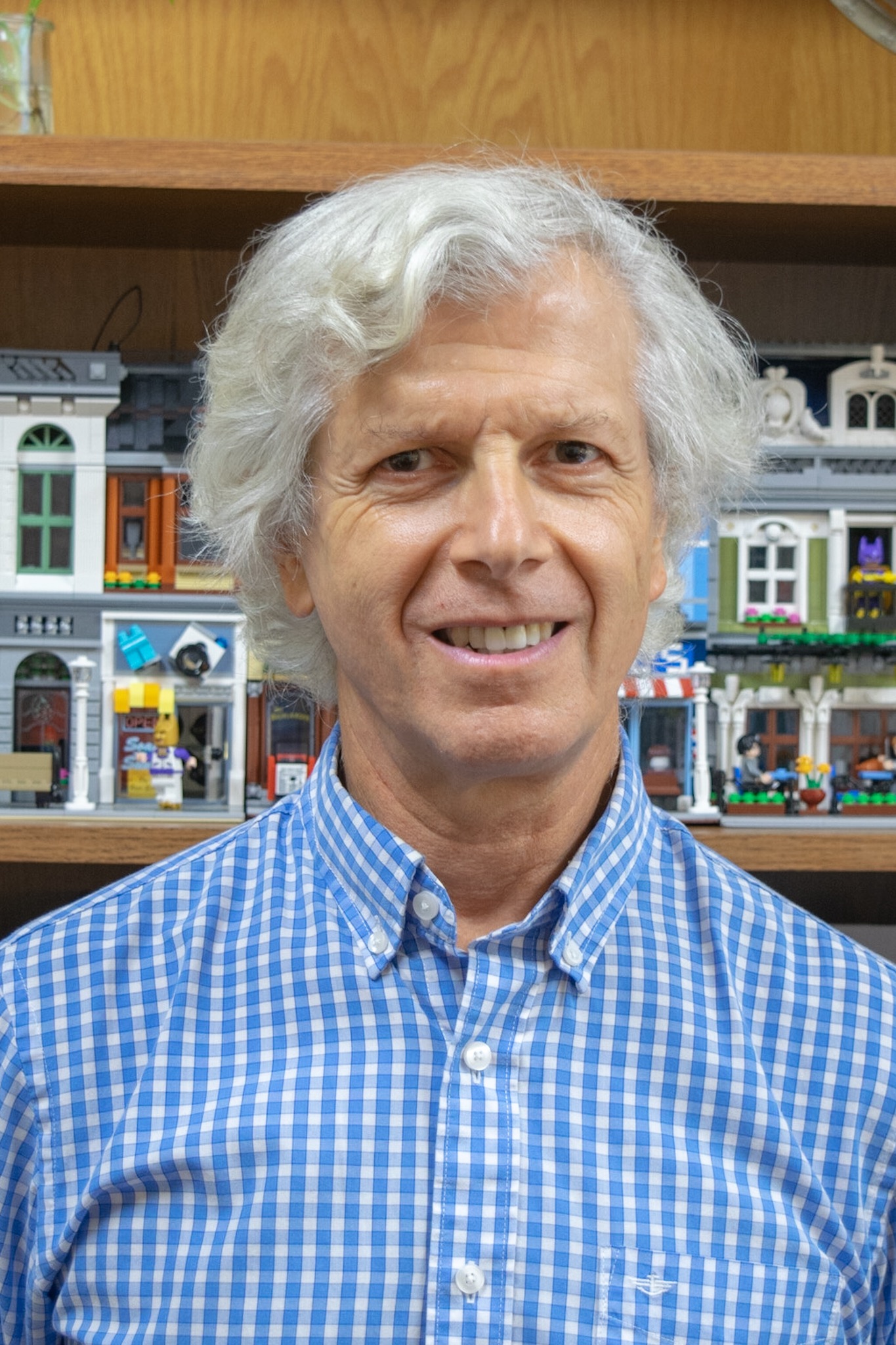
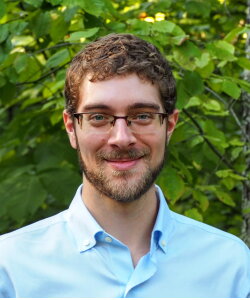
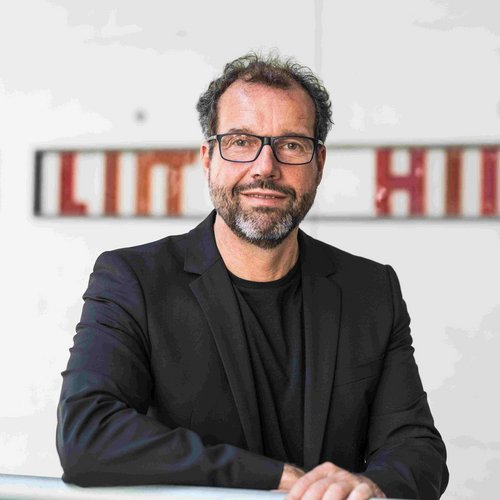
Eric V. Slud is a Professor in the Statistics Program within the Department of Mathematics at the University of Maryland, College Park. He has taught numerous graduate-level statistics courses including Mathematical Statistics, Categorical Data Analysis, and High-Dimensional Statistics since at least 2017. Dr. Slud's research spans several key areas of mathematical statistics and probability. His work focuses on: Census statistics, particularly demographic modeling of nonresponse to national surveys Small Area Estimation (SAE) with applications to the SAIPE program Survival data analysis including semiparametric inference and clinical trial design Meta-analysis in biostatistics Pharmaceutical statistical methods Large-scale data problems with emphasis on cross-classified data His publications demonstrate continued contributions across these domains, with particular emphasis on small area estimation methodologies, survival analysis techniques, and applications in survey statistics. Dr. Slud has developed innovative approaches to weighting adjustment, nonresponse correction, and estimation with complex survey data. Dr. Slud has advised several PhD students including Yang Cheng (2004), Sophie Tsou (2005), and others working on topics ranging from Factor Analysis to Survival Data. He has collaborated extensively with researchers at the Census Bureau and FDA. Dr. Slud maintains active research programs through multiple Research Interaction Teams (RITs) at the University of Maryland, focusing on advanced statistical methodologies and their applications to real-world problems in census methodology, healthcare, and other domains requiring sophisticated statistical analysis.
Prof. Dr. Kurt Stockinger is a Professor of Computer Science at ZHAW School of Engineering and holds a doctorate at the University of Zurich . He serves as Head of the MAS Data Science program and co-leads the ZHAW Datalab . His research focuses on Intelligent Information Systems , bridging information systems, natural language processing, and machine learning. Affiliated with the University of Zurich, he contributes to Quantum Machine Learning and Open Data Exploration initiatives. Stockinger's educational background includes a PhD in Computer Science (University of Vienna & CERN), a Master in Business Informatics (University of Vienna), and a CAS in Didactics & Methodology (ZHAW). He has taught courses in Quantum Computing , Big Data for Natural Sciences , and Data Science programs at ZHAW and University of Zurich. His research spans Data Science , Big Data , Natural Language Query Processing , Knowledge Graphs , and Quantum Machine Learning . Recent publications focus on quantum autoencoders , hybrid quantum neural networks , and prompt engineering for knowledge graph question answering. He has developed frameworks like ScienceBenchmark for real-world NL-to-SQL evaluation and NQuest for natural language query exploration. Scientific awards include the Best Paper Award at 7th Swiss Conference on Data Science (2020) He leads major projects such as DataGEMS (Data Discovery Platform, Horizon Europe) Digital Health Zurich (Clinical Innovation Lab) INODE4StatBot.swiss (NL-to-SQL Translation) GraphQueryML (Graph Database Optimization) ScienceBenchmark (NL-to-SQL Evaluation) Stockinger's work intersects with computer vision , biomedical data , and industrial applications , demonstrated through collaborations with institutions like Lawrence Berkeley National Laboratory, CERN, and University of Washington. He has contributed to establishing QuantumBasel and ZHAW Datalab as research hubs.
Brandon T. Ritchison is an Assistant Professor in the Department of Anthropology at the University of Illinois at Urbana-Champaign. His research focuses on anthropological archaeology, examining mobility strategies, environmental interactions, and sociopolitical organization across the Southeastern United States. Active fieldwork spans four thousand years of human history in Kentucky, Georgia, Florida, and South Carolina. Ph.D., University of Georgia (2019) B.A., University of Kentucky (2012) Ritchison employs multi-scalar spatial and chronological analyses of settlement, ceramic, and radiocarbon data. Current research explores institutionalized inequality development through mobility practices, property concepts, and gender dynamics. His NSF-funded work at Sapelo Island involved training over 130 students in excavation and geophysical survey techniques. Collaborative projects include past environment reconstruction, radiocarbon sampling methods, and academic job market analysis. Key research themes intertwine climate change, resilience studies, and GIS applications in archaeology. Publications demonstrate expertise in Bayesian chronological modeling, political economy, and heritage management. Ritchison's teaching portfolio includes courses on North American archaeology, pottery analysis, and GIS applications. He emphasizes hands-on field training and methodological innovation. Recent collaborations analyze tenure-track hiring trends and professional equity challenges in anthropology.
Aurélie Davranche serves as an Associate Professor in Ecology and Spatial Analysis at the University of Angers' Department of Biology since 2011, while maintaining an active international research presence as a Visiting Researcher at the Lammi Biological Station, University of Helsinki since September 2024. Her academic career spans multiple European institutions with significant research contributions in wetland ecology and remote sensing applications. Dr. Davranche's research focuses on nature-society interactions with particular emphasis on developing remote sensing tools for wetland monitoring across diverse landscapes from boreal forests to semi-arid zones. Her multidisciplinary approach combines ecology, geosciences, biogeography and mathematics to create robust models for automated mapping of biophysical parameters and species requirements. She specializes in extracting multispectral and multitemporal data from high-resolution satellite and drone images combined with field surveys to monitor landscapes while minimizing sampling costs. Recent work has expanded into social ecology with art-based protocols to understand social cognition of wetlands and developing pedagogical kits that integrate game, art and science to improve public perception of wetland biodiversity. Analysis of her publication record reveals a consistent trajectory in wetland monitoring using remote sensing technologies, with increasing interdisciplinary integration over time. Her early work focused on technical aspects of remote sensing applications for wetland mapping, while recent publications demonstrate expansion into broader ecological concerns including freshwater browning, artificial light pollution impacts, and social-ecological approaches to wetland management. The work shows strong practical application orientation with direct connections to wetland management needs. Dr. Davranche has secured substantial research funding including the Kone Foundation grant for the POOL project (2022-2025), ANR funding for WETLANDSPACE (2017), and multiple CNRS projects. She leads significant collaborative efforts across European institutions with particular strength in French-Finnish research partnerships. As a research supervisor, Davranche has directed numerous students across multiple projects including 19 Master's students, 1 PhD student, and 1 post-doc for the POOL project alone. Her research group structure typically involves interdisciplinary teams of students, technicians, and researchers from multiple institutions working on complex wetland management questions. Current research activities center around the Lammi Biological Station at the University of Helsinki and the Department of Biology at the University of Angers, with extensive international collaboration networks spanning Europe, Africa, and beyond.
Professor Tahani Coolen-Maturi is a faculty member in the Department of Mathematical Sciences at Durham University and Fellow of the Durham Research Methods Centre. Her research focuses on advanced statistical methodologies with applications across multiple domains. Her primary research interests include: Nonparametric predictive inference and statistics Reliability and survival analysis using survival signatures Diagnostic accuracy and ROC analysis Modeling dependence structures Uncertainty quantification through imprecise probability Statistical reproducibility frameworks Analysis of her recent publications reveals a strong trend toward statistical reproducibility research, particularly in hypothesis testing and educational trial methodologies. Her work bridges theoretical statistics with practical applications in reliability engineering, medical diagnostics, and educational assessment. A significant portion of her recent output develops nonparametric predictive inference frameworks for complex systems and censored data. Professor Coolen-Maturi actively supervises doctoral students, with ten current supervisees including Azza Alzahrani, Fatemah Alammar, and Hadeer Ghonem. Her collaborative research includes major educational trials funded by the Education Endowment Foundation, focusing on statistical power calculations and meta-analysis of intervention effectiveness.
Prof. Dr. Holger Lengfeld is a Professor and Principal Investigator at the Research Institute for Social Cohesion (FGZ), Leipzig location, affiliated with the University of Leipzig. He serves as Member of the Data Committee at FGZ Leipzig, overseeing national research infrastructure for social cohesion studies. His research centers on social cohesion dynamics in contemporary Germany, with particular expertise in right-wing populism (especially AfD voter behavior), political polarization, inequality, and racism. Using rigorous quantitative methodologies, he investigates how democratic institutions withstand societal transformations through projects like A_02 on voting behavior and LEI_F_06 on cultural divisions. His work consistently bridges theoretical frameworks with empirical analysis of large-scale survey data. Prof. Lengfeld's recent publications (2021-2024) demonstrate a cohesive research trajectory centered on the German Social Cohesion Panel, analyzing AfD voter irreversibility, European solidarity divides, and disconnected living environments. His output reveals a methodological signature: transforming complex survey data into policy-relevant insights about democratic resilience, with consistent focus on German societal fragmentation and populism's structural drivers. Scientific Awards: None listed in available documentation. He currently leads four major FGZ projects with significant policy implications: A_02 (democratic trust), INRA_B11 (ethnic prejudice in federal agencies), INRA_A06 (public service employee surveys), and LEI_F_06 (populism drivers). While specific student supervision details aren't published, his Principal Investigator role at FGZ Leipzig indicates active mentorship of graduate researchers in quantitative sociology. As core faculty at the University of Leipzig's sociology ecosystem, Prof. Lengfeld shapes national discourse through the FGZ's research infrastructure. His Data Committee role ensures methodological rigor across Germany's social cohesion studies, while his German Social Cohesion Panel publications establish foundational datasets for tracking societal fragmentation in real-time.
Professor Dagfinn Rime is a distinguished scholar in international finance at BI Norwegian Business School, where he serves as Professor in the Department of Finance. With a PhD from BI Norwegian Business School (2001), his career spans significant roles at Norges Bank (Central Bank of Norway) and academic appointments at Norwegian University of Science and Technology (NTNU) and Stockholm Institute for Financial Research. His academic journey includes: 2014-Present: Professor, Department of Finance, BI Norwegian Business School 2001-2014: Researcher and Manager, Norges Bank (Central Bank of Norway) 2006-2012: Adjunct Professor, Norwegian University of Science and Technology 2001-2006: Visiting Research Fellow, Stockholm Institute for Financial Research Professor Rime's research primarily focuses on the microstructure of foreign exchange markets, examining how market participants interact, how prices are formed, and how information flows through currency markets. His work bridges theoretical finance with practical market observations, often utilizing high-frequency transaction data to uncover patterns that traditional macroeconomic approaches might miss. He has made significant contributions to understanding the relationship between order flow and exchange rate movements, the volume-volatility relation in FX markets, and the mechanics of covered interest parity deviations. His research has evolved from examining basic dealer behavior in the early 2000s to more complex analyses of market fragmentation, high-frequency trading effects, and the role of different market participants in price discovery. Recent work has addressed contemporary issues such as the offshore renminbi market and the effectiveness of central bank communication policies. Professor Rime's scientific contributions have been recognized through publications in top-tier finance journals: Journal of Financial Economics Review of Financial Studies Journal of Monetary Economics Journal of International Economics International Journal of Finance and Economics His research methodology typically involves detailed empirical analysis of transaction-level data, allowing him to observe market dynamics at a granular level. This microstructure approach has provided valuable insights into how foreign exchange markets actually function, as opposed to how they are often modeled in traditional macroeconomic frameworks. Professor Rime is also engaged in public discourse, having contributed opinion pieces on topics such as cryptocurrency markets and the value of international researchers in Norwegian academia. His commentary on Bitcoin as a financial bubble demonstrated his ability to translate complex financial concepts for broader audiences.
Revti Raman is Associate Professor of International Business and currently serves as Head of School for the School of Marketing and International Business at Victoria University of Wellington, New Zealand. He completed his PhD in International Business from the University of Auckland and has established himself as a prominent researcher in international business with numerous publications in high-quality journals. Dr. Raman's primary research interests focus on International Business and International Management, with specific expertise in global strategy, cultural intelligence, cross-border knowledge management, relationship quality, and emerging economies. His current research passion centers on environmental sustainability within the context of international business and United Nations Sustainable Development Goals. His work examines how multinational enterprises navigate complex global environments through strategic knowledge management, relationship building, and cultural adaptation. His publication record demonstrates consistent scholarly output with multiple recent articles (2023-2025) examining cutting-edge topics including cross-border acquisitions by emerging economy firms, knowledge sharing within multinational enterprises, and the complex dynamics of intercultural negotiations. His research often employs sophisticated methodologies including survey research with international samples and mixed-method approaches. Fellow of New Zealand India Research Institute Editorial review board member of the Journal of International Management Recipient of both internal and external research grants Dr. Raman has significantly contributed to academic leadership, having served as undergraduate and postgraduate director of the International Business program, International Business program leader, deputy Head of School, and acting Head of School before his current permanent appointment. He has supervised 9 PhD students (7 completed, 2 in progress), 3 MCom students, and 8 Honours students. His teaching portfolio spans undergraduate through EMBA levels, covering courses such as International Management, Global Strategy, Cross Cultural Management, and International Business Consultancy.
Bernad Batinic is a Professor at Johannes Kepler University Linz, where he serves as Head of the Department of Work, Organizational, and Media Psychology and Director of the Institute of Psychology. He has held these leadership positions since founding the department in 2005 and becoming Institute Director in 2007, and has been a university professor at JKU Linz since 2004. Batinic completed his psychology education at the University of Giessen (1995), earned his doctorate at the University of Erlangen-Nuremberg in 2001 (summa cum laude, with faculty prize), and habilitated there in 2006. He also served as a visiting professor at the University of Marburg in 2003. His academic career shows continuous progression from research assistant positions to his current leadership roles. His research primarily focuses on the relationship between work and well-being, examining how employment status affects mental health through longitudinal studies with five waves of data collection. Batinic has repeatedly demonstrated the mediating role of Marie Jahoda's latent functions of work in the relationship between employment aspects and well-being. He also investigates media psychology, particularly the use and effects of new technologies, internet-based data collection methods (including web experiments and panel research), personnel development, and opinion leadership/trendsetting phenomena. A pioneer in online research methodology, he conducted one of the first online surveys on Usenet in 1994 and published the first online guide for conducting online surveys in 1995. Analysis of Batinic's recent publications (2020-2025) reveals a strong methodological evolution toward integrating technological approaches, including wearable devices for experience sampling and objective measurement of digital behavior. His work increasingly combines traditional psychological assessment with real-world behavioral data, examining topics like fear of missing out, chatbot interactions, laughter in daily life, and the relationship between job characteristics and physical activity. The research consistently applies longitudinal and meta-analytic approaches to understand the complex relationship between work, technology, and psychological well-being. Bernad Batinic has served in numerous leadership roles at JKU Linz beyond his departmental and institute director positions. He was the spokesperson for the professorial committee of the Faculty of Social and Economic Sciences and remains an active member of various university commissions and bodies, including as department spokesperson, senate member, and member of the study commission for web sciences. Notably, in 2015 he declined an offer for a W3 professorship at the University of Trier that would have included management of the Leibniz Center for Psychological Information and Documentation. He leads a productive research team that has generated numerous publications in high-impact journals including Journal of Occupational and Organizational Psychology, Frontiers in Psychology, and European Journal of Work and Organizational Psychology. His work has practical applications in organizational settings and has informed the development of measurement tools like the New Work Values Scale (NWVS) and the Latent and Manifest Benefits of Work (LAMB) scale. Batinic has also co-founded several companies related to his research, including Globalpark AG (now Questback), tivian GmbH, and respondi AG, where he served in advisory capacities.
Professor Markus Zenger is a Professor of Differential and Personality Psychology at Hochschule Magdeburg-Stendal, where he has held a full professorship since 2016. His academic journey includes a habilitation at Friedrich-Schiller-University Jena (2020), a PhD from the University of Leipzig (2010, summa cum laude), and psychology studies at the same institution (2000-2007). He also completed training as a systemic therapist (2010-2013). His institutional affiliations span Hochschule Magdeburg-Stendal (current), University Medicine Leipzig (2007-2015), and Friedrich-Schiller-University Jena (habilitation). Professor Zenger's research centers on health psychology, psychometrics, and longitudinal studies, with a special focus on psychological resources and health. His work involves conducting representative population surveys across Germany, psychometric validation of assessment tools, and applying structural equation models to complex datasets. Key research areas include unemployment and mental health, political attitudes (particularly regarding German reunification), psycho-oncology, quality of life, psychosocial stress, care needs, and response shift phenomena. He has been deeply involved with the Saxon Longitudinal Study since 2007, which tracks psychological and social changes following German reunification. His extensive publication record demonstrates expertise in psychometric validation, with numerous articles developing and testing short-form psychological assessment instruments. His work often bridges clinical psychology and population health, creating practical yet scientifically rigorous tools for measuring psychological constructs in large samples. Professor Zenger has received the Sabine-Grüsser-Sinopoli Prize for young scientific researchers from the German Society for Medical Psychology (2010), recognizing his early contributions to the field. Sabine-Grüsser-Sinopoli Prize for young scientific researchers (2010) Extensive publication record in top psychology and medical journals Significant contributions to psychometric validation of assessment tools Long-term involvement with the Saxon Longitudinal Study Professor Zenger serves as a reviewer for numerous prestigious journals including Psychological Assessment, Journal of Individual Differences, and Quality of Life Research. His memberships include the German Society for Medical Psychology (DGMP), International Test Commission (ITC), and German Society for Systemic Therapy, Counseling and Family Therapy (DGSF). His work combines rigorous methodological expertise with practical applications for understanding psychological health in population contexts.
Olaniyi Olayinka, MD, MPH is an Assistant Professor in the Faillace Department of Psychiatry and Behavioral Sciences at UTHealth Houston, serving as a board-certified psychiatrist at the Harris County Psychiatric Center (HCPC) since July 2022. His academic journey spans medical training in Nigeria, public health education at Saint Louis University, clinical psychiatry fellowship at Yale School of Medicine, and executive healthcare management training at Yale SOM. Dr. Olayinka's research centers on two critical areas: the epidemiology of co-occurring psychiatric and substance use disorders, and developing effective treatments for dually diagnosed individuals. His work heavily utilizes national and state inpatient databases to analyze trends in opioid use disorders across diverse populations including adolescents, pregnant women, and hospitalized adults. Recent publications demonstrate a clear focus on comorbidity patterns and healthcare utilization in substance use populations. His publication record shows consistent output with 15 significant articles from 2014-2024, predominantly analyzing large-scale health datasets to understand substance use disorder patterns. Approximately 70% of his recent work focuses on opioid-related epidemiology, with strong collaboration networks in North Carolina and Yale-affiliated institutions. He also contributes clinically relevant case reports on complex psychiatric presentations. NIDA Research in Addiction Medicine Scholar Program Dr. Olayinka's clinical work focuses on dually diagnosed patients at HCPC, informed by his CDC outbreak investigation experience and addiction psychiatry fellowship. His research on long-acting injectable antipsychotics and complex presentations like catatonia in alcohol withdrawal demonstrates practical clinical applications. His training trajectory from CDC epidemiology to Yale clinical fellowship positions him uniquely at the intersection of public health and clinical psychiatry. He leads research utilizing North Carolina State Inpatient Database and Nationwide Inpatient Sample data, focusing on substance use disorders across vulnerable populations. His work with the NIDA-funded program continues his trajectory from CDC outbreak investigations to current substance use epidemiology research.
Sophie Stowers serves as a Research Associate at UK in a Changing Europe, an influential research initiative based at King's College London. Her work bridges academic analysis and public discourse, focusing on the evolving dynamics of British politics within the post-Brexit context through evidence-based research and timely commentary. Her research portfolio centers on three interconnected domains: UK-EU relations examining diplomatic and economic ties after Brexit; British political parties analyzing strategic positioning and voter alignment; and public opinion dynamics tracking shifts in voter sentiment and electoral behavior. This tripartite focus enables comprehensive analysis of how political institutions adapt to changing public attitudes in contemporary Britain. As a core contributor to UK in a Changing Europe, Stowers operates within a collaborative research environment that produces high-impact publications for policymakers and media. The initiative's cross-disciplinary approach combines political science, sociology, and policy analysis to address complex questions about Britain's political trajectory, with Stowers' work particularly emphasizing electoral systems, party competition, and the practical implications of Brexit for governance.
Janelle M. Jones is a Senior Lecturer in Social Psychology and Director of Graduate Studies at Queen Mary University of London, where she is affiliated with the Department of Psychology within the School of Biological and Behavioural Sciences. Her academic work is centered in the Centre for Research in Social Psychology, where she investigates how group memberships shape self-perception, social interactions, and health outcomes. Dr. Jones earned her Ph.D. in Social Psychology from York University in 2009. Her academic trajectory includes significant research contributions at the University of Exeter before her current appointment at Queen Mary, where she has established herself as a leading scholar in social identity processes and health. Her research program examines how multiple group memberships (friends, family, social categories) influence psychological resilience, self-worth, and well-being across diverse contexts. She specifically investigates how group salience provides strength during challenges, strategies for managing conflicting identities, and the impact of group loss on psychological health following injury or life transitions. Her work demonstrates how social identity processes serve as critical resources during adversity, bridging theoretical social psychology with practical health applications. This research has important implications for understanding resilience mechanisms in clinical populations, aging individuals, and those experiencing social transitions. Analysis of Dr. Jones's publication record reveals a consistent thematic focus on social identity as a psychological resource across varied populations and contexts. Her research spans clinical settings (including psychosis and brain injury), aging populations, and general community samples, with a recurring emphasis on how multiple group memberships contribute to self-esteem, quality of life, and recovery from trauma. Her methodological approach combines experimental, survey, and qualitative techniques to examine the complex pathways through which social connections translate into psychological benefits. Senior Lecturer in Social Psychology at Queen Mary University of London Director of Graduate Studies overseeing psychology graduate programs Active researcher with publications in top journals including Clinical Psychological Science, PLOS ONE, and British Journal of Social Psychology Recipient of research funding for projects on social identity and health outcomes Dr. Jones teaches Essential Skills for Psychologists, Introduction to Positive Psychology, and Introduction to Social Psychology. She supervises graduate students through her leadership role and mentors early-career researchers in the Centre for Research in Social Psychology. Her laboratory currently focuses on social identity mapping techniques to understand quality of life in people with psychosis, employing both quantitative and qualitative methods to explore how individuals conceptualize their social worlds and how this relates to psychological outcomes.