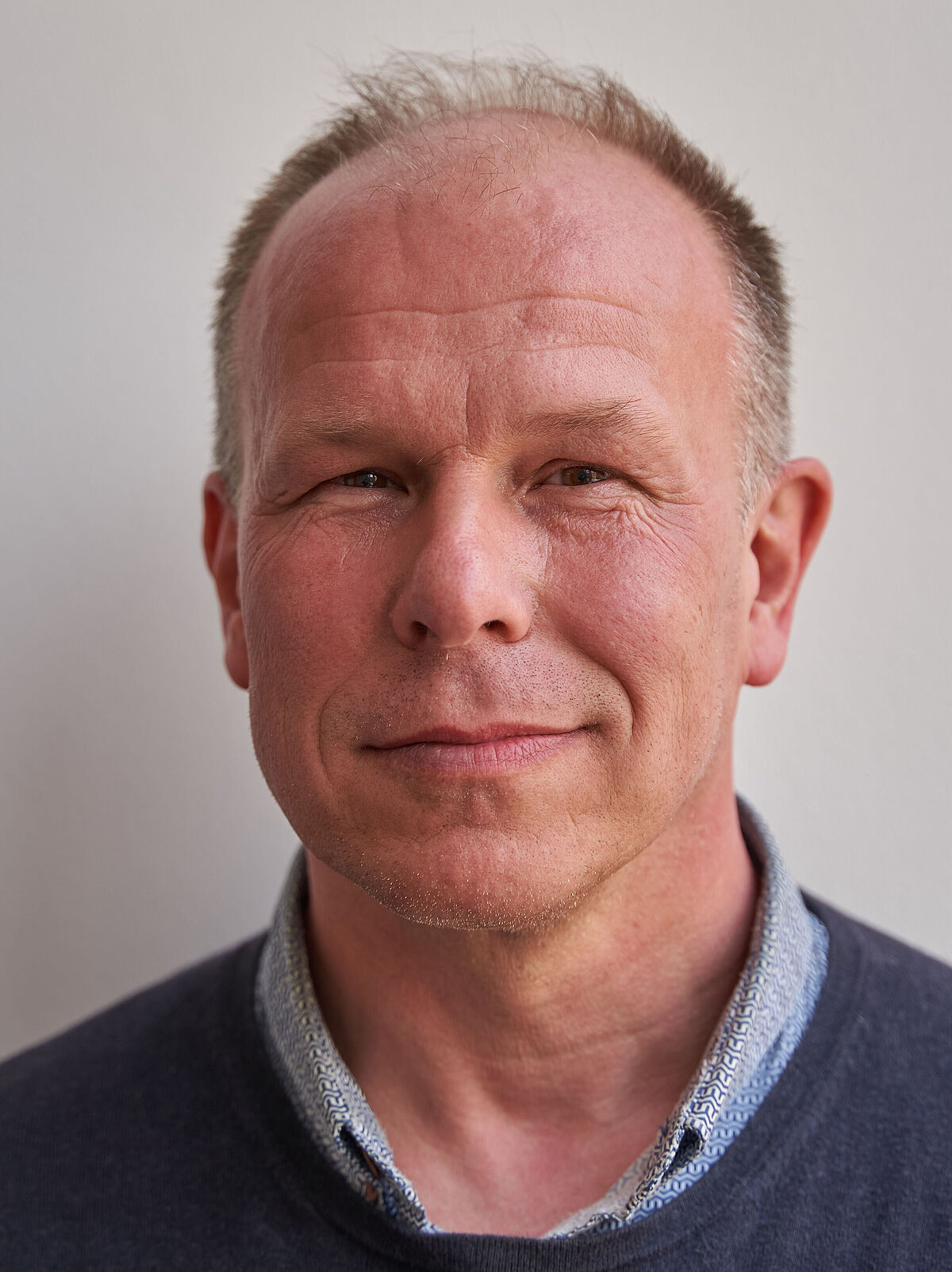
Jörg Harloff is a Researcher at the Department of Inorganic Chemistry within the Faculty of Mathematics and Natural Sciences at the University of Rostock, where he has been a scientific employee since 1998. He earned his Diploma in 1997 and completed his doctorate (Dr. rer. nat.) in 2001, both at the University of Rostock. His research focuses on CN chemistry, ionic liquids (ILs), metal-organic frameworks (MOFs), and organosilicon chemistry . Since 2008, he has served as a lecturer and topic leader in the working group of Prof. Dr. Axel Schulz. He teaches stoichiometric calculations and supervises basic internships in General and Inorganic Chemistry for multiple degree programs. The recent publications highlight a strong trend in synthetic inorganic chemistry with applications in advanced materials and 3D printing. His work bridges fundamental molecular chemistry with innovative material design, particularly in reactive ionic systems and silicone-based structures. He has contributed to academic governance as a member of the Staff Council for Academic Employees (2009–2013) and the Faculty Council of Mathematics and Natural Sciences (2014–2021). Harloff advises no listed students and has no mentioned scientific awards. He is actively involved in research and teaching, with no indication of part-time status or retirement.
Maria Isabel Romero Garcia is a full Professor in the Department of Chemistry at the Faculty of Sciences, University of Girona (UdG), Spain. She holds a PhD from the Autonomous University of Barcelona and has been a faculty member at UdG since 1996, advancing from Assistant to Associate and then to full Professor in 2018. Her academic career includes significant postdoctoral experience in France, contributing to her expertise in inorganic and catalytic chemistry. Education: BSc in Chemistry, University of Murcia (1989) Master’s in Chemistry, University of Murcia (1990) PhD in Chemistry, Autonomous University of Barcelona (1995) Her research focuses on Sustainable Redox Catalysis using coordination compounds and the Heterogenization and Reusability of Catalytic Systems . She has made notable contributions to photoredox catalysis with ruthenium and metallacarborane compounds, particularly in aqueous-phase oxidation reactions. Her work bridges fundamental inorganic chemistry with practical applications in green and sustainable processes. The 15 most recent publications reflect a consistent trajectory in inorganic and organometallic catalysis , emphasizing sustainability, reusability, and biomimetic design. Key themes include photoredox systems, heterogenized catalysts, and the use of boron and silver complexes. Her publications appear in top journals such as JACS, Angewandte Chemie, and Green Chemistry, showcasing the high impact of her work. She has been recognized through extensive research leadership, including coordination of the doctoral and master's programs in Homogeneous Catalysis at UdG. She has also served on scientific committees for major conferences like QIES12, QIES14, and EUROBORON9. Scientific contributions and service include: Principal Investigator in 7 public R&D projects Member of scientific committees for international conferences Reviewer for AGAUR (Catalonia), ANPCyT (Argentina), and international journals External reviewer for doctoral theses Jury member for over 25 doctoral defenses and academic hiring processes Maria Isabel Romero has supervised 8 completed PhD theses and currently mentors 2 more, along with numerous master’s and undergraduate students. She has participated in 35 funded R&D projects and holds 2 published patents with one pending. She is also involved in the Erasmus+ KA107 mobility program, promoting international academic exchange. Her research group contributes to the Analytical and Environmental Chemistry Research Group at UdG. She has presented her work on boron salts for antimicrobial resistance at public outreach events and participated in technology transfer activities such as the EBTON Conference (2023). Her laboratory integrates synthetic inorganic chemistry with catalytic testing and material characterization, aiming to develop environmentally friendly chemical processes.
Anthony Hastir is a researcher at the Namur Institute for Complex Systems , focusing on control theory, nonlinear systems, and partial differential equations (PDEs). His work bridges mathematical analysis with applications in chemical engineering and mechanical systems. Education: PhD in Sciences (2022) and Master in Mathematical Sciences (2018), both advised by Prof. Joseph Winkin. Research Interests include: Stability analysis of nonlinear infinite-dimensional systems Optimal control of distributed parameter systems Frequency-domain approaches for PDE control Stabilization of reaction-diffusion and wave networks His scientific awards include the 2022 Distributed Parameter Systems TC Outstanding Student Paper Prize and the 2018 Frank Callier Prize. Hastir's projects involve: FRACTIONS (2022–2025): Frequency analysis for nonlinear input-output systems Local stabilization of non-isothermal tubular reactors (2020–2022) LQ-optimal control of tubular reactors (2018–2020) His activities span conference presentations on spectral analysis, Kalman filtering, and LQ control of hyperbolic PDEs.
Junwu Chen is a Doctoral Assistant and PhD student at École polytechnique fédérale de Lausanne (EPFL), affiliated with the School of Basic Sciences (SB), the Institute of Chemical Sciences and Engineering (ISIC), and the Laboratory of Artificial Chemical Intelligence (LIAC). He is pursuing his doctoral studies in the Doctoral Program in Chemistry and Chemical Engineering (EDCH) under the EDOC doctoral school. The Laboratory of Artificial Chemical Intelligence focuses on integrating artificial intelligence with chemical research for autonomous discovery and intelligent molecular design. Junwu Chen's work lies at the intersection of machine learning and chemistry, aiming to develop data-driven methodologies for accelerating chemical innovation. His research interests include artificial chemical intelligence, computational chemistry, machine learning for molecular design, and smart laboratory automation. The lab emphasizes AI-driven solutions for complex chemical problems, suggesting a strong interdisciplinary approach combining computer science and chemical engineering. The publications in this domain typically span artificial intelligence, chemistry, and materials science, with subfields such as neural network modeling of reaction pathways, generative models for novel compounds, and reinforcement learning in chemical synthesis planning. However, no specific publications are listed in the current profile. There are no scientific awards mentioned in the current profile. As a Doctoral Assistant, Junwu Chen contributes to ongoing research projects within LIAC. While no formal advisees are listed, he likely collaborates with other researchers and students in the lab. There is no mention of independent grants, though he may be supported through institutional or supervisory funding. He is part of the Laboratory of Artificial Chemical Intelligence (LIAC) at EPFL, a research group dedicated to pioneering intelligent systems for chemical discovery. The lab combines AI, robotics, and chemistry to enable self-driving laboratories and accelerate scientific innovation.
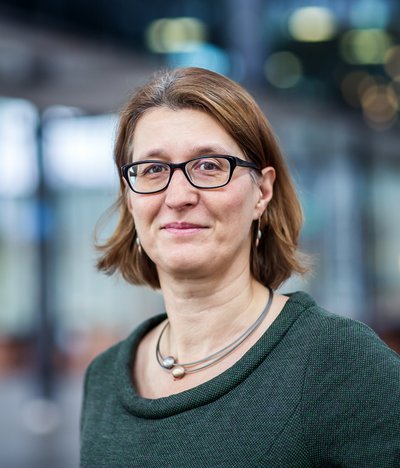
Martin Boer, dr.ir., is a dedicated Researcher at Biometris within Wageningen University & Research (WUR), Netherlands, affiliated with the PE&RC Graduate School. His role as co-promotor for multiple PhD projects and leadership in statistical genetics initiatives establishes him as an integral part of WUR's academic ecosystem, focusing on bridging advanced statistics with agricultural innovation. Research Expertise: Dr. Boer specializes in quantitative genetics with emphasis on QTL mapping, genotype-environment interactions (GxE), and high-throughput phenotyping (HTP) data analysis. His work develops computational frameworks like penalized factorial regression and spatio-temporal models to address complex challenges in plant breeding, particularly for crops such as Arabidopsis thaliana and wheat. This research directly tackles climate adaptation needs through improved genomic prediction accuracy. Publication Trends: Analysis of his 2024-2025 publications reveals a decisive shift toward computationally efficient tools for big-data agriculture. Key contributions include the statgenHTP software package and novel GxE modeling approaches that integrate multi-parent population genetics with environmental covariance structures. These works demonstrate increasing industry relevance, evidenced by rising citations in plant breeding applications. Supervision & Funding: He actively co-supervises PhD candidates across critical projects including biomass prediction modeling and GxE covariable selection. His sustained grant success includes leadership roles in the Integrated Phenotyping Analysis project (2019) and current involvement in the 'From light to biomass' initiative (2025-), reflecting consistent competitive funding in statistical genomics. Collaborative Framework: As a core member of Biometris, Dr. Boer operates within WUR's premier biometrical statistics group, which specializes in developing mathematical solutions for life science challenges. His extensive collaboration network—particularly with F. van Eeuwijk across 66+ publications—drives methodological innovation in international plant breeding programs.
Nancy S. B. Williams is an Associate Professor of Chemistry at the Keck Science Department, Claremont Colleges . Her work bridges physical organometallic chemistry and chemical education innovation , focusing on ligand design and reductive elimination reactions. Research Interests : Physical organometallic chemistry, ligand effects on organic transformations, reductive elimination mechanisms, and chemical education. Teaching : General, Organic, and Inorganic Chemistry courses. Selected Publications explore reductive elimination pathways in platinum complexes, asymmetric catalysis with pincer ligands, and the IONiC initiative for collaborative chemical education. Her work has appeared in Inorganic Chemistry , Organometallics , and Journal of the American Chemical Society .
Dr. Miriam Botros serves as Group Leader for Energy Materials and Process Design within the Materials for Electrochemistry Research Unit (RU Janek) at the Institute of Nanotechnology, Karlsruhe Institute of Technology (KIT), Germany. Her laboratory operates across Buildings 640/0-354 and 717/204 at the Eggenstein-Leopoldshafen campus, with office hours conducted remotely on Tuesdays and Fridays. Her research centers on high-entropy materials and solid-state electrochemistry , specializing in compositionally complex systems for energy storage. Key focus areas include garnet-type solid electrolytes , high-entropy oxides/fluorides , and advanced cathode architectures , with particular emphasis on doping effects, grain boundary engineering, and structural transformations in battery components. Recent work demonstrates expertise in photonic synthesis techniques and mechanochemical processing for novel material discovery. Analysis of her 15 most recent publications reveals a dominant research trajectory in solid-state battery materials (73% of works), with significant contributions to high-entropy systems (60%) and electrocatalysis (27%). Her collaborative network spans 12+ international institutions, consistently publishing in high-impact journals including Nature Reviews Materials , Science , and Energy & Environmental Science . Dr. Botros maintains active laboratory operations within KIT's Institute of Nanotechnology infrastructure, directing research on energy materials synthesis and characterization. Her team employs advanced techniques including nebulized spray pyrolysis, field-assisted sintering, and in-situ electrochemical analysis to develop next-generation battery components.
Robert Cavanaugh is an Assistant Professor at the Massachusetts General Hospital Institute for Health Professions with dual appointments in Communication Sciences and Disorders and Genetic Counseling. As one of two core statistical faculty members in IHP's PhD program, he provides statistical support to students and faculty across the institute while teaching courses in statistics, measurement, and reproducible research. His methodological expertise spans hierarchical/mixed-effects models, Bayesian methods, psychometrics including item response theory, and causal inference methodology. PhD in Communication Sciences and Disorders, University of Pittsburgh M.S. in Speech and Hearing Sciences, University of North Carolina at Chapel Hill B.A. in Communication Sciences and Disorders, University of Pittsburgh Dr. Cavanaugh's research integrates rehabilitation health services, population health, and data science to analyze insurance claims and electronic health record data, examining healthcare outcomes and improving service delivery in speech-language pathology. His work focuses on treatment dosage effects in post-stroke aphasia rehabilitation, addressing disparities observed during his clinical practice as a speech-language pathologist. He advocates for experiential learning approaches that build strong statistical foundations for future rehabilitation researchers and practitioners, with a commitment to open science principles. His scholarly output demonstrates a clear trajectory toward methodological innovation in rehabilitation research, with publications spanning statistical methodology development, aphasia assessment tools, and healthcare services analysis. Cavanaugh has contributed to both technical statistical literature and clinical rehabilitation research, effectively bridging the gap between advanced quantitative methods and practical clinical applications in speech-language pathology. His work increasingly focuses on causal inference approaches and the development of open-source tools for research implementation. As a statistical co-investigator and consultant, Dr. Cavanaugh mentors students and faculty across the institute while developing practical research tools like the allofus R package for the All of Us Research Program. His collaborative research agenda spans efficacy, effectiveness, and implementation approaches to improve complex interventions in neurorehabilitation. He is actively engaged in the rehabilitation research community through social media and professional networks, frequently sharing resources and insights on statistical methods for rehabilitation research.
Daniel Amor is a Junior Professor in the Department of Physics at École Normale Supérieure - Paris Sciences et Lettres (ENS-PSL) . His research focuses on microbial ecology and evolution, particularly on alternative stable states in microbial communities and the ecological drivers of antibiotic resistance.
Marc-Oliver Winghart is a researcher at the Max Born Institute for Nonlinear Optics and Short Pulse Spectroscopy in Berlin, Germany. He contributes to the C1: Femtosecond Spectroscopy of Molecular Systems group, focusing on ultrafast electronic and nuclear dynamics in molecular systems using advanced spectroscopic techniques. Research Focus: Ultrafast processes, X-ray absorption spectroscopy, molecular dynamics Contact: marc-oliver.winghart@mbi-berlin.de His work spans the investigation of photochemical reactions, including σ-complex formation, Förster cycle transformations in aromatic amines, and photodissociation dynamics of nitrogen oxides. Publications highlight the use of femtosecond and X-ray absorption techniques to map electronic structure changes and proton transfer mechanisms. Collaborative efforts with researchers like E. T. J. Nibbering and M. Odelius are evident across studies on molecular ionization, fragmentation, and solvation effects. Notable collaborations include studies on alkane σ-complexes, aromatic amine photoacids, and nitrogen dioxide dissociation, demonstrating expertise in ultrafast chemical physics and molecular spectroscopy.
Anja Palmans is a Full Professor at the Eindhoven University of Technology within the College of Chemical Engineering and Chemistry. As part of the Institute for Complex Molecular Systems and the Supramolecular Chemistry & Catalysis group, her research focuses on biomimetic catalytic systems and supramolecular polymer dynamics. She holds a doctorate from TU/e (1997) and has held academic positions at ETH Zürich, DSM Research, and KIT. Her research explores two primary areas: (1) compartmentalized catalysis in water via polymer folding, reducing purification costs in organic synthesis, and (2) controlling supramolecular copolymerization exchange dynamics. Key work involves benzene-1,3,5-tricarboxamides (BTAs) as multifunctional building blocks for self-assembled nanostructures. Recent publications highlight her team's innovations in creating enzyme-like catalytic systems in water, tuning cooperativity in supramolecular polymers, and leveraging hydrogen bonding for hierarchical assembly. Collaborators include E.W. Meijer and C. Kulkarni, with applications in biomedical and nanotechnological fields. She teaches courses in molecular chemistry and contributes to annual RPK A lectures. Her group, ICMS Core, operates at the intersection of synthetic polymers and functional materials, with a focus on sustainability and bio-inspired design.
Edward Justin Modestino, Ph.D., M.S., is a Senior Lecturer of Psychology and Codirector of the EEG Lab at Curry College's Department of Psychology. He has been teaching in the Psychology department since 2016, offering courses including Introduction to Psychology, Child Development, Motivation, Research Methods in Psychology, and various specialized courses related to neuroscience and mental health. Senior Lecturer of Psychology Codirector of EEG Lab Director of Brain & Behavior Laboratory Faculty Member since 2016 Dr. Modestino's educational background includes degrees from Harvard (1997), University of Pennsylvania (1999, 2001), Florida Atlantic University (2009 - Ph.D. in Complex Systems and Brain Sciences), and University of Massachusetts Boston (2021 - M.S. in Mental Health Counseling). He completed postdoctoral research fellowships in neuroimaging at the University of Virginia (Psychiatry, 2010-2012) and Boston University (Neurology, 2013-2015). His research program focuses on three interconnected areas: (1) combining multiple neuroimaging techniques to study Parkinson's disease, particularly examining side-of-onset differences and Hoehn and Yahr staging; (2) investigating the connection between ADHD and narcolepsy/hypersomnia within the framework of Reward Deficiency Syndrome; and (3) exploring empathy and rejection sensitivity dysphoria in ADHD. Dr. Modestino has extensive experience with EEG research dating back to 1991, when he trained at Harvard Medical School's Department of Psychiatry. His publication record shows a strong focus on the intersection of neuroimaging, dopaminergic pathways, and various neurological and psychiatric conditions. Recent work (2023-2025) increasingly explores genetic connections between ADHD and narcolepsy, the effects of GLP-1 agonists on neurological conditions, and the application of KB220 variants for treating Reward Deficiency Syndrome. His research often bridges clinical practice with neuroscience, particularly in understanding how dopaminergic mechanisms underlie various behavioral and cognitive phenomena. Dr. Modestino serves in editorial roles for several academic journals: Associate Editor for the Journal of Addiction Science Editorial Board Member for Current Psychopharmacology Editorial Board Member for the Journal of Personalized Medicine Editorial Board Member of INNOSC Theragnostics and Pharmacological Sciences As a Licensed Mental Health Counselor, Dr. Modestino maintains a clinical practice in Stoughton, MA, integrating his neuroscience expertise with therapeutic approaches. His work with students includes teaching a wide range of psychology courses while mentoring research through the EEG Lab and his Brain & Behavior Laboratory. His research has received attention globally, with clinicians worldwide reaching out to discuss his work on rejection sensitivity dysphoria in ADHD patients. Dr. Modestino codirects Curry College's EEG Lab, which he took over after Dr. Steinberg's retirement, and directs his own Brain & Behavior Laboratory. His laboratory work combines multiple neuroimaging techniques to investigate Parkinson's disease, ADHD, and narcolepsy, with particular attention to how these conditions relate to the brain's reward system and dopaminergic pathways.
Dr Jun Xia serves as a Reader in Mechanical and Aerospace Engineering within Brunel University's College of Engineering, Design and Physical Sciences. Holding a BEng and MSc from Zhejiang University and a PhD from the University of Southampton, he directs the MSc Advanced Mechanical Engineering program while leading research in high-fidelity simulation of multiphase flows and combustion systems. His research spans Multiphase flow dynamics in energy systems Turbulent combustion with alkali-metal emissions Molecular dynamics for CO 2 /H 2 storage Machine learning-enhanced fluid simulations Droplet/spray combustion modeling Notable methodologies include Lattice Boltzmann methods, interface-capturing techniques, and chemistry tabulation for complex fuels. Recent publications (2021-2024) demonstrate strong focus on multicomponent droplet dynamics, CO 2 /H 2 transport in porous media, and alkali-metal emissions in solid fuels, primarily published in Physics of Fluids , Combustion and Flame , and Journal of Chemical Physics . Professional memberships include: Combustion Institute British Section (CIBS) American Society of Mechanical Engineers (ASME) Supported by EPSRC funding, his work integrates molecular dynamics with macroscopic modeling for underground energy storage. He collaborates extensively with international groups on coal/biomass combustion and has developed simulation tools for dense-to-dilute spray regimes. His IEF research group focuses on physics-guided machine learning for transport phenomena.
Yan Zhao is an Associate Professor and Doctoral Supervisor in the Department of Neurobiology at the School of Life Sciences, Southern University of Science and Technology (SUSTech). She received her bachelor’s and Ph.D. from Peking University Health Science Center, followed by postdoctoral research at the Chinese Academy of Sciences and UMass Medical School. Her work focuses on autophagy mechanisms in neural cells and their implications for neurodegenerative diseases and viral infections. Education: Peking University Health Science Center (B.S., Ph.D.) Postdocs: Chinese Academy of Sciences, UMass Medical School Research Interests: Molecular role of metazoan-specific autophagy proteins ER-autophagosome interactions in membrane dynamics Therapeutic targets for neurodegeneration Double-membrane vesicle formation in coronaviruses Scientific Contributions include Cell , Molecular Cell , and Current Biology publications. She received the NSFC Outstanding Young Scientist Fund. Teaching includes Introduction to Life Sciences and Principles of Biology. She leads a laboratory in Research Building 2, Room 315, with active recruitment for postdocs, research assistants, and graduate students.
Rint Sijbesma is a Full Professor at the Eindhoven University of Technology, affiliated with the Institute for Complex Molecular Systems and the Department of Chemical Engineering and Chemistry. His research group focuses on supramolecular polymer chemistry, particularly in developing dynamic and stimuli-responsive materials. Institute for Complex Molecular Systems Chemical Engineering and Chemistry Sijbesma's research integrates supramolecular chemistry and dynamic covalent chemistry to create smart polymers with applications in self-healing materials , mechanochromism , and closed-loop recycling . His work emphasizes mechanical stimuli-responsive systems, such as stress-sensitive catalysts and light-emitting polymers. The 15 most recent publications highlight advancements in recyclable polyurethanes , mechanoresponsive materials , and green synthesis methods . These studies often address sustainability , thermal stability , and industrial scalability . Sijbesma's educational contributions include teaching courses in Organic Chemistry , Physical Organic Chemistry , and Materials Science . He has also engaged in ancillary activities such as postdoctoral training programs.