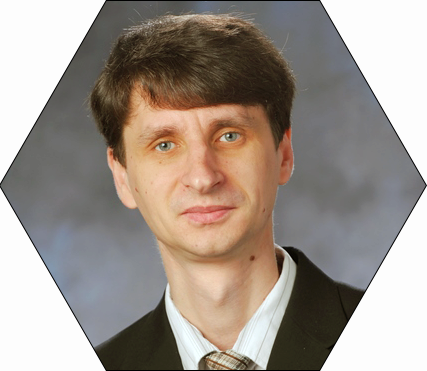
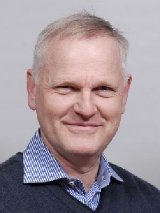
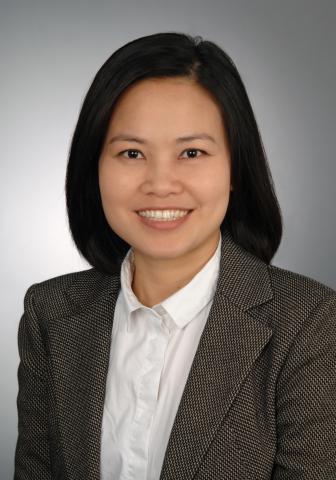
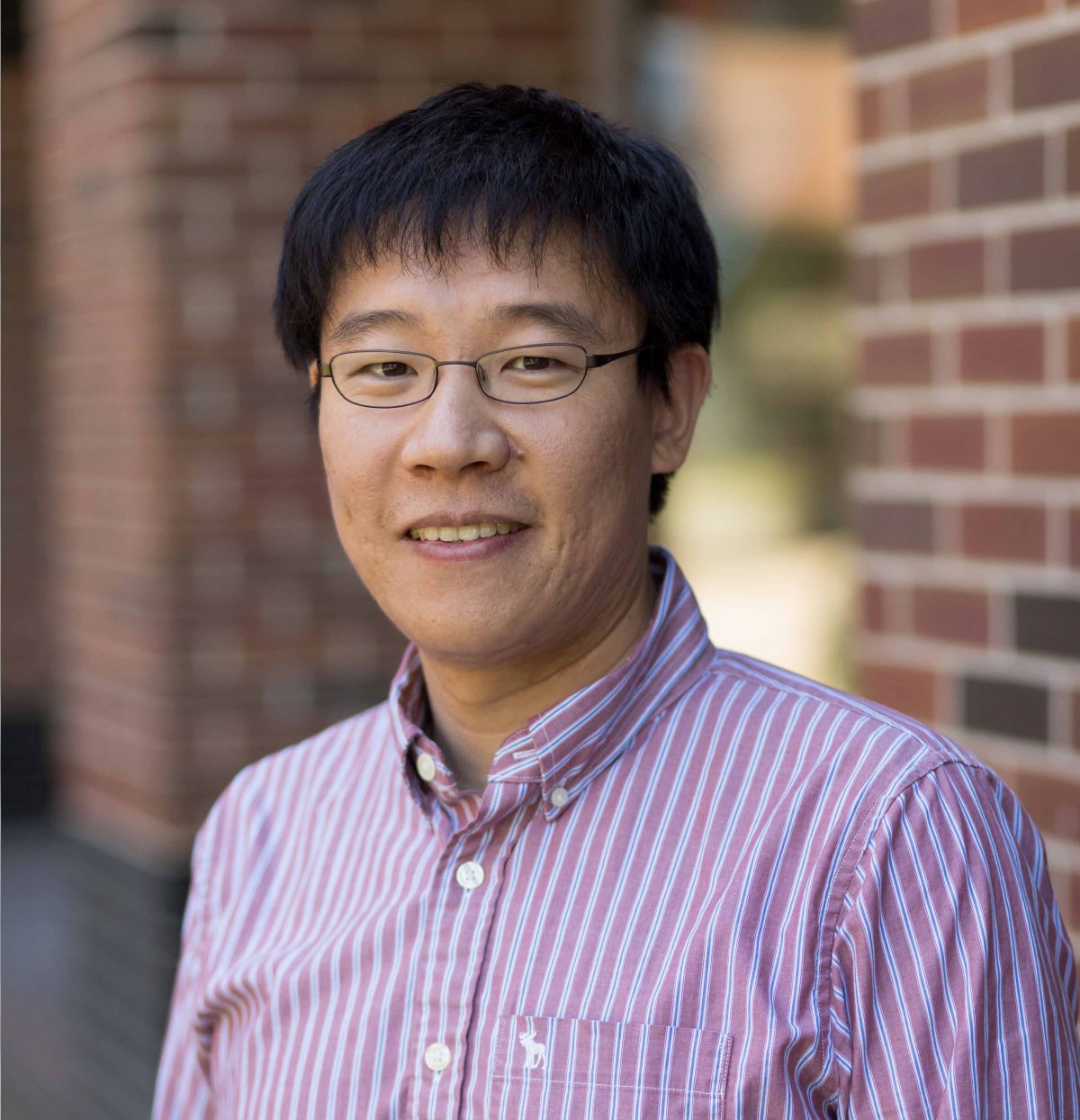
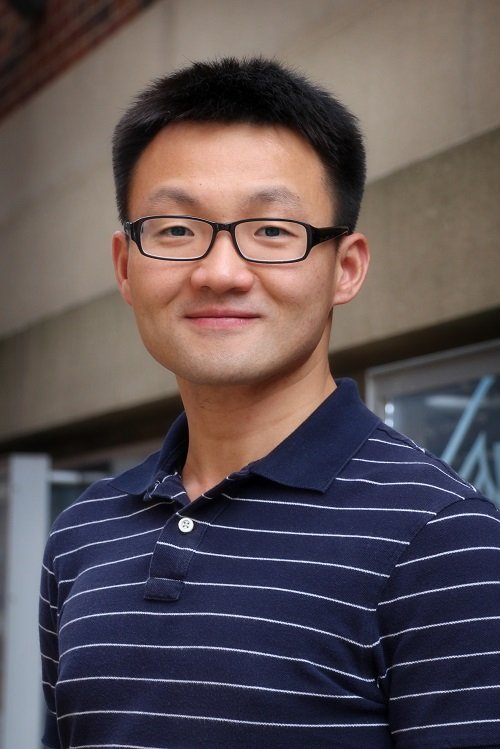
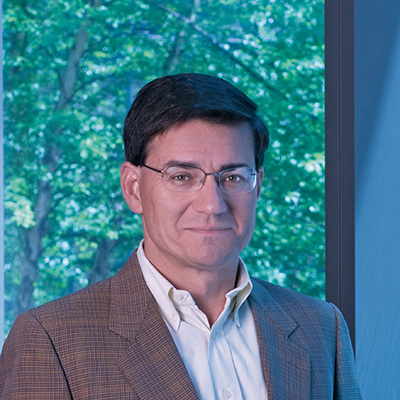
Dr. Alexander Alexeev is a Professor in the Department of Mechanical Engineering at Georgia Institute of Technology, where he joined in 2008 as an assistant professor. His research focuses on computational fluid mechanics, soft materials, and biomimetic microfluidic systems. Ph.D., Technion-Israel Institute of Technology (2003) M.Sc., Technion-Israel Institute of Technology (1999) Dipl.-Ing. in Mechanical Engineering, St. Petersburg State Polytechnic University (1994) Dr. Alexeev's research interests center on developing synthetic systems inspired by biological microorganisms to perform complex functions in microfluidic devices. His work includes: Modeling bio-inspired micro-robots with flagella-like propulsion Designing responsive membranes for drug delivery systems Studying fluid-structure interactions in compliant materials Investigating thermocapillary flows in thin liquid films Simulating microscale particle dynamics in patterned substrates His methodological approach integrates advanced computational techniques such as: Lattice Boltzmann method Lattice spring method Dissipative particle dynamics Multiphase flow modeling (VOF, level set, immersed boundary) Scientific awards and recognitions include: David and Olga Pnueli Prize for Ph.D. Thesis (2004) Excellence Graduate School Scholarship (2001-2002) Aaron and Ovadia Barazani Award (2000) Miriam and Aaron Gutwirth Award (1999)
Lyes Kahouadji is an Advanced Research Fellow in Computational Fluid Dynamics within the Department of Chemical Engineering at Imperial College London . He has held academic positions at Imperial since 2015, progressing from Research Associate to Research Fellow and now Advanced Research Fellow, while also supervising a significant number of undergraduate and master's students. His affiliation with the Matar Fluids Group further emphasizes his role in advanced fluid dynamics research. Education: PhD in Numerical Modelling in Fluid Dynamics – Pierre et Marie Curie University, France (2011) Master's degree in Instability and Turbulence – Pierre et Marie Curie University, France (2007) Licence in Mechanics and Engineering Sciences – Pierre et Marie Curie University, France (2005) Research Interests: Kahouadji’s research spans computational fluid dynamics , mechanical and chemical engineering , applied mathematics , and environmental engineering . His work integrates theoretical, numerical, and experimental approaches to understand complex fluid behaviors, including multiphase flows, non-Newtonian fluids, and rotating free surface flows. His doctoral thesis focused on linear stability analysis of rotating free surface flow , which laid the foundation for his continued contributions to fluid mechanics and transport phenomena. Teaching Experience: He has taught extensively across multiple institutions and levels, including: Mathematics (partial differentiation, vector calculus, integral theorems) Fluid Mechanics (streamfunctions, vorticity, turbulence, two-phase flows) Virtual Reality-based Fluid Mechanics education Thermodynamics and scientific computing using MATLAB and Scilab Student Supervision: Since 2015, he has supervised: 10 undergraduate students (20 hours each) 14 master's students (30 hours each) Total supervision time: 620 hours
Kees Vuik is a Professor at the Delft Institute of Applied Mathematics within the Faculty of Electrical Engineering, Mathematics and Computer Science at Delft University of Technology. His research focuses on developing advanced numerical methods for complex engineering and scientific simulations across multiple domains including energy systems, environmental engineering, and computational physics. His research interests center on Numerical Analysis and Scientific Computing, with specialized expertise in Computational Fluid Dynamics, Reservoir Simulation, and Wave Propagation. He develops innovative preconditioning techniques for large-scale linear systems and creates high-fidelity models for subsurface flow, flood prediction, and energy conversion systems. Recent work integrates graph-based frameworks for electrolyzer modeling and advanced triangulation methods for point cloud processing. Analysis of his 2025 publications reveals a strong interdisciplinary focus on sustainable energy solutions (hydrogen/CO2 storage), environmental resilience (flood modeling), and computational efficiency (parallel preconditioning). His work consistently bridges theoretical numerical methods with practical engineering applications, particularly in energy transition technologies and climate-related simulations. Professor Vuik's scientific contributions have earned significant recognition: Officer of the Order of Orange-Nassau (2021) Professor of Excellence award (Leermeesterprijs) from TU Delft (2022) He has supervised 49 students across bachelor, master, and PhD levels, with notable successes including undergraduate research published in leading medical journals. His collaborative network spans 21 documented activities including industrial partnerships with Fujitsu Laboratories and leadership in academic societies, indicating substantial research funding and mentorship impact. As chair of the Bataafsch Genootschap der Proefondervindelijke Wijsbegeerte (2023-2024) and active member of the Delft Institute of Applied Mathematics, he contributes to both foundational mathematical research and real-world applications through international collaborations and industrial knowledge exchange.
Dr. Thi Thai Le serves as Head of the Predictive Methods Research Group within the Applied Algorithmic Intelligence Methods Department at Zuse Institute Berlin (ZIB), a leading research institute affiliated with Freie Universität Berlin. Her work bridges mathematical theory with practical applications in energy systems and fluid dynamics. Dr. Le's research focuses on stability analysis of fluid interfaces, particularly examining Kelvin-Helmholtz instability in various contexts including shallow water flows, compressible media, and porous media. Her work investigates how factors like depth discontinuity, viscosity, porosity, and inertia forces affect interface stability, with direct applications to energy transition challenges. She has developed mathematical models that consider real-world constraints such as solid walls along flow directions and thermophysical properties of CO 2 for carbon transport networks. Analysis of her publication trends reveals a clear evolution from fundamental fluid dynamics research toward increasingly applied work supporting sustainable energy transition. Her recent publications demonstrate a strategic shift toward solving practical engineering challenges in carbon capture and storage systems, particularly focusing on CO 2 transport networks. The interdisciplinary nature of her work connects pure fluid mechanics with energy engineering, computational mathematics, and environmental science. Dr. Le maintains a strong collaborative network, particularly with Thorsten Koch at ZIB, as well as international researchers including Yasuhide Fukumoto in Japan. Her work on CO 2 transport networks represents a significant contribution to decarbonization efforts, providing optimization frameworks for pipeline infrastructure that could accelerate the transition to carbon-neutral industrial processes. Her research group develops mathematical algorithms that address the complex nonlinear behavior of CO 2 under varying temperature and pressure conditions, which is critical for designing safe and efficient carbon transport systems.
Marios Kotsonis is a full-time Professor at the Faculty of Aerospace Engineering, Delft University of Technology (TU Delft). His research focuses on aerodynamics, flow control, and boundary layer stability, particularly in swept-wing configurations. He actively leads experimental and numerical studies involving plasma actuators, instability analysis, and drag reduction technologies. Key Research Areas: Laminar-turbulent transition, cross-flow instability, nonlinear stability analysis Awards: ERC Consolidator Grant (2024), NWO Vici Grant (2024), ERC Starting Grant (2018) Recent publications highlight his work on surface humps for transition delay, harmonic Navier-Stokes solvers for complex geometries, and plasma-based flow control. His research trends emphasize integrating computational methods with experimental validation to address turbulence and drag reduction challenges. Scientific Awards: ERC Consolidator Grant 2024 NWO Vici Grant 2024 ERC Starting Grant 2018 Kotsonis supervises 9 academic advisees and collaborates on multidisciplinary projects, including patents for aircraft surface optimization. His work appears in journals like Journal of Fluid Mechanics and Physics of Fluids , with media coverage in TU Delft press releases.
David LE TOUZÉ is a Professor of Fluid Mechanics and Director of the Research Laboratory in Hydrodynamics, Energetics & Atmospheric Environment (LHEEA) at Centrale Nantes. His research focuses on advanced computational methods in fluid dynamics, particularly Smoothed Particle Hydrodynamics (SPH) and its applications to ocean engineering, wave-structure interactions, and multiphase flows. Research Interests: Prof. LE TOUZÉ's work spans: Development of high-fidelity SPH algorithms for complex fluid-structure interactions Hydrodynamic modeling of offshore structures and wave energy converters Numerical wave tanks and experimental validation techniques Multi-scale coupling methodologies (SPH-FEM, SPH-FV) Free-surface flows and multiphase systems Publication Focus: His recent publications demonstrate strong emphasis on: 1) SPH methodology enhancements for industrial applications, 2) Experimental-computational synergy in marine hydrodynamics, and 3) Novel approaches to modeling fluid-elastic systems. Dominant themes include wave-structure interactions, particle method optimizations, and marine renewable energy applications. Laboratory Leadership: Directs the LHEEA laboratory, coordinating research in hydrodynamic systems, atmospheric environment studies, and marine renewable energy technologies through the MÉLUHSINE IIHNÉ research group.
Xiang Cheng is a Professor and Director of Graduate Studies in the Department of Chemical Engineering and Materials Science at the University of Minnesota, College of Science and Engineering. His research focuses on experimental soft materials physics, biophysics, and fluid mechanics with emphasis on emergent flow phenomena in complex systems. Current Affiliation: University of Minnesota (since July 2013) Research Group: Fluid Mechanics & Transport Research interests include: Mesoscopic flow behaviors in soft materials and biological systems Sheared colloidal suspensions and active fluids Granular flow dynamics and geological applications Jamming transitions under mechanical perturbation Key techniques involve high-speed photography, confocal microscopy, and digital holographic imaging to study flows at micro-to-macro scales. Recent publications show strong focus on active matter physics, bacterial transport, and multiphase flow phenomena. Scientific recognition includes: APS Division of Fluid Dynamics 'Gallery of Fluid Motion' Award (2014) PNAS Featured Image Physics Today Backscatter Selection Several journals' 'Editors' Suggestion' designations His group has mentored numerous graduate students and postdoctoral researchers who have transitioned to academic positions at institutions like IST Austria, ETH Zurich, and ShanghaiTech University, as well as industrial roles at companies such as Dow Chemical, Corning, and Argonne National Lab.
Jiarong Hong is a Professor in the Department of Mechanical Engineering at the University of Minnesota's College of Science and Engineering. He holds additional affiliations with the Saint Anthony Falls Laboratory, Minnesota Robotics Institute, and Institute on the Environment, demonstrating his interdisciplinary research approach spanning fluid mechanics, renewable energy, and environmental systems. Professor Hong's research focuses on fundamental fluid mechanics with particular emphasis on turbulence, atmospheric and multiphase flows, wind turbine aerodynamics, cavitation and bubbly flows, microfluidic systems, and optical imaging and instrumentation. His work bridges theoretical fluid dynamics with practical applications in flow diagnostics, biophysics, geophysics, medical and material sciences. A significant portion of his research involves developing and applying advanced measurement techniques, particularly digital holography and particle image velocimetry, to study complex fluid phenomena. Analysis of his recent publications reveals a strong trend toward interdisciplinary applications of fluid mechanics principles, with increasing focus on renewable energy systems (particularly wind energy in challenging environments), environmental fluid dynamics, and biomedical applications of optical imaging techniques. His work shows a consistent evolution from fundamental fluid mechanics studies toward practical implementations addressing real-world engineering challenges, with particular emphasis on measurement techniques that can operate in field conditions. Robert T. Knapp Award for outstanding paper Best Paper Award from Measurement Science and Technology Multiple Featured Article designations in Physics of Fluids Cover Article in Acta Mechanica Sinica Cover Article in Biotechnology and Bioengineering Editor's Pick in Physics of Fluids Highlight of Nature Communication for groundbreaking wind turbine research Professor Hong actively mentors graduate students, with several advisees appearing as first authors on numerous publications. His research is supported by significant grants that enable field studies, particularly at the EOLOS wind energy research station. His laboratory develops innovative imaging systems for 3D flow measurement and particle tracking, with applications spanning from wind energy to biomedical diagnostics. The Flow Field Imaging Laboratory, directed by Professor Hong, specializes in developing advanced optical measurement techniques for fluid dynamics research. The lab is particularly known for its innovative use of natural phenomena (like snowfall) for large-scale flow visualization, as well as pioneering work in digital holography for particle field imaging. Recent work has expanded into drone-based atmospheric measurement systems and applications of machine learning to fluid dynamics problems.
Stanislau Stasheuski is a Doctoral Researcher at the Department of Energy and Mechanical Engineering, Aalto University. His work focuses on energy conversion systems and fluid dynamics, with a specialization in computational modeling of complex flow phenomena. Research Interests: Energy conversion mechanisms in mechanical systems Cavitating and multiphase flow simulations Numerical modeling of combustion and turbulent flows The 2024 publication Impact of modelling assumptions in cavitating flow of simplified injector demonstrates his expertise in computational fluid dynamics and energy systems analysis. This work contributes to optimizing fuel injection processes through advanced numerical simulations.
Dr Michael Watson is a Lecturer in Applied Mathematics at the School of Mathematics and Statistics, University of New South Wales. His research focuses on mathematical and computational modelling of biological and physical systems, particularly pattern formation in tissues, atherosclerotic plaque development, and pore-scale fluid flow in porous media. Education: PhD in Mathematical Biology (2013), Heriot-Watt University BSc in Mathematics (First Class Honours, 2008), University of Dundee His work combines partial differential equation models, individual-based models, and pore network models to address complex biological and physical phenomena. Applications include wound healing, retinal vasculature development, and enhanced oil recovery techniques. Notable award: Lee Segel Prize for Best Paper (2014) from the Society for Mathematical Biology. Publications span topics like atherosclerosis, porous media, and angiogenesis, with recent preprints exploring smooth muscle cell phenotype switching and lipid-dependent macrophage kinetics. Teaching: MATH6781 Biomathematics MATH1231 Mathematics 1B
Michael A. Bevan is a Professor in the Department of Chemical and Biomolecular Engineering at Johns Hopkins University. His research focuses on measuring and manipulating colloidal and biomacromolecular interactions, dynamics, and structures in interfacial and confined systems, with applications in complex fluids, nanotechnology, and biomedical devices. BS in Chemical Engineering and Chemistry from Lehigh University (1994) PhD in Chemical Engineering from Carnegie Mellon University (1999) Postdoctoral work at University of Illinois at Urbana-Champaign (Materials Science & Physics, 2001-2002) and University of Melbourne (Chemistry & Mathematics, 1999-2001) Bevan's research areas include colloidal interactions, dynamics assembly, nanoparticle materials, biomacromolecular interactions, and energy landscape engineering. His lab develops advanced microscopy and simulation tools to control colloidal self-assembly, with applications in photonic materials, drug delivery, and reconfigurable electromagnetic devices. Recent publications highlight work on energy landscapes on 3D surfaces, feedback-controlled colloidal assembly via reinforcement learning, anisotropic particle phase behavior in nonuniform fields, and micro/nano motor navigation. These studies span colloidal physics, materials design, and biomedical interfaces. ACS Fellow (2016) PECASE, NSF (2005) NSF CAREER Award (2004) Beckman Fellowship (2001) Henkel Fellowship, ACS Colloids & Surfaces Division (1998) Bevan advises current and former PhD students working on topics like colloidal assembly, zwitterionic polymers, and shape-dependent capsule delivery. His lab actively recruits postdoctoral researchers in areas such as hierarchical colloidal assembly and bio-inspired microsystems.
Dr. Pei Zhang is an Honorary Research Fellow at the School of Civil Engineering, Faculty of Engineering, Architecture and Information Technology at the University of Queensland. With expertise spanning computational fluid dynamics, particle-fluid interactions, and environmental engineering, Dr. Zhang contributes significantly to research in sediment transport, porous media flow, and microplastics research. Dr. Zhang's research focuses on the intersection of computational methods and environmental fluid mechanics, particularly in: Development and application of advanced computational models (Lattice Boltzmann Method, Discrete Element Method) Particle-fluid interactions with complex morphologies Microplastic transport and retention in porous media Constructed wetland systems for wastewater treatment Sediment-water interface processes and nutrient transport Analysis of Dr. Zhang's recent publications reveals a strong trend toward increasingly sophisticated computational methods for modeling fluid-particle systems. The research spans fundamental fluid mechanics of particle settling to applied environmental engineering problems like microplastic contamination and wastewater treatment. A notable pattern is the development of the "metaball" approach for handling complex particle shapes, which has been applied to various environmental systems with growing complexity from 2021 to 2025. Dr. Zhang is available for supervision of graduate students, indicating active involvement in mentoring the next generation of researchers in computational environmental engineering. The research appears to be conducted within collaborative frameworks involving multiple institutions, as evidenced by co-authorship patterns spanning Australian and Chinese research groups. Dr. Zhang's work is conducted within the computational and experimental facilities of the School of Civil Engineering at the University of Queensland, likely collaborating with research groups focused on environmental fluid mechanics, computational modeling, and water treatment technologies. The research has direct applications to contemporary environmental challenges including microplastic pollution mitigation and optimization of engineered water treatment systems.
Brian Arthur Grimes is an Associate Professor at the Department of Chemical Engineering , Norwegian University of Science and Technology (NTNU) . His research focuses on molecular dynamics simulation , adsorption , and transport phenomena , with applications in crude oil separation , flow assurance , and chromatography . He joined the Ugelstad Laboratory in 2007 to develop mathematical models for transport and adsorption processes. Ph.D. from University of Missouri-Rolla (2002) Alexander von Humboldt Research Fellowship recipient His work integrates molecular dynamics simulations with continuum modeling and population balance equations to study interfacial mass transport in liquid-liquid dispersions. Recent projects include multi-scale modeling for oil-water separation, microfluidic droplet detection , and CO2 capture membranes . Key publications span 2008–2024 , addressing topics like aggregation of amphiphilic molecules , pipeline restart modeling , and supercapacitor charge dynamics . His scientific awards include the Alexander von Humboldt Research Fellowship. Teaching responsibilities include courses in transport phenomena , surface and colloid chemistry , and chemical engineering specialization projects . He is based at Kjemi 5, K5-339, Gløshaugen , NTNU.
Dr. Shahid Husain serves as a Research Fellow at the University of Limerick's Department of Mathematics and Statistics under a prestigious Marie Skłodowska-Curie postdoctoral fellowship (2022-2024), supervised by Professor Michael Vynnycky. Previously, he held an Assistant Professor position in Mechanical Engineering at Aligarh Muslim University since August 2016. Education: PhD in Mechanical Engineering, Aligarh Muslim University (awarded March 7, 2018) Husain's research integrates Computational Fluid Dynamics with Machine Learning to solve complex thermal-fluid problems, specializing in nanofluid heat transfer, natural convection systems, and renewable energy applications. His work on multiphase flow modeling directly addresses UN Sustainable Development Goals through innovations in solar energy systems and pharmaceutical delivery mechanisms. Recent projects include developing ML-based models for microalgal bioreactors and aerosol transport in human airways. His 2022-2024 publications reveal a strategic shift toward interdisciplinary applications, combining CFD with machine learning for biomedical and sustainable energy solutions. Key trends include nanofluid optimization in solar walls, phase change material integration, and DEM-ML hybrid modeling for particle transport - demonstrating growing emphasis on practical engineering implementations. Scientific Awards: Marie Skłodowska-Curie postdoctoral fellowship (2022) EuroTechPostdoc2 Marie-Curie Cofund fellowship (2022) [declined] University Medal for First position in masters Erasmus Mundus Scholarship [declined] Maulana Azad National Fellowship Husain's primary research funding comes from his €195,000 Marie Curie fellowship supporting the 'Development of a Novel Machine Learning-based model for Multiphase flows' project. Though no formal advisees are listed, his 39 publications (including 22 in 2022-2024) reflect extensive collaboration across 15+ international institutions, with significant co-authorship from Eindhoven University of Technology and Aligarh Muslim University researchers. He operates within Professor Vynnycky's computational modeling group at UL, leveraging high-performance computing resources for fluid dynamics simulations. His current work bridges mechanical engineering and data science, with emerging collaborations in biomedical engineering for respiratory drug delivery systems and sustainable energy applications through UL's Sustainable Energy Research Group.
Pedro Ponte Castañeda is a Professor in the Department of Mechanical Engineering and Applied Mechanics at the University of Pennsylvania's School of Engineering and Applied Science, where he holds the Raymond S. Markowitz Faculty Fellowship. His work focuses on theoretical and computational solid mechanics within the university's engineering framework. His research centers on micromechanics and homogenization of heterogeneous materials, with expertise in viscoplastic composites, elastomers, polycrystalline aggregates, and porous media. He investigates macroscopic response prediction, field statistics, microstructure evolution, and instabilities in nonlinear materials, developing advanced methods like variational linear comparison and second-order estimates. Applications span magnetoactive/dielectric elastomers, yield stress fluid suspensions, and twinning phenomena in soft composites. Analysis of his recent publications reveals consistent focus on homogenization techniques for nonlinear composites, with emerging integration of machine learning. Key themes include field statistics quantification, macroscopic instability prediction, and domain formation analysis in magnetoactive systems. His work maintains strong theoretical foundations in variational methods while addressing complex material behaviors under finite strains. Scientific recognition includes: Raymond S. Markowitz Faculty Fellowship