Dr. Xiaoli Li is an Associate Professor in the Department of Chemical and Petroleum Engineering at the University of Kansas. Her research laboratory (PVT Lab) focuses on complex fluid behavior in energy systems, with particular emphasis on phase equilibria, gas transport phenomena, and enhanced hydrocarbon recovery techniques. She maintains active research programs in unconventional reservoirs, CO 2 geostorage, hydrate technology, and nanoscale fluid dynamics. Her core research domains include: Confined phase behavior: Thermodynamics of fluids in nanoporous media Gas transport mechanisms: Rarefied flow and apparent permeability modeling Hydrate science: Structure stability and phase boundaries CO 2 utilization: Enhanced oil recovery and geological sequestration Asphaltene dynamics: Precipitation mechanisms in EOR processes Dr. Li teaches across the petroleum engineering curriculum, including core courses: Chemical Engineering Thermodynamics (C&PE 221), Reservoir Engineering (C&PE 327), Well Logging (C&PE 528), and Petroleum Engineering Design (C&PE 628). Her instructional portfolio emphasizes fundamental thermodynamics, reservoir characterization, and practical field applications. Her publication record (35+ articles) demonstrates consistent focus on reservoir thermodynamics and transport phenomena, with recent emphasis on: CO 2 -oil interactions (2020-2023), gas hydrate stability (2020-2022), shale gas transport (2019-2021), and equation of state modifications for confined fluids (2018-2020). Research methodologies combine molecular simulations, experimental studies, and novel thermodynamic modeling approaches.
Jennifer Johnson-Leung serves as Professor in the Department of Mathematics and Statistical Science within the College of Science at the University of Idaho, with additional affiliation as Participating Faculty at the Institute for Modeling Collaboration and Innovation under the Office of Research and Economic Development. Her academic credentials include: PhD in Mathematics from the California Institute of Technology (2005) BS in Chemistry and Mathematics from the College of William and Mary (1998) Professor Johnson-Leung maintains a dual research focus bridging pure mathematics and applied epidemiology. In theoretical mathematics, she investigates Siegel modular forms, paramodular forms, Hecke algebras, and representation theory, advancing understanding of automorphic forms and their connections to algebraic geometry. Her applied work develops spatial statistical models for sociodemographic risk assessment in public health crises, particularly during the COVID-19 pandemic, utilizing techniques like elastic net regression to analyze vaccination behavior and mortality patterns. Analysis of her recent publications reveals equal emphasis on deep theoretical number theory problems and urgent public health applications. The mathematical works explore structural properties of modular forms and representation theory, while epidemiological studies dissect complex interactions between political ideology, social vulnerability, and pandemic outcomes across U.S. populations. No specific scientific awards were documented in the provided materials. Information regarding graduate student advising and research grant funding remains unspecified in the available documentation. No dedicated research laboratories or specialized collaborative teams were mentioned in the source materials.
Leif Kobbelt serves as a University Professor at RWTH Aachen University, leading the Computer Graphics Group within the Department of Computer Science (Informatik 8). His research focuses on advancing geometry processing, interactive visualization, and computer graphics through innovative algorithmic solutions and interdisciplinary collaborations. Professor Kobbelt's research program centers on geometry acquisition and processing, with significant contributions to mesh generation, surface reconstruction, and neural rendering techniques. His work bridges theoretical geometry with practical applications in computer vision, photo-realistic image synthesis, and multimedia data transmission, often involving collaborations with industry partners and international research teams funded by DFG and EU sources. Recent publications (2023-2025) reveal a strategic integration of deep learning with traditional geometry processing, particularly in Gaussian splatting for real-time rendering, NeRF-based 4D content generation, and robust mesh Boolean operations. His group maintains leadership in quad mesh optimization and surface mapping while expanding into immersive visualization techniques for complex data analysis. The group has earned recognition through prestigious awards: Günter Enderle Best Paper Award at Eurographics 2023 Best Paper Award (1st place) at Symposium on Geometry Processing 2022 Honorable Mention for Best Paper at ACM Symposium on Virtual Reality Software and Technology Funding from Deutsche Forschungsgemeinschaft and European Union programs supports the group's research infrastructure and international collaborations. The team actively supervises graduate theses while developing open-source software tools that translate theoretical advances into practical industry applications, particularly in digital fabrication and immersive visualization systems. The Computer Graphics Group operates as a central hub for visual computing research at RWTH Aachen, maintaining strong ties with both academic institutions and technology companies. Their recent work on virtual reality educational tools and high-fidelity 3D reconstruction systems demonstrates commitment to knowledge transfer and real-world impact beyond traditional publication venues.
Dr. Xiong Yi is an Assistant Professor at the School of System Design and Intelligent Manufacturing (SDIM) at Southern University of Science and Technology (SUSTech) in Shenzhen, China. He leads the Computational Design and Fabrication (CoDeFab) research group, focusing on the integration of computational design methods with advanced manufacturing technologies, particularly in the field of additive manufacturing. Dr. Xiong has established himself as a leading researcher in computational design for additive manufacturing, with a strong international research background spanning Europe and Asia. Dr. Xiong's educational journey includes: Doctor of Science (DSc) in Engineering Design and Production from Aalto University, Finland (2012-2016) Master of Science (MSc) in Machine Automation from Tampere University of Technology, Finland (2010-2012) Bachelor of Engineering (BEng) in Mechanical Engineering from Hubei University of Technology, China (2006-2010) Dr. Xiong's research primarily focuses on computational design and fabrication methodologies, with particular emphasis on design for additive manufacturing (DfAM), intelligent manufacturing systems, and smart materials. His work bridges the gap between theoretical design principles and practical manufacturing constraints, developing novel approaches for the production of complex engineered products. He has pioneered research in continuous fiber-reinforced composite additive manufacturing, developing innovative process planning and optimization techniques that enable the production of high-performance structural components. His research in electrothermally controlled origami and 4D printing of smart materials represents cutting-edge work at the intersection of materials science, mechanical engineering, and computational design. Dr. Xiong's recent publications reveal a strong focus on continuous fiber-reinforced composites, with significant contributions to 4D printing, metamaterials, and intelligent process planning. His work integrates computational design with manufacturing constraints, creating novel approaches for topology optimization, toolpath planning, and structural design that consider both performance requirements and manufacturability limitations. The research demonstrates increasing sophistication in materials science applications, particularly in programmable materials and multi-functional structures. Dr. Xiong has received multiple prestigious awards for his research contributions, including: Best Presentation Award at the 24th Chinese Conference on Mechanisms and Machine Science (IFToMM CCMMS2024) Best Presentation Award at the International Conference on Frontiers of Additive Manufacturing Research (RAAM 2024) Best Paper Award at the International Conference on Design for 3D Printing (ICD3DP 2023) PhD Scholarship from Aalto University (2016) Research Travel Grant from the International Association for Vehicle System Dynamics (IAVSD) (2013) National Scholarship from the Ministry of Education (2008) As a dedicated educator and mentor, Dr. Xiong serves as a PhD supervisor at SUSTech and has successfully guided students who have gone on to pursue advanced studies and careers at prestigious institutions including Hong Kong Polytechnic University, Beihang University, DJI Innovations, and Singapore's A*STAR research institute. His research is supported by multiple competitive grants, including key projects from the National Key R&D Program of China, the National Natural Science Foundation of China, and provincial and municipal funding agencies. Dr. Xiong also serves on the editorial board of the Journal of Engineering Design and as a guest editor for Composites Communications, contributing to the advancement of his field through scholarly service. Dr. Xiong leads the CoDeFab research group, which maintains a strong collaborative culture focused on 'design leading manufacturing, manufacturing driving design, and digital-intelligent integration.' The group has developed several advanced manufacturing platforms, including multi-axis continuous fiber-reinforced composite additive manufacturing systems, smart composite additive manufacturing platforms, and multifunctional soft matter open manufacturing platforms. With a focus on practical applications and innovation, the CoDeFab group actively collaborates with industry partners and has established a joint laboratory to bridge academic research with industrial implementation.
Ben Andrews is a Professor and ARC Laureate Fellow at the Centre for Mathematics and its Applications within the Mathematical Sciences Institute at the Australian National University (ANU). He holds multiple prestigious fellowships including Fellow of the Australian Academy of Science, Fellow of the American Mathematical Society, and Fellow of the Australian Mathematical Society. His office is located in Room 2131B of the John Dedman Mathematical Sciences Building. Andrews received his BSc and PhD from ANU. His research spans multiple areas of geometric analysis with particular focus on differential geometry and partial differential equations. His work includes extensive investigations into curvature flows, geometric evolution equations, and their applications to problems in mathematical physics. Andrews' research demonstrates a consistent focus on understanding curvature flows from multiple perspectives - developing new techniques like non-collapsing estimates, cylindrical estimates, and modulus of continuity methods. His work bridges pure mathematics with applications in physics and geometry, with significant contributions to understanding the asymptotic behavior of geometric evolution equations. His publications reveal a progression from foundational work on curve shortening and Gauss curvature flows to more complex settings including hypersurfaces in non-Euclidean spaces and flows with non-smooth speeds. Fellow of the Australian Academy of Science Fellow of the American Mathematical Society Fellow of the Australian Mathematical Society ARC Laureate fellow As an ARC Laureate fellow, Andrews leads significant research initiatives in geometric analysis. He has supervised numerous PhD students including Charles Baker, Huy Nguyen, Chris Hopper, Paul Bryan, and Julie Clutterbuck, many of whom have become active researchers in geometric analysis. His collaborative work spans multiple institutions and has resulted in fundamental contributions to the field of geometric evolution equations. Andrews is an active member of the Applied and Nonlinear Analysis Research Group within the Mathematical Sciences Institute at ANU, where he contributes to both research and academic community building through seminars and collaborative projects.
Professor Yonathan Shapir is a full Professor in the Department of Physics at the University of Michigan, with a joint appointment in Chemical Engineering. Since his arrival in 1985, he has advanced from Assistant Professor to full Professor, pursuing theoretical condensed-matter physics and statistical mechanics. Education: B.Sc. in Physics, Tel-Aviv University (1971) Ph.D. in Physics, Tel-Aviv University (1981) Research Interests: Professor Shapir’s work centers on understanding complex disordered systems through statistical mechanics. His investigations encompass critical phenomena in spin-glasses and random-field systems, classical and quantum transport in dirty metals leading to the metal-insulator transition, polymer statistics, fractal properties of percolation clusters, and kinetic models of surface growth and aggregation. These themes are unified by a deep interest in scaling laws, universality, and the emergent geometry of random media. Publication Trends: Between 2001 and 2010, his articles reveal a concentrated effort on diffusion in dynamically disordered environments, scaling behavior of growing surfaces, and the morphology of organic thin films such as pentacene. Earlier work (1996–2000) explored critical dynamics of dendrimers, surface growth on disordered substrates, and transitions in crystalline roughness. The breadth spans from fundamental statistical-physics questions to applications in materials science and organic electronics. Scientific Awards: Fulbright Award (1981) Bourse Joliot-Curie (1982) Visiting Compton Fellowship at the Technion (1989–1990) Advising & Grants: No explicit lists of students or current funding are provided in the material; however, his extensive publication record with numerous co-authors suggests active mentoring and collaboration. Future directions likely continue along the interface of statistical mechanics and nanoscale materials. Labs & Teams: While no specific laboratory names are given, Professor Shapir’s joint appointment implies active participation in both the Physics Department and the Chemical Engineering program, fostering interdisciplinary teams working on materials growth, transport phenomena, and computational statistical physics.
Tamás Darvas is a Professor in the Department of Mathematics at the University of Maryland, College Park. He maintains an active research program in complex differential geometry and serves as a key organizer of the Informal Geometric Analysis Seminar, which provides a forum for researchers and graduate students interested in geometric analysis across multiple academic years from 2015 through 2024. Professor Darvas's research focuses on complex differential geometry, Monge-Ampère type equations, and infinite dimensional geometries. His work explores the deep connections between geometric analysis, pluripotential theory, and complex Monge-Ampère equations. He has made significant contributions to understanding the metric geometry of spaces of Kähler metrics, particularly in big cohomology classes, developing important results related to twisted Kähler-Einstein metrics and the structure of singularity types. His research often bridges abstract mathematical theory with concrete geometric problems. Analysis of Darvas's publication record reveals a consistent focus on the interplay between complex geometry, pluripotential theory, and metric geometry. His most recent works examine lines in Kähler metric spaces, transcendental approaches to non-Archimedean metrics, and the Hausdorff distance on toric singularity types. A notable trend in his research is the extension of classical results from Kähler geometry to more general settings, particularly when working with big cohomology classes rather than just Kähler classes, as demonstrated in his significant 2024 paper establishing a uniform Yau-Tian-Donaldson existence theorem for Kähler-Einstein metrics. Professor Darvas is actively engaged with the mathematical community, co-organizing the thematic semester "Analysis and geometry on complex manifolds" in Budapest for August-December 2025. While specific grant information isn't provided in the available texts, his extensive publication record across top journals indicates ongoing research support. Through the Informal Geometric Analysis Seminar he helps organize, he provides mentorship opportunities for graduate students interested in geometric analysis, creating an environment where students of all levels are encouraged to attend and participate in discussions.
Dr. Ajit Kumar Chaturvedi is a Professor in the Department of Electrical Engineering at the Indian Institute of Technology Kanpur (IIT Kanpur), specializing in Communications Theory and Systems. With decades of experience at IIT Kanpur, he has established himself as a leading researcher and educator in wireless communications and information theory. Dr. Chaturvedi earned his B.Tech (1986), M.Tech (1988), and PhD (1995) all in Electrical Engineering from IIT Kanpur, demonstrating his deep institutional commitment. His educational background reflects his dedication to academic excellence at his alma mater. His research focuses on Communications Theory and Systems, with specific expertise in Wireless Communications, Information Theory, and Spread Spectrum Systems. Dr. Chaturvedi's work bridges theoretical foundations with practical applications in modern communication technologies. His contributions have significantly advanced the understanding of signal processing techniques, multiuser detection methods, and error analysis in wireless systems. His research has direct implications for improving the reliability and efficiency of contemporary wireless communication standards. Dr. Chaturvedi's publication record demonstrates consistent contributions to communications engineering, spanning from fundamental signal processing techniques to complex system-level analyses. His work on ISI mitigation, orthogonal sequence design, and error rate analysis shows both theoretical rigor and practical relevance for real-world communication challenges. Distinguished Teacher award of IIT Kanpur (2007) Tan Chin Tuan Fellowship of NTU, Singapore (2008) Supervisor of Best B. Tech Project groups (2002, 2006, 2012) Plenary speaker at the 15th National Conference on Communications (2009) Mentor of IEEE Computer Society International Design Contest winning team (2002) As an educator, Dr. Chaturvedi has supervised numerous award-winning student projects, including three Best B.Tech Project awards. He has mentored teams to international recognition, such as the Microsoft Award for Innovation at the IEEE Computer Society International Design Contest World Finals in 2002. His office is located in ACES 201B at IIT Kanpur, where he continues to contribute to the academic and research mission of the institution.
Sylvain Faisan is a permanent Assistant Professor at ICube - MIV (University of Strasbourg, France). His research focuses on image processing, statistical modeling, and geometry, with applications in medical imaging and neuroscience. He works on advanced methodologies integrating machine learning and mathematical frameworks. Key Research Areas: Polarimetric image processing, retinal image registration, 3D statistical model comparison, topology-preserving image deformation, and fMRI brain mapping Technical Expertise: Bayesian inference, non-local means filtering, reversible jump MCMC algorithms, causal modeling, and constrained optimization His publications demonstrate interdisciplinary applications in optics, biomedical imaging, and computational anatomy. He contributes to developing algorithms that maintain physical admissibility and topological integrity in complex imaging problems.
Michael Bronstein is a Professor at Università della Svizzera italiana (USI Lugano) in Switzerland and Imperial College London in the UK, where he holds the Chair in Machine Learning and Pattern Recognition. He serves as Head of Graph Learning Research at Twitter following the acquisition of his startup Fabula AI, and maintains a principal engineer position at Intel Perceptual Computing. His research focuses on the interplay between geometry, machine learning, and computer vision, with particular emphasis on non-Euclidean structured data. Professor Bronstein received his Ph.D. with distinction in Computer Science from the Technion in 2007. He has held visiting appointments at Stanford University, MIT, Harvard University (as a Radcliffe Fellow), and Tel Aviv University, and has been affiliated with multiple Institutes for Advanced Study including TUM-IAS where he was a Rudolf Diesel Industry Fellow (2017). He is a Fellow of IAPR, Senior Member of the IEEE, and a member of the Young Academy of Europe. His research program centers on theoretical and computational methods in spectral and metric geometry applied to computer vision, pattern recognition, and machine learning. He pioneered the field of geometric deep learning, developing novel neural network architectures that process non-Euclidean data structures like graphs and manifolds. His work spans from theoretical foundations to practical applications, with over 100 publications in top scientific journals and conferences, and has been featured in international media including CNN. Analysis of his recent publications reveals a strong trajectory in geometric deep learning with applications spanning computer vision, 3D shape analysis, social network analysis, and bioinformatics. His research consistently bridges theoretical innovation with real-world applications, developing novel neural architectures for processing complex data structures. The work demonstrates increasing interdisciplinary reach, connecting machine learning with fields from particle physics to molecular biology. Dalle Molle Prize (2018) Royal Society Wolfson Research Merit Award (2018) ERC Proof of Concept Grant (2018) Amazon AWS Machine Learning Research Award (2018) Fellow, International Association for Pattern Recognition (IAPR) Google Faculty Research Award (2017) Radcliffe fellowship, Harvard University (2017) Rudolf Diesel industrial fellowship, TU Munich (2017) ERC Consolidator Grant (2016) World Economic Forum Young Scientist (2014) Professor Bronstein has secured multiple ERC grants (Starting Grant 2012, Proof of Concept Grants 2016 and 2018, Consolidator Grant 2016) and has mentored numerous students who have contributed to over 30 granted patents. He has chaired more than a dozen conferences and workshops in his field and served as area chair at major computer vision conferences including ECCV 2016 and ICCV 2017. His research group at USI Lugano collaborates extensively with industry partners including Intel and Twitter. As a serial entrepreneur, Professor Bronstein co-founded Novafora (2005-2009) developing large-scale video analysis, Invision (2009-2012) which created low-cost 3D sensors and was acquired by Intel, and Fabula AI (2018-2019) focused on fake news detection which was acquired by Twitter. His work bridges theoretical research with commercial applications, with his technology contributing to Intel RealSense and Twitter's graph learning infrastructure.
Praveen Agarwal is a Professor of Mathematics at the Department of Mathematics, International College of Engineering, located near Kanota, Agra Road, Jaipur-303012, Rajasthan, India. He also maintains a significant affiliation with the Lepage Research Institute in Slovakia. His academic profile demonstrates a strong international presence with collaborations spanning multiple continents. Dr. Agarwal's research expertise centers on Special functions , Fractional calculus , and Mathematical Physics . His work in fractional calculus represents cutting-edge contributions to this specialized mathematical field, developing theoretical frameworks with applications across diverse scientific disciplines. His research in special functions has led to numerous extensions and generalizations of classical mathematical constructs, creating innovative tools for solving complex differential equations. In mathematical physics, he applies rigorous analytical techniques to model physical phenomena, particularly those involving wave propagation, diffusion processes, and energy systems. Analysis of Dr. Agarwal's extensive publication record reveals a sophisticated approach to fractional-order differential equations with applications spanning viscoelastic wave behavior, neural networks, energy storage systems, and biomedical engineering. He frequently develops novel mathematical methods, including specialized integral transforms and polynomial-based solution techniques, to address complex nonlinear systems. His research consistently bridges pure mathematical theory with practical engineering applications, particularly in areas requiring precise modeling of memory effects and non-local phenomena. The interdisciplinary nature of his work is evident in publications addressing both theoretical mathematics and practical engineering challenges. Dr. Agarwal maintains active research collaborations with prestigious institutions worldwide, including The Union of Czech Mathematicians and Physicists, University of Prešov in Prešov, Eötvös Loránd University, Italian Society for General Relativity and Gravitation, Transilvania University of Brasov, VŠB-TU Ostrava, and Lodz University of Technology. These international partnerships reflect the global recognition of his contributions to mathematical sciences and demonstrate his ability to work across disciplinary boundaries to solve complex problems.
David Rabouin is a Directeur de Recherche at the CNRS , affiliated with the SPHERE laboratory (UMR 7219) at the Université de Paris. His work bridges the history and philosophy of mathematics with a focus on early modern figures like Leibniz, Descartes, and Pascal, as well as contemporary French philosophy . He leads the ERC Adg PHILIUMM project (2021–2026) on Leibniz’s manuscripts and previously directed the ANR Mathesis (2017–2021). His research interests include mathesis universalis , the philosophy of infinitesimals , and the historiography of mathematical concepts . His recent publications analyze the interplay between mathematical methods and philosophical frameworks , particularly in 17th-century Europe. He has also organized seminars on mathematical generality and classical age mathematics. Rabouin’s contributions extend to editorial leadership, including co-directing volumes like The Oxford Handbook of Generality in Mathematics and the Sciences (2016) and G.W. Leibniz. Mathesis Universalis (2018). He is a leading voice in historical approaches to mathematical philosophy .
Jason R. Green is a Professor in the Department of Chemistry at the University of Massachusetts Boston. With a PhD from Purdue University (2007) and postdoctoral experience at the Universities of Chicago, Cambridge, and Northwestern University, his research bridges theoretical chemistry, physics, and data science to explore nonequilibrium systems. His work focuses on transforming chemical energy into dynamically functional materials through interdisciplinary approaches. Education: B.S., Case Western Reserve University (cum laude, 2002) Ph.D., Purdue University (2007) with NASA Graduate Fellowship NSF Postdoctoral Fellow at University of Chicago and University of Cambridge Research Interests: Theoretical chemical physics Nonequilibrium statistical mechanics Data science applications in chemical systems His recent publications analyze electrochemical material dynamics (ACS Nano 2024), chemically driven self-assembly (Chemical Science 2024), and thermodynamic speed limits across disciplines (Nature Physics 2020, Physical Review X 2022). He has received prestigious fellowships including NASA's Graduate Student Researchers Program and NSF Postdoctoral Fellowship. The Green Research Group at UMB applies theory, computation, and data science to understand energy transformation in synthetic and biological materials.
Prof. Wojciech Sobieski is a faculty member at the Department of Mechanics and Fundamentals of Machine Design within the Faculty of Technical Sciences at the University of Warmia and Mazury in Olsztyn . His research focuses on fluid mechanics, numerical modeling, and porous media analysis, with applications in environmental engineering, hydraulic systems, and 3D printing. Academic Rank: Professor Scientific Discipline: Mechanical Engineering Key Research Areas: Tortuosity Analysis, Multiphase Flow, DEM Simulations His recent publications highlight advancements in computational methods for granular porous media, fluid flow modeling, and thermodynamic applications. Notable trends include the use of the Waterfall Algorithm for geometric analysis and sensitivity studies of numerical models like the Eulerian multiphase approach. He has contributed to understanding Forchheimer's laws and cavitation phenomena in hydraulic systems. Prof. Sobieski oversees the PathFinder Project , a research initiative focused on numerical modeling of porous media. His laboratory maintains infrastructure for multiphase flow simulations and particle-scale modeling. He has supervised 2 doctoral students to completion but currently has no active advisees.
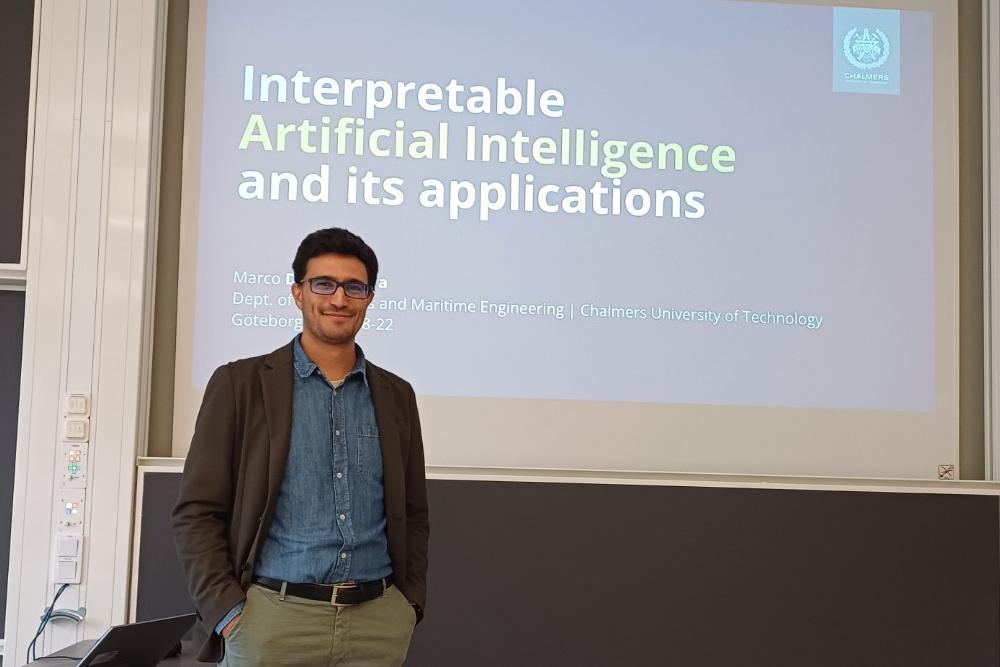
Marco L. Della Vedova is a Senior Lecturer in Applied Artificial Intelligence at Chalmers University of Technology, Sweden. He works in the Vehicle Engineering and Autonomous Systems division within the Department of Mechanics and Maritime Sciences, as part of Prof. Mattias Wahde's research group. Since 2025, he has served as Director of the Data Science and AI master's programme (MPDSC) at Chalmers, where he teaches courses including Introduction to Artificial Intelligence and Digitalization in Sports. Dr. Della Vedova earned his academic foundation at the University of Pavia, Italy, where he completed his BSc (2006), MSc (2009), and PhD (2013) in Computer Engineering. His doctoral research focused on "Real-Time Physical Systems and Electric Load Scheduling" under Prof. Tullio Facchinetti. During his PhD studies, he spent a year at U.C. Berkeley hosted by Prof. Francesco Borrelli at the Model Based Predictive and Distributed Control Lab. His research spans multiple AI domains with a strong emphasis on interpretability. Dr. Della Vedova develops interpretable methods for conversational AI, naturalness evaluation of forests using canopy height models, and geospatial applications. His work bridges theoretical AI with practical societal benefits, particularly in environmental monitoring, transportation systems, and orienteering. He has previously contributed to cloud computing, hate speech detection, and cyber-physical energy systems, demonstrating his interdisciplinary approach to AI research. Dr. Della Vedova's publication record reveals a consistent trajectory of impactful research across multiple domains of artificial intelligence. His recent work shows a strong focus on interpretability in AI systems, with significant contributions to natural language processing, geospatial analysis, and causal inference. The research demonstrates both theoretical depth and practical applications, particularly in environmental monitoring and social media analysis. His methodology often combines traditional machine learning approaches with novel interpretability techniques, creating bridges between complex AI systems and human understanding. Dr. Della Vedova has received several prestigious recognitions for his work: Best PhD thesis award from the Order of the Engineers of Bergamo (2013) Italian champion of Il Cervellone (2012) Top Italian performer in IEEEXtreme 6.0 programming competition (148th overall globally, 2012) Premio Arturo Schena award from Fondazione Credito Valtellinese (2010) With over 50 students supervised through bachelor's and master's theses, Dr. Della Vedova has established himself as a dedicated mentor in the AI community. His current PhD students include Minerva Suvanto working on interpretable NLP and Vivien Lacorre developing AI for railway infrastructure inspection. His supervision spans diverse topics from forest naturalness evaluation to hate speech detection and transportation optimization. Beyond formal supervision, he actively contributes to educational initiatives including serving as Director of Chalmers' Data Science and AI master's program and developing innovative teaching methods that connect theoretical concepts with real-world applications. Dr. Della Vedova is deeply embedded in both academic and professional communities. He leads the Applied Artificial Intelligence research group at Chalmers while maintaining strong connections with European research networks through projects like the ERASMUS+ EUrienteering initiative. His interdisciplinary approach is reflected in collaborations across computer science, environmental science, and social sciences. Notably, he applies his AI expertise to orienteering both as a researcher developing localization methods and as a licensed Event Advisor for the International Orienteering Federation, demonstrating how his professional and personal interests converge in innovative ways.