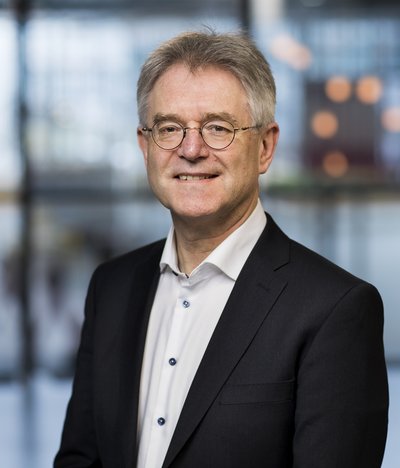
Prof. Dr. Karsten Niehaus serves as Head of the Proteome and Metabolome Research Group at the Center for Biotechnology (CeBiTec) and Faculty of Biology, University of Bielefeld. His research focuses on proteomics and metabolomics applications in plant-microbe interactions, bacterial stress responses, and disease model systems. His laboratory employs advanced mass spectrometry imaging and cell phenotyping technologies to investigate molecular responses in crops like sugar beet and grapevines under abiotic stress conditions, as well as in cancer models where differentiation therapy impacts tumor malignancy. The group also explores microbial biotechnology through Xanthomonas campestris studies on xanthan production and stress adaptation. Selected publications highlight innovations in 3D microfluidics for biomarker detection and bioinformatics platforms like MetHoS for metabolomics data analysis. His work appears in journals covering Frontiers in Plant Science , Scientific Reports , and Journal of Experimental Botany . Contact: kniehaus@cebitec.uni-bielefeld.de | Office: UHG W7-117
Martien Hulsen is an Associate Professor at the Department of Mechanical Engineering , Eindhoven University of Technology (TU/e) . His research focuses on Computational Rheology , with applications in Polymer Processing , Microfluidics , and Additive Manufacturing (3D Printing) . Academic background: PhD in Mechanical Engineering (Delft University of Technology, 1988) Specializes in Numerical Methods for viscoelastic flow simulation Key applications: External Gear Pumps , Cell Sorting , and Micro-rheology Recent research trends: Interface Rheology , Particle Dynamics , and Thermal-Viscous Coupling His work has been published in top journals like Journal of Non-Newtonian Fluid Mechanics and Physics of Fluids . Martien serves on the editorial board of the Journal of Non-Newtonian Fluid Mechanics. Contact: m.a.hulsen@tue.nl
Mary Hannah Wood is an Assistant Professor at the University of Copenhagen's Niels Bohr Institute, specializing in the Theoretical High Energy, Astroparticle and Gravitational Physics department. With a background in physical and surface chemistry, her research focuses on applying advanced techniques like neutron reflectometry to understand complex bioelectronic interfaces and electron transport mechanisms. Her work addresses energy and chemical supply challenges through bioelectronic systems and interfacial analysis . Publications highlight collaborations in electrochemistry , biophysics , and microfluidic engineering , with recent studies in Journal of the American Chemical Society and Langmuir . Mary's research spans photosynthetic membranes , lipid bilayer dynamics , and environmental chemistry . She utilizes neutron reflectometry and atomic force microscopy to explore bioelectronic interfaces and mineral surface interactions.
Gary Hunt serves as the Dyson Professor of Fluid Mechanics at the University of Cambridge, affiliated with the Energy, Fluids and Turbomachinery academic division and Fluids research group. His work bridges fundamental fluid dynamics with practical engineering applications, focusing on sustainable building design and energy efficiency through experimental and theoretical approaches. Hunt's research centers on industrial and environmental fluid dynamics, particularly buoyancy-driven flows, turbulent plumes, and natural ventilation systems in buildings. He combines laboratory experiments in water-filled visualization tanks with theoretical modeling to investigate heat and contaminant transport mechanisms, revealing critical flaws in contemporary 'low-energy' building designs like glazed atria. His findings demonstrate that current ventilation guidance often misrepresents fluid behavior, leading to ineffective energy consumption despite buildings accounting for nearly half of urban energy use. The professor conducts experimental work in a dedicated fluid dynamics laboratory utilizing advanced flow visualization techniques to study complex phenomena including turbulent entrainment across density interfaces, plume dynamics, and environmental stratification. This setup enables precise observation of small density difference effects that significantly impact building ventilation efficiency, human comfort, and energy requirements for heating/cooling systems.
Angelika Manhart is an Assistant Professor in the Department of Mathematics at the University of Vienna's Faculty of Mathematics. With 26 publications spanning from 2014 to 2025, she has established herself as a leading researcher at the intersection of mathematical modeling and biological processes. Her work bridges rigorous mathematical analysis with biological insight to address fundamental questions in cellular mechanics and dynamics. Dr. Manhart's research focuses on mathematical biology, particularly the mechanics of cellular processes including cell movement, cytoskeletal dynamics, and tissue morphogenesis. She specializes in developing computational frameworks that capture the intricate interplay between physical forces and biological functions at the cellular level. Her work explores how mathematical models can elucidate complex phenomena such as actin network dynamics, nuclear positioning in muscle cells, and epithelial tissue formation. She employs techniques from partial differential equations, dynamical systems theory, and computational mathematics to address biological questions across multiple scales. Her publication record reveals a consistent trajectory of increasingly sophisticated modeling approaches, with recent work incorporating machine learning techniques and multiscale modeling. The research spans diverse biological contexts including wound healing, muscle development, microbial communities, and epithelial morphogenesis, demonstrating the versatility of mathematical approaches in biological inquiry. Several of her papers have received significant citations, with 'Nuclear Scaling Is Coordinated among Individual Nuclei in Multinucleated Muscle Fibers' (2019) accumulating 49 citations and 'Intracellular Fluid Mechanics: Coupling Cytoplasmic Flow with Active Cytoskeletal Gel' (2018) receiving 83 citations. Dr. Manhart actively collaborates with experimental biologists across institutions, as evidenced by her co-authorship with researchers from various biological disciplines. Her work has been presented at conferences including talks on 'Alignment processes in cells - From individual interactions to collectivity' (December 2024) and earlier presentations on 'Model and Simulation of Actin-dependent Cell Movement' (2014), reflecting her continued engagement with both theoretical and applied aspects of her field.
Anouar Soufiani is an active researcher specializing in radiative heat transfer, computational fluid dynamics, and plasma physics. His work focuses on complex thermal systems involving coupled radiation-convection phenomena, molecular gas radiation, and high-temperature spectroscopy. Research Interests: Soufiani's investigations span: Fundamental studies of Rayleigh–Bénard convection under radiation effects High-temperature gas radiative properties (CO 2 , argon plasmas) Development of numerical models for turbulent participating media Experimental spectroscopy at extreme temperatures (up to 6000K) Applications in aerospace thermal protection and geological systems Publication Trends: His recent articles (2024-2025) predominantly explore coupled heat transfer mechanisms in confined geometries, with frequent examination of: Radiation-convection interactions in cubical cavities Validation of reduced-order models against experimental data Molecular radiation effects in plasma environments Advanced measurement techniques for radiative properties This consistent focus demonstrates expertise in multiscale thermal transport modeling.
Professor S. Jon Chapman is a faculty member at the Mathematical Institute, University of Oxford, holding the position of Professor of Mathematics and its Applications. He is affiliated with the Oxford Centre for Industrial and Applied Mathematics research group. His educational background includes a DPhil, MA, and BA. Research interests span diverse areas of applied mathematics and scientific modeling: Industrial mathematics and mathematical modeling Partial differential equations and asymptotic methods Fluid dynamics and turbulence theory Biophysical applications including tumor growth and tissue modeling Electromagnetic scattering and superconductivity Materials science and energy systems Publication analysis reveals two primary trends: Recent work (2025) focuses on electrochemical systems (battery modeling, gas-induced bulging) and biological applications (organoid models). Earlier influential publications established expertise in pattern formation, fluid dynamics (ship waves, spiral waves), and transport phenomena in biological systems. Mathematical techniques consistently feature multiscale analysis, asymptotic methods, and nonlinear modeling. Awards and honors recognizing scholarly contributions: Naylor Prize (2015) Julian Cole Prize (2002) Whitehead Prize (1998) Richard C. DiPrima Prize (1994) Johnson Mathematical Prize (1992) No information is available regarding student advising, grants, or laboratory affiliations.
Professor Philip Steinberg is a distinguished academic at Durham University, serving as a Professor in the Department of Geography within the Faculty of Social Sciences and Health. He also holds leadership positions as the Director of the Northern Ireland / Northeast England Doctoral Training Partnership (NINE DTP) and Durham Arctic Director. Additionally, he is an Associate Fellow in the Institute of Advanced Study at Durham. Steinberg earned his MA and PhD from Clark University's Graduate School of Geography (1990-1996). Prior to joining Durham in 2013, he spent sixteen years at Florida State University's Department of Geography, with research interludes at the New York Public Library's Cullman Center (2002-2003), the University of California, Santa Cruz (2005-2006), and Royal Holloway, University of London (2012-2013). He also taught briefly at Bucknell University in 1997. His research focuses on the historical and ongoing projection of social power onto spaces resistant to state territorialization, particularly the world-ocean, the Arctic, and electronic communications. Steinberg explores how these spaces challenge conventional notions of territory, sovereignty, and governance. His current research concentrates on Wet Ontologies and Ocean Governance and Arctic Politics and the Liveliness of Sea Ice , examining how liquid and frozen maritime environments complicate traditional geopolitical frameworks. Analysis of Steinberg's recent publications reveals a sophisticated interdisciplinary approach that bridges political geography, ocean studies, and Arctic research. His work consistently challenges conventional land-based territorial concepts by examining fluid, dynamic maritime spaces. Key themes include the politics of ocean privatization, Arctic sovereignty complexities, oceanic epistemologies, and the interplay between technological imaging and marine governance. His scholarship demonstrates a commitment to rethinking spatial concepts through watery and frozen environments, with significant implications for international law, environmental policy, and geopolitical theory. Among his notable professional contributions, Steinberg served as editor-in-chief of Political Geography (2016-2019) and has directed several significant research centers including IBRU: Durham University's Centre for Borders Research, the Durham Arctic Research Centre for Training and Interdisciplinary Collaboration (DurhamARCTIC), and the Northern Ireland / Northeast England Doctoral Training Partnership (NINE DTP), which supports approximately 150-200 PhD students annually across seven universities. Steinberg has supervised numerous doctoral students, including Joaquim Gaignard. His leadership in interdisciplinary doctoral training, particularly through DurhamARCTIC and NINE DTP, has secured substantial funding for Arctic research and social science doctoral education. His work with IBRU has facilitated boundary dispute resolution and advanced understanding of border areas through professional training and research initiatives. As Director of IBRU, Steinberg leads Durham University's Centre for Borders Research, which offers training courses on boundary delimitation and supports research on sovereignty, territory, and the political organization of space. His leadership of DurhamARCTIC has facilitated Arctic research collaborations across disciplines, building on a six-year grant that trained 15 PhD students across seven disciplines. Through these centers, Steinberg fosters innovative approaches to understanding geopolitical spaces that challenge conventional land-based territorial frameworks.
Mohamed Houssem Kasbaoui is an Assistant Professor in the Department of Mechanical and Aerospace Engineering at Arizona State University's School for Engineering of Matter, Transport and Energy. His research focuses on Computational Fluid Dynamics and Multiphase Flow simulations, with expertise in particle-laden flows, immersed boundary methods, and high-fidelity numerical tools. PhD, Aerospace Engineering (Cornell University, 2017) MSc, Aerospace Engineering (Cornell University, 2015) MSc, Theoretical Physics (Université Paris-Sud, 2014) Diplôme d'Ingénieur (Ecole Centrale Paris, 2013) BSc, Theoretical Physics (Université Paris-Sud, 2011) His work spans particle-resolved DNS , turbulent flow modulation , and environmental applications like microplastic transport in riverbeds. He leads the Kasbaoui Research Group , developing open-source tools like LEAP for CFD simulations. Recent publications highlight expertise in: Vortex dynamics in dusty flows Drag reduction mechanisms Immersed boundary modeling Microplastic trapping in sediment Swirling flow simulations Scale-separated combustion modeling Awarded the 2021 ACS Petroleum Research Fund Doctoral Investigator Award , his group actively seeks students with skills in Applied Mathematics and Parallel Programming . Research spans NSF-funded projects on Environmental Microplastics and Planetary Dust Clouds .
John van Duynhoven is a Professor of Biophysics at Wageningen University and Research. His work bridges advanced imaging techniques and food science, focusing on lipid oxidation, protein processing, and emulsion structure. Affiliation: Wageningen University and Research Academic Rank: Professor Research Interests: He investigates food structure and stability using NMR spectroscopy, super-resolution microscopy, and magnetic resonance imaging. Key areas include lipid oxidation pathways, plant-protein extrusion, and granular flow dynamics. Scientific Contributions: Supervised multiple PhD projects on multiscale protein modeling, emulsion oxidation, and infant nutrition protein digestion. His recent articles highlight innovations in quantifying anisotropic food structures and oxidation products. Collaborations: Partnerships span imaging techniques, X-ray scattering, and food technology. Active projects include lipid oxidation mapping and protein extrusion modeling.
Dr. Alison Paul serves as Reader in Physical Chemistry and Innovation within the School of Chemistry at Cardiff University. She has established a multidisciplinary research program bridging physical chemistry, materials science, and biomedical applications with particular expertise in colloidal systems and polymer science. Her work demonstrates strong industry connections through the Cardiff University Commercial Advisory Panel which she chairs. Her research interests focus on formulation in colloidal systems, physicochemical characterization of macromolecules in solution, and scattering methods to determine structures at small length scales. She investigates relationships between molecular structure, solution conformation, and functionality of novel polymers, with applications in drug delivery, structural materials, and degradable plastics. Her work integrates molecular dynamics with experimental data to advance understanding of complex systems. Analysis of her recent publications reveals a strong trend toward biomedical applications of polymer science, particularly in drug delivery systems for cancer therapy and anesthesia. Her work increasingly incorporates sustainable chemistry principles, as evidenced by research on chemically recyclable polymers and environmentally friendly surfactants. The interdisciplinary nature of her research is reflected in collaborations spanning chemistry, materials science, civil engineering, and medical fields. Dr. Paul actively supervises postgraduate students, with Taylor Young currently listed as her supervisee. She serves on important institutional committees including as co-chair of the Cardiff Materials Research Network and chair of the Cardiff University Commercial Advisory Panel, demonstrating her leadership within the university community. Her teaching portfolio includes Year 2 Physical Chemistry (focusing on thermodynamics of colloidal systems), Year 2 Medicinal Chemistry, laboratory classes for Years 2-3, and Advanced Materials for Year 4 and postgraduate students. Her pedagogical approach emphasizes connecting fundamental chemical principles to real-world applications students encounter daily.
Ezequiel Goldschmidt, MD, PhD is an Assistant Professor in the Department of Neurological Surgery at the University of California, San Francisco (UCSF) . He is affiliated with the Brain Tumor Center and specializes in treating brain, skull base, and pituitary gland tumors using minimally invasive approaches . A proud member of the Latinx community, his research focuses on improving surgical techniques through human anatomy studies and exploring how developmental biology can enhance tumor growth understanding and brain recovery post-injury. Education: MD and PhD from Universidad de Buenos Aires Facultad de Medicina (2009) Residency in Neurosurgery at University of Pittsburgh Medical Center (2020) Postdoctoral Surgical Fellowship in Neuroplasticity at Karolinska Institute (Sweden) Research Interests: He investigates neurosurgical anatomy , endoscopic techniques , and brain tumor biology . His work includes determining risk factors for postoperative complications , application of indocyanine green (ICG) angiography , and genetic profiling of brain tumors . Clinical Trials: Dr. Goldschmidt leads trials on optic nerve stimulation to prevent visual deficits and ICG angiogram as a predictor of postoperative visual function. Scientific Awards: Fellowship in Skull Base Surgery at University of Pittsburgh Medical Center (2019) Fellowship in Neurosurgery Spine at University of Pittsburgh Medical Center (2015) Postdoctoral Surgical Fellowship in Neuroplasticity at Karolinska Institute Publications: His research spans minimally invasive neurosurgery , brain tumor classification , and intraoperative monitoring , with recent works on HPV-associated sinonasal cancer and immune checkpoint inhibition in meningiomas.
Miroslav Grmela is a Researcher at the Department of Chemical Engineering in Polytechnique Montréal , and a member of the Research Center for High-Performance Polymer and Composite Systems (CREPEC) . His work spans thermodynamics, transfer processes, and multiscale modeling of complex fluids. Grmela’s research focuses on non-equilibrium thermodynamics , contact geometry in kinetic dynamics , and mesoscopic theories of polymer suspensions, superfluids, and nanocomposites. He has extensively explored the role of energy and entropy in multiscale systems, with recent publications addressing geometric formulations of thermodynamics and neural network applications to non-symplectic mechanics. Analysis of his 15 most recent articles reveals trends in multiscale thermodynamics , non-Fourier heat conduction , GENERIC formalism , and quantum hydrodynamics . His work often bridges geometric mechanics with thermodynamic consistency. Grmela has supervised 10 graduate students (7 PhD, 3 Master’s) in projects involving nanocomposite thermal conductivity , polymer rheology , and powder suspension simulations . He has no listed scientific awards. His research intersects with fluid dynamics , polymer science , and statistical mechanics , emphasizing mathematical structures like Poisson brackets and Hamiltonian formulations . The CREPEC laboratory provides institutional support for his studies on polymers and composites.
Dr James Shucksmith is a Senior Lecturer in Water Engineering at the School of Mechanical, Aerospace and Civil Engineering, University of Sheffield. After completing his undergraduate degree and PhD at the same department, he joined the academic staff in 2010 following a KTP associate role with Yorkshire Water. His research focuses on urban flooding hydrodynamics, water quality modeling, and sustainable drainage systems. Co-director of EPSRC Centre for Doctoral Training in Water Infrastructure and Resilience Current projects: Real Time Abstraction Management (with Severn Trent Water), Centaur FloodInteract Research interests include: Urban flood hydrodynamics and drainage-surface flow interactions Water quality forecasting tools for surface water abstraction Development of local real-time control systems for urban drainage Experimental validation of flood models using PIV measurements His publications (2010-2025) cover topics like contaminant transport in flooded sewer systems, longitudinal dispersion modeling, and real-time control optimization. Recent work focuses on data-driven approaches for Cryptosporidium prediction and E. coli forecasting.
Massimo Trovato is a Full Professor of Mathematical Physics at the University of Catania, where he has been teaching since 2004 and has held the rank of full professor since 2010. He serves as Director of the INDAM Unit of the Department of Mathematics and Informatics (DMI) since 2014. Professor Trovato teaches courses in both the Mathematics and Physics degree programs at the University of Catania. Professor Trovato's research spans multiple areas within mathematical physics, with a particular focus on theoretical frameworks for understanding physical systems. His work integrates advanced mathematical techniques with physical principles to develop models that explain complex phenomena in semiconductor physics, quantum systems, and fluid dynamics. His research interests include: Mathematical Physics Statistical Mechanics Quantum Kinetic Theory Semiclassical Kinetic Theory Extended Thermodynamics Maximum Entropy Principle Quantum Maximum Entropy Principle Semiconductor Physics Fluid Dynamics Professor Trovato's publication record demonstrates a consistent focus on entropy principles and their applications across various physical systems. His work shows an evolution from classical thermodynamics to quantum formulations, with particular emphasis on semiconductor applications and 2D materials like graphene. The research trajectory reveals increasing sophistication in handling nonlocal quantum effects and fractional statistics, reflecting the growing complexity of modern physical systems being studied. Professor Trovato has made significant contributions to the theoretical understanding of transport phenomena in semiconductors, particularly through the application of maximum entropy principles to both classical and quantum systems. His research has important implications for the development of next-generation semiconductor devices. His teaching responsibilities include Analytical Mechanics for Physics students and Mathematical Physics II for Mathematics students, demonstrating his commitment to educating the next generation of physicists and mathematicians.