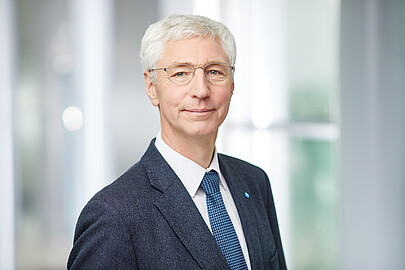
Prof. Jörg Seume is the Executive Director of the Institute of Turbomachinery and Fluid Dynamics at Leibniz University Hannover (Faculty of Mechanical Engineering). He also serves as Spokesperson of the Collaborative Research Centre (CRC) 871 'Regeneration of Complex Capital Goods' and holds roles in the Leibniz Research Centre Energy 2050. His research focuses on turbomachinery, fluid dynamics, gas turbine technology, and aerodynamics. Education details are not explicitly provided, but his academic and professional trajectory indicates expertise in mechanical engineering and fluid dynamics. Research interests include compressor and turbine design, aeroelasticity, aeroacoustics, and energy systems (e.g., PEM fuel cells, organic Rankine cycles). Recent publications (2023-2024) emphasize numerical simulations of turbine and compressor performance, aeroacoustic scaling, labyrinth seal dynamics, and innovations in hydrogen and fuel cell systems. He leads experimental and computational projects, including wind tunnel tests and fluid dynamics modeling. Notable projects include the WiValdi wind farm research initiative and the development of electric turbochargers for automotive applications. His work bridges academic research with industrial applications in energy and propulsion systems.
Stéphane BORDAS is a Full Professor in Computational Mechanics at the University of Luxembourg's Faculty of Science, Technology and Medicine (FSTM), leading the Computational Mechanics (Legato) research group. His work focuses on free boundary problems, method development for complex geometries, and applications in fracture mechanics, biomechanics, and computational engineering. He previously held roles at Cardiff University and the Swiss Federal Institute of Technology in Lausanne (EPFL). His research integrates computational methods like XFEM, isogeometric analysis, and meshfree techniques to address challenges in engineering and medicine. Education: Ph.D. in Theoretical and Applied Mechanics, Northwestern University (2003) M.Sc. in Civil Engineering, École Spéciale des Travaux Publics and Northwestern University (1999) Research Interests: Computational Mechanics, Biomechanics, Finite Element Methods, Fracture Mechanics, High-Performance Computing, Isogeometric Analysis. Grants & Projects: ERC Starting Grant (RealTCut) for surgical simulation and material cutting FP7 ITN INSIST for meshless methods Labs/Teams: Computational Mechanics (Legato) Group at the University of Luxembourg. His work bridges academia and industry, with applications in aerospace, biomedical engineering, and materials science. He is active in open-source software development, including codes for XFEM, isogeometric analysis, and meshfree methods.
Professor Katherine Dobson is a Reader in Geomaterials and Imaging at the University of Strathclyde, jointly appointed in Civil & Environmental Engineering and Chemical & Process Engineering. She joined Strathclyde in 2019 as a Chancellor’s Fellow and has since held various academic roles. Her research focuses on the behavior and evolution of natural and man-made materials using advanced imaging techniques like X-ray computed tomography (CT) and real-time 4D imaging. These methods enable non-destructive analysis of material microstructures under dynamic conditions, such as thermal, mechanical, or chemical changes. Education: Doctor of Philosophy (2007): Specializing in thermochronometry of igneous provinces Bachelor of Science (2001): Natural Sciences (Earth Science & Physics) Research Interests: Multi-phase flows and rheology in complex fluids Pore-scale controls on slope stability for infrastructure resilience Diffusion and bubble growth in silicate melts In situ deformation of composite materials Sustainable resource management and environmental remediation Grants & Projects: EPSRC-funded IM3AGES Facility (2024–2027): Multi-scale imaging for engineering and environmental sustainability NERC Training Courses in 3D/4D X-ray CT imaging (2023–present) Studies on enzyme-induced carbonate precipitation for subsurface CO 2 storage Labs & Equipment: Leverages state-of-the-art facilities including synchrotron-based XCT systems and high-pressure/temperature experimental setups. Collaborates on projects involving soil health, geothermal energy, and bio-cementation technologies.
Sara Grundel is a leading researcher at the Max Planck Institute for Dynamics of Complex Technical Systems in Magdeburg, Germany. Her work focuses on computational methods in systems and control theory, particularly in model order reduction, gas network simulation, and optimization of energy systems. Education: Diplom in Mathematics, ETH Zurich (2005) PhD in Mathematics, Courant Institute of Mathematical Sciences, New York University (2011) Research Interests: Sara’s research encompasses mathematical control theory, stability analysis, and numerical methods for differential-algebraic equations. She applies these techniques to gas and energy networks, epidemic modeling, and multi-agent systems. Her interdisciplinary work bridges computational mathematics with real-world engineering and public health challenges. Recent Publications: Her 15 most recent articles (2024–2012) demonstrate expertise in parametrized PDEs, model reduction for coupled systems, and control strategies for SARS-CoV-2 containment. Key subtopics include adaptive meshing, stability-preserving algorithms, and optimization of nonlinear network dynamics. Scientific Contributions: Developed clustering-based model reduction techniques for networked systems Investigated hyperbolic discretization methods using Riemann invariants Advanced polynomial root radius optimization with affine constraints Collaborations: Sara frequently collaborates with researchers like Peter Benner and Martin Gersen on energy grid simulations and control theory. She participates in international conferences (GAMM, IEEE CDC, MTNS) and contributes to edited volumes in applied mathematics.
Patrick Le Tallec is a Professor of Mechanics at École Polytechnique in France, where he currently serves as Dean of the Bachelor Program and is a member of the M3DISIM project. His distinguished academic career spans multiple institutions including Université Paris Dauphine, INRIA (French National Institute for Research in Digital Science and Technology), and international universities such as Stanford University, University of Wisconsin, and Shanghai Jiao Tong University. He has held leadership positions including Vice President for Education and Head of the Laboratory of Solid Mechanics at École Polytechnique. His educational background includes: Graduate from École Polytechnique Ph.D. in Engineering Mechanics from The University of Texas at Austin (1980) Thèse d'Etat in Applied Mathematics from Université Pierre et Marie Curie in Paris (1981) Professor Le Tallec's research focuses on computational mechanics and applied mathematics with expertise in nonlinear mechanics, domain decomposition methods, and multiscale modeling. His work bridges theoretical mathematics with practical engineering applications, particularly in material science and fluid-structure interactions. He has developed advanced numerical methods for elasticity, viscoelasticity, and fluid dynamics with applications in industrial manufacturing and biomedical engineering. His recent publications demonstrate progression from foundational numerical methods to sophisticated multiscale approaches addressing complex engineering challenges in material science. The research shows particular emphasis on rubber mechanics, fatigue analysis, and computational methods for nonlinear structures, reflecting his ongoing commitment to solving real-world engineering problems through mathematical innovation. His scientific honors include: CISI award in Scientific Computing Prize Blaise Pascal of the French Academy of Sciences Chevalier des Palmes Académiques Chevalier de la Légion d'Honneur Officier de l'Ordre National du Mérite Professor Le Tallec has directed over 40 Ph.D. students from 10 different nationalities, demonstrating significant impact in academic mentoring. His research has been supported through extensive collaborations with industrial partners including Michelin, PSA Group, and Dassault Aviation, as well as scientific advisory roles at the French Alternative Energies and Atomic Energy Commission. He has served as president of the French Society of Applied and Industrial Mathematics and held editorial positions with leading journals in his field. His laboratory work centers around computational mechanics research, particularly through the M3DISIM project at École Polytechnique. His research team brings together mathematicians, engineers, and computer scientists to develop innovative solutions for complex problems in material science and structural mechanics, with applications ranging from industrial tire manufacturing to biomedical engineering.
Harald Köstler is an Associate Professor and Head of Research at the Erlangen National High Performance Computing Center (NHR@FAU) within the Department of Computer Science at Friedrich-Alexander-Universität Erlangen-Nürnberg (FAU). He leads the research group on HPC Software Design at the Chair of Computer Science 10 (System Simulation), focusing on software engineering for high-performance computing and data analytics. His research interests include: Software Engineering for HPC Code Generation for Numerical Solvers Performance Engineering on Hybrid Architectures Discontinuous Galerkin and Lattice Boltzmann Methods Multigrid Solvers and Parallel Algorithms Performance Portability across CPUs, GPUs, and FPGAs The recent publications highlight a strong trend in developing efficient, scalable, and portable simulation frameworks for complex physical systems. His work emphasizes code generation, performance optimization, and the integration of classical model-driven and data-driven approaches. Key application areas include computational fluid dynamics, geotechnical engineering, and climate modeling, often leveraging the waLBerla and ExaStencils frameworks. Harald Köstler has no listed scientific awards in the provided text. He advises students in the areas of high-performance computing, numerical methods, and software engineering for scientific applications. His research is supported by collaborations within the FAU HPC ecosystem and likely involves grants related to national high-performance computing initiatives. He is a key contributor to the waLBerla framework, a block-structured, high-performance software for multiphysics simulations, and is involved with the ExaStencils project, which focuses on advanced multigrid solver generation. These frameworks form the core of his research team's efforts in scalable scientific computing.
Wouter van Toll is a Lecturer at the Academy for AI, Games & Media, specializing in crowd simulation and real-time systems. His research focuses on path planning, crowd behavior modeling, and fluid dynamics in agent-based simulations. He has contributed to advancing algorithms for microscopic crowd simulation and integrating techniques like Smoothed Particle Hydrodynamics (SPH) to handle extreme crowd densities. Key research interests include sketch-based interaction design for steering behaviors, navigation mesh optimization, and topological strategies for agent coordination. His work bridges computational methods with creative applications in game development and artificial intelligence. Received Best Paper Award Honorable Mention (2022) for his work on sketch-based steering behaviors in crowd simulation. Active collaborations in Europe and North America, particularly in crowd simulation software development. Publications span algorithmic advancements in crowd simulation, navigation systems, and interdisciplinary applications combining physics-based methods with agent-based models. Current research emphasizes real-time simulation efficiency and human-centered design tools for behavior specification.
Professor Peter Nixon holds the position of Professor of Biochemistry in the Department of Life Sciences at Imperial College London's Faculty of Natural Sciences. His research focuses on solar energy conversion mechanisms in chloroplasts and cyanobacteria, including enhancing photosynthetic light reactions, photosystem II assembly/repair, and synthetic biology applications in agriculture and sustainability. Education: BA (Hons) Biochemistry from the University of Cambridge, followed by a PhD at Imperial College London. He also served as a Visiting Professor at Nanyang Technological University's School of Biological Sciences from 2016 to 2020. Key research interests include thiamine deficiency pathogenesis, folate bioavailability, and enzyme catalysis mechanisms. His work spans structural biology, synthetic biology, and food science applications. Recent publications highlight his long-standing contributions to understanding ethanol-induced neurological damage, transketolase biochemistry, and folate-milk protein interactions. He collaborates with multiple centers including the Centre for Solar Biotechnology, Bezos Centre for Sustainable Protein, and Molecular Plant and Microbial Systems.
Derek Fong is a Lecturer at Stanford University, specializing in environmental fluid dynamics and coastal processes. His research focuses on sediment transport dynamics, estuarine hydrodynamics, and tidal flow modeling, with particular emphasis on river plumes, reservoir circulation patterns, and the impacts of physical processes on aquatic ecosystems. His work integrates numerical modeling, field observations, and experimental studies to address challenges in water resource management, climate change impacts, and environmental fate analysis. Notable contributions include studies on vertical mixing in tropical reservoirs, sedimentation dynamics in alpine lakes, and tidal advection mechanisms in estuaries. Dr. Fong's publications span over two decades, emphasizing interdisciplinary approaches to understanding hydrodynamic processes in complex aquatic systems. His recent work (2024) introduces a novel tool for evaluating fuel management project effectiveness, reflecting his expanding focus on applied environmental solutions. While no specific awards are mentioned in the provided texts, his extensive publication record highlights sustained contributions to environmental fluid dynamics research. His advising and grant activities remain unreported in available data.
W. KEIL is an Instructor affiliated with the École Normale Supérieure (ENS), the CNRS, and the Curie Institute. His research focuses on Soft Matter and Biophysics within the Department of Physics. Research interests include the interdisciplinary study of complex fluids, biological systems at mesoscopic scales, and the interplay between structure and dynamics in soft materials. Specific topics involve colloidal systems, active matter, and polymer physics.
Allegra Hosford Scheirer is an Adjunct Professor in the Department of Earth & Planetary Sciences at Stanford University. Her research focuses on basin and petroleum system modeling, integrating 3D geologic frameworks with geochemical, tectonic, and fluid flow processes to evaluate hydrocarbon resource potential. She specializes in unconventional reservoir characterization, gas hydrate systems, and the application of advanced modeling techniques to complex sedimentary basins globally. Education: Ph.D. in Geology/Petroleum Geology (likely from Stanford or comparable institution, inferred from affiliation) Research interests span: 3D basin modeling of gas hydrate deposits in the Gulf of Mexico and New Zealand margins Thermal maturation and rock physics templates for unconventional shale reservoirs Integration of seismic interpretation with petroleum system analysis in Alaska, California, and Colombia Impact of tectonics and fluid migration on reservoir quality and hydrocarbon distribution Recent work emphasizes: Gas hydrate destabilization mechanisms linked to tectonic uplift Quantitative workflows for sweet spot identification in organic-rich mudrocks Multi-dimensional scaling methods for uncertainty quantification in reservoir properties Key projects include: San Joaquin Basin (CA) thermal history modeling Shublik Formation unconventional potential on Alaska's North Slope 3D petroleum system analysis of the Jeanne d’Arc Basin (Newfoundland) Her work bridges academic research and industry applications, focusing on improving resource assessment in complex geological settings.
Prof. Dr. Peter Sollich is a Professor of Theoretical Physics at Georg-August-Universität Göttingen, affiliated with the Institute for Theoretical Physics. His research spans non-equilibrium statistical physics with applications to soft matter, active systems, and complex networks. He maintains a small part-time appointment at King's College London. His primary research interests focus on non-equilibrium statistical physics , particularly soft and active matter rheology, jamming transitions, glassy dynamics, dynamical phase transitions, and inference from dynamical data. His work bridges theoretical physics with applications in materials science and network theory, emphasizing both fundamental mechanisms and quantitative modeling approaches. Analysis of his recent publications reveals strong thematic consistency in studying glassy dynamics and active matter systems , with increasing integration of machine learning techniques for network analysis. Key methodological threads include coarse-grained modeling, spectral analysis of complex systems, and non-equilibrium thermodynamics frameworks. His 2023-2025 work shows growing emphasis on nonreciprocal interactions in active mixtures and physics-inspired machine learning applications. Prof. Sollich actively supervises Bachelor's, Master's, and PhD students, welcoming thesis inquiries in theoretical physics. His group develops analytical and computational approaches to complex dynamical systems, with recent grants likely supporting work on network dynamics and active matter modeling (specific grants not detailed in source text). His research group operates within the Institute for Theoretical Physics at Göttingen, focusing on computational and analytical modeling of disordered systems. Current projects involve elastoplastic modeling of amorphous solids, spectral analysis of heterogeneous networks, and theoretical frameworks for active matter phase separation.
Dr. Rama S. Gorla is a Professor of Aerospace Engineering at the Air Force Institute of Technology (AFIT), Wright-Patterson Air Force Base, Ohio, affiliated with the Graduate School of Engineering and Management within the Department of Aeronautics and Astronautics. Previously, he served as Professor of Mechanical Engineering and Fenn Distinguished Research Professor at Cleveland State University. Ph.D. in Mechanical Engineering, University of Toledo His primary research interests lie in combustion, heat transfer, fluid dynamics, turbomachinery, and aerothermodynamics. His work spans theoretical, computational, and applied aspects of thermal-fluid systems, particularly in boundary layer flows, radiative heat transfer, and non-Newtonian dusty fluids. He has made significant contributions to the understanding of reacting flows, wavy surface convection, and singular perturbation methods in engineering problems. The recent publications highlight a consistent focus on thermal-fluid phenomena involving radiation, complex geometries, and multiphase flows. Key trends include the analysis of dusty fluids under nonlinear radiation, heat transfer in non-Newtonian Casson fluids, and boundary layer behavior in combustible environments. These works appear in high-impact journals such as AIAA Journal of Thermophysics and Heat Transfer , ASME Journal of Heat Transfer , and Numerical Heat Transfer . Dr. Gorla has received numerous honors and awards for his contributions to engineering education and research: Distinguished Faculty Research Award, Cleveland State University (1999) Distinguished Faculty Teaching Award, Cleveland State University (2004) Teaching Excellence Award, Northeast Ohio Council on Higher Education (2004) Distinguished Technical Educator Award, Cleveland Technical Societies Council (2006) Fenn Distinguished Research Professor (2008) ASME Fellow He has secured research funding from NASA, AFOSR, and local industry. Dr. Gorla has authored over 695 technical papers, co-authored two textbooks, and serves as Editor-in-Chief of the International Journal of Fluid Mechanics Research , and Associate Editor for five other journals. Although specific students and grants are not listed, his editorial and publication record indicates extensive academic leadership. He has previously served as University Ombudsperson, demonstrating commitment to academic community and mentorship. While no specific lab or research team is mentioned in the text, his research areas suggest involvement in thermal sciences and propulsion-related laboratories at AFIT, likely supporting Air Force mission needs in aerospace systems and energy technologies.
Professor Panayotis G. Kevrekidis is a tenured full professor in the Department of Mathematics and Statistics at the University of Massachusetts Amherst, where he has been a faculty member since 2001. He holds a prominent position in applied mathematics and nonlinear science, with affiliations extending to the Center for Nonlinear Studies at Los Alamos National Laboratory as the Stanislaw M. Ulam Scholar. Education: B.Sc. in Physics, University of Athens, 1996 M.S., Rutgers University, 1998 M.Phil. and Ph.D. in Applied Mathematics, Rutgers University, 2000 (jointly supervised by Joel Lebowitz and Panos G. Georgopoulos) His research focuses on the mathematical analysis of nonlinear waves, particularly solitary wave structures in nonlinear partial differential equations and difference equations. His work has broad applications in nonlinear optics, atomic physics (especially Bose-Einstein condensates), materials science, biology, and chemistry. He employs dynamical systems, stability theory, and numerical methods to explore existence, bifurcations, and long-term behavior of coherent structures in Hamiltonian and dissipative systems. The 15 most recent publications reflect a strong emphasis on localized excitations, discrete solitons, and nonlinear models across physics and biology. These works span theoretical developments in the discrete nonlinear Schrödinger and sine-Gordon equations, applications in optical waveguides and Josephson junctions, and interdisciplinary modeling in tumor angiogenesis, aerosol dynamics, and cosmology. The keywords and subfields reveal a deep integration of mathematical rigor with physical insight. Scientific Awards and Honors: NSF CAREER Award (2003) Humboldt Research Fellowship SIAM Outstanding Paper Prize Stefanos Pnevmatikos International Award (2008) J.D. Crawford Prize, SIAM (2013) A.F. Pallas Award, Academy of Athens Fellow of the American Physical Society (2014) Fellow of the Society for Industrial and Applied Mathematics (2017) Fellow of the American Mathematical Society (2020) Professor Kevrekidis has secured major research funding from the National Science Foundation, US Air Force, European Research Council, Alexander von Humboldt Foundation, Alexander S. Onassis Public Benefit Foundation, and the US–Israel Binational Science Foundation. He has advised 8 PhD students, several of whom hold academic or research positions at institutions such as UIUC, Cameron University, ORNL, and Los Alamos National Laboratory. He has also mentored 5 postdoctoral researchers, many of whom now hold permanent positions in academia. He is an associate editor for three journals and has authored or edited four influential books in nonlinear science. He leads a vibrant research group at UMass Amherst focused on nonlinear waves and complex systems, fostering collaborations across disciplines and institutions. His work continues to shape the theoretical foundations of nonlinear phenomena in both discrete and continuous systems.
Julian Antony Quick is a Researcher at the Department of Wind and Energy Systems within the Technical University of Denmark . His work focuses on wind farm optimization, energy management, and market-driven renewable energy systems. Active research in wind farm control and market integration Specializes in hybrid power plant design and uncertainty quantification Contributes to UN Sustainable Development Goals through wind energy research His research explores advanced optimization techniques for wind resource assessment, turbine design, and revenue maximization in electricity markets. Key areas include: Compressed air energy storage integration Wind farm layout optimization Surrogate-based system modeling Dynamic energy management strategies While not explicitly listed, his collaborative projects suggest active involvement in PhD supervision and industry partnerships across Europe. His recent publications demonstrate a strong focus on translating technical advances into economic benefits through: Market-aware wind farm design Data-driven flow control Hybrid system efficiency improvements SDG-aligned sustainable energy solutions