Dr. Dong-Han Ham was part of the academic staff at Middlesex University's Computer Science department. His research focuses on human factors, cognitive ergonomics, and safety-critical systems, particularly in nuclear power plant operations and decision support systems. He has contributed to frameworks for usability evaluation, human error analysis, and visual analytics. Key research interests include human-system interaction, task complexity analysis, and applying systems theory to improve safety and efficiency in complex environments. He has developed methodologies like the MaRMI-III framework for component-based software development and the TACOM extension for nuclear plant task analysis. His work often intersects with big data applications, such as extracting human reliability data from incident reports using Safety-II concepts. He has also explored usability in mobile interfaces and the design of physical controls for process systems. Ham has organized conferences like ECCE 2007 and contributed to editorial roles in journals. His research emphasizes practical applications of theoretical models, aiming to bridge gaps between cognitive science and engineering systems.
Ioannis Kotidis is an Associate Professor in the Department of Informatics at the Athens University of Economics and Business (AUEB), School of Information Sciences and Technology. He holds a Diploma in Electrical and Mechanical Engineering from the National Technical University of Athens (1995), and Master's and Ph.D. degrees from the University of Maryland (1997, 2000). Prior to joining AUEB, he worked as a Senior Technical Specialist at AT&T Labs-Research in Florham Park, New Jersey until January 2006. His research spans multiple areas of database systems with particular focus on On-Line Analytical Processing (OLAP) and data warehousing, data mining, sensor/P2P networks, mobile data management, data fusion & dissemination, data streams, RFID data management, approximate query answering, and database preservation . His work bridges theoretical foundations with practical implementations, as evidenced by numerous publications in top-tier database conferences and journals. Professor Kotidis leads several significant research projects including RECOST (REal time management of COmplex STreams), DBSENSE (Information Management in Wireless Sensor Networks), INFORE (Interactive Extreme-Scale Analytics and Forecasting), and DeLorean (Storage, Indexing and Analysis Techniques for Time-Series Management). His recent work focuses on blockchain applications for decentralized OLAP processing, complex event processing frameworks, and advanced techniques for managing complex data streams. Among his notable achievements is the best paper award at the ACM SIGMOD International Conference on Management of Data for his work on DynaMat: A Dynamic View Management System for Data Warehouses. His publications consistently address challenging problems in database systems with innovative approaches that have influenced both academic research and practical implementations. He has supervised numerous undergraduate theses on topics including blockchain-based OLAP view management, complex event processing using FlinkCEP, and graph similarity learning. His research has attracted significant funding through various research programs at AUEB, including Basic Research Funding Programs 1 & 2.
Alessandro Lomi is Full Professor in the Faculty of Economics at the University of Italian Switzerland (USI), where he conducts research on organizational networks and social dynamics. As Life Member of Clare Hall College, University of Cambridge, his expertise spans social network modeling, interorganizational relations, and computational approaches to organizational behavior. His methodological contributions include: Developing relational event models for network dynamics Analyzing multilevel organizational networks Studying temporal patterns in interhospital patient transfers Examining knowledge sharing in organizational contexts Recent publications investigate role switching in financial markets, goodness-of-fit frameworks for network models, and microstructural approaches to self-organization.
Isambo Karali is an Assistant Professor in the Department of Informatics and Telecommunications at the National and Kapodistrian University of Athens, a position she has held since November 2007. Prior to this, she served as a Lecturer at the same department from September 1999 to November 2007. Her academic career spans over three decades with significant contributions to knowledge representation, uncertainty reasoning, and semantic web technologies. Dr. Karali's educational background includes: PhD in Informatics (1995) from the University of Athens MSc in Computer Science (1988) from University College, University of London Bachelor of Mathematics (1986) from the Department of Mathematics, University of Athens Dr. Karali's research focuses on Knowledge Representation and Reasoning with Uncertainty, Artificial Intelligence, Logic Programming, and Object-Oriented Programming. She has made significant contributions to applying Dempster-Shafer theory for handling uncertainty in Semantic Web applications. Her work bridges theoretical foundations of logic programming with practical applications in knowledge representation, particularly in distributed and heterogeneous environments. She has supervised numerous PhD and master's theses in these areas. Her recent publications demonstrate a strong trend toward integrating uncertainty reasoning with Semantic Web technologies, particularly using Dempster-Shafer theory and fuzzy logic. Her work addresses challenges in managing imprecise and uncertain information in large-scale knowledge systems, with applications in recommendation systems, news analysis, and semantic search. The interdisciplinary nature of her research connects artificial intelligence, knowledge representation, and web technologies to solve complex information management problems. Dr. Karali has been actively involved in research funding and collaboration: Principal Investigator for "Handling uncertainty in data intensive applications on a distributed computing environment (cloud computing)" under the "Thalis" Program Scientific Responsible for "Artificial Intelligence and Logic Programming Techniques for Knowledge on the World Wide Web" at the National and Kapodistrian University of Athens Scientific Responsible for "Semantic Web and Logic Programming - Application to Guided Search" at the National and Kapodistrian University of Athens Participant in multiple EU research projects including MISSION, COSMOS, ADDSIA, PARACHUTE, APPLAUSE, and EDS As an educator, Dr. Karali has taught core undergraduate courses including Object-Oriented Programming and Logic Programming, as well as graduate courses on Knowledge Technologies and Artificial Intelligence. She has supervised numerous PhD and master's students, with a focus on uncertainty reasoning, semantic web technologies, and logic programming applications. Her mentorship extends to student competitions, including guiding the Department's team in the Microsoft ImagineCup 2009. Dr. Karali has also contributed to the academic community through service activities, including membership on program committees for conferences like IEEE ICTAI, reviewer for prestigious journals, and organizational roles in academic events. From 2000 to 2012, she was responsible for the Department's website, contributing to its architecture design and system development.
Hannah Epstein is an Honorary Lecturer at the School of Life Sciences, University of Essex, specializing in marine biology with a focus on coral reef ecosystems. She is based at the Colchester Campus and actively contributes to both research and teaching in her field. Dr. Epstein's research focuses on several interconnected areas of marine science: Coral Reef Ecology - examining community structures and dynamics across tropical seascapes Microbial Ecology - investigating the complex relationships between corals and their microbial symbionts Tropical Marine Biology - studying biodiversity and ecological processes in warm-water marine environments Coral Reef Climate Resilience - exploring mechanisms that enable corals to withstand environmental stressors Her recent publications demonstrate a strong emphasis on understanding how coral microbiomes respond to environmental stressors, particularly thermal events. Epstein's work reveals important insights into microbial transmission, coral bleaching mechanisms, and potential pathways for enhancing coral resilience through microbiome engineering. She has published extensively in high-impact journals including Animal Microbiome, Global Change Biology, and The ISME Journal. Dr. Epstein has received recognition for her methodological contributions to coral microbiome research, particularly in developing best practices for 16S rRNA amplicon data analysis. Her interdisciplinary approach combines molecular techniques with ecological theory to address pressing conservation challenges facing coral reef ecosystems worldwide. As an educator, Dr. Epstein teaches across multiple levels of the curriculum, from introductory marine ecology to specialized field courses in tropical marine biology. Her teaching portfolio reflects her research expertise while providing students with practical skills for marine scientific investigation.
Dr. Ki-Young Jeong is a Professor of Engineering Management in the College of Science and Engineering at the University of Houston-Clear Lake. He holds a Ph.D. in Industrial Engineering from Texas A&M University and an MBA from the University of Massachusetts. With over 10 years of industrial experience as a project lead, systems engineer, and consultant, he transitioned to academia to focus on research and teaching. Education: M.S. in Industrial Engineering, Texas A&M University Ph.D. in Industrial Engineering, Texas A&M University MBA, University of Massachusetts His research focuses on supply chain design & optimization , humanitarian logistics network design , discrete event simulation , and data envelopment analysis . He has published over 60 peer-reviewed articles, emphasizing applications in disaster relief logistics, emergency supply chains, and operational efficiency. His work combines advanced analytics with real-world challenges in manufacturing, project management, and crisis response. Awards: UHCL Distinguished Professorship in Computer Science and Engineering (2021-2022) Minnie Stevens Piper Teaching Award nominee (2010-2011) Dr. Jeong’s research has explored trade-offs in emergency logistics networks, integrating multi-objective programming and data envelopment analysis to improve decision-making. His recent work addresses disaster recovery center location-allocation, supply chain resilience, and financial ratio analysis in the oil and gas industry. He also investigates simulation-based training for project management and lean Six Sigma implementation. His research has been supported by institutions like NASA, focusing on practical solutions for complex systems. He advises students on topics combining technical skills with humanitarian and industrial applications.
Leilei Zeng is a Professor and Associate Chair (Research) at the University of Waterloo's Department of Statistics and Actuarial Science. She holds the Graham Trust Chair in Health Statistics. Her research focuses on statistical methodologies applied to health sciences, including event history analysis, longitudinal data modeling, and clinical trial design. She collaborates with researchers in aging, dementia, rheumatology, and environmental health. Dr. Zeng earned her Ph.D. in Biostatistics from the University of Waterloo in 2005. She previously served as an Assistant Professor at Simon Fraser University before joining Waterloo in 2011 as an Associate Professor. Her work addresses complex data challenges such as multivariate processes, incomplete observations, and measurement error in health-related studies. Her research interests span statistical methodology development for clinical and epidemiological studies, including the design of cancer trials, analysis of progression-free survival, and the integration of auxiliary information in longitudinal datasets. She has contributed to studies on maternal cortisol profiles, cognitive reserve in dementia, and the impact of environmental factors on health outcomes. Dr. Zeng’s publications emphasize rigorous statistical approaches to address real-world health data complexities. Her recent work highlights advancements in mitigating bias in intermittent data measurements and improving cohort study designs for disease progression analysis.
Brooks Simpson is a Foundation Professor of History at Arizona State University's College of Integrative Sciences and Arts. His expertise focuses on U.S. political and military history, particularly the Civil War and Reconstruction eras. He has authored six books and contributed to ten more, including the acclaimed Ulysses S. Grant: Triumph over Adversity, 1822-1865 , which earned a New York Times Notable Book designation and a Choice Outstanding Academic Title. Simpson has appeared on C-SPAN and PBS’ American Experience , and in 2009 delivered lectures in Turkey on Abraham Lincoln and Barack Obama’s historical contexts. His research interests encompass presidential studies, military strategy, and the socio-political dimensions of the Civil War. He has been featured in media discussions analyzing modern political events through historical frameworks, including commentaries on presidential elections and debates. Simpson’s work bridges academic scholarship with public engagement, reflecting his commitment to interpreting complex historical dynamics for broader audiences. Affiliations: College of Integrative Sciences and Arts, Arizona State University Media Contributions: C-SPAN, PBS, Arizona PBS, TIME, ABC 15 Key Awards: New York Times Notable Book (2000), Choice Outstanding Academic Title (2000) Public Engagement: State Department-sponsored lectures (2009), op-eds on presidential history His publications explore military campaigns, political leadership, and post-war reconstruction, with a focus on figures like Grant, Lincoln, and Sherman. Simpson’s analyses often emphasize the interplay between military strategy and political objectives, offering critical insights into how historical events shape contemporary understanding of governance and conflict.
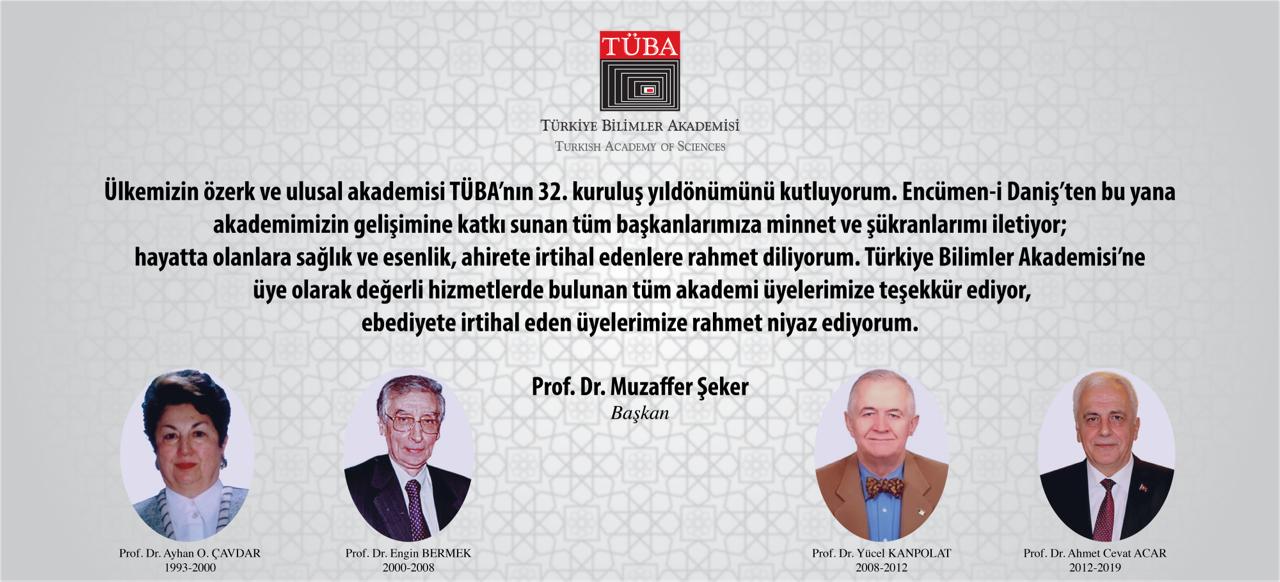
M. Talha Cicek serves as an Associate Professor in the School of History at University College Dublin, where he contributes to the academic community through teaching, research, and professional activities. His institutional affiliation with University College Dublin places him within one of Ireland's leading research-intensive universities. His educational background includes a PhD from Sabanci University, followed by prestigious postdoctoral experiences including The British Academy Newton Post-Doctoral Fellowship at the School of Oriental and African Studies (SOAS) in London and The Humboldt Experienced Research Fellowship at the Alexander von Humboldt Foundation in Bonn, Germany. Professor Cicek's research focuses on the Modern Middle East, with particular emphasis on Ottoman history, World War I in the Middle East, and Arab tribal societies. His scholarly work examines complex historical processes including state formation, political engineering, and the dynamics between imperial centers and peripheral regions. He has made significant contributions to understanding Ottoman-Arab relations during critical historical transitions, particularly the late Ottoman period and early Turkish Republic era. His extensive publication record demonstrates consistent scholarly productivity with a clear trajectory toward increasingly sophisticated analyses of translocal tribal dynamics, imperial governance, and post-Ottoman political formations. His recent work shows a progression from examining specific historical events to analyzing broader structural patterns in Middle Eastern history, with growing attention to transnational and translocal phenomena that challenge conventional state-centered historical narratives. Among his notable recognitions are The Incentive Award for pioneering research on modern Middle Eastern history, the Exceptional Young Scientist Award, and the High Achiever Young Academics Award. These honors reflect the significance and impact of his scholarly contributions to the field. The Incentive Award (2021) - For conducting pioneering research on the history of the modern Middle East Exceptional Young Scientist Award (2021) High Achiever Young Academics Award (2015-2018) Professor Cicek actively supervises PhD students and has developed and taught numerous courses including Middle East State & Society, Rurality in Modern Middle East, Elites and Empire in the Ottoman Arab Lands, and Modernisation in the Middle East. His professional engagement extends to grant assessment for organizations including the Swiss National Science Foundation and service on editorial boards for several prominent journals in Middle Eastern studies. He maintains active membership in scholarly associations such as the Turkish Academy of Sciences (since 2023), Union Académic Internationale, British Society of Middle Eastern Studies, and Middle East Studies Association. His multilingual capabilities in Turkish, Arabic, Ottoman Turkish, English, French, and German enable him to work with primary sources across multiple languages, enhancing the depth and authenticity of his historical research. This linguistic proficiency supports his analysis of diverse historical materials including Ottoman archives, Arabic memoirs, and European diplomatic correspondence.
Stuart Campbell is a Professor of Near Eastern Archaeology at The University of Manchester, with a career spanning over four decades. He holds a MA and PhD from the University of Edinburgh (1984, 1992), followed by a post-doctoral fellowship there before joining Manchester in 1995. His fieldwork focuses on the Near East, including long-term projects at Domuztepe (Turkey), Tell Khaiber (Iraq), and Charax Spasinou (Iraq). He specializes in obsidian sourcing, early complex societies, and innovative archaeological technologies like portable XRF. Key interests include Neolithic to Bronze Age social complexity, ceramic analysis, and cultural heritage protection in conflict zones. Research highlights include directing the Domuztepe project (1995–2016), co-directing the Ur Region Archaeology Project (2013–present), and analyzing obsidian networks across the prehistoric Near East. His work bridges material culture studies with computational archaeology, emphasizing interdisciplinary approaches. Education: MA Archaeology (Edinburgh, 1984); PhD (Edinburgh, 1992) Major Projects: Domuztepe, Tell Khaiber, Charax Spasinou Expertise: Obsidian provenance, early urbanism, archaeological technology Recent work emphasizes cultural heritage preservation in post-conflict Iraq and the application of proteomics to archaeological ceramics. Over 50 peer-reviewed publications and datasets on figshare document his contributions to Near Eastern archaeology.
Adam Moore is a Senior Lecturer in Psychology at the University of Edinburgh's School of Philosophy, Psychology and Language Sciences. He holds office in the Psychology Building at 7 George Square, Edinburgh. His teaching includes undergraduate courses on Thinking and Reasoning and postgraduate modules on statistics and methodology with R. He actively supervises PhD students in areas like moral psychology and political behavior. Moore's research examines the intersection of morality, power, and politics, focusing on moral judgment consistency, political identity biases, and self-serving moral disengagement. Methodologically, he integrates computational modeling, neuroimaging, and advanced statistical analyses. Recent work explores AI's role in moral decision-making, political polarization dynamics, and empathy's cognitive foundations. His publication trends reflect interdisciplinary approaches to moral psychology, with emphasis on agent-based modeling, Bayesian analysis, and social neuroscience. While no specific awards are listed, his extensive supervision record and diverse grant participation (implied through advisor roles) highlight sustained academic engagement. He advises on honors dissertations and collaborates on topics like social identity's impact on risk-taking at mass gatherings.
Nicolai Haydn is a Professor of Mathematics at the University of Southern California (USC), affiliated with the Department of Mathematics in the Dornsife College of Letters, Arts and Sciences. He has held academic positions at USC since 1990, progressing from Assistant Professor (1990–1994), to Associate Professor (1994–2002), and Professor since 2002. He earned his Ph.D. in Mathematics from the University of Warwick in 1987. His research focuses on ergodic theory , dynamical systems , and limit theorems , with particular emphasis on entry and return times distribution, escape rates, and random dynamical systems. His work explores both theoretical and applied aspects of these fields, including applications to statistical mechanics and stochastic processes. Recent publications (2020–2025) highlight advancements in quenched limiting entry distributions , number of visits in ϕ-mixing dynamics , and escape rate analysis . These studies contribute to understanding statistical behaviors in complex dynamical systems. Notable collaborations include work with researchers like Sandro Vaienti (University of Toulon) and Matthew Nicol (University of Houston). Teaching responsibilities include advanced courses such as Math 625: Ergodic Theory and Dynamical Systems and Math 520: Complex Analysis . He has also contributed to educational materials, including lecture notes on entry/return times distributions. No academic awards or grants are explicitly listed in the provided texts, though his extensive publication record reflects sustained scholarly impact. Research is centered at USC, with no mention of lab affiliations or team collaborations beyond co-authorships.
Federica Corrado is an Associate Professor at the Polytechnic University of Turin, affiliated with the Interuniversity Department of Regional and Urban Studies and Planning (DIST). She is a member of the Interdepartmental Centre R3C - Responsible Risk Resilience Centre. Her work focuses on mountain areas, territorial policies, and local development, with expertise in urban planning, sustainability, and climate action. She holds leadership roles in projects such as 'Beyondthesnow' and 'Forcora Attiva', addressing climate resilience and territorial transition in alpine regions. Education: Curriculum details are available in her downloadable file (487KB). Teaching: Leads courses in Urban Planning at the Master's and Bachelor's levels, including 'City, territory, landscape' and 'Architecture, society and territory B'. Research: Explores metropolitan-mountain interactions, climate change impacts on alpine tourism, and sustainable development policies. Collaborates with institutions like CIPRA Italy and the Italian Alpine Club. Grants/Projects: Manages projects on territorial analysis (Alcotra A-MOT), socio-economic studies (Monesi district), and sustainable development conventions. Awards: Recognized as a Fellow by CIPRA Italy, the Italian Alpine Club, and the Dislivelli Association for contributions to alpine research and policy. Labs/Teams: Active in the R3C Centre for risk resilience and collaborates with the Esino-Frasassi Mountain Union on transboundary initiatives. Her research integrates interdisciplinary approaches to address urban-rural dynamics, climate adaptation, and cultural practices in mountain regions.
Stefano Di Stefano is a Full Professor of Organic Chemistry at the University of Rome La Sapienza, Department of Chemistry. He holds a PhD (2000) and undergraduate degree from the same institution. His academic career spans postdoctoral research at La Sapienza, progressing through Researcher, Associate Professor roles before achieving Full Professorship in 2007. He has conducted research at Universidad Autónoma de Madrid (Spain) and Albrecht Christian Universität Kiel (Germany). Research : Focuses on supramolecular chemistry, dynamic combinatorial chemistry, and non-heme metal catalysis for C-H bond oxidation. Key projects include dissipative systems (fuel-driven molecular machines), supramolecular catalyst design, and understanding macrocyclization equilibria. Collaborates with researchers from Tor Vergata Rome, Parma, Bologna, Eindhoven, Cambridge, Girona, Manchester, and Mainz. Teaching : Teaches Organic Chemistry II, IV, and specialized courses for Chemical Sciences. Awarded the Excellent University Teaching Prize four times (2014, 2017, 2018, 2021) for his instruction in Physical Organic Chemistry. Awards : Recipient of the Italian Chemical Society's 2020 national prize for methodological advances in organic chemistry. Recognized for pioneering work in chemical fuels for molecular machines and dissipative systems. Laboratory : Based in Cannizzaro Building (office/lab 329/324), his group develops novel catalytic systems and fuel-driven devices. Recent work includes transient polymers, pH-responsive nanodevices, and biomimetic oxidation catalysts.
Reinhard Lührmann is a Professor and Director at the Max Planck Institute for Multidisciplinary Sciences, leading the Department of Cellular Biochemistry. He holds an honorary professorship at Georg-August University of Göttingen. His research focuses on RNA splicing mechanisms, particularly the spliceosome's structure and function. He earned his PhD from the University of Münster in 1975 and has held roles at the Max Planck Institute for Molecular Genetics (1981–1988), University of Marburg (1988–1999), and currently directs the MPI department since 1999. Research Interests: Lührmann’s lab investigates how the spliceosome recognizes intron/exon boundaries in complex metazoan pre-mRNAs, the assembly of catalytically active spliceosomes, and the structural basis of splicing. Techniques include biochemical purification, mass spectrometry, RNA engineering, X-ray crystallography, and cryo-EM to visualize spliceosome components. Work emphasizes mammalian systems but also uses yeast for core mechanisms. Publications highlight structural insights into spliceosome activation, RES complex roles, and small molecule inhibitors targeting splicing. Collaborations with structural biologists (e.g., Stark, Kastner) and functional studies on catalytic steps underscore his interdisciplinary approach. Labs/Teams: His group is part of the Max Planck Institute’s Molecular Biology and Structural Biology research networks. The lab’s homepage is here .