National and Kapodistrian University of AthensGreece
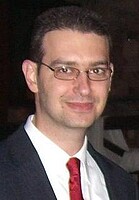
Nicholas V. Sarlis is a Professor of Experimental Solid State Physics at the Department of Physics , National and Kapodistrian University of Athens since 2017. With an h-index ≥36, he has authored 2 monographs, >155 peer-reviewed publications, and 80 conference communications. B.Sc. in Physics (1991), National and Kapodistrian University of Athens Ph.D. in Physics (1997), National and Kapodistrian University of Athens His research applies Natural Time Analysis to: Earthquake precursor identification Space weather and cosmic ray studies Climate phenomenon prediction (El Niño) Fracture mechanics and complex systems Seismicity and geoelectric field correlations Non-extensive statistical mechanics applications Recent work includes analyzing seismic entropy changes under time reversal and developing earthquake nowcasting systems. Publications span 2025's Statistical mechanics in geophysical contexts to 2024's cross-disciplinary disaster prediction tools.
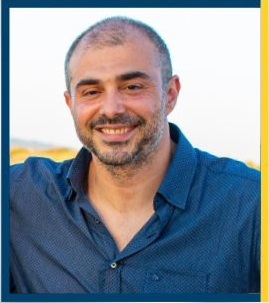
Antonios Deligiannakis is a Professor at the School of Electronic and Computer Engineering of the Technical University of Crete, specializing in database systems and distributed data processing. His academic career includes a postdoctoral position at the National and Kapodistrian University of Athens (2006-2007) and a visiting researcher role at AT&T Labs-Research (2003). His educational background includes: PhD in Computer Science, University of Maryland, USA (2005) Master's Degree in Computer Science, University of Maryland, USA (2001) Diploma in Electrical and Computer Engineering, National Technical University of Athens (1999) Professor Deligiannakis's research spans Databases , Stream Processing , and Sensor Networks , with pioneering work in Approximate Query Evaluation for massive datasets and Complex Event Processing in distributed environments. His contributions enable efficient analytics in resource-constrained settings through techniques like synopses-based engines and windowed outlier detection. His 15 most recent publications (2020-2025) reveal a dominant focus on distributed streaming analytics, with recurring themes of cross-platform integration, federated learning, and extreme-scale interactive systems. Key innovations include the INFORE framework for interactive analytics, DAG* for IoT workflow optimization, and communication-efficient federated learning techniques—demonstrating consistent translation of theoretical advances into production-ready platforms. Scientific Awards: No specific awards were listed in the provided material. Information about advisees and research grants was not provided in available documentation, though his leadership in the Distributed Information Systems and Applications laboratory suggests active mentorship and project direction. He directs research in the Distributed Information Systems and Applications laboratory, developing systems for real-time analytics across domains including maritime surveillance, financial technology, and IoT platforms, with emphasis on scalability and fault tolerance in geo-distributed environments.
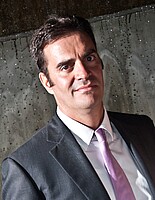
Nikos Giatrakos is an Assistant Professor at the School of Electronic & Computer Engineering, Technical University of Crete, and a core member of the Software Technology and Network Applications Lab (SoftNet) . His work bridges Big Data systems, IoT, and advanced analytics, with a focus on real-time processing and scalable architectures. Previously, he served as a postdoctoral researcher at the same laboratory. Education PhD in Computer Science, University of Piraeus (2012) Postgraduate Diploma in Information Systems, Athens University of Economics and Business (2008) BSc in Computer Science, University of Piraeus (2006) Research Focus : Nikos specializes in software architectures for Big Data streaming, including Distributed Big Data Processing , Federated Machine Learning , Cloud-to-Edge Data Management , and Approximate Query Processing . His work has also advanced Complex Event Processing and Outlier Detection in decentralized environments. Scientific Contributions : His research has led to the DAG* workflow optimizer for IoT, the SuBiTO framework for real-time neural learning, and the INFORE approach for cross-platform analytics. He received the Best System Demonstration Award at ACM CIKM 2020 for INforE. Academic Leadership : Nikos teaches Object-Oriented Programming, Data Science, and Distributed Systems. He has supervised numerous European and national grants as Principal Investigator and served on program committees for top-tier conferences like SIGMOD, VLDB, and DEBS.
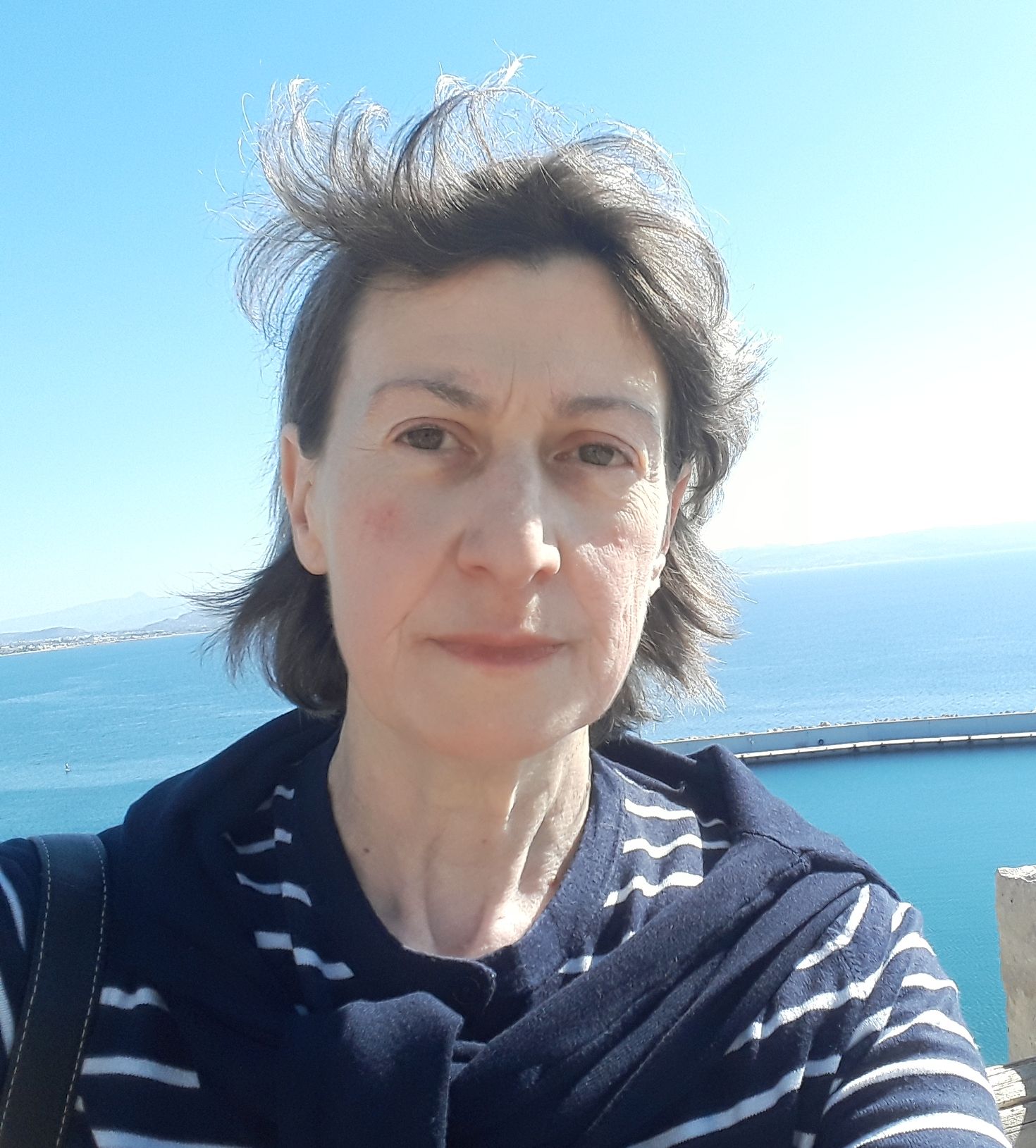
Costas Smaragdakis is an Assistant Professor in Numerical Analysis and Scientific Computing at the Department of Statistics and Actuarial - Financial Mathematics, University of the Aegean. He is also a Member of the Institute of Applied and Computational Mathematics (IACM) at FORTH. His work bridges numerical methods, machine learning, and applied mathematics, with a focus on solving complex problems in finance and oceanography. Research Interests : Numerical Analysis Scientific Computing Mathematical Modelling Deep Learning Machine Learning Applications to PDEs/PIDEs Recent Research Trends : His articles highlight a strong focus on integrating deep learning with traditional numerical methods for functional minimization, PDE/PIDE solutions, and financial applications. Earlier work emphasizes acoustic signal processing, inverse problems in oceanography, and wavelet-based analysis. Events : Organized a mini-symposium on Machine Learning Methods in Finance (ICCF24, Amsterdam) and attended international workshops in Canada and Greece. Contact : kesmarag@aegean.gr , kesmarag@iacm.forth.gr , Office A5, Vourlioti Building, Karlovassi, Samos, Greece.
National and Kapodistrian University of AthensGreece
Nikas Thomas is an External Instructor at the Department of Informatics (DI) of the National and Kapodistrian University of Athens (NKUA). His work spans multiple interdisciplinary areas including quantum cryptography, fiber optic sensing technologies, and seismic monitoring. Key roles include advancing secure communication protocols through quantum key distribution (QKD) and developing novel Li-Fi transceivers using perovskite photodiodes. He also pioneers applications of Distributed Acoustic Sensing (DAS) for urban earthquake monitoring in Athens, leveraging existing fiber-optic infrastructure for environmental and geophysical studies. His research bridges theoretical frameworks (e.g., phase transmission analysis) with practical implementations in optical communication systems and seismic detection. Research interests focus on: Secure optical communication systems leveraging quantum principles Fiber optic-based seismic and acoustic sensing Emerging Li-Fi technologies for high-speed wireless networks Phase-sensitive fiber optic analysis for geophysical applications Publications from 2022-2024 highlight trends in: Quantum security protocols for optical and radio-over-fiber systems Urban DAS applications for earthquake monitoring Microwave frequency interferometry for low-cost seismic sensors No scientific awards are explicitly listed in the provided materials. His work often involves collaborative projects with industry and academic partners, though specific grants are not detailed here. Current projects include optimizing DAS for real-time urban seismic networks and exploring novel modulation formats for secure optical transmission.
Minos Garofalakis is a Professor at the School of Electronic & Computer Engineering at the Technical University of Crete, specializing in data stream management, complex event processing, and privacy-preserving analytics. His work bridges theoretical and applied computer science, with a focus on scalable algorithms for high-velocity data. Best Paper Award at VLDB 2024 for 'OmniSketch' Leader in sketch-based and distributed stream processing Pioneer in differential privacy for relational data Research interests span stream analytics , probabilistic databases , and interactive query systems . Recent work includes oblivious parallel joins (2025), relational data synthesis under privacy constraints (2024), and cross-platform analytics frameworks (2020). His publications demonstrate a consistent focus on error-controlled approximations and real-time distributed processing. Scientific contributions have been recognized at premier conferences like VLDB, with awards highlighting innovations in multi-dimensional stream analysis and privacy-preserving operations . Collaborations span academia and industry, particularly in bioinformatics and distributed systems.
Mara Nikolaidou is a Professor in the Department of Informatics and Telematics at Harokopio University of Athens since 2007 and has served as the university's Rector since 2016. She represents Greek universities in the European University Association (EUA) for 2023-2024. Her research focuses on distributed systems, system modeling, and responsible computing, with a strong emphasis on IoT, cloud/edge computing, and cyber-physical systems. She leads projects funded by national, EU, and international agencies, exploring topics like autonomous systems, ethical requirements in design, and human-in-the-loop systems. Her educational background includes roles as a computer engineer and IT consultant before academia. She is a member of IEEE (SMC Society and Systems Council) and participates in the Object Management Group (OMG) working groups for SysML and responsible computing. She organizes international conferences in software and systems engineering. Research interests span distributed systems, IoT, and ethical computing. Recent work investigates cost analysis in cloud markets, human-AI collaboration, and smart city technologies. Over 200 publications highlight her contributions to model-based systems engineering, including SysML extensions for cost/QoS analysis and frameworks for autonomous fog nodes. Grants and projects include EU-funded initiatives on smart farming, cloud brokerage, and organizational interoperability. Her lab focuses on autonomous systems and context-aware middleware. She advises on e-Government compliance frameworks and collaborates with industry partners on IoT management platforms.
Anargyros Tsadimas serves as a Teaching Associate and member of the Department of Informatics & Telematics at Harokopio University in Athens, Greece. He joined the university in 2004 as a research associate and currently holds a position in teaching laboratory staff. His academic background includes a BSc in Applied Informatics from the University of Macedonia (2002) and an MSc in Advanced Information Systems from the National and Kapodistrian University of Athens (2005). He earned his PhD in Information Systems from Harokopio University, focusing on model-based design of enterprise systems using SysML. His research interests span modeling and simulation of systems, distributed systems, enterprise information systems engineering, and cyber-physical systems. He has contributed over 25 publications in international conferences and journals, including work on SysML extensions for cost analysis, hybrid simulation platforms, and human-centric design of cyber-physical systems. Tsadimas has participated in EU and Greek government-funded R&D projects, with practical experience in startups as a Software Engineer, DevOps, and Technology Advisor. His recent research emphasizes integrating human factors into system design frameworks, exploring cloud pricing policies, and advancing simulation methodologies for complex systems. Notable contributions include developing declarative approaches for executable SysML models and applying systems engineering to transportation infrastructure challenges. No scientific awards are explicitly mentioned in the provided materials. His professional engagement includes advising on systems design projects and collaborating on interdisciplinary initiatives combining technical and human-centric perspectives.
Eleftheria Katsiri is an Assistant Professor at the Department of Electrical and Computer Engineering, Democritus University of Thrace, specializing in Operating Systems and Internet of Things (IoT) technologies. She joined the university in December 2013 and has been an Associate Faculty Member at the Athena Research Center since 2014. University of Patras, B.Sc. in Computer and Informatics Engineering (1998) University of Cambridge, PhD in Computing (2005) Her research focuses on real-time data processing, sensor network simulation, and middleware development for IoT systems. She has contributed to environmental monitoring, healthcare informatics, and decentralized water management solutions. Notable scientific awards include the Domestic Studentship, CASE, and Pressed Steel Award scholarships during her PhD. She has coordinated research projects like ALPINE and Hydropolis and participated in eight international research initiatives. Coordinated ALPINE project (2013-2015), showcased at Thessaloniki International Fair 2016 Worked on EU-funded SPICE, iWidget, ICENI II, UbiMon, and Greek projects RFCure, Greenactions, CAP Contributed to 11 EU evaluation committees (46 proposals assessed) Developed 13 hardware/software demonstration systems (sensor networks, IoT apps, simulation tools)
Professor Chatziantoniou Damianos holds a position at the Athens University of Economics and Business (AUEB) within the Department of Management Science and Technology (DMST), School of Business. He earned a B.Sc. in Applied Mathematics from the National & Kapodistrian University of Athens (1991), M.Sc. from New York University's Courant Institute of Mathematical Sciences, and a Ph.D. from Columbia University. His research focuses on big data systems, business intelligence, query processing, and real-time data analysis, with contributions influencing commercial database systems like Microsoft SQL Server and Oracle. As Director of AUEB's Master’s program in Business Analytics and Big Data, he previously served as an Assistant Professor at Stevens Institute of Technology (1997–1999). His industry collaborations include co-founding Panakea Software and VoiceWeb SA, and consulting roles at Aster Data Systems (now Teradata). He leads big data projects for companies like Cosmote, Piraeus Bank, and HEDNO. His research has been published in top venues including VLDB, ICDE, and SIGMOD, emphasizing practical applications in large-scale analytics and OLAP systems. He advises on strategic partnerships for the MSc program and maintains an active role in academic administration, including steering committees and quality assurance initiatives.
Minos Garofalakis is a Professor of Computer Science at the School of Electrical and Computer Engineering (ECE) of the Technical University of Crete (TUC), where he directs the Software Technology and Network Applications Laboratory (SoftNet). He is also the Director of the Information Management Systems Institute (IMSI) at the Athena Research and Innovation Centre in Athens. Previously, he held roles at Yahoo! Research, Intel Research Berkeley, and Bell Laboratories, and was an Adjunct Associate Professor at UC Berkeley. Education: He earned a BSc in Computer Engineering from the University of Patras (1992), followed by MSc (1994) and PhD (1998) in Computer Science from the University of Wisconsin-Madison. Research Interests: His work focuses on Big Data analytics , including database systems, data streams, approximate query processing, probabilistic databases, and secure/private data analytics. Key areas include distributed stream processing, data synopses, and machine learning applications. He has authored over 150 papers and holds 29 patents, with an h-index of 63 and 13,500+ citations. Recent Work Trends: His recent articles emphasize scalable stream analytics (e.g., OmniSketch), privacy-preserving techniques, and distributed event processing. He explores challenges in handling high-velocity data streams, uncertainty in databases, and real-world applications like healthcare analytics. Scientific Awards: ACM Fellow (2018), IEEE Fellow (2017), TUC Excellence Award (2015), and multiple patents from Bell Labs/Yahoo/AT&T. Advising & Grants: He led EU projects such as FERARI, LEADS, and The Human Brain Project. His lab, SoftNet, develops tools for extreme-scale analytics and declarative networking. Current work includes interactive cross-platform analytics (Infore) and AI-driven medical data systems. Labs/Teams: Director of SoftNet Lab and IMSI. Collaborates with industry partners on distributed systems and privacy-preserving technologies.
Antonios Deligiannakis is a Professor at the Department of Electronic and Computer Engineering, Technical University of Crete. His research focuses on databases, sensor networks, online analytical processing (OLAP), approximate query processing, and distributed systems. He holds a Ph.D. in Computer Science from the University of Maryland (2005), an M.Sc. from the same institution (2001), and a Diploma in Electrical & Computer Engineering from the National Technical University of Athens (1999). His career includes postdoctoral work at the University of Athens (2006–2007), a lecturer position there (2007), and an internship at AT&T Labs-Research (2003). He leads the Software Technology and Network Applications Laboratory , contributing to projects like extreme-scale analytics platforms (INFORE) and federated learning systems. Research areas span IoT workflow optimization, communication-efficient distributed learning, and real-time maritime event detection. His work emphasizes scalability, efficiency, and practical implementations for big data challenges. Courses taught include Structured Programming . Notable contributions include DAG* algorithms for IoT workflows, federated learning frameworks, and systems for proactive streaming analytics at scale. He has pioneered methods for outlier detection in sensor networks and efficient query processing over distributed streams.
Ioannis Kotidis is an Associate Professor in the Department of Informatics at the Athens University of Economics and Business (AUEB), School of Information Sciences and Technology. He holds a Diploma in Electrical and Mechanical Engineering from the National Technical University of Athens (1995), and Master's and Ph.D. degrees from the University of Maryland (1997, 2000). Prior to joining AUEB, he worked as a Senior Technical Specialist at AT&T Labs-Research in Florham Park, New Jersey until January 2006. His research spans multiple areas of database systems with particular focus on On-Line Analytical Processing (OLAP) and data warehousing, data mining, sensor/P2P networks, mobile data management, data fusion & dissemination, data streams, RFID data management, approximate query answering, and database preservation . His work bridges theoretical foundations with practical implementations, as evidenced by numerous publications in top-tier database conferences and journals. Professor Kotidis leads several significant research projects including RECOST (REal time management of COmplex STreams), DBSENSE (Information Management in Wireless Sensor Networks), INFORE (Interactive Extreme-Scale Analytics and Forecasting), and DeLorean (Storage, Indexing and Analysis Techniques for Time-Series Management). His recent work focuses on blockchain applications for decentralized OLAP processing, complex event processing frameworks, and advanced techniques for managing complex data streams. Among his notable achievements is the best paper award at the ACM SIGMOD International Conference on Management of Data for his work on DynaMat: A Dynamic View Management System for Data Warehouses. His publications consistently address challenging problems in database systems with innovative approaches that have influenced both academic research and practical implementations. He has supervised numerous undergraduate theses on topics including blockchain-based OLAP view management, complex event processing using FlinkCEP, and graph similarity learning. His research has attracted significant funding through various research programs at AUEB, including Basic Research Funding Programs 1 & 2.
National and Kapodistrian University of AthensGreece
Isambo Karali is an Assistant Professor in the Department of Informatics and Telecommunications at the National and Kapodistrian University of Athens, a position she has held since November 2007. Prior to this, she served as a Lecturer at the same department from September 1999 to November 2007. Her academic career spans over three decades with significant contributions to knowledge representation, uncertainty reasoning, and semantic web technologies. Dr. Karali's educational background includes: PhD in Informatics (1995) from the University of Athens MSc in Computer Science (1988) from University College, University of London Bachelor of Mathematics (1986) from the Department of Mathematics, University of Athens Dr. Karali's research focuses on Knowledge Representation and Reasoning with Uncertainty, Artificial Intelligence, Logic Programming, and Object-Oriented Programming. She has made significant contributions to applying Dempster-Shafer theory for handling uncertainty in Semantic Web applications. Her work bridges theoretical foundations of logic programming with practical applications in knowledge representation, particularly in distributed and heterogeneous environments. She has supervised numerous PhD and master's theses in these areas. Her recent publications demonstrate a strong trend toward integrating uncertainty reasoning with Semantic Web technologies, particularly using Dempster-Shafer theory and fuzzy logic. Her work addresses challenges in managing imprecise and uncertain information in large-scale knowledge systems, with applications in recommendation systems, news analysis, and semantic search. The interdisciplinary nature of her research connects artificial intelligence, knowledge representation, and web technologies to solve complex information management problems. Dr. Karali has been actively involved in research funding and collaboration: Principal Investigator for "Handling uncertainty in data intensive applications on a distributed computing environment (cloud computing)" under the "Thalis" Program Scientific Responsible for "Artificial Intelligence and Logic Programming Techniques for Knowledge on the World Wide Web" at the National and Kapodistrian University of Athens Scientific Responsible for "Semantic Web and Logic Programming - Application to Guided Search" at the National and Kapodistrian University of Athens Participant in multiple EU research projects including MISSION, COSMOS, ADDSIA, PARACHUTE, APPLAUSE, and EDS As an educator, Dr. Karali has taught core undergraduate courses including Object-Oriented Programming and Logic Programming, as well as graduate courses on Knowledge Technologies and Artificial Intelligence. She has supervised numerous PhD and master's students, with a focus on uncertainty reasoning, semantic web technologies, and logic programming applications. Her mentorship extends to student competitions, including guiding the Department's team in the Microsoft ImagineCup 2009. Dr. Karali has also contributed to the academic community through service activities, including membership on program committees for conferences like IEEE ICTAI, reviewer for prestigious journals, and organizational roles in academic events. From 2000 to 2012, she was responsible for the Department's website, contributing to its architecture design and system development.
Foundation for research and technology-hellasGreece
Pavlos Fafalios is an Assistant Professor of Information Systems at the School of Production Engineering and Management, Technical University of Crete, and an Affiliated Researcher at the Centre for Cultural Informatics (CCI) and Information Systems Laboratory (ISL), Institute of Computer Science, Foundation for Research and Technology - Hellas (FORTH). He holds a PhD and MSc in Information Systems from the University of Crete and an Engineer's Diploma from the University of the Aegean. His academic journey includes postdoctoral research at L3S Research Center, Leibniz University of Hanover, and FORTH-ICS, as well as teaching roles at Hellenic Mediterranean University and the University of Crete. His research interests span Information Systems , Data and Knowledge Management , and Linked Data , with a strong interdisciplinary focus on applications in Cultural Heritage and the Humanities . He develops semantic technologies, knowledge graphs, and information management systems for complex, real-world domains. The recent publications highlight a strong trend in applying semantic technologies to cultural and historical data, including earthquake data modeling, feminism history documentation, and museum data integration. His work consistently focuses on knowledge representation, ontology development, and data interoperability, particularly using CIDOC CRM and Linked Data principles. Individual postdoctoral research fellowship 'Marie Skłodowska-Curie' (H2020-MSCA-IF-2019) Finalist for the '2019 ERCIM Cor Baayen Young Researcher Award' Fellowship from legacy 'Maria Michael Manasaki' (2014-2015) 1st prize in Hack4Med 2014 1st prize in Blue Hackathon 2013 PhD and MSc scholarships by FORTH Pavlos Fafalios has been involved in significant research projects such as PortADa (MSCA Staff Exchange), RICONTRANS (ERC Consolidator Grant), FE.P.I.B., ReKnow (Marie Curie project), SeaLiT (ERC Starting Grant), and ALEXANDRIA (ERC Advanced Grant), where he served as principal investigator, scientific responsible, or lead researcher. He has supervised student projects that led to award-winning software tools. He is active in scientific committees and regularly publishes in international venues. He leads and contributes to research in the Centre for Cultural Informatics (CCI) and Information Systems Laboratory (ISL) at FORTH-ICS, collaborating on interdisciplinary projects that bridge computer science with humanities and cultural heritage. His lab work emphasizes practical tools for semantic data integration, exploration, and analysis.