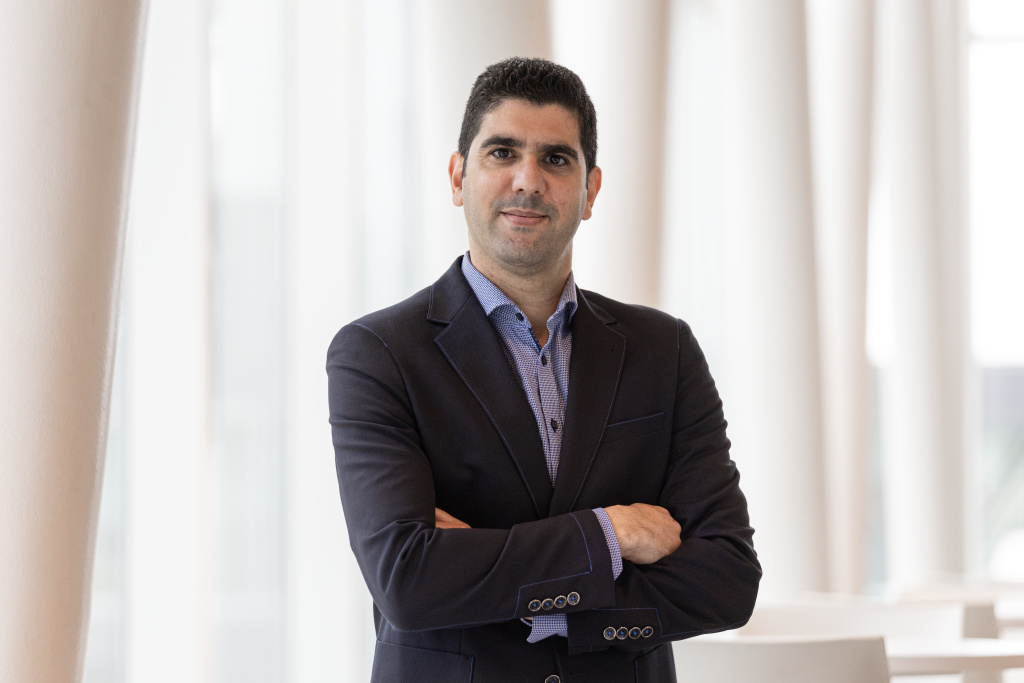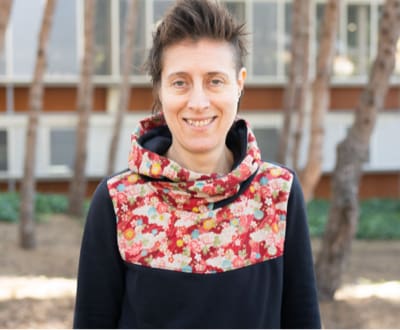
Elisabet RomeroView profile
Researcher
Dr. Elisabet Romero is a Group Leader at the Institute of Chemical Research of Catalonia (ICIQ) , where she leads research in bio-inspired solar energy conversion . Her work focuses on designing chromophore-protein assemblies capable of efficiently converting sunlight into electrochemical energy, mimicking natural photosynthesis. She is supported by prestigious grants, including an ERC Starting Grant and a Marie Curie Fellowship . Education: PhD in Biophysics, VU Amsterdam (2011) Master’s in Chemistry, Institute of Advanced Chemistry of Catalonia BSc in Chemistry (Physical Chemistry specialization), University of Barcelona (2003) Research Interests: Dr. Romero’s research lies at the intersection of physical chemistry, photophysics, and sustainable energy . She investigates the quantum mechanical principles underlying energy and electron transfer in photosynthetic systems, applying this knowledge to engineer artificial systems for solar fuel production. Her group uses ultrafast spectroscopy techniques like transient absorption and 2D electronic spectroscopy to probe femtosecond-scale dynamics. Publications & Research Trends: Her recent publications reflect a strong trend in de novo protein design for artificial light harvesting , excitonic coupling in chromophore systems , and quantum effects in biological energy transfer . Collaborative work with leading institutions highlights her role in advancing synthetic biology and quantum bio-inspired materials. Scientific Awards: European Research Council (ERC) Starting Grant Marie Curie Fellowship Advising and Grants: Dr. Romero mentors a dynamic team of PhD students, postdoctoral researchers, and master’s students . Her group has secured competitive funding from the ERC, Severo Ochoa Programme, and Marie Skłodowska-Curie Actions , supporting innovative research in renewable energy technologies. Labs and Teams: Her laboratory at ICIQ is equipped with state-of-the-art ultrafast spectroscopy facilities. The team fosters a collaborative and inclusive environment, combining rigorous scientific inquiry with social engagement and cultural exchange.