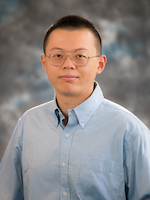
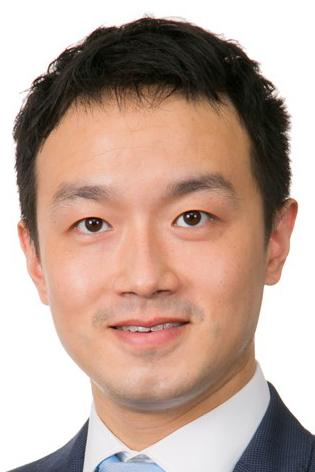
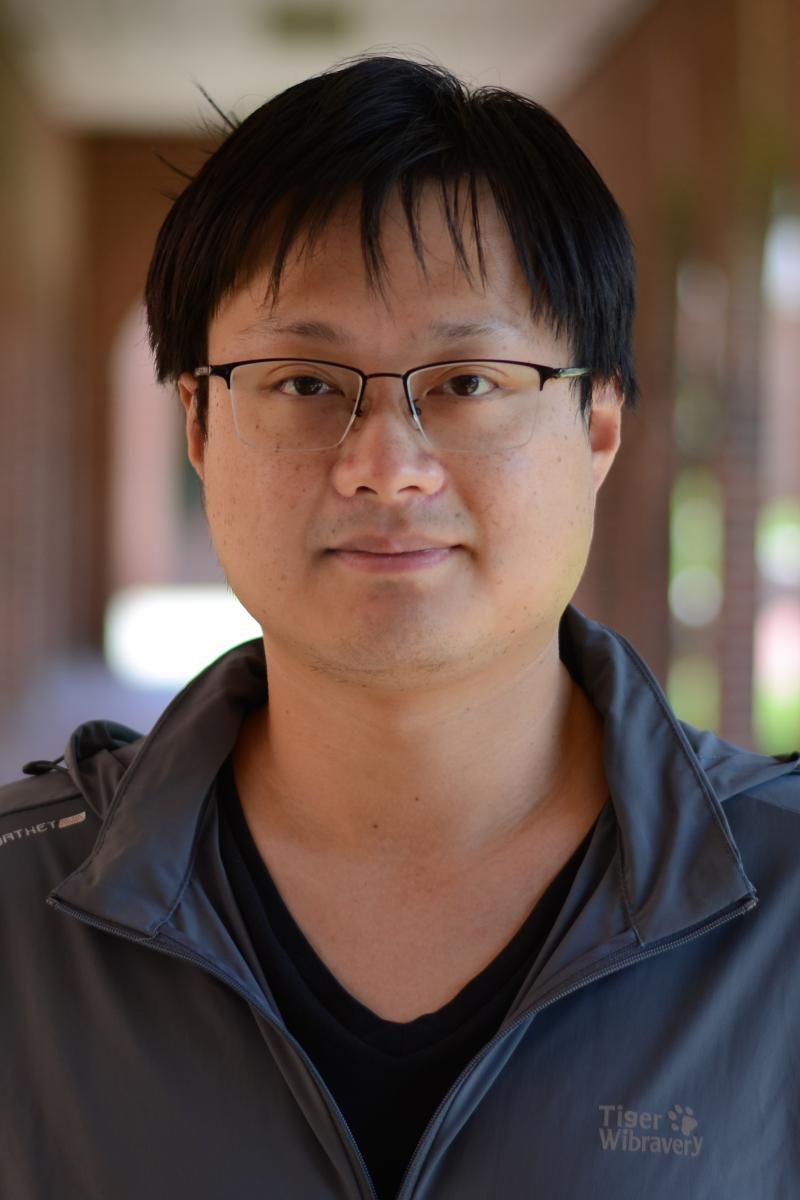
Kejun Huang is an Assistant Professor in the Department of Computer and Information Science and Engineering at the University of Florida's Herbert Wertheim College of Engineering. His primary research area is Machine Learning, with additional interests in algorithms, computer vision, and data science. He received his Ph.D. in Electrical Engineering from the University of Minnesota in 2016. His research focuses on machine learning, signal processing, optimization, and statistics. Recent work tackles unsupervised learning challenges and AI-powered medical research through NIH-funded projects. Dr. Huang's publications demonstrate consistent focus on optimization techniques for tensor decomposition, dictionary learning identifiability, and nonnegative matrix factorization. Key themes include algorithmic efficiency and theoretical guarantees in machine learning models.
Chen Zhi is an Assistant Professor in the Department of Analytics and Operations at the NUS Business School, National University of Singapore, where he has been employed since July 2020. His academic work focuses on operational challenges in innovation-driven value chains, with particular expertise in new product development, innovation sourcing, AI economics, and wisdom of crowds methodologies. Dr. Chen received his Ph.D. in Management (Decision Sciences) from INSEAD (2014-2020) and his B.E. with First Class Honors in Industrial and Systems Engineering from the National University of Singapore (2009-2013). During his academic journey, he completed an overseas exchange at the Georgia Institute of Technology and a research internship at École Polytechnique in France. Chen's research spans two primary streams. The first addresses R&D phase challenges in new products, examining how firms can optimally design supplier bases and informational policies to procure innovation from suppliers, with recent focus on policy impacts on AI-based product development such as autonomous vehicles. The second stream investigates demand forecasting for new products, exploring how to aggregate diverse expert insights into consensus forecasts and quantify underlying uncertainty through obtained forecasts. His publication record demonstrates a strong trajectory in top-tier operations and management journals, with recent work appearing in Management Science, Manufacturing & Service Operations Management, and International Journal of Forecasting. Chen's research shows increasing focus on AI development challenges, uncertainty quantification in forecasting, and strategic approaches to innovation sourcing in complex technological environments. At NUS Business School, Chen teaches Managerial Operations and Analytics for the MBA program and Decision Analytics Using Spreadsheets for undergraduate students. Previously at INSEAD, he taught tutorials for Uncertainty, Data and Judgment, and Production and Operations Management courses.
William A Pasmore is a Professor of Practice in the Social-Organizational Psychology Department at Teachers College, Columbia University. With a unique background spanning academia and consulting, he focuses on complex organizational change, digital transformation, and leadership development. His work bridges theoretical rigor with practical application through roles at the Center for Creative Leadership, Oliver Wyman Delta consulting, and his own firm, Pasmore Advisors. Education: Ph.D. in Administrative Sciences (Purdue University, 1976), B.S. in Aeronautical Engineering/Industrial Management (Purdue University, 1973) His research spans organizational change, digital transformation, and future organizational models, with recent publications emphasizing networked organizations and continuous change frameworks. Collaborative action research and board effectiveness are recurring themes in his work with global corporations. Scientific Awards: European HRM association's HR Influential Thinker recognition Academy of Management co-recipient of collaborative research award Pasmore co-founded STARLabs - a consortium with Google, Microsoft, Shell, and other Fortune 500 companies studying digital transformation. He previously served as tenured professor at Case Western Reserve University (1976-1997) and visiting professor at INSEAD and Stanford.
Prof. Zoltán Károly Lakner is a Professor at the Hungarian University of Agriculture and Life Sciences, affiliated with the Department of Agricultural and Food Economics. His research focuses on applying dynamic systems theory, econometrics, and artificial intelligence to analyze food supply networks, agricultural policy, and socio-economic systems in Africa and Central Asia. Key areas include big-data modeling of complex systems, game-theory applications, and open-source intelligence tools in innovation policy. He leads the SafeConsume H2020 project, developing strategies to mitigate foodborne illness risks through consumer education and prototype tools. His work spans food policy analysis, climate change impacts on agriculture, and ethical food consumption behaviors. Education details not explicitly provided in text. Research interests emphasize quantitative methods in agricultural economics, econometrics-driven policy analysis, and interdisciplinary approaches to global food challenges. Recent publications explore bioenergy expansion effects, water tax policy implications, and post-Paris Agreement green finance trends. No scientific awards explicitly stated in the text. Grants include the Horizon 2020 SafeConsume project. Active in advising and mentoring, though specific student names are not listed. Affiliated with the Szént István Campus in Gödöllő, contributing to institutional research and policy initiatives.
Alistair Sterling is an Assistant Professor in the Department of Chemistry & Biochemistry at the University of Texas at Dallas (UTD), affiliated with the School of Natural Sciences and Mathematics. His research integrates computational modeling, theoretical physical organic chemistry, and electronic structure theory to study chemical reactivity, particularly in catalysis, molecular editing, and polymer upcycling. Sterling leads the Sterling Lab, emphasizing interdisciplinary collaboration with synthetic chemists and fostering skills in reaction mechanism analysis, coding, and scientific communication. He actively engages in outreach to promote public understanding of chemistry. Education includes a DPhil in Organic Chemistry (University of Oxford, 2021), an MChem in Chemistry (University of Oxford, 2017), and postdoctoral fellowships at Lawrence Berkeley National Lab and UC Berkeley. He holds the EPSRC Doctoral Prize Fellowship (2021). Research focuses on understanding chemical bonding and reactivity through computational tools, with applications in drug discovery and sustainable materials. Key themes include delocalization-enabled reactions, node-induced electron confinement, and strain-release mechanisms. The lab develops novel synthetic methods for creating complex molecules with pharmaceutical relevance, such as meta-substituted arene bioisosteres. Notable awards include the Global Young Scientists Summit (2021), Young Modellers' Forum Best Talk Prize (2019), and multiple University of Oxford scholarships. His work bridges theory and experiment, aiming to advance both fundamental understanding and practical innovations in chemistry.
Professor Sylvia Walby is a faculty member at Royal Holloway, University of London, within the Department of Law and Criminology, School of Law and Social Sciences. She holds the Alexander von Humboldt Foundation Anneliese Maier Research Award, hosted by the University of Duisburg-Essen (2018–2025), and has held visiting positions at institutions including UCLA and Harvard. Current research focuses on violence and society, including gender dimensions, trafficking, and complex systems theory. Her work contributes to Sustainable Development Goals (SDGs), particularly those addressing gender equality and reduced inequalities. Key publications include Trafficking Chains: Modern Slavery in Society (2024) and methodological contributions to violence measurement. Her research spans criminology, sociology, and gender studies, emphasizing policy engagement and data-driven approaches. Recent articles analyze violent crime trends, trafficking data integration, and violence measurement in crime surveys. These works highlight intersections of gender, policy, and statistical methodologies. Scientific awards include Fellowships from the British Academy and Academy of Social Sciences, an OBE, and an honorary doctorate from Queen’s University Belfast. She has served as Chair of the REF2021 Sociology Sub-Panel and held leadership roles in the International Sociological Association and European Sociological Association.
Jiaxin Jin is an Assistant Professor in the Department of Mathematics at University of Louisiana at Lafayette, joining in 2024. He holds a Ph.D. in Mathematics from University of Wisconsin-Madison (2021), M.S. from University of Wisconsin-Madison (2015), and B.S. from Shanghai Jiao Tong University (2014). Previously, he served as Zassenhaus Assistant Professor at The Ohio State University. His research focuses on applying dynamical systems to mathematical biology/biochemistry and partial differential equations in mathematical physics, with emphasis on: (i) dynamical equivalence in reaction models, (ii) network structure in input-output networks, and (iii) kinetic equations analysis. His work bridges mathematical theory and biological applications through advanced computational methods. Recent publications demonstrate strong focus on reaction networks (12 papers), kinetic theory (4 papers), and homeostasis in biological systems (2 papers), with increasing emphasis on algorithmic implementations and geometric approaches.
H. Jane Bae is an Assistant Professor of Aerospace at the California Institute of Technology (Caltech), affiliated with the Division of Engineering and Applied Science. Her research focuses on turbulence modeling, particularly developing high-fidelity computational methods to simulate high-Reynolds-number flows for applications in aircraft design, wind farms, and atmospheric predictions. She integrates machine learning, information theory, and numerical techniques to enhance turbulence modeling efficiency. Education: B.S. in Aerospace Engineering from Caltech (2011), Ph.D. in Mechanical Engineering from Stanford University (2018). She joined Caltech in 2021. Research interests include near-wall turbulence dynamics, resolvent analysis, sparse identification of nonlinear dynamics, and reinforcement learning for wall models in LES. Her work addresses computational cost reduction and model accuracy in complex flow simulations. Awards: 2023 Outstanding Referee Award from Physical Review. Teaching includes courses on fluid mechanics (Ae/APh/CE/ME 101 abc) and turbulence (Ae 239 ab). Her lab combines turbulence theory, high-performance computing, and data-driven methods to study unsteady flows over complex surfaces. Notable contributions include machine learning-based wall models and resolvent analysis frameworks for non-stationary flows.
Emilia Vann Yaroson is a Lecturer in Operations and Supply Chain Management at the Sheffield University Management School (The University of Sheffield). She holds a PhD in Operations and Information Management from the University of Bradford, an MSc in Business and Financial Economics from the University of Greenwich, and a PgCHE (Postgraduate Certificate in Higher Education). Her research focuses on leveraging emerging technologies (AI, blockchain, cloud computing, digital twins) to enhance supply chain resilience and sustainability, particularly aligned with UN SDGs related to healthcare access, environmental protection, and poverty reduction. Research Interests Pharmaceutical supply chains and resilience strategies Circular economy integration in supply chains Impact of Industry 4.0/5.0 technologies on sustainable operations Healthcare operations and quality improvement Artificial intelligence-driven decision-making in supply chains Teaching She teaches operations management, supply chain analytics, and related modules across undergraduate and postgraduate programs, including executive education. Her teaching aligns with the school’s Triple Crown accreditation, positioning it among global elite management schools. Research Group She is part of the Operations Management and Decision Sciences group, contributing to interdisciplinary projects on supply chain innovation and sustainability. Her work bridges theoretical frameworks (e.g., Complex Adaptive Systems) with practical applications in healthcare and manufacturing sectors.
Mikolaj Firlej is a Lecturer in AI Law and Regulation at the University of Surrey's Surrey Institute for People-Centred Artificial Intelligence (PAI). He holds a D.Phil. and M.Phil. from the University of Oxford's Faculty of Law, an MPP from the Oxford School of Government, and degrees from the University of Warsaw. His research focuses on AI ethics, human control over autonomous systems, and defense sector innovation. He co-founded the Expeditions Fund, a dual-use venture capital firm, and serves as Director of the Law and Tech Hub. Research interests include AI security, global policy challenges for emerging technologies, and the intersection of AI with defense and intelligence sectors. His work emphasizes practical legal frameworks for regulating autonomous systems while fostering innovation. Firlej teaches AI and Law, Intellectual Property Law, and Law, AI & Technology courses. He supervises PhD students in AI security at Surrey's PAI. His publications span AI governance in defense, ethical frameworks for autonomous weapons, and regulatory approaches to complex adaptive systems. He actively engages with policy through expert testimony on UK AI defense capacity and international AI weaponization debates. Outside academia, he co-leads a family investment firm and explores geopolitics, literature, and sport.
Sijia Geng is an Assistant Professor in the Department of Electrical and Computer Engineering (ECE) at Johns Hopkins University (JHU) and a core researcher at the Ralph O’Connor Sustainable Energy Institute (ROSEI). She directs the Power and Energy Network Systems Analysis (PENSA) Laboratory and co-leads the NSF-funded Electric Power Innovation for a Carbon-free Society (EPICS) Center as co-PI. Her research focuses on integrating control theory, mathematical analysis, and optimization to enhance renewable energy utilization and grid resiliency. Education: Ph.D. and M.S. (ECE & Mathematics) from the University of Michigan-Ann Arbor (2016–2022), B.S. in Automation from Harbin Institute of Technology (2016). Postdoctoral work at MIT (2022) and visiting scholar roles at Purdue University (2015) and Pacific Northwest National Lab (2018). Research Interests: Dynamic analysis of inverter-based power systems, nonlinear control theory, data-driven decision-making, and multi-energy systems. Her work emphasizes achieving autonomous, resilient energy systems through advanced computational tools and theoretical frameworks. Awards: Best Paper Award at MIT/Harvard Applied Energy Symposium (2022), MIT Rising Stars in EECS (2021), Barbour Scholarship (2021), Towner Prize (2018), and Gerald and Esther Forrest Fellowship (2016). She is active in IEEE and INFORMS, organizing sessions at PES General Meeting and CISS conferences. Grants & Collaborations: Funded by NSF, DOE, MIT Energy Initiative, and industry. Leads global initiatives through EPICS, collaborating with UK, Australian, and international stakeholders. Co-leads ROSEI’s Grid pillar to advance fossil-free energy systems. Labs & Teams: Directs PENSA Lab, affiliated with JHU’s Data Science and AI Institute, Applied Mathematics & Statistics, and Computer Science departments.
Graeme Robertson is a Professor of Political Science at the University of North Carolina at Chapel Hill and Director of the Center for Slavic, Eurasian and East European Studies. His research focuses on authoritarian politics, protest dynamics, and regime stability in post-communist states, with particular emphasis on Russia and Ukraine. He earned his academic qualifications in political science, though specific details of his education are not explicitly stated in the provided texts. Robertson has authored influential books including Putin v. The People (Yale UP, 2019), Revolution and Reform in Ukraine (PONARS Eurasia), and The Politics of Protest in Hybrid Regimes (Cambridge UP). His work has appeared in top journals like the American Political Science Review and Proceedings of the National Academy of Sciences . Robertson’s research themes include the interplay between authoritarian regimes and public opinion, the role of identity in political mobilization, and the impact of external pressures on autocratic governance. His recent projects analyze Russia’s war in Ukraine, protest behaviors in hybrid regimes, and psychological underpinnings of support for authoritarian policies. As Associate Editor for Comparative Politics at the American Journal of Political Science , he contributes to advancing methodological rigor in the field. His interdisciplinary approach combines experimental methods, survey analysis, and comparative case studies to dissect complex political phenomena. Robertson leads the Center for Slavic, Eurasian and East European Studies, fostering academic exchange and research on Eastern Europe. His work frequently engages with policy-relevant issues, including authoritarian governance, conflict resolution, and democratic backsliding.
Jon Lindsay is an Associate Professor at the Sam Nunn School of International Affairs, part of the Ivan Allen College of Liberal Arts at Georgia Institute of Technology. His research focuses on cybersecurity, international relations, and military strategy, with an emphasis on cyber warfare, deterrence theory, and the impact of technological advancements like AI and quantum computing on global security. He explores topics such as cyber conflict dynamics, the role of deception in defense strategies, and the institutional challenges of military automation. His work often bridges theoretical frameworks from international relations with empirical analyses of modern cyber threats and geopolitical tensions. Notable contributions include studies on Stuxnet's implications for secret statecraft, the stability-instability paradox in cyberspace, and the strategic ambiguity of quantum computing. Lindsay has also engaged in policy debates on cross-domain deterrence and the evolving nature of intelligence operations in the digital age.
Prof. Bayu Jayawardhana is a Full Professor in Mechatronics and Control of Nonlinear Systems at the University of Groningen, affiliated with the Faculty of Science and Engineering. He leads the Jayawardhana Group focusing on opto-mechatronics and advanced nonlinear control theories. His roles include Director of Engineering and Scientific Director of the Engineering and Technology Institute Groningen. He holds editorial positions in journals like International Journal of Robust and Nonlinear Control and European Journal of Control . Education: PhD in Control and Power Group from Imperial College London (2006), M.Eng from Nanyang Technological University (2003), and B.Eng from Institut Teknologi Bandung (2000). Research interests span opto-mechatronics for high-tech systems, nonlinear control, and systems biology. Key projects include digital twins for energy optimization, control of ocean energy systems, and modeling of cryogenic actuators for telescopes. His work integrates AI and model-based methods for high-performance systems. Notable awards include the 2016 FSE Faculty Teacher of the Year Award and the Ben Feringa Impact Award (2020). He advises on ventures like Ocean Grazer B.V. and Sencilia B.V. Teaching includes graduate courses on nonlinear control, opto-mechatronics, and fitting dynamical models to data. His research labs include the Groningen Centre for Systems and Control and the Data Science and Systems Complexity Center.
Mauro Maggioni is a Professor in the Departments of Mathematics and Applied Mathematics and Statistics at Johns Hopkins University. His research focuses on the mathematical foundations of Data Science, with applications in molecular dynamics, hyperspectral imaging, and reinforcement learning. He employs techniques from Harmonic Analysis, Approximation Theory, and Probability to develop scalable algorithms, particularly multiscale methods for analyzing high-dimensional data. Maggioni’s work bridges theoretical mathematics and practical applications, including cardiac electrophysiology modeling, unsupervised segmentation of hyperspectral images, and reduced-order modeling of complex systems. Education: B.S. in Mathematics from Università degli Studi in Milan, Italy; Ph.D. in Mathematics from Washington University in St. Louis. He held a Gibbs Assistant Professorship at Yale before moving to Duke University and later becoming a Bloomberg Distinguished Professor at JHU. Research Interests: Mathematical foundations of Data Science, Machine Learning, Partial Differential Equations, and their applications in physical and biological systems. Notable contributions include diffusion wavelets, interaction kernel learning, and multiscale geometric analysis of molecular dynamics data. Scientific Awards: Popov Prize in Approximation Theory (2007), NSF CAREER Award and Sloan Fellowship (2008), Fellow of the American Mathematical Society (2013), Simons Fellowship (2020). Advising & Grants: Maggioni mentors postdocs and students in areas like stochastic systems and signal processing. His group’s work is supported by Simons Foundation grants, NSF funding, and collaborations with institutions like MINDS and CIS at JHU. Labs/Teams: Leads a research group focused on data-driven discovery in mathematics and applied sciences, emphasizing interdisciplinary collaboration across computational methods, statistics, and domain-specific applications.