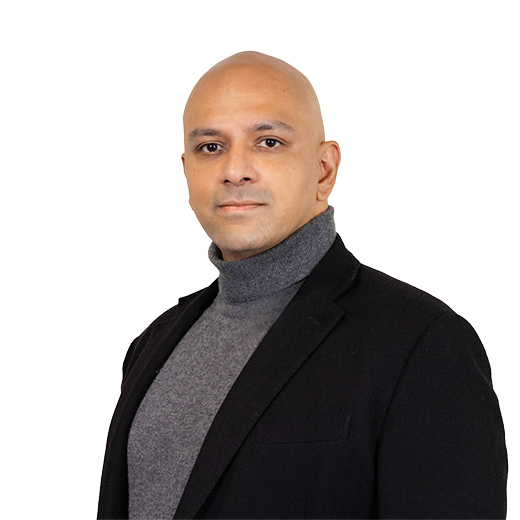
Dr. Segundo Sergio Robert-Ibarra is a board-certified psychiatrist with over 20 years of experience in child, adolescent, and adult mental health care. Currently serving as Chief of Acute Services and Medical Director at Brighter Days Pediatric Mental Health Urgent Care Center, he is affiliated with the University of Rochester Medical Center and holds an academic appointment as Clinical Associate Professor in the Department of Psychiatry at the University of Rochester School of Medicine and Dentistry. Medical training: Paraguay Psychiatric residency (1994-1998): Baylor College of Medicine Child psychiatry fellowship (1997-1999): Baylor College of Medicine His research interests focus on improving mental health care systems through psychodynamic psychotherapy and mentalization-based treatment approaches. He specializes in addressing anxiety, depression, identity issues, and trauma in youth, particularly within LGBTQ communities and complex family dynamics. A dedicated educator, Dr. Robert-Ibarra has received multiple teaching awards including the Dean's Teaching Excellence Award and Irwin C Rosen Distinguished Educator Award. Otto F. Thaler Memorial Teaching Development Award (2023-2024) Dean's Teaching Excellence Award (2020-2021, 2019-2020) Irwin C Rosen, Ph.D, Distinguished Educator Award (2008-2009) Child and Adolescent Faculty Supervisor Award (2005) Previously at the Menninger Clinic for a decade, he now leads efforts to create inclusive care environments while collaborating with families, schools, and multidisciplinary care teams to support youth mental health outcomes.
Dr. Caroline Schuppli is a Max Planck Research Group Leader at the Max Planck Institute of Animal Behavior in Konstanz and a Freigeist Fellow by the Volkswagen Foundation. She serves as IMPRS QBEE faculty , Adjunct Researcher at the University of Zürich, and Director of the SUAQ Orangutan Research Project in Indonesia since 2017. Her work bridges evolutionary biology and cognitive ecology through longitudinal studies of Sumatran orangutans. Education: PhD in Evolutionary Biology (2012-2016), University of Zürich MSc in Anthropology (2010-2012), University of Zürich BSc in Biology (2007-2010), University of Zürich Her research investigates how social learning , environmental complexity , and maternal behavior shape cognitive evolution in great apes. Key themes include: Comparative analyses of wild vs. captive orangutan cognition Development of ecological skills and cultural repertoires Role of curiosity and innovation in cognitive evolution Interplay between life history and brain size trade-offs Recent publications emphasize nested skill acquisition , maternal behavior plasticity , and cross-taxa comparisons of social learning mechanisms. She has mentored PhD candidates like Nora Slania , Adriana Luna , and Emma Lokuciejewski . Scientific Awards: Freigeist Fellowship (2021) Swiss National Science Foundation Postdoc Funding (2019-2020) As President of the SUAQ Foundation and collaborator with institutions across Switzerland and Germany, she integrates fieldwork at Suaq Balimbing with global comparative frameworks.
Jane Bjørn Vedel is an Associate Professor at the Department of Organization, Copenhagen Business School, and a member of the Center for Organizational Research on Impact (CORI). Her research explores the organizational and societal effects of large-scale donations to research, dynamic capabilities in interorganizational relationships, and the role of time and temporality in innovation management. Her recent work investigates how transformative innovation policy reshapes universities’ organizational structures and how spatial scale influences institutional processes. She has secured significant funding (1.72M EUR) as a Principal Investigator and collaborates with institutions like Stanford University. Key Research Themes: Organizational adaptation to financial shifts Temporal tensions in dynamic capabilities Interorganizational collaboration in mission-oriented research Isomorphic differences in science policy Micro-foundations of resource integration Her publications appear in top journals like Research Policy and Journal of Management Studies , with recent articles focusing on resilience in goal-complex environments and ethical disruptions in organizations. She has mentored PhD candidates and postdocs, including Vera Simoneit and Søren Lund Frandsen.
Assoc. Prof. MMag. Dr. Alexandra Rausch is an Associate Professor at the Department of Controlling and Strategic Management , Institute of Management at Alpen-Adria-Universität Klagenfurt . Her research focuses on corporate decision-making, budgeting, controlling, and economics, with particular emphasis on agent-based modeling of organizational dynamics and team coordination. University: Alpen-Adria-Universität Klagenfurt Affiliation: Institute of Management Department: Department of Controlling and Strategic Management Rausch's research explores: Organizational behavior and individual-group interactions Coordination mechanisms in dynamic teams Strategic management and adaptive systems Controlling frameworks for corporate sustainability Agent-based modeling of distributed decision-making Recent publications demonstrate interdisciplinary work spanning both management science (team coordination, strategy-making) and pharmacological chemistry (indazole derivatives for autoimmune therapies). 2022-2025 work highlights coordination benefits in virtual teams, dynamic group adaptation, and pharmaceutical compound development. She teaches courses in controlling and strategic management, with consultation hours available by appointment via email at Alexandra.Rausch@aau.at . Contact details: Phone +43 463 2700 4032 | Office S.0.10 Main Building, South Wing West, Level 0.
Martin Salzmann-Erikson is an Associate Professor in Nursing Science at the University of Gävle, specializing in Caring Science. With extensive clinical experience in psychiatric intensive care, he has developed innovative models for staff-patient interactions and advanced courses like "Integrative Nursing in Psychiatric Care" and "Concept Analysis." His work bridges clinical practice, education, and research, focusing on the complexities of human interaction through chaos theory and digital transformation. Current research in the "Digital Shapeshifting" program addresses critical challenges in healthcare digitization, including reducing digital exclusion, ensuring inclusive care environments, and safeguarding nursing quality. Projects span interprofessional communication, digital inclusion for homeless women, and the ethical implications of AI in mental health. His methodological expertise includes netnography, autoethnography, and complexity science. Key article trends highlight intersections of technology and empathy, with recurring themes in psychiatric care, technostress, and digital equity. His 2023–2025 publications emphasize ethical AI integration, footwear symbolism in healthcare teams, and socio-technical approaches to continuous learning. Supervision roles include doctoral projects on intellectual disabilities, cyber nursing, and violence in intensive care. Supervised: Ingela Rudberg (Interprofessional Communication), Oskar Andersson (Staff Participation Promotion), Fredric Sjöberg (Violence Management, KI) Education: Courses on Integrative Nursing & Concept Analysis Affiliations: Strategic Research Area Health-Promoting Work, University of Gävle
Audrey Gérard is an Associate Professor and Senior Research Fellow of the Kennedy Trust of Rheumatology Research at the University of Oxford, based at the Kennedy Institute of Rheumatology. She leads the Gérard Group, which investigates the spatiotemporal dynamics of T cell responses in infection, vaccination, and cancer. Her educational background includes: Ph.D. at the University of the Mediterranean, Marseille, France, supervised by Jacques Nunes and Daniel Olive, focusing on negative regulation of T cell activation. Postdoctoral training at the Netherlands Cancer Institute with John Collard, studying polarity proteins and T cell migration. Postdoctoral training at UCSF with Matthew Krummel, working on T cell migration in vivo using 2-photon microscopy. Research interests span T cell immunology, with emphasis on molecular mechanisms governing T cell migration, activation, and intercellular communication during immune responses. Her work employs advanced intravital imaging to dissect spatiotemporal T cell behavior in physiological and pathological contexts, including infection, vaccination, and tumor immunity. Recent publications (2023-2025) reveal focus on interferon-gamma modulation of T cell function in tumors, biophysical aspects of TCR engagement, and neuronal guidance molecules like Semaphorin 3A in CD8+ T cell suppression. These studies bridge immunology, biophysics, and cancer therapy development. Scientific awards include: Senior Research Fellow of the Kennedy Trust of Rheumatology Research Dr. Gérard mentors DPhil students through the Kennedy Institute studentship program and DPhil in Cancer Science. Her research is supported by the Kennedy Trust, with open positions indicating active grant funding for T cell dynamics studies. The Gérard Group utilizes cutting-edge imaging and molecular techniques to explore T cell navigation within complex tissue environments, aiming to develop novel immunotherapeutic strategies for cancer and infectious diseases.
Prof. Dr. Rolf Wanka is a Professor at the Department of Computer Science, Friedrich-Alexander-Universität Erlangen-Nürnberg (FAU), specializing in efficient algorithms and combinatorial optimization. His research focuses on swarm intelligence, discrete optimization algorithms, and scheduling problems, particularly in timetabling and robotics applications. Education : Sc.D. (Dr. rer. nat.) in Computer Science His work includes theoretical and experimental analyses of particle swarm optimization (PSO) algorithms, addressing runtime complexity, stagnation behavior, and convergence properties. He has developed novel heuristics for timetabling and sorting problems, with applications in multi-robot systems and medical imaging. Notable collaborations include studies on Markov chain-based PSO and fairness in academic scheduling. Key trends in his recent publications span swarm intelligence , discrete optimization , and scheduling heuristics , with a focus on robust timetabling , runtime analysis , and stochastic algorithm behavior . While no explicit scientific awards are listed, his mentorship in the Max Weber-Programm highlights his advisory role in academia. His publications demonstrate interdisciplinary applications of algorithms in robotics , medical imaging , and parallel computing , leveraging both theoretical rigor and practical experimentation. The full description below provides exhaustive details on his academic contributions and affiliations.
Anthony Clark is an Assistant Professor of Computer Science at Pomona College, where he has been teaching since 2020. Previously, he served as an Assistant Professor at Missouri State University from 2016 to 2020. He directs the ARCS (Autonomous Robotics and Complex Systems) Lab, which focuses on improving the robustness and adaptability of autonomous robots, particularly small-scale systems that can navigate unpredictable terrain and adapt to potential damage. Clark earned his Ph.D. in Computer Science from Michigan State University in 2016, where he worked under Dr. Philip K. McKinley, and his B.S. in Computer Engineering from Kansas State University, graduating magna cum laude. His research centers on making autonomous robots more robust and adaptive through optimization algorithms and multimodal systems. He specializes in evolutionary robotics, computer vision, neural networks, and simulation methods for developing control systems that leverage multiple locomotion mechanisms. His recent work demonstrates strong trends across several domains: developing hybrid locomotion systems (wheel/leg transformations), applying deep learning to terrain classification and pathfinding, using simulation environments for training, and exploring pretraining techniques for evolutionary robotics. His research shows a consistent focus on bridging simulation and real-world applications while addressing challenges in robot adaptability and robustness. Faculty Excellence in Teaching, Missouri State University (2018) Best Paper Award, Workshop on Evolutionary and Reinforcement Learning (2013) Best Paper Award, ALIFE Conference, Behavior and Intelligence Track (2012) Outstanding Reviewer, Elsevier (2018) Master Advisor Certification, Missouri State University (2017) Clark has advised numerous undergraduate and graduate students through the ARCS Lab, with current research involving projects like the Adabot (a robot with multiple locomotion mechanisms) and thermal semantic segmentation for aerial field robots. His teaching portfolio includes courses on data structures, algorithms, neural networks, computer systems, and mobile robotics. He has also served as a Visiting Associate at Caltech's ARC Lab from 2023-2024, working with Dr. Soon-Jo Chung. The ARCS Lab develops simulation environments, optimizes control systems, and fabricates physical robots. Current projects include the Adabot with its geared coaxial shaft mechanism for hybrid locomotion, thermal semantic segmentation using satellite data, and creating dynamic simulation environments with Unreal Engine 5. The lab emphasizes practical applications of theoretical research while training students in both hardware and software aspects of robotics.
Anne E. McCall serves as the 13th President of The College of Wooster and is a tenured Professor of French and Francophone Studies. She assumed the presidency on July 1, 2023, and was formally inaugurated on October 28, 2023. As the second woman to lead Wooster since its founding in 1866, she brings extensive academic leadership experience from previous roles as provost at Xavier University of Louisiana and deanships at Binghamton University, University of Denver, and Tulane University. Dr. McCall earned her bachelor's degree in French and German from the University of Virginia before pursuing graduate studies in France, where she earned both her master's and doctoral degrees in French literature from the Université Strasbourg. She has maintained a distinguished academic career alongside her administrative roles, remaining active in scholarship throughout her leadership positions. Her research focuses on nineteenth-century French fiction and life writing, with particular expertise in the works of George Sand. As a past-president of the George Sand Association, Dr. McCall has established herself as an internationally recognized scholar in this field. Her scholarly work explores epistolary literature, autobiography, and the intersection of legal and literary discourses in nineteenth-century France, examining how writers like George Sand challenged societal norms through their literary innovations. She has published extensively on George Sand's works, including a book titled 'De l'être en lettres. L'autobiographie épistolaire de George Sand' (1996) and is completing 'Arrested Memories: Letters, Law, and Literature in Nineteenth-Century France'. Dr. McCall's publications demonstrate a consistent scholarly trajectory examining narrative forms, particularly epistolary conventions, and their relationship to social structures. Her work shows increasing engagement with interdisciplinary approaches, connecting literary analysis with historical, legal, and gender studies frameworks. Over time, her research has expanded from focused textual analysis to more complex examinations of how literature interacts with broader cultural and institutional forces. While specific scientific awards aren't detailed in the available information, Dr. McCall's scholarly contributions have been recognized through her leadership positions in academic organizations and her invitation to present at international conferences. Her work has been published in prestigious journals and presses specializing in French literary studies. As an administrator, Dr. McCall has demonstrated exceptional skill in academic leadership, having overseen the creation of new core curricula and nearly two dozen degree programs at Xavier University. She has successfully secured funding from major foundations including Andrew W. Mellon, W.K. Kellogg, and Kresge, as well as federal agencies like NIH, Department of Education, and NSF. Her commitment to inclusive excellence is evident in her work establishing task forces on diversity, creating specialized courses on migrations and diasporas, and implementing initiatives to support underrepresented faculty. Dr. McCall serves as Chair of the Steering Committee for the U.S. section of Scholars at Risk, demonstrating her commitment to academic freedom globally. She has also been involved with the Center for Equity, Justice, and the Human Spirit at Xavier University and has led initiatives addressing systemic inequities in STEM fields, particularly focusing on female faculty of color. Her leadership philosophy emphasizes 'building innovation through inclusive excellence' and she is committed to nurturing environments conducive to global learning and intellectual freedom.
Dennis Esch serves as Lecturer (Assistant Professor) in Marketing and Behavioural Science at Cranfield School of Management, Cranfield University, where he acts as the Strategic Marketing and Sales Group's liaison for research matters. Previously, he directed the Cranfield Customer Management Forum, one of the School's premier research practice clubs. Dr. Esch holds award-winning academic qualifications in marketing, psychology and behavioural science from Lancaster University Management School and Cranfield School of Management, establishing a strong interdisciplinary foundation for his research. His research program centers on three interconnected domains: the psychological mechanisms of brand influence in consumer decision-making, the transformative impact of emerging technologies on consumer perceptions and preferences, and the complex relationship between social consumption experiences and human happiness. Methodologically, he integrates behavioral science principles with marketing theory through quantitative approaches including experiments, field studies, and big data analysis to address questions with both theoretical significance and practical managerial relevance. Dr. Esch's publication record reveals an evolving research trajectory from foundational consumer behavior studies (2016-2019) examining product assortment effects, sports consumption impacts, and social identity dynamics, toward contemporary methodological innovations in mobile research platforms (2022-2025). His recent work demonstrates particular expertise in evaluating mobile-first platforms for crowdsourcing behavioral, advertising, and personality research, addressing critical questions about digital research validity and ecological relevance. While specific major scientific awards beyond his noted 'award-winning degrees' aren't detailed in available information, his research has been published in reputable outlets including Behavior Research Methods and Academy of Marketing Science proceedings, indicating scholarly recognition. Dr. Esch brings extensive international teaching experience across multiple contexts, having instructed postgraduate students and executives in brand management, marketing strategy, consumer behavior, and research methods in the UK, Germany, and Switzerland. His pre-academic industry background includes significant roles at Audi, Henkel, Vaillant Group, and Swiss Post, providing practical grounding for his academic work and enhancing the real-world applicability of his research findings. His research methodology reflects a commitment to bridging the gap between laboratory rigor and field relevance, particularly through his investigations of mobile research platforms that can capture authentic consumer experiences while maintaining scientific validity. This approach addresses contemporary challenges in behavioral research methodology while generating actionable insights for marketing practitioners.
Denny Yu is an Associate Professor at the Edwardson School of Industrial Engineering, Purdue University. His work bridges human factors, neuroergonomics, and healthcare safety through advanced sensor systems and AI. Primary Affiliation : Edwardson School of Industrial Engineering, Purdue University Research Themes : Surgical ergonomics, autonomous vehicle human factors, cognitive workload assessment, multimodal physiological sensing Dr. Yu's research focuses on neuroergonomics and human-robot interaction , particularly in surgical and transportation contexts. His team develops sensor-based systems for workload monitoring, including: EEG-eye tracking fusion for situation awareness Wearable exoskeletons for surgical posture support Computer vision tools for lifting task risk analysis Smart infusion pump usability frameworks AI-driven surgical coaching systems Recent publications emphasize deep learning applications in soft tissue deformation estimation and real-time adaptive systems for robotic surgery augmentation. His work spans both occupational health (veterinary surgeons, airport workers) and medical device innovation domains.
David J. Yu is an Associate Professor at Purdue University with primary appointments in the Lyles School of Civil Engineering (75%) and Department of Political Science (25%) . He contributes to interdisciplinary research through Purdue’s Building Sustainable Communities cluster, focusing on sustainability and community resilience. His research examines resilience of coupled systems to change and uncertainty, combining natural, physical, and institutional factors across scales from local to global. Methodological approaches include mathematical modeling , case study analysis , and behavioral experiments to understand human-infrastructure-water interactions. Recent publications demonstrate expertise in socio-hydrology of reservoir operations groundwater governance frameworks agent-based modeling of water systems cognitive biases in water management His work was recognized with an NSF CAREER Award (2022) for innovative research on resilience engineering. He actively seeks graduate students for projects in Civil Engineering, Ecological Sciences, Environmental Engineering, and Political Science programs at Purdue. Current research includes logical interdependencies in water infrastructure and AI-enhanced resilience frameworks for reservoir management.
Professor Ulysses Sengupta is a leading academic and practitioner in architecture and urbanism at the Manchester School of Architecture , where he holds the Professor of Architecture and Urbanism title. He is the founding director of the [CPU]lab (Complexity Planning and Urbanism Research Laboratory) and leads the [CPU]ai master’s design atelier, which integrates data-driven design and computational thinking into architectural education. His work bridges academic research, pedagogy, and practice through Softgrid Limited , an internationally networked architecture and urban research firm. Founding director of [CPU]lab Leader of [CPU]ai atelier Director of Softgrid Limited International collaborations with institutions like the Architectural Association and University of Westminster Research Interests focus on cities as complex adaptive systems, utilizing big data, IoT, and machine learning to address urban sustainability and governance. Key themes include: Smart cities and digital urban disruption Agile governance and participatory planning Complexity-based design methodologies Global South urbanism and resource-limited settings Interdisciplinary tools for urban data analysis Eco-architecture and futureproofing urban systems Articles highlight his work on urban data analysis, mobility-as-a-service, transdisciplinary systems mapping, and the intersection of social/environmental justice in smart cities. His Google Scholar profile reflects a consistent focus on computational urbanism and sustainable transformation frameworks. Scientific Awards include shortlisting for the Colvin Prize (2025), a prestigious honor in architectural research. His projects span ESRC, H2020, and Innovate UK grants, including leadership in the DACAS network and Synchronicity EU initiative. Professional Contributions encompass advisory roles for international organizations like RIBA, policy briefs for the United Nations University, and design competitions in China, India, and the UK. His [CPU]ai atelier redefines architectural education through computational complexity.
Antonios Deligiannakis is a Professor at the School of Electronic and Computer Engineering of the Technical University of Crete, specializing in database systems and distributed data processing. His academic career includes a postdoctoral position at the National and Kapodistrian University of Athens (2006-2007) and a visiting researcher role at AT&T Labs-Research (2003). His educational background includes: PhD in Computer Science, University of Maryland, USA (2005) Master's Degree in Computer Science, University of Maryland, USA (2001) Diploma in Electrical and Computer Engineering, National Technical University of Athens (1999) Professor Deligiannakis's research spans Databases , Stream Processing , and Sensor Networks , with pioneering work in Approximate Query Evaluation for massive datasets and Complex Event Processing in distributed environments. His contributions enable efficient analytics in resource-constrained settings through techniques like synopses-based engines and windowed outlier detection. His 15 most recent publications (2020-2025) reveal a dominant focus on distributed streaming analytics, with recurring themes of cross-platform integration, federated learning, and extreme-scale interactive systems. Key innovations include the INFORE framework for interactive analytics, DAG* for IoT workflow optimization, and communication-efficient federated learning techniques—demonstrating consistent translation of theoretical advances into production-ready platforms. Scientific Awards: No specific awards were listed in the provided material. Information about advisees and research grants was not provided in available documentation, though his leadership in the Distributed Information Systems and Applications laboratory suggests active mentorship and project direction. He directs research in the Distributed Information Systems and Applications laboratory, developing systems for real-time analytics across domains including maritime surveillance, financial technology, and IoT platforms, with emphasis on scalability and fault tolerance in geo-distributed environments.
Sirpa Tani is a Professor at the Department of Educational Sciences, University of Helsinki, with a docentship in the Department of Geosciences and Geography. She is affiliated with the Institute of Sustainability Science (HELSUS), the Institute for Urban Studies (Urbaria), and Humanities and Social Sciences Education (HuSoEd). Tani serves as a supervisor in the Doctoral Program in School, Education, Society and Culture. Her educational background includes a doctoral dissertation from 1995 on the relationship between people and the city in Finnish fictional films. She has established herself as a leading scholar in geography and environmental education with expertise in cultural geography and urban studies. Sirpa Tani's research focuses on multisensory and bodily aspects of place attachment, the importance of public space in young people's everyday lives, and environmental education in urban contexts. She examines how meaningful subject knowledge and human capacities for action can promote youth well-being. Her work bridges geography education, youth research, and environmental studies, with particular interest in subject-based integration and the relationships between youth work, cross-curricular school education, and youth geography. Her recent publications demonstrate a strong focus on educational frameworks, geography curriculum development, and urban youth studies. The articles span topics from curricular analysis of powerful knowledge across countries to multisensory observation of everyday environments and the social dynamics guiding young people's movement in urban spaces. Ragnar Hult Medal (October 25, 2018) Ympäristökasvatuksen Ruusu Award (November 19, 2020) Professor Tani has supervised 5 doctoral students and been involved in numerous research projects, including the current PowerKnow project (2023-2027) funded by the Academy of Finland, which focuses on knowledge building sustainable futures through subject-based, integrated, and everyday knowledge in geography, history, and social studies education. She has also been active in the InterEarth RESET project and the "Nuorten paikkataju ja huolet" (Youth's Spatial Awareness and Concerns) project. Her research group and collaborations span multiple institutions, with strong connections to urban studies, sustainability science, and educational research. Tani's work often involves interdisciplinary teams examining the complex relationships between people, places, and educational practices, particularly focusing on youth experiences in urban environments.