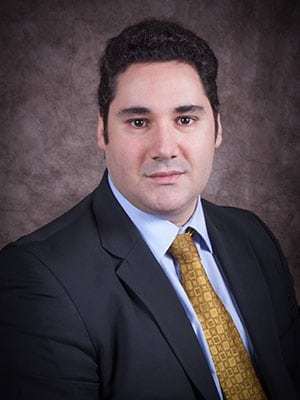
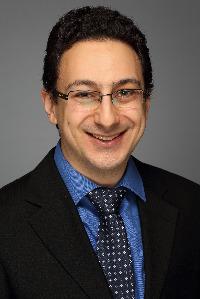
Maria Iacovou is a Professor of Prehistoric and Protohistoric Archaeology at the Department of History and Archaeology, University of Cyprus. She has held leadership roles including Deputy Dean of the Faculty of Philosophy, Chair of the Department of History and Archaeology, and Deputy Director of the Archaeology Research Unit. Her research focuses on ancient Cyprus, urbanization, and Mediterranean archaeology, with a particular emphasis on the Bronze and Iron Ages. She has directed major projects like the Palaepaphos Urban Landscape Project and the Palaepaphos-Laona Tumulus Investigation. Iacovou has received numerous fellowships and awards, including from the Fulbright Commission, British Academy, and Onassis Foundation. She has authored/co-edited over 20 monographs and contributed to international conferences. Her work integrates archaeological fieldwork, historical cartography, and GIS technologies.
Christos Nicolaides is an Assistant Professor at the Department of Business and Public Administration within the School of Economics and Management at the University of Cyprus (UCY), holding a secondary appointment as a Digital Fellow at MIT's Initiative on the Digital Economy. Previously, he spent three years as a James McDonnell Foundation-funded Postdoctoral Fellow at MIT Sloan School of Management. His educational background includes a PhD in Engineering from Massachusetts Institute of Technology (2014), SM from MIT (2011), MSc in Applied Mathematics from Imperial College London (2009), and BSc in Physics from University of Thessaloniki (2008). Nicolaides' research applies mathematical, statistical, and computational tools to large-scale empirical questions in social influence mediated by digital technologies. His work spans Data Science , Machine Learning , Social Networks , and Computational Social Science , with significant contributions to understanding human mobility patterns, disease transmission dynamics, and social contagion effects. His research has established novel methodologies for analyzing complex network structures in mobility data and social interactions. Analysis of his 15 most recent publications reveals a consistent focus on applying network science to real-world problems, particularly in pandemic response (12 publications), human mobility analytics (9 publications), and social contagion dynamics (7 publications). His work demonstrates increasing interdisciplinary integration, combining computer science, epidemiology, and organizational behavior since 2020. Marie S. Curie Fellow Two Highly Cited Papers by Web of Science (2017, 2020) Best Paper Award by Risk Analysis Society (2019) Professor of The Week by Poets & Quants (2020) As principal institutional investigator, Nicolaides has secured over €1 million in research funding from the European Commission, industry partners, Cyprus Innovation and Research Foundation, and Cyprus Ministry of Health. His current teaching includes Social Networks and Entrepreneurship, Introduction to Operations Management, and Quantitative Methods in Management. Media coverage of his work spans major outlets including The New York Times, CNN, Nature, and Science, with significant impact on public health policy discussions during the COVID-19 pandemic.
Dr. Theodoros Tsakiris is an Associate Professor of Geopolitics and Energy Policy at the School of Business, University of Nicosia . He serves as an International Research Associate at ESCP's London-based Research Center for Energy Management and leads the Energy & Geopolitics Program at ELIAMEP, Greece's leading foreign policy think tank. Dr. Tsakiris contributes to the Horizon 2020 research program FEUTURE , analyzing EU-Turkish relations, and teaches courses on oil & gas geopolitics, economics, and markets. He coordinates energy-related study programs at UNIC and is seconded to the Department of Engineering and the Department of International & European Relations . PhD , Faculty of International & European Studies, Panteion University of Athens (2008) Master , School of Foreign Service, Georgetown University (2002) Bachelor , Faculty of Philosophy, National and Kapodistrian University of Athens (1999) Dr. Tsakiris' research focuses on energy security , geopolitical dynamics in the Eastern Mediterranean , and EU energy policy . His work explores Turkish revisionism , cross-border energy infrastructure , and regional cooperation mechanisms , particularly regarding natural gas reserves and export routes. He has authored 1 book , 10 monographs , 14 book chapters , and 13 peer-reviewed articles in multiple languages, with citations from institutions like Harvard University's Belfer Center and MIT Energy Initiative. His recent publications analyze the impact of the Russian-Ukrainian War on EU gas supplies , the geopolitical significance of the EastMed Pipeline , and the role of Cyprus, Israel, and Egypt in EU energy diversification . Dr. Tsakiris has held high-level policy advisory roles, including Director for International Policy Planning for the Greek Minister of Energy and member of Cyprus' Council for Geostrategic Studies (2014–2015). He is a research associate at UNIC's Center for European and International Affairs and leads the Energy Geopolitics Committee at the Hellenic Association for Energy Economics.
Andreas Athenodorou is an associate research scientist at the Computation-based Science & Technology Research Center (CaSToRC) of The Cyprus Institute. He holds a PhD in Theoretical Particle Physics from the University of Oxford (2004–2008) and has held postdoctoral positions at DESY Zeuthen, Swansea University, and the University of Cyprus. Prior to his current role, he was a Marie Sklodowska Curie Individual Fellow at the University of Pisa (2019–2021). He currently leads a work package in the NI4OS-Europe project. His research focuses on theoretical and computational aspects of particle physics, including lattice gauge theories, large-Nc limits, hadron structure, and beyond Standard Model physics. He specializes in applying high performance computing (HPC), data science, and machine learning to solve complex problems in quantum field theory. Notable areas include confinement dynamics via effective string theory, glueball spectroscopy, and topological susceptibility studies in QCD. His computational work spans lattice QCD simulations, development of reproducible open science workflows, and application of machine learning to phase transition analysis. He has contributed to understanding mass hierarchies in strongly-coupled systems and the neutron electric dipole moment using advanced simulation techniques. Key contributions include advancing effective string theory descriptions of flux tubes, analyzing Z_N gauge theories, and exploring β-function behaviors in SU(2) adjoint fermion systems. His work bridges fundamental theory with computational innovation, addressing both particle physics questions and methodological challenges in large-scale simulations.
Angelos Georghiou is an Associate Professor of Operations Management at the Department of Business and Public Administration, University of Cyprus. He previously held academic positions as Assistant Professor at McGill University (2016–2019), Post-Doctoral Researcher at MIT (2012–2013), and Postdoctoral Researcher at ETH Zurich (2013–2016). His work bridges computational methods in stochastic and robust optimization with applications in healthcare, energy systems, and operations management. Ph.D. in Operations Research, Imperial College London (2012) M.Sci. in Mathematics, Imperial College London (2008) His research focuses on stochastic optimization , robust optimization , and decision rules , addressing challenges in healthcare analytics , energy-efficient control systems , and machine learning integration . Recent publications in Management Science and Operations Research highlight his contributions to decision-dependent information discovery and computational frameworks. Key trends in his 15 most recent articles include: Advancing robust optimization techniques for multistage problems Applications in healthcare (psychiatric risk prediction) and energy systems Integration of machine learning with stochastic programming Development of tractable algorithms for complex decision environments Scientific Awards : Esdras-Minville Best Student Paper Award (2023) He serves on editorial boards of Operations Research Letters (Area Editor) and Management Science , and collaborates with institutions like MIT, ETH Zurich, and McGill University. His work with undergraduate students includes a 2021 paper in SIAM Undergraduate Research Online .
Thilo Rehren is the A.G. Leventis Professor for Archaeological Sciences at The Cyprus Institute's Science and Technology in Archaeology and Culture Research Center (STARC). He holds a PhD in Earth Sciences and has led major international research groups at institutions like UCL and UCL Qatar. His work focuses on reconstructing ancient technological processes, particularly metallurgy, glassmaking, and ceramic production, integrating archaeological, scientific, and historical data. He has pioneered studies on global metallurgical networks and early technical innovations in regions such as the Mediterranean, China, and sub-Saharan Africa. Education: MSc (mineralization of copper-silver mines) and PhD (volcanology of Nisyros, Greece). Career highlights include establishing UCL Qatar and co-directing the STARC lab. Research emphasizes cross-cultural collaboration and the socio-technical dynamics of material production. Publications span 40+ years, analyzing production techniques from Late Bronze Age Cyprus to Medieval Chinese glass workshops. His work challenges traditional narratives by highlighting the ingenuity of past artisans and the global interconnectedness of technical knowledge. Current projects investigate early metallurgy in the Balkans and glass production in West Africa. Labs/Teams: Leads STARC's interdisciplinary teams focused on archaeological materials science. Collaborates with global institutions on projects like the Meroe Quarries in Sudan and the Dhaskalio-Keros excavation in Greece.
Eleni Andreou is a Professor and Associate Professor at the University of Nicosia within the School of Life and Health Sciences , teaching and coordinating Nutrition/Dietetics programs since 1992. She practices as a private clinical dietitian in Cyprus since 1991 and holds a Doctorate in Professional Studies from Middlesex University (2006-2011), focusing on behavioral modification, diabetes, obesity, and cognition-sleep relationships. B.Sc. (Summa Cum Laude) in Dietetics from Youngstown State University (1990) Postgraduate clinical training at Youngstown State University and Southside & Northside Memorial Hospital (1992) Doctorate in Professional Studies (Clinical Dietetics, Nutrition Sciences, Health Education) from Middlesex University (2011) Her research spans behavioral nutrition , chronic disease management , and cognition-sleep interactions , with recent work including chrono-nutrition effects on cognitive function, carbohydrate periodization for physical fitness, and pandemic-induced lifestyle changes . She contributes to public health policy through her roles in Cyprus Diabetes Association , CySPEN , and as a Scientific Advisor for health organizations. She authored the textbook Antioxidants in Health and Disease (2015) and over 75 research outputs. Key scientific contributions include h-index of 13 with 640 citations (Scopus) and fellowship in the United Kingdom Higher Education Academy. She leads nutrition research projects and consults food/pharmaceutical companies , while serving as President of Cyprus Dietetic and Nutrition Association , CySPEN , and Cyprus Atherosclerosis Association . Her work aligns with UN Sustainable Development Goals (SDGs 2,3,4) and has active collaborations across Europe and Cyprus .
Olympios Michalis serves as Associate Professor of History of Western Art at the Department of History and Archaeology, University of Cyprus, Faculty of Letters. Previously holding positions as Assistant Professor (2015-2020) and Lecturer (2011-2015) at the same institution, he specializes in medieval European art with particular focus on Gothic architecture in France and the Latin East. Doctoral studies in Art History, Courtauld Institute of Art, University of London (2005-2010) MA in Art History, Courtauld Institute of Art, University of London (2004-2005) Undergraduate studies, Department of History and Archaeology, National and Kapodistrian University of Athens (1999-2003) His research centers on Gothic architecture and sculpture in France and the Latin East, with specific interests in the history of Gothic church construction, spatial usage in medieval churches, and the interaction between ritual, architectural form, and sacred topography in the late Middle Ages. He teaches undergraduate courses including Introduction to Western Art History, Renaissance Art, Gothic Architecture, and specialized courses on Cyprus under Lusignan and Venetian rule, alongside postgraduate seminars on Crusader art and medieval Cypriot archaeology. Recent publications reveal consistent focus on Lusignan and Venetian Cyprus architecture, with emerging trends examining cross-religious architectural influences and performative aspects of medieval sacred spaces. His monograph Building the Sacred in a Crusader Kingdom: Gothic Church Architecture in Lusignan Cyprus (2018) represents a major contribution to the field. Corresponding Member, International Center of Medieval Art (2023-2026) Guest Scholar, Getty Research Institute (2018) Member, International Research Seminar 'Art of the Crusades: A Re-Evaluation' (2015-2017) Visiting Research Associate, Centre for Hellenic Studies, King's College London (2012-2014) As Principal Investigator for the Leventis Foundation-funded project on Nicosia's Bedestan (2017-2019), he has secured significant research funding while co-directing interdisciplinary projects on Saint-Omer Collegiate Church and the Cistercian Nunnery of St Theodore in Nicosia. He co-edits the journal Frankokratia: A Journal for the Study of Greek Lands under Latin Rule and serves on the editorial board for Brepols' 'Mediterranean Nexus' series. His research integrates architectural analysis with cultural history, examining how sacred spaces functioned within complex religious landscapes of the Crusader states, particularly emphasizing Cyprus as a crossroads of Byzantine, Latin, and Eastern Christian traditions.
Ramzi Moucharafieh is an Adjunct Professor in the Department of Orthopaedic Surgery at European University Cyprus. He has held academic positions at St Georges University Hospital and Clemenceau Medical Center in Beirut, Lebanon, and previously served as Associate Professor of Orthopaedics at American University of Beirut (1991-2005). Orthopedic Surgery Hand and Microvascular Surgery Hip Fracture Research His research focuses on reconstructive techniques for extremities, including nerve transfers, free tissue transfer, and microsurgical approaches to diabetic foot salvage. Recent work examines hip joint morphology and femoroacetabular impingement through computed tomography. Moucharafieh has published extensively on lower extremity reconstruction, bone fracture risk assessment, and surgical innovations. His 2021 study on hip joint space analysis and 2020 review on nerve transfers highlight his clinical expertise. Professor's Medal Lecture (1991), Robert Jones & Agnes Hunt Orthopaedic Hospital G.K. Rose Award for Biomechanics (1991), Robert Jones & Agnes Hunt Orthopaedic Hospital As an editorial reviewer for journals like Injury and The Journal of Hand Surgery European , he contributes to orthopedic research evaluation. He has also served as a lecturer at international microsurgery and orthopedic conferences since 2000.
Savvas G. Loizou is a faculty member at the Cyprus University of Technology , affiliated with the Department of Mechanical and Materials Science and Engineering . He established the Robotics, Control, and Decision Systems Laboratory (RCDS Laboratory) in 2011. Education: PhD in Mechanical Engineering (2005) and Eng. Diploma (2000) from National Technical University of Athens (NTUA). Postdoctoral Experience: GRASP Laboratory, University of Pennsylvania (2005–2007). His research focuses on control theory for autonomous robotic systems , with applications in underwater, aerial, ground, and micro-robotics . Key areas include multi-agent coordination , human-robot interaction , task planning , and sensor-based navigation . Recent work emphasizes logistics automation , UAV hardware platforms , and bounded control algorithms . Dr. Loizou has contributed to multi-agent formation control , underwater vision systems , and nonlinear model predictive control for electric vehicles. He is active in control system design and navigation transformations for complex environments. His laboratory, RCDS , serves as a hub for research in autonomous systems and decision-making algorithms.
Assoc. Prof. Dr. Adnan Acan is a faculty member in the Department of Computer Engineering at Eastern Mediterranean University (EMU). He holds a PhD from Middle East Technical University, specializing in Electrical Engineering. His academic roles include teaching and supervising numerous graduate students in areas such as optimization algorithms, computer vision, and biomedical signal processing. Education: PhD, Electrical Engineering, Middle East Technical University (1992) MS, Electrical Engineering, Middle East Technical University (1985) BS, Electrical Engineering, Middle East Technical University (1983) Research Interests: His research focuses on optimization algorithms, machine learning, pattern recognition, and biomedical applications. Notable areas include metaheuristic algorithms (e.g., particle filters, great deluge), multi-agent systems, and ECG/heartbeat classification. He has contributed to advancements in computational intelligence, evolutionary algorithms, and medical diagnostics. Advising & Students: He has supervised over 30 graduate students, including PhDs such as JAMSHID TAMOUK (2021) and ZAHRA GOLRIZ KHATAMI (2019), and master’s students like MILAD ROSTAMPOUR (2023). His work spans applications in robotics, face recognition, and numerical optimization. Labs & Collaboration: His teaching and research involve courses in artificial intelligence, algorithms, and computer engineering. He actively contributes to academic service, including roles as a session chair and reviewer in conferences. His lab focuses on developing innovative solutions to complex computational and biomedical challenges.
Dr. Nezire İnce serves as an Assistant Professor in the Nutrition and Dietetics Department at Eastern Mediterranean University's School of Health Services. She holds dual administrative roles as Coordinator and Vice Chair, with her office located in SBF 124. Her contact email is nezire.ince@emu.edu.tr. Her educational background includes: PhD in Nutrition and Dietetics (2019) MS in Medical Nutrition Therapy (2007-2010) BS in Nutrition and Dietetics (2001-2005) Dr. İnce's research spans multiple domains of nutritional science, with particular emphasis on the relationship between dietary patterns and health outcomes across diverse populations. Her work investigates how chronobiology influences eating behaviors and metabolic health, the impact of nutrition on cognitive function in elderly populations, and anthropometric measurements in youth athletes. She employs primarily cross-sectional study designs to examine complex relationships between dietary intake, anthropometric measurements, and health indicators. Analysis of her publication record reveals a strong regional focus on Northern Cyprus populations while contributing to international nutrition science. Her research bridges clinical nutrition, public health, and sports science, with recent work exploring emerging topics like AI technology anxiety among nutrition students alongside traditional nutrition research areas. Her scientific contributions have been recognized through participation in notable conferences: III. International Congress of Athletic Performance and Health in Sports (2021) 6. Ulusal Sağlıklı Yaşam Sempozyumu 1. Yaşam için Beslenme ve Spor Kongresi (2017) Dr. İnce actively mentors graduate students across diverse research topics in nutrition science, supervising multiple PhD and Master's candidates. She has also contributed to significant research projects including 'Enhancing Competitiveness of Micro and Small Enterprises Through Provision of Business Support Services' and maintains an active research agenda with publications spanning from 2020 to 2025.
Dimitrios Loukidis serves as Associate Professor in the Department of Civil and Environmental Engineering at the University of Cyprus, where he has been a core faculty member since January 2009. His academic foundation includes a Civil Engineering degree from the National Technical University of Athens (1999) and advanced geotechnical specialization through MSCE (2000) and PhD (2006) degrees from Purdue University, followed by postdoctoral research there (2006-2008). Educational Background: Civil Engineering, National Technical University of Athens (1999) MSCE in Geotechnical Engineering, Purdue University (2000) PhD in Geotechnical Engineering, Purdue University (2006) Professor Loukidis maintains a robust research program addressing critical geotechnical challenges through both theoretical and applied approaches. His work spans foundations engineering , expansive soils behavior (particularly Nicosia marl), slope stability and landslide mechanics , offshore geotechnics for pipeline systems, and advanced computational geomechanics including constitutive modeling and seismic analysis. Recent investigations integrate machine learning with traditional geotechnical methods to enhance landslide susceptibility mapping. His 15-year publication trajectory reveals evolving expertise: early work focused on fundamental soil-pile interaction and bearing capacity mechanisms (2008-2012), transitioning toward complex geohazard analysis including fault-rupture propagation (2009), offshore pipeline-fault interactions (2020-2023), and sophisticated modeling of expansive soil behavior (2018-2024). The 2025 publication demonstrates cutting-edge integration of machine learning with geotechnical parameters for landslide prediction in Southwestern Cyprus. No scientific awards are documented in the provided materials. While specific student advising details and grant information aren't disclosed, his collaborative publications with researchers like Triantafyllaki, Tzampoglou, and Papanastasiou indicate active participation in Cyprus-focused geotechnical research teams. Current investigations center on urban development impacts on paleolandslides (Pissouri case study) and machine learning-enhanced geohazard assessment. Laboratory work appears centered on computational geomechanics modeling, with recent publications utilizing advanced numerical techniques for large deformation analysis and hybrid optimization algorithms. The research group maintains strong field validation components, particularly for Nicosia marl behavior and offshore pipeline performance under tectonic stresses.
Mian Pan is an Associate Professor at Hangzhou Dianzi University. He holds a B.S. in Electronic Engineering (2007) and a Ph.D. in Signal Processing (2013) from Xi'dian University, Xi’an, China. His research focuses on machine learning, radar signal processing, pattern recognition, and audio/video/image processing algorithms. Education: Ph.D. in Engineering Sciences, 2013, Xi'dian University B.S. in Electronic Engineering, 2007, Xidian University Research Interests: Mian Pan explores advanced machine learning techniques for radar signal analysis, develops algorithms for pattern recognition in complex systems, and investigates efficient processing methods for audio, video, and image data. His work bridges theoretical foundations with practical applications in signal processing domains. Publications & Awards: No specific articles, grants, or awards are listed in the provided information. Advising & Labs: No student advisees, lab affiliations, or grant details are mentioned.
Dr. Joyce De-Graft Acquah serves as a Research Fellow in the Department of Peace Studies at the School for Development Studies, University of Cape Coast, Ghana, where she teaches graduate courses in Peace, Security, and Development Studies. She concurrently holds a prominent position on Ghana's Central Regional Peace Council. Her academic foundation includes: Bachelor of Arts in Social Work and Sociology (University of Ghana) Master of Arts in Development Studies (University of Ghana) Master of Philosophy in Peace and Conflict Transformation (University of Tromsø, Norway) Ph.D. in International Conflict Management (Kennesaw State University, USA) Dr. Acquah's research critically examines conflict dynamics through multiple lenses including gender-responsive peacebuilding, refugee integration, and post-conflict livelihood reconstruction. Her current work investigates urban gang violence in Ghana using innovative methodological approaches to analyze socioeconomic, cultural, and political drivers within stable democratic contexts. She bridges theoretical frameworks with practical community engagement across Africa, Europe, and North America. Her recent publication on Ghanaian gang violence reveals complex interactions between urban development patterns and conflict emergence, employing specialized sampling techniques for high-risk environments. This work contributes significantly to criminology and peace studies through its focus on 'hot spots' within otherwise stable nations. Key recognitions include: Norwegian Government Quota Scholarship PEO International Peace Scholarship British Council Pan-African Leadership selection (2004) Nordic Africa Institute Research Fellowship (2023) Golden Key and Alpha Beta Kappa Honor Society memberships Dr. Acquah has secured substantial research funding from Norway's Centre for Environment and Development and Canada's Bureau for International Education. Her professional practice combines academic rigor with field application through USAID community development projects, Georgia Office of Dispute Resolution certification, and leadership in the Ghana Association of Social Workers. She maintains active roles in the South South Migration Network, Gender Violence Survival Support Network, and African Migration Mobility Initiative. Through the Central Regional Peace Council and multiple transnational networks, she implements community-based conflict resolution frameworks while advancing policy development on migration, gender-based violence, and urban security challenges across West Africa.