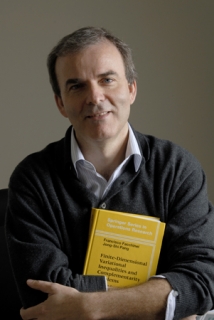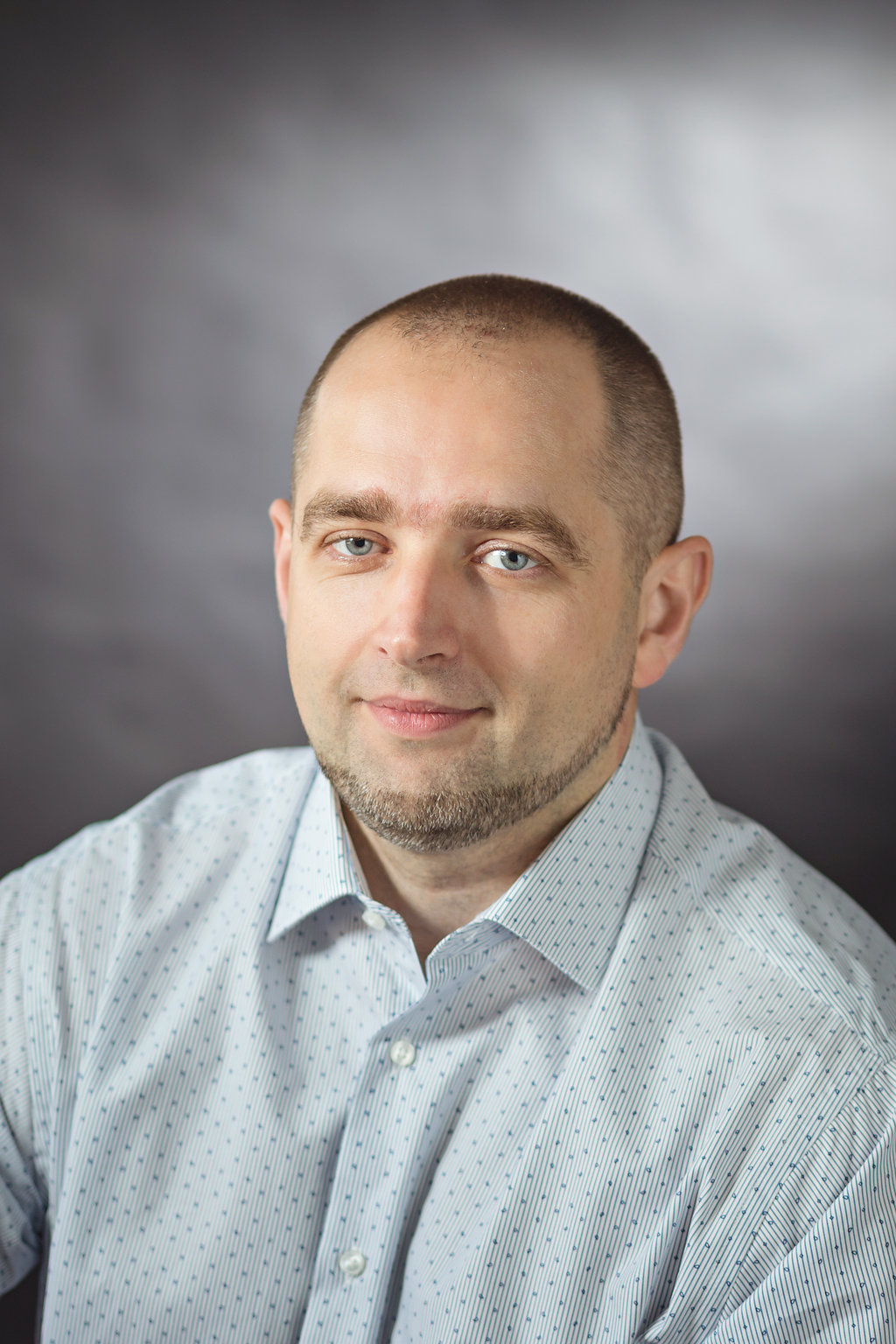
Maksim KitsakView profile
Associate Professor
Maksim Kitsak is an Associate Professor (tenured) at the Faculty of Electrical Engineering, Mathematics and Computer Science at Delft University of Technology. He serves as the M.Sc. Program Coordinator for the Wireless Communication and Sensing track and is an Editorial Board Member for Nature Scientific Reports and IEEE Transactions on Network Science and Engineering. He also co-chairs the Dutch Network Science Society. Dr. Kitsak earned his Ph.D. in Physics from Boston University in 2009, advised by Prof. H.E. Stanley and Prof. S. Havlin. His academic career includes positions at Northeastern University, Dana-Farber Cancer Institute, and University of California San Diego before joining Delft University of Technology in March 2020 as a tenure-track Assistant Professor, achieving tenure in May 2022. His research spans network science with expertise in complex networks, hyperbolic geometry, epidemic spreading, and network resilience. He has pioneered work on using latent geometric spaces to understand network structure and function, with applications in communication networks, pandemic forecasting, and molecular biology. His influential 2010 Nature Physics paper on identifying influential spreaders in networks challenged conventional wisdom and spurred significant follow-up research. His publication record shows a strong trajectory with recent work focusing on hyperbolic geometry applications across multiple dimensions, network resilience in transportation systems, and epidemic modeling. His research has appeared in high-impact journals including Nature Communications, Nature Scientific Reports, and Physical Review journals, demonstrating both theoretical depth and practical applications. NWO VICI research grant for studying shortest paths in large incomplete networks Dutch Research Council (NWO) funding for "Mathematical Description and Inference of Complementarity Mechanisms in Complex Networks" Seed funding from TU Delft Safety and Security Institute for privacy and security theory Dr. Kitsak actively mentors students including Ph.D. candidates Roberto Gheda (Federated Learning, AI, and Privacy), Yongdin Tian (decentralized Machine Learning), and Elizaveta Evmenova (complementarity principles in networks), as well as M.Sc. students. His research group at Delft University of Technology focuses on advancing network science theory while applying insights to real-world problems in communication networks, network medicine, and pandemic response, with two current postdoctoral openings funded by the NWO VICI grant.