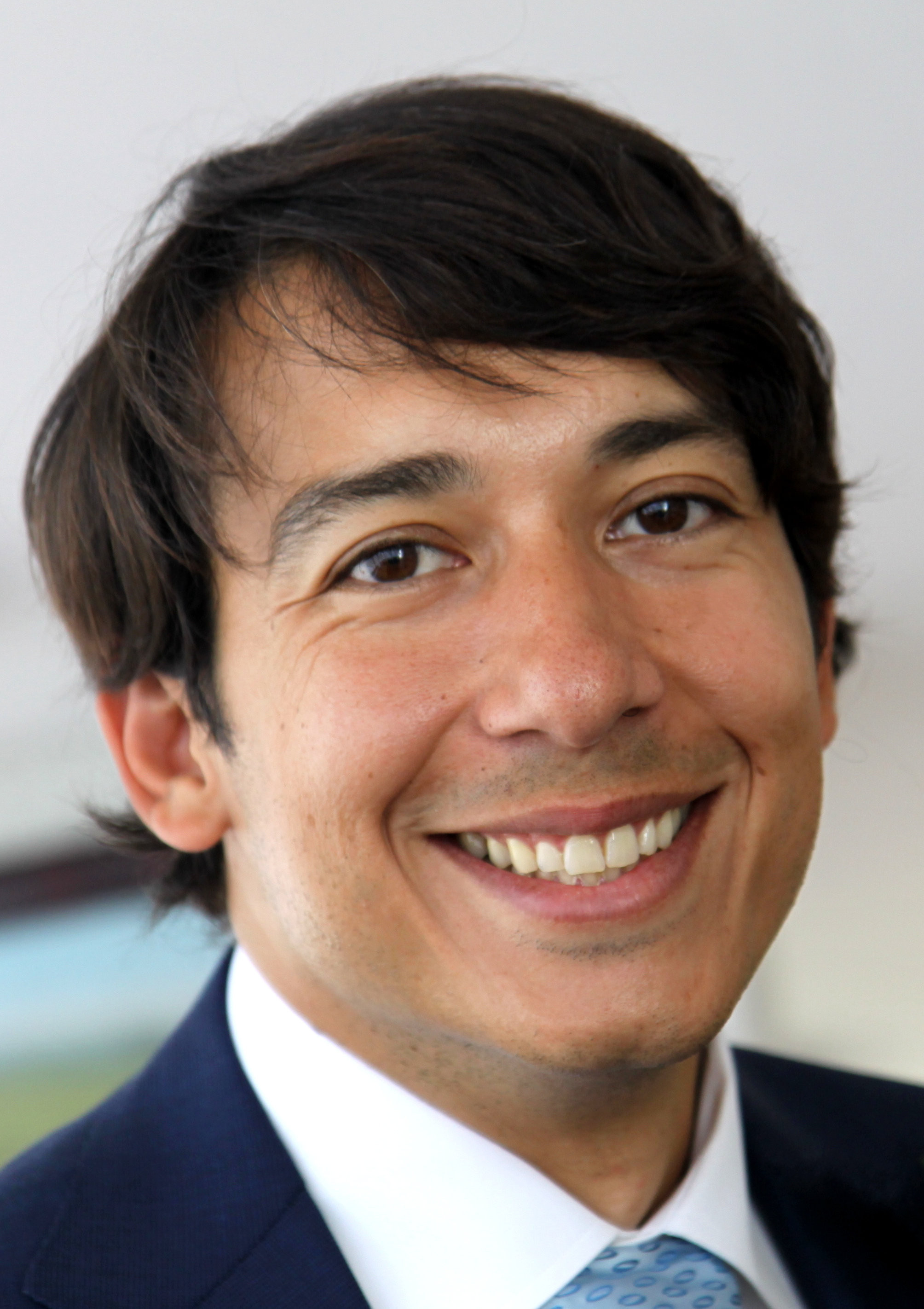
William Wulff is a Scientific Assistant at the Chair of Integrated Systems, Technical University of Munich (TUM), School of Computation, Information and Technology. He holds an M.Sc. in Computer Science and Engineering from the Technical University of Denmark (2021-2023) and a B.Eng. in Computer Engineering from the same institution (2017-2021), with an internship at CERN focusing on Embedded Systems and Compilers. Education : M.Sc. in Computer Science and Engineering (TUD), B.Eng. in Computer Engineering (TUD) Current Role : PhD candidate at LIS, TUM Research Interests include computer architecture (arithmetic circuits), error-correction schemes, asynchronous circuits, and linear codes for improving packet-drop resilience in wired networks, particularly low-latency implementations on SmartNICs. Contact : Email william.wulff@tum.de , Room N2139, Building N1, TUM Campus.
Michael Hunter serves as Associate Professor of East Asian Languages & Literatures at Yale University, where he specializes in pre-imperial and early imperial Chinese intellectual history within the Department of East Asian Languages & Literatures. His research critically re-examines foundational texts of Chinese philosophy, particularly focusing on Confucius quotation practices and the compilation history of the Analects (Lunyu). Hunter challenges traditional scholarship by arguing the Analects was compiled during the Western Han dynasty (150s-130s BCE) rather than the Warring States period, analyzing how pre-Analects authors dynamically re-performed Confucius's teachings as creative reinterpretations of inherited wisdom. His methodology integrates textual analysis with historical context to illuminate early Chinese philosophical discourse and political-intellectual milieus. Dr. Hunter completed his doctoral work under the supervision of Willard Peterson and Martin Kern, producing the dissertation Sayings of Confucius, Deselected which deconstructs the Analects' authority through reverse chronological analysis of Confucius quotations across the early Chinese corpus.
Prof. Dr.-Ing. Holger Blume serves as Vice President for Research and Transfer at Leibniz University Hannover while maintaining his academic position as Professor in the Architectures and Systems Section within the Faculty of Electrical Engineering and Computer Science. He holds multiple leadership positions including Chairperson of the Research Commission and Central Ethics Committee, Executive Board member of eNIFE (Leibniz Research Initiative for Neurosciences), and membership in both the Laboratory of Nano and Quantum Engineering and L3S Research Centre. His research interests span computer architecture, hardware design, signal processing, AI accelerators, hearing aid technology, and biomedical engineering. His work bridges theoretical computer science with practical applications in automotive systems, medical devices, and quantum engineering. Professor Blume's research demonstrates strong interdisciplinary connections between electrical engineering, computer science, and biomedical applications, with particular emphasis on hardware-oriented solutions for real-world problems. Analysis of his recent publications (2023-2025) reveals a strong focus on hardware acceleration for AI and signal processing applications, particularly in automotive radar/LiDAR systems and hearing aid technology. His work shows consistent innovation in RISC-V processor design, specialized hardware for mathematical functions, and biomedical applications of engineering principles. The research demonstrates a clear trajectory toward energy-efficient, specialized computing architectures for specific application domains. As Vice President for Research and Transfer, Professor Blume oversees significant research initiatives at Leibniz University Hannover, which hosts multiple Clusters of Excellence including PhoenixD (Photonics, Optics, and Engineering), QuantumFrontiers, and Hearing4all. The university participates in numerous collaborative research centers and junior research groups funded by DFG, BMBF, and EU programs. Professor Blume is actively involved in multiple research facilities including the Laboratory of Nano and Quantum Engineering and the L3S Research Centre. His work connects with Leibniz University's research focuses on optical technologies, quantum optics and gravitational physics, and biomedical research and technology. His leadership positions indicate strong involvement in shaping the research strategy and ethical framework of the university's scientific endeavors.
Shuyin Jiao is an active Associate Teaching Professor in the Department of Computer Science at North Carolina State University's College of Engineering. She serves as course coordinator for CSC 111 Introduction to Computing: Python and teaches multiple core undergraduate courses including CSC 116 (Java) and CSC 246 (Operating Systems), with extensive teaching experience spanning over 9 years at both NC State and the College of William & Mary. Her educational background includes a Ph.D. from the University of Houston (2015), a Diplôme d'Ingénieur from Ecole Central de Lyon, France, and a B.S. from Beihang University, China. She previously held positions as Assistant Teaching Professor (2020-2025) and Lecturer at NCSU, and taught as Lecturer and Adjunct Lecturer at William & Mary from 2015-2020. Dr. Jiao's research focuses on computing education and program analysis, with particular emphasis on developing tools to enhance student learning in computer science. Her work explores pedagogical methods to address diverse learning styles in increasingly large CS classrooms and investigates code inefficiencies through memory profiling and performance analysis. She leads the CERES lab at NCSU and serves as Publications Co-Chair for SIGCSE TS 2026. Her publication record shows consistent output in top venues including SIGCSE, CGO, MobiCom, and ICSE, with recent work spanning from 2025 back to 2012. Her research trajectory demonstrates a clear evolution from materials science (early career) to software engineering and computer science education, with current work heavily focused on educational technology and program analysis tools. Dr. Jiao has secured significant funding including as PI for NSF Grant DUE-#2417469 (2024-2027), NCSU Data Science Academy Seed Grant (2023-2024) as Co-PI, and NCSU GEARS Grants (2023-2024) as PI. She also serves as Co-PI for NSF Grant OAC-#2411136 (2025-2028) focused on computer system research. She actively involves undergraduate students in research through COE REU and CSC 498/499 projects, recruiting at CSC Undergraduate Research Lightning Talks each semester. Her course redesign projects include enhancing operating systems education through multimedia and redesigning CSC 111 with DELTA funding to address challenges in large-class instruction.
Martin Odersky is a Full Professor at École Polytechnique Fédérale de Lausanne (EPFL) in the School of Computer and Communication Sciences, where he heads the Programming Methods Laboratory (LAMP1). He maintains dual teaching appointments in the Systems and Software Engineering (SIN) and Software and Systems Engineering (SSC) sections. Education: Doctorate from ETH Zurich (1989) Odersky's research fundamentally explores the unification of object-oriented and functional programming paradigms. His work spans language design, type theory, compiler construction, and semantic foundations, driven by the thesis that these paradigms are complementary facets of a single computational model. This vision materialized in the Scala programming language, engineered for seamless Java/.NET interoperability while advancing type-safe abstractions for modern software development. His publication trajectory (1997-2005) reveals consistent innovation in bridging theoretical rigor with industrial applicability. Key themes include component-based modularity (Scalable Component Abstractions), dependent type systems for objects, and practical implementations of generics and functional constructs, all converging toward expressive yet safe programming models. Advising and Funding: Odersky has mentored 29 PhD students across his career, including 5 current candidates. His research sustains major funding from the Swiss National Science Foundation, European Commission, and Hasler Foundation, enabling foundational work in language design and implementation. Laboratory: He directs EPFL's Programming Methods Laboratory (LAMP), which drives Scala's evolution and investigates next-generation programming abstractions for concurrency, modularity, and type-driven development.
Eric Van Wyk is a Professor in the Department of Computer Science and Engineering at the University of Minnesota's College of Science and Engineering. His research focuses on programming languages, particularly extensible languages and language tools. He leads the Minnesota Extensible Language Tools (MELT) group and has made significant contributions to attribute grammars, compiler design, and language specification techniques. Professor Van Wyk's research centers on programming languages, especially extensible languages. His team has developed techniques for specifying languages and extensions that add new syntax and semantics to a "host" language. His work focuses on mechanisms guaranteeing that independently-developed domain-specific extensions can be automatically composed into well-defined languages. He has created two major systems: Silver, an attribute grammar specification language enabling highly-modular language specification, and Copper, an integrated parser and context-aware scanner generator that uses parser information to return more discriminating tokens. His publication record shows a clear progression from foundational work on language composition to increasingly sophisticated techniques for metatheoretic reasoning, scope management, and strategic tree rewriting. The research demonstrates a consistent pattern of developing practical tools (Silver, Copper, ableC) alongside theoretical advances in language specification and composition, bridging the gap between formal methods and practical language implementation. Distinguished Paper award at SLE2020 Professor Van Wyk has advised multiple Ph.D. students including Ted Kaminski (2017), Lijesh Krishnan (2012), August Schwerdfeger (2010), Jimin Gao (2007), and Dawn Michaelson (2024). His research has received substantial support from the National Science Foundation through projects such as "FMitF: Track I: ComScaN" (2021-2026), "XPS: EXPL: Enabling An Ecosystem of Parallel Programming" (2016-2021), and "SI2-SSE: Collaborative: Extensible Languages for Sustainability" (2010-2015). He leads the Minnesota Extensible Language Tools (MELT) group, which has developed influential systems for language specification while advancing theoretical understanding of language composition and extensibility. The group's work has established significant contributions to the field of software language engineering with particular expertise in attribute grammars and language composition techniques.
Prof. Dr. Philipp Slusallek serves as Scientific Director and executive board member at the German Research Center for Artificial Intelligence (DFKI), where he leads the Agents and Simulated Reality research area. He holds a Full Professorship in Computer Graphics at Saarland University since 1999, co-founded the European AI initiative CAIRNE as Director of Strategy, and directs research at the Intel Visual Computing Institute. His career spans leadership roles in the Excellence Cluster on Multimodal Computing and Interaction and prior visiting positions at Stanford University and Nvidia Research. His academic foundation includes: 1983-1990: M.Sc. in Physics, University of Tübingen 1992-1995: Ph.D. in Computer Science, University of Erlangen Slusallek's research bridges Artificial Intelligence, Simulated Reality, and Computer Graphics with applications in high-performance computing, motion synthesis, and AI for science. His interdisciplinary work integrates real-time rendering, heterogeneous system programming (CPU/GPU/FPGA), and biomechanical modeling, driving innovations in digital reality frameworks and AI-driven simulation systems across medical, engineering, and autonomous vehicle domains. His 2025 publications reveal a strong focus on graphics compilation (Vulkan SPIR-V), rehabilitation biomechanics, and multi-agent motion simulation, demonstrating consistent integration of computer graphics foundations with emerging AI methodologies for practical real-world applications. Award highlights include the Eurographics Gold Medal (2023), acatech membership (2018), Land of Ideas Awards (2015, 2010), and Eurographics Fellowship (2013), recognizing his transformative contributions to computer graphics and AI. Eurographics Gold Medal (2023) acatech Membership (2018) Land of Ideas Award: Display as a Service (2015) Fellow of Eurographics Association (2013) CeBIT Innovation Award (2013) Land of Ideas Award: DFKI Visualization Center (2010) Slusallek leads major research initiatives including B5GCyberTestV2X (cybersecurity for autonomous driving), ENGAGE (AI computing environments), Carousel+ (digital character interaction), PRIME (predictive rendering), and TAILOR (trustworthy AI). His DFKI research group pioneers virtual environment frameworks while his academic mentorship has shaped generations of computer graphics researchers through Saarland University's programs. He co-founded the Intel Visual Computing Institute and established foundational visualization infrastructure at DFKI, maintaining active leadership in European AI strategy through CAIRNE and prior service on the European Commission's High-Level Expert Group on AI.
Lei Bu is a Professor and Vice Dean at the Software Institute , Nanjing University . He leads research in formal verification, cyber-physical systems, and software engineering, with a focus on bounded model checking and hybrid system analysis. B.Sc. and Ph.D. in Computer Science from Nanjing University (2004, 2010) Visiting student at Carnegie Mellon University and University of Texas at Dallas His research integrates formal methods and machine learning for verifying complex systems like IoT and software with real-time constraints. Key projects include BACH Toolset and BRICK for reachability analysis. Recent publications demonstrate expertise in hybrid system verification , cache side-channel detection , and parallel code analysis frameworks . His work bridges theoretical advancements with practical applications in safety-critical systems. Zhongchuang Software Talent Award (2023) CCF-IEEE CS Young Computer Scientist Award (2022) High-Tech Software Innovation Awards (2019-2023) As Principal Investigator, he leads major projects funded by National Science Foundation of China and Jiangsu Natural Science Foundation (2020-2027). Current tools include BACH for hybrid systems and MLB for Java symbolic execution.
Raffaella Bottini is a Lecturer in Corpus Linguistics at the School of Social Sciences, Lancaster University . She completed her PhD at the ESRC Centre for Corpus Approaches to Social Science (CASS), with prior academic training including an MA in Applied Linguistics (King's College London) and an MA in English Language and Literary Studies (Università degli Studi di Milano, Italy). Research Interests: Her work centers on applying corpus linguistics to language testing and second language acquisition, with a focus on lexical complexity and statistical analysis of learner corpora. She develops quantitative methods and automatic tools for analyzing vocabulary use across proficiency levels in spoken exams (e.g., the Trinity Lancaster Corpus). Her research expands into register analysis, data visualization, and pedagogical applications. Teaching: Bottini leads courses on corpus design, statistics, and vocabulary analysis in Lancaster's distance MA programs in Corpus Linguistics and TESOL. She also contributes to undergraduate modules on corpus-based English studies and summer schools in corpus linguistics. Scientific Awards: PhD Research Award PhD Students: Reem Alojaimi Chris Ott Projects: Includes "Linguistic demands of EMI in Higher Education" (2022-2025), analyzing EMI contexts in China, Italy, and Thailand, and participation in "Culture and Communication: Global Perspectives" and the LAEL-China Network.
Alejandro Russo is a Professor at Chalmers University of Technology , specializing in Information Flow Control (IFC) , Secure Programming Languages , and Functional Programming . His research bridges theoretical foundations and practical implementations, focusing on mitigating timing channels , covert channels , and data leakage in concurrent systems. Developed novel frameworks for Differential Privacy with provable accuracy bounds Pioneered COWL integration for browser security and instruction-based scheduling to prevent cache timing attacks Led major projects like HIPSTER (hybrid static/dynamic IFC) and AppFlow (practical IFC deployment) His publications reveal expertise in security libraries for Haskell and Python , with a focus on faceted execution , label manipulation , and mechanized security proofs . Students under his supervision have explored topics ranging from secure eDSLs to privacy-preserving compilation techniques . Scientific awards : Google Research Award (2011) for Python taint analysis Advising and grants : Principal Investigator for VR , STINT , and Google Research Award Supervised 12+ PhD and Master’s students in security and functional programming research
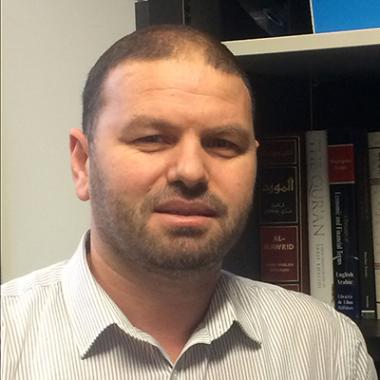
Mahammed Bouabdallah is a Lecturer in Arabic at the University of Westminster , affiliated with the School of Humanities since 2009. He has previously taught at SOAS , UCL , and King's College , specializing in both Arabic for Specific Purposes and General Arabic across all levels. Academic Rank: Lecturer University: University of Westminster School: School of Humanities His research focuses on Arabic language pedagogy , particularly heritage learners and blended learning , as well as intersections of Arabic identity , Islam and politics , and Intellectual Islamic History . His publications emphasize innovative teaching methods using documentaries and digital tools. He is a Fellow of the Higher Education Academy (FHEA) and has presented at international conferences on topics like Cultural Policy in the Arab Region and Twitter in Arabic instruction . Key Research Areas: Arabic Pedagogy, Blended Learning, Cultural Policy, Islamic History Scientific Award: FHEA Notable Teaching: Arabic Polylang, Language Power and Institutions, Themes in Contemporary Arabic Studies
Roman Krivko is an Associate Professor at the Department of Slavonic Studies , University of Vienna. His research focuses on Old Church Slavonic , Byzantine hymnography , and historical linguistics of Slavic languages. Specializes in medieval Slavic epigraphy and liturgical text analysis Key contributor to studies on Christian traditions in Slavic contexts Active editor and researcher in international Slavic studies Research Themes include: Quantitative analysis of loanwords in Slavic Gospels Textological studies of service menaia and kontakia Historical development of Old Bulgarian language Linguistic networks in Central/Eastern Europe Scientific Contributions span Editorial work on Slověne journal Notable publications on the Temnić inscription and Samuil's epigraph Collaborations with institutions like Vinogradov Russian Language Institute
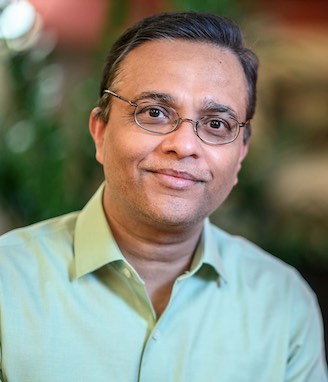
Jignesh M. Patel is a Professor in the Computer Science Department at Carnegie Mellon University, where he leads research on efficient data analysis methods. His work focuses on improving both system efficiency (e.g., high-performance data algorithms) and human efficiency (e.g., user productivity with data systems). Research Focus: Patel's group specializes in database systems, query optimization, hardware acceleration, and human-data interaction. Their interdisciplinary work spans: Transactional processing and real-time analytics Query optimization techniques Hardware-algorithm co-design Natural language interfaces for data systems Memory-efficient data processing Professional Activities: Co-founded four technology companies (Paradise, Locomatix, Quickstep, DataChat). Serves on program committees for premier conferences including SIGMOD and CIDR (as co-chair). Teaches database systems courses at CMU. Awards: Received Best Paper Award at DaMoN 2010 for work on cluster efficiency.
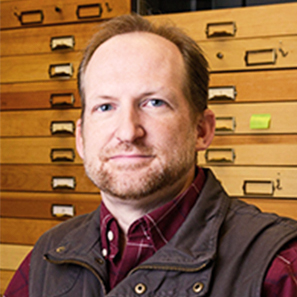
Dr. John Abbott is an Associate Professor and Chief Curator at the University of Alabama Museums , where he leads the Department of Museum Research & Collections. With a PhD in Entomology from the University of North Texas (1999), his career spans academic research, conservation initiatives, and public outreach. Education: PhD (1999), MS (1998) from University of North Texas; BS (1993) from Texas A&M Academic Role: Associate Professor at University of Alabama Museums since 2016 Research Leadership: Editor-in-Chief of International Journal of Odonatology Research Focus: Specializes in Odonatology (dragonfly and damselfly studies), combining systematics , biogeography , and conservation biology with innovative citizen science approaches. Key projects include: Conservation genetics of endangered dragonflies Population dynamics of American Burying Beetle Citizen science data collection networks Field guide development (Texas and North America) Wing evolution and digitization projects Scientific Contributions: Author of 4+ field guides, with 1500+ research photos documenting global insect diversity. His work appears in journals like Freshwater Biology and Biological Invasions . Awards: Notable recognition includes the Hamilton Book Award at UT Austin for his Damselflies of Texas publication. Outreach: Active nature photographer and science communicator, maintaining platforms like OdonataCentral and PondWatch for public engagement.
Peter Sestoft is a Professor at the IT University of Copenhagen (ITU), leading the Computer Science Department since 2017. His primary roles include academic leadership, research in programming languages and software engineering, and teaching. He holds a PhD in Computer Science from the University of Copenhagen (1991) and has held academic positions at institutions like the Royal Veterinary and Agricultural University and the Technical University of Denmark before joining ITU in 1999. His research focuses on programming languages, functional and managed object-oriented languages, parallel programming, compilers, and spreadsheet implementation technologies. He has developed influential tools like the C5 Generic Collection Library for C# and Moscow ML, a Standard ML implementation. His work on Funcalc and Corecalc advanced spreadsheet technology with user-defined functions and efficient recalculation algorithms. Key contributions include over 30 publications, including books on programming language concepts and Java/C# syntax. He has led major research projects such as 'Popular Parallel Programming' (P3) and 'Probabli' for actuarial calculations. His academic service includes roles on national grant committees and international conference organizing committees. Notable advising includes PhD students like Andrzej Wasowski (ITU Professor) and David Christiansen (Director of Haskell Foundation). His work has been recognized through grants exceeding 25 million DKK and collaborations with institutions like Microsoft Research and Harvard University.