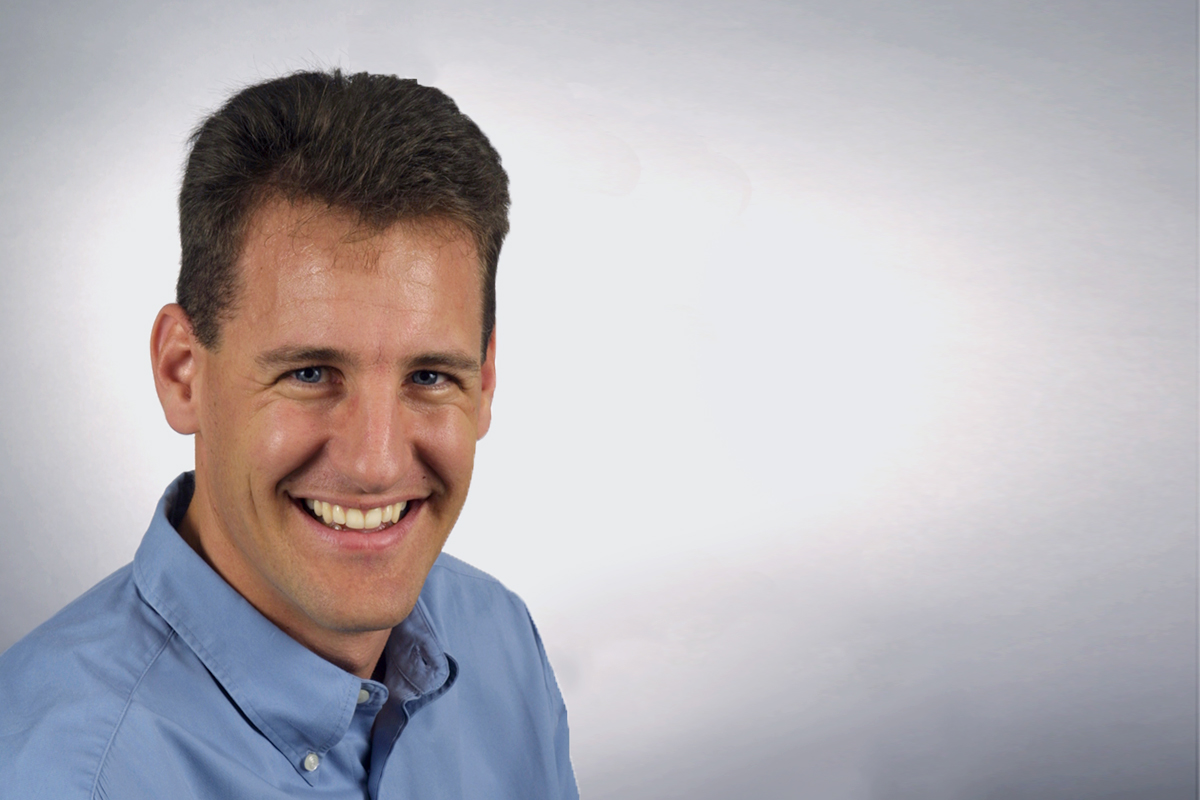
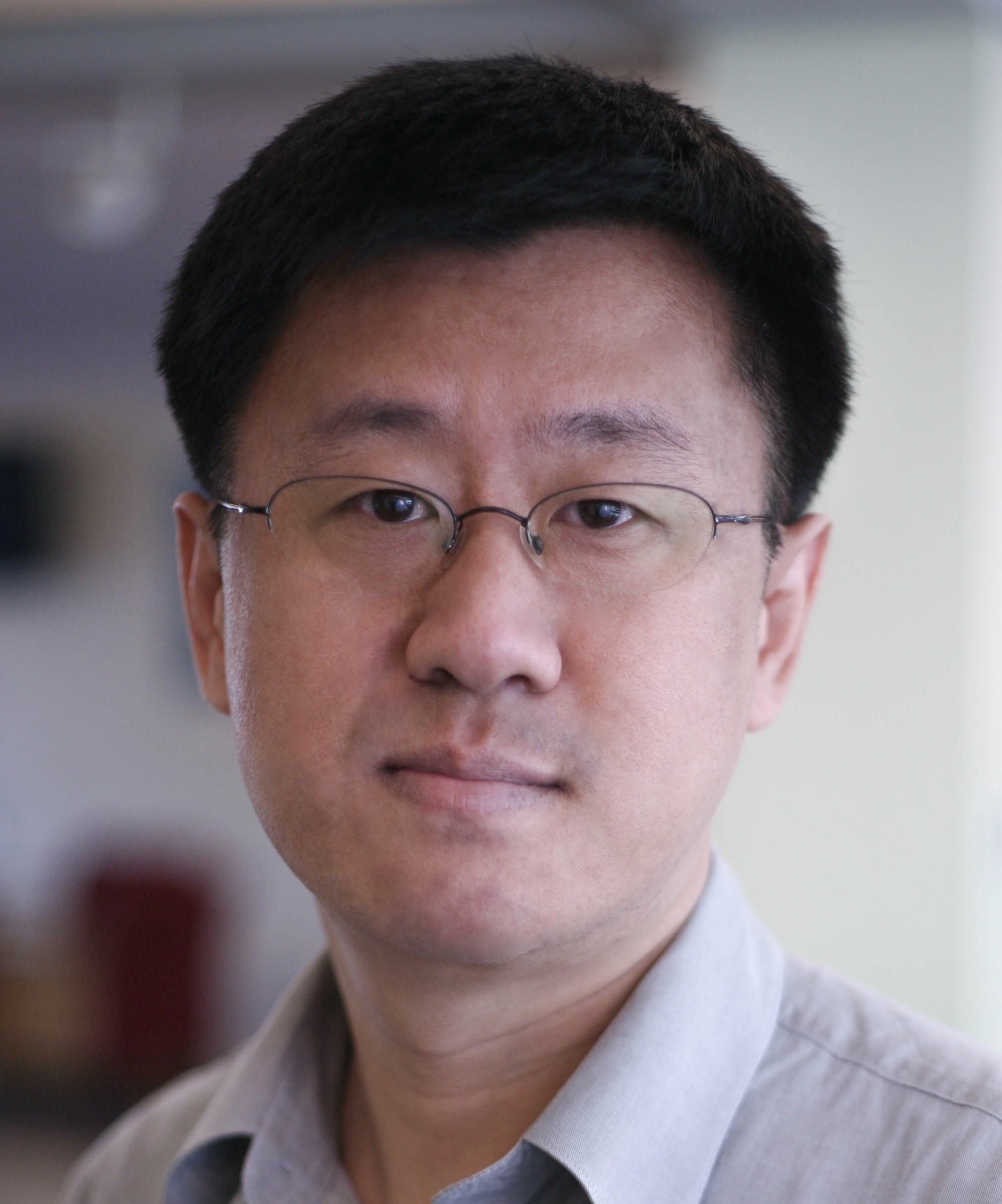
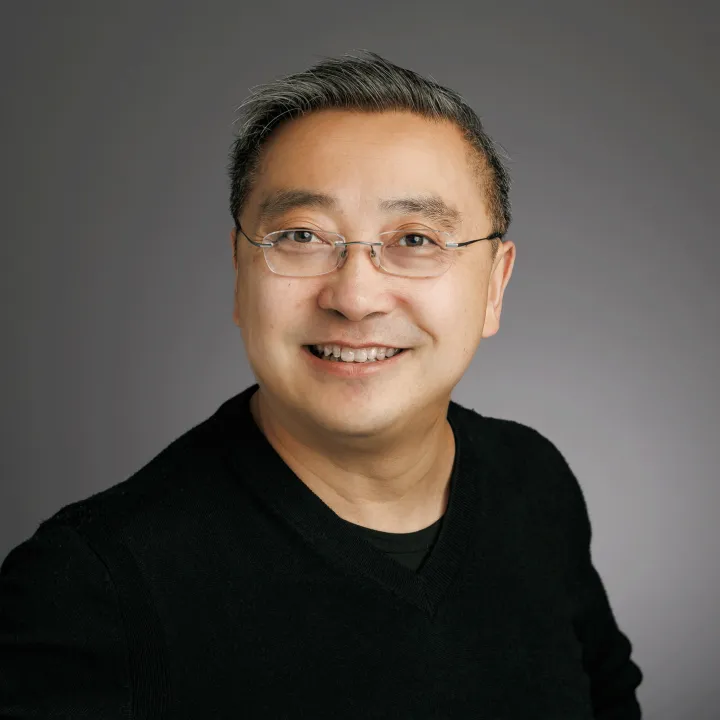
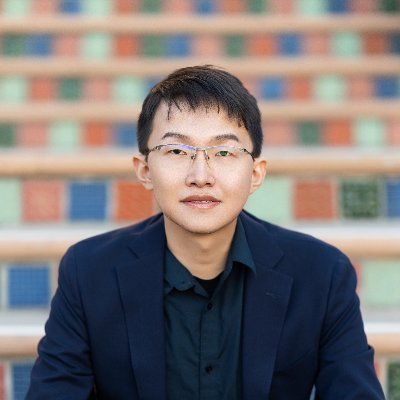
Stephen W. Keckler is an Adjunct Professor at the Department of Computer Science , The University of Texas at Austin , and serves as Vice President of Architecture Research at NVIDIA . He is an ACM Fellow , IEEE Fellow , and Sloan Foundation Research Fellow . Education: BS in Electrical Engineering, Stanford University (1990) SM in Computer Science, Massachusetts Institute of Technology (1992) PhD in Computer Science, MIT (1998) Research Interests focus on computer architecture for deep learning , GPU computing , and energy-efficient systems . His work explores memory compression , network-on-chip designs , and heterogeneous computing . Publication Trends highlight advancements in deep learning accelerators , GPU memory systems , and energy-efficient architectures . Notable themes include sparsity exploitation , multi-chip modules , and fault-tolerant GPU pipelines . Scientific Recognition : ACM Fellow IEEE Fellow Sloan Foundation Research Fellow Best Paper Awards at ASPLOS 2009 and ISPASS 2011 Laboratory Affiliations : Computer Architecture and Technology Laboratory (CART) TRIPS Project (Tera-Op Reliable Intelligently adaptive Processing System) NVIDIA Research
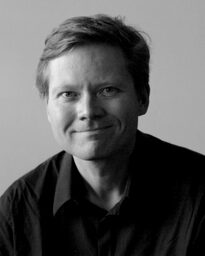
Peter Dinda is a Professor in the Department of Computer Science at Northwestern University , with a secondary appointment in the Department of Electrical and Computer Engineering . He has authored over 130 scientific papers, holds five patents, and is a Fellow of the IEEE . As the former head of the Computer Engineering and Systems division, he has contributed extensively to experimental computer systems. Education: B.S. in Electrical and Computer Engineering from the University of Wisconsin Ph.D. in Computer Science from Carnegie Mellon University Research Focus: Experimental computer systems, particularly parallel and distributed systems , virtualization , operating systems , and empathic systems that integrate user satisfaction with systems-level decision-making. His work also spans compiler design, memory management, and hardware-software co-design for performance optimization. Recent Trends: His publications emphasize virtualization efficiency, memory protection frameworks, parallel programming language design, and power management in heterogeneous computing environments. Key areas include exascale systems, IoT privacy, and physiological sensor-based user modeling. Scientific Awards: Fellow, IEEE Leadership: Served as Director of Graduate Studies and previously led the Computer Engineering and Systems division.
Tom Schrijvers is a Professor at the Department of Computer Science in the Faculty of Engineering Science at KU Leuven, Belgium. He leads the Programming Languages Group within the Declarative Languages and Artificial Intelligence (DTAI) research group. His research focuses on programming languages, particularly functional and logic programming, with special emphasis on Haskell, type systems, and algebraic effects. His research interests include: Functional Programming, especially Haskell Type Systems and Type Theory Algebraic Effects and Handlers Logic Programming, particularly Prolog Constraint Programming Domain-Specific Languages Programming Language Theory Prof. Schrijvers' recent research has focused on effect systems, staged programming, and language composition. His work on algebraic effect handlers has been particularly influential, providing new insights into how effects can be modularly composed and handled in functional languages. He has also made significant contributions to the understanding of type classes and their implementation in Haskell. His publications demonstrate a consistent focus on practical applications of programming language theory, with work spanning from foundational type theory to applied domain-specific languages for areas like fluorescence microscopy. His research often bridges the gap between theoretical programming language concepts and practical implementation concerns. Prof. Schrijvers has supervised numerous PhD students to completion, including Pieter Wuille, Benoit Desouter, George Karachalias, Steven Keuchel, Amr Saleh, Alexander Vandenbroucke, and Ruben Pieters. He currently supervises PhD students Klara Mardirosian, César Santos, Gert-Jan Bottu, Koen Pauwels, Birthe van den Berg, and Roger Bosman. His research group has received funding from various sources including EU projects like GRACeFUL. The Programming Languages Group at KU Leuven, which he leads, focuses on functional (Haskell) and logic (Prolog, Datalog, CLP) programming languages, as well as general programming language theory. The group has been active in numerous research projects and collaborations across Europe.
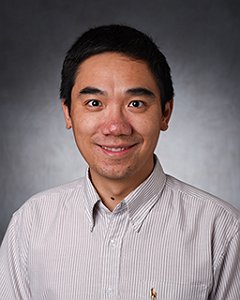
Aviral Shrivastava is a Professor at the School of Computing and Augmented Intelligence, Arizona State University, leading the Make Programming Simple Lab. He holds a Ph.D. and M.S. from the University of California-Irvine (2006, 2002) and a Bachelor’s from IIT Delhi (1999). His research focuses on making programming simple for embedded and cyber-physical systems, with a particular interest in manycore and accelerated computing, software for CPS, and resilient/fault-tolerant computing. He has co-authored over 120 publications in top venues like DAC, ESWEEK, and ACM TECS, with more than 3000 citations and 5 granted patents. His work has been recognized with multiple awards, including the 2010 NSF CAREER award and best paper nominations. Research Areas: Embedded and Cyber-Physical Systems Compiler Design for Modern Architectures Resilient and Fault-Tolerant Computing Scientific Awards: 2010 NSF CAREER award DAC 2017 Best Paper Award Candidate VLSI 2016 Best Student Paper Award LCTES 2010 Second Highest Ranked Paper ASPDAC 2008 Best Paper Candidate Advising & Grants: He has mentored 9 Ph.D. and over 20 Masters students. His research has been funded by NSF, DOE, NIST, SFAZ, and industry partners, totaling $3.5M. He teaches courses on computer organization, architecture, and embedded systems, with student evaluations averaging over 4/5. He also serves as General Chair of Embedded Systems Week (ESWEEK) and holds editorial roles in IEEE ESL, ACM TCPS, and ACM TECS.
Gang (Gary) Tan is a Professor at the Pennsylvania State University's College of Engineering, specializing in computer security, formal methods, and programming languages. He co-directs the Institute for Networking and Security Research (INSR) and leads the Security of Software (SOS) Group, focusing on compiler, programming language, and formal method techniques to enhance computer security. Education: B.E. in Computer Science from Tsinghua University Ph.D. in Computer Science from Princeton University His research integrates formal verification with practical security applications, particularly emphasizing: Compiler-based security enforcement Side-channel mitigation in speculative execution Fairness analysis in machine learning systems Formal grammar approaches for software reliability Key article trends show: Security-focused formal methods (15% of publications) ML fairness verification (20% of recent work) Compiler-based security solutions (30% of output) Side-channel defense mechanisms (25% of research) Parser design and formal grammar synthesis (10% of contributions) Scientific achievements include: NSF CAREER Award Google Research Awards (2x) PLDI 2024 Best Paper James F. Will Career Development Professorship Outstanding Research Award at Penn State Ruth and Joel Spira Excellence in Teaching Award Dr. Tan actively contributes to academic communities through: DARPA ISAT study group membership Program committee roles (CGO 2024, ECOOP 2018, etc) Leadership in security research initiatives
Zhendong Su is a full professor in the Department of Computer Science at ETH Zurich since August 2018. Previously, he held a full professorship at UC Davis from 2003 until June 2019. He earned his Ph.D. in Computer Science from UC Berkeley and dual Bachelor’s degrees in Computer Science and Mathematics from UT Austin in 1995. Affiliations: ETH Zurich: Full Professor (since 2018) UC Davis: Full Professor and Chancellor’s Fellow (2003–2019) IEEE Fellow, ACM Fellow, and Member of Academia Europaea His research focuses on programming languages, compilers, software engineering, computer security, and education technologies . Key contributions include compiler validation (e.g., Project Yin-Yang for SMT solvers and DBMS testing), testing tools like SQLancer, and educational innovations such as the Algot visual programming language. Recent work emphasizes secure AI (e.g., CipherSteal for TEE-shielded models) and compiler reliability (e.g., Artemis/Apollo for JIT validation). He has pioneered techniques like metamorphic testing and equivalence modulo inputs (EMI) for compiler validation, uncovering thousands of bugs in GCC/LLVM and SMT solvers. Awards: ICSE MIP Award (2022), ACM SIGSOFT Impact Paper (2018), NSF CAREER Award, and multiple industrial awards. His students have won IEEE TCSE Rising Star and SIGSOFT Impact Paper awards, securing roles at top universities and companies like Google and NVIDIA. Service: Steering committee member of ISSTA and ESEC/FSE, ACM Distinguished Speaker, and Associate Editor for ACM TOSEM. Program chaired ISSTA 2012 and co-chaired FSE 2016. Labs/Teams: Leads research groups on compiler validation, secure AI, and education technologies. Projects include Yin-Yang (SMT testing), SQLancer (DBMS fuzzing), and Algot (visual programming for education).
William Gropp is the Grainger Distinguished Chair and Director of the National Center for Supercomputing Applications (NCSA) at the University of Illinois Urbana-Champaign. He holds a Ph.D. in Computer Science from Stanford University (1982) and has contributed extensively to parallel computing, software for scientific computing, and numerical methods for PDEs. His research focuses on high performance computing, programming models, and scalable algorithms. Education: B.S. Mathematics (Case Western Reserve, 1977), M.S. Physics (University of Washington, 1978), Ph.D. Computer Science (Stanford, 1982). Research Interests: Gropp's work spans HPC, parallel computing, and numerical methods. He co-developed the MPI standard and MPICH implementation, and contributed to the PETSc library. His current projects include the Delta and DeltaAI supercomputers, Illinois Computes, and exascale initiatives. Scientific Awards: AAAS Fellow (2018), ACM/IEEE-CS Ken Kennedy Award (2016), SIAM/ACM Prize (2015), and 2024 ACM Software System Award. Member of the National Academy of Engineering. Grants & Leadership: Director of NCSA, leader of the Midwest Big Data Hub, and contributor to NSF-funded projects. His teams support AI/ML infrastructure and exascale computing. He advises on HPC policy and serves on committees like the Computing Community Consortium. Labs/Teams: NCSA, Siebel School research groups, collaborations with DOE, NSF, and industry partners. His work drives advancements in cyberinfrastructure and computational science.
Alan Sussman is a Professor and Associate Chair of Undergraduate Education in the Computer Science department at the University of Maryland. His research focuses on databases, high-performance computing, parallel systems, and educational curriculum development for computing disciplines. He holds a Ph.D. from Carnegie Mellon University (1991) and a B.S.E. from Princeton University (1982). His educational contributions include integrating parallel and distributed computing concepts into early undergraduate courses, supported by NSF-funded initiatives like the CyberTraining program. He has advised students such as Harshit Soora (Master's) and Xiaolong Tian (PhD). His research spans compiler optimizations for parallel programs, distributed data management systems, and scientific workflow frameworks like DYFLOW. He collaborates with UMIACS and contributes to interdisciplinary projects like the TASCS center. Key innovations include VeloxDFS for distributed dataset streaming, compiler techniques for irregular memory access in PGAS programs, and NetCDFaster for geospatial data optimization. His work emphasizes productivity improvements for high-performance applications and curriculum modernization to address emerging computational challenges. Awards: No individual awards explicitly listed; however, collaborator Jik-Soo Kim received a best paper award in 2006. Grants: NSF CyberTraining, TCPP Curriculum Initiative, and Center for Technology for Advanced Scientific Component Software (TASCS). Labs/Teams: Active in UMIACS and interdisciplinary collaborations, including the TASCS center and InterComm framework development.
Arrvindh Shriraman is an Associate Professor and Program Director of Software Systems at Simon Fraser University's School of Computing Science in Surrey. His research focuses on energy-efficient software, multicore memory systems, and optimizing hardware/software interfaces for parallel programming. He holds a Ph.D. (2010) and M.S. (2006) in Computer Science from the University of Rochester, and a B.Eng. (2004) from the University of Madras. He teaches courses on parallel programming and energy-conscious software design. His research interests include synchronization mechanisms for domain-specific architectures, cache optimization, and FPGA-based acceleration. He has contributed to frameworks like Mu-grind for HLS-generated RTL instrumentation and TAPAS for parallel accelerator generation. Notable projects include RANGE-BLOCKS for synchronization in domain-specific systems and TapeFlow for gradient computation in neural networks. His work emphasizes real-time verification of autonomous systems and safety-critical trajectory planning for underwater vehicles. Shriraman collaborates closely with the Tangent Lab, exploring cutting-edge solutions in hardware-software co-design and embedded systems. His teaching and research bridge theoretical computer science with applied engineering challenges, addressing scalability, efficiency, and safety in modern computing systems.
Amir Shaikhha is an Associate Professor (Reader) in the School of Informatics at the University of Edinburgh. He was previously an Assistant Professor (Lecturer) at the same institution from 2020 to 2024 and a Departmental Lecturer at the University of Oxford until August 2020. He is also a Junior Research Fellow at University College, Oxford. His academic journey began with a Ph.D. from EPFL in 2018, where he was awarded the Google Ph.D. Fellowship in structured data analysis and a Ph.D. thesis distinction. His research centers on the design and implementation of data-analytics systems, drawing upon techniques from databases, programming languages, compilers, and machine learning. He develops high-performance systems such as SDQL.py, StructTensor, and VecHT, focusing on the compilation of data science workloads and optimization of tensor operations. His work bridges the gap between high-level abstractions and efficient execution, particularly in sparse and probabilistic computing domains. The recent publications highlight a strong trend in compiler-driven optimizations for data-intensive applications, including automatic differentiation, loop fusion, probabilistic programming, and domain-specific language (DSL) restaging. His research integrates machine learning for systems decisions and emphasizes reproducibility and performance. He has published consistently in top venues like PLDI, OOPSLA, SIGMOD, and CGO, reflecting sustained impact in programming languages and database systems. Dahl-Nygaard Junior Prize, 2025 Google Research Scholar Award, 2025 Most Influential Paper Award, GPCE 2024 Best Paper Award, GPCE 2017 Most Reproducible Paper Award, SIGMOD 2017 Google Ph.D. Fellowship, 2017 Amir Shaikhha has advised PhD students including Hesam Shahrokhi and has been nominated for Best Supervisor of the Year at the University of Edinburgh. He leads research projects that have received recognition and support through awards and grants, including the Google Research Scholar Award. He actively serves the community through program committees (e.g., GPCE, DBPL, DRAGSTERS), editorial roles, and peer review for premier journals. His leadership in organizing workshops and conferences underscores his role as a central figure in the programming languages and databases research communities. He leads a research group focused on compiler and database systems, with recent open-source releases such as StructTensor and VecHT. His team collaborates with researchers from institutions like MIT, EPFL, and TU Berlin, and he co-chairs workshops like Sparse@PLDI and DRAGSTERS. His lab emphasizes innovation in how data-intensive programs are compiled and executed efficiently across modern hardware.
Bryan Parno is a Professor at Carnegie Mellon University in the Departments of Electrical & Computer Engineering and Computer Science . He is the recipient of the Kavčić-Moura Chair and leads the Secure Foundations Lab , focusing on end-to-end secure systems through formal verification. Research spans secure systems , applied cryptography , distributed systems , and zero-knowledge proofs Developed Verus (verified Rust systems) and Project Everest (verified HTTPS stack) Key contributions include Ironclad , Flicker , and Pinocchio , with impacts on Intel CPUs and Windows/iOS security models His work emphasizes open-source tools and reproducibility , often published in top venues like POPL, PLDI, and IEEE S&P. Recent projects address WebAssembly security and formal verification of complex distributed systems . Major Awards Jay Lepreau Best Paper Award (OSDI 2025) IEEE Cybersecurity Award for Practice (2024) Sloan Research Fellowship (2018) Test-of-Time Awards (IEEE S&P 2023, IEEE S&P 2020) Best Paper Awards at USENIX Security, OOPSLA, and PLDI
Lin Zhong is the Joseph C. Tsai Professor of Computer Science at Yale University, leading the Efficient Computing Lab. He holds a Ph.D. from Princeton University and M.S./B.S. degrees from Tsinghua University. Previously, he served at Rice University from 2005 to 2019. His research focuses on optimizing computing efficiency, quantum error correction, operating systems, and mobile systems. Education: Ph.D., Princeton University M.S., Tsinghua University B.S., Tsinghua University Research Interests: His work spans quantum computing (e.g., decoding algorithms for surface codes), operating systems (safety, correctness, and lightweight kernels), and mobile/networking systems (massive MIMO, energy-efficient designs). Recent trends include integrating large language models (LLMs) into robotics and securing cloud-based AI workflows. Awards: NSF CAREER Award ACM SIGMOBILE RockStar (2014) and Test of Time (2022) Fellowships from IEEE and ACM Best Paper Awards at ACM MobileHCI, IEEE PerCom, ACM MobiSys, and more Lab & Teams: His Efficient Computing Lab explores systems for quantum error correction (e.g., FPGA-based decoders), secure embedded systems, and LLM-driven robotics. Projects include TimelyLLM (real-time LLM serving) and Blindfold (confidential memory management).
Danfeng Zhang is a faculty member at Duke University whose research sits at the intersection of programming languages and security. Active across the premier PL conferences since 2015, Zhang has served on more than two-dozen program committees and currently co-chairs the POPL Student Research Competition. Education & Affiliation: Home page: users.cs.duke.edu/~dz132 Affiliation: Duke University, United States Research Interests: Zhang’s work spans programming-language design, static and dynamic analysis, formal verification, and security. A recurring theme is developing language-based techniques that guarantee strong security and privacy properties—ranging from side-channel resistance and constant-time execution to differential-privacy proofs—while preserving performance and usability. His recent projects combine type systems, program logics, and automated reasoning to build practical verification tools for concurrent, speculative, and approximate software. Publication Trends: Across nine representative papers (2015-2024) Zhang has advanced static detection of cache side channels, automated proofs of differential privacy, and relaxed concurrency models. The trajectory shows deepening integration of security concerns into language infrastructure, with tool-building (CtChecker, SpecSafe, LightDP) that bridge formal guarantees and real-world systems. Service & Leadership: 2024 POPL Student Research Competition Co-Chair 2025 POPL Program Committee member Repeated reviewer/PC member: PLDI, SPLASH/OOPSLA, ISSTA, ECOOP, APLAS, PriSC, PASS Zhang regularly mentors student researchers through SRC sessions and workshop panels, fostering diversity and early-career participation in the programming-languages community.
Timothy M. Jones is a Professor of Computer Architecture and Compilation at the University of Cambridge Computer Laboratory, where he leads research in systems-level computing. He is also a Fellow at Gonville and Caius College, contributing to academic leadership and student mentorship within the collegiate system. His primary affiliation with the Computer Laboratory positions him at the forefront of systems research within the university. Dr. Jones's research focuses on extracting various forms of parallelism (thread-level, data-level, memory-level) to enhance computational performance while addressing energy efficiency and reliability challenges. His work spans compiler design, binary translation, and microarchitecture optimization, with specific interest areas including: Compiler technologies for functional and parallel programming Hardware reliability and fault tolerance mechanisms Binary analysis and instrumentation frameworks Memory system optimization and virtual memory management Security enhancements through binary modification Runtime systems for heterogeneous architectures Analysis of his recent publications reveals strong emphasis on systems-level innovation, particularly in fault tolerance techniques, binary analysis tools, memory optimization, and parallel execution frameworks. His work consistently bridges theoretical computer science with practical hardware implementation challenges. Dr. Jones maintains active participation in the academic community through conference leadership roles, including serving as Program Co-Chair for CGO 2026 and committee positions at premier venues including ISMM, CGO, and ECOOP. He contributes to open-source academic resources through GitHub and maintains professional engagement via Twitter.
Dr. Gushu Li is an Assistant Professor at the University of Pennsylvania's School of Engineering and Applied Science, affiliated with the Computer and Information Science Department (primary) and Electrical and Systems Engineering Department (secondary). He leads the Penn Quantum System Lab, focusing on quantum computing software-hardware co-design. University: University of Pennsylvania School: School of Engineering and Applied Science Department: Computer and Information Science Academic Rank: Assistant Professor His research spans quantum compilers, programming languages, algorithm optimization, computer architecture, and electronic design automation. He develops techniques for quantum error correction verification, qubit mapping, and hybrid quantum-classical systems, with work integrated into IBM's Qiskit and Quantinuum's TKET frameworks. The 15 most recent publications highlight advancements in quantum simulation , bosonic quantum computing , fermion-to-qubit mapping , and NISQ-era architectures . Key methodologies include symbolic Hamiltonian compilation, adaptive tree structures, and runtime assertions for quantum program testing. 2024: NSF CAREER Award, NVIDIA Academic Grant Program Award, Intel Rising Star Faculty Award 2021-2022: QISE-NET Triplet Fellow, ACM SIGPLAN Distinguished Paper Award, multiple travel grants 2015-2017: Fellowships from UCSB, UChicago, and DAC Dr. Li advises four PhD students and actively recruits candidates with FPGA/digital design skills for 2025. His lab emphasizes interdisciplinary backgrounds to tackle quantum system challenges.