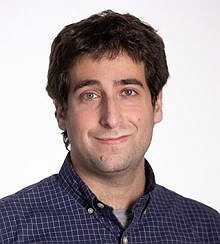
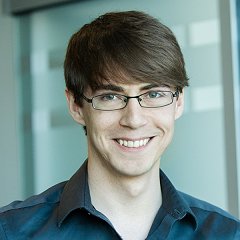
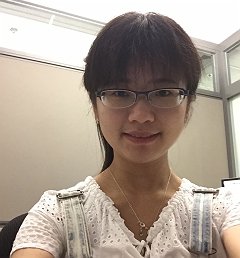
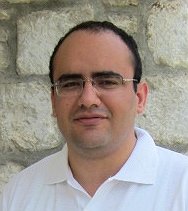
Furkan Kıraç is an Assistant Professor in the Computer Science Department at Özyeğin University, specializing in Computer Vision and Machine Learning . He previously served as a Part-Time Instructor at the same university (2012-2013) and as a Research Assistant at Boğaziçi University (2009-2013). Education: PhD in Computer Engineering, Boğaziçi University (2013) MS in Systems and Control Engineering, Boğaziçi University (2002) BS in Mechanical Engineering, Boğaziçi University (2000) His research focuses on real-time hand pose estimation , deep learning , and computer vision applications in industrial automation. Recent publications highlight his work on pedestrian tracking, spatio-temporal mapping, and image processing pipelines for test oracle automation. Notable achievements include founding two computer vision companies ( Proksima and Fortibase ) and receiving awards at SIU conferences (2004, 2005, 2012). He has contributed to projects funded by TÜBİTAK and the Scientific and Technical Research Council of Turkey. Scientific Awards: 3rd place in best demo award (SIU 2012) Best application paper award (SIU 2012) 3rd degree in Turkish National Science Competition (1994, 1995) Gold/Silver/Bronze medals in National Computer Science Olympiads
Dr. José Carlos Cabaleiro Domínguez is a Full Professor in the Department of Electronics and Computing at the University of Santiago de Compostela's Faculty of Computing, Spain. He has been a member of CiTIUS (Centro singular de investigación en tecnoloxías da información e comunicación) since 2010 and was promoted to Full Professor in 2022 after serving as an Associate Professor since 1994. His academic journey began with a BS and PhD in Physics from the University of Santiago de Compostela in 1989 and 1994 respectively, with initial teaching experience at the University of A Coruña from 1990-1994. His research focuses on high performance computing, particularly in parallel systems architecture, development of parallel algorithms for irregular problems with sparse matrices, performance prediction and improvement of parallel applications, memory hierarchy optimization, and applications for grid and cloud computing. He has developed significant expertise in 3D point cloud processing from remote sensors like LiDAR, with applications in urban infrastructure analysis, powerline detection, and route planning. Analysis of his recent publications reveals a strong emphasis on optimizing resource allocation for big data frameworks, developing deep learning applications for point cloud classification, and creating efficient algorithms for powerline detection in LiDAR surveys. His work bridges theoretical computer science with practical applications in geospatial analysis and infrastructure monitoring. His research has been published in top-tier journals including IEEE Transactions, ISPRS Journal of Photogrammetry and Remote Sensing, and Future Generation Computer Systems, reflecting his significant contributions to the field of high performance computing and its applications. Dr. Cabaleiro actively collaborates with researchers across multiple institutions, as evidenced by his extensive publication record with co-authors from various universities and research centers. His work demonstrates a consistent trajectory of advancing parallel computing techniques while applying them to increasingly complex real-world problems involving large-scale geospatial data.
Ziyang Li is an Assistant Professor of Computer Science at Johns Hopkins University and a member of the Data Science and AI Institute. He holds a Ph.D. in Computer Science from the University of Pennsylvania (2025) and dual bachelor's degrees in Computer Science and Mathematics from UCSD (2019). Research Areas: Neurosymbolic Programming, AI4Code His research bridges programming languages and machine learning, focusing on neurosymbolic methods that combine symbolic reasoning with learning-based techniques. Applications span software security, computer vision, natural language processing, bioinformatics, and clinical decision-making. He developed Scallop , a neurosymbolic programming language, and Lobster , a GPU-accelerated framework for neurosymbolic applications, with impacts in cybersecurity and biomedical domains. Recent publications highlight neurosymbolic approaches for RNA structure prediction, Long COVID modeling, and safety-critical systems. His work emphasizes data-efficient learning, weak supervision, and hybrid AI for scalable reasoning. Scientific Awards : AWS Fellowship (2023) KPCB Fellows, Engineering (2018) NIH L3C Honorable Mention Award Li has mentored students including Jason Liu, Felix Zhu, and Eric Zhao, and served as Teaching Assistant for courses at UPenn and UCSD. He co-organized the TACPS Workshop and reviewed for NeurIPS, ICLR, and ICML.
Marco Vassena is an Assistant Professor at the Department of Information and Computing Sciences, Utrecht University, within the Faculty of Science. He focuses on developing principled methods for building secure systems, bridging Security and Programming Languages research communities. His work applies type systems, compilers, program analysis, and verification to ensure reliable security guarantees in software systems. PhD in Computer Science from Chalmers University of Technology Visiting Assistant Professor at Stanford Postdoctoral Researcher at CISPA Helmholtz Center for Information Security Member of the CISPA-Stanford Center for Cybersecurity His research spans language-based security (constant-time programming, memory safety, information flow control), software defenses against Spectre and side-channel attacks, and WebAssembly sandboxing. He leads projects like MSWasm and Blade, targeting microarchitectural attack mitigation through formal verification and compiler design. Scientific recognition includes the Veni Grant (2023). Current projects explore speculative execution security, dynamic information flow control, and secure WebAssembly implementations.
Sam Westrick is an Assistant Professor in the Courant Institute of Mathematical Sciences at New York University . Previously, he was a postdoctoral researcher at Carnegie Mellon University , where he also earned his PhD in 2022 . Research Focus : Provably efficient implementations of high-level parallel programming languages, with key contributions in parallel garbage collection , automatic granularity control , and functional language design Teaching : Currently teaching CSCI-GA.3033-121: Programming Parallel Algorithms at NYU; was a TA for CMU courses 15-210 and 15-122 His work includes the development of MaPLe (MPL) , an open-source parallel functional language with performance comparable to C/C++. Notable awards include the SIGPLAN Reynolds Doctoral Dissertation Award (2023) and best/distinguished paper recognitions at QCE'24, POPL'24, and others. Selected Publications explore topics like quantum circuit simulation , cache coherence specialization , and separation logic for disentanglement . Active in conference service as ML Family Workshop chair and PLDI/SPAA committee member. Mentoring : Advises PhD students, master's and undergraduate researchers at NYU and CMU Collaborators : Umut Acar, Guy Blelloch, Stephanie Balzer, and 20+ others
R. Hai is a researcher active in the fields of Machine Learning , Relational Databases , and Quantum Computing . Their work bridges the integration of large language models (LLMs) with database systems, focusing on optimizing query processing and data management through linear algebraic methods. Hai's research emphasizes seamless data-ML workflows and innovative applications of relational databases in emerging domains. Key Research Themes : LLM compilation to SQL, quantum circuit simulation via RDBMS, and convergence of data integration with ML. Collaborations : Active in international academic networks, with contributions to conferences like SIGMOD and IEEE journals. Scientific Awards: Veni grant AES2022 (2023) Publications demonstrate expertise in overcoming data barriers, enhancing database performance for ML tasks, and simulating quantum computations using relational database management systems.
Gang Tan is an Associate Professor at the Pennsylvania State University's College of Engineering, Department of Computer Science and Engineering. He also holds the James F. Will Career Development Professorship and is affiliated with the Institute for Computational and Data Sciences (ICDS). His research focuses on binary reverse engineering , cybersecurity , Internet of Things (IoT) security , machine learning fairness , and information flow security . He has led numerous NSF-funded projects, including work on precise binary analysis, IoT policy enforcement, and automated fairness repair in AI systems. Recent work trends include memory safety validation , pseudocode extraction , and control-flow integrity mechanisms. His 127+ research outputs reflect deep engagement with static program analysis , cache side-channel detection , and secure kernel-driver interfaces . Scientific Awards: James F. Will Career Development Professorship Gang Tan has secured multiple grants from the National Science Foundation (NSF) and U.S. Navy for projects like Sliver (information flow verification) and Semantics-Directed Binary Reverse Engineering . His work involves advising teams on IoT safety, and he has 19 active or completed grants since 2008.
Swarnendu Biswas is an Assistant Professor in the Department of Computer Science and Engineering at the Indian Institute of Technology Kanpur. He teaches courses including Programming for Performance (CS 610), Analysis of Concurrent Programs (CS 636), and Compiler Design (CS 335), demonstrating his expertise across multiple areas of computer systems. His research interests center on Programming Languages, Compilers, Runtime Systems, and Parallel Software Systems. He leads the PROSPAR (Programming Languages and PARallel Systems) research group, which focuses on developing techniques to build efficient and correct parallel software through program analysis, compiler optimizations, and runtime systems. His recent publications reveal a strong trend in addressing fundamental challenges in parallel computing, with work spanning cache coherence, false sharing detection, data race analysis for GPUs, verification of neural networks, and thermal-aware management of heterogeneous systems. His research bridges theory and practice with significant contributions to both hardware and software aspects of parallel systems. His scientific achievements have been recognized through multiple prestigious awards: Google India Research Award 2021 Google Explore CSR 2022 Research Grant from Intel Corporation SERB Start-up Research Grant 2019 Google Cloud Platform Research Credits (2019, 2020) IITK Initiation Grant 2019 As an advisor, he mentors several PhD and MTech students working on cutting-edge research in parallel systems. His PROSPAR group has secured significant funding from industry and government sources, supporting innovative research in programming languages and parallel systems. The group actively collaborates with industry partners including Google and Intel, addressing real-world challenges in parallel computing. He leads the PROSPAR research group at IIT Kanpur, which brings together faculty, PhD students, and MTech researchers to tackle challenging problems at the intersection of programming languages, compilers, and parallel systems. The group maintains strong industry connections and focuses on practical solutions that can be deployed in real systems.
Jingbo Wang is an Assistant Professor in the Elmore Family School of Electrical and Computer Engineering at Purdue University, where he conducts research at the intersection of software engineering and formal methods. His work emphasizes developing rigorous program analysis and verification techniques to improve the security, robustness, and fairness of software systems. Prior to joining Purdue in August 2024, he was a Postdoctoral Researcher in the Department of Computer Science at University of Texas, Austin, working with Professor Isil Dillig. He obtained his PhD in Computer Science from the University of Southern California in 2023 under the supervision of Professor Chao Wang. Dr. Wang's educational background includes: PhD in Computer Science, University of Southern California, 2023 Postdoctoral Researcher, University of Texas, Austin, 2023-2024 Dr. Wang's research focuses on bridging software engineering and formal methods to create more secure, robust, and fair software systems. His work spans several key areas: Program Analysis and Verification : Developing techniques for static and dynamic analysis of software systems Security and Privacy : Creating methods to detect and prevent security vulnerabilities and privacy leaks Fairness in Machine Learning : Certifying and quantifying fairness properties of AI systems Formal Methods for Neural Networks : Verification techniques for deep learning models His recent publications demonstrate a strong trend toward applying formal methods to machine learning systems, particularly in ensuring fairness and robustness. He has published extensively in top-tier venues including PLDI, POPL, ICSE, and CAV, with multiple papers on verifying properties of neural networks and decision trees. His work often combines program analysis techniques with constraint solving and optimization approaches. Dr. Wang has received numerous awards and recognitions for his research: ACM SIGPLAN Distinguished Paper Award, PLDI, 2023 MIT EECS Rising Star, MIT, 2021 WiSE Merit Award, USC, 2021 Selected to participate in the 7th Heidelberg Laureate Forum, 2019 Selected for CRA-W Grad Cohort for Women Workshop, 2019 Multiple conference scholarships including VMW Scholarship (CAV'19) and PLMW Scholarship (PLDI'19) Dr. Wang is actively mentoring students and planning to recruit PhD students for Fall 2025. He currently advises: Siyu Chen (PhD student, 2024 Fall -- present) Xuyang Li (PhD student, 2024 Fall -- present) Multiple undergraduate researchers including Weiyi Chen, Yaoyang Ye, Paul Jiang, and Sarthak Tandon He has also served as a mentor for the PLMW @ PLDI'21 and USC Viterbi Graduate Mentorship Program. Dr. Wang is deeply involved in the programming languages and formal methods research community, serving on multiple program committees including OOPSLA, PLDI, CAV, ICSE, and ISSTA. His GitHub repository shows active work on fair decision trees and formal verification techniques, indicating an active research lab focused on the intersection of formal methods and machine learning.
Xiaokang Qiu is an Associate Professor at the Elmore Family School of Electrical and Computer Engineering , Purdue University , with a Ph.D. in Computer Science from University of Illinois at Urbana-Champaign (2013). His research focuses on Programming Languages and Software Engineering , particularly theories, algorithms, and tools for program synthesis, verification, and logic-based analysis. Research Interests His work addresses: Formal methods for heap-manipulating programs using separation logic Automated deduction and decision procedures for data structures Syntax-guided synthesis of concurrent and bit-vector programs Integration of machine learning with formal verification Scalable verification of hardware memory consistency Network protocol optimization through program synthesis Recent Publications Recent work includes PLDI 2025 on concurrent string synthesis, POPL 2024 on bit-vector synthesis, and POPL 2023 on comparative network design. His tools like STRAND and VCDryad enable automated verification of complex data-structure manipulations. Grants & Awards Recipient of: NSF SHF Small Award (2024, co-PI, $593K) NSF FMitF Award (2023, PI, $750K) Tenure at Purdue (2023) Professional Service Active in program committees for PLDI , POPL , CAV , and ATVA conferences. Developed tools like DryadSynth (PLDI 2020), ImpSynt (OOPSLA 2017), and JSketch (ESEC/FSE 2015).
Stefan K. Muller is an Assistant Professor in the Computer Science Department at Illinois Institute of Technology. His research focuses on applying programming language techniques to improve correctness and efficiency in parallel computing, with applications spanning AI, computer science education, and systems design. He earned his PhD at Carnegie Mellon University (2018) under Umut A. Acar, following a postdoc there (2018–20), and holds an AB in Computer Science from Harvard University (2012). PhD, Carnegie Mellon University (2018) Postdoc, Carnegie Mellon University (2018–20) AB, Harvard University (2012) Stefan’s work integrates type systems, static resource analysis, and concurrency to address challenges in parallelism. His recent projects include Graph Types for language-agnostic parallel computation analysis, Responsive Parallelism models for interactive systems, and Resource-aware GPU Programming tools. He has contributed to conferences like POPL, PLDI, ICFP, and SPLASH, often focusing on deadlock detection, futures-based parallelism, and efficient compiler optimizations. His publications (2012–2024) emphasize formal methods for parallel systems. Key trends include type-driven concurrency, static analysis of GPU programs, and responsive scheduling for interactive applications. He mentors students in programming language theory and parallel computing, with former advisees now at institutions like Apple, Amazon, and UPenn. Stefan’s teaching includes courses on Types and Programming Languages (CS534), Science of Programming (CS536), and Compiler Construction (CS443). Outside academia, he is a homebrewer, runner, and singer, with a Bacon number of 2 and Erdős number of 4 .
William J. Bowman is an Assistant Professor in the Department of Computer Science at the University of British Columbia. He focuses on secure and verified compilation, dependently typed programming, and meta-programming systems. His work bridges high-level language design with low-level code generation to maintain correctness and security invariants throughout compilation. Education: PhD in Computer Science from Northeastern University Research spans type-preserving compilation, including: Typed closure conversion for dependently typed languages Allocation-aware type universes Hybrid embedding techniques Secure interoperability via multi-language semantics Recent publications examine: Heap allocation modeling through type universes Flat closure representations WebAssembly extensions with indexed types Control-effect semantics
Yufei Ding is an Associate Professor in the Computer Science & Engineering Department at the University of California, San Diego (UCSD), where she leads the PICASSO Lab. Her research spans domain-specific language design, architecture and compiler optimization, and hardware acceleration, with current focus on developing high-performance, energy-efficient, and high-fidelity programming frameworks for quantum computing and machine learning. Dr. Ding received her Ph.D. in Computer Science from North Carolina State University and a B.S. in Physics from the University of Science and Technology of China. Her interdisciplinary background bridges physics and computer science, enabling her to tackle challenges in emerging computing paradigms. Her research interests focus on Compiler Technology, Machine Learning, and Quantum Computing , with specific expertise in domain-specific language design, architecture and compiler optimization, and hardware acceleration. Dr. Ding's work addresses critical challenges in programming frameworks for emerging technologies, particularly in making quantum computing more accessible and efficient through innovative compiler techniques and runtime systems. Dr. Ding's scientific contributions have been recognized with prestigious awards including the NSF CAREER Award (2020) and the IEEE Computer Society TCHPC Early Career Researchers Award for Excellence in High-Performance Computing (2019) . As an active researcher and educator, Dr. Ding serves on program committees for major conferences including PLDI, PPoPP, and SPLASH. She currently has Ph.D. openings in quantum computing and machine learning systems research, as well as a postdoc position in quantum computing for physics Ph.D. candidates with relevant background. Dr. Ding founded and leads the PICASSO Lab at UCSD, which focuses on developing innovative solutions for programming emerging computing technologies. The lab's work bridges theoretical foundations with practical implementations to address real-world challenges in high-performance computing.
Mohamed Faouzi Atig is a Professor in Computer Systems at Uppsala University's Department of Information Technology since July 2021, following a progression from Assistant Professor (2014-2018) to Associate Professor (2018-2021). His academic career began with a post-doctoral position at Uppsala University (2010-2012) after earning his PhD from University of Paris Diderot-Paris 7 in 2010, followed by a docent degree (habilitation equivalent) from Uppsala University in 2017. His research focuses on formal verification of concurrent and infinite-state systems, with particular expertise in model checking , weak memory models (including x86-TSO, Release-Acquire), and automata theory applied to string constraints. His work bridges theoretical foundations with practical verification techniques for modern hardware and programming language semantics. Analysis of his publication record reveals a sustained focus on verification challenges in concurrent systems, evolving from foundational work on memory models (2015) to sophisticated techniques for string constraints (2017) and persistent memory (2024-2025). His research demonstrates consistent contributions to top venues like PLDI and POPL, with increasing complexity in handling real-world memory models while maintaining theoretical rigor. At Uppsala University, he has served on program committees for major conferences including POPL, VMCAI, and SPLASH, demonstrating active engagement with the programming languages research community.
José Fragoso Santos is an Assistant Professor in the Department of Computer Science and Engineering at Instituto Superior Técnico, University of Lisbon, and a member of INESC-ID where he conducts research as part of the SAT group. His research focuses on embedding formal methods into software development processes, with particular emphasis on JavaScript program analysis and verification. His educational background includes: PhD in Computer Science from University of Nice Sophia Antipolis (2014) Master's degree in Information Systems and Computer Engineering from Instituto Superior Técnico, Universidade de Lisboa (2008) Dr. Santos' research centers on JavaScript verification, symbolic execution, and secure information flow. He led the development of JaVerT, the first separation-logic-based tool for JavaScript analysis and testing, which has gained significant interest from both industry and academia. His work bridges theoretical formal methods with practical applications, particularly in web security and program analysis. He has made substantial contributions to understanding JavaScript semantics, symbolic execution techniques, and secure information flow in web applications, with publications in premier venues like PLDI, POPL, and ECOOP. His recent publications demonstrate a strong focus on symbolic execution for JavaScript and related languages, with applications in web security and program verification. The research shows progression from foundational work on information flow security to advanced techniques like compositional symbolic execution and multi-language analysis platforms. His work on JaVerT and Gillian has established significant research directions in program analysis for dynamic languages. His notable scientific achievements include: Facebook research award for the JaVerT project Dr. Santos has supervised numerous graduate students on projects related to JavaScript verification, symbolic execution, web security, and formal methods. His research has practical applications, as evidenced by the collaboration with Amazon R&D engineers to verify critical components of the AWS Encryption SDK using JaVerT. He has served on program committees for major conferences including PLDI, OOPSLA, and IJCAI, demonstrating his standing in the programming languages community. As a member of the SAT group at INESC-ID, Dr. Santos collaborates with researchers working on formal methods, program verification, and software security. His current projects include extending JavaScript symbolic execution to Web Workers, developing formal semantics for JavaScript regular expressions, and creating first-order solvers for program analysis. He continues to push the boundaries of what's possible in JavaScript program analysis and verification.