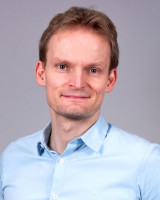
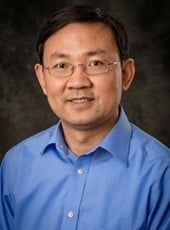
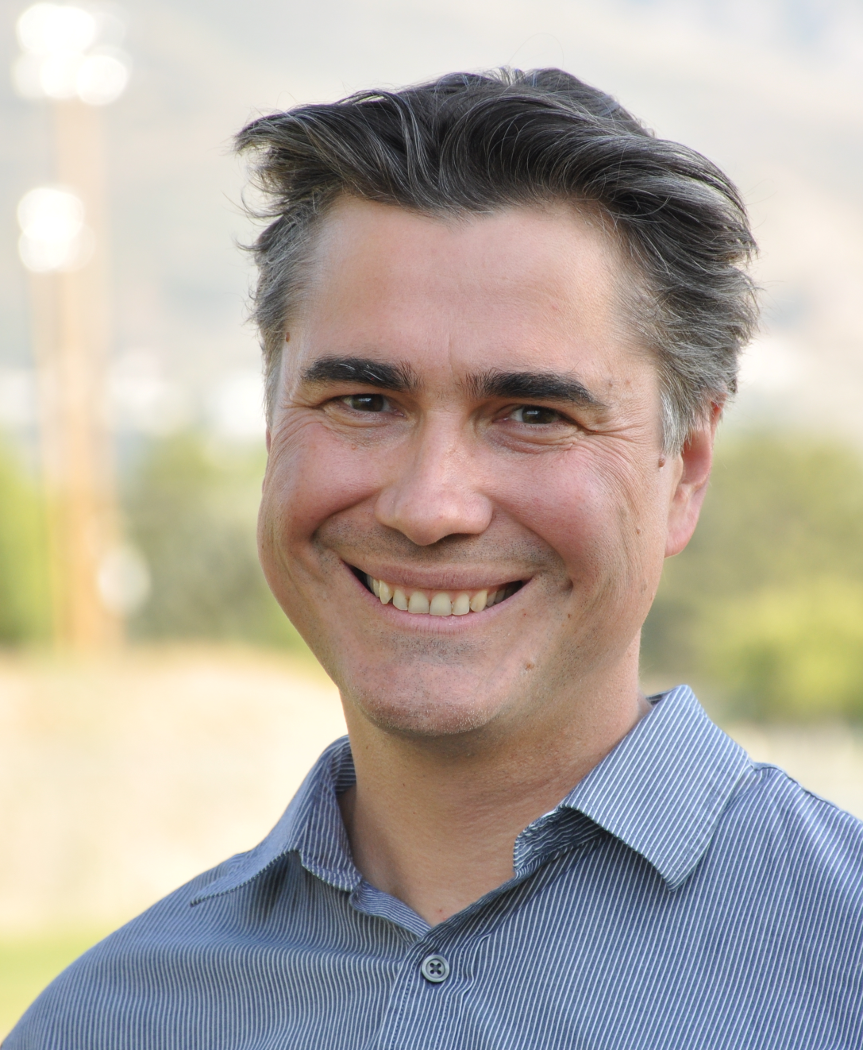
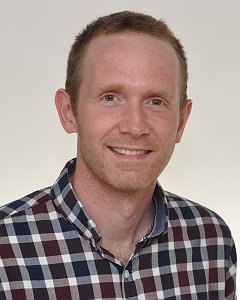
Prof. Dr. Robert Wille is a Full Professor at the Technical University of Munich (TUM) in the School of Computation, Information and Technology and Chief Scientific Officer at the Software Competence Center Hagenberg GmbH . He leads the Chair for Design Automation , focusing on automatic methods for complex system design in conventional and future technologies. Studied Computer Science (Diploma) at the University of Bremen (2002-2006) Doctorate (summa cum laude) from the University of Bremen (2009) His research spans quantum computing , microfluidic biochips , field-coupled nanotechnologies , and reversible circuits , with applications in machine learning , artificial intelligence , and cyber-physical systems . Recent work includes quantum circuit verification, radar-camera fusion, and silicon dangling bond logic optimization. Robert Wille has received prestigious awards such as the ERC Consolidator Grant , Google Research Award , and Distinguished Professor appointment . He serves as Associate Editor for journals like IEEE TCAD and Springer LNCS, and has chaired conferences including DATE and ICCAD.
Zhenlin Wang is a Professor and Chair of the Department of Computer Science at Michigan Technological University's College of Computing. He earned a BS (1992) and MS (1995) from Peking University, and a PhD in Computer Science from the University of Massachusetts, Amherst (2003). He joined Michigan Tech in 2003 as an assistant professor, became associate professor in 2009, and full professor in 2015. University: Michigan Technological University School: College of Computing Department: Computer Science Academic Rank: Professor His research bridges compilers, operating systems, and computer architecture , with core focus on memory system optimization and virtualization. Key research areas include: Memory hierarchy optimization Cache replacement modeling GPU programming and architecture Virtualization and cloud computing Datacenter resource management Heterogeneous memory systems Recent publications analyze GPU speculation (GSpecPal), hardware-assisted virtualization (Accelerating Address Translation), and graph neural network-based memory inefficiency detection (GRAPHSPY). His work often integrates compiler analysis with hardware insights for performance improvements. Scientific Awards NSF CAREER Award 0643664 (2007-2012) NSF SaTC2225424 (2022-2025) Best Paper Award at ICS’23 (FLORIA paper) He has advised numerous PhD and MS students in memory systems, virtualization, and distributed computing. Current advisees include Shiwei Ding (PhD candidate) and Junyao Yang (PhD candidate).
Dr. Michael Szvetits is a Lecturer and Researcher at the Institute of Computer Sciences at the University of Applied Sciences Wiener Neustadt. He holds a PhD in Computer Science from the University of Vienna (2019), an MSc in Computer Science (2012), and a BSc in Information Technology (2010), all from the University of Applied Sciences Wiener Neustadt. His research focuses on software architecture, domain-specific languages, model-driven software development, functional programming, logic programming, and compiler construction. He has contributed to projects such as 'Care about Care' (C^C), which aims to enhance home care through ICT solutions, and 'CARU cares,' which integrates emergency call systems with care documentation tools. His publications span topics like runtime event analysis, model-driven engineering, and software architecture decisions. He collaborates on initiatives funded by the FFG and Active Assisted Living Programme. Dr. Szvetits is actively involved in research projects targeting healthcare technology, software systems optimization, and innovation in assistive living solutions.
Nikolaos Foutris is a Researcher at The University of Manchester, specializing in dependable and energy-efficient computer architectures. His work emphasizes hardware/software co-design, focusing on systems and processors that balance performance with reliability. Key research areas include memory optimization, GPU acceleration for cryptographic computations, and radiation effects on MPSoC systems. His research intersects with UN Sustainable Development Goals, particularly through energy-efficient technologies and resilient computing infrastructure. Collaborations span academia and industry, addressing challenges in NUMA systems, blockchain, and cloud applications. Recent publications highlight trends in memory analysis for managed applications, SPIR-V code generation frameworks, and mitigating radiation-induced errors in advanced embedded systems. No scientific awards or grants are explicitly mentioned in the provided text.
Anthony Goodacre is a Professor of Computer Architectures at the School of Computer Science, holding a part-time role while serving as Director of Technology and Systems at ARM Ltd. in Cambridge. He leads research spanning nanotechnology, hardware design, operating systems, and heterogeneous runtimes, with a focus on scalable, power-efficient systems for embedded, enterprise, and HPC applications. Research interests include: Exascale computing through EU-funded projects like EUROSERVER and ExaNoDe 3D silicon integration and system virtualization for heterogeneous architectures Quantum-classical programming languages (e.g., Quff) Power management techniques like cyclic power-gating Memory models and runtime systems for ARM-based data centers His 15 most recent publications highlight trends in FPGA acceleration, radiation-hardened MPSoC systems, and hybrid quantum-classical programming. Contributions to EU FP7/H2020 projects (e.g., EUROSERVER, ExaNEST) emphasize commercialization of ARM technology for exascale computation. Current collaborations include: KALEAO Limited (CSO/CTO since 2015) ARM Ltd. (Director since 2002) Technology Strategy Board (member since 2015) Academic partnerships in EU H2020 projects He co-supervises two PhD students and contributes to policy discussions, including parliamentary select committee evidence. His work aligns with UN SDGs for energy efficiency and sustainable computing.
Alvise SPANO' is a Researcher at Ca' Foscari University of Venice, affiliated with the Department of Environmental Sciences, Computer Science and Statistics. He is also part of the Research Institute for Complexity. His academic focus includes Blockchain Programming Languages, Programming Languages, and Information Systems. Research projects include ALGOMOVE for Algorand and the RINmaker bioinformatics tool. He has taught courses like Object-Oriented Programming and Introduction to Programming at both undergraduate and doctoral levels. Research interests span smart contract analysis, type systems, and cybersecurity in distributed systems. He contributed to projects like secure RPL for mobile networks and Android-LEGO interoperability. Funding includes the CEVID 2016 project (Role: LD), collaboratively managed with researchers like Agostino Cortesi and Salvatore Orlando. His work bridges theoretical foundations (e.g., COBOL code typing) with practical applications in wearable systems and bioinformatics. Collaborations include the Blockchain Programming Languages research group with Lorenzo Benetollo and Sabina Rossi.
Roberto Amadini is an Associate Professor in the Department of Computer Science and Engineering at the University of Bologna. His work focuses on constraint programming, algorithm selection, and string constraint solving, with applications in cloud-edge computing and IoT systems. He leads research in deploying microservices over hybrid infrastructures and optimizing solver portfolios for constraint satisfaction problems. Research interests include advanced constraint solving techniques, formal methods for software analysis, and energy-efficient resource allocation. Amadini’s contributions span the design of frameworks like FREEDA and SUNNY-as2, which enhance deployment resilience and algorithm selection efficiency. His work bridges theoretical foundations with practical implementations in programming languages and verification tools. Recent publications explore sustainable cloud-edge applications, failure-resilient systems, and dynamic symbolic execution. He actively contributes to open-source projects like JSetL and participates in international solver challenges. No awards are explicitly listed in the provided materials. Amadini’s research group addresses cutting-edge challenges in distributed computing and constraint-based methodologies. Ongoing projects focus on optimizing solver portfolios for real-world computational tasks and advancing string analysis techniques in programming paradigms.
José Cano Reyes is a Senior Lecturer (Associate Professor) at the University of Glasgow's School of Computing Science, leading the Glasgow Intelligent Computing Lab (gicLAB) and serving as deputy Head of the GLAsgow Systems Section (GLASS). His academic career includes postdoctoral roles at the University of Edinburgh (2014-2018) and Universitat Politècnica de Catalunya (2012-2013), with a PhD and engineering degree from Universitat Politècnica de Valencia (2004-2012). He has held visiting and guest lecturer positions at Edinburgh and Glasgow across computer architecture, compilers, and embedded systems topics. Research focuses on hardware-software co-design for edge AI, including DNN acceleration (FPGA/GPU), encrypted AI systems, and secure mission-critical SoCs. Key projects include EU's dAIEDGE, EPSRC IDEAL, and UKRI AppControl. He leads over 15 research staff and students in areas like quantization, sparsity exploitation, and robust AI deployment. Notable contributions span 100+ peer-reviewed publications across top venues (ISCA, IJCNN, IEEE TPDS) and 3 authored books on ad hoc networks and embedded systems. Academic service includes organizing 20+ conferences (ISPASS, Euro-Par, ASPLOS) and serving on editorial boards for ACM TACO and IEEE TPDS. His educational efforts include teaching Computer Architecture (Year 4), Computer Systems (Year 1), and supervising over 20 PhD/MSc students since 2017.
Anton Burtsev is an Associate Professor at the Kahlert School of Computing, University of Utah. His research focuses on redefining operating system architectures to address modern challenges like security attacks, data center workloads, and heterogeneous hardware. He leads the Mars Research Group, developing systems like the formally verified Atmosphere microkernel in Rust/Verus, and the high-performance DRAMHiT hash table. Key projects include Rust for Linux kernel integration, verified drivers (Veld), and isolation mechanisms like RedLeaf OS. Research interests include kernel isolation, formal verification, language safety (Rust), and overcoming the memory wall. Current work emphasizes clean-slate OS designs and retrofitted security solutions for existing kernels. Collaborative projects include Horizon (secure scientific cloud computing) and RedLeaf OS verification efforts. Advising undergraduate to PhD students interested in OS research. Notable grants include NSF CAREER (NgOS) and collaborative NSF grants on verified systems. Active in the MARS reading group and open-source contributions via repositories.
Gang Tan is an Associate Professor at the Pennsylvania State University's College of Engineering, Department of Computer Science and Engineering. He also holds the James F. Will Career Development Professorship and is affiliated with the Institute for Computational and Data Sciences (ICDS). His research focuses on binary reverse engineering , cybersecurity , Internet of Things (IoT) security , machine learning fairness , and information flow security . He has led numerous NSF-funded projects, including work on precise binary analysis, IoT policy enforcement, and automated fairness repair in AI systems. Recent work trends include memory safety validation , pseudocode extraction , and control-flow integrity mechanisms. His 127+ research outputs reflect deep engagement with static program analysis , cache side-channel detection , and secure kernel-driver interfaces . Scientific Awards: James F. Will Career Development Professorship Gang Tan has secured multiple grants from the National Science Foundation (NSF) and U.S. Navy for projects like Sliver (information flow verification) and Semantics-Directed Binary Reverse Engineering . His work involves advising teams on IoT safety, and he has 19 active or completed grants since 2008.
Sang-Hoon Kim is an Associate Professor in the Department of Software and Computer Engineering and Department of Artificial Intelligence at Ajou University, South Korea. He leads the Systems Software Lab (Paldal Hall 1004-2) and maintains active collaborations with Virginia Tech as a Visiting Scholar since August 2024. His academic journey includes a Ph.D. in Computer Science from KAIST (2016) under advisors Seungryoul Maeng and Jin-Soo Kim, and a B.S. in Computer Science from KAIST (2002). His research spans operating systems, memory management, and storage systems with focus on mobile platforms, heterogeneous architectures, and SSD technologies. Key interests include memory fragmentation control , distributed thread execution , key-value storage optimization , and resource disaggregation . His work bridges theoretical innovation with practical system implementations, particularly for mobile and datacenter environments. Kim's publication portfolio shows consistent output in top-tier venues including USENIX FAST, VLDB, ICDCS, and ASPLOS. His research demonstrates evolution from mobile memory management (2015-2017) toward distributed systems and hardware-aware software (2019-present), with recent emphasis on resource-disaggregated environments and heterogeneous-ISA computing. The 2024 Best Paper Award at USENIX FAST highlights his impact in storage systems research. Best Paper Award at USENIX FAST'24 Multiple patents including US-9588912B2 for memory control He directs significant research projects funded by ETRI, NRF, and US ONR, including current work on memory-centric computing systems (2020-2023) and disaggregated non-volatile memory systems using RDMA (2018-2020). His Systems Software Lab maintains strong industry partnerships with Samsung Electronics and NHN, with prior projects improving Android memory management and developing SSD-based storage systems for large-scale internet services.
Fredrik Kjolstad is an Assistant Professor in the Department of Computer Science at Stanford University, specializing in compilers and programming models for sparse computing and performance engineering. His research focuses on separating algorithms from data representations to enable portable applications across diverse hardware platforms. His research interests span compilers, programming models, performance engineering, and computer architecture, with particular emphasis on sparse tensor algebra, compiler design for heterogeneous systems, and high-performance computing. He has pioneered frameworks like TACO, Simit, and Distal that enable efficient sparse computations across CPUs, GPUs, and specialized accelerators. Dr. Kjolstad's publications demonstrate expertise in compiler optimization techniques for sparse data structures, tensor algebra, and distributed systems. His work consistently addresses the challenge of bridging high-level programming abstractions with efficient hardware execution across diverse architectures. MIT EECS First Place George M. Sprowls PhD Thesis Award NSF CAREER Award Rosing Award Adobe Fellowship Google Research Scholarship Best Paper Awards at EuroMPI 2013, OOPSLA 2017, and OOPSLA 2021 ISCA Distinguished Artifact Award PLDI and OOPSLA Distinguished Paper Awards He advises multiple PhD students including James Dong, Olivia Hsu, and Rohan Yadav, while leading research on compiler technologies that have received significant grant support. His group develops practical tools like the TACO compiler and Legate Sparse that are used in both academic and industrial settings. Current projects focus on programmable accelerators for sparse tensor algebra, distributed sparse computing, and compiler support for emerging hardware architectures.
Anil Madhavapeddy is the Professor of Planetary Computing at the University of Cambridge Computer Laboratory, where he co-leads the Energy & Environment Group and is a member of the Systems Research Group. He is also a Fellow at Pembroke College where he serves as Director of Studies in Computer Science. Madhavapeddy completed his PhD from the University of Cambridge in 2003 and his BEng in Information Systems Engineering from Imperial College in 1999. He holds a JM Keynes Fellowship since 2022 for his work combining computer science with economics, and serves on the management committee of the Cambridge Conservation Initiative where he co-directs 4C (Cambridge Centre for Carbon Credits) and the Centre for Earth Observation. His research spans computer systems and programming languages with a strong focus on applying these technologies to global conservation, biodiversity, and climate change challenges. He leads the OCaml Labs group and has made significant contributions to open-source projects including OCaml, Docker, Xen, and OpenBSD. His work often bridges computer science with environmental science, developing computational approaches to address planetary-scale challenges. Madhavapeddy's recent publications demonstrate a clear trajectory toward integrating programming language research with environmental monitoring and conservation. His work spans from foundational programming language techniques to applied geospatial computing systems, with increasing emphasis on biodiversity measurement, carbon credit systems, and planetary-scale environmental monitoring. JM Keynes Fellowship (2022-present) As an educator, Madhavapeddy teaches undergraduate courses including Foundations of Computer Science, Software & Security Engineering, and Cloud Computing. He mentors MPhil and PhD students and co-founded the award-winning book 'Real World OCaml' (2nd Edition, 2022). He has co-founded several companies including Unikernel Systems, High Energy Magic, Segfault, and Tarides to translate research into real-world impact. Madhavapeddy leads the OCaml Labs group at Cambridge and works closely with the Energy & Environment Group, collaborating with colleagues from Plant Sciences, Zoology, Economics, and NGOs including UNEP-WCMC and the IUCN. His current efforts are primarily focused on conservation technology through partnerships with organizations like Canopy PACT.
Kunle Olukotun is a Professor of Electrical Engineering and Computer Science at Stanford University's School of Engineering, where he has been faculty since 1991. He directs the Stanford Pervasive Parallelism Lab (PPL) and co-leads the Transactional Coherence and Consistency (TCC) project. His research focuses on computer architecture, parallel programming environments, and scalable parallel systems. Key areas include chip multiprocessors (CMPs), transactional memory systems, domain-specific languages (DSLs) for heterogeneous computing, and hardware-software co-design for machine learning workloads. His work bridges theoretical foundations with practical systems implementation. Notable contributions include the Stanford Hydra research project (one of the first chip multiprocessors with thread-level speculation), founding Afara Websystems (acquired by Sun Microsystems), and developing the Niagara processor architecture. His DSL frameworks like Green-Marl and Spatial enable efficient graph analysis and hardware acceleration. His publications reveal strong trends in parallel systems evolution: from foundational CMP research (2000s) to transactional memory (2004-2010), then DSLs for heterogeneous computing (2010-2015), and currently foundation model systems (2023-2025). Subfield analysis shows consistent focus on hardware-software co-design, sparse computation, and compiler techniques across decades. ACM Fellow (2006) for contributions to multiprocessors on a chip and multi-threaded processor design Best Paper Award at IEEE International Symposium on Workload Characteristics (IISWC '10) for EigenBench Olukotun actively mentors researchers through the Stanford Pervasive Parallelism Lab (PPL), which seeks to proliferate parallelism across application domains. His projects have secured significant industry partnerships, including the acquisition of his startup Afara Websystems by Sun Microsystems. Current research focuses on compiler frameworks for foundation model systems and hardware acceleration for sparse machine learning workloads, supported by collaborations with major tech companies. He leads the Stanford Pervasive Parallelism Lab (PPL), which develops compiler and runtime systems for heterogeneous architectures. The lab's work spans DSLs, hardware acceleration, and parallel programming models, with strong industry ties to companies like NVIDIA and Google. Current initiatives include the Mosaic compiler framework and Stardust architecture for sparse tensor computation.
Sean Kauffman is an Assistant Professor in the Department of Electrical and Computer Engineering at Queen's University, Faculty of Engineering and Applied Science. He holds his office in Walter Light Hall, Room 611, and can be reached at sean.k@queensu.ca or by phone at 613-533-6000 ext. 77360. Dr. Kauffman earned his Ph.D. in Electrical and Computer Engineering from the University of Waterloo before completing a two-year postdoctoral position at Aalborg University in Denmark. Notably, he returned to academia after accumulating over a decade of industry experience as a software engineer, with his final industry role being Principal Software Engineer at Oracle. His research expertise spans several critical areas in computer science and software engineering, with a particular focus on safety-critical software systems. His work significantly contributes to the fields of Formal Methods, Runtime Verification, Anomaly Detection, and Explainable AI. Dr. Kauffman has established productive research collaborations with prestigious organizations including NASA's Jet Propulsion Laboratory, the Embedded Systems Institute, QNX, and Pratt and Whitney Canada. Dr. Kauffman's research output demonstrates a consistent focus on event stream analysis, formal verification techniques, and the development of practical tools for system monitoring. His most notable contribution is the nfer language and toolset, which has become influential in the runtime verification community for its ability to abstract event streams into meaningful temporal hierarchies. His publications reveal a progression from theoretical foundations to practical implementations, with applications spanning spacecraft telemetry, autonomous vehicles, and embedded systems. Among his scientific contributions, Dr. Kauffman has received recognition for his work on the complexity analysis of nfer evaluation, developing methods for annotating control-flow graphs for formalized test coverage criteria, and creating frameworks for anomaly detection in embedded systems. His research has been published in top-tier venues including Science of Computer Programming, International Journal on Software Tools for Technology Transfer, and proceedings of major conferences like Runtime Verification and NASA Formal Methods. As an educator, Dr. Kauffman employs active learning techniques, productive failure approaches, and peer instruction to foster student engagement. His industry background informs his teaching approach, providing students with practical insights into real-world software engineering challenges, particularly in safety-critical domains. Dr. Kauffman leads the CritLab research group at Queen's University, which focuses on critical systems research. The lab develops tools and techniques for analyzing and verifying systems where failures could have severe consequences, with applications in aerospace, automotive, and other safety-critical domains. His work on the nfer language has spawned related projects including nvis for visualizing temporal interval hierarchies.