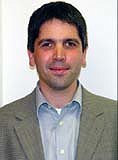
Daniel Martínez Cisneros serves as an Interim Substitute Professor in the Department of Sport and Computer Science and holds a Researcher position for the academic period 2024-2025. His academic focus centers on the specialized domain of Computer Languages and Systems within the broader discipline of Computer Science. His research expertise concentrates on Programming Languages and Systems, encompassing theoretical foundations and practical implementations of language design, compiler construction, runtime environments, and system-level software development. These areas drive innovation in computational infrastructure and software engineering methodologies. No scientific awards or honors were documented in the available profile. Information regarding student supervision, research grants, collaborative projects, or laboratory leadership was not provided in the source material.
Jamie A. Jennings is an Associate Teaching Professor in the Department of Computer Science at North Carolina State University's College of Engineering. Her office is located in Engineering Building II, and she focuses on undergraduate education while maintaining active research interests in theoretical computer science applications. Education: Ph.D. in Computer Science from Cornell University (1995) Jennings' research spans multiple domains within computer science, with particular expertise in programming language theory, compiler design, and automata. She has made significant contributions to regular expression technology through her creation of the Rosie Pattern Language, which serves as a large-scale alternative to traditional regular expressions designed for complex industrial pattern matching. Her research also encompasses computational geometry, algorithm design, and distributed systems. Recent work focuses on command-line benchmarking tools like BestGuess, which addresses challenges in measuring program performance accurately. Her publication history reveals an interesting evolution from early robotics research to contemporary work on pattern matching and benchmarking. The earliest publications focus on cooperative robotics and mobile manipulation, while more recent work centers on regular expressions, pattern languages, and performance measurement. This trajectory reflects both her theoretical foundations and practical applications in software development. Jennings brings substantial industry experience to her academic role, having spent 19 years at IBM including positions as Research Staff Member at IBM's T.J. Watson Research Lab and Senior Technical Staff Member in IBM's Software Group. During her time at IBM, she chaired international technical standards groups related to mobile computing and holds multiple software patents. She returned to academia in 2018 after her industry career. She maintains an active research blog where she discusses technical topics related to programming languages, benchmarking, and software design, demonstrating her commitment to sharing knowledge with both academic and practitioner communities.
Xipeng Shen is a Professor in the Department of Computer Science at North Carolina State University and Director of the High-Performance Intelligent Computing (HiPIC) lab. He joined NC State in 2014 as part of the Chancellor's Faculty Excellence Program after serving as the Adina Allen Term Distinguished Associate Professor at the College of William and Mary. Shen's research spans programming systems and machine learning, with a focus on enabling extreme-scale, data-intensive, and intelligent computing through innovations in compilers, runtime systems, and ML algorithms. His work has significantly influenced the development of heterogeneous computing and modern AI systems. His research areas include High-Performance Machine Learning & Real-Time AI, Heterogeneous Massively Parallel Computing, and Foundations of Programming Systems & Languages. His recent publications demonstrate strong trends in optimizing AI deployment across various platforms including mobile devices, serverless environments, and edge computing systems, with particular emphasis on efficiency, power consumption, and real-time performance. His research increasingly integrates compiler techniques with machine learning approaches to solve complex optimization problems. ACM Distinguished Member (2018) University Faculty Scholar (2017-18) ACM Distinguished Speaker (2016-2019) IEEE Senior Member (2016) IBM CAS Faculty Research Fellow (2010-2016) Google Faculty Research Award (2015) DOE Early CAREER Award (2011) NSF CAREER Award (2010) Shen has successfully advised 15 PhD students who have gone on to positions at top universities and companies including UC Santa Cruz, UMass Amherst, Google, Meta, and Huawei. His research has been funded by numerous grants from NSF, DOE, and NIH totaling over $4 million. He co-founded CoCoPIE Inc. to commercialize his research on efficient AI deployment and serves as a consultant to major technology companies including Intel, Microsoft, Huawei, Cisco, and Meta. He leads the PICTure research group and teaches courses including Compiler Construction (CSC412/512), Code Optimization for Scalar and Parallel Programs (CSC766), and Real-time AI and Machine Learning Systems (CSC591/791).
Bernhard Scholz is a Professor at the University of Sydney's School of Computer Science. His research focuses on programming languages, compilers, static analysis, and blockchain technologies, with significant contributions to Datalog optimization and smart contract security. He teaches COMP3109 Programming Languages and Paradigms and leads research in declarative programming frameworks. Scholz's primary research interests include: Development of Soufflé, a Datalog-based program analysis framework Ethereum smart contract security through tools like Ethainter and MadMax Parallel data structures for efficient Datalog evaluation Compiler optimizations for embedded systems and cloud environments His recent publications demonstrate a consistent focus on improving the efficiency and security of declarative programming systems, particularly through innovations in Datalog execution and smart contract analysis. This work bridges theoretical computer science with practical applications in blockchain and distributed systems. Scholz has secured research funding including an ARC Discovery Project on adaptive key-value stores and a Fantom Operations grant for smart contract toolchain development. He collaborates with international researchers on parallel computing and blockchain verification projects.
Stéphane Baciocchi is a Researcher at the École des Hautes Études en Sciences Sociales (EHESS) , affiliated with the Centre for Historical Research (CRH) and its Laboratory of Demography and Social History (LaDéHiS) . He coordinates major projects including GeoHistoricalData , Structure and Dynamics of Forms , and the ANR TIME-US initiative on textile trade remuneration and time budgets in France (17th-20th centuries). His work bridges historical demography, religious sociology, and digital methodologies. Current Projects : GeoHistoricalData, Structure and Dynamics of Forms, ANR TIME-US Collectives : LaDéHiS, CRH Digital Collective, French Sociology Association Social Networks RT Committees : EHESS GIS Steering Committee, Labex HASTEC, Monitoring Unit against Sexual Harassment at EHESS His research interests focus on collective investigative practices , historical GIS, and relational data analysis across social sciences. He specializes in the sociology of the summer 1789 Grand'Peur , the history of social sciences (Le Play, Durkheim, Hertz), and digital editions of historical sources . Notably, he oversees the Prosopographic dictionary for students of the École Normale and the Cassini Roads and Cities Dataset . Baciocchi has taught seminars on relational data analysis (2003-2010), ethnography of religious facts (2005-2008), and history of investigative collectives (2007-present). He contributes to the Durkheimian Studies journal as associate editor and collaborates with the British Center for Durkheimian Studies at Oxford.
Zhiru Zhang is a Professor at Cornell University in the School of Electrical and Computer Engineering , leading research at the Computer Systems Laboratory . His work focuses on algorithms, methodologies, and design automation tools for heterogeneous computing systems. Recent publications emphasize high-level synthesis (HLS), hardware specialization for machine learning, and programming models for software-defined FPGAs. Education: Ph.D. in Computer Science, UCLA B.S. in Computer Science, Peking University M.S. in Computer Science, UCLA Research Interests: Heterogeneous computing systems High-level synthesis (HLS) optimization FPGA-based hardware acceleration Sparse data format compilers Machine learning for electronic design automation Scientific Awards: IEEE Fellow Intel Outstanding Researcher Award NSF CAREER Award DARPA Young Faculty Award Multiple Best Paper Awards at ASPLOS, ISPD, FPGA, AutoML, FCCM Research Group: Mentors 12 current students including Jordan Dotzel, Jie Liu, and Grace Dinh, with 14 alumni now at institutions like AWS AI, NVIDIA, Google DeepMind, and Microsoft. His lab develops tools like UniSparse for sparse format customization, presented at OOPSLA'24 and IEEE CAL.
Ziui Chen Vance serves as Adjunct Faculty in the Design and Illustration department at Temple University's Tyler School of Art and Architecture, where she pioneers intersections of digital craft and immersive experience through screen-based environments. Her research practice merges motion tracking, virtual materiality, and visual narratives to create participatory digital spaces where human intuition and embodied virtual controls co-author dynamic interactions. This work explores profound connections between physical presence and constructed reality, transforming institutional and public spaces internationally through augmented reality installations and paintings that facilitate emotional and spatial transformation. Dr. Vance's contributions have earned significant recognition: Adolph and Esther Gottlieb Foundation Individual Support Grant Sustainable Arts Foundation Individual Award MacDowell Fellowship Independence Fellowship for creating the first American compilation of her works Her creations reside in permanent collections including The Newark Museum of Art and Michener Art Museum, while her ongoing research reimagines media applications for public and private sectors to cultivate novel experiential fields that push artistic expression boundaries.
Sandro Stucki is a Lecturer in the Department of Computer Science and Engineering at Chalmers University of Technology. He has previously worked as an applied scientist at Amazon and as a postdoctoral researcher at Chalmers University of Technology and the University of Gothenburg. He completed his doctoral studies at the Programming Methods Laboratory (LAMP) at EPFL under the supervision of Professor Martin Odersky. His research focuses on programming languages, with particular interest in formal methods, type systems and theory, and the semantics and implementation of domain-specific languages. He applies formal methods and type theory to problems in privacy and security, investigates type safety of Scala and related type systems, and develops type soundness proofs using Agda. His work also includes designing domain-specific languages for modeling probabilistic and stochastic systems, especially biochemical systems. He has contributed to the Scala ecosystem by developing a GNU/Emacs mode for Kappa, a modeling language for systems biology. His recent publications demonstrate strong expertise across programming language theory, formal verification, privacy-preserving systems, and applications in systems biology. His work bridges theoretical foundations with practical applications, particularly in the Scala programming language ecosystem. Stucki is actively involved in academic service, having served on program committees for numerous conferences including ECAI, GPCE, NWPT, and as a steering committee member for the Scala Symposium series. He has also organized several academic events, including the Scala Symposium 2016. He currently teaches courses on Data Science and AI, Fundamentals of Program Development, and Neuro-symbolic AI at Chalmers/Gothenburg University, and has previously taught courses on Parallel Functional Programming, Principles of Concurrent Programming, and Types and Programming Languages.
Dávid Szabó is a habilitated Associate Professor at the Institute of Romance Studies , Department of French Language and Literature , Eötvös Loránd University. His academic profile bridges sociolinguistics , focusing on argot and slang studies in French-Hungarian contexts, with computer graphics and C# software development . He has contributed to diverse fields, including AI in education , sustainable finance , and real-time graphics APIs . Research Highlights: His work explores the intersection of language evolution and technology, with recent publications on Green Finance , AI-driven educational tools , and parallel processing in graphics programming . He investigates linguistic taboos in Hungarian politics and translation challenges of urban French slang into Hungarian, while developing educational software like StudyHelper. Technical Contributions: Szabó has pioneered the integration of modern C# with graphics APIs (Vulkan, OpenGL) for real-time rendering , creating frameworks for multi-platform applications and shader program development . His technical papers emphasize code efficiency, API abstraction, and GPU optimization.
Torben Ægidius Mogensen is an Associate Professor at the Department of Computer Science, University of Copenhagen, where he leads research in the Programming Languages and Theory of Computation section. His office is located at Universitetsparken 5, Copenhagen. His primary research focuses on: Automatic program analysis and transformation (especially partial evaluation and semi-inversion) Compiler technology for functional languages Domain-specific language design Reversible computing systems and languages Algorithms, complexity theory, and automata theory Applications in graphics and fractal generation His recent publications demonstrate a strong focus on reversible computation systems, including specialized programming languages like Hermes for encryption, reversible processor architectures, and functional programming extensions. His textbook publications on compiler design (2024) and programming language implementation (2022) indicate significant contributions to computer science education and foundational knowledge. He teaches courses on compilers, programming language technology, and game development, and maintains active research collaborations internationally. He is fluent in Danish and English, with working knowledge of German and Romanian.
Martin Eberlein is a Doctoral Researcher and Ph.D. candidate in the Software Engineering group at Humboldt University of Berlin, Germany, working under Prof. Lars Grunske. Previously, he collaborated with Prof. Andreas Zeller's research group at CISPA Helmholtz Center for Information Security. His research focuses on automated software engineering, particularly software testing, vulnerability detection, and fuzzing. He is currently part of the EMPEROR project, which aims to automatically generate explanations for program behaviors, especially failures. Dr. Eberlein has developed notable tools including Avicenna (for explaining why programs fail) and EvoGFuzz (an evolutionary, grammar-based fuzzer). Education: 2022-Present: Dr. rer. nat. (PhD), Computer Science, Humboldt-Universität zu Berlin 2020-2022: Master of Science (M.Sc.), Computer Science, Humboldt-Universität zu Berlin (Final Grade: 1.0) 2015-2020: Bachelor of Science (B.Sc.), Computer Science, Humboldt-Universität zu Berlin (Final Grade: 1.3) His publications demonstrate innovative approaches to software testing and debugging, with emphasis on explaining program failures through machine learning. Recent work includes 'Which Inputs Trigger My Patch?' (APR'2025) and 'jAST' (FSE'2025), showing trends toward automated explanation of software behavior and program analysis tools. Scientific Awards: Black Shirt from HU-Berlin research group (2025) €900k initial funding for InputLab startup Dr. Eberlein serves on program committees for FSE 2025 (Artifact Evaluation Track) and ISSTA 2025 (Tools Demonstrations Track). He organizes and assists with teaching courses at HU Berlin, particularly in Software Engineering II and Compiler Construction. As co-founder of InputLab, he bridges academic research with practical applications in software testing for government and business formats. He maintains active research collaborations through GitHub, his blog, and participation in major software engineering conferences worldwide.
Kim Völlinger serves as a Researcher at the Institute of Computer Science within the Faculty of Mathematics and Natural Sciences at Humboldt University of Berlin. Her role as a scientific collaborator focuses on two primary subject areas: the Grako parser generator framework and the SOAMED medical software project. Based at the Berlin-Adlershof campus (Rudower Chaussee 25), she contributes to both research initiatives and operational infrastructure through the Computer Operations Group while actively participating in the Women's advancement program and WiMi Initiative. Her research spans Programming Languages and Medical Informatics , with specialized expertise in compiler construction through the Grako project—a Python-based parser generator utilizing Parsing Expression Grammars (PEGs). In Medical Informatics, she develops software solutions for healthcare applications under the SOAMED initiative, demonstrating interdisciplinary integration of computer science principles in medical contexts. This dual focus reflects her commitment to advancing both foundational language processing technologies and practical health informatics systems. Völlinger's operational responsibilities include maintaining institutional technical infrastructure while supporting academic community development through gender equality initiatives. Her work bridges theoretical computer science research with real-world medical software implementation, positioning her at the intersection of language engineering and healthcare technology innovation within Humboldt University's research ecosystem.
Artur Izmaylov is a Professor of Theoretical Chemistry at the University of Toronto with dual departmental appointments: the Department of Chemistry at the St. George campus and the Department of Physical and Environmental Sciences at the University of Toronto Scarborough (UTSC). He leads the Izmaylov Research Group and is affiliated with the Center for Quantum Information and Quantum Control. His offices are located at EV356 (UTSC) and LM420C (St. George), and he can be contacted at artur.izmaylov@utoronto.ca or via phone at 416-208-2951 (UTSC) / 416-946-8405 (St. George). Professor Izmaylov's research develops novel theoretical and computational approaches to quantum dynamics in complex systems. Key focus areas include: Quantum processes in organic photovoltaics, biomolecules, and catalytic surfaces Hybrid quantum-classical methodologies for subsystem-environment interactions Renormalization techniques for efficient quantum dynamics simulations Quantum computing applications for chemical problems and electronic structure Nonadiabatic dynamics near conical intersections and spin-charge transfer His recent publications (2023-2025) demonstrate strong emphasis on quantum algorithm development for chemical applications, particularly: Advancements in variational quantum eigensolver (VQE) methodologies Quantum resource optimization and error mitigation strategies Novel Hamiltonian decomposition techniques for efficient simulation Applications in molecular vibrations, electronic structure, and materials science Hybrid quantum-classical approaches for scalable computations The Izmaylov Research Group actively recruits graduate students and postdoctoral researchers, with opportunities through NSERC USRA, CQIQC, CHMD90/91, CHM499Y/PHY479Y courses, and Mitacs Globalink programs. Current research directions emphasize quantum computing implementations for chemical dynamics and surface interactions.
Marta Lopez-Luaces is a Professor of Spanish and Latino Studies at Montclair State University's College of Humanities and Social Sciences. Previously, she served as the Inaugural Chair of the Department of Business and Administration at the University of Winnipeg (2009-2015), leading its growth to 15 full-time faculty and successful enrollment expansion. Her academic leadership emphasizes collaboration, innovation, and pedagogical excellence. She holds a BA and MA from Queens College and a PhD from New York University. Her research focuses on Spanish and Latin American poetry, translation studies, and 20th-century literary movements. Notable publications include Urbanización X (2024), Antología Poética (2017), and New Poetry from Spain (2013). She received the 2011 Administrative Sciences Association of Canada’s Research Excellence Award for institutional impact. Her academic philosophy prioritizes interdisciplinary approaches, creative writing, and empowering educational structures. She has designed curricula and mentored faculty across institutions, balancing administrative rigor with scholarly creativity.
Rita Bueno Maia is an Assistant Professor at the School of Communication and Cultural Sciences (FCH-Católica) of Universidade Católica Portuguesa. She holds a PhD in Translation History and completed her postdoctoral research (2014–2016) at the University of Lisbon’s Centre for English Studies, focusing on 19th-century Portuguese exiles’ literary activities in Paris. Her research expertise centers on translation studies, particularly indirect translation, exilic literature, and the cultural dynamics of literary translation in global contexts. She teaches Spanish as a foreign language and modules on research methodologies in translation history. Her academic work explores topics such as the role of translation in constructing literary genres (e.g., the picaresque), the impact of exile on literary production, and the historical interplay between translation and censorship. Notable contributions include co-editing Indirect Translation: Theoretical, Methodological and Terminological Issues (2020) and Los límites del Hispanismo (2022). She actively engages in pedagogical projects like Translators for Ukraine , promoting social responsibility through translation education. Prof. Maia’s research extends to 19th-century Portuguese translation networks, including the activities of exiled absolutists in Paris and the role of periodicals in shaping literary geography. Her work bridges historical analysis with contemporary translation theory, emphasizing the cultural dimensions of textual transfer.