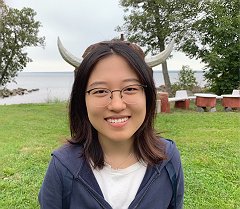
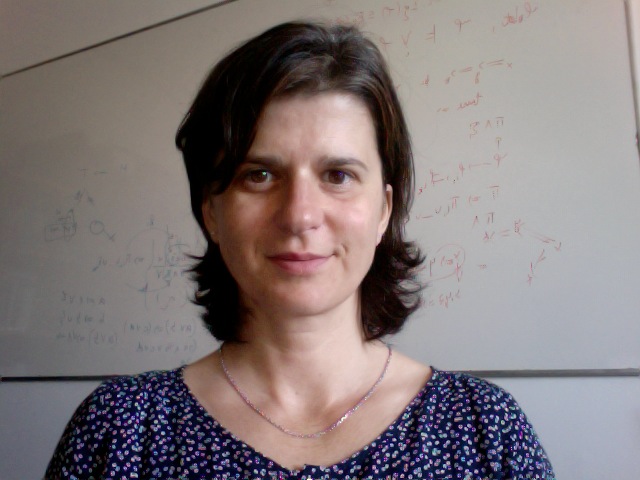
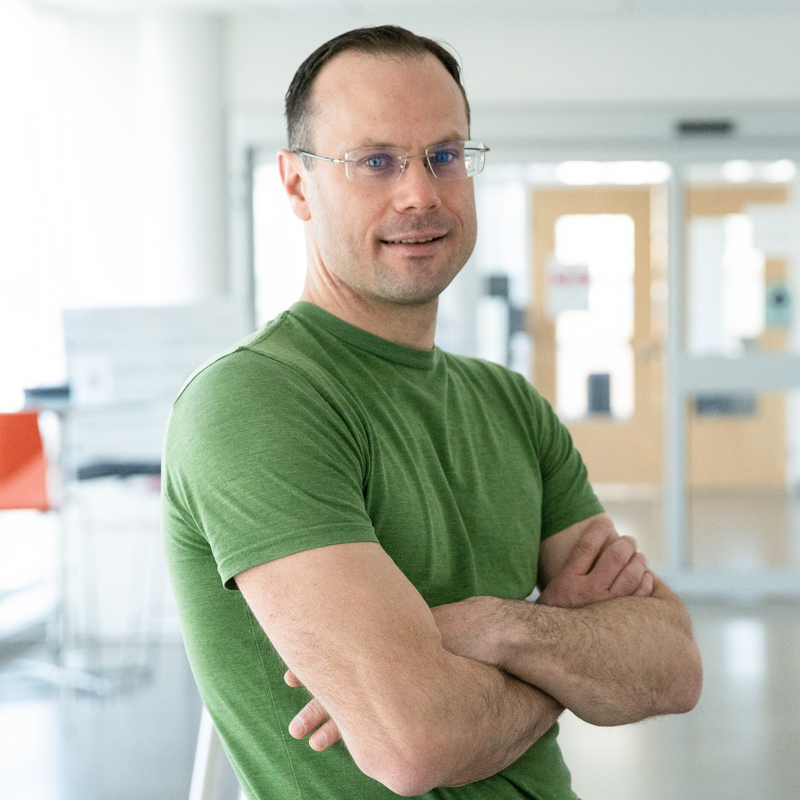
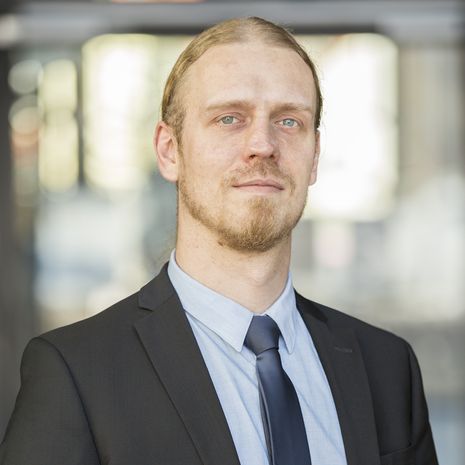
Dr. Xiaoning Du is a Senior Lecturer (equivalent to Associate Professor) at the Department of Software Systems and Cybersecurity, Faculty of Information Technology, Monash University. She completed her PhD at Nanyang Technological University (2020) and bachelor’s at Fudan University (2014). Education: PhD, Nanyang Technological University (2020) Bachelor’s, Fudan University (2014) Her research bridges program analysis , formal methods , and AI-assisted software systems , focusing on security and quality assurance. Key contributions include tools like Devign , BigCodeBench , DeepStellar , and SimPy . Recent publications (2023-2025) span neural code generation evaluation , deep learning testing , and code dataset security , appearing in venues like ICLR, FSE, ISSTA, ICSE, and USENIX Security. Awards: 2024 Google Research Scholar 2023 FIT Dean’s Early Career Award ACM SIGSOFT Distinguished Paper (ISSTA'24) ICLR Oral Presentation (2025) Grants: 2021-2023 FIT ECR Seed Grants She actively serves on program committees including ICSE 2025 , ISSTA 2025 , and FSE 2026 , and mentors PhD students via full scholarships at Monash.
Prof. Agnieszka Stanimir is a faculty member at the Department of Econometrics and Operations Research, Wrocław University of Economics. Her research focuses on socio-economic challenges related to aging populations, tourism industry dynamics, and generational analysis. She actively contributes to academic discussions on policy impacts and demographic shifts in Europe. Education and Academic Background: While detailed educational history is not explicitly stated, her academic rank of professor indicates advanced doctoral qualifications (habilitation in Poland) and extensive research contributions. She is affiliated with the Faculty of Economics and Finance, specializing in econometric methods and applied statistical analysis. Research Interests: Her work spans topics such as seniors' quality of life, tourism accessibility for elderly populations, socio-economic disparities, and multivariate statistical techniques. Recent studies emphasize post-pandemic recovery, sustainable tourism practices, and generational differences in technology adoption. Publications: Over 50 peer-reviewed articles from 2003–2025. Key themes include EU policy evaluations, silver economy development, and statistical methodologies like correspondence analysis. Recent trends focus on post-COVID demographic challenges and active aging strategies. Grants and Collaboration: No specific grants listed, but her active seminar roles (e.g., supervising master's and licentiate seminars) suggest involvement in academic mentorship. She communicates in Polish, English, and German, enhancing cross-cultural research collaboration. Labs/Teams: Leads research initiatives within the Department of Econometrics, focusing on applied socio-economic analysis. Her work often integrates quantitative methods with policy-oriented frameworks.
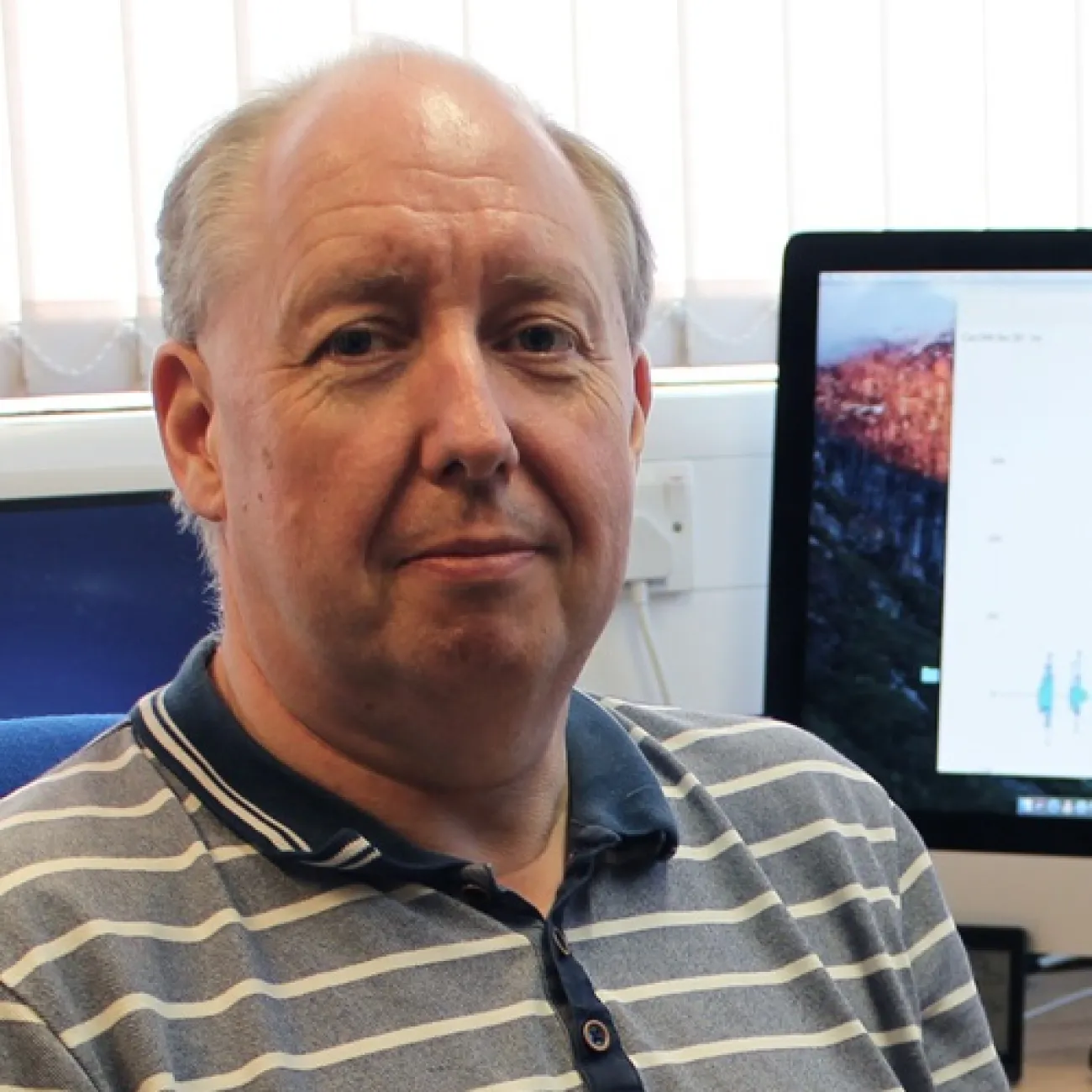
Professor Tony Bird is a member of the astronomy group within the School of Physics and Astronomy at the University of Southampton. He currently serves as Deputy Head of School (Education) and previously held roles as Director of Programmes for Physics and Astronomy. His research focuses on instrumentation and data analysis for high-energy astrophysics, particularly through his role as a co-investigator on the ESA's INTEGRAL mission's IBIS telescope. He leads the compilation of its all-sky survey catalogues and explores applications of astronomical technology in medical imaging and security systems. Research Projects: - Developed novel instrumental techniques for coded-aperture imaging. - Led Knowledge Transfer Partnerships with Symetrica for security tech. - Co-led SPRINT programs advancing space technology innovation. - Active in next-generation space telescope design initiatives. Teaching: Teaches Medical Physics and Applied Nuclear Physics courses, and oversees mission design components of the Tenerife Field Trip for astronomy students. Supervises multiple PhD students in physics and related fields. Labs/Teams: Part of the Southampton Theory Astrophysics and Gravity (STAG) Research Centre and collaborates with interdisciplinary teams on detector development and data analysis challenges.
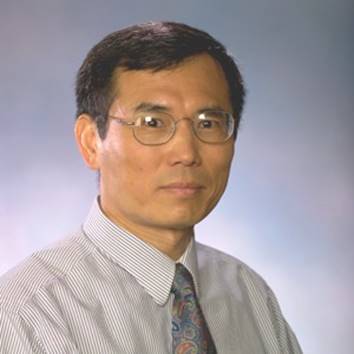
Weng Fai WONG is an Associate Professor and Deputy Head of the Department of Computer Science at the School of Computing, National University of Singapore (NUS). With over three decades of academic experience at NUS, he has established himself as a leading researcher in computer systems, with particular expertise in the interface between hardware and software stacks. Dr. Wong received his B.Sc. (First Class Honors) and M.Sc. from the National University of Singapore in 1989 and 1991 respectively, followed by a Dr.Eng.Sc. from the University of Tsukuba in 1993. His academic journey began at NUS (then DISCS) in 1985, where he progressed from student to Senior Tutor in 1989, and later returned from Japan as a Lecturer in 1993. Dr. Wong's research focuses on systems and networking, with special emphasis on hardware-software co-optimization. His current research interests include approximate computing , neuromorphic computing , and hardware acceleration for deep learning. His work spans computer architecture , embedded systems , compilers and runtime systems , and programming languages . He has made significant contributions to optimizing software for novel hardware including FPGAs, GPUs, and non-volatile memory technologies. His recent publications (2023-2025) demonstrate a strong focus on energy-efficient AI computing, with particular emphasis on spiking neural networks, large language model acceleration, and FPGA-based solutions for graph processing and machine learning workloads. His research shows a clear trajectory toward green AI through hardware-software co-design that minimizes energy consumption while maintaining computational effectiveness. Dr. Wong is a Member of ACM and a Senior Member of IEEE. His paper "Exploiting half precision arithmetic in Nvidia GPUs" was a Best Paper Finalist at the IEEE High Performance Extreme Computing Conference (HPEC 2017). As Deputy Head of the Department of Computer Science at NUS, Dr. Wong plays a key leadership role in academic administration while maintaining an active research program. His work has been supported by numerous research grants, though specific details are not provided in the available information. Dr. Wong leads research in the Systems & Networking area at NUS, with particular focus on the Hardware-Software Interface Laboratory. His team explores innovative approaches to bridge the gap between theoretical computer science and practical hardware implementation, with applications spanning from edge computing to large-scale data centers.
Eric Brewer is a Professor in the Department of Computer Science at the University of California, Berkeley, part-time since July 2014 while also serving as a leader at Google. He is renowned for his work in operating systems, networking, and technology for developing regions. His academic journey includes a B.S. from UC Berkeley (1989) and a Ph.D. from MIT (1994), both in EECS. Brewer's research focuses on scalable systems, security, and energy-efficient technologies for underserved areas. He co-founded Inktomi Corporation and pioneered projects like FirstGov.gov (now USA.gov). His awards include the ACM Prize in Computing (2009) and membership in the National Academy of Engineering. Education: B.S. in EECS from UC Berkeley (1989), M.S. and Ph.D. in EECS from MIT (1994). Research interests span developing region technologies, programming languages, and networking. His work on DC microgrids and rural cellular networks highlights efforts to bridge the digital divide. Collaborative projects in Cambodia, India, Ghana, and other regions emphasize practical, sustainable solutions. Recent publications address energy systems, cloud computing, and low-cost connectivity. Awards include ACM Fellow, SIGOPS Mark Weiser Award, and Global Leader for Tomorrow recognition. His contributions to education include courses like CS169 (Software Engineering) and CS262A (Advanced Topics in Computer Systems).
Regina Grundmann is Professor of Jewish Studies at the University of Münster, where she has served on the faculty since 2015 (previously as Junior Professor from 2009-2015). She holds multiple leadership positions including membership on the Board of Directors of the Cluster of Excellence "Religion and Politics. Dynamics of Tradition and Innovation" and serves as Principal Investigator for Research Field C on "Criticism of religion and apologetics" and Head of Project C3-6 on "Polemics, Criticism of Society and Religion in Talmud Parodies of the 19th to 21st century". Professor Grundmann's research focuses on Jewish religious and cultural history, with particular expertise in rabbinic literature and contemporary halakhic literature. Her work examines responsa literature as a window into religious decision-making processes within Judaism, analyzing how rabbinic authorities address contemporary issues through traditional frameworks. She also investigates Talmudic parody as a creative adaptation of tradition to address modern challenges, and explores the intersection of Jewish tradition with questions of religious pluralism, migration, and diaspora. Her publication record reveals consistent scholarly output across multiple venues, with a clear evolution from early work on Jewish-German literary figures like Heinrich Heine toward increasingly sophisticated analyses of responsa literature and Talmudic interpretation. Recent work demonstrates growing attention to the rhetorical dimensions of religious decision-making and the creative adaptation of tradition in response to modern challenges. Feodor Lynen-Forschungsstipendium für Postdoktoranden – Alexander von Humboldt foundation (2008) PostDoc-Stipendium – German Academic Exchange Service (DAAD) (2008) Doctoral scholarship – Studienstiftung des deutschen Volkes (2004) Appointment as member of the Young Academy of the North Rhine-Westphalian Academy of Sciences (2011) Preisträgerin des 8. Forums Junge Heine-Forschung – Heinrich-Heine-Institut Düsseldorf (2006) Professor Grundmann has successfully supervised multiple doctoral students whose dissertations examine diverse aspects of Jewish tradition and practice, including regulatory strategies of religious pluralism, Talmudic hermeneutics, humor as a coping mechanism in Jewish tradition, and neo-orthodox self-understanding in German-Jewish press. She has secured significant research funding through the Cluster of Excellence "Religion and Politics" and various Collaborative Research Centres focusing on law and literature, cultures of decision-making, and religious studies, demonstrating her ability to lead major interdisciplinary projects. She leads or has led several significant research projects including the current C3-6 project on Talmudic parodies, C2-22 on tradition transfer in medieval Jewish compilation literature (until 2018), and D13 on violence in ancient Judaism (until 2012). Grundmann actively participates in multiple academic communities through her roles on the advisory board of the Jewish Museum of Westphalia, the Strategical Planning Commission of the Union of German Academies of Sciences, and as a jury member for the Johannes Zilkens Doctoral Prize.
Kai-Hsiung Chang is a Professor in the Department of Computer Science and Software Engineering at Auburn University's College of Engineering. He has been a faculty member since 1986, progressing from Assistant to Associate Professor in 1991, and to full Professor in 1998. He served as Department Chair from 2006 to 2016 and was honored with the Alumni Professorship from 2004 to 2009. Ph.D., Electrical and Computer Engineering, University of Cincinnati, 1986 M.S., Electrical and Computer Engineering, University of Cincinnati, 1982 Diploma, Electrical Engineering, Taipei Institute of Technology, 1977 Dr. Chang's research focuses on software testing, software comprehension and visualization, complexity metrics, information assurance education, computer supported cooperative work (CSCW), and artificial intelligence in software engineering. His work integrates formal methods and usage profiles to enhance software quality and safety. He has led research sponsored by the National Science Foundation (NSF) and the Department of Defense (DoD), particularly in pervasive and mobile computing and information assurance education. His recent publications reflect a strong focus on software testing methodologies, formal specification-based validation, collaborative systems, and intelligent software tools. Themes include object-oriented testing, complexity measurement, CSCW, and AI-driven test generation, indicating a long-standing commitment to improving software reliability and development processes. Alumni Professorship, Auburn University (2004–2009) ACM Certificate of Appreciation for Outstanding Service (1997) IEEE Senior Member INFOSEC Professional Certification (2005) Multiple Outstanding Teaching Awards at Auburn University (1989, 1992, 1997) Summer Faculty Fellowship at NASA Marshall Space Flight Center (1995) Dr. Chang has advised over 50 graduate students, including numerous Ph.D. and Master’s candidates, many of whom now hold academic and industry positions. He has served on NSF and DHS fellowship review panels, contributed to ABET accreditation as a commissioner and program evaluator, and participated in the IEEE-Computer Society/ACM Curriculum Committee for Software Engineering. He also served as Vice President of the International Society of Applied Intelligence. He has led significant research initiatives, including NSF-sponsored REU programs in pervasive computing, and has been deeply involved in curriculum development and professional service. His lab and research group have focused on software quality, intelligent systems, and collaborative environments, fostering interdisciplinary work in software engineering and AI.
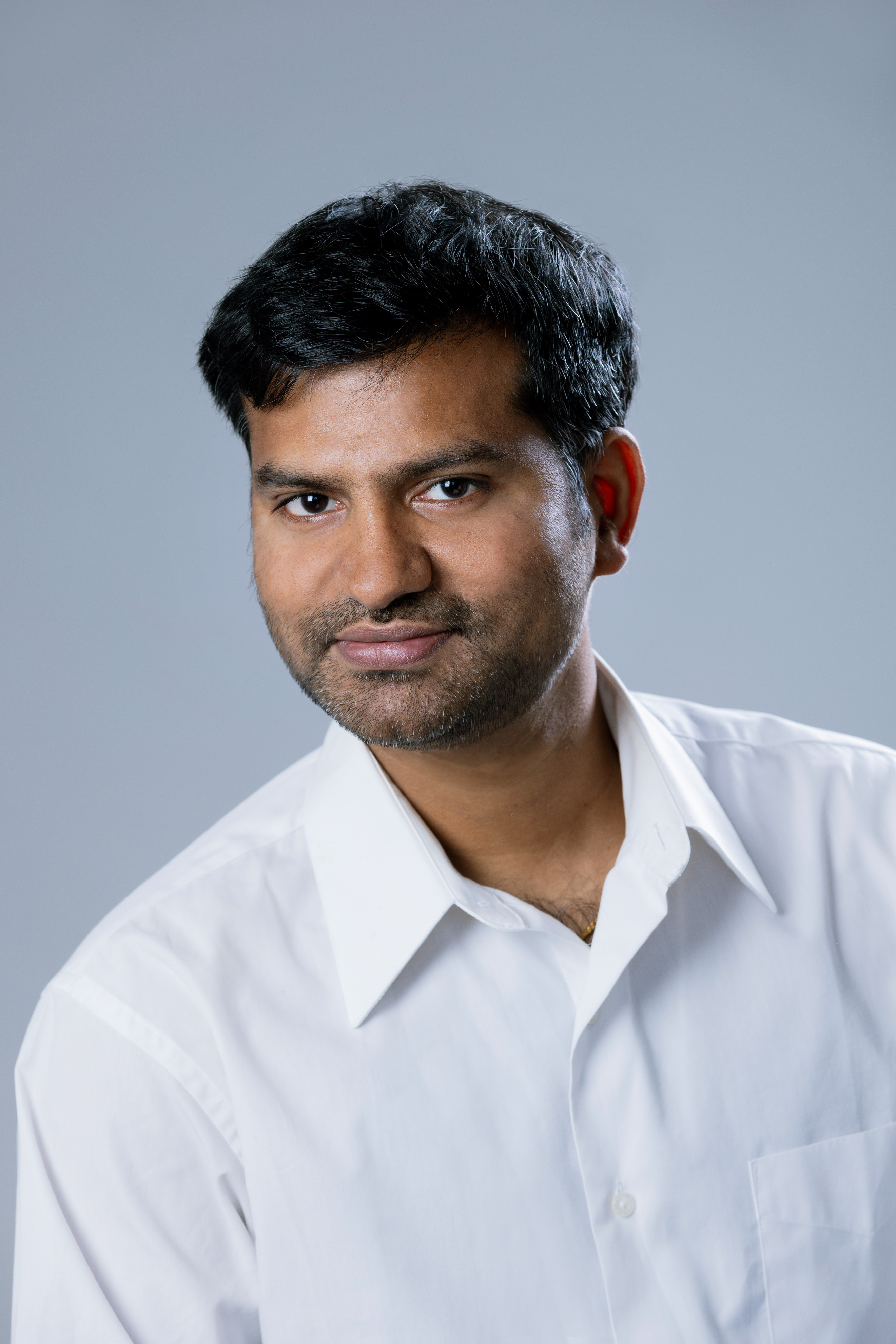
Roles & Affiliations: Vijayanand Nagarajan is a Professor at the Kahlert School of Computing, University of Utah. He leads the CAPS Research Group, focusing on computer architecture, programming languages, and systems. His work emphasizes constructive, specification-driven design for efficiency and correctness. Research Interests: His research spans consistency models for distributed systems, persistent memory, coherence protocols, and hardware/software co-design. Key areas include key-value-store consistency, persistent memory optimization, and automated protocol synthesis. His group explores topics like cache coherence, fault tolerance, and scalable distributed storage. Articles Trends: Recent work emphasizes automated protocol generation (e.g., HeteroGen, PipeGen), consistency in distributed systems (LAW theorem), and fault-tolerant designs (Apta, Dve). Publications span top conferences like ISCA, ASPLOS, and VLDB, addressing both theoretical foundations and practical implementations. Advising & Grants: Advises current PhD students (An Qi Zhang, Soham Bagchi, et al.) and has mentored over a dozen alumni now in academia and industry (e.g., NVIDIA, Google, Huawei). Active in organizing and reviewing for conferences like ISCA, MICRO, and HPCA. Labs & Teams: Heads the CAPS Research Group, collaborating on projects like C3D, ATCache, and Odyssey. Engages in interdisciplinary work with robotics and compiler communities.
Mihaela Sighireanu is a Professor at the Informatics Department of ENS Paris-Saclay , where she has worked since at least 2020. Her research focuses on models, algorithms, and tools for software verification and analysis , with specific expertise in separation logic, decision procedures, timed systems, and model-checking. Projects: Led initiatives like Colis (2017-2019), Vecolib (2014-2018), Veridyc (2009-2013), and AMAES (2005-2009) Tools: Developed SPEN, CELIA, TRAIAN, and contributed to CADP and TReX Research Trends: Her recent publications emphasize separation logic with pointer arithmetic , automated lemma generation , and compositional verification techniques . These works often intersect with memory safety , data structure verification , and deductive reasoning . Teaching: She teaches programming (L3), logic for AI (Master 1 MPRI), and networks, while serving as Director of Studies for Master 2 Research in Informatics.
Ben Titzer is a Research Professor at Carnegie Mellon University 's Software and Societal Systems Department since 2022. His work spans systems programming languages , compilers , and WebAssembly virtual machines. Co-founder of the WebAssembly project (2014) Developed the Wizard Engine for Wasm research Former Member of Technical Staff at Sun Microsystems (2007-2010) Google employee (2010-2019) leading V8's TurboFan compiler Teaching/Research Fellow at Australian National University (2020) Private consultancy in 2021 His research interests focus on WebAssembly evolution for academic and industrial applications, including: Edge computing integration Dynamic instrumentation via Whamm! and Wasm-R3 Garbage collection and memory optimization Fast interpreters and execution models Linux-kernel interfaces for Wasm Security against Spectre-class vulnerabilities Key trends in recent publications (2025-2021) include: Scaling Wasm beyond web environments Improving debugging and analysis tooling Compiler design for lightweight systems Memory safety in embedded contexts LLM security as a new research direction
Kai Ludwig is a Researcher affiliated with Otto von Guericke University Magdeburg , where he is pursuing a doctorate in the "Databases and Software Engineering" research group under the supervision of Prof. Gunter Saake and Prof. Thomas Leich. His work bridges academic research and practical software development, with a focus on variability analysis and software product line engineering.
Johannes Hölzl is a Post-doctoral Researcher in the Faculty of Science , specifically within the Department of Computer Science at Vrije Universiteit Amsterdam . He works in the Section of Theoretical Computer Science , focusing on formal verification and probabilistic systems. His research integrates higher-order logic with programming languages to model and verify complex computational processes. Position: Post-doctoral Researcher Institution: Vrije Universiteit Amsterdam Department: Computer Science Section: Theoretical Computer Science Hölzl's research spans formal verification, probabilistic programming, and concurrency. He has contributed extensively to the Isabelle/HOL proof assistant, formalizing mathematical structures like measure theory, Markov chains, and timed automata. His work bridges theoretical analysis with practical verification tools, ensuring rigorous proofs in automated reasoning. His publications highlight advancements in probabilistic systems, including formalizing Markov decision processes (2017), verifying compilers for probability density functions (2015), and analyzing expected running times of probabilistic programs (2016). The 2025 article on probabilistic timed automata indicates ongoing exploration of concurrent probabilistic models. Hölzl has no explicitly listed scientific awards in the provided texts. His collaborations with researchers like Tobias Nipkow and Andrei Popescu underscore interdisciplinary efforts in formal methods and security verification. He contributes to the Theoretical Computer Science Section at VU Amsterdam, advancing foundational research in logic-based programming and probabilistic modeling.
Associate Professor Ines Matić Matešković serves at the University of Rijeka's Faculty of Law as Vice Dean for Business Relations and faculty member of the Department of Roman Law. Her scholarly work bridges ancient Roman legal traditions with contemporary legal frameworks through meticulous analysis of medieval statutes from Croatia's Adriatic regions. Her research centers on Roman legal continuity in medieval Croatian statutes, particularly examining debt security instruments in Dalmatian, Istrian, and Kvarner legal texts. Key specialties include: Evolution of antichresis and debt enforcement mechanisms Roman law influences on medieval Adriatic jurisprudence Historical development of insolvency and bankruptcy concepts Legal analysis of medieval wine trade regulations and vineyard protection Diachronic study of price control systems from Diocletian's Edict to modern economies Recent publications reveal a pronounced focus on 2024-2025 on higher education's role in public administration competency development and modern Croatian university funding models within European frameworks. Her historico-legal methodology consistently connects ancient legal principles to current administrative challenges, notably through examination of the 'salus populi' doctrine in pandemic contexts and evolution of ombudsman institutions from Roman tribunes. Dr. Matić Matešković secured Croatian Science Foundation project 6558 ( Business and Personal Insolvency–the Ways to Overcome Excessive Indebtedness ) and contributes significantly to doctoral education at Rijeka's Law Faculty as evidenced by her 2018 publication on new PhD graduates. Her supervisory role extends to guiding research on Roman legal principles in Croatian judicial practices and medieval statute interpretations.
Dr. Mandar Gogate is a Senior Research Fellow at the School of Computing Engineering and the Built Environment, Edinburgh Napier University. He actively contributes to the Centre for Artificial Intelligence and Robotics, focusing on multimodal signal processing and AI applications. Research Themes: Audio-Visual Speech Enhancement, Green AI, Data Privacy, Hearing Aid Technology, Climate Modeling Collaborations: Prof. Amir Hussain, Dr. Kia Dashtipour, Prof. Ahmed Al-Dubai His research explores audio-visual speech enhancement for hearing aids, leveraging deep learning and fuzzy logic. He investigates green AI techniques like neural network pruning for energy efficiency and develops privacy-preserving frameworks using thermal imaging. His work spans climate data analysis with partial least squares and underwater image enhancement via dimension decomposition transformers. Recent publications include 2026 surveys on ensemble malware detection and 2025 studies on cognitive load-driven speech enhancement . He has contributed to federated learning for market surveillance and multimodal hearing aid projects. As a second supervisor for Idrees Hasan's research on COG-MHEAR hearing aids, he mentors emerging scholars. His grants include £3.25M from EPSRC for the COG-MHEAR project (2021-2026) and £12k from Royal Society for multilingual speech enhancement studies. He works with the Centre for Artificial Intelligence and Robotics and Centre for Distributed Computing , integrating 5G-IoT systems into assistive technologies. His technical background includes compiler design, embedded systems, and wireless sensor networks from earlier projects like gesture mice and Hadoop-based rule mining.
Res. Asst. İpek ŞENGÜL serves as a full-time Researcher in the Department of Basic Islamic Sciences at Karabuk University's Faculty of Theology, Turkey, holding this position continuously since 2016. Her academic foundation is anchored in advanced Islamic scholarship with specialized expertise in mystical traditions. Her educational trajectory demonstrates deep interdisciplinary engagement: PhD in Fundamental Islamic Sciences (2020), Karabuk University: Dissertation on Sufi themes in Iranian cinema Master's in Eastern Languages and Literatures (2019), Istanbul University Master's in Fundamental Islamic Sciences (2018), Marmara University BA in Theology (2014), Marmara University Dr. ŞENGÜL's research centers on Mysticism with rigorous textual analysis of Sufi masterworks, particularly focusing on Gulshan-i Raz commentaries and comparative studies of Ibn Arabi, Rumi, and Kurdish Sufi poets like Ahmed-i Hânî. Her methodology bridges Persian literary criticism with theological inquiry, examining concepts like divine unity (Wahdat al-Wujud) and gender constructions in mystical thought. This is evidenced by publications analyzing Lahiji's and Bedlisi's interpretations of blasphemy within Sufi frameworks and Rumi's perspectives on femininity. Her publication pattern (2016-2021) reveals consistent scholarly output across three domains: critical analysis of classical Sufi texts (60% of works), Persian/Kurdish literary studies (30%), and linguistic contributions including a published Persian pocket dictionary (10%). The corpus demonstrates increasing specialization in comparative Sufi hermeneutics after 2018, with recent works engaging directly with primary sources in original languages. No scientific awards or recognitions are documented in available records. While actively contributing to academic discourse through publications and conference presentations, Dr. ŞENGÜL has not supervised any theses according to institutional records. There is no evidence of secured research grants or external funding for independent projects. Her scholarly activities remain concentrated within departmental teaching and publication frameworks without indication of laboratory affiliations or collaborative research teams.