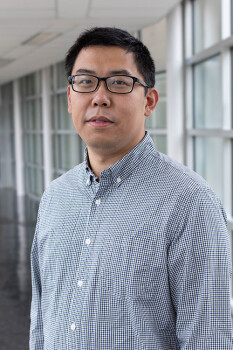
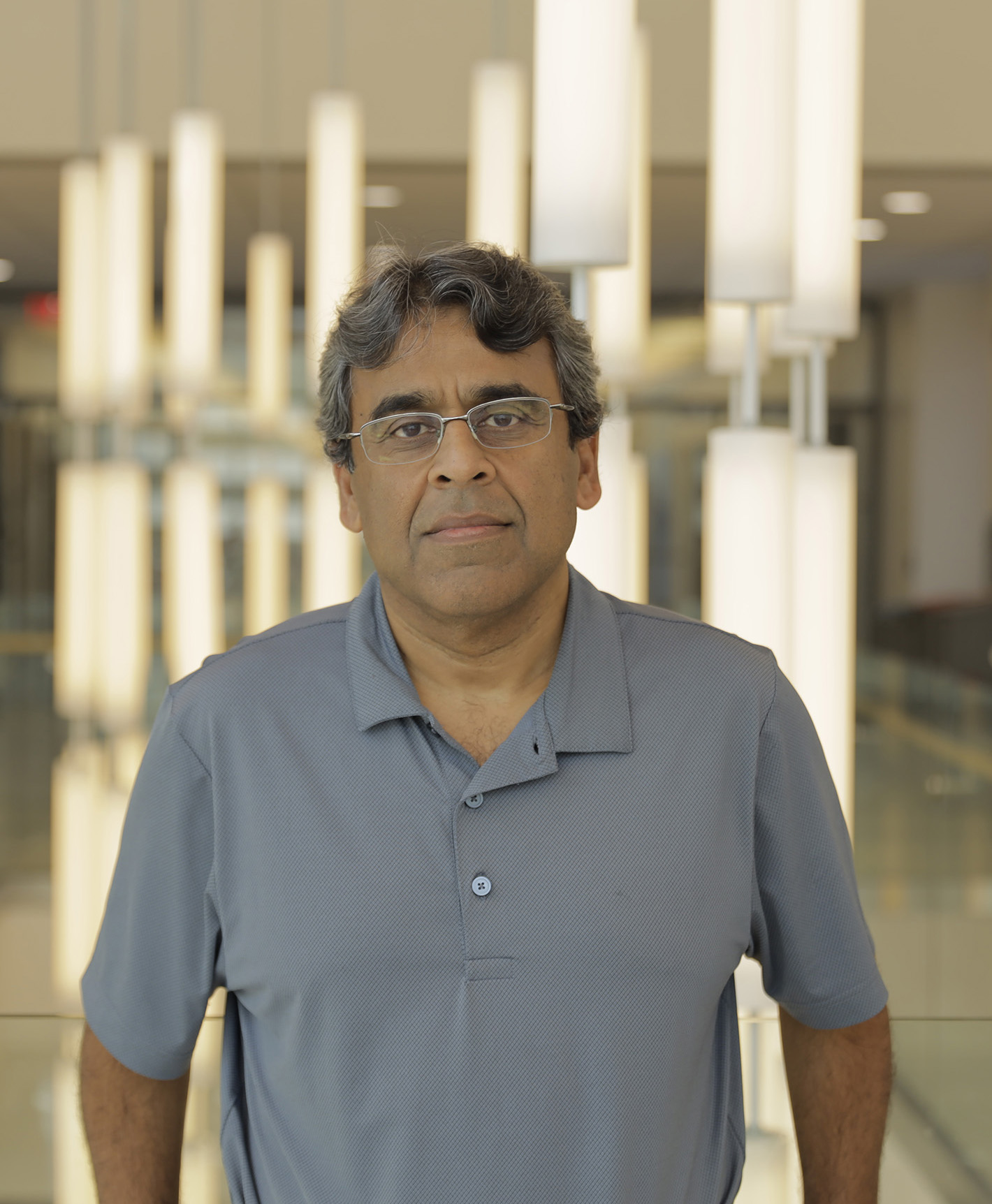
Davide Clematis is an Associate Professor at the Department of Civil, Chemical, and Environmental Engineering (DICCA) of the University of Genoa. His academic role focuses on chemical foundations of technologies and teaching in engineering programs. University: University of Genoa Department: Civil, Chemical, and Environmental Engineering Role: Associate Professor (CHEM-06/A) His research centers on chemical and environmental engineering , with specific applications in solid oxide fuel cells , oxygen redox reactions , and microstructured electrode design . Recent work employs LSTM-based predictive models for hydrogen safety and physical modeling to correlate electrode microstructure with performance. Publications reveal a focus on energy technology , electrochemical systems , and advanced materials . Key themes include optimizing air electrode interfaces, redox kinetics, and gas transport mechanisms in clean energy devices. Contact: davide.clematis@unige.it
Dr. Sharon M. Tennant serves as Adjunct Professor in the Department of Microbiology and Immunology at the University of Maryland School of Medicine, where she heads the Clinical Microbiology and Molecular Diagnostics Section at the Center for Vaccine Development and Global Health (CVD). Her leadership spans global clinical trials and field studies across Africa, Asia, and South America, with primary focus on non-typhoidal Salmonella (NTS) pathogenesis and vaccine development. Her academic foundation includes a B.A./B.Sc. in French/Psychology/Genetics/Microbiology (1999) and Ph.D. in Microbiology (2005) from the University of Melbourne, followed by postdoctoral training at UMSOM's CVD through a J.N. Peters Bequest Fellowship (2005-2007), Academic Fellowship (2007-2008), and Postdoctoral Fellowship (2008-2010). Dr. Tennant's research integrates four pillars: bacterial pathogenesis of invasive NTS strains like African ST313 variants; vaccine development of live attenuated and flagellin-conjugate vaccines against NTS, Klebsiella pneumoniae , and Pseudomonas aeruginosa ; diagnostic assay innovation for culture-independent Salmonella detection; and global health contributions through landmark studies like VIDA and EFGH that define diarrheal disease etiology in resource-limited settings. Her publication record reveals sustained focus on NTS vaccine mechanisms, with recent expansion to nosocomial pathogens. Key innovations include flagellin-secreting vaccine platforms now in Phase 2 trials, age-stratified immunogenicity studies, and tolerability-optimized strains that balance inflammatory responses. This work bridges preclinical development through FDA regulatory pathways. Recognition includes: J.N. Peters Bequest Research Fellowship (University of Melbourne) Academic Fellowship at UMSOM CVD Postdoctoral Fellowship at UMSOM CVD As Principal Investigator and co-investigator on multiple diagnostic studies, she has compiled FDA Investigational New Drug applications and directs grant-funded research within the EFGH consortium. Her laboratory provides critical microbiology oversight for multicenter trials evaluating shigellosis incidence across seven global sites. The CVD laboratory under her direction maintains comprehensive microbiology and molecular biology capabilities including biosafety cabinets, real-time PCR systems, electroporators, and gel electrophoresis platforms, supporting vaccine engineering from genetic modification through preclinical evaluation.
Dr. Muhammad Shahbaz is the Kevin C. and Suzanne L. Kahn New Frontiers Assistant Professor in Computer Science at Purdue University. He specializes in designing domain-specific abstractions, compilers, and architectures for emerging workloads such as machine learning and self-driving networks. His research bridges networking, machine learning, and computer architecture to create high-performance, scalable systems. Shahbaz holds a Ph.D. and M.A. in Computer Science from Princeton University and a B.E. in Computer Engineering from the National University of Sciences and Technology (NUST). Before joining Purdue, he conducted postdoctoral research at Stanford University and worked as a Research Assistant at Georgia Tech and the University of Cambridge. His research interests include Networking and Operating Systems, Artificial Intelligence, Machine Learning, Computer Architecture, Distributed Systems, and Programming Languages/Compilers. He has developed influential open-source systems like Pisces, SDX, and NetFPGA-10G, which are widely adopted in industry and academia. Shahbaz has received prestigious awards including the Facebook, Google, and Intel Research Awards; IETF/IRTF ANRP Prize; ACM SOSR Systems Award; and APNet Best Paper Award. His work focuses on advancing edge computing, smartNICs, in-network machine learning, and scalable distributed systems. His research portfolio includes contributions to network caching, hardware acceleration, and AI-driven network optimization. He leads projects like CAREER (per-packet AI on heterogeneous data planes) and EdgeScaler (smart auto-scaling for 5G edge networks). His systems address challenges in tail latency, resource harvesting, and scalable multicast in modern networks.
Elsa Gunter is a Research Professor and Senior Lecturer at the Siebel School of Computing and Data Science, part of the Grainger College of Engineering at the University of Illinois Urbana-Champaign. She holds a Ph.D. in Mathematics from the University of Wisconsin (1987). Her research focuses on programming languages, formal methods, software engineering, and interdisciplinary computing education. Key research areas include the semantics of programming languages, compiler optimization, formal verification frameworks, and integrating computing into interdisciplinary education. She teaches courses like CS 421 (Programming Languages & Compilers), CS 431 (Embedded Systems), and CS 477 (Formal Software Development Methods). Her work emphasizes practical applications of formal methods in software development and pedagogical innovations in computing education. Recent projects explore challenges in interdisciplinary computing curricula and the formal semantics of programming languages. Elsa’s academic contributions span over four decades, with notable work on theorem proving tools (e.g., HOL90), compiler correctness frameworks, and educational technologies for programming courses.
Talia Ringer is an Assistant Professor at the University of Illinois Urbana-Champaign, affiliated with the Grainger College of Engineering and the Siebel School of Computing and Data Science. Her research focuses on proof engineering, formal verification, and bridging neural and symbolic proof automation. She holds a PhD in Computer Science from the University of Washington and a BS in Mathematics and Computer Science from the University of Maryland. Prior to academia, she worked at Amazon as a software engineer. Ringer is known for founding initiatives like SIGPLAN-M and the Computing Connections Fellowship, fostering inclusivity in computer science research. She has received prestigious awards including the 2023 ACM SIGPLAN Distinguished Service Award and the DARPA Young Faculty Award. Education: PhD, University of Washington (2021); BS, University of Maryland (2012) Research Areas: Dependent Type Theory, Verification, Interactive Theorem Proving, Proof Automation, Formal Methods Awards: ACM SIGPLAN Distinguished Service Award (2023), ESEC/FSE Distinguished Paper Award (2023), DARPA Young Faculty Award (2023) Her work emphasizes making formal verification accessible to programmers through tools like Proof Repair and Baldur , while advocating for ethical AI research and LGBTQ+ inclusivity. She advises a diverse team of graduate and undergraduate students in the Illinois Theorem Provers (ITP) lab, exploring topics including proof repair, reinforcement learning for proofs, and quotient type equivalences.
Tian Zhong is an Assistant Professor of Molecular Engineering at the University of Chicago's Pritzker School of Molecular Engineering. His research focuses on quantum photonics and solid-state quantum technologies, particularly leveraging rare-earth doped materials for quantum networks and optical quantum memory. He completed his PhD in Electrical Engineering at MIT (2013) and a postdoc at Caltech’s Institute of Quantum Information and Matter. Key roles include pioneering rare-earth quantum nanophotonics and developing scalable quantum optical networks. Research interests include quantum entanglement purification, epitaxial thin films for quantum devices, and hardware-software co-design for quantum computing. Notable achievements include a DoD ARO Young Investigator Award (2020) and an NSF CAREER Award (2020). His lab, Zhong Quantum Lab, explores quantum interconnects and hybrid systems, with recent grants from the Betty Moore Foundation for novel quantum matter projects. Publications span quantum networking protocols, coherence properties of rare-earth ions, and interdisciplinary studies in microbiome-gut-brain interactions. Advising focuses on training students in quantum device fabrication and theoretical modeling, with active projects on dilution fridge setups and quantum repeater networks.
Karl Crary is an Associate Professor at the Computer Science Department of Carnegie Mellon University , where he also serves as Director of Doctoral Programs . His research focuses on Programming Languages , Security and Privacy , and Mechanized Metatheory , with emphasis on applying Type Theory to software verification and compiler design. Research Type Safety Proofs Certified Code Compiler Implementation His recent publications explore Substructural Parametricity , Hashgraph Consensus Verification , and Focused Logic applications. He has advised students including Derek Dreyer , Chris Martens , and Tom Murphy , with software projects like Istari proof assistant and CM-Lex/CM-Yacc for hygienic code generation. Current teaching includes Constructive Logic (15-317/657) and HOT Compilation (15-417).
Leonidas Lampropoulos is an Assistant Professor of Computer Science at the University of Maryland, with an appointment in the University of Maryland Institute for Advanced Computer Studies (UMIACS). He leads research in Programming Languages and Software Engineering, focusing on formal verification, proof assistants, and scalable software development methodologies. His work addresses challenges in formalizing security properties, optimizing proof workflows, and advancing verified software for critical systems like distributed systems and autonomous vehicles. He received the NSF CAREER Award in 2022 and co-led a $540K NSF-funded project (2021) to improve proof engineering tools and protocols. His academic contributions span programming language design, type systems, and testing frameworks, with notable collaborations through the Maryland Cybersecurity Center (MC²). Advised PhD students: Segev Elazar Mittelman, Alperen Keles, Oliwia Kempinski, Jacob Prinz, Finn Voichick. Key honors: NSF CAREER Award (2022), NSF Award for Proof Engineering (2021). Research partnerships: Collaborates with institutions like the University of Texas at Austin on proof assistant scalability. His grants emphasize bridging software engineering practices with formal verification to enhance reliability in large-scale projects. Current efforts include improving proof assistant usability and integrating formal methods into mainstream software development.
Michael Marsh is a Senior Lecturer in the Department of Computer Science at the University of Maryland. His roles include teaching courses such as Computer and Network Security (CMSC414), Computer Networking (CMSC417), and Advanced Data Structures (CMSC420). He has developed the Diptych application to assist in managing large courses on Canvas, offering cross-platform binaries and open-source code. His research interests span cybersecurity, distributed systems, and parallel programming, with a focus on peer-to-peer networks, load balancing, and cryptographic protocols. Marsh has advised students such as Cole Lashley on projects like Shellcode Compilers. His work includes contributions to desktop grid systems, trust management in distributed environments, and robust secret distribution mechanisms. He maintains an active GitHub repository for Diptych, addressing issues like group list rendering and grading reports. His publications reflect expertise in resource discovery, decentralized PKI, and network protocol optimization. Awards and grants are not explicitly listed, but his academic contributions are highlighted through his teaching innovations and open-source projects. He continues to develop educational materials, including free e-books for his courses, and supports students through detailed course expectations and supplementary resources.
Vassilios V. Dimakopoulos is a Professor of Parallel Processing at the Department of Computer Science and Engineering, University of Ioannina, Greece. He has been affiliated with the university since 1998, initially as an adjunct professor and later as a regular faculty member. Currently, he serves as the Dean of the School of Engineering and Chairman of the Technical Council of the University of Ioannina. His academic journey includes a Diploma in Computer Engineering from the University of Patras (1990), and M.A.Sc. and Ph.D. degrees in Electrical and Computer Engineering from the University of Victoria, Canada (1992 and 1996, respectively). His research focuses on parallel and distributed systems, parallel programming models, systems software, computer architecture, embedded systems, and performance analysis. He has held administrative roles such as Deputy Chairman of the Department (2014–2017) and Director of Graduate Studies (2016–2020). His contributions include pioneering work on OpenMP runtime systems, adaptive scheduling for embedded multicore architectures, and probabilistic search protocols in dynamic networks. Dimakopoulos is a member of the IEEE and the Technical Chamber of Greece. His work emphasizes bridging compiler design, runtime systems, and hardware constraints to optimize parallel computing efficiency. Recent research trends include hybrid OpenMP-MPI offloading strategies, adaptive task scheduling in heterogeneous environments, and fog computing cost modeling. His administrative leadership spans multiple institutional committees, reflecting his dual role as an academic leader and researcher. His research group collaborates on projects involving high-performance numerical optimization, task-based global optimization for protein folding, and embedded systems integration.
Jeffrey Foster is a Professor and Chair of the Department of Computer Science at Tufts University's School of Engineering. He holds a Ph.D. in Computer Science from the University of California, Berkeley (2002). His research focuses on programming languages, software engineering, and security, with notable contributions to program synthesis, static analysis, and formal verification. He leads efforts in developing tools like Dafny-based synthesis frameworks and Ruby type systems. His work emphasizes practical applications of formal methods, including security policy analysis for Android systems and improving software reliability through automated testing and machine learning-driven triaging. He has been recognized with awards such as the Outstanding Director of Graduate Studies Award (2017). Foster’s research spans theoretical advancements (e.g., abstract interpretation-guided synthesis) and empirical studies (e.g., REST API design practices). His publications address challenges in dynamic languages, static analysis, and ethical considerations in algorithmic systems like hiring tools. He actively contributes to the academic community through conference organization and pedagogical innovations in computer science education.
Dr. Tien Nguyen is an Associate Professor in the Department of Computer Science at UT Dallas' Erik Jonsson School of Engineering. His research focuses on software engineering innovations, particularly in machine learning applications for code analysis, vulnerability detection, and automated testing. He develops neural network approaches to enhance software quality and security. Recent publications demonstrate strong emphasis on AI-driven software solutions, including GPT-based test generation, neural vulnerability scanners, and code representation learning. His team's work bridges theoretical computer science with practical developer tools, evidenced by studies on syntactic sugar design and program dependence learning. Dr. Nguyen's lab maintains active industry collaborations, with translational research addressing real-world challenges in code maintenance and cybersecurity. Current projects explore context-aware code analysis and self-improving language models for programming assistance.
Shiyi Wei is an Associate Professor in the Department of Computer Science at the University of Texas at Dallas (UT Dallas), affiliated with the Erik Jonsson School of Engineering and Computer Science. He holds a Ph.D. in Computer Science from Virginia Tech (2015) and a B.E. in Software Engineering from Shanghai Jiao Tong University (2009). His postdoctoral research was conducted at the University of Maryland, College Park's PLUM Lab. His research focuses on enhancing software security and reliability through automated analysis, testing, and static/dynamic tool development. Key areas include configurable systems analysis, machine learning-driven static analysis, and fuzz testing benchmarking. Wei has received prestigious awards, including the NSF CAREER Award (2021) and a USENIX Security Distinguished Paper Award (2022). He teaches courses such as Compiler Construction (CS 6353), Compiler Design (CS 4386), and Software Maintenance and Evolution (CS/SE 6356). Current research projects involve improving fuzz testing methodologies, AI-driven vulnerability修复, and evaluating static analysis tools. His group has developed frameworks like ECSTATIC for configurable tool testing and FIXREVERTER for realistic bug injection. Wei has advised numerous students, including Austin Mordahl (Assistant Professor at UIC) and Zenong Zhang (Software Engineer at Google). His work is supported by NSF grants and AWS research credits. Notable recent contributions include studies on nondeterministic static analysis tools and feature-based fuzz testing benchmarking.
Zhoulai Fu is a tenured Associate Professor at the State University of New York (SUNY), Korea, specializing in programming languages and software security. He also holds joint appointments as a Research Associate Professor at Stony Brook University and is affiliated with the Electrical and Computer Engineering Department at Virginia Tech. His educational background includes: Ph.D., 2009-2013, INRIA – Université de Rennes 1, France M.Eng., 2008-2009, Télécom ParisTech, France M.S, B.S, and French engineer degrees (Ingénieur), 2005-2008, École Polytechnique, France Professor Fu's research focuses on the intersection of Programming Languages, Software Security, and Large Language Models, with special emphasis on improving software reliability through formal methods, numerical error analysis, and scalable verification techniques . His work spans abstract interpretation, automated testing, and verification tools development. He has made significant contributions to floating-point analysis and program verification, with publications at top-tier conferences including PLDI, POPL, OOPSLA, ICSE, and CAV. His publication record shows a consistent trajectory in programming language theory with increasing practical applications. Early work focused on foundational aspects of abstract interpretation and floating-point analysis, while recent papers address security concerns through programming language techniques and incorporate modern approaches like incorrectness logic. Key themes across his publications include formal verification of low-level code, numerical error analysis, and developing scalable analysis tools for real-world software systems. His notable achievements include: Principal Investigator for DARPA E-BOSS Program funding Sole Principal Investigator for National Research Foundation of Korea funding Program Committee membership for POPL 2026, FSE 2024, and PLDI 2023 Professor Fu actively mentors students and has taught courses including Foundations of Computer Science, Programming Abstractions, and Research in Computer Science. His research is supported by significant grants from DARPA and NRF, enabling him to lead the Data & Intelligent Computing Lab at SUNY Korea. He is currently seeking postdocs, PhD, and graduate students to join his research team. He leads the Data & Intelligent Computing Lab, which focuses on advancing programming language techniques for software reliability and security. The lab collaborates with institutions including Virginia Tech, Stony Brook University, and international partners across Europe, working on projects that bridge theoretical computer science with practical software engineering challenges.
Abid M. Malik is an Associate Professor in the Department of Computer Science at Stony Brook University, joining in September 2023. His research focuses on high-performance computing, parallel programming models, and compiler optimizations targeting LLVM and MLIR frameworks. Prior roles include positions at Brookhaven National Laboratory, the University of Houston, Rice University, INRIA (France), and IBM's Center for Advanced Studies in Toronto. Education: PhD from the University of Waterloo, Canada. Research interests span compiler technology, parallel programming languages, and constraint programming. He has over 15 years of academic and industry experience, combining theoretical and applied work in computing systems. Teaching responsibilities include courses such as CSE 220, CSE 307, CSE/ISE 337, CSE 416, and CSE 304. No specific scientific awards or grants are listed in the provided text.