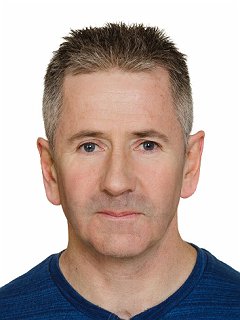
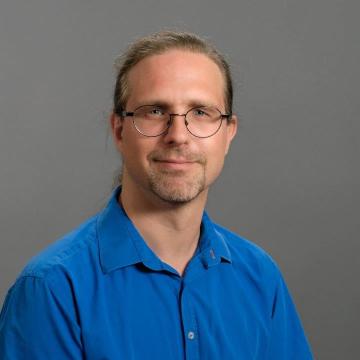
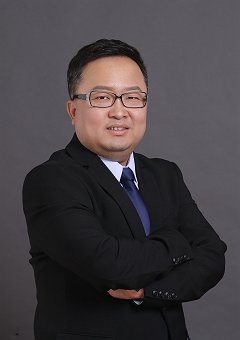
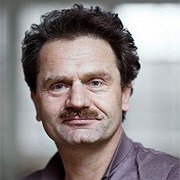
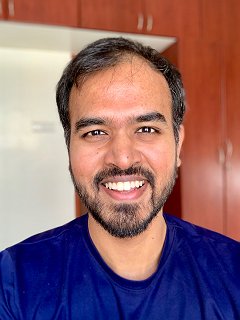
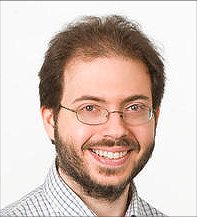
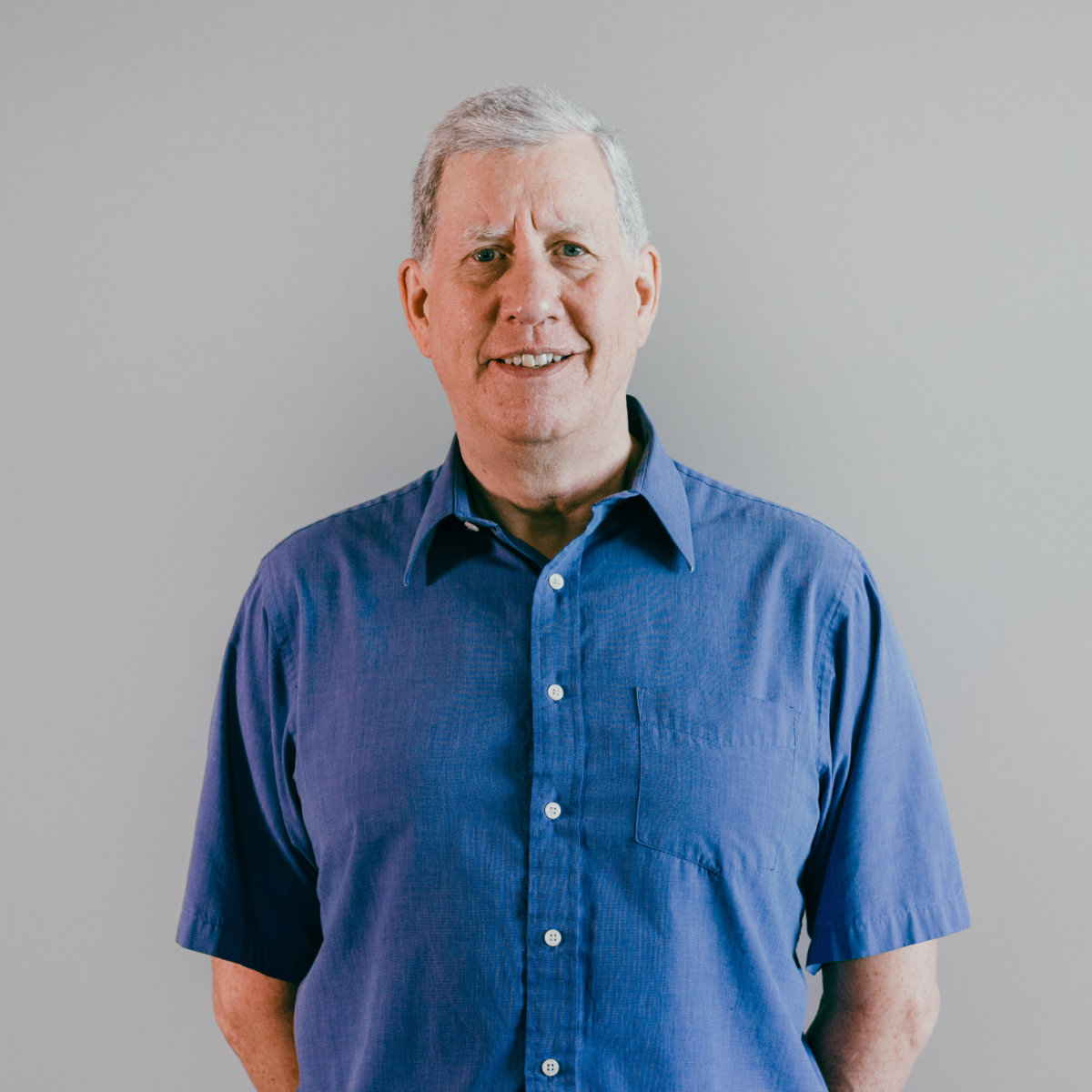
Ruslan Nikolaev is an Assistant Professor in the Department of Computer Science and Engineering, specializing in nonblocking algorithms, memory reclamation, and concurrent data structures. His research spans operating systems, virtualization, and lock-free programming paradigms. Academic Rank: Assistant Professor Department: Computer Science and Engineering Research Interests focus on: Nonblocking and wait-free algorithms Memory-efficient reclamation techniques Lock-free data structures Operating system virtualization Device driver security Recent work includes 2025 advancements in SCOT and RRR-SMR frameworks for nonblocking structures, 2024 contributions to wait-free reclamation, and 2022 innovations in address space randomization (Adelie), critical service domains (Kite), and wait-free queues (Wcq). Earlier projects (2013-2020) explored OS virtualization (VirtuOS) and reclamation mechanisms (LibrettOS). Trends in his publications highlight: Optimization of concurrent algorithms Security enhancements in Linux drivers Virtualization techniques for critical services Efficient memory management strategies Robust fault tolerance in distributed systems
Vijay Narayanan is the Robert Noll Chair Professor in Computer Science & Engineering and Electrical Engineering at Pennsylvania State University. He co-directs the Microsystems Design Lab and leads research in embedded visual analytics, self-powered processors, and system design using emerging devices. Education: B.E in Computer Science and Engineering (1993) from University of Madras, India Ph.D. in Computer Science and Engineering (1998) from University of South Florida, USA His research spans Power Aware Computing , Computer Architecture , and Embedded Systems , with emphasis on Visual Cortex on Silicon and Self-Powered Processors . Current work includes Non-Volatile Processors and Design Automation under unreliable power conditions via NSF ERC ASSIST. Recent publications focus on GPU architecture (Tensor Cores, ACE), Memory Consistency Verification (QED), and Neural Radiance Fields (Disorf, Distwar) for robotics and rendering. Key collaborations include Tsinghua University and DARPA/SRC LEAST Center . Scientific Awards: IEEE Fellow ACM Fellow He leads the Architecture, Benchmarking and Circuits Thrust in the DARPA/SRC LEAST Center and contributes to NSF ERC ASSIST for self-powered systems. Grants and projects emphasize cross-layer optimizations and hardware-software co-design.
Seiichiro Tani is a Professor at Waseda University's Faculty of Education and Integrated Arts and Sciences since April 2024. He previously held prominent roles at NTT Communication Science Laboratories (2003-2024), including Leader of the Computing Theory Research Group and Project Manager of the Research Center for Theoretical Quantum Information. He has also served as a Visiting Professor at Tokyo Institute of Technology (2022-2024) and a researcher at JST's ERATO projects (2004-2009). His academic journey includes a Ph.D. in Computer Science from the University of Tokyo (2006), preceded by M.E. and B.E. degrees from the University of Tokyo and Kyoto University, respectively.
Wei Yang is an Associate Professor in the Department of Computer Science at the University of Texas at Dallas, actively contributing to software engineering research through program committee roles at ICSE, FSE, ASE, and ISSTA conferences since 2015. His research focuses on software testing innovation , particularly in mobile security, GUI testing, and AI-driven test automation. Key contributions include frameworks for malware analysis (MalScan), UI exploration (Guardian, Vet), and neural network testing (DeepPerform, EREBA), addressing critical challenges in test oracle generation, flaky tests, and resource-constrained environments. Recent work demonstrates a strategic shift toward LLM and foundation model applications for testing, with 2023-2026 publications exploring vision-language models for GUI testing, parameter ownership in collaborative AI development, and instruction alignment in large language models. This evolution reflects the field's broader trajectory toward AI-integrated quality assurance.
Michalis Kokologiannakis is an Assistant Professor in the Department of Computer Science at ETH Zurich, Switzerland. Previously, he was affiliated with the Max Planck Institute for Software Systems (MPI-SWS) in Germany where he completed his PhD. His research focuses on programming languages, compilers, and software verification, with particular emphasis on: Automated verification and testing of concurrent programs Weak memory models employed by modern microprocessors Stateless model checking techniques Formal methods for program analysis His work has led to the development of several verification tools including GenMC (a stateless model checker for C/C++ programs under weak memory models) and Kater (a tool that automates weak memory model metatheory and consistency checking). Dr. Kokologiannakis has published extensively at top-tier programming languages and verification conferences including PLDI, POPL, OOPSLA, and CAV. His research has pioneered advances in stateless model checking, partial order reduction, and verification under weak memory consistency models. He completed his MEng at the National Technical University of Athens (NTUA) before earning his PhD from MPI-SWS.
Michael F. P. O'Boyle is a Professor of Computer Science at the University of Edinburgh's School of Informatics. He is a leading researcher in compiler technology, specializing in optimizing compilation, machine learning for compilation, and heterogeneous systems. His work addresses the critical challenges of compiling software for increasingly diverse hardware architectures in the post-Moore's Law era. Professor O'Boyle's research interests focus on: Optimizing compilation techniques Machine learning applications in compilation Heterogeneous computing systems Program synthesis Neural machine translation for code Hardware/software co-design His recent publications demonstrate a strong focus on tensor optimization, compiler infrastructure for heterogeneous systems, and machine learning applications in program analysis and transformation. O'Boyle's work bridges traditional compiler techniques with modern AI-driven approaches to code optimization, addressing the growing complexity of hardware-software interfaces. Professor O'Boyle has received several notable honors and awards: ACM CGO Test of Time award (2017) Senior EPSRC Research Fellow Fellow of the British Computer Society (BCS) He holds significant leadership roles including Director of the ARM Research Centre of Excellence at Edinburgh and Director of the EPSRC Centre for Doctoral Training in Pervasive Parallelism. O'Boyle is also a founding member of HiPEAC, a European network for high-performance and embedded architecture and compilation, and has delivered keynote addresses at major conferences including PPoPP 2019 where he presented his vision for "Rethinking Compilation in a Heterogeneous World."
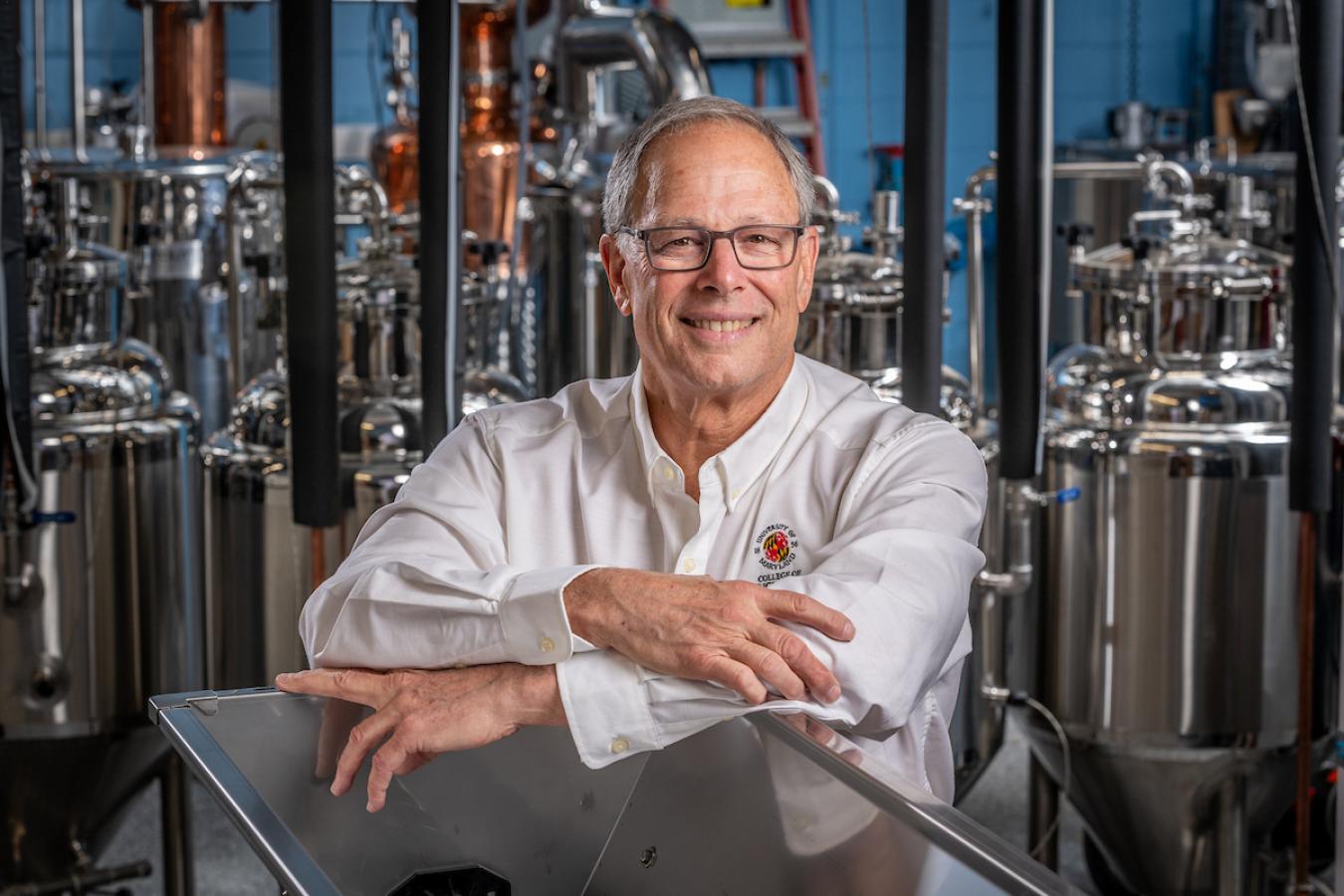
Dr. Craig Beyrouty is a Professor at the University of Maryland's College of Agriculture and Natural Resources, specializing in soil science and plant-root interactions. He previously served as Dean and Director of the college (2015–2025) and held leadership roles at Colorado State University, Purdue University, and the University of Arkansas. His international research spans Africa, Asia, and the Americas, focusing on sustainable agriculture. Education: Ph.D. in Soil Chemistry, Purdue University M.S. in Soil Chemistry, Purdue University B.S. in Soil Science, Cal Poly State University Research Interests: Beyrouty investigates root-system dynamics, nutrient uptake (potassium, nitrogen), soil-plant interactions in crops (rice, soybean), and bioremediation techniques. His work addresses no-till systems, water-nutrient stress, and microbial-assisted soil decontamination, emphasizing practical applications for global agriculture. Publications: Recent articles (1998–2011) reveal a focus on potassium management in soybeans, root ecophysiology, rice nutrition under floodwater stress, and phytoremediation. Trends include soil fertility optimization, crop adaptation to environmental constraints, and sustainable farming innovations. Awards: Fellow, Soil Science Society of America Fellow, American Society of Agronomy George Scarseth Research Award (1983) Professional Leadership: Vice Chair of the International Rice Root Working Group; President of the Plant Root Environment Working Group; extensive collaboration with global agricultural institutions.
Sašo Živanović is an Assistant Professor at the Department of Comparative and General Linguistics, Faculty of Arts, University of Ljubljana. He holds a PhD in General Linguistics (2007) and a Diploma in Theoretical Mathematics (2002), and has been continuously employed at the university since 2007. His educational background reflects an interdisciplinary approach, combining mathematical rigor with linguistic theory. This foundation supports his research at the intersection of formal linguistics and computational methods. Živanović's research spans theoretical linguistics with particular emphasis on semantics (especially quantification), phonology, and syntax. His work demonstrates a consistent focus on the formal properties of language structure, with publications ranging from theoretical explorations of logical form to practical applications in linguistic documentation. His recent work shows increasing integration of computational approaches, particularly through his development of specialized LaTeX packages for linguistic research. Analysis of his publication record reveals a dual trajectory: theoretical contributions to linguistic theory (particularly in Slavic languages) and practical tools for linguistic documentation and analysis. His most recent publications demonstrate growing interest in computational linguistics and the development of specialized software tools for linguistic research. Živanović maintains an active presence in both academic and open-source communities, with significant contributions to the LaTeX ecosystem through packages like Memoize, Forest, and SignDraw that address specific needs in linguistic research and publication. As an educator, he teaches courses including Phonetics and Phonology, Linguistic Typology, Modern Linguistic Theories, and LaTeX for Linguists, demonstrating his commitment to equipping students with both theoretical knowledge and practical technical skills essential for contemporary linguistic research.
Dr. Guoqiang Li is an Associate Professor in the School of Computer Science at Shanghai Jiao Tong University, where he conducts research at the intersection of formal methods, programming languages, and security. His academic journey includes prior positions as Assistant Professor (2009-2013) and subsequent promotion to Associate Professor (2014-present) at the same institution. He has held international appointments including a postdoctoral fellowship at Nagoya University (2008-2009), an academic visit at the University of Oxford (2015-2016), and a Guest Associate Professorship at Kyushu University's Research and Development Center for Smart Mobility (2016-2020). Dr. Li earned his B.S. from Taiyuan University of Technology (2001), M.S. from Shanghai Jiao Tong University (2005), and Ph.D. from Japan Advanced Institute of Science and Technology (2008). His educational background reflects a strong foundation in both Chinese and Japanese academic traditions. His research focuses on formal verification, programming language theory, zero-knowledge proofs, knowledge reasoning, and intelligent system verification and security. Over the past decade, his work has evolved from traditional formal methods applied to timed automata and process calculi to contemporary topics including neural network verification, zero-knowledge proof systems, and the application of large language models to program analysis. His publication record demonstrates a clear progression toward addressing verification challenges in increasingly complex modern systems. Dr. Li's recent publications reveal a strategic research trajectory: early work centered on timed automata and formal verification of concurrent systems, while current research addresses the verification of AI systems, zero-knowledge cryptographic protocols, and LLM-enhanced program analysis. This evolution reflects his commitment to applying rigorous formal methods to emerging computational challenges. Distinguished Paper Award at ICSE 2020 for 'Unblind Your Apps: Predicting Natural-Language Labels for Mobile GUI Components by Deep Learning' Consistent publication in top-tier venues including ASE, ICSE, FSE, and OOPSLA Recognition through multiple National Natural Science Foundation of China (NSFC) grants as Principal Investigator Dr. Li actively contributes to the academic community as a Senior Member of the China Computer Federation, Deputy Director of Theoretical Computer Science for the Shanghai Computer Society, and committee member for multiple technical organizations. He serves as Organization Chair for SEKM'20-22 and FMAC'17, Publicity Chair for TASE'21-23, and has participated in program committees for numerous international conferences. His teaching portfolio includes undergraduate and graduate courses in algorithm design, mathematical foundations, and scientific writing, demonstrating his commitment to both theoretical computer science education and practical application.
Fritz Henglein is a Professor at the Department of Computer Science, University of Copenhagen (DIKU), with affiliations also at Deon Digital. His career spans over three decades, with notable roles including Head of the Algorithms and Programming Languages (TOPPS) research group and Director of the HIPERFIT research center. Research interests include Programming languages and type systems Functional programming and DSLs High-performance computing Contracts and distributed ledger technology Algorithmic logic and formal semantics His work often bridges theoretical rigor with practical applications, particularly in financial information technology and compiler design. Collaborations include leadership in conferences like POPL, ICFP, and PEPM, with a focus on mentoring through academic events and community-building initiatives.
KC Sivaramakrishnan serves as an Adjunct Professor at the Indian Institute of Technology, Madras and CTO of Tarides, bridging academic research and industrial application in programming languages and systems. His dual roles reflect a commitment to advancing both theoretical foundations and practical implementations in computer science. His research spans Functional Programming, Language Runtimes, Concurrency/Parallelism/Distribution, and Weak Memory/Consistency models, with particular focus on the OCaml programming language. Sivaramakrishnan's work addresses fundamental challenges in concurrent and distributed systems through innovative language design and runtime techniques. Analysis of his publication record reveals a consistent trajectory from foundational work on effect handlers and concurrency models (2015-2020) to more recent contributions in verified systems, multicore programming, and distributed data types (2021-2025). His research demonstrates strong continuity in exploring how programming language principles can solve real-world systems challenges. Sivaramakrishnan actively contributes to the academic community through program committee memberships across major PL conferences including POPL, PLDI, ICFP, and SPLASH. His service spans multiple roles from committee member to track chair and diversity co-chair. As CTO of Tarides, he leads industrial efforts in OCaml compiler development and systems programming, maintaining a productive synergy between his academic research and industry leadership. His work with the OCaml community includes significant contributions to multicore support and effect handler implementations.
Derek Dreyer is the Scientific Director at the Max Planck Institute for Software Systems (MPI-SWS) and an Adjunct Professor in the Saarland Informatics Campus of Saarland University . His research focuses on programming languages , type theory , and formal verification of software systems. Education : PhD in Computer Science from Carnegie Mellon University (2005), advised by Bob Harper and Karl Crary. Key Contributions : Pioneering work in separation logic , ownership types , and memory safety for languages like Rust and C. Awards & Grants : Recipient of significant grants for research on logical foundations of safe systems programming . Leadership : Program Chair for POPL and PLDI, Organizer of RTFM (Red-Hot Topics in Faculty Mentoring), and active role in mentoring students through PLMW. Labs & Teams : Leads a dynamic research group at MPI-SWS , driving collaborative projects in programming languages and systems verification.
Doug Trick serves as Associate Professor of Linguistics and Vice President at Canada Institute of Linguistics (CanIL), where he has taught since 2006. His instructional responsibilities include Principles of Translation, Philosophical Perspectives in Linguistics, Language Programs Design & Management, and Semantics & Pragmatics, while maintaining active involvement in Philippine language projects. His educational credentials include: 2013: D.Min. in Bible Translation from Gordon Conwell Theological Seminary 1992: Seminar in Linguistic Consulting from University of North Dakota 1977-1980: M.A. in Linguistics (Honours) from University of Texas at Arlington 1974-1977: Bachelor of Religious Education from Providence College Trick's research centers on practical Bible translation challenges, with specializations in Philippine linguistics (particularly Southern Sinama and Tagalog), lexicography, and sociolinguistic surveying. His work bridges theoretical linguistics with field application, focusing on translation evaluation metrics, meaning construction in cross-cultural contexts, and curriculum development for language workers. He has contributed significantly to understanding ergative syntax in Philippine languages and translation testing methodologies. Analysis of his 15 most recent publications reveals consistent emphasis on translation evaluation frameworks (2018-2023), Philippine language syntax (1997-2008), and the philosophical foundations of meaning in translation (2011-2019). His work demonstrates evolving focus from descriptive linguistics to translation theory and leadership discourse analysis. As academic mentor for CanIL's MA in Translation of Scripture program, Trick guides five translation consultants-in-training. His administrative roles have included Program Chair for the Master of Applied Linguistics and Exegesis (2012-2017) and interim leadership positions within SIL Philippines. He maintains active field engagement through ongoing contributions to Philippine language projects and collaboration with Summer Institute of Linguistics, applying decades of experience in language learning curriculum design and dictionary compilation to contemporary translation challenges.
Michael Philippsen is a Professor at the Department of Computer Science at Friedrich-Alexander-Universität Erlangen-Nürnberg (FAU), where he leads the Chair of Programming Systems (Lehrstuhl für Informatik 2). His research spans software engineering, programming languages, high-performance computing, and machine learning applications. He has directed multiple significant research projects including Holoware (software visualization in VR/AR), ORKA (OpenMP for FPGAs), and CS4MINTS (computer science education initiatives). Prof. Philippsen's research focuses on improving software quality and developer productivity through innovative approaches. His work in software testing includes novel methods for detecting flaky tests using version history and test execution data. In compiler research, he has pioneered automated testing techniques and optimization methods, particularly for FPGA acceleration using OpenMP extensions. His Holoware project revolutionized software visualization by applying city metaphors in virtual reality to enhance program comprehension. Additionally, he has made significant contributions to machine learning applications in software engineering, including few-shot out-of-domain detection in natural language processing systems. His publication record demonstrates a strong trend toward interdisciplinary research bridging traditional software engineering with emerging technologies. A significant portion of his recent work focuses on optimizing compiler techniques for heterogeneous architectures, particularly FPGA acceleration through OpenMP extensions. His research in software visualization has produced award-winning work on layered software city metaphors that significantly improve program comprehension compared to traditional visualization techniques. The consistent theme across his work is applying practical, measurable solutions to real-world software engineering challenges. Best Paper Award for 'Multipurpose Cacheing to Accelerate OpenMP Target Regions on FPGAs' (2023) Best Paper Award for 'A Layered Software City for Dependency Visualization' (2020) Prof. Philippsen has secured substantial research funding from the German Federal Ministry for Economic Affairs and Energy (BMWE), the Bavarian State Ministry of Science and the Arts (StMWK), and the Fraunhofer Society. His projects often involve industry collaboration to ensure practical applicability. He has supervised numerous student theses contributing to his research in compiler testing and software visualization. His research group maintains specialized laboratories for VR/AR software visualization, FPGA acceleration, and educational tool development as part of the CS4MINTS project.
Clément Pit-Claudel is an assistant professor at École Polytechnique Fédérale de Lausanne (EPFL), where he heads the SYSTEMF lab in the School of Computer and Communication Sciences. His research focuses on programming languages, compilers, and formal verification, with broader interests spanning systems engineering, hardware design languages, security, performance engineering, and type theory. Education: Undergraduate studies at École Polytechnique PhD at MIT with Adam Chlipala, specializing in proof-producing compilers Pit-Claudel's research program is organized around three main axes: extensible compilation (teaching compilers domain-specific optimization tricks), hardware design languages and verification (creating ways to describe and verify hardware), and tooling for proof assistants (to support verification efforts and lower entry barriers). His work bridges theoretical foundations with practical applications, as evidenced by algorithms from his Elk project being merged into V8 (and hence Chrome and Node.js). Scientific Awards: Distinguished artifact, Untangling Mechanized Proofs, ACM SIGPLAN International Conference on Software Language Engineering (2020) William A. Martin Memorial Thesis Award for Outstanding Thesis in CS, MIT (2016) Frederick C. Hennie III Teaching Award in Recognition of Outstanding Contributions to Departmental Teaching, MIT (2016) Pit-Claudel has extensive experience mentoring students through MIT's Undergraduate Research Opportunities Program and currently teaches Software Construction to approximately 400 undergraduate students and Interactive Theorem Proving at the graduate level. He's deeply committed to educational excellence, having developed innovative teaching methods including continuous assessment through oral examinations and designing assignments that lead students to build concrete artifacts they can be proud of. The SYSTEMF lab, created in January 2023, focuses on building "small, fast, and completely verified components for critical systems, at reasonable cost." The lab's philosophy of "full assurance, without compromise" combines machine-checked proofs of correctness, hardware-software co-design, low-level compiler engineering, and new tools for interactive theorem proving.