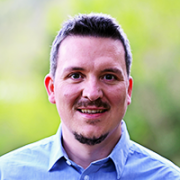
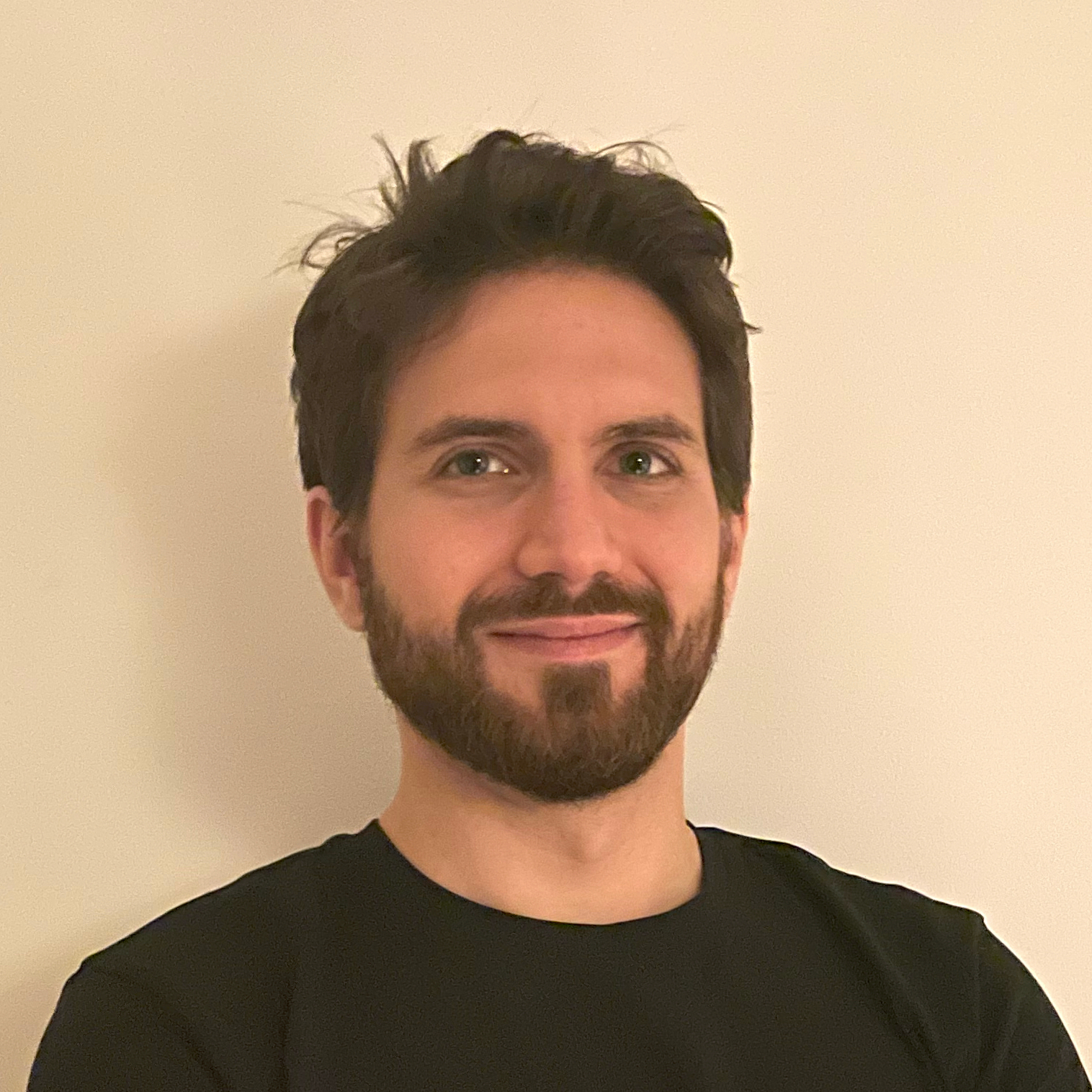
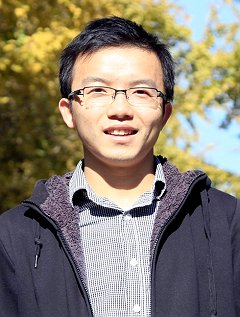
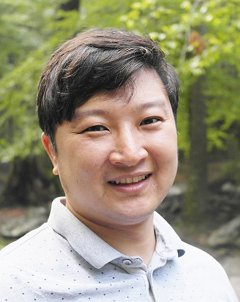
Muhammad Arslan Ansari is a researcher at the Department of Computer Architecture and Parallel Systems, Technical University of Munich. He contributes to hybrid quantum-classical computing models and high-performance computing (HPC) integration. Research Focus: Hybrid Quantum-Classical Computing, HPC-QC Integration, Compilation Toolchain Teaching: Seminar leadership on quantum-HPC integration and performance modeling in SS2023-SS2025 Projects: Involved in EuroHPC initiatives like SEANERGYS, PlasmaPEPS, and MUNIQC-ATOMS Software: QMPI, LAIK, and other HPC toolchain developments His publications address quantum accelerator integration challenges and programming tool reviews. He participated in conferences like IEEE QCE 2023.
Peter Schwabe is a scientific director at the Max Planck Institute for Security and Privacy and holds academic positions as a part-time professor for cryptographic engineering in the Digital Security Group at Radboud University, Faculty of Science, and as an adjunct professor in the Faculty of Computer Science at Ruhr University Bochum. His career spans multiple prestigious institutions including Academia Sinica and National Taiwan University. Dr. Schwabe's research focuses on cryptography, particularly post-quantum cryptography, cryptographic engineering, and implementation security. His work addresses critical challenges in secure cryptographic implementations, side-channel resistance, and the transition to quantum-resistant algorithms. He has made significant contributions to NIST's post-quantum cryptography standardization project, particularly with CRYSTALS-Kyber which was selected for standardization in July 2022. His publication record shows a strong emphasis on practical implementations of cryptographic algorithms, formal verification of security properties, and addressing real-world security challenges. Recent work centers on verifying Kyber implementations, protecting against Spectre variants, and developing high-assurance cryptographic software. Dr. Schwabe has received significant recognition in the field, serving as an elected member of the IACR Board of Directors and participating in various steering committees including the IACR CHES and RWC Steering Committees. He also serves on advisory boards for several security-focused companies. As an advisor, he has supervised numerous PhD students working on cutting-edge cryptographic research, with recent graduates focusing on post-quantum cryptography, side-channel resistance, and formal verification of cryptographic implementations. His research group actively contributes to both theoretical advances and practical implementations in cryptography.
Jürgen Cito is an Associate Professor with tenure at Vienna University of Technology (TU Wien), specializing in software engineering, explainable AI, and performance engineering. He leads research at the IPA Lab (as indicated by his personal website) and maintains a visiting researcher position at Google. His academic journey began with joining TU Wien as an Assistant Professor in Spring 2020, with promotion to Associate Professor announced in April 2024. His research interests span multiple critical areas of modern software development, with particular focus on developer experience, program comprehension, and the intersection of AI with software engineering practices. His work bridges theoretical foundations with practical industrial applications, as evidenced by collaborations with major technology companies. Analysis of his recent publications reveals a strong emphasis on practical tools and methodologies that enhance software quality, performance, and security. His research trajectory shows increasing focus on explainable AI techniques applied to software engineering problems, performance prediction from source code, and automated security testing approaches that leverage large language models. best teaching award for distance learning for Web Engineering (2020) Cito actively contributes to the software engineering community through numerous conference committee roles, including program committee positions at ASE, ICSE, ESEC/FSE, and other major venues. His lab appears to focus on developer tools, program analysis, and AI-assisted software engineering, with connections to both academic and industrial research environments.
Prof. Fabian Meder is an Associate Professor at the BioRobotics Institute of Scuola Superiore Sant'Anna in Pisa, Italy, leading the Lab for Surface Phenomena and Integrated Systems . He holds a PhD in Materials Science (2013) from the University of Bremen and has held positions at EMPA (Switzerland), University College Dublin (Ireland), and the Max Planck Institute (Germany). His research focuses on surface phenomena and their applications in energy harvesting, soft robotics, and biohybrid systems, particularly leveraging plant surfaces for sustainable technologies. Education: Bachelor's in Bio- and Nanotechnology (2008) – South Westphalia University of Applied Sciences PhD in Materials Science (2013) – University of Bremen Research Interests: Triboelectric charging and energy conversion on biological surfaces Plant-inspired biohybrid systems for autonomous energy generation Epicuticular electrification mechanisms and their ecological implications Soft robotics and sensor technologies integrated with natural systems Grants & Awards: ERC Consolidator Grant (2024) for the EpiC project on epicuticular electrification National Italian Habilitation (ASN) as Associate Professor in Physical Chemistry (2022) Labs & Teams: Leads the Lab for Surface Phenomena and Integrated Systems, collaborating on interdisciplinary projects in biohybrid robotics and energy harvesting.
Pierre Monnin is a Junior Fellow in AI at Université Côte d'Azur , conducting research within the Wimmics team at the I3S Laboratory . He also teaches within the EFELIA Côte d'Azur program. His work spans multiple institutions through funded projects like SHACKLE (EU Horizon), ECLADATTA and AT2TA (ANR), with collaborations at Télécom Paris , Università di Bari , and INESC-ID in Lisbon. Previous roles include temporary lecturer at TELECOM Nancy (2023-2024) and researcher at Orange (2020-2023). Research Interests focus on the knowledge graph lifecycle (construction, matching, refinement, mining, discovery) from neurosymbolic AI and analogical reasoning perspectives. He explores Domain knowledge injection into ML models Symbolic-semantics for graph embeddings Zero-shot bootstrapping techniques Context-aware semantic annotation Link prediction with constraint enrichment Life sciences applications Recent scientific awards include: Best Paper Award at ESWC 2024 (Student & Resource Papers) Best Thesis Award from French Association EGC (2022) 1st Prize (Accuracy Track) at Semantic Web Challenge (2021) His teaching portfolio covers AI fundamentals for foreign languages, marketing, and adult education programs, with specialized courses in Semantic Web technologies NoSQL databases XML tools Compiler implementation He supervises multiple PhD students and interns on topics involving neurosymbolic refinement , knowledge reconciliation , and analogical reasoning . Key software contributions include: KGPrune - Web application for thematic Wikidata subgraph extraction PyGraft - Synthetic knowledge graph generation tool DAGOBAH UI - Semantic table interpretation interface He also maintains datasets like PGxLOD and YAGO4-LP for pharmacogenomics and link prediction.
Jens Palsberg is a Professor and former Department Chair of Computer Science at the University of California, Los Angeles (UCLA), where he currently serves as Director of the UCLA-Amazon Science Hub for Humanity and Artificial Intelligence and co-director of UCLA's quantum research center. He chairs ACM SIGPLAN and is a member of the ACM Council. His research spans programming languages, software engineering, quantum computing, compilers, embedded systems, and information security. Palsberg has authored over 80 technical papers, co-authored the book Object-Oriented Type Systems , and revised Appel's textbook on Modern Compiler Implementation in Java . His recent work shows a significant shift toward quantum computing, including compiler techniques and program analysis for quantum systems. Analysis of his recent publications reveals a clear transition from traditional programming language research to quantum computing, with nearly half of his 2022-2024 publications focusing on quantum topics while maintaining strong work in software engineering and programming languages. His quantum research particularly emphasizes compiler optimization, abstract interpretation, and circuit analysis. ACM SIGPLAN Distinguished Service Award (2012) UCLA teaching award for quantum computing courses (2023) National Science Foundation CAREER and ITR awards Purdue University Faculty Scholar award IBM Faculty Award Okawa Foundation research award Palsberg has served in numerous leadership roles including general chair of POPL, conference chair of LICS, and vice chair of ACM SIGBED. His research has been supported by DARPA, Intel, British Telecom, and the National Science Foundation. He was instrumental in establishing UCLA's Masters degree in quantum science and has mentored numerous students through his legendary proof sessions. He leads a research group of over 30 professors in UCLA's quantum research center and maintains active collaborations across academia and industry, particularly with Amazon through the UCLA-Amazon Science Hub.
Prof. Dr.-Ing. Richard Membarth is a Research Professor for System-on-a-Chip and AI at the Edge Computing at Technische Hochschule Ingolstadt (THI). He is affiliated with the Hardware-Software Co-Design group and holds a secondary position at the German Research Center for Artificial Intelligence (DFKI) Saarbrücken. Co-creator of DSL frameworks like AnyDSL and Hipacc Key contributor to MetaDL (AI metaprogramming) and PRIME (predictive rendering) His research bridges GPU computing , domain-specific languages , and compiler technology , with recent work on Vulkan SPIR-V compilation and device-driven SpMV algorithms . Notable awards include the HiPEAC Paper Award (2018) and multiple Best Paper Awards for his compiler frameworks.
Prof. Dr. rer. nat. Rainer Leupers is a faculty member at RWTH Aachen University, chairing the Department of Software for Systems on Silicon. His research focuses on embedded systems, hardware-software co-design, virtual prototyping, and security in computing-in-memory architectures. He has published extensively on RRAM accelerators, logic locking, and neuromorphic security. Chair of Software for Systems on Silicon Research in hardware security and deep learning accelerators Recent publications on cross-tool virtual frameworks and thermal side-channel attacks His work bridges system-level modeling with practical security implementations, emphasizing reliability and performance in heterogeneous computing environments. Key trends in his 2025-2023 articles include compute-in-memory optimization, neural network inference efficiency, and security vulnerabilities in emerging hardware. Awards and formal recognitions are not explicitly detailed in the provided materials. He has not directly mentioned advising students or research grants in the given text fragments. The chair's contact information includes an office at ICT Cube 1, Electrical Engineering, Aachen, with direct email and website links.
Michael Sammler is an Assistant Professor leading the Programming Languages and Verification Group at the Institute of Science and Technology Austria (ISTA). He holds a PhD from the Max Planck Institute for Software Systems (MPI-SWS) and was a postdoctoral researcher at ETH Zürich. His research focuses on formal verification of low-level systems code, combining foundational proofs with automation. Key projects include RefinedC (C verification), Islaris (assembly code verification), and DimSum (multi-language interoperability). Education: PhD at MPI-SWS/Saarland Informatics Campus, postdoc at ETH Zürich. Research interests emphasize tool development for safety-critical systems, including Rust verification (RefinedRust), OCaml/C interoperability (Melocoton), and decentralized multi-language semantics (DimSum). Awards: Runner-Up for Informatics Europe 2024 Best Dissertation Award, Dr. Eduard Martin Prize, Distinguished Paper Awards at PLDI/POPL/USENIX, and Google PhD Fellowship. Labs/Teams: Programming Languages and Verification Group at ISTA, collaborations with MPI-SWS and international researchers. His work bridges foundational theory with practical tools for industry-relevant verification challenges.
Volker Markl is a Professor at Technische Universität Berlin in the Institute of Software Engineering and Theoretical Computer Science, with additional affiliations at the Berlin Institute for the Foundations of Learning and Data (BIFOLD) and the German Research Center for Artificial Intelligence (DFKI). His research spans database systems, stream processing, and distributed data management with significant contributions to both theoretical foundations and practical implementations. Markl's research interests focus on next-generation data management systems, particularly for streaming and IoT environments. His work addresses critical challenges in distributed query processing, system integration, and performance optimization. He has pioneered approaches for stream processing in volatile infrastructures and developed innovative techniques for GPU-accelerated database operations. His NebulaStream project represents a major contribution to distributed stream processing systems. His publication record demonstrates consistent impact across top database venues including VLDB, SIGMOD, and ICDE. Recent work shows increasing focus on machine learning integration with database systems, privacy-preserving query processing, and educational approaches for teaching large-scale data management. Markl has mentored numerous researchers who have become prominent in the database community, with frequent collaborators including Steffen Zeuch, Tilmann Rabl, and Philipp Grulich. His leadership extends to major research initiatives and collaborations across European institutions.
Prof. Dr. Thomas Stäcker is a Part-time Professor for Digital Humanities at the Department of Information Sciences, University of Applied Sciences Potsdam. He serves as Director of the University and State Library Darmstadt (since 2017) and Deputy Director of the Herzog August Library Wolfenbüttel (since 2009). His career spans roles as a librarian at Herzog August Bibliothek (since 1998) and Johannes a Lasco Library in Emden (1997-1998). Education: Master's degree in History of Philosophy and Latin (1991), doctorate (1994) from TU Braunschweig, University of Essex, and University of Osnabrück Research: Digital Humanities, digitization of early printed books, XML/TEI encoding, OCR technologies, and cultural heritage preservation Leadership: Key roles in major digitization projects (e.g., VD17, Dünnhaupt Digital) and digital library development His work bridges library science with scholarly research, emphasizing open access, digital editions, and metadata standards. He has authored/co-authored numerous monographs, including the 2015 'Grenzen und Möglichkeiten der Digital Humanities' and the 2016 Festschrift chapter on open access. Stäcker co-edited digital editions like Christoph Heidmann's Oratio de Bibliotheca Julia (2013) and maintained active engagement through blogs like 'dhd-blog.org' (2015 post on humanities research data).
José Cano Reyes serves as a Reader (Associate Professor) in the School of Computing Science at the University of Glasgow, where he leads the Glasgow Intelligent Computing (GIC) Lab. His academic profile spans multiple premier conferences including ASE, CGO, ICSME, and EASE through 2025, demonstrating active engagement in computer systems research. His research focuses on the critical intersection of hardware and software systems for AI workloads, with core interests in Computer Architecture, Compilers, and Machine Learning. Recent investigations examine deep learning framework conversions, hardware accelerator robustness, and security implications of computational environments. This work addresses fundamental challenges in deploying efficient and reliable AI systems across diverse hardware platforms. Analysis of his 2023-2025 publications reveals a concentrated research trajectory toward optimizing deep learning deployment: 80% of recent work targets framework conversion errors and hardware compatibility issues, with strong emphasis on image recognition systems. Key methodologies include automatic fault localization (40% of publications), performance parameter analysis (30%), and domain-specific compiler techniques (30%). Leads Glasgow Intelligent Computing (GIC) Lab focusing on AI-system co-design Active contributor to ASE, CGO, and ICSME conference committees Maintains research presence through GitHub (jcanore) and Twitter (@jcanore)
Yu Jiang is an Associate Professor at the School of Software, Tsinghua University, China. His research focuses on software security with emphasis on fuzz testing, embedded systems, and database security. He leads the Software System Security Assurance Group which has discovered over 1,000 bugs in major system software with 300+ CVEs registered. Dr. Jiang's research interests include Software Engineering , Embedded Systems Security , and Cross-Layer Fuzzing . His work addresses vulnerabilities in operating systems, databases, communication protocols, and IoT firmware through innovative fuzzing frameworks. Key contributions include semantic-aware fuzzing for heterogeneous software stacks and learning-based vulnerability detection for embedded systems. His recent publications demonstrate strong trends in database security (Hulk, PUPPY, THANOS), ransomware defense (Fawkes, Preventing Disruption), and web security (JANUS). Research spans both theoretical advances in fuzzing techniques and practical industrial applications, with significant impact evidenced by numerous distinguished paper awards. Career Award, NSFC: 2026 Distinguished Paper Award, ISSTA: 2025 First Prize for Technical Invention, CCF: 2024 Distinguished Paper Award, USENIX Security: 2024 SIGSOFT Distinguished Paper Award, FSE: 2022 Dr. Jiang has advised over 50 graduate students including 20 PhD candidates. His research is supported by major grants including NSFC projects ($600,000 for Software Trustworthiness Construction and $350,000 for Distributed Database Reliability), Huawei ($80,000 for LLM-Powered Fuzzing), and Tencent ($120,000 for LLM-Powered Unit Testing). The Software System Security Assurance Group maintains strong industry partnerships with Huawei, Alibaba, Tencent, and Webank. The group operates cutting-edge infrastructure for fuzz testing across multiple domains including database systems, operating kernels, blockchain platforms, and industrial control systems. Current projects integrate LLM technologies with traditional fuzzing techniques to enhance vulnerability detection in complex software stacks.
Dongyoon Lee is an Assistant Professor in the Department of Computer Science at Stony Brook University's College of Engineering and Applied Sciences. His research focuses on software engineering challenges in programming languages and security, with emphasis on regular expression analysis and empirical studies. His research interests include: Software reliability through regex generalizability testing Developer decision-making in security-critical contexts Empirical measurement of programming language features across ecosystems Security implications of common coding patterns His publication trends reveal strong focus on practical security vulnerabilities in developer tools, particularly analyzing regular expression implementations across multiple programming languages. The work combines empirical measurement with human factors analysis to identify systemic risks. Lee actively contributes to the software engineering community through leadership roles in major conferences: LCTES 2025: Program Committee & Steering Committee LCTES 2023: Program Chair & Session Chair CGO 2022: Author of HECATE compiler optimization work ASE 2019: Two regex-related research papers His advising and community engagement is demonstrated through consistent program committee service since 2016 across PLDI, LCTES, CC, CGO, and ASE conferences. He has chaired sessions on storage systems, scheduling, and techniques for specific domains, showing breadth in systems software research.
Yue Li is an Associate Professor at the School of Computer Science, Nanjing University, where they co-run the PASCAL Research Group with Tian Tan. Their work focuses on static program analysis techniques and tools for programming languages, software engineering, security, and hardware verification. PhD in Computer Science from UNSW Sydney (2016) Postdoctoral research at Aarhus University (Denmark) and UNSW Sydney B.Eng and M.Eng from Northwestern Polytechnical University (2010, 2012) Research interests center on Program Analysis and Programming Languages , with a focus on: Pointer analysis for database-backed applications Context sensitivity optimization Reflection analysis in Java/Android Operational semantics for hardware languages Distributed dataflow analysis frameworks Developer-friendly static analysis tools Key publication trends (2016-2025) span static analysis , pointer precision , reflection handling , and tool frameworks across conferences like OOPSLA, PLDI, ICSE, ISSTA, and journals including TOPLAS and IEEE TSE. Notable artifacts include Tai-e and Chianina systems. 2025: ICSE Best Artifact & Distinguished Paper Awards 2024: IEEE TSE Publication on Generic Sensitivity 2023: OOPSLA Distinguished Artifact, SPLASH/ECOOP committees 2021: National Youth Talent Support Program, ZiJin Scholar 2016: ECOOP Distinguished Paper, CGO Best Paper As co-PI of PASCAL Research Group, they lead projects on precision-guided analysis, microservice systems, and cloud-based dataflow frameworks, with teaching awards for SICP and Software Analysis courses.