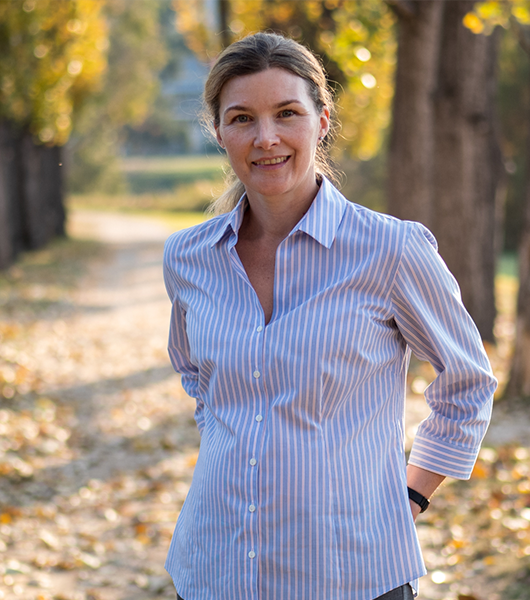
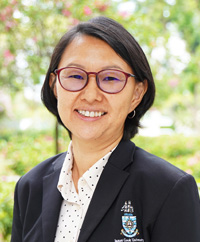
Dr. Amelia Simpson holds the position of Honorary Associate Professor at the Australian National University (ANU), specializing in constitutional law with a focus on discrimination principles and federalism. She earned her BA Hons and LLB Hons from ANU, followed by an LLM and JSD from Columbia University. She is a practicing Barrister and Solicitor in the High Court of Australia. Her research critically examines constitutional frameworks, particularly regarding state residence discrimination under Section 117 and interstate free trade jurisprudence. Her work has been cited in landmark High Court and Federal Court rulings, solidifying her reputation as a leading scholar in public law. Amelia’s contributions include co-authoring Hanks Australian Constitutional Law: Materials and Commentary (2016) and contributing to the Oxford Handbook of Australian Constitutional Law (2018). Her research on social equality and functionalist approaches to non-discrimination has advanced scholarly discourse on constitutional values. Notably, her 2017 paper Social Equality in Australia critiques the historical neglect of equality principles in constitutional interpretation. Her publications span constitutional doctrine, class actions reform, and environmental policy, reflecting her interdisciplinary approach. She ranks among Australia’s top 20 most prolific legal scholars in high-impact journals (2000–2010). Her work bridges theoretical analysis with practical legal challenges, influencing both academia and judicial practice.
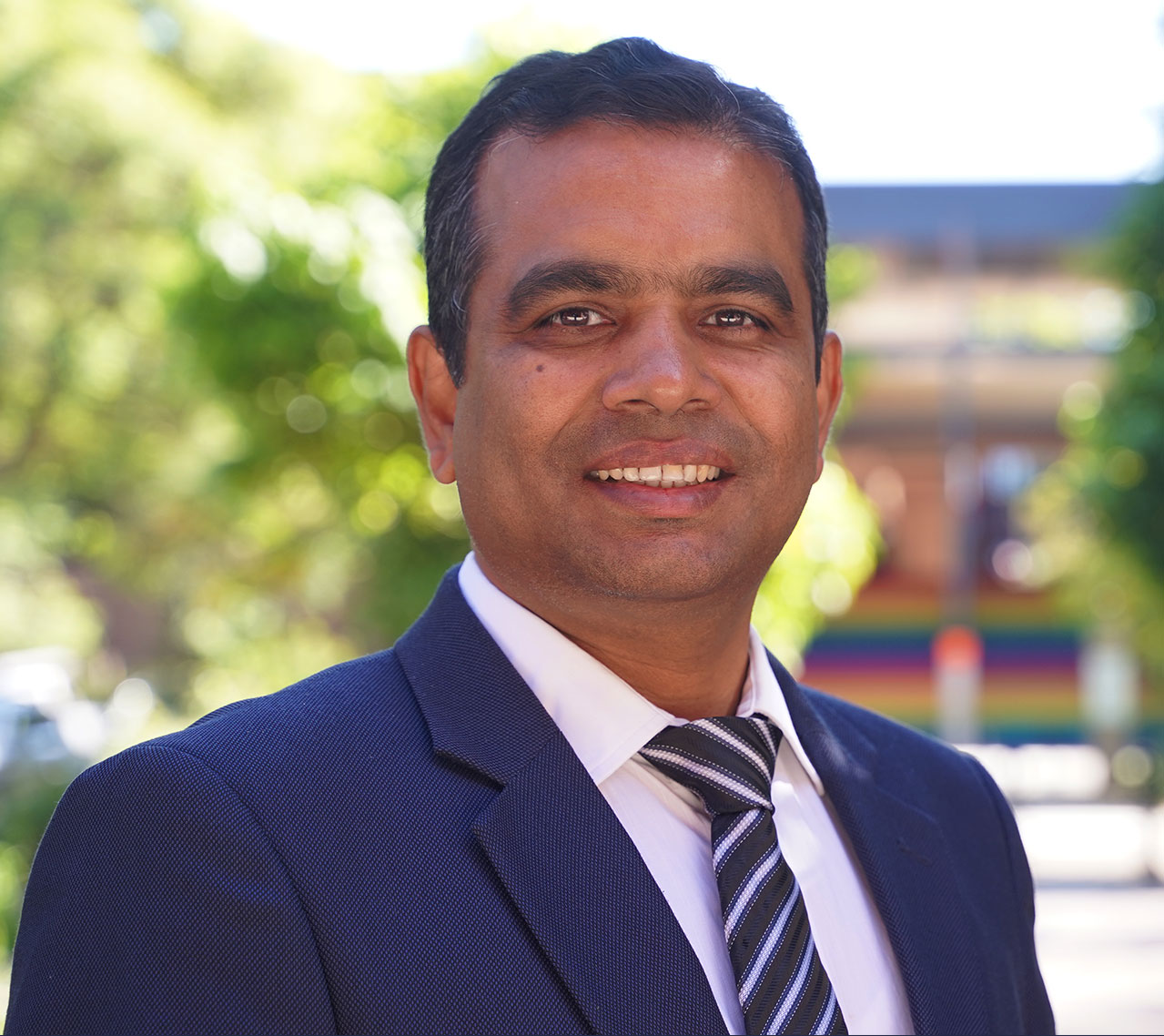
Associate Professor Aditi Dey holds a conjoint appointment at the Sydney Medical School within the University of Sydney , and serves as Manager of Surveillance at the National Centre for Immunisation Research and Surveillance (NCIRS) . Her work focuses on immunization program evaluation, vaccine coverage analysis, and surveillance of vaccine-preventable diseases and adverse events. She has extensive experience in public health research, spanning roles in Thailand and India prior to her current positions in Australia. Dr Dey completed an MBBS, followed by postgraduate qualifications including a DTM&H (Tropical Medicine & Hygiene), Grad Dip Applied Science (Health Information Management), MPH, and a PhD from the University of Sydney. Her research integrates epidemiological analysis with public health policy implementation, particularly addressing health disparities in vaccination access and outcomes among Indigenous populations and other underserved groups. Her research interests prominently feature vaccine safety , epidemiological trends of infectious diseases, and the impact of vaccination policies such as Australia’s “No Jab, No Pay” initiative. She also investigates the effectiveness of vaccination programs for diseases like rotavirus, HPV, and varicella-zoster virus, often analyzing large-scale national health datasets. Notable contributions include evaluations of Australia’s HPV vaccination program, analysis of rotavirus vaccine efficacy, and assessments of adverse events following immunization. Her work emphasizes improving immunization coverage through better data systems and healthcare provider education, particularly for at-risk populations. Dr Dey actively contributes to public health efforts through teaching and course coordination at the University of Sydney, and collaborates with institutions like the Sydney Infectious Diseases Institute . Her expertise bridges clinical practice, research, and policy, driving evidence-based improvements in Australia’s immunization landscape.
Associate Professor Peter Sutton is an academic at the University of Queensland (UQ), holding roles as Deputy Head of School (Teaching and Learning) and Associate Professor in the School of Electrical Engineering and Computer Science. His research focuses on Engineering Education, Embedded Systems, Reconfigurable Computing, and Electronic Design Automation. He has contributed to curriculum design, remote lab management during the pandemic, and hardware-software co-design for embedded systems. Sutton completed his undergraduate studies at UQ and earned advanced degrees at Carnegie Mellon University, with over three decades of experience in computer systems research and education. Education Bachelor of Science, University of Queensland Bachelor (Honours) of Engineering, University of Queensland Masters of Science (Coursework), Carnegie Mellon University Doctor of Philosophy, Carnegie Mellon University Research Interests Sutton’s work spans engineering pedagogy, embedded system design, and reconfigurable computing. Recent projects include adapting hands-on labs for remote learning during the pandemic and optimizing FPGA-based architectures for data compression and encryption. His contributions to cache optimization and multiprocessor systems highlight his expertise in hardware-software integration. Publications His 50+ publications cover topics like FPGA implementations of neural networks, code compression techniques for VLIW processors, and embedded system design tools. Notable contributions include frameworks for reconfigurable system-on-chip development and methods to enhance debugging practices in post-novice students. Labs & Teams He collaborates within UQ’s School of Electrical Engineering and Computer Science, contributing to research groups focused on embedded systems and engineering education innovation.
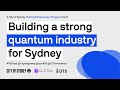
Professor Simon Devitt is Research Director of the Centre for Quantum Software and Information (QSI) at the University of Technology Sydney's Faculty of Engineering and Information Technology, School of Computer Science. He also holds several prestigious international appointments including InstituteQ Visiting Chair of Excellence in Quantum Technologies at Aalto University, Finland, and visiting positions at RIKEN in Japan. As a leading figure in quantum computing research, he directs the Australian Quantum Software Network and co-founded quantum education startup Eigensystems Pty Ltd. His educational background includes: PhD in Physics from University of Melbourne (2004-2007) BSc (Hons) in Physics from University of Melbourne (2000-2003) Professor Devitt's research spans quantum software, quantum architecture, and quantum error correction, with a focus on making quantum computing practical at scale. His work addresses fundamental challenges in quantum computing architecture when scaled to millions or billions of qubits. He has pioneered approaches to quantum error correction, resource estimation, and quantum network design, particularly through his leadership of the Quantum Technology at Scale (QTS) research group. His research bridges theoretical foundations with practical implementation challenges, aiming to shape the evolution of quantum technology over the coming decades. His recent publications demonstrate a strong focus on practical quantum computing challenges, with particular emphasis on error correction techniques, resource estimation, and quantum architecture. A significant portion of his work addresses the surface code and its variants, exploring ways to optimize qubit usage and error rates. He has also made important contributions to quantum networking, particularly through the concept of "quantum sneakernet," and to quantum education and standardization efforts that will be critical for the emerging quantum industry. His notable awards and recognitions include: Fellow of the Australian Institute of Physics Fellow of the Royal Society of New South Wales Warren Prize from the Royal Society of NSW InstituteQ Visiting Chair of Excellence in Quantum Technology Professor Devitt actively mentors numerous PhD students, postdocs, and researchers through his Quantum Technology at Scale group. His research is supported by significant funding from diverse sources including Google Academic Research Awards, Sydney Quantum Academy, DARPA, and the Japanese Society for the Promotion of Science. He has led projects on quantum sneakernet networks, quantum algorithm benchmarking frameworks, and quantum software tools that address critical challenges in the field. He leads the Quantum Technology at Scale (QTS) research group at UTS, which focuses on the design and architectural challenges of quantum computing and communications technology at scale. The group includes researchers working on quantum computing architectures, quantum networking (Rottnest Quantum Sneakernet project), and quantum software (Quokka project). The team collaborates extensively with international partners including Aalto University in Finland, University of New South Wales, Keio University in Japan, and industry leaders like Rigetti Computing.
Dr Daniel Harris is a Senior Lecturer in the Department of Geography at the School of the Environment, University of Queensland (UQ). His research focuses on coastal and coral reef morphodynamics, integrating physical processes like waves and tides with ecological and geological systems. Prior to UQ, he held positions at the University of Sydney and the Leibniz Center for Tropical Marine Ecology (ZMT). He leads The BeachLab, dedicated to developing tools for coastal resilience in a warming world. Research interests include coral reef structural complexity, coastal protection under climate change, and surf zone processes. His work combines field data, remote sensing (e.g., LiDAR, drones), and numerical modeling to address both fundamental and applied questions. Notable projects involve quantifying coral rubble mobility, analyzing Holocene reef evolution, and assessing shoreline change via satellite imagery. His expertise spans marine geoscience, physical oceanography, and environmental adaptation strategies. Publications emphasize coral reef dynamics, coastal geomorphology, and climate impacts. He collaborates with ecologists, geologists, and coastal engineers to advance interdisciplinary solutions. Teaching focuses on geography and marine science, reflecting his commitment to educating future researchers and practitioners. Key contributions include advancing methods for shoreline monitoring using Bayesian networks and Google Earth Engine. His research highlights the critical role of coral reefs in coastal protection, particularly under rising sea levels and extreme weather events. The BeachLab’s work bridges academic inquiry with practical management strategies for vulnerable coastal ecosystems.
Dr. Gea Rahman is a Lecturer in Computing at Charles Sturt University (CSU), specializing in data science and machine learning. He holds a PhD in Computer Science from CSU, and MSc/BSc degrees from Rajshahi University, Bangladesh, where he was awarded a Gold Medal for academic excellence. With over 20 years of teaching experience, he previously served as Professor and Programme Director at Bangladesh Agricultural University. Education: PhD in Computer Science (Data Science/ML), Charles Sturt University (2011-2015) MSc in Computer Science & Engineering, Rajshahi University (2002-2003) BSc (Hons) in Computer Science & Technology, Rajshahi University (1998-2002) Research Interests: Data science applications in agriculture, healthcare, and environmental monitoring Machine learning techniques including ensemble/deep learning, transfer learning, and incremental learning Data preprocessing methods (missing value imputation, outlier analysis) AI ethics and healthcare consent strategies Awards: Global Research Impact Recognition Award 2020 Best Researcher Award Gold Medal for Academic Excellence (2003) Advising & Grants: Principal supervisor for multiple postgraduate students Recipient of grants including: Ai-Enabled Segmentation of Brain MRI (2024) Adaptive Federated Learning Framework (2024) Unusual Behaviour Detection in Aged Care (2023) He is part of the Data Mining Research Group (DaMRG) and actively contributes to conferences/journals as a reviewer and editorial board member.
Brae Webb is an Associate Lecturer in the Faculty of Engineering, Architecture and Information Technology at The University of Queensland. His email is b.webb@uq.edu.au . His research focuses on formal methods, compiler optimizations, and software verification, with contributions to verification frameworks for compiler optimizations and formal semantics of programming language implementations. He has co-authored multiple publications at conferences such as FormaliSE, CPP, and ICFEM, and contributed to editions of the textbook Software Architecture . His work spans theoretical and applied aspects of software engineering, including the use of proof assistants like Isabelle/HOL for verifying term graph optimizations. Recent projects include analyzing GraalVM's intermediate representation and differential testing methodologies for compiler verification frameworks. Brae Webb's publications reflect a commitment to advancing formal verification techniques in compiler design and software systems. His textbook series on software architecture emphasizes practical design principles for scalable software systems.
Professor Jingbo Wang is a faculty member at The University of Western Australia (UWA), serving as Head of the Physics Department and Director of QUISA (Research Hub for Quantum Information, Simulation, and Algorithms). She leads research in quantum walks, quantum simulation, and quantum algorithms. Her affiliations include the Australian Institute of Physics (Chair of WA Branch) and the ARC College of Experts. She holds a PhD from the University of Adelaide. Education: PhD in Physics and Mathematical Physics from the University of Adelaide. Previous affiliations include Murdoch University and UWA. Research focuses on quantum walks, quantum algorithms for optimization, machine learning, and network analysis. Key contributions include quantum compilers, efficient quantum circuits, and applications in complex systems. Her work bridges theory and experimental implementation, with collaborations in photonic quantum processors and quantum machine learning. Recent articles explore quantum computing applications in finance, biology, and physics. Awards include the Vice-Chancellor’s Research Mentorship Award (2022) and Australian Institute of Physics Fellowship (2021). Advising and grants involve leadership in quantum computing initiatives, including the UWA-Pawsey Educational Quantum Computing Centre. Her team develops algorithms for real-world problems like portfolio optimization and metabolic pathway analysis. She co-authored books on computational quantum mechanics and quantum walks. Labs/teams: QUISA Research Hub, UPQCC, and collaborations with institutions like CSIRO and Pawsey Supercomputing Centre.
Shoba Ranganathan is an Honorary Professor in the Department of Applied BioSciences at Macquarie University. Her research focuses on computational biology, bioinformatics, and structural modeling of proteins, with significant contributions to drug design and biological databases. She serves as editor of the Encyclopedia of Bioinformatics and Computational Biology and leads projects on insect olfaction, tumor immunology, and genomic technologies. Her work spans collaborations in Australia, Europe, and Asia-Pacific regions. Research interests include protein structure modeling, GPCR analysis, and applications of AI in genomics. Key projects include biomolecular discovery, mosquito odorant receptor modeling, and immune evasion mechanisms in cancers. She has authored over 270 publications and actively participates in international conferences like InCoB, fostering bioinformatics innovation. Her recent efforts emphasize translational research, integrating computational tools with clinical proteomics for cancer diagnostics and drug development. Projects like 'Biomolecular Discovery and Design Research Centre' highlight her role in interdisciplinary scientific networks.
Dr. Qiang Fu is a Senior Lecturer at RMIT University's School of Computing Technologies, specializing in Cloud, Networked Systems, and Security. He holds a PhD from The University of Queensland and is actively involved in industry collaborations. His research focuses on Internet and Cloud-based systems, including Content Delivery Networks (CDNs), data centre design, Cyber-Physical Systems (CPS)/IoT, virtualization, and SDN/NFV. Recent work emphasizes network telemetry, fault detection, and IoT workflow optimization. He has published extensively in top-tier journals and conferences like IEEE Transactions and IFIP NOMS. Dr. Fu supervises PhD/Master students in areas such as network security, cloud computing, and IoT. His projects are often industry-funded and address real-world challenges like network scalability and blockchain integration. He is open to supervising students in these domains through RMIT's scholarship programs.
Wayne Kelly is an Associate Professor in the School of Computer Science at Queensland University of Technology (QUT), Faculty of Science. He has over 25 years of academic experience and serves as the Academic Lead for Teaching and Learning and Course Coordinator for the Bachelor of Information Technology degree. PhD in Computer Science, University of Maryland, College Park, 1996 BSc (Hons) in Computer Science, University of Queensland, 1989 His research expertise lies in Programming Languages, Compiler Construction, and Parallel Computing, with significant contributions to High Performance Computing, Big Data, and Bioinformatics. His work has led to collaborations with Microsoft Research and over $2 million in external funding. His recent publications reflect a strong trend in parallel and distributed systems, embedded computing, bioinformatics data analysis, and remote sensing. Key themes include optimization of computational systems, memory management, and scalable data processing. Wayne Kelly has made impactful contributions to both teaching and research, guiding numerous postgraduate students and leading curriculum development in information technology. Optimizing I/O cost and managing memory for bioinformatics A communication model for streaming applications on MPSoC Ruby.NET: a compiler for the Common Language Infrastructure He is actively engaged in real-world technology development, including a project with a vision-impaired student to improve public transportation accessibility, currently trialed by transport authorities in Australia and the US.
Associate Professor John Williams holds dual roles as Deputy Director of Cyber Security and faculty member at the School of Electrical Engineering and Computer Science, University of Queensland. His academic journey includes a PhD (2001) and undergraduate degrees (1995) in Electronic Engineering and Information Technology from Queensland University of Technology (QUT). Research Focus: Reconfigurable computing architectures Real-time embedded systems 3D computer vision and imaging Cyber security solutions Key Contributions: Edited the 2004 IEEE International Conference on Field Programmable Technology proceedings Developed the Egret platform for reconfigurable systems-on-chip Published 5 journal articles and over 20 conference papers Professional Affiliations: Member of IEEE for over 20 years, contributing to standards and interdisciplinary cyber security initiatives at UQ.
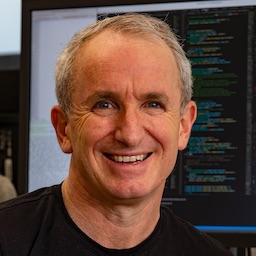
Steve Blackburn is a Professor of Computer Science at the Australian National University (ANU), affiliated with the ANU College of Systems & Society. His research focuses on programming language implementation, garbage collection algorithms, performance analysis, and high-performance runtime systems. He leads key projects like the DaCapo benchmark suite and the MMTk memory management framework. **Education & Background**: No specific education details provided, but his career spans decades with extensive contributions to computer science research. **Research Interests**: Blackburn prioritizes garbage collection innovation, memory management optimization, and empirical performance evaluation. His work bridges theory and practice, addressing challenges in managed runtimes, just-in-time compilation, and hardware-software co-design. He emphasizes reproducible research through shared infrastructure. **Recent Article Trends**: His 2020–2025 publications emphasize low-latency garbage collection, memory management in distributed systems (e.g., Mako collector for datacenters), and novel approaches to Java/JVM performance analysis. He also explores hardware features like transactional memory and their impact on runtime systems. **Awards**: ACM Fellow (2020+). **Grants & Leadership**: Served as Associate Dean for Diversity & Inclusion in ANU’s College of Engineering and Computer Science (2014–2019). Editorial roles include ACM TOPLAS Associate Editor (2017–2020) and program chairs for top conferences like PLDI (2015) and ISMM (2008). **Labs & Projects**: Leads the MMTk and DaCapo initiatives, foundational tools for memory management and benchmarking in academia and industry.
Dr. Fanny A. Yasumaru is a Senior Lecturer in Aquaculture at the School of Science and Technology, James Cook University (Singapore campus). She specializes in aquaculture nutrition, focusing on nutrient digestibility and sustainable feed development for marine and freshwater species including whiteleg shrimp, tilapia, cobia, and mud crab. Her work integrates in vitro and in vivo methodologies to optimize feed formulations and assess ingredient quality. Education: PhD in Biological Oceanography (Universidade de Sao Paulo, 2009–2014) MSc in Aquaculture (Universidade Federal de Santa Catarina, 2005–2007) BSc in Aquaculture Engineering (Universidade Federal de Santa Catarina, 2002–2005) Her research interests span sustainable aquafeeds, feed safety, and food security. She actively contributes to the scientific community as an editorial board member for Critical Insights in Aquaculture and an ad hoc reviewer for journals like Aquaculture and Reviews in Fisheries Science & Aquaculture . She currently serves as Student Director (2022–2025) for the Asian-Pacific Chapter of the World Aquaculture Society (WAS-APC). Professional activities include collaborating with private companies on research trials involving Asian sea bass and hybrid grouper, emphasizing practical aquaculture solutions. Her work bridges academic research with industry applications to advance sustainable aquaculture practices.
Dr. Sachith Seneviratne is a Research Fellow at the University of Melbourne's Melbourne School of Design, specializing in Computer Vision and Health. His research bridges Machine Learning, Urban Design, and Public Health, with a focus on Deep Learning, Contrastive Representation Learning, and Agent-Based Modelling. He holds a PhD in Machine Learning from Monash University, exploring automated parallelized machine learning models. His work has collaborations with NASA, Harvard University, and Currnt Research Hub. He is affiliated with the Transport, Health and Urban Design (THUD) research group, focusing on 'Data and Value,' 'Future Cities,' and 'Healthy Communities and Infrastructure.' His recent publications span facial deepfake detection, urban design impacts on health, and automated architecture generation using LLMs. Research interests include generative design, automated infrastructure planning, and the ethical implications of facial recognition under privacy constraints (e.g., masked faces). He has pioneered methods for collecting population-level bicycling data via smartphones/Bluetooth beacons and developed novel architectures like Arch-LLM for neural architecture generation. His work on subgrid-informed flood mapping and physics-informed neural networks demonstrates cross-disciplinary innovation. Consulting work includes machine learning projects for NASA and Harvard. His lab teams focus on creating interpretable AI systems for environmental and health applications, such as Ginn-kan for physics simulations and Ginn-lp for symbolic equation discovery. Current projects aim to quantify urban design's impact on non-communicable diseases and improve walkability through micro-scaled spatio-temporal analysis.