Thiago Cavalcante is a Postdoctoral Researcher at the Biodiversity Informatics Unit of the Conservation Informatics Research Group at the University of Helsinki. His work focuses on environmental science, ecology, and biodiversity conservation, particularly in the Amazon biome and primate habitats. He actively contributes to projects like NaturaConnect , designing resilient conservation networks in Europe. Research Areas: Spatial conservation planning, climate change impacts, primate ecology, invasive species, and interspecific competition. Methodologies: Geospatial modeling, ecological niche modeling, and behavioral studies. Recent Publications: Focus on Amazonian primates, conservation prioritization, and data-driven ecological assessments (2016-2025). His research integrates geospatial abundance data and ecological models to address conservation challenges, often emphasizing underrepresented factors like interspecific competition. He collaborates with multidisciplinary teams across Europe and the Amazon, leveraging computational tools to enhance conservation strategies.
Chao Peng is a Principal Research Scientist at ByteDance where he leads the Software Engineering Lab, focusing on AI agents for software engineering. He holds a part-time position as a Postgraduate Student Mentor at Fudan University's School of Computer Science. His research bridges industry and academia, with significant contributions to software testing, program repair, and LLM applications in software development. Education: PhD in Informatics, 2021, University of Edinburgh, UK MSc in High Performance Computing and Data Science, 2017, University of Edinburgh, UK BEng in Computer Science and Technology, 2016, Xuzhou University of Technology, China Dr. Peng's research interests center on the intersection of artificial intelligence and software engineering. He explores how large language models can transform traditional software development practices, particularly in code generation, testing, and bug fixing. His work on LLM4Code has led to innovative frameworks like CodeVisionary for evaluating code generation capabilities and Trae Agent for software engineering tasks with test-time scaling. He investigates the synergy between machine learning techniques and compiler optimizations to enhance software reliability and developer productivity. His recent publications reveal a strong focus on practical evaluation frameworks for LLMs in real-world software engineering contexts. Rather than theoretical benchmarks, his work emphasizes real-world applicability, as seen in RepoMasterEval which evaluates code completion in actual repository settings. He examines multi-faceted challenges including code generation, bug reproduction, issue resolution, and repository-level question answering, consistently addressing the gap between laboratory evaluations and practical development environments. Scientific Awards: Distinguished Reviewer for FSE'25 Invited to program committees for FSE'26, SANER 2026, ASE 2025, and others School of Informatics Scholarship (fully-funded PhD) Multiple national scholarships during undergraduate studies Honours Spot Bonus at ByteDance Dr. Peng actively mentors postgraduate students at Fudan University while leading research initiatives at ByteDance that foster university collaborations. His laboratory work translates academic research into practical tools for software development, with several frameworks deployed in industrial settings. He serves on multiple conference program committees, contributing to the advancement of software engineering research through rigorous peer review and community building. His Software Engineering Lab at ByteDance operates at the forefront of AI-assisted development, exploring how agent-based systems can automate complex software engineering tasks. The team's work on frameworks like AEGIS for bug reproduction and DialogAgent for code question answering demonstrates their commitment to solving practical challenges faced by developers in real-world settings.
Eric Atkinson is an Assistant Professor in the School of Computing at Binghamton University, specializing in programming languages for uncertainty and their intersections with artificial intelligence. He holds a PhD from MIT (2024), an MS from MIT (2018), and a BS from UC Berkeley (2015). Prior to Binghamton, he was a visiting researcher at INSAIT in Sofia, Bulgaria, and conducted research internships at Facebook and Mozilla. His research focuses on programming languages, program runtimes, formal methods, and AI integration. Key interests include probabilistic programming, static analysis, and runtime systems for uncertain domains. He teaches programming languages courses and advises PhD and M.Sc. students. His publications span probabilistic programming systems, compiler optimizations, and formal verification. He actively participates in academic service roles, including program committees for PLDI, LAFI, and OOPSLA, and mentors underrepresented groups in graduate school through initiatives like the MIT EECS GAAP program.
Jesper Cockx is an Assistant Professor in the Programming Languages group at Delft University of Technology . His research focuses on the theory and implementation of dependently typed languages , particularly Agda , and he is a core contributor to Agda's development. His work bridges Type Theory , Pattern Matching , and practical Compiler Design through tools like agda2hs . Research Interests : Type Theory and Dependently Typed Programming Pattern Matching and Unification Agda and Compiler Implementation Erasure Annotations for Verified Compilation Generic Programming and Language Design Formal Verification of Functional Code Scientific Awards : NWO Veni Grant (2020) for a Trustworthy and Extensible Core Language for Agda Conference Contributions : He serves on program committees for CPP , WITS , POPL , and ICFP . Recent publications analyze erasure annotations , correct-by-construction compilers , and dependent (co)pattern matching in Agda. His work often intersects with Haskell and functional programming education in the Netherlands.
Seif Haridi is a Professor at KTH Royal Institute of Technology in Stockholm, Sweden, specializing in parallel and distributed computing systems. He holds dual roles as Chair-Professor of Computer Systems and Chief Scientific Advisor at RISE SICS. His research integrates systems engineering with theoretical foundations, focusing on programming systems, distributed computing, and big data technologies. Key contributions include co-designing SICStus Prolog, the Mozart Programming System, and Apache Flink, as well as leading the development of HOPS, a European big data platform awarded the IEEE Scale Prize 2017. He has led major EU projects like EIT-Digital’s cloud computing initiative and co-founded startups such as LogicalClocks and HiveStreaming. His teaching includes courses on distributed algorithms and peer-to-peer computing at KTH. Notable awards include the European Data Science Technology Innovation 2019. His work spans systems like HOPS, Flink, and Kompics, emphasizing scalability and robustness in distributed environments. Current projects include CDA (Continuous Deep Analytics) and ExtremeEarth for geospatial data analysis. Research interests include distributed algorithms, consensus protocols, and cloud-native systems. His lab’s contributions to scalable storage (e.g., HopsFS) and stream processing (Apache Flink) highlight his impact on both academia and industry.
Atanas Gotchev is a Professor of Signal Processing at Tampere University, Finland, where he leads the 3D Media Group and directs the Centre for Immersive Visual Technologies (CIVIT). He also serves as Chair of the Erasmus Mundus Joint Master Programme in Imaging and Deputy Director of the TAU Imaging Research Platform. Gotchev holds degrees from Technical University Sofia (M.Sc. in Electronics and Automation Engineering and M.Sc. in Applied Mathematics), the Bulgarian Academy of Sciences (PhD in Information Technologies), and Tampere University of Technology (D. Tech.). His research focuses on immersive imaging, 3D/light field imaging, computational optics, and image quality assessment. He has coordinated three Marie Sklodowska-Curie networks in light field imaging and serves as Senior Editor for IEEE Transactions on Image Processing and the Journal of Electronic Imaging. Gotchev has organized major conferences like the IEEE International Conference on Image Processing (2026) and chaired workshops on multimedia signal processing. Recent research emphasizes computational cameras, diffractive optics, and end-to-end design for metaoptics. He has a visiting professorship at the University of Utah (2023-2024) supported by Fulbright and Nokia Foundation grants. His work spans datasets like CIVIT and contributions to safety-critical applications in robotics and ITER projects.
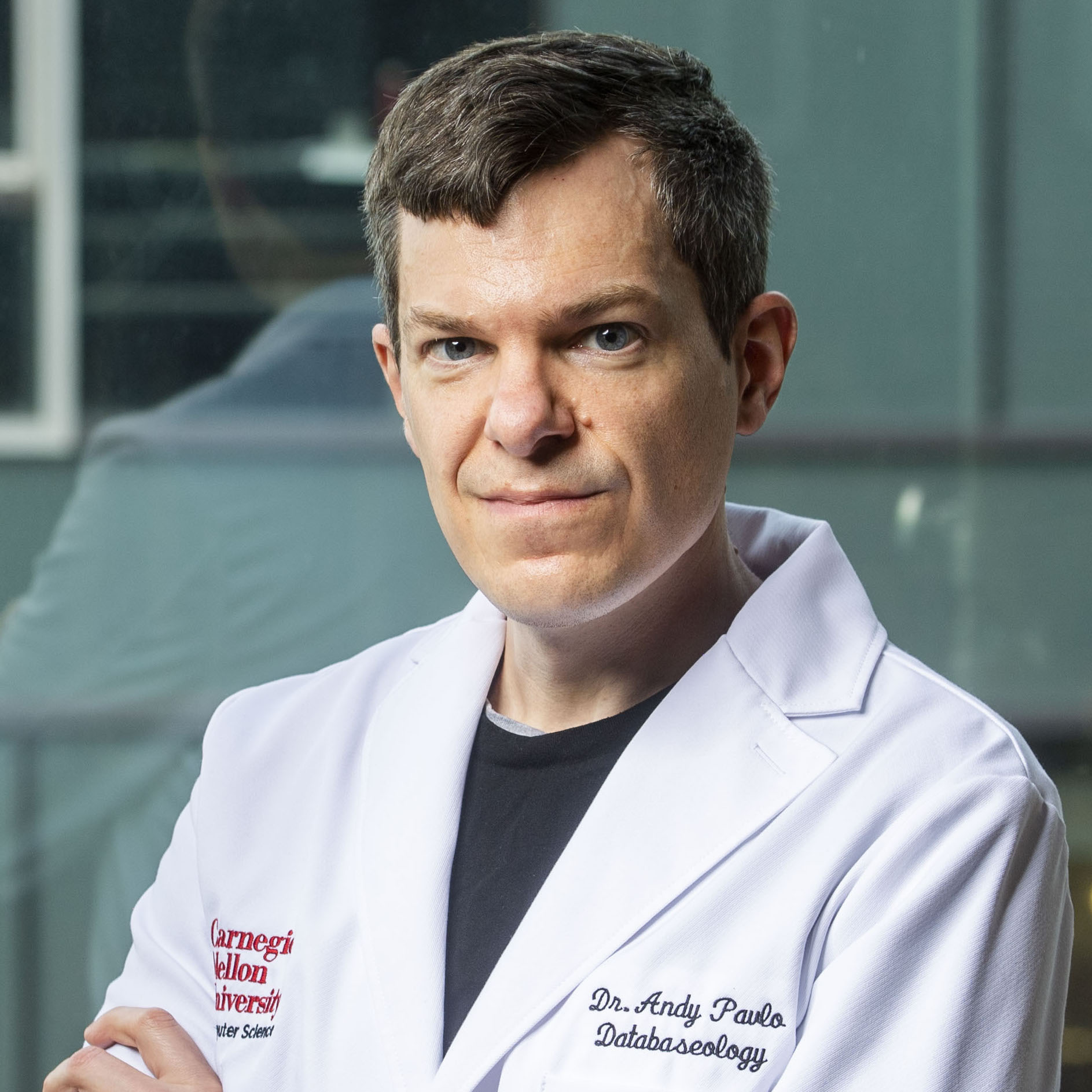
Andrew Pavlo is an Associate Professor of Databaseology in the Computer Science Department at Carnegie Mellon University , part of the School of Computer Science . His research focuses on database systems, particularly self-driving architectures, transaction processing, and large-scale analytics. He is a member of the CMU Database Group and Parallel Data Laboratory. His awards include the NSF CAREER (2019), Sloan Fellowship (2018), and ACM SIGMOD Jim Gray Dissertation Award (2014). He co-founded OtterTune, a database tuning startup, though it later ceased operations. Current research interests emphasize autonomous database systems, query optimization, and distributed computing. Recent publications (2024) highlight work on self-driving DBMS, null representation in columnar formats, and UDF optimization techniques. Awards: NSF CAREER Award (2019) Sloan Fellowship (2018) ACM SIGMOD Jim Gray Dissertation Award (2014) Advising: Mentors students in database systems, including Sam Arch, Wan Shen Lim, and William Zhang. Labs/Teams: Leads the Database Group and collaborates with the Parallel Data Laboratory.
John Clements is a Lecturer in the Department of Computer Science at California Polytechnic State University. He teaches undergraduate and graduate courses including CSC 430 (Programming Languages) and CSC 202 (Data Structures). His research focuses on programming languages, functional programming, and educational technology, with contributions to the Racket language ecosystem and tools like DrRacket. He emphasizes ethical computing and pedagogical innovation in introductory courses. Clements is actively involved in curriculum design, particularly in integrating test-driven development and socially responsible computing principles. His work spans educational research, compiler design, and IDE development, with a focus on making programming more accessible and inclusive. Education: While specific academic credentials are not explicitly detailed, his extensive contributions to Racket and functional programming suggest advanced training in computer science. He has been affiliated with Cal Poly since at least 2008, contributing to courses and research initiatives. Research Interests: Functional programming, language design, educational computing, test-driven development, and ethics in technology. His projects include Racket's Typed Racket extension, spectral analysis tools for music, and password generation systems using Markov models. He advocates for diverse and inclusive learning environments. Publications: Over 20 papers on topics ranging from notional machines for runtime stacks to ethics-first computing education. Recent work emphasizes integrating social responsibility into CS curricula and improving student retention through interest-based CS0 courses. Labs/Teams: Active in the Racket community, contributing to open-source projects like rust-antlr, RSound, and molis-hai. Collaborates with researchers on pedagogy and programming language theory.
Debanjan Mukherjee is an Assistant Professor in the Department of Mechanical Engineering at the University of Colorado Boulder, leading the FLOWLab research group. His work focuses on interdisciplinary flow physics, particularly in biomedical and cardiovascular systems, aiming to improve medical device design and treatment strategies for conditions like stroke and thrombosis. His research integrates computational fluid dynamics, quantitative image processing, and patient-specific modeling to address clinical challenges. He holds a Ph.D. and M.S. in Mechanical Engineering from the University of California, Berkeley, and a B.Tech. in Ocean Engineering from the Indian Institute of Technology Madras. His postdoctoral training at UC Berkeley was supported by the American Heart Association Fellowship. He has held a Visiting Assistant Professor position at the University of Colorado Boulder. Key research areas include cardiovascular and cerebrovascular hemodynamics, embolic stroke mechanisms, thrombus biomechanics, and particle-laden flow dynamics. His group develops tools for disease biomechanics and drug delivery systems, with applications in advanced manufacturing and biomedical engineering. Quantifying hemodynamic forces and flow-mediated transport processes are central to his work. Mukherjee has received several awards, including the NIH Trailblazer Award (2020) and the Ralph E. Powe Junior Faculty Enhancement Award (2020). His work bridges fundamental fluid mechanics with clinical translation, emphasizing patient-specific solutions to reduce mortality from cardiovascular diseases. His teaching contributions include designing courses on computational fluid dynamics using open-source tools and active learning strategies for biofluids concepts. He also focuses on remote education innovation in biomechanics through initiatives like the BIORES-21 survey.
Azalea Raad is a Reader (Associate Professor) in the Department of Computing at Imperial College London, leading the Veritas Lab. She holds a PhD in Computer Science from Imperial College London and is a UKRI Future Leader Fellow since 2021. Her research focuses on programming languages, formal verification, and persistent memory systems, particularly addressing challenges in weak memory models, concurrency, and software correctness. Affiliations: Co-director of the UK Research Institute on Verified, Trustworthy Software Systems Adjunct roles at Facebook (2020–2022) and Bloomberg (2022–present) Education: MEng from Imperial College London PhD in Computer Science from Imperial College London Research Interests: Azalea’s work bridges theoretical foundations and practical system implementation, emphasizing: Formal semantics of persistent and weak memory systems Verification frameworks for concurrent and persistent programs Bug detection in libraries and binaries Transactional memory and system validation Publications: Her recent work explores compositional bug detection, persistent programming principles, and scalable non-termination analysis. Key contributions include frameworks like IsaBIL and Memento, and foundational papers on RDMA robustness and C/C++ memory model extensions. Awards: UKRI Future Leader Fellowship (2021–present). Research recognized through collaborations with industry (e.g., Intel PMDK validation). Labs/Teams: Leads the Veritas Lab, advancing formal methods for trustworthy software systems.
Graham Riley is a Lecturer in the School of Computer Science at the University of Manchester and holds a part-time position in the Scientific Computing Department (SCD) at STFC, Daresbury. His research focuses on high performance computing (HPC), software engineering for scientific computing, and performance modeling for parallel machines. Key areas include techniques for developing HPC applications, software architectures for coupled modeling, and performance control in distributed systems. His work emphasizes collaboration with computational scientists in domains such as Earth System Modelling (e.g., UK Met Office), computational chemistry, and biology. He has contributed to projects like the EuroExa architecture for exascale computing and the LFRic weather/climate model porting to FPGAs. Riley's research also explores energy efficiency in HPC systems and FPGA acceleration strategies for scientific workloads. Notable contributions include studies on parallelization strategies, FPGA-based acceleration of climate models, and optimizing OpenCL for heterogeneous architectures. His work aligns with UN Sustainable Development Goals, particularly through contributions to climate modeling and sustainable computing practices. Riley collaborates with institutions like the Met Office and the ESM community in Europe/US. His academic profile reflects a balance between theoretical research and practical application, with a strong focus on bridging computational science and engineering challenges.
Laure Gonnord is a Full Professor in Computer Science at Grenoble INP , affiliated with the Esisar Engineer School in Valence, France, since September 2021. She is a member of the CTSYS research team at the LCIS laboratory and an external member of the CASH team at the University of Lyon / CNRS / LIP / Inria. Her research focuses on compilation , static analysis , and applications to safety , security in high-performance and embedded systems . Fields of Interest : Compiler Design Static Analysis for Safety & Security Abstract Interpretation Embedded Systems High-Performance Programming Hardware Security Engineering Research Trends (from recent publications): Her work explores modular verification through monadic abstract interpreters, complexity bounds in term rewriting , and educational tools for theorem proving . Notable contributions include compiler hardening schemes for hardware security and memory layout optimizations for algebraic data types. Academic Leadership : Scientific Director of the Summer School EJCP (École Jeune Compilation et Programmation) Board Member of the French national research group GDR GPL Teaching Responsibilities at Grenoble INP include courses in architecture , compilation , programming languages , algorithms , and databases . She has also taught at University of Lyon, ENS Lyon, Polytech'Lille, and INSA.
Bryan Koronkiewicz serves as Associate Professor of Spanish Linguistics within the Department of Modern Languages & Classics at the University of Alabama. His academic profile bridges theoretical linguistics and practical language education with specialized expertise in bilingual speech phenomena. His educational trajectory includes: PhD in Hispanic Studies (Linguistics), University of Illinois at Chicago (2014) MA in Hispanic Studies (Linguistics), University of Illinois at Chicago (2010) BA in Spanish / Communication Arts, University of Wisconsin-Madison Dr. Koronkiewicz's research centers on Spanish-English code-switching through experimental and quantitative lenses, examining syntactic constraints in heritage speakers' language production. His work interrogates phenomena like preposition stranding, adverb placement, and inalienable possession while addressing methodological challenges in bilingualism research. This interdisciplinary approach connects theoretical syntax with second language acquisition and heritage language pedagogy, emphasizing empirical validation of linguistic constraints. Analysis of his 13 publications (2013-2023) reveals consistent focus on experimental code-switching research using acceptability judgments and corpus methods. Key trends include systematic investigation of syntactic boundaries in bilingual speech, methodological innovations in data collection, and expansion into language pedagogy through studies of social media integration and writing assessment. His work demonstrates strong alignment with contemporary debates in bilingual syntax while maintaining practical relevance for heritage language education. No scientific awards or fellowships were documented in the source material. Dr. Koronkiewicz teaches across the curriculum from first-year language courses to graduate seminars in bilingualism, syntax, and second language teaching methods. While departmental highlights reference French PhD students (Awodirepo, Lambon, Dafong), no specific advisees in Spanish linguistics are identified. The text contains no mention of grant funding or research team leadership. No dedicated laboratories or research collectives are associated with his profile in the available documentation.
Martin Trapp is an Academy Postdoctoral Researcher in the Department of Computer Science at Aalto University, specializing in probabilistic machine learning. He is affiliated with Professor Arno Solin's research group, focusing on advancing tractable probabilistic models for real-world applications. His research centers on Probabilistic Circuits , Probabilistic Programming , and Bayesian Nonparametrics , with emphasis on hardware-efficient implementations for edge devices and multimodal systems. Key interests include uncertainty quantification in deep learning, neurosymbolic AI integration, and medical imaging applications. His work bridges theoretical foundations with practical deployment constraints, particularly in resource-limited environments. Analysis of his 15 most recent publications (2022-2025) reveals three dominant trends: (1) hardware-aware probabilistic inference for TinyML applications, (2) scalable Bayesian methods using bitstring representations and probabilistic programming, and (3) multimodal robustness in vision-language systems and medical imaging. His contributions span from theoretical circuit representations to real-world implementations in mammography analysis and vision-language models. Trapp secured a HIIT short-term project grant (November 2022) for "Positive Semi-Definite Circuits" under the Department of Computer Science. No formal advising relationships are documented in available sources. He actively collaborates with researchers including Arno Solin, Rui Li, and Marcus Klasson across institutions like Aalto University and the Helsinki Institute for Information Technology. As a core member of Aalto's Probabilistic Machine Learning group, he contributes to advancing probabilistic AI methodologies with applications in healthcare, edge computing, and multimodal reasoning. His current work emphasizes deployable probabilistic systems that maintain rigorous uncertainty quantification while meeting hardware constraints.
Terry Walker is a Professor of English Linguistics at Mid Sweden University's Department of Humanities and Social Sciences. He holds a PhD in English Linguistics (2005) from Uppsala University, where he contributed to the A Corpus of English Dialogues 1560–1760 project. His research focuses on historical linguistics, corpus studies, and speech-related texts from the early modern period. Education: PhD (Uppsala University, 2005); BA in History (University of East Anglia, 1983) Collaborators: Prof. Merja Kytö (Uppsala), Prof. Peter J. Grund (Yale), Assoc. Prof. Rachel Allan (Mid Sweden University) His work includes the edition An Electronic Text Edition of Depositions 1560–1760 , analyzing linguistic standardization processes in historical corpora. Recent research examines speech representation in early modern English legal texts, resulting in publications in Journal of Historical Pragmatics and Langages . Walker co-edits the Nordic Journal of English Studies since 2021 and organizes academic symposia like Incorporating Corpora in Teaching (2020). He has supervised four doctoral students and contributed chapters to major projects like The New Cambridge History of the English Language (forthcoming 2024). Walker's teaching spans English language education, corpus linguistics, and historical pragmatics at undergraduate and graduate levels. His editorial projects include co-editing special issues on data-driven learning (2023) and medical humanities (2022) for the Nordic Journal of English Studies .