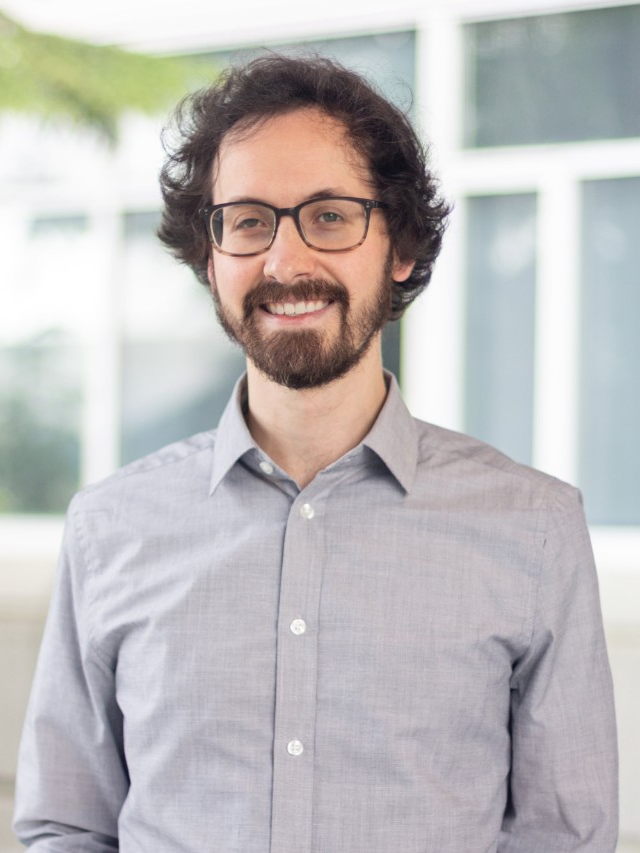
Kevin W. Hamlen is the Louis A. Beecherl, Jr. Distinguished Professor in the Department of Computer Science at the University of Texas at Dallas. He serves as Executive Director of UT Dallas' Cyber Security Research and Education Institute. His research focuses on language-based security , binary software hardening , cyberdeception , and formal program verification . He has received multiple grants from agencies like AFOSR, NSF, DARPA, and industry partners including Lockheed Martin and Intel. PhD and MS from Cornell University BS from Carnegie Mellon University His research explores automated approaches to software security through techniques like binary disassembly , control-flow integrity , and honey-patching . He has pioneered methods for malware defense and cloud/web/mobile security . Recent work examines adaptive cyberdeception and GPU-based security frameworks . His publications span binary code manipulation , malware mitigation , and blockchain security . Key awards include the NSF IUCRC Technology Breakthrough Award and two CSAW Best Paper 2nd Prizes . He advises numerous PhD students, many of whom now work at Google, IBM, and Microsoft. His book Autonomous Cyber Deception (Springer, 2019) with Ehab Al-Shaer and Cliff Wang provides comprehensive coverage of adaptive cyberdeception strategies.
Earl Campbell is Professor of Quantum Computation in the School of Mathematical and Physical Sciences at the University of Sheffield. He holds an MSc in Physics and Philosophy from University of Bristol and a PhD in Quantum Computing from University of Oxford. His research develops fault-tolerant quantum computing protocols, error correction codes, and quantum software architectures to enable reliable quantum technologies. Key focus areas include topological error correction, magic state distillation, qudit computation, and bridging quantum theory with hardware implementation. Research Team: 1 Postdoctoral Researcher (Mark Howard) 1 PhD Student (Luke Heyfron) Major Grants: EPSRC Early Career Fellowship: 'Towards fault-tolerant quantum computing with minimal resources' (£675,867) Royal Commission of Great Exhibition of 1851 Fellowship
Jens Palsberg is a Professor and former Department Chair of Computer Science at the University of California, Los Angeles (UCLA), where he currently serves as Director of the UCLA-Amazon Science Hub for Humanity and Artificial Intelligence and co-director of UCLA's quantum research center. He chairs ACM SIGPLAN and is a member of the ACM Council. His research spans programming languages, software engineering, quantum computing, compilers, embedded systems, and information security. Palsberg has authored over 80 technical papers, co-authored the book Object-Oriented Type Systems , and revised Appel's textbook on Modern Compiler Implementation in Java . His recent work shows a significant shift toward quantum computing, including compiler techniques and program analysis for quantum systems. Analysis of his recent publications reveals a clear transition from traditional programming language research to quantum computing, with nearly half of his 2022-2024 publications focusing on quantum topics while maintaining strong work in software engineering and programming languages. His quantum research particularly emphasizes compiler optimization, abstract interpretation, and circuit analysis. ACM SIGPLAN Distinguished Service Award (2012) UCLA teaching award for quantum computing courses (2023) National Science Foundation CAREER and ITR awards Purdue University Faculty Scholar award IBM Faculty Award Okawa Foundation research award Palsberg has served in numerous leadership roles including general chair of POPL, conference chair of LICS, and vice chair of ACM SIGBED. His research has been supported by DARPA, Intel, British Telecom, and the National Science Foundation. He was instrumental in establishing UCLA's Masters degree in quantum science and has mentored numerous students through his legendary proof sessions. He leads a research group of over 30 professors in UCLA's quantum research center and maintains active collaborations across academia and industry, particularly with Amazon through the UCLA-Amazon Science Hub.
Charith Mendis is an Assistant Professor in the Siebel School of Computing and Data Science at the University of Illinois at Urbana-Champaign, with joint appointments in the Department of Computer Science, Electrical and Computer Engineering, and the Coordinated Science Lab. His research focuses on the intersection of compilers, program optimization, and machine learning systems. Dr. Mendis received his educational background from prestigious institutions: Ph.D. in Computer Science from Massachusetts Institute of Technology (2020) S.M. in Computer Science from Massachusetts Institute of Technology (2015) B.Sc. in Electronics and Telecommunication Engineering from University of Moratuwa (2013) His primary research interests center around compiler technology and machine learning systems. Mendis leads the ADAPT lab at UIUC, where his team works on creating high-performance ML optimization techniques and automated compiler construction using machine learning and formal methods. His work bridges the gap between traditional compiler design and modern machine learning approaches, with applications in tensor compilers, graph neural networks, and sparse computation. He has developed novel frameworks for optimizing deep learning workloads, verification of compiler transformations, and performance modeling for emerging hardware architectures. Mendis has established himself as a leading researcher in compiler optimization for machine learning systems, with a particular focus on tensor compilers, graph neural networks, and performance modeling. His recent publications demonstrate increasing sophistication in combining formal methods with machine learning techniques to solve challenging problems in compiler optimization and verification, with multiple papers accepted at top-tier conferences including OOPSLA, PLDI, POPL, and SIGMOD. His notable scientific achievements include: Google ML and Systems Junior Faculty Award (2025) DARPA Young Faculty Award (2024) NSF CAREER Award (2024) Distinguished Paper Award at POPL (2025) William A. Martin Thesis Award for Outstanding SM thesis, MIT (2015) Multiple teaching excellence awards at UIUC (2021-2023) Dr. Mendis actively mentors students through the ADAPT lab, offering research opportunities for undergraduates, master's students, and PhD candidates interested in compiler technology and machine learning systems. His research is supported by significant funding from the ACE center (part of JUMP 2.0), National Science Foundation (NSF), DARPA, IIDAI, and industry partners including Google, Intel, Amazon, and Qualcomm. He teaches advanced courses in compiler construction and machine learning for compilers. He leads the ADAPT lab at UIUC, which focuses on developing advanced compiler technologies for modern machine learning workloads. The lab maintains active collaborations with industry partners and has established itself as a leading research group in compiler optimization for AI systems. Current projects include tensor compilers, graph neural network optimization, and automated verification of deep learning systems.
Amal Ahmed is a Professor and Associate Dean for Graduate Programs at Khoury College of Computer Sciences, Northeastern University, USA. Her career spans over two decades, with a focus on correct and secure compilation , safe language interoperability , and semantic type systems . Research Interests: Her work addresses key challenges in Secure compilation across software-hardware stacks Design of sound foreign-function interfaces (FFIs) Typed compiler intermediate languages for multi-language systems Probabilistic and modal separation logic Gradual typing with parametricity Provenance and concurrency semantics Recent Publications highlight advancements in application binary interfaces , probabilistic logic , WebAssembly interoperability , and gradual typing . These works span POPL , ICFP , LICS , and PLDI , with collaborations across institutions like Cornell and UBC. Scientific Recognition: NSF CISE CAREER Workshop awardee (2016) Editorial Board, Journal of Functional Programming (2017–present) Editorial Board, Mathematical Structures in Computer Science (2016–present) Advising & Mentorship: She mentors PhD students like John Li (co-advised with Steven Holtzen) and Andrew Wagner, alongside postdocs and undergraduates. Alumni include Daniel Patterson (Assistant Teaching Professor at Northeastern), Max New (Assistant Professor at U. Michigan), and William Bowman (Assistant Professor at UBC). Professional Leadership: Active in program committees for POPL , OOPSLA , and LICS , she co-organizes workshops like Dagstuhl Seminars and chairs PLDI 2024 and POPL 2023 .
Michael Sammler is an Assistant Professor leading the Programming Languages and Verification Group at the Institute of Science and Technology Austria (ISTA). He holds a PhD from the Max Planck Institute for Software Systems (MPI-SWS) and was a postdoctoral researcher at ETH Zürich. His research focuses on formal verification of low-level systems code, combining foundational proofs with automation. Key projects include RefinedC (C verification), Islaris (assembly code verification), and DimSum (multi-language interoperability). Education: PhD at MPI-SWS/Saarland Informatics Campus, postdoc at ETH Zürich. Research interests emphasize tool development for safety-critical systems, including Rust verification (RefinedRust), OCaml/C interoperability (Melocoton), and decentralized multi-language semantics (DimSum). Awards: Runner-Up for Informatics Europe 2024 Best Dissertation Award, Dr. Eduard Martin Prize, Distinguished Paper Awards at PLDI/POPL/USENIX, and Google PhD Fellowship. Labs/Teams: Programming Languages and Verification Group at ISTA, collaborations with MPI-SWS and international researchers. His work bridges foundational theory with practical tools for industry-relevant verification challenges.
Yizhou Zhang is an Assistant Professor in the Department of Computer Science at the University of Waterloo. He holds a PhD and MS from Cornell University (2019 and 2016) and a BS from Shanghai Jiao Tong University (2012). His research focuses on programming languages, including design, implementation, and theory, with emphasis on formal methods, compiler optimization, and probabilistic programming. Education: PhD, Cornell University, 2019 MS, Cornell University, 2016 BS, Shanghai Jiao Tong University, 2012 Research interests span programming language theory, compiler construction, and formal verification. His work explores topics like certified compilers, effect handlers, and probabilistic program analysis. Recent publications emphasize formal models for memoization, nested family polymorphism, and bidirectional control flow. His publications reflect contributions to probabilistic programming semantics, compiler optimization techniques, and type systems. No scientific awards are explicitly listed. Advising and grant details are not provided in the text. Zhang’s research often intersects with formal methods and practical compiler implementation challenges.
Nuno Pereira Lopes is an Associate Professor at Instituto Superior Técnico , part of Universidade de Lisboa , and a researcher at INESC-ID . He also serves as an advisor at FuriosaAI , focusing on tensor contraction processors for AI workloads. Research Interests : Compilers, formal verification of LLVM optimizations, machine learning frameworks, undefined behavior exploitation, probabilistic model checking, blockchain security, and many-core code generation. Teaching : Compilers and Computer/Informatics Engineering projects. Funding : Supported by Google, Matter Labs, NLnet, Oracle, PRACE, RNCA, and Woven by Toyota. Recent Publications focus on LLVM backend validation , PyTorch pipeline parallelism , C++ dynamic cast optimization , undefined behavior in C/C++ , and AI tensor processors . His work bridges compiler design, formal methods, and AI hardware. Academic Service includes representing Portugal in ISO/IEC JTC 1/SC 22 (C++), organizing FLoC'26 , and serving on program committees for PLDI, EuroLLVM, and CGO.
Roberto Giacobazzi is a Professor at the University of Arizona specializing in theoretical computer science with a focus on abstract interpretation, program analysis, and verification. His research bridges theoretical foundations with practical applications in software security and verification systems. Dr. Giacobazzi received his Ph.D. from the University of Pisa in Italy in 1993, establishing a long-standing academic career focused on the theoretical underpinnings of program analysis. His educational background forms the foundation for his contributions to abstract interpretation theory. His primary research interests center around abstract interpretation, a theoretical framework for approximating program semantics. This work spans theory of computation , programming languages , program analysis and verification , and logic in computer science . Giacobazzi has made significant contributions to understanding completeness and precision in abstract interpretation, with applications extending to code obfuscation, security analysis, and more recently, AI fairness in legal contexts. His work demonstrates how theoretical computer science concepts can address practical software engineering challenges. An analysis of his recent publications (2022-2025) reveals a consistent research trajectory with increasing sophistication in abstract interpretation theory. His work shows a growing emphasis on completeness properties, precision limitations, and security applications. Notably, his 2024 publication on "Fairness of AI Systems in the Legal Context" indicates an expansion of his theoretical expertise into AI ethics and regulatory compliance, demonstrating the versatility of abstract interpretation frameworks. Dr. Giacobazzi has contributed extensively to major conferences in programming languages and verification, including SAS (Static Analysis Symposium), POPL (Principles of Programming Languages), and VMCAI (Verification, Model Checking, and Abstract Interpretation). His publications reflect deep theoretical insights while maintaining relevance to practical software analysis challenges. His research has significant implications for software security, particularly in code obfuscation techniques based on abstract interpretation. The systematic approach to measuring incompleteness in abstract interpretations has provided new frameworks for understanding and improving program analysis tools. His work continues to influence both academic research and practical applications in program verification and security.
Haobin Ni is a Postdoctoral Scholar at the University of Washington in the Programming Language and Software Engineering (PLSE) group, advised by Professor Zachary Tatlock. His research bridges theoretical formal methods with practical systems development in programming languages and security. Education: Ph.D. in Computer Science, Cornell University (2024). Dissertation: "Formal Modeling Languages for High-assurance Domain-specific Systems." Advisors: Greg Morrisett and Robbert van Renesse. Ni's research focuses on language design, program analysis, and compiler optimization with emphasis on formal verification of distributed systems, concurrent programs, and parsers. He pioneers secure smart contract languages using information flow control type systems and develops novel protocols for distributed systems. His work consistently targets high-assurance systems where correctness and security are critical, spanning blockchain, binary parsing, and state machine replication. Analysis of his 11 publications (2019-2024) reveals three dominant research thrusts: compositional security frameworks for smart contracts (especially against reentrancy attacks), provably correct implementations of critical infrastructure like ASN.1 parsers, and modular abstractions for distributed ledger technologies. His methodology combines deep theoretical formalization with practical implementation, resulting in tools and protocols adopted in real-world systems. Scientific awards: Best Paper Award, IEEE Symposium on Security and Privacy (2021) ICPC World Finals Gold Medal (2016) ICPC World Finals Silver Medal (2014) Ni actively mentors through competitive programming: he coached Cornell's ICPC team (2018-2024), leading them to World Finals qualifications in 2019 and 2023, and volunteered for high school programming contests. Currently, he leads the PLSE Programming Languages Reading Group (PLRG) at the University of Washington, fostering community engagement in PL research. His work shows strong industry collaboration, particularly with Microsoft Research on blockchain and security projects. As a core member of UW's PLSE group, Ni contributes to one of academia's leading programming languages research teams. His current leadership of the PLRG demonstrates active community building, while his technical work on Charlotte and ASN1★ positions him at the forefront of secure distributed systems research.
John Regehr is a Professor at the School of Computing, University of Utah, specializing in compilers, software testing, and formal verification. His research develops tools to improve software correctness and efficiency, including Csmith (random C program generator) and C-Reduce (test-case reducer). His group focuses on compiler validation, fuzzing techniques, and superoptimization, primarily targeting the LLVM infrastructure. Research interests span compilers, testing methodologies, formal verification, embedded systems, and program analysis. Recent work emphasizes practical tools backed by formal methods to detect and prevent software errors. Publications demonstrate strong trends in compiler verification and testing, with consistent focus on LLVM optimization correctness, translation validation, and automated bug detection through fuzzing and synthesis techniques. Scientific awards include: PLDI 2015 Distinguished Paper Award ICST 2014 Best Paper Award ACM SIGSOFT Distinguished Paper Award Leads a research group developing tools like Souper (superoptimizer) and Alive2 (translation validator). Maintains active academic service through program committees (PLDI, CGO, OOPSLA) and contributes to open-source compiler infrastructure.
Brandon Lucia is a Full Professor in the Department of Electrical and Computer Engineering at Carnegie Mellon University's College of Engineering. He leads the abstract research group focusing on the intersection of computer architecture, systems, and programming languages. His work bridges theoretical foundations with practical implementations in energy-constrained environments. Lucia's research centers on intermittent computing systems and edge computing in extreme environments. His work on energy-harvesting systems has established fundamental principles for batteryless computing, while his orbital edge computing research pioneers computational intelligence for nanosatellite constellations. These research thrusts address critical challenges in reliability, efficiency, and programmability for systems operating under severe power constraints. His publication record shows a clear evolution from foundational work on intermittent computing models to sophisticated applications in space computing and edge intelligence. Recent publications demonstrate increasing integration of dataflow architectures with energy-harvesting constraints, particularly in satellite constellations where computational resources must be managed across distributed, power-constrained platforms operating in extreme environments. NSF CAREER Award (2017) IEEE TCCA Young Computer Architect Award (2019) Sloan Foundation Fellowship (2021) ASPLOS Best Paper Awards (2018, 2020) OOPSLA Distinguished Paper and Artifact Awards (2015) Lucia actively mentors numerous PhD students including Brad Denby, Zhuo Cheng, and Emily Ruppel, many of whom contribute significantly to his research program. His abstract research group maintains strong industry connections while pursuing fundamental advances in computing systems. The group has developed multiple open-source tools including Legerdemain for program analysis and MultiCacheSim for cache coherence simulation. His laboratory work spans from theoretical foundations of intermittent computing to practical implementations in space systems. Current projects include computational nanosatellite constellations, energy-minimal dataflow architectures, and secure edge computing systems that operate reliably despite frequent power failures.
Heather Miller is a tenure-track Assistant Professor in the Software and Societal Systems Department within Carnegie Mellon University's School of Computer Science. Her academic journey includes prior roles as an Assistant Clinical Professor at Northeastern University's College of Computer and Information Science and as Executive Director of the Scala Center at EPFL. Miller's research centers on distributed and concurrent computation through the lens of programming languages, with particular emphasis on data-centric systems, big data processing, and edge computing. A defining theme throughout her work is composability - enabling construction of complex distributed systems through composition of components that are correct by construction. Her projects span distributable closures, flexible serialization techniques, futures and promises for asynchronous programming, and deterministic concurrent dataflow models. Her recent publications demonstrate strong trends in applying programming language theory to practical distributed systems challenges, with increasing focus on WebAssembly instrumentation, microservice resilience, and language model pipelines. This evolution reflects her commitment to bridging theoretical foundations with real-world system requirements. Dahl-Nygaard Junior Prize (2023) Mentorship forms a significant component of Miller's academic work. She actively supervises multiple PhD, MS, and undergraduate researchers at CMU, including Christopher Meiklejohn, Matthew Weidner, Huairui Qui, Ria Pradeep, and Luke Dramko. Her service contributions span numerous top-tier conferences including PLDI, SPLASH, ECOOP, and ICSE where she has served as committee member, chair, and keynote speaker. Miller co-founded the Curry On conference to foster industry-academia dialogue, hosting successful editions in Prague, Rome, Barcelona, Amsterdam, and London. She leads research groups focused on distributed programming models and maintains strong industry connections through Two Sigma, where she holds an affiliation. Her work consistently emphasizes practical open-source implementations, primarily within the Scala ecosystem where she's been a core contributor since 2011.
Dr. Matt Amy is an Assistant Professor in the School of Computing Science at Simon Fraser University (SFU), holding the Canada Research Chair in Quantum Computing. His research focuses on quantum compilers, programming languages, and formal verification of quantum programs. He also explores quantum circuit optimization and models of quantum computation. Education: PhD in Computer Science (University of Waterloo, 2019), M.Math in Quantum Information (2013), and B.Math in Computer Science (2011), all from the University of Waterloo. Research Interests: Quantum compilers and languages, circuit optimization, formal verification, and quantum computation models. His work bridges theoretical foundations with practical implementations, emphasizing efficient quantum software development. Recent research trends include advancing quantum compilation techniques, exploring NP-hard optimization problems in quantum circuits, and developing formal methods for quantum program analysis. His work on symbolic synthesis and equational theories for quantum circuits demonstrates a focus on foundational algorithmic challenges. Scientific Awards: Canada Research Chair (2025–present) Advising and Grants: While no current advisees are listed, his research is supported by grants focused on quantum computing and formal methods. He collaborates with industry through SFU’s School of Computing Science. Labs and Teams: Involved with the Tangent Lab, a research group exploring quantum algorithms and software systems at SFU.
Andrea Simonetto is a Research Professor at the Applied Mathematics Unit (UMA) , ENSTA Paris, Institut Polytechnique de Paris. His work spans optimization, control theory, and learning algorithms for large-scale and streaming data , with applications in smart grids, intelligent transportation, personalized health, and quantum computing. Current research focuses on online algorithms for time-varying optimization , personalized optimization for cyber-physical systems , and variational quantum algorithms . Past contributions include theoretical and algorithmic advances in convex/non-convex optimization, distributed optimization (robotic networks, smart grids), and signal processing for sparse reconstructions and parallel computing in particle filtering. Key application domains include renewable energy integration , quantum state preparation , and human-in-the-loop control systems . His research is published in journals like ACM Transactions on Quantum Computing , IEEE Control Systems Letters , and Automatica .